Culture & Customs · Malaysia
Malaysia: An Open House for Every Faith
Malay, Chinese, Indian and Indigenous communities keeping their own festivals and then throwing their doors open to one another, in a country where courtesy is gentle, indirect and carefully observed
By Worldlore Editorial · 30 September 2026
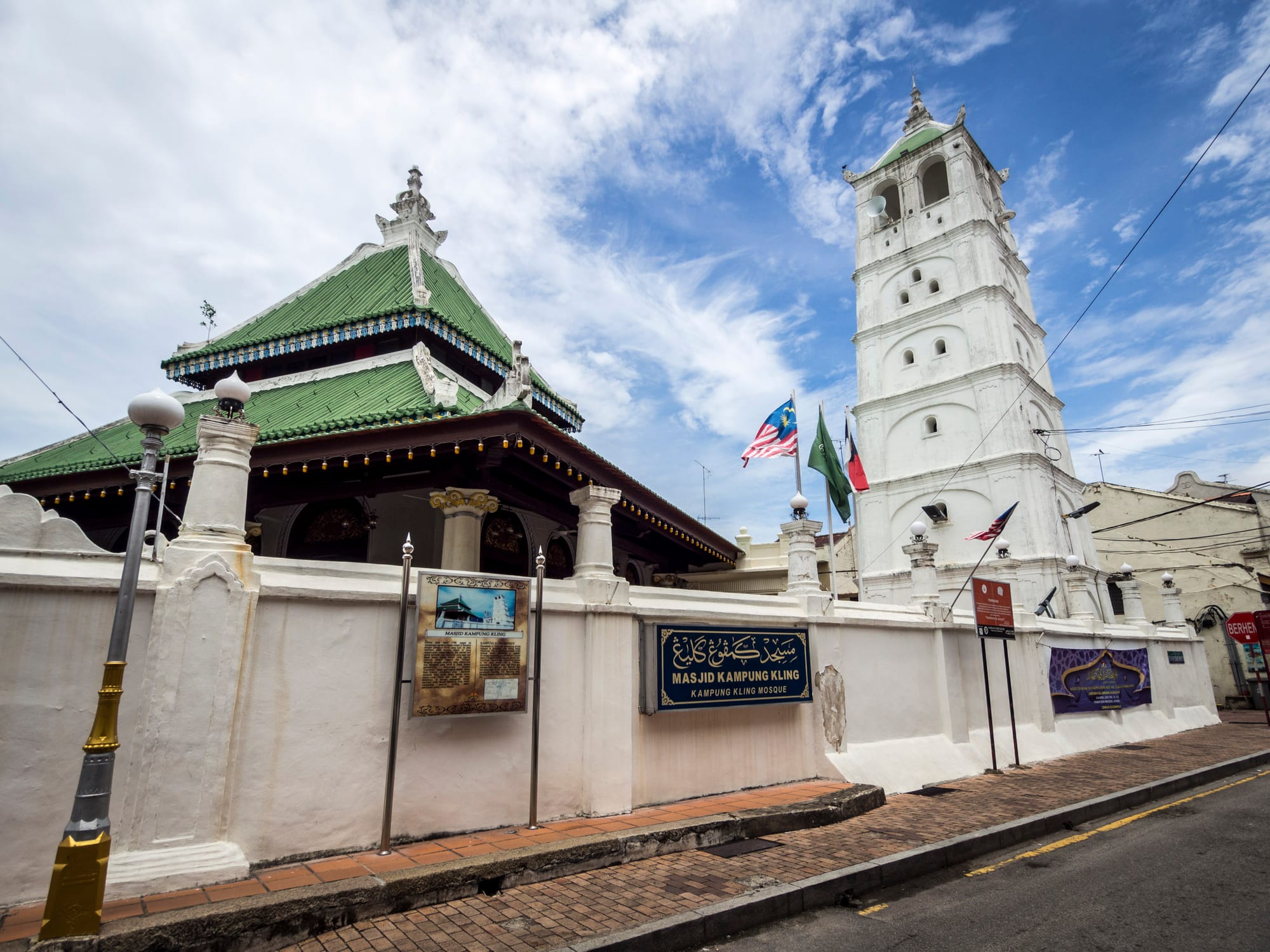
It is the first morning of Hari Raya Aidilfitri, the festival that ends the fasting month of Ramadan. After prayers at the mosque, a family gathers at home. The elders sit, and one by one the younger relatives come forward to take their hands, touch them respectfully and ask forgiveness for any wrongs of the past year, with the words "maaf zahir dan batin". Later the doors open and the visitors begin to arrive: neighbours, colleagues and friends, many of them Chinese, Indian or from Borneo's Indigenous peoples, all welcome to share the food laid out on the table. A few months on, the same families will be guests themselves at a Chinese New Year or Deepavali open house. It is one of the most distinctive habits of a country whose communities keep their own faiths and customs, and then make a point of celebrating each other's.
Faith, identity and values
Islam is Malaysia's official religion and has the largest following, at a little over 60 per cent of the population. Cultural Atlas records about a fifth of Malaysians as Buddhist, around 9 per cent Christian, 6 per cent Hindu and a smaller share following traditional Chinese religions. Faith and ethnicity are closely linked: Malaysian law defines a Malay as a person who professes Islam, habitually speaks Malay and conforms to Malay custom. Most Chinese Malaysians are Buddhist or follow Chinese religious traditions, most Indian Malaysians are Hindu, and many Indigenous people in Sabah, Sarawak and the peninsula hold traditional beliefs, known as agama adat, passed down orally and centred on the spirits of the natural world. Muslims may be subject to Sharia law, and relations between communities, while generally harmonious, can be sensitive where religion and state meet.
Places of worship often stand within sight of one another, and all welcome respectful visitors. Malaysia's National Fatwa Council has ruled that non-Muslims may enter mosques, provided they have permission from the mosque's management and behave in a way that respects its sanctity. Shoes come off before entering, and visitors are expected to wear loose clothing with long sleeves and ankle-length trousers or skirts; many mosques lend robes and headscarves free of charge. Hindu temples ask visitors to remove shoes and hats, cover shoulders and knees, keep the soles of the feet from pointing at sacred objects and leave statues untouched.
Beneath the diversity lie shared values. Cultural Atlas singles out budi, a Malay idea combining wisdom, virtue, etiquette and morality, alongside gentleness, respect, courtesy, modesty and filial piety. Face, a person's reputation and dignity, matters greatly, and hierarchy is widely accepted, with people adjusting their manner to another's age and status. Communication is therefore indirect. A flat "no" is rarely given, embarrassment may be masked with a laugh, and a pause before answering is a sign that a question has been taken seriously.
Greetings and meeting people
A handshake is the common greeting across all communities, but physical contact between men and women is frowned upon in most circumstances. The safest course is for a man to wait and see whether a woman offers her hand. Many people instead place a hand over the chest with a slight nod, a gesture used especially with those who may prefer not to be touched. The common Malay verbal greeting is "salaam".
Titles are used until someone invites more familiarity, and elders are treated with visible respect. Older people may be addressed as pakcik, uncle, or makcik, aunty, and a slight bow of the head is a polite greeting to someone older. In more formal settings, a younger person may take an elder's hand and touch it to the forehead or the tip of the nose.
The body carries its own etiquette. The head is regarded as sacred, and touching or passing objects over someone's head is very rude. The feet are considered the lowliest part of the body, so they are not used to move things and their soles are kept out of sight. Pointing with the index finger is avoided: an open hand, or the right thumb with the fingers folded beneath it, is used instead. The left hand is not used on its own to greet, eat, or give and receive.
Hospitality and being a guest
Shoes are removed before entering a home. Gifts are given and received with both hands, and choosing them well is a mark of courtesy towards each community. Muslim Malays should not be given anything containing alcohol or made of pigskin, or anything depicting pigs or dogs, and white wrapping is avoided because it is associated with mourning. Among Chinese Malaysians, flowers are not usually favoured as gifts, black, white and blue wrapping is avoided, and gifts are given in even numbers. Hindu hosts should not be given leather or alcohol, nor frangipani, which is used at funerals; red, yellow and green wrapping is preferred.
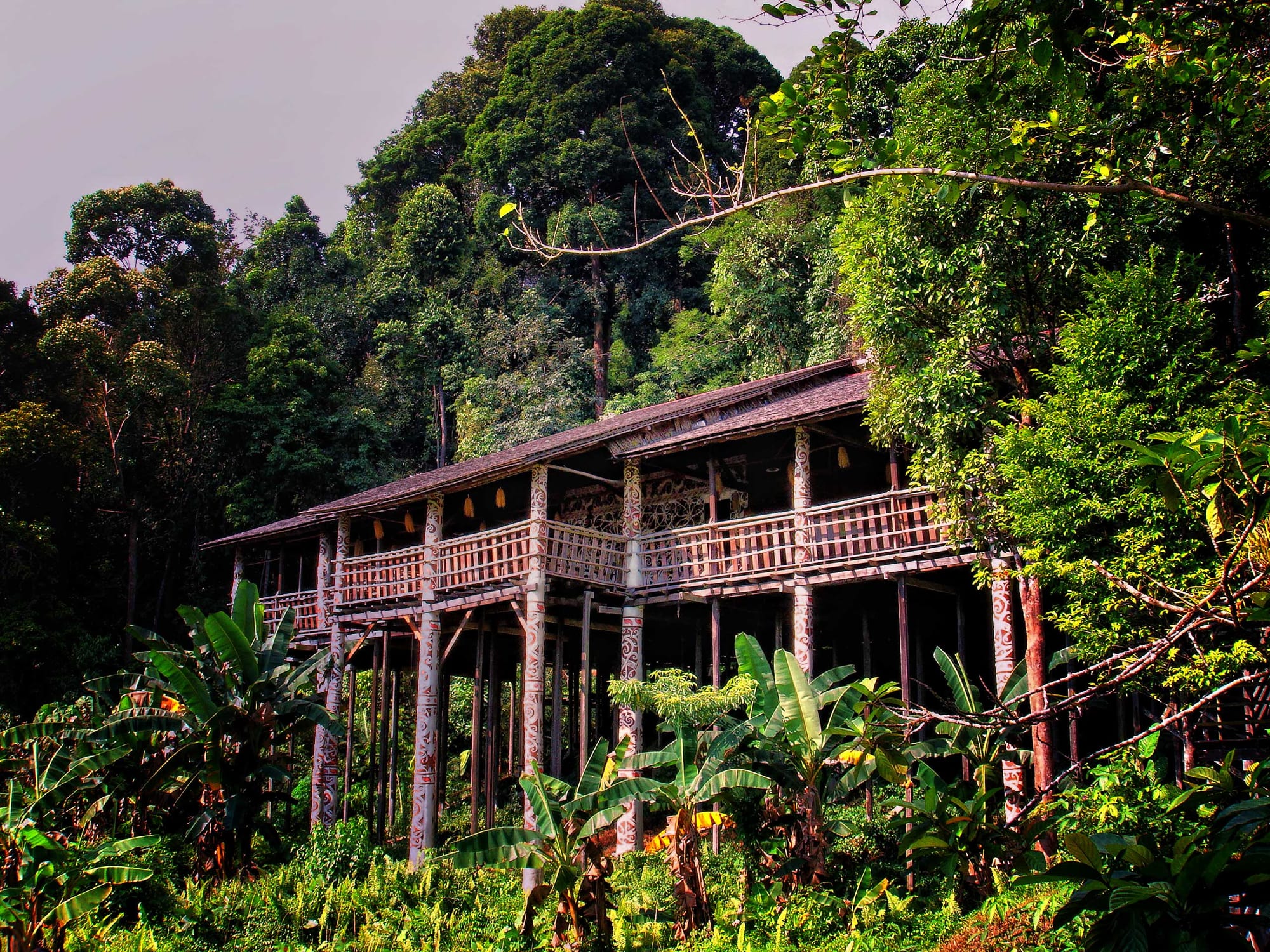
At the table, the right hand is used to eat and to pass food to others. Malays avoid pork, most Indian Malaysians avoid beef, and where chopsticks are used they should never be left standing upright in a bowl of rice, a gesture that recalls funeral rites. Among the Indigenous peoples of Sarawak, hospitality has its own rituals. At Gawai, the harvest festival, guests arriving at a longhouse are welcomed with a drink and then generously served with tuak, rice wine, in a custom known as nyibur temuai, "watering the guests".
Festivals and life's big moments
Each community's great festivals are public holidays, and each has its own customs. Hari Raya Aidilfitri begins with prayers at the mosque, after which families seek forgiveness from their elders. Men wear the baju Melayu and women the baju kurung or baju kebaya, homes are decorated with woven ketupat casings and oil lamps, and children and those in need receive duit raya, small packets of money.
For Chinese Malaysians, the eve of the New Year brings the reunion dinner, the most important meal of the year, for which people travel home from all over the country. On the first day, homage is paid to ancestors and gods, younger family members greet their elders with wishes for prosperity, and married couples give ang pow, red packets of money, to children and unmarried relatives. Families hold open houses where friends of every race and religion visit, bringing mandarin oranges, whose Cantonese name sounds like the word for gold. The celebrations close on the fifteenth day, Chap Goh Mei. At Deepavali, the Hindu festival of lights, small clay oil lamps are lit to mark the triumph of good over evil, homes are cleaned to welcome the goddess Lakshmi, and floors are decorated with kolam, intricate designs in coloured rice.
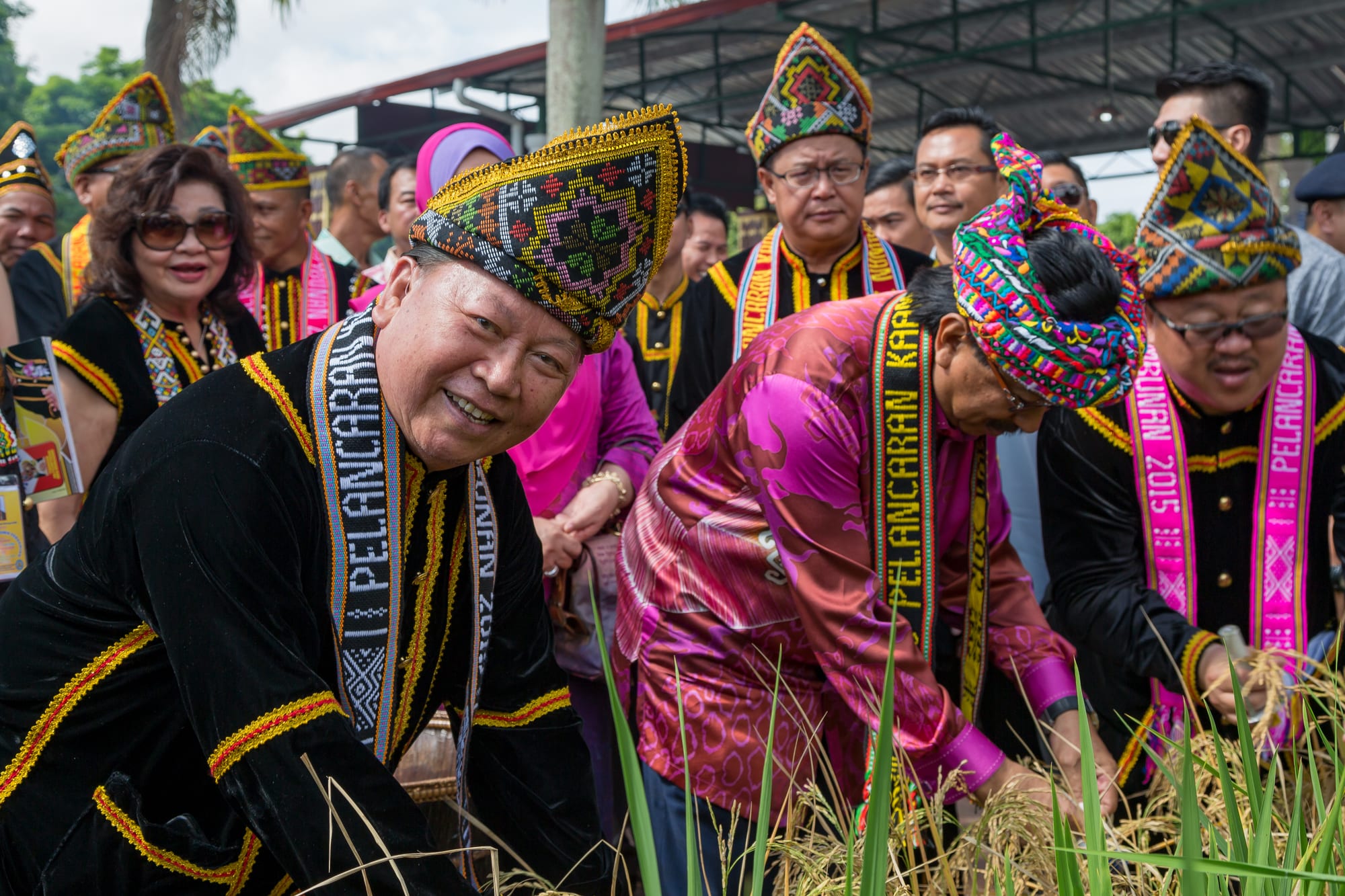
The Indigenous peoples of Borneo mark the end of the rice harvest with their own festivals. Kaamatan, celebrated by the Kadazandusun and Murut on 30 and 31 May, takes its name from the word for harvest and recalls a creation myth in which Huminodun, daughter of the creator Kinoingan, gave her life so that rice and other crops would feed the people. Its best-known event is the Unduk Ngadau, "the girl crowned by sunlight", a pageant celebrating beauty of heart, mind and body. Gawai, the festival of the Dayak peoples, including the Iban, Bidayuh, Kayan, Kenyah and Kelabit, begins on the evening of 31 May with offering ceremonies and a midnight toast, and on 1 June longhouse homes are opened to visitors. The ngajat, the Iban dance, is among the highlights of the celebrations.
Malay weddings are celebrated with great ceremony. On the nights before the wedding, family and friends paint henna patterns on the bride's hands in the berinai. The akad nikah, the religious solemnisation, is conducted by a kadi or imam. At the bersanding, the couple are treated as raja sehari, "king for a day", and seated in state before their guests, while elders bless them by sprinkling rose water and fragrant flower petals on their palms in the merenjis. Guests traditionally take home a bunga telur, a decorated egg on a paper or fabric flower, as a symbol of fertility. Songket and pantun, both on UNESCO's list, often feature at weddings as well.
Arts, crafts and music
Songket is Malaysia's most prestigious textile. Woven by women on a traditional two-pedal floor loom called a kek, it has gold or silver thread inserted between the base threads so that the metallic patterns seem to float above the coloured cloth. The designs draw on geometric shapes, flowers, birds and insects, and a single piece can take months. Once reserved for royalty, songket is now worn at royal installations, weddings, births, festivals and state functions.
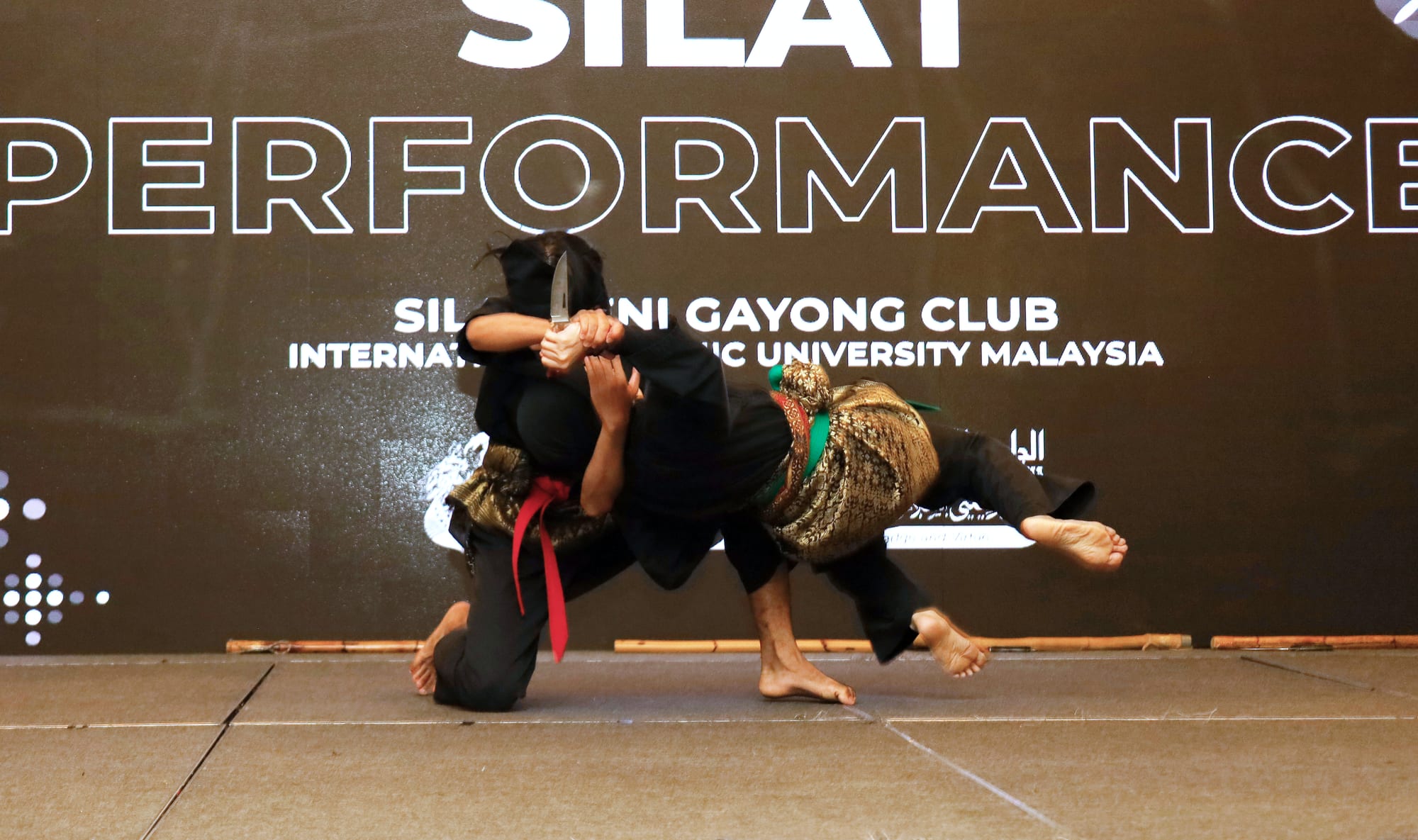
Silat, the Malay art of self-defence, combines physical and spiritual training with traditional dress, music and a strong code of moral values and self-discipline. Many styles are practised in Malaysia, some inspired by nature and animals; Silat Harimau, for example, imitates the movements of a tiger. Training is traditionally held in the evening or at night, in an open space such as a courtyard, under a master, and silat is now performed as an art and played as a sport as well as practised for self-defence.
Words are an art form too. The pantun, a quatrain usually rhyming a-b-a-b, is recited at weddings, customary rites and official ceremonies, and UNESCO notes that it offers a socially acceptable way to say something indirectly and politely, which makes it a natural fit for Malaysian manners. Dondang Sayang sets such verses to music: two singers, a man and a woman, trade quatrains to the accompaniment of a violin, rebana drums and a gong. Once performed at the royal court of the Melaka Sultanate, it is kept alive today by four communities together, the Malay, Baba Nyonya, Chitty and Portuguese, a small emblem of the country's blended heritage.
Dos and don'ts for visitors
- Do check the latest government travel advice before any trip; the UK government advises against all but essential travel to the islands and dive sites off the coast of eastern Sabah because of the threat of kidnapping.
- Do wait for a woman to offer her hand before shaking it; a hand placed on the chest with a slight nod is a courteous alternative.
- Do remove shoes before entering homes, mosques and temples, and dress modestly at religious sites, with arms and legs covered at mosques and, for women, the hair too; many mosques lend robes and headscarves.
- Do use the right hand to eat, pass food and give things, and give and receive gifts with both hands.
- Do point with an open hand or the right thumb, never the index finger, and never touch anyone's head or show the soles of the feet.
- Do accept an invitation to an open house, whatever your own faith; hosts expect guests of every background.
- Don't give alcohol or pork products to Muslim hosts, or leather or alcohol to Hindu hosts.
- Don't make public displays of affection, which can draw a negative reaction; same-sex sexual acts are criminal offences under the federal Penal Code, and for Muslims under state sharia laws as well.
- Don't carry or use illegal drugs; penalties are severe, and drug trafficking can still carry the death penalty, though since July 2023 it is no longer mandatory.
What to take away
Malaysia's communities keep their traditions distinct but share their celebrations generously, and visitors who learn a little of each community's courtesies will find a warm welcome at every open door.