Culture & Customs · Malawi
Malawi: The Great Dance and the Open Door
A Christian majority that keeps older rites alive, masked dancers who teach as they perform, and a code of courtesy built on greeting first, using the right hand and never turning a visitor away
By Worldlore Editorial · 30 September 2026
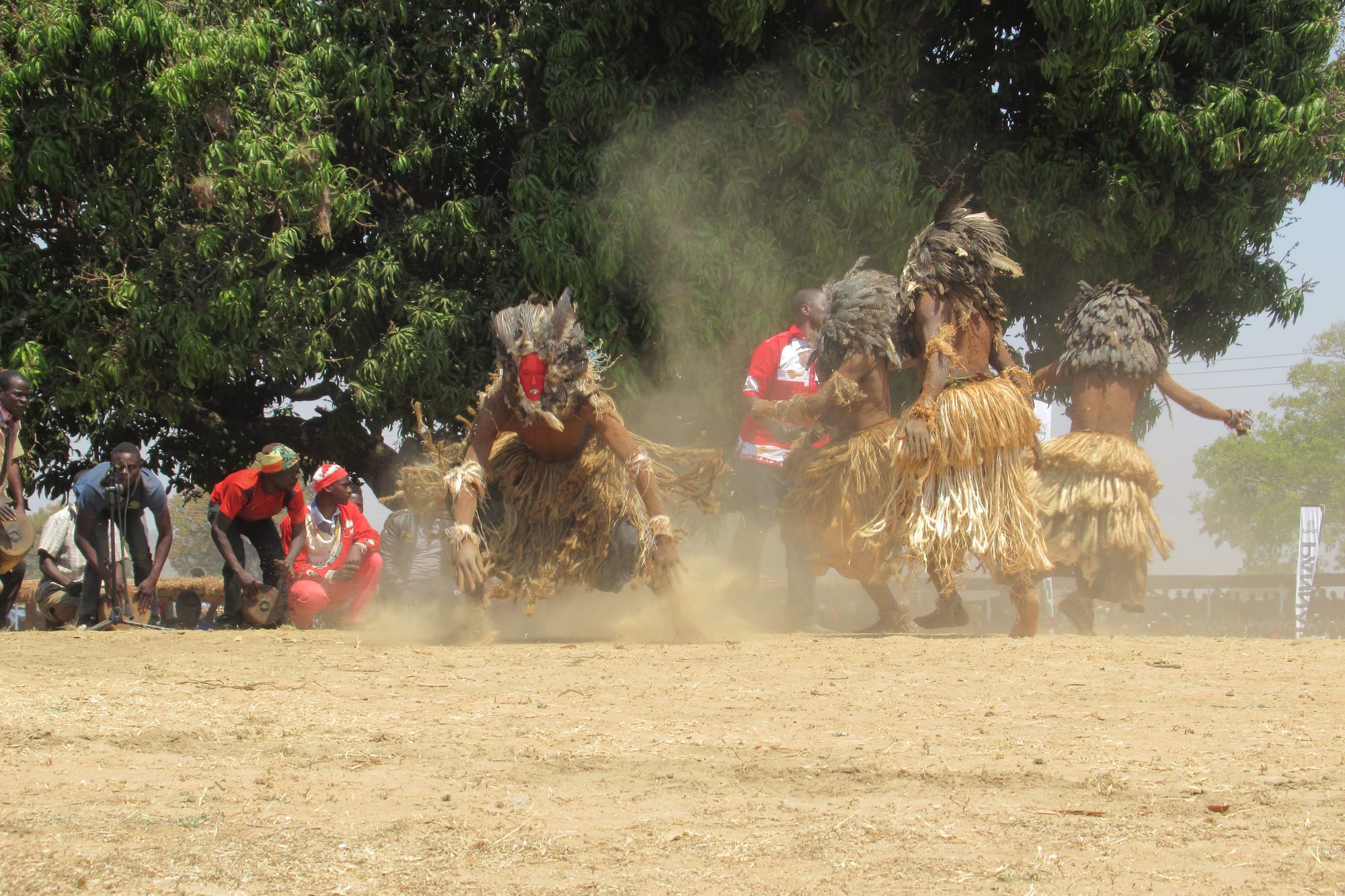
The drums start, and the dust begins to rise. Out of the crowd come figures that are not quite human: dancers in costumes of straw and feathers, faces hidden behind carved and painted masks, stamping and leaping so hard that the ground seems to smoke around them. Some masks represent wild animals, some the spirits of the dead, some slave traders from a darker past, and some are startlingly modern. This is Gule Wamkulu, the great dance of the Chewa, and the performers are members of the Nyau, a society of initiated men. The audience laughs, gasps and scatters as the characters charge, but the dance is more than entertainment. Each figure carries a lesson about how to behave, and the whole performance is a reminder that in Malawi, old knowledge and new faith, the ancestors and the everyday, sit side by side.
Faith, identity and values
Malawi is a strongly religious country. According to the 2018 census, cited by the US State Department, just over three quarters of the population is Christian and around 14 per cent Muslim. The Christian majority is divided among many churches: Roman Catholics are the largest single denomination, followed by the Church of Central Africa Presbyterian, Seventh-day Adventists and Baptists, Pentecostals and Anglicans, with a quarter of the population belonging to other Christian groups. Most Muslims are Sunni and live near the shores of the lake, especially at its southern end, while Christians are found throughout the country.
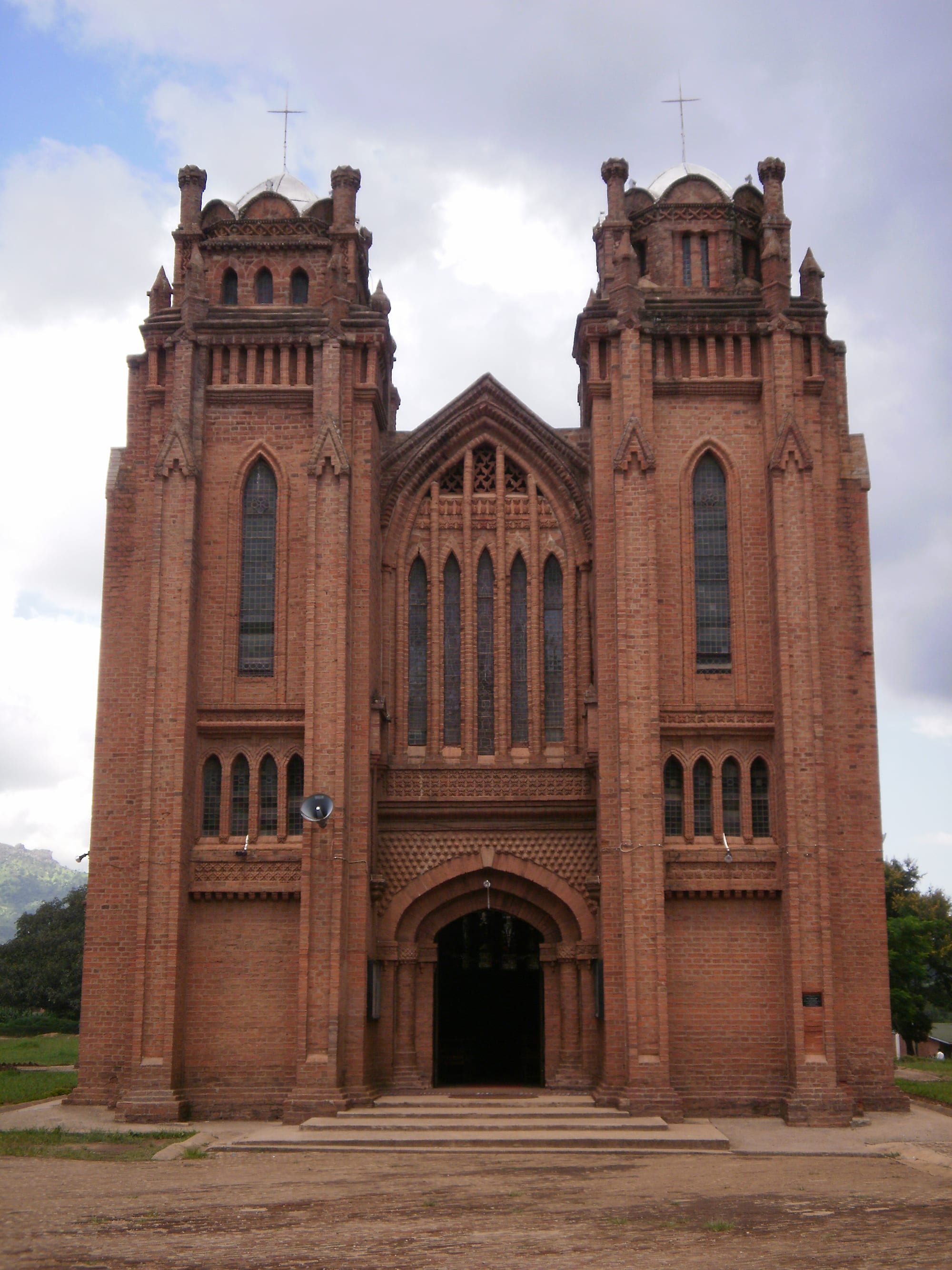
Beneath these figures lies a layer of older belief. The State Department notes that traditional practices with a spiritual dimension are sometimes followed by Christians and Muslims alike, and gives the Gule Wamkulu spirit dancers of the Chewa as an example. Practitioners of traditional spirituality describe offering the first small portion of a meal to the ancestors, and traditional healers treat illness with roots, herbs and other natural medicines, on the understanding that many ailments have a spiritual cause. Among the Tumbuka, the vimbuza healing dance, listed by UNESCO, sees patients, most of them women, enter a trance and "dance their disease" in the company of singers and drummers, sometimes staying for weeks or months in a healer's village house. It was banned by the colonial administration in the 1920s, with missionary support, and still faces some opposition from churches and modern medicine.
The value most visitors notice first is friendliness. The country markets itself as "the Warm Heart of Africa", and Visit Malawi, the official tourism site, calls its people the country's greatest asset. Most Malawians live in rural villages, where the extended family, the church and the authority of chiefs shape daily life. Appearance is read as a sign of respect: clothes that are dirty, torn or revealing are frowned upon, and many men wear smart trousers, shirts and even ties for office work or teaching.
Greetings and meeting people
Greeting comes before everything else. Chichewa, the national language, is spoken across most of the country alongside English, and a handful of words goes a long way: "Moni" for hello, "Muli bwanji?" for how are you, and "Tsalani bwino" for goodbye. "Zikomo" is the most useful word of all. It means thank you, but depending on the context it can also serve as hello, goodbye or excuse me. A visitor may be welcomed with "Takulandirani".
The handshake is made with the right hand, and a common mark of respect is to grip the right forearm lightly with the left hand while shaking. When arriving at someone's home, it is customary to call out "Odi, odi" from outside to announce oneself, rather than walking straight up to the door.
Respect for age and position runs through these encounters. Chiefs remain important figures in village life, and news of a death, for example, is traditionally taken to the chief before mourning begins. English is widely understood in towns and in the tourist trade, but an attempt at Chichewa is the surest way to earn a smile.
Hospitality and being a guest
Hospitality is instinctive. A visitor to a Malawian home will almost always be offered something to drink, and often something to eat. Meals are traditionally eaten without cutlery, using only the right hand, because the left hand is considered unclean; the same hand is used to give and receive. In many households men have customarily eaten separately from women, with women serving the food.
Meals are also a social occasion. UNESCO describes eating nsima, the maize staple, as a communal family tradition and a chance to strengthen bonds, with customs at mealtimes intended to curb greed and promote cleanliness and togetherness. A guest who waits to be shown where to sit and follows the lead of the host will rarely go wrong.
Dress matters to good manners. The national tourism body recommends modest clothing in rural areas and notes that swimwear and very skimpy clothing belong at the beach resorts. For women, a chitenje, the printed wrap worn by many Malawian women, is a practical and well-received choice.
Festivals and life's big moments
The national calendar remembers the struggle for independence. Chilembwe Day, on 15 January, honours the Reverend John Chilembwe, who led a rising against colonial rule in 1915. Martyrs' Day, on 3 March, recalls those who gave their lives for the country's freedom, among them people killed on that date in 1959. Kamuzu Day, on 14 May, remembers Hastings Kamuzu Banda, the first president. The annual independence celebrations and other days of national significance are among the occasions for traditional dances.
Alongside these are the cultural festivals of individual peoples, which have grown into major national gatherings. Visit Malawi lists the Chewa's Kulamba in August, the Tumbuka's Gonapamuhanya in September and the Lhomwe's Mulhako wa Alhomwe in October, among others. The Umthetho festival of the northern Ngoni, led by their paramount chief, celebrates Ngoni traditions with performances such as the ingoma dance and is presented as a celebration of cultural preservation and national unity.
Marriage customs vary with descent. In much of the centre and south, families are matrilineal, and children belong to the mother's lineage. Under chikamwini, a husband moves to his wife's village; under chitengwa, the wife moves to her husband's, yet the children still belong to her line. In the patrilineal north, the groom pays lobola to the bride's family, traditionally often in cattle. Across the country, a couple is considered properly engaged only after the chinkhoswe ceremony, in which the ankhoswe, the marriage guardians from each side, traditionally exchanged chickens and gifts. Guests at weddings often wear outfits made from the same chitenje fabric as a sign of solidarity with the bride.
Death calls for the whole community. Funerals and mourning can last several days, and employers commonly give workers time off to attend. Traditional rites include lighting a fire at the funeral, covering the body or coffin with a mat, and deciding which way the head of the deceased will face. The dead were once wrapped in mats or blankets and carried on stretchers that were destroyed after burial; today coffins have become expected, and the rising cost of funerals is a subject of public debate.
Arts, crafts and music
Dance is Malawi's great art, and four of its dances, vimbuza among them, are on UNESCO's Representative List of intangible heritage. Gule Wamkulu, inscribed in 2008 for Malawi together with Mozambique and Zambia, where Chewa communities also live, is performed after the July harvest and at weddings, funerals, the installation of chiefs and the initiation of young men. Its masks and costumes, made of wood and straw, portray a vast cast of characters, and the Nyau use them to pass on moral and social values. UNESCO has warned that the dance risks losing its meaning as it is increasingly performed for tourists and for political ends. Among the Lhomwe, tchopa is danced by twenty to thirty people in a circle to three sizes of drum, after good harvests and successful hunts, and in offerings to the ancestors after droughts or disease. In the north, mwinoghe, whose name means "let us enjoy ourselves", is danced in two rows, men facing women, to three drums and a whistle.
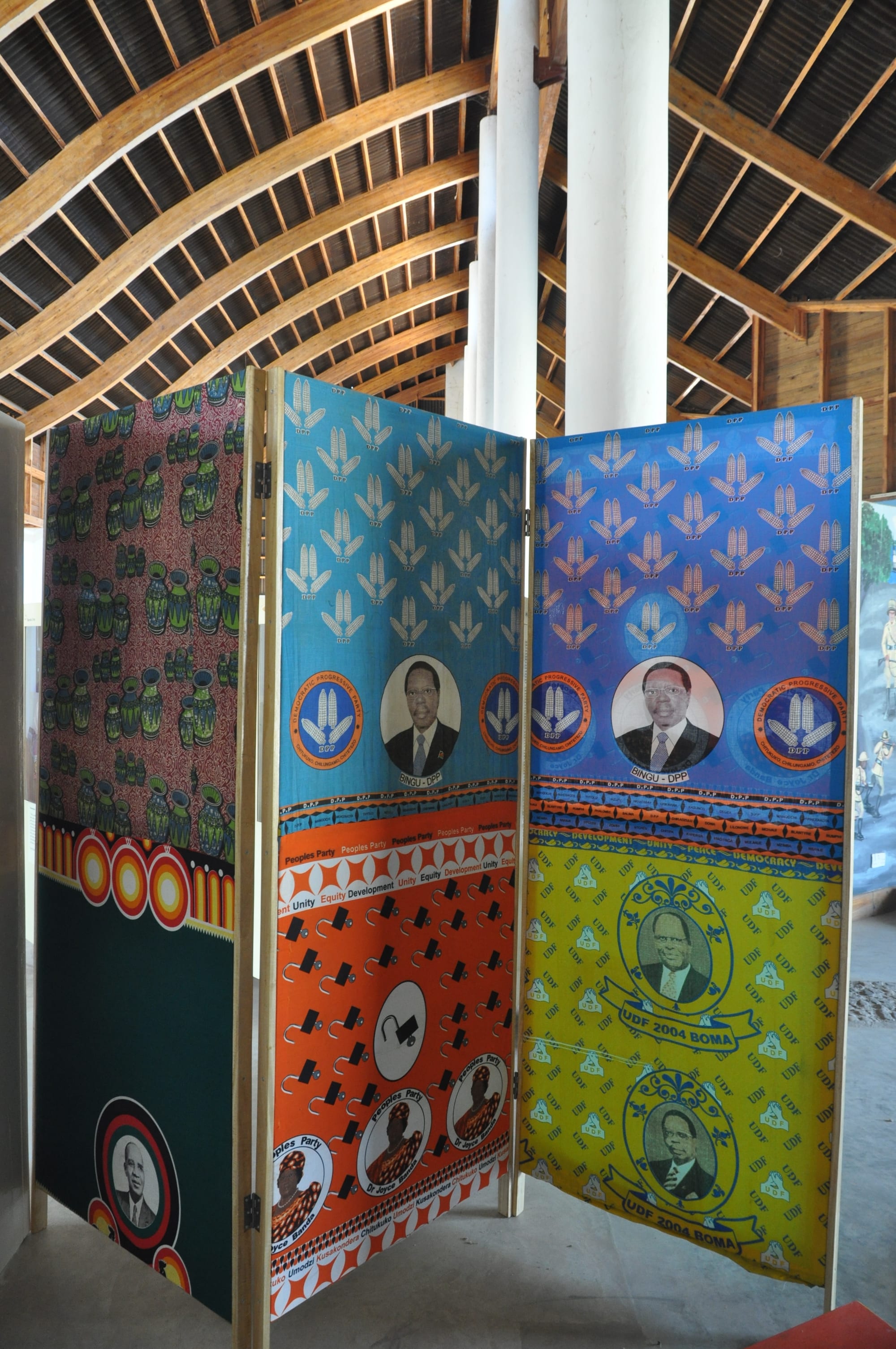
Cloth is an art in its own right. The chitenje, a length of printed fabric about two metres long, is worn as a wraparound skirt, often with a matching headscarf and blouse, and together they serve as a form of national dress for women. The cloth also works as a kind of archive: designs commemorate national events and achievements, and political parties print chitenjes with their emblems and leaders' faces to hand out free to supporters.
Carving is the best-known craft. Malawi is especially associated with the carved wooden "chief's chair", and the Mua Mission is famous for the quality of the carvings produced and sold there. Carvings and pottery are the crafts visitors most often take home, and the pottery is often hand-painted with scenes of everyday life, such as fishing boats on the lake at sunset. The mbira, with its cycles of interwoven melody, is still passed down within families as well as taught in schools.
Dos and don'ts for visitors
- Do greet people before anything else, with "Moni" or "Muli bwanji?", and try the handshake with the left hand resting lightly on the right forearm.
- Do call out "Odi" when arriving at a home, and accept the drink that is almost always offered.
- Do use the right hand to eat, give and receive; the left is considered unclean.
- Do dress modestly away from the beach resorts, where swimwear and skimpy clothing belong.
- Do ask permission before photographing people; most do not mind, but asking is a basic courtesy.
- Do bargain in markets, where it is expected, and keep it good-humoured.
- Don't make public displays of affection; Malawi is socially conservative, and same-sex relations are illegal.
- Don't treat masked dances as a show put on for visitors; they belong to societies and ceremonies with their own rules.
What to take away
Malawi's welcome is genuine and generous, and visitors who greet first, give with the right hand and treat its dances and rites with the seriousness they carry will find the country fully lives up to its warm-hearted reputation.