Culture & Customs · Madagascar
Madagascar: Where the Ancestors Keep Watch
A Christian majority that still honours the dead, a web of local taboos that visitors are asked to respect, and an island culture of formal speech, silk cloth and song
By Worldlore Editorial · 30 September 2026
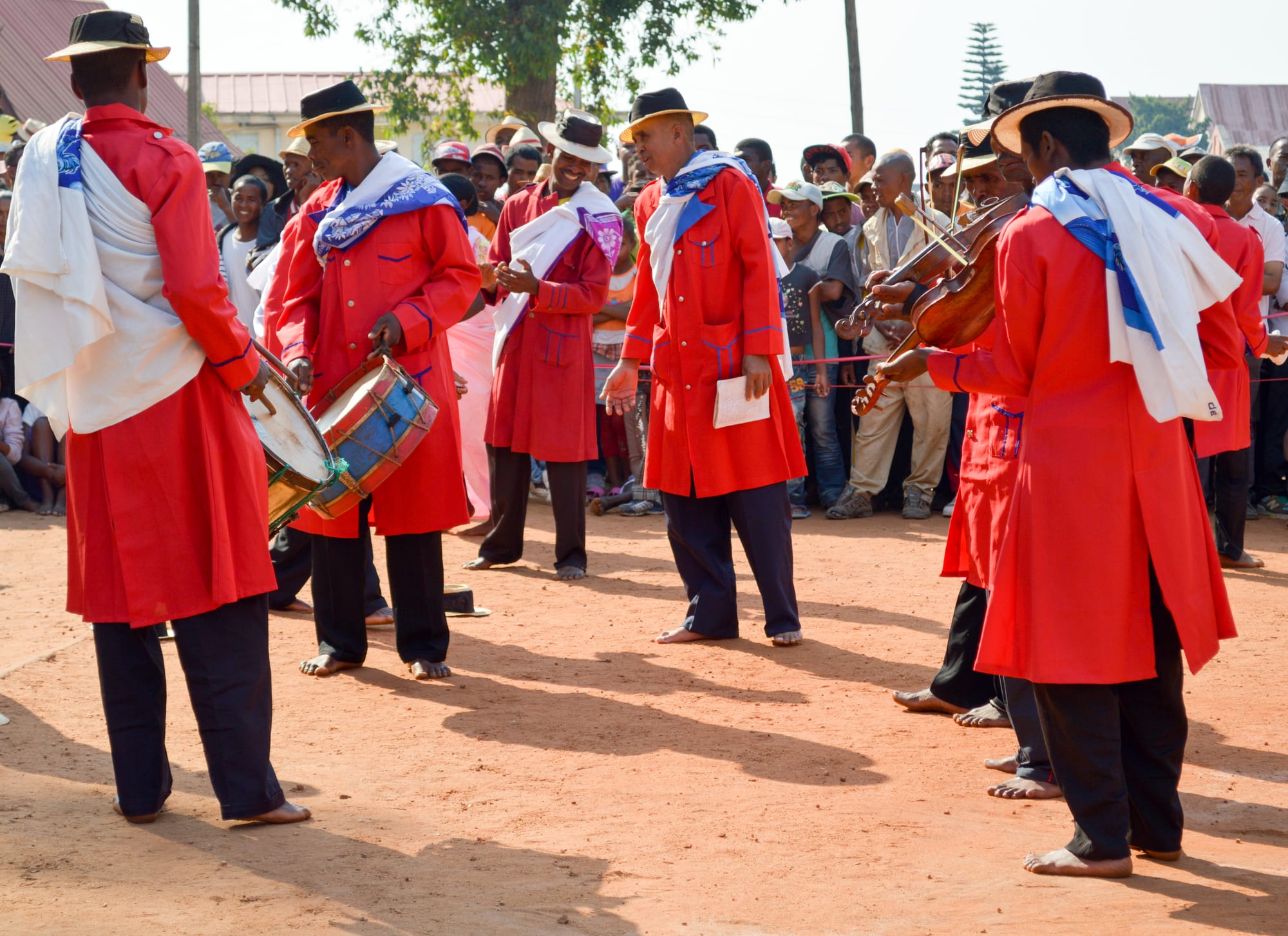
A brass band arrives at a family tomb with trumpets and drums, and the crowd waiting on the hillside breaks into dance. Relatives have travelled from across the island, some from overseas, and rolls of fine white silk lie ready to be cut into new shrouds. Inside the tomb, the remains of the family's dead are brought out, wrapped tightly in the fresh silk and carried round the tomb as the music plays and people talk, laugh and dance. Prayers are often said before the ancestors are returned to their resting place. To an outsider the scene can seem startling. To the family it is an act of love and duty, a reminder that in Madagascar the dead are not gone but remain part of the household, watching over those who come after them.
Faith, identity and values
Madagascar is, on paper, a Christian country. Figures cited by the US State Department put Christians at around 85 per cent of the population, with Muslims at about 3 per cent and followers of traditional Malagasy religion at about 4.5 per cent, though Muslim leaders give a much higher estimate for their own community. Muslims are concentrated along parts of the coast, Christians in the highlands and elsewhere, and both Eid al-Fitr and Eid al-Adha are national holidays. The same report notes something that numbers alone cannot show: it is common for people to move between religious identities or to combine them, and many hold Indigenous beliefs alongside their Christianity or Islam.
At the heart of those Indigenous beliefs are the razana, the ancestors. Recently departed generations are thought to keep an influence over every part of life, acting as intermediaries between the living and the divine and able to bless or harm their descendants. Honouring them is therefore both a spiritual matter and a practical one. Tombs are a prominent feature of the landscape, often built with more care and expense than houses, and they are treated as sacred places, royal tombs above all. The materials and styles vary from one people to another. The Mahafaly, for instance, bury their dead in square enclosures of stone or wood, decorated with the horns of sacrificed zebu and with carved wooden memorial posts called aloalo. The name comes from a word meaning intermediary or messenger, and the posts often carry figures or objects that evoke the dead person's life.
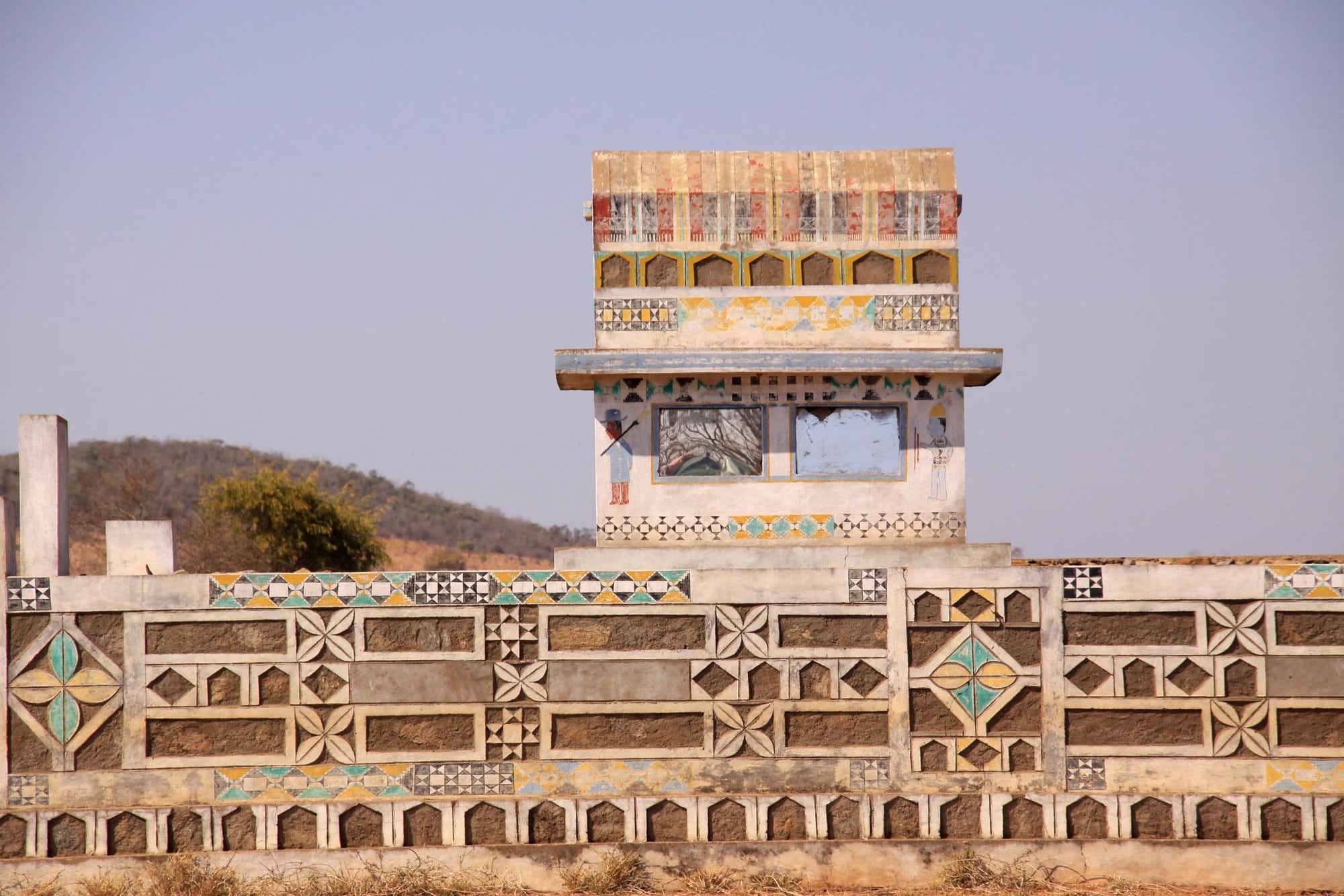
Alongside the ancestors runs the system of fady, or taboos. Fady can apply to a food, a day, a place, an animal, an action or an item of clothing, and they differ from region to region, between peoples, and even between families. Many Sakalava, for example, traditionally avoid eating pork, and in some places certain lakes and forests are off limits. Many fady are handed down by elders and explained through legends, and they persist long after anyone can remember their original purpose. Visitors are not expected to know them, but they are expected to respect them once told, and the UK government advises travellers to rural areas to ask guides or tour operators what applies locally.
The social value that binds all this together is fihavanana, which Madagascar's own government has described at the United Nations as the Malagasy art of living together, an aspiration to live in harmony, mutual respect and solidarity. That preference for harmony shows in the way people speak: a critical point is often made indirectly, through allusion and proverb, rather than head on.
Greetings and meeting people
Meetings, especially formal ones, begin with handshakes, and titles are observed. A small gesture carries real weight: loosely holding one's own right forearm with the left hand while shaking hands is a sign of respect, as is passing or receiving something with both hands, whether a document, a gift or a sum of money.
Malagasy is spoken across the whole island, while French, which became dominant during the colonial period, remains in use alongside it in government and education. Both languages appear in official publications, and French forms of address are common in formal settings. A few words of Malagasy, even just a greeting, are warmly received.
Nowhere is the Malagasy love of careful speech more visible than in kabary, the traditional art of oratory, now on UNESCO's list of intangible cultural heritage. A kabary is a poetic speech delivered before an audience, rich in proverbs, maxims, rhetorical figures and wordplay, and often performed as a formal dialogue between two orators. Once used by leaders to inform their communities about matters of governance, it is now part of festivities, funerals, official ceremonies and popular events. A kabary may be brief or may last for hours, depending on the occasion. It was traditionally the preserve of older men of standing, though younger speakers and women increasingly take part. The skill it prizes, making an important point indirectly and gracefully, shapes everyday conversation too.
Hospitality and being a guest
A guest in a Malagasy home is shown respect, and in return is expected to show it. At family meals, elder men have traditionally been served first and given the choicest portions, with an exception made for honoured guests, who may find themselves served ahead of everyone. Following the host's lead on where to sit and when to begin is the safest course. Food is offered and accepted with care, and using both hands to give or receive something, whether a plate, a gift or a small payment, is a quiet mark of good manners.
Food is also one of the areas where fady matter most. A household or a whole village may avoid a particular meat, and a guest who asks politely about local restrictions, rather than assuming, is showing exactly the right kind of consideration. If a host explains that something is fady, it is best simply to accept it without questioning the reason.
Hospitality expands on important occasions. For ceremonies such as burials, reburials, circumcisions, the building of a tomb, a child's first haircut or the presentation of a newborn, extra meat is added to the pot and at least one zebu is often sacrificed. Being able to provide an animal for sacrifice is regarded as the ultimate show of prestige, and the shared meal binds the family, its guests and its ancestors together in the same celebration.
Festivals and life's big moments
With a Christian majority, the church calendar shapes much of the year. Muslim communities observe Ramadan and the two Eids, which the state recognises as national holidays and whose dates it sets in consultation with Muslim leaders. The biggest secular date is Independence Day on 26 June, commemorating the end of French rule in 1960 and marked with a grand military parade in the capital, and hiragasy troupes appear at this and at festive and cultural events of every kind.
Many of life's milestones are timed with the help of traditional practitioners who act as diviners, healers or astrologers, and who are consulted to choose auspicious dates. A newborn is traditionally kept inside the house for a time before a small ceremony marks the child's first "coming out". A child's first haircut and, for boys, circumcision are also marked with ceremonies on dates chosen by an astrologer. Marriage can be traditional, civil, religious or a combination of the three, and among some peoples a prospective spouse's family background is looked into carefully before a match is agreed, and an astrologer is then consulted to set the date.
Death brings the most elaborate customs of all. Mourners are careful about colour: in some communities red clothing is fady at a funeral, even though it may be quite usual at a sacrifice or when asking the ancestors for a blessing. Among the highland peoples, the famadihana, or turning of the bones, is usually held every five to seven years and is often described as the most important celebration in a family's life. It may last several days, involves music, dancing and generous hospitality, and can take years of saving, since the family must feed its guests, hire musicians and buy new silk shrouds. It serves as a chance to speak to the ancestors, to tell them the family's news, and to reaffirm that death is a change of state rather than an end.
Arts, crafts and music
Hiragasy, on UNESCO's list of intangible cultural heritage, is the best-loved of the traditional performing arts. It combines song, dance and speech, and a performance, often a contest between two troupes in a public space, moves through drumming, greetings, storytelling, dance and folk songs. The lyrics carry moral, civic and cultural messages. In the royal era hiragasy was used to carry messages between rulers and people, and after the spread of Christianity it also became a vehicle for religious faith. It is still passed down within families, with children following their parents on tour and joining the performance as they grow.
Music runs through Malagasy life more widely. The valiha, a tube zither made from a length of bamboo with strings running around it, is regarded as the national instrument and was traditionally used to call on the ancestors during ceremonies. Tsapiky, a fast, high-energy style that mixes electric guitars, drums and accordions with the small kabosy guitar and the marovany zither, is played at weddings, funerals and festivals and was added to UNESCO's list as well.
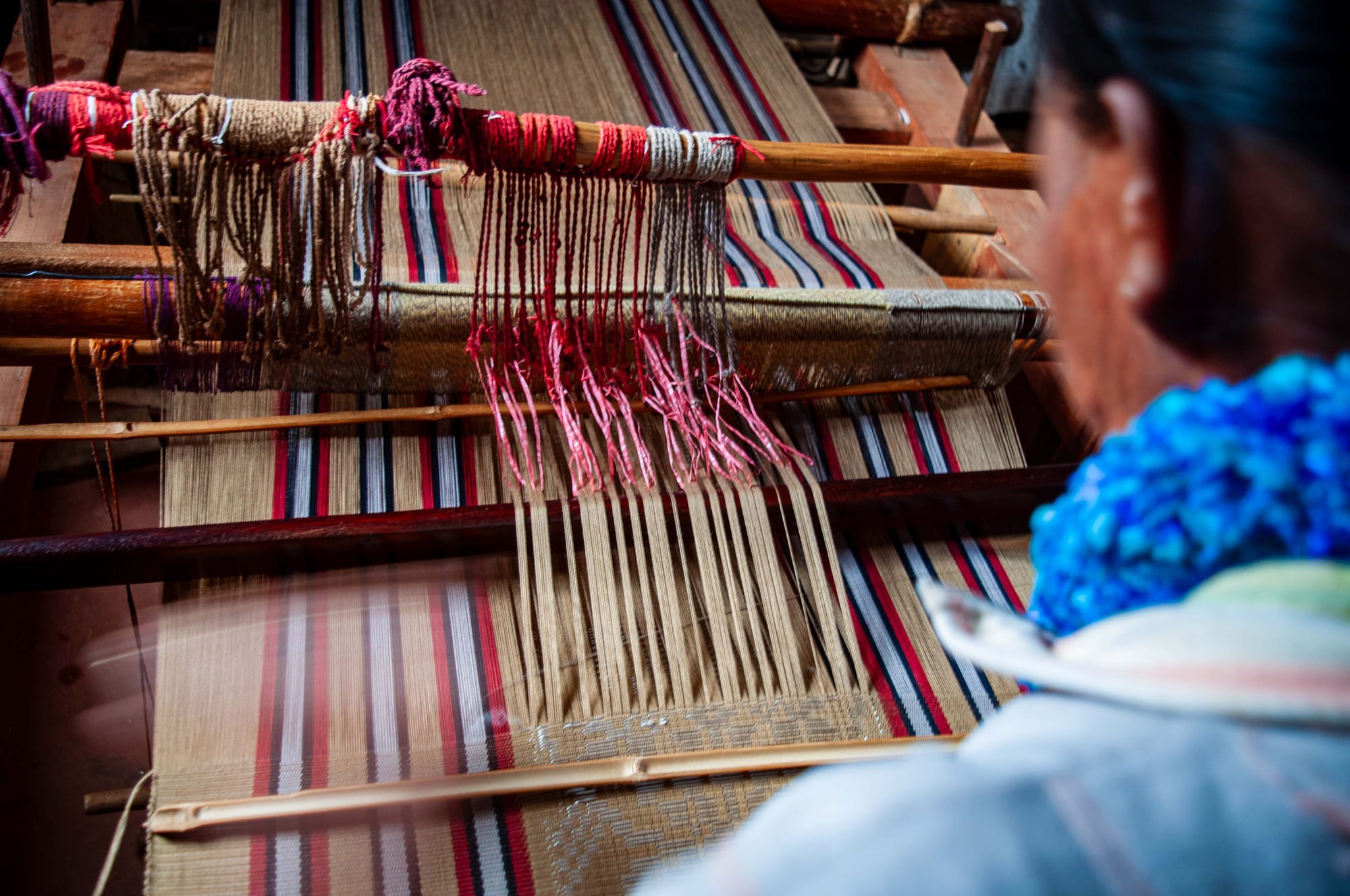
Crafts are made from wood, leather, horn, metal, stone, clay, cloth and even feathers, and the most emblematic of them is the lamba, a length of cloth wrapped around the body. The lamba has practical and ceremonial roles at once: a white wrap is draped over other clothes by men and women alike for special occasions, while the finest white silk is bought for the lamba mena, the shroud in which the ancestors are wrapped. That link between cloth and the dead gives weaving a significance far beyond fashion.
Dos and don'ts for visitors
- Do ask a guide or host what is fady in a place before swimming, eating, or entering a forest, lake or sacred site, and accept the answer without argument.
- Don't point at a tomb with an extended finger; many Malagasy use a clenched fist or an open hand instead.
- Do shake hands in greeting, and show extra respect by holding your right forearm with your left hand or by giving and receiving with both hands.
- Do follow the host's lead at meals, where elder men have traditionally been served first unless a guest is being honoured.
- Don't wear red to a funeral, where in some communities it is considered fady.
- Do treat an invitation to a famadihana as an honour, dress respectfully and join the dancing if asked.
- Don't collect, buy or export protected animals, plants or rosewood, which is prohibited by law.
What to take away
In Madagascar, respect runs in two directions at once, towards the living elders in the room and towards the ancestors in the tomb, and visitors who ask before they act will find that courtesy readily returned.