Attractions & Natural Wonders · Madagascar
Madagascar: Seven Attractions and Natural Wonders
An island that split from Africa 150 million years ago and grew its own world — giant baobabs, a forest of stone spikes, and lemurs found nowhere else on earth
By Worldlore Editorial · 9 September 2026
An island continent of its own
Madagascar split from the African mainland around 150–160 million years ago and from India about 90 million years ago, and its plants and animals evolved in isolation ever since — roughly 90 percent of its wildlife exists nowhere else on earth. It is the world's fourth-largest island, home to about 30 million people and a culture that mixes African, Southeast Asian (Malagasy is an Austronesian language), and Arab influences. Roads are slow and the country is poor, but the wildlife and landscapes reward the effort.
The seven below span the baobab country of the west, the rainforest east, and the capital in between. The dry season (April to November) is the best time to travel; cyclones can hit the east coast between December and March.
1. The Avenue of the Baobabs
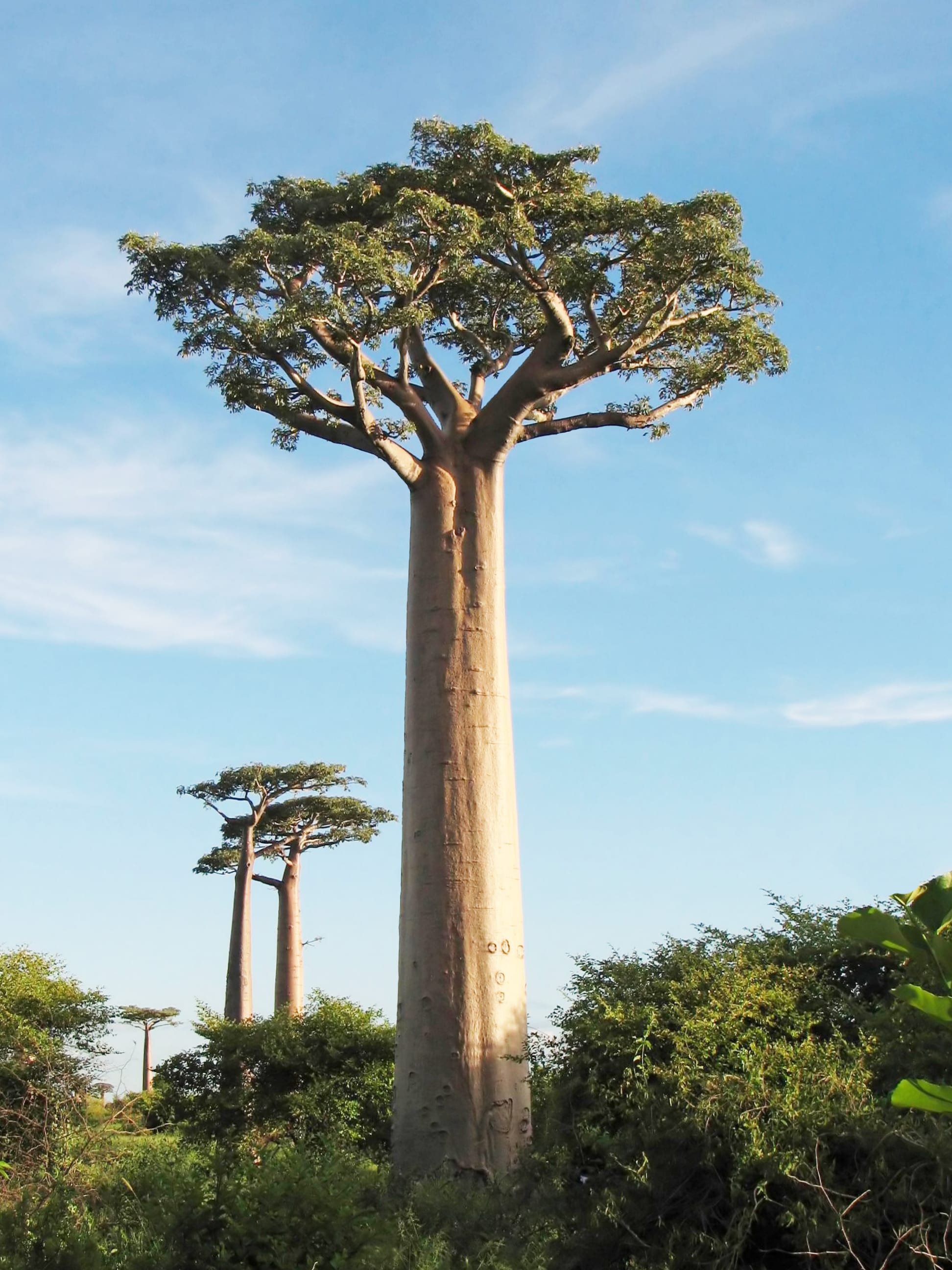
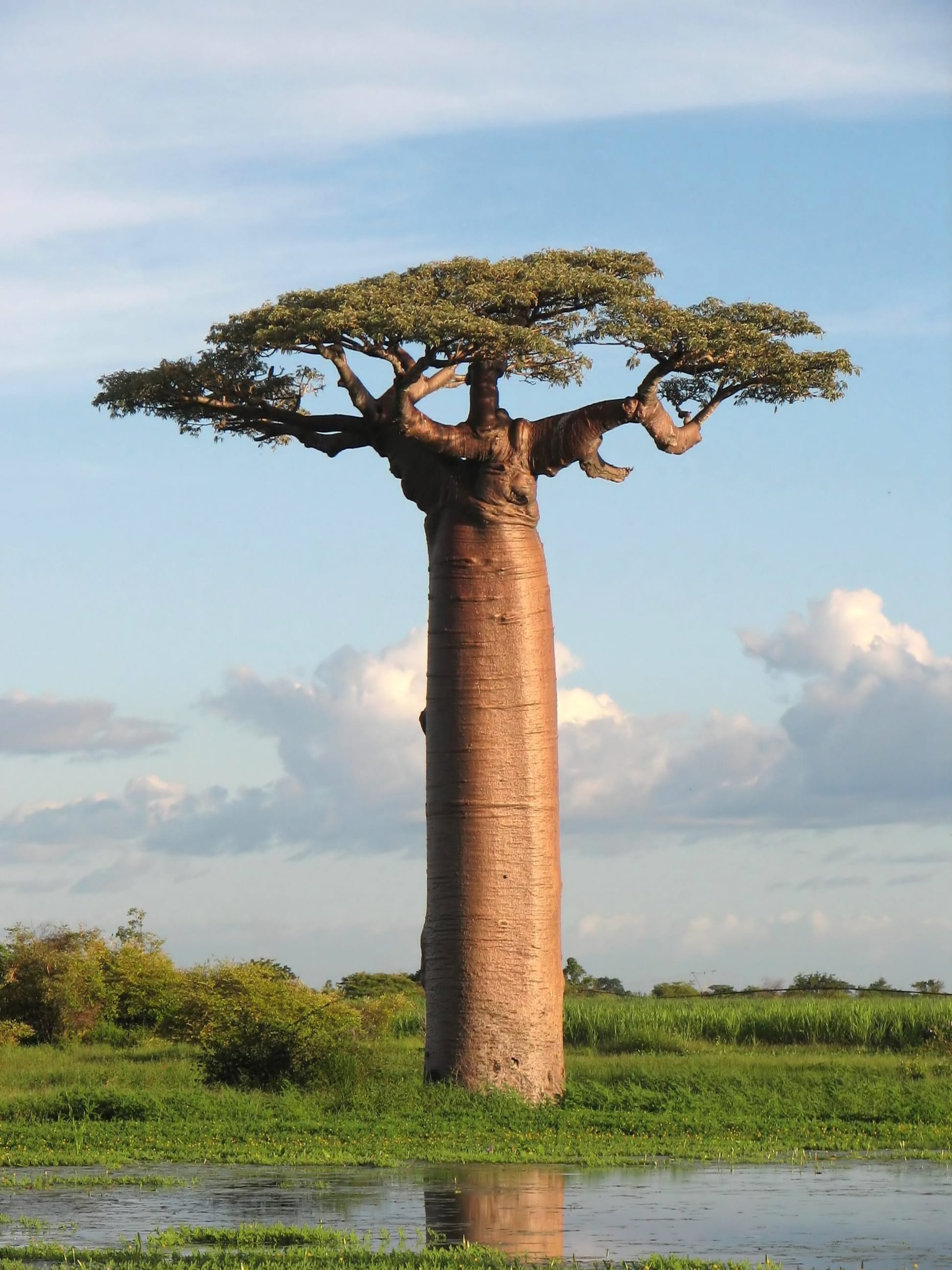
Near Morondava on the west coast, a red dirt road runs through a stand of Grandidier's baobabs — smooth, swollen trunks up to 30 metres tall and 800 years old, all that remains of a denser forest cleared for farmland over centuries. Sunset and sunrise, when the trees silhouette against the sky, are when it is photographed and visited by nearly everyone who comes.
It is a bumpy few hours' drive from Morondava, itself reached by a long road or a domestic flight from Antananarivo.
2. Tsingy de Bemaraha
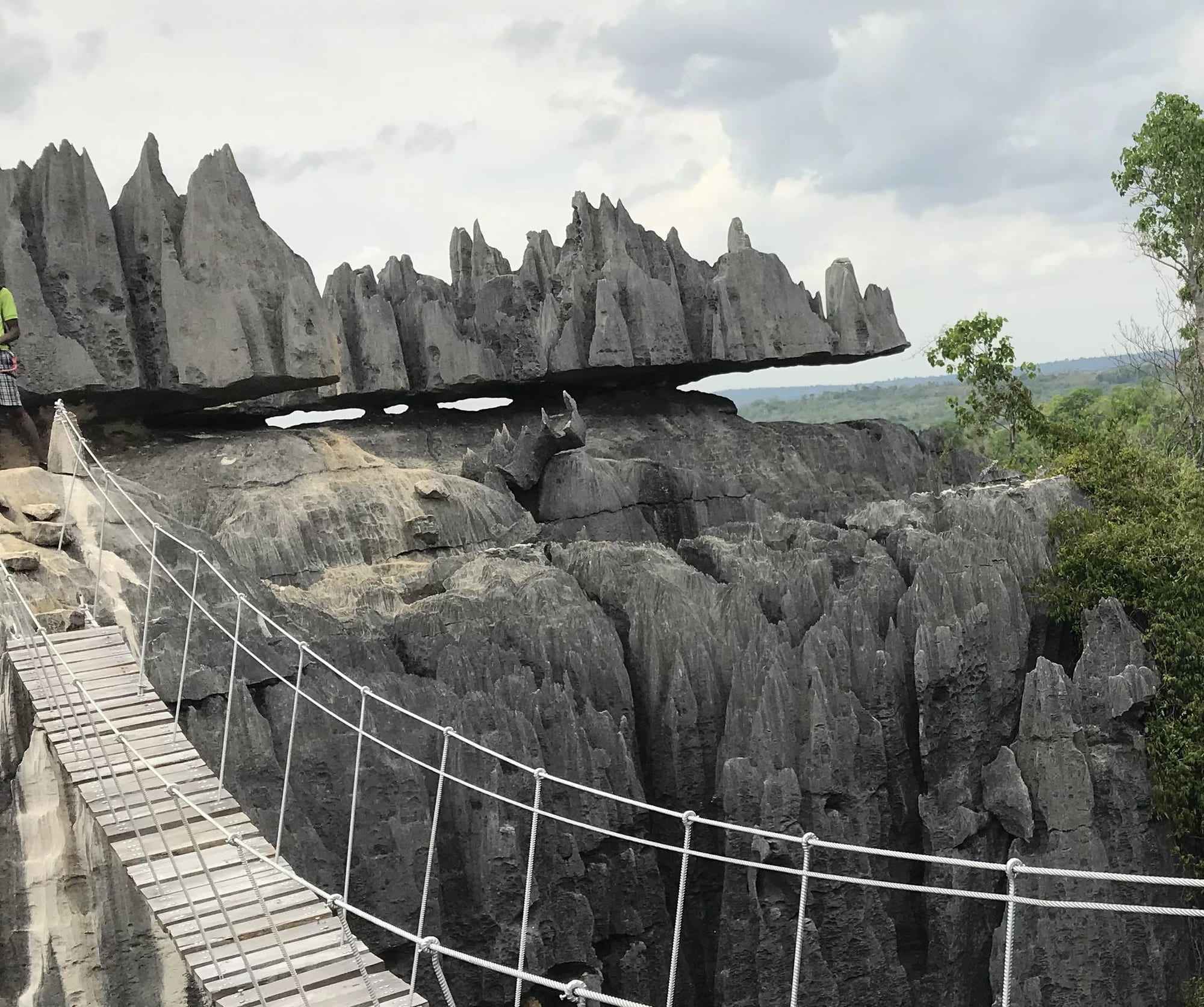
The Tsingy de Bemaraha is a "stone forest" — a vast plateau of limestone eroded by water into a maze of razor-sharp pinnacles, canyons, and caves, its name meaning "where one cannot walk barefoot". Suspension bridges and via-ferrata routes let visitors cross between spires with harnesses and guides; the reserve also protects rare lemurs adapted to this harsh terrain. It is a UNESCO World Heritage Site.
It is remote and reached by a rough multi-day drive or charter flight from Morondava, usually as part of a dedicated western circuit.
3. Andasibe-Mantadia
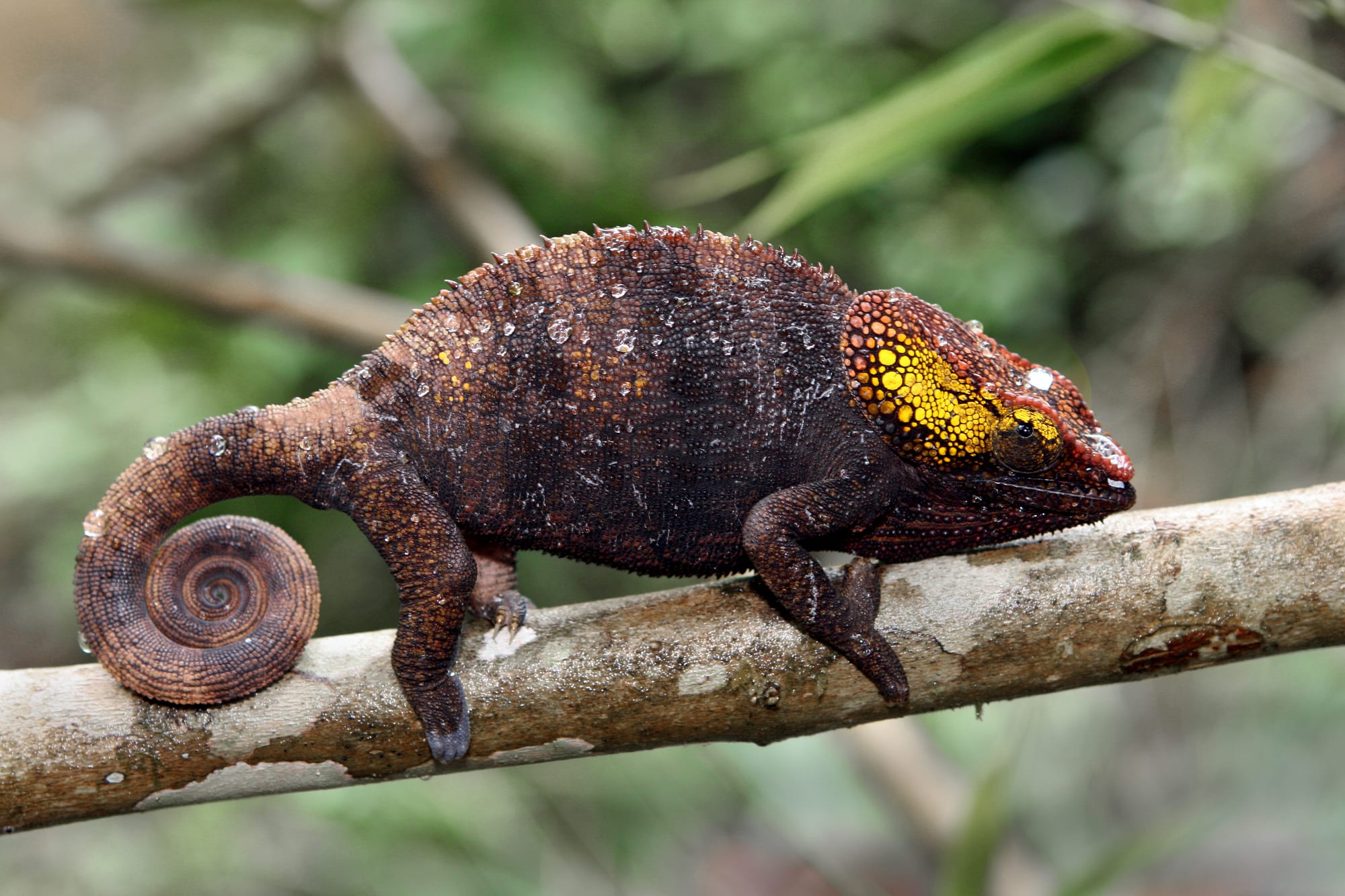
Andasibe-Mantadia, in the eastern rainforest a few hours from the capital, is the easiest place to see and hear the indri — the largest living lemur, whose haunting, siren-like call carries for kilometres through the forest at dawn. The park is also thick with chameleons (including some of the world's smallest and largest species), frogs, and orchids, and forms part of the UNESCO-listed Rainforests of the Atsinanana.
It is the standard first stop for most Madagascar itineraries, an easy add-on to Antananarivo.
4. Isalo National Park
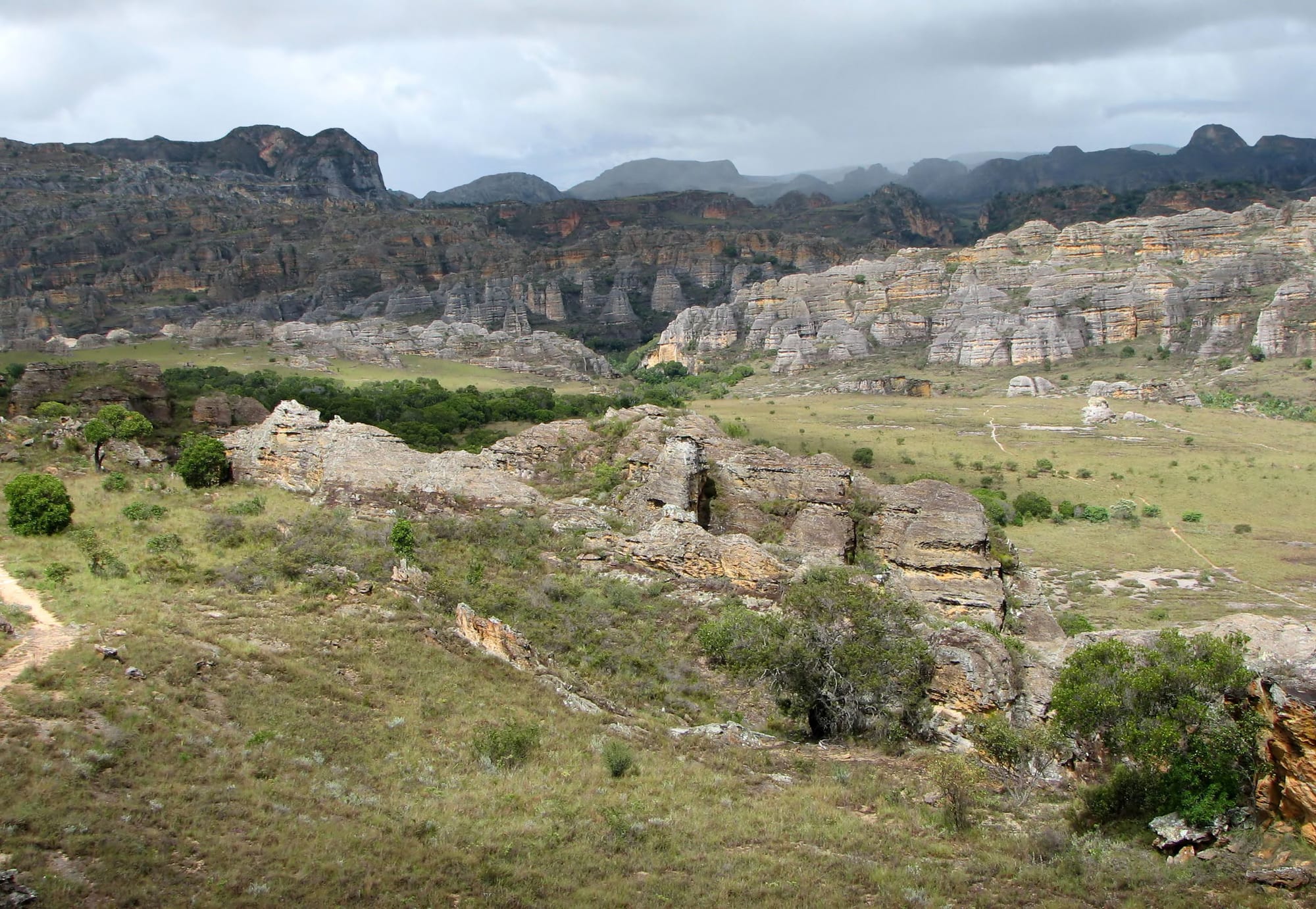
Isalo, in the arid south, is a landscape of eroded sandstone massifs, canyons, and natural swimming pools, closer in feel to the American Southwest than to tropical Madagascar. Its trails lead to the "Piscine Naturelle" pool for a swim, past ring-tailed and brown lemurs and the endemic "Isalo" chameleon, through country grazed by Bara cattle herders.
It sits on the main road between Antananarivo and Toliara (Tuléar), a common stop on a south-of-the-island loop.
5. The Anja Community Reserve
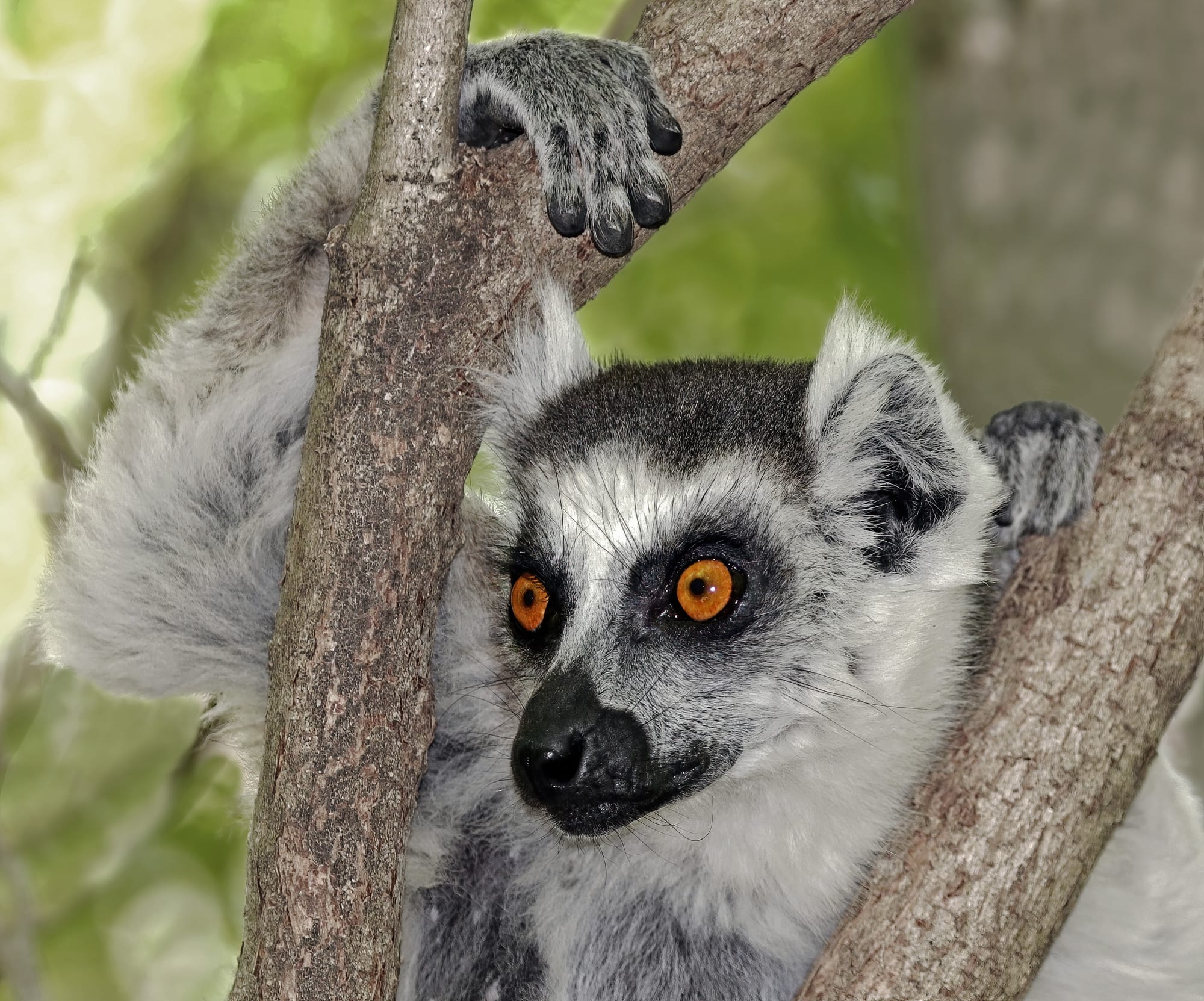
Anja, a small community-run reserve near Ambalavao in the highlands, is one of Madagascar's conservation success stories — a patch of forest among granite boulders that has become the most reliable place in the country to see wild ring-tailed lemurs at close range, alongside chameleons and, in the surrounding rock, ancestral burial caves of the Betsileo people.
Guided walks are short and easy, run entirely by the local community that protects the reserve.
6. Nosy Be and the northern islands
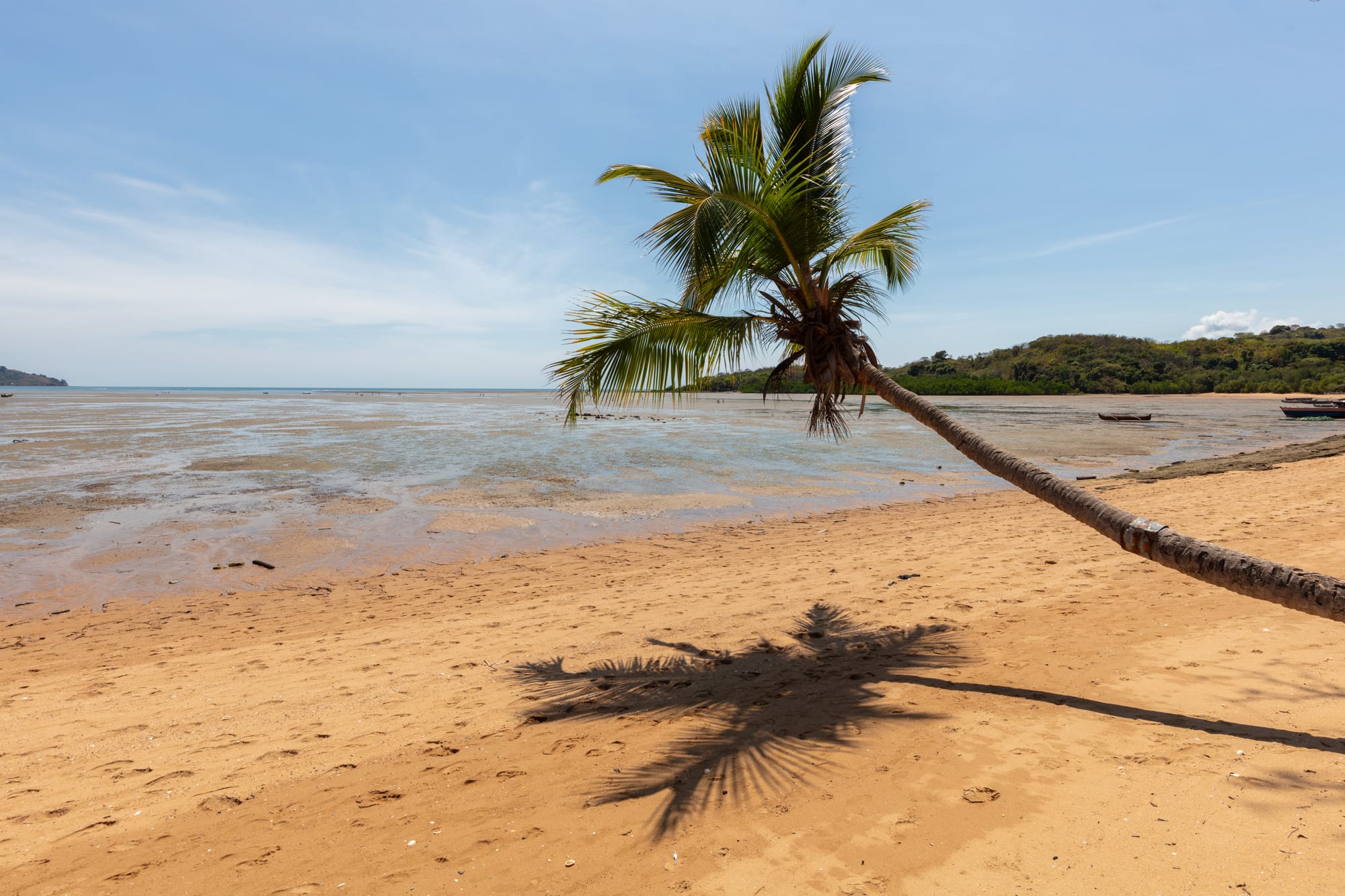
Nosy Be, off the northwest coast, is Madagascar's main beach resort — warm, calm water, ylang-ylang plantations, and easy boat trips to smaller islands like Nosy Komba (lemurs) and Nosy Tanikely (a marine reserve for snorkelling). Further afield, the tiny sandbank island of Nosy Iranja, linked to a larger island by a sandbar exposed at low tide, is one of the most photographed beaches in the country.
It has its own airport, making it the easiest way to combine wildlife with beach time.
7. Antananarivo
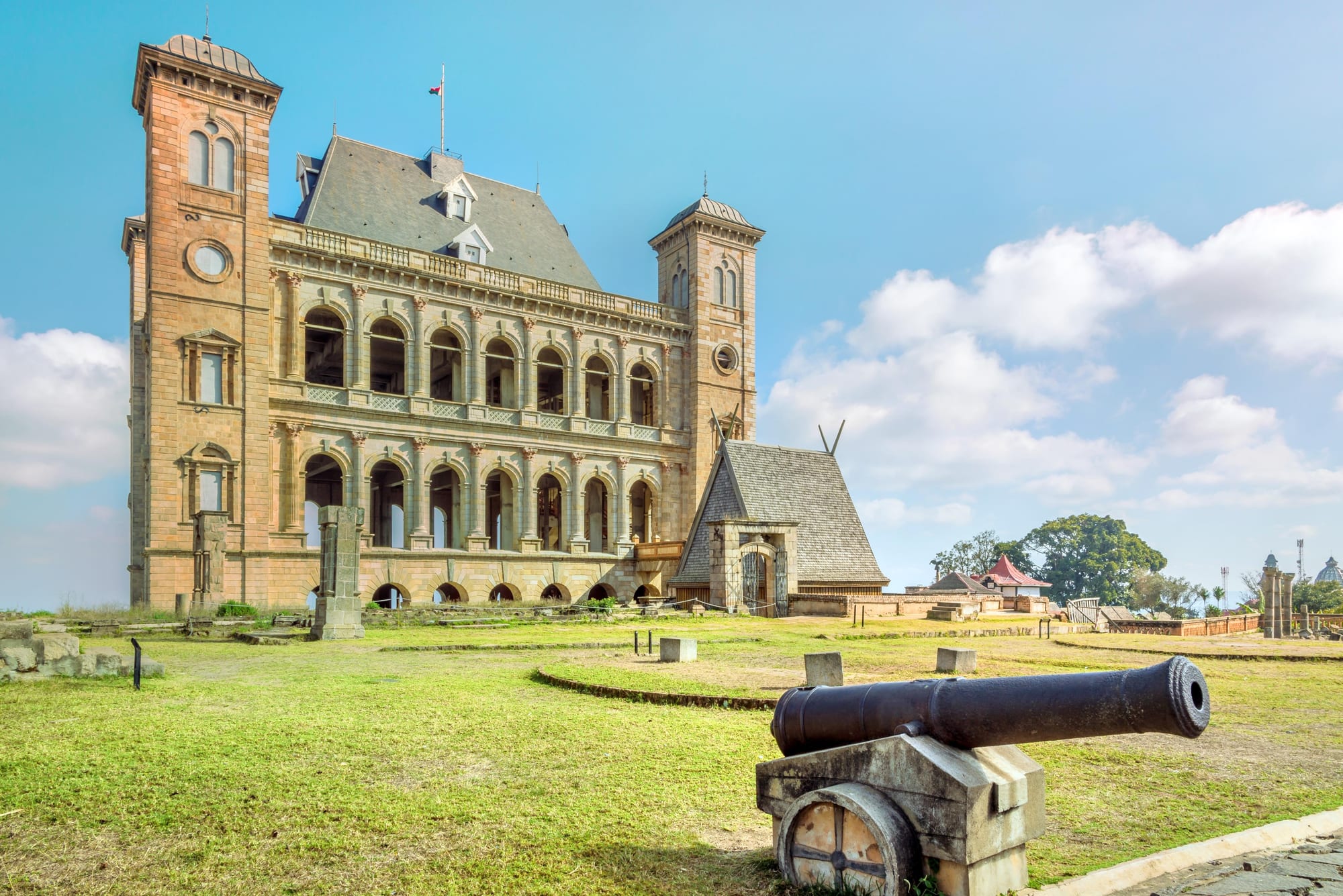
Antananarivo ("Tana"), the hillside capital, has a French colonial lower town and a warren of steep lanes climbing to the Rova, the royal palace compound of the Merina kings and queens who ruled much of the island before French colonisation — burned in 1995 and since partially rebuilt. The Andravoahangy and Analakely markets, the artificial Lake Anosy, and the view over the terraced rice paddies that ring the city fill out a stay.
Most trips pass through here at the start and end, as the main international gateway.
Madagascar is a big country with slow roads, so trips usually pick a region rather than trying to circle the island. A common two-week route combines Antananarivo and Andasibe in the east with Isalo and the Avenue of the Baobabs in the west or south; the Tsingy and the far north are better suited to a dedicated, longer trip.