Daily Life · Macau
Macau: The World's Most Crowded Address
Households packed into some of the densest high-rises on Earth, a workforce that leans heavily on non-resident workers, and an economy so tied to gaming that the government pays residents a cash share each year
By Worldlore Editorial · 30 September 2026
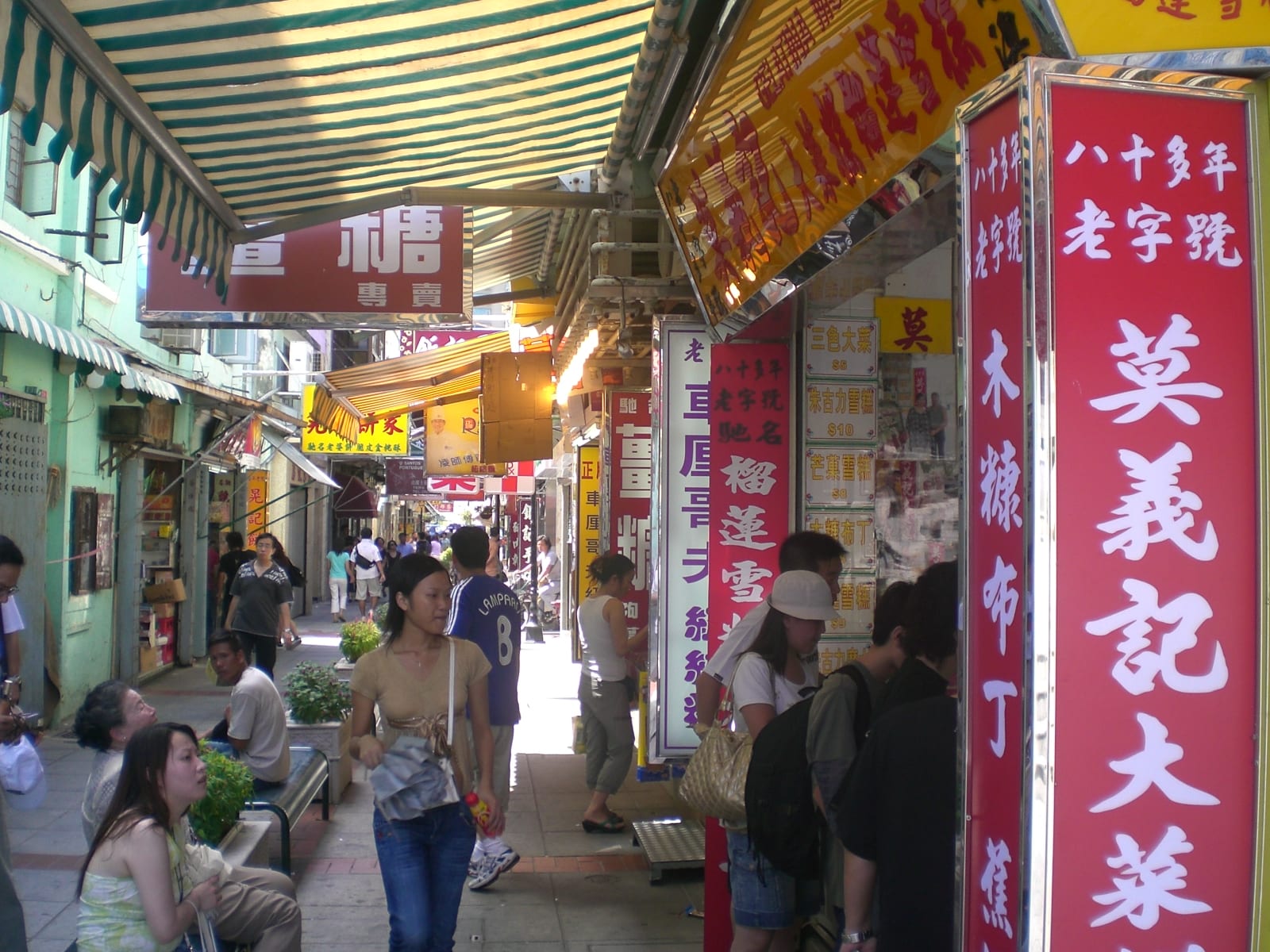
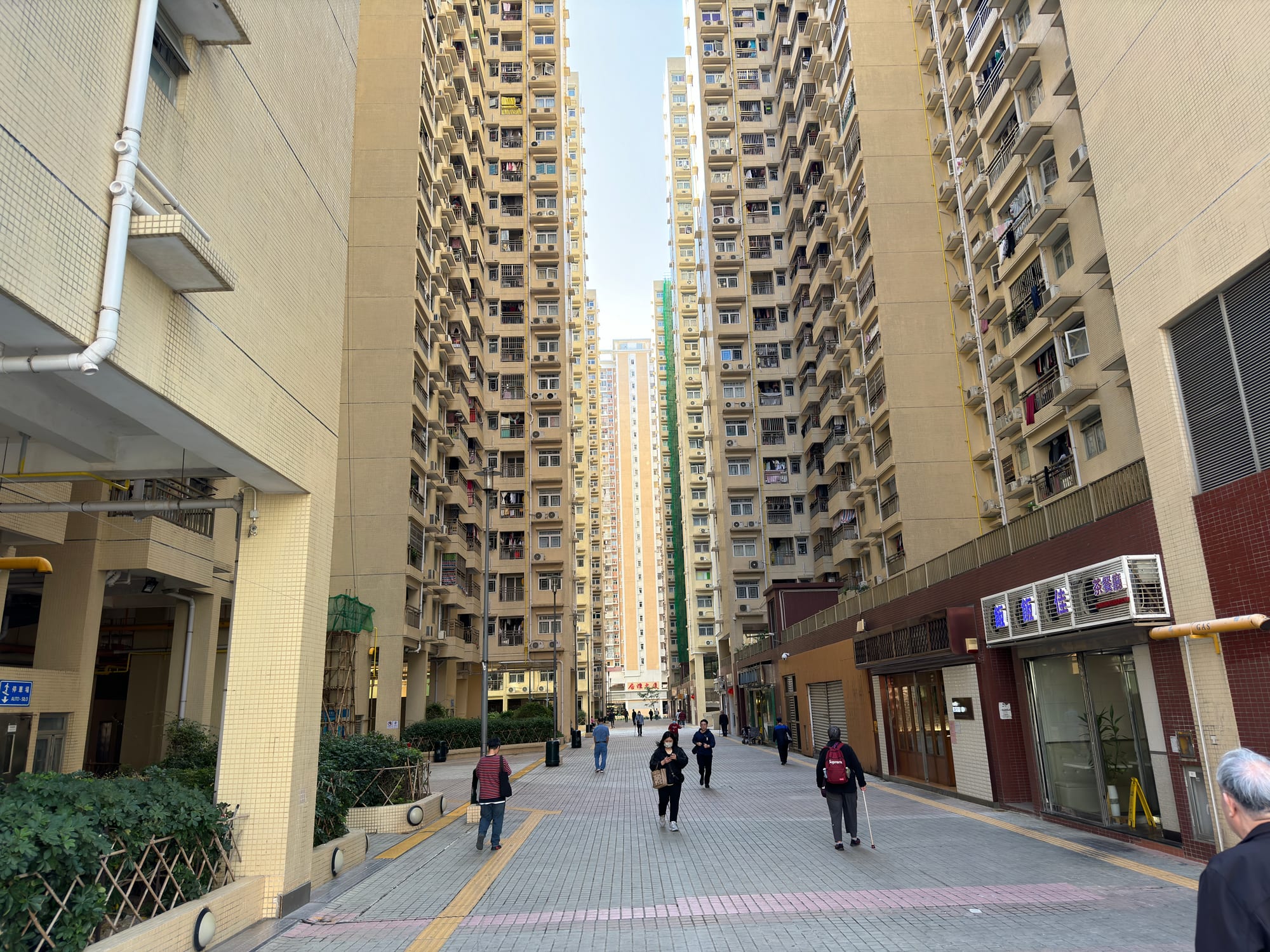
Macau packs roughly 686,000 people into about 33 square kilometres, a density of over 20,000 people per square kilometre that makes it one of the most crowded places on Earth, and daily life reflects that plainly: tall, tightly packed housing blocks, narrow streets, and a territory small enough to cross end to end in well under an hour. Underneath the density sits an economy almost entirely dependent on gaming and tourism, which funds an annual cash payout to residents but also draws in a very large workforce from outside Macau to keep the casinos, hotels and building sites running. An ordinary day here is shaped less by any single tradition than by these two plain facts: not enough space, and an economy built overwhelmingly around one industry.
Family and home life
Most Macau households live in compact apartments in high-rise blocks, private or public housing alike, since land is scarce and expensive nearly everywhere in the territory. Public housing estates such as Seac Pai Van, on the outlying island of Coloane, house a significant share of residents in dense clusters of towers built specifically to stretch the territory's very limited land. Extended families often live near one another rather than under one roof, since apartments themselves are generally too small to comfortably house more than one nuclear family, though grandparents helping with childcare remains common, as it is across the wider Cantonese-speaking region. The population is ageing and ethnically mixed, with a small but historically significant Macanese community of joint Portuguese and Asian descent alongside the Cantonese majority.
Work, school and the rhythm of the day
Macau's labour market runs close to full employment, with an unemployment rate of around two per cent and a minimum wage of MOP 7,280 a month from 2026, but the workforce that keeps the territory running is only partly local. As of mid-2025, roughly 182,000 non-resident workers were registered in Macau, equivalent to more than a quarter of the territory's entire population, filling jobs across construction, hotels, restaurants and a share of gaming-industry roles. Median monthly pay across all employees ran to roughly MOP 18,000 in 2024, a figure that sits well above most of the surrounding region and are underwritten almost entirely by gaming and tourism revenue. Schooling is free for 15 years at schools in the government's free education network, and given the territory's Portuguese and Chinese administrative history, Chinese and Portuguese are both official languages, though Cantonese is what is spoken in the vast majority of classrooms and households.
Community life and public spaces
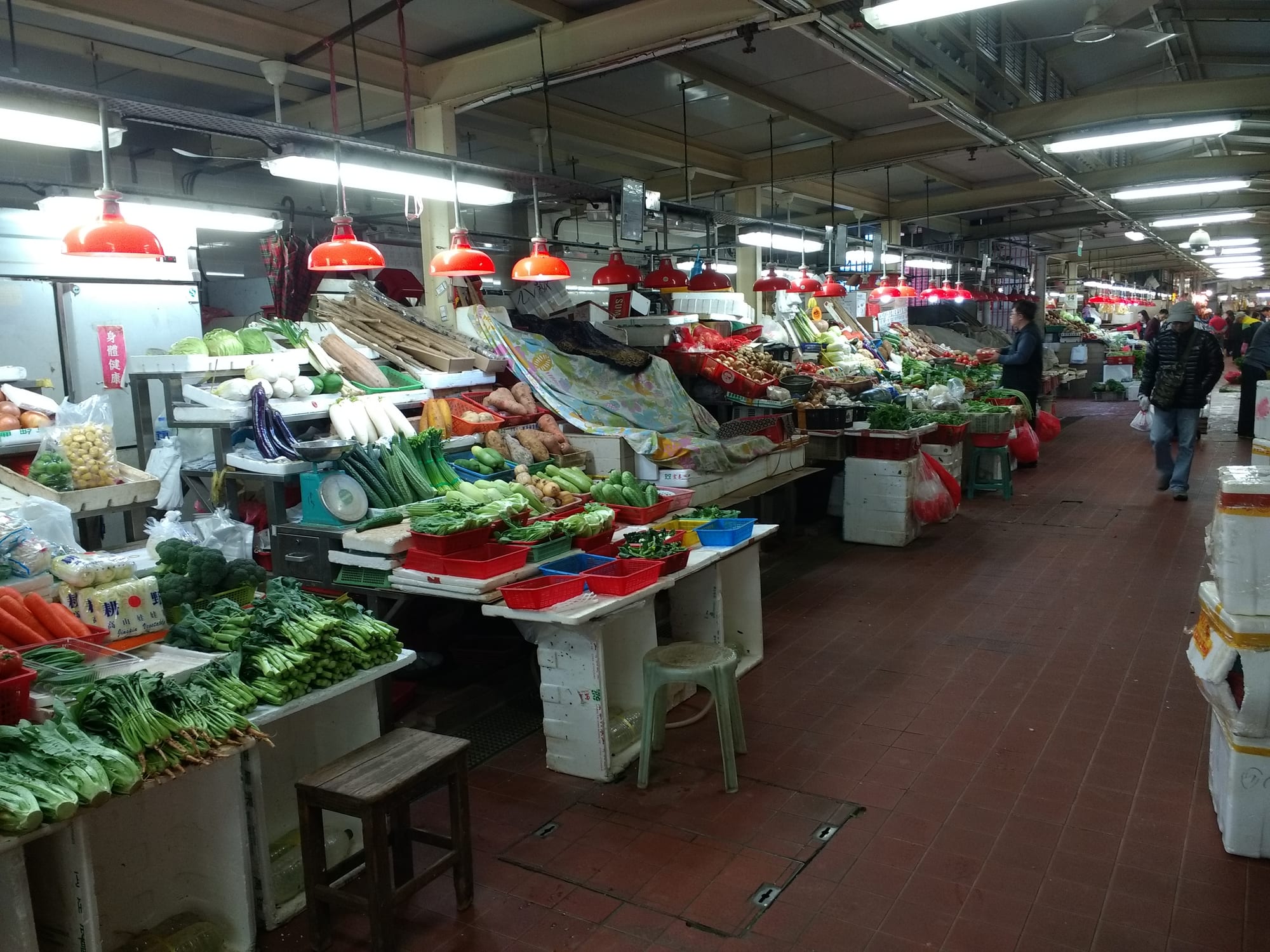
Wet markets remain a genuine daily fixture for many households despite Macau's ultra-modern casino skyline: the Red Market on the peninsula, a distinctive red-brick building dating to 1936, is one of the busiest, selling fresh vegetables, meat and fish much as it has for generations. Public buses and the newer Light Rapid Transit, which mainly serves Taipa and Cotai, carry the bulk of everyday local transport, while free shuttle buses run by the casino resorts, technically aimed at guests, are also used by many residents as a practical, no-cost way to get between the ferry terminals, the border and the resorts. Rua do Cunha, a narrow pedestrian street in Taipa Village lined with bakeries and gift shops, functions as an everyday gathering and shopping strip as much as a destination for visitors.
Free time and weekends
Weekend life often means a family meal, a walk through one of the historic centre's squares, or, for those with the means and paperwork, a short trip across the border into mainland China, a routine outing rather than a special occasion given how closely Macau is now linked to neighbouring Zhuhai. Card games, particularly mahjong, remain a common way for extended family to spend time together, and the territory's dense cluster of cinemas, malls and restaurants, many of them inside the casino resorts themselves, doubles as ordinary leisure space for residents, not just a draw for visiting gamblers.
A visitor's ordinary day
Macau is compact and easy to get around: the historic centre is walkable end to end, and the free casino shuttle buses, technically for hotel and casino guests, are widely used as an unofficial transit network between the ferry terminals, the border crossing and the main resort areas. Hong Kong dollars are generally accepted at par with the local pataca in shops, and cards and mobile payment are standard in hotels, restaurants and casinos, so carrying much cash is rarely necessary. Crossing into mainland China or Hong Kong from Macau is always a separate border formality, even for a short trip, so it is worth checking entry requirements before planning a same-day crossing.
What to take away
An ordinary day in Macau plays out inside two hard facts that shape almost everything else: there is very little space for a growing population, and there is one industry, gaming, whose revenue funds much of what makes daily life here as comfortable as it is.