Culture & Customs · Macau
Macau: Temple Smoke and Church Bells
A Cantonese city with four and a half centuries of Portuguese presence, where sea goddesses and Catholic saints keep parallel calendars, gifts are offered with both hands, and a small Eurasian community keeps its creole alive on stage
By Worldlore Editorial · 30 September 2026
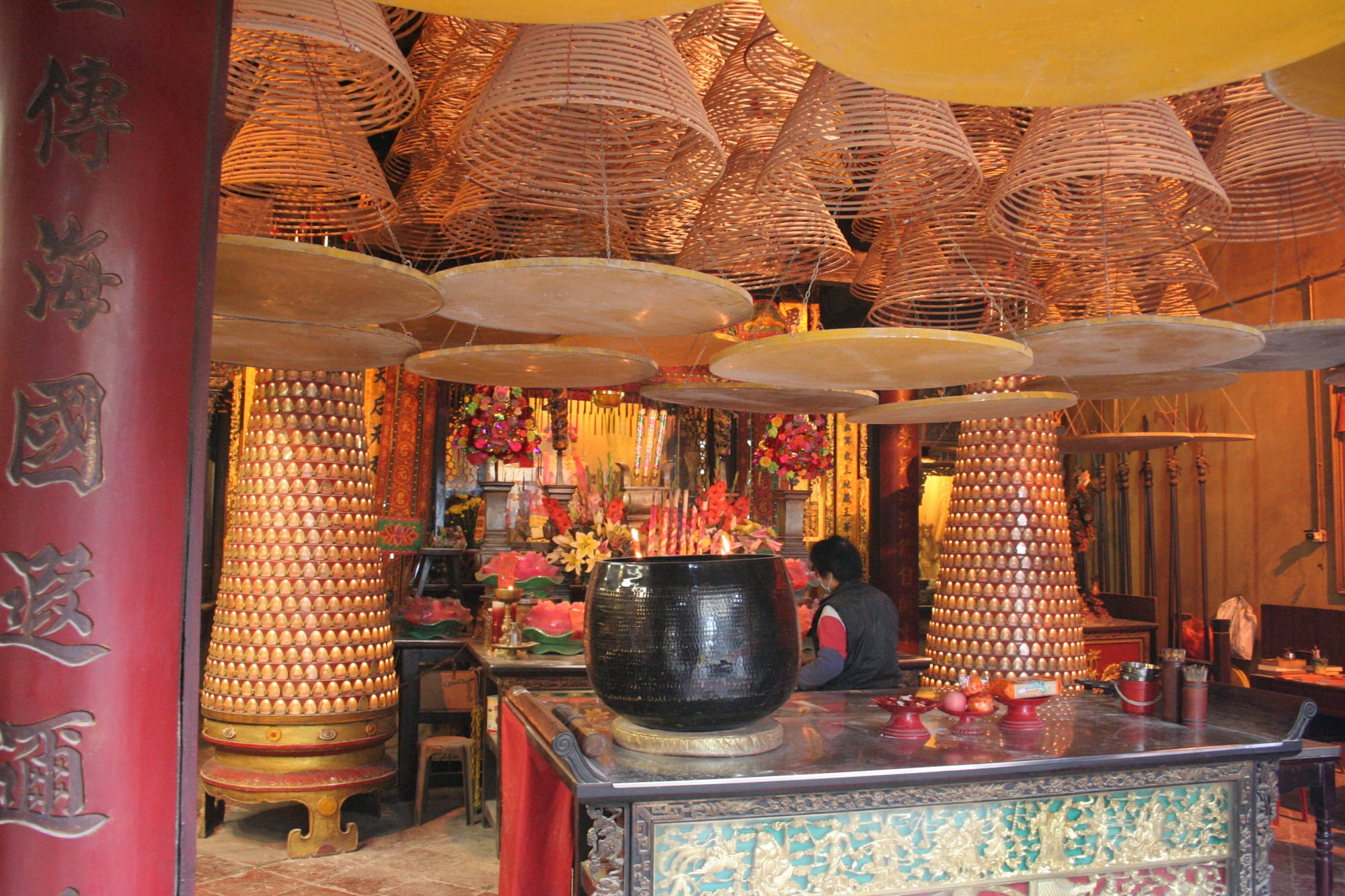
On the twenty-third day of the third month of the lunar calendar, A-Ma Temple fills with smoke. Great spirals of incense hang from the roof, ornate lanterns are strung up, and for several days banquets are held and Cantonese opera is performed in honour of the sea goddess who protected the fishermen of this coast. Not far away, in the same small city, Catholic parishes carry statues of Christ and the Virgin through the old streets in processions that have been held for generations. Macau's culture is built on that doubleness: overwhelmingly Chinese and Cantonese-speaking, yet shaped by more than four centuries of Portuguese presence, with temple and church each keeping its own feasts.
Faith, identity and values
Portugal administered Macau from the sixteenth century until 20 December 1999, when it became a Special Administrative Region of the People's Republic of China, with its own Basic Law and with both Chinese and Portuguese as official languages. The great majority of residents are Cantonese-speaking Chinese. Alongside them live the Macanese, a small community of mixed Portuguese and Asian descent that grew over the centuries as Portuguese seafarers married local women from the places along their route, and which developed its own creole language, Patuá, and its own cuisine.
Religious life is plural and relaxed about boundaries. According to the Macao government's yearbook, most people practise Buddhism or Chinese folk religion, often mixing Buddhist, Confucian and folk elements without seeing any contradiction. Catholics make up about five per cent of the population, nearly half of them foreign domestic workers and other expatriates.
Chinese popular religion is woven into the city through its temples and the gods who look after particular needs. A-Ma is honoured as the protector of fishermen and seafarers. Tou Tei, the earth god, guards the health and well-being of residents, and many other deities, from the child god Na Tcha to Kun Iam, Kuan Tai and Pak Tai, have their own temples and festival days. The beliefs and customs of A-Ma, Na Tcha and Tou Tei are now on Macao's official list of intangible cultural heritage, as is the carving of wooden religious figures for temples and household altars.
The temples are working places of worship rather than museums. The city has dozens of them, and at the busiest, worshippers carry lit joss sticks from altar to altar, bowing before each. During the A-Ma Festival the goddess is ceremonially invited out to watch the opera staged in her honour and then escorted back to her temple as a mark of respect.
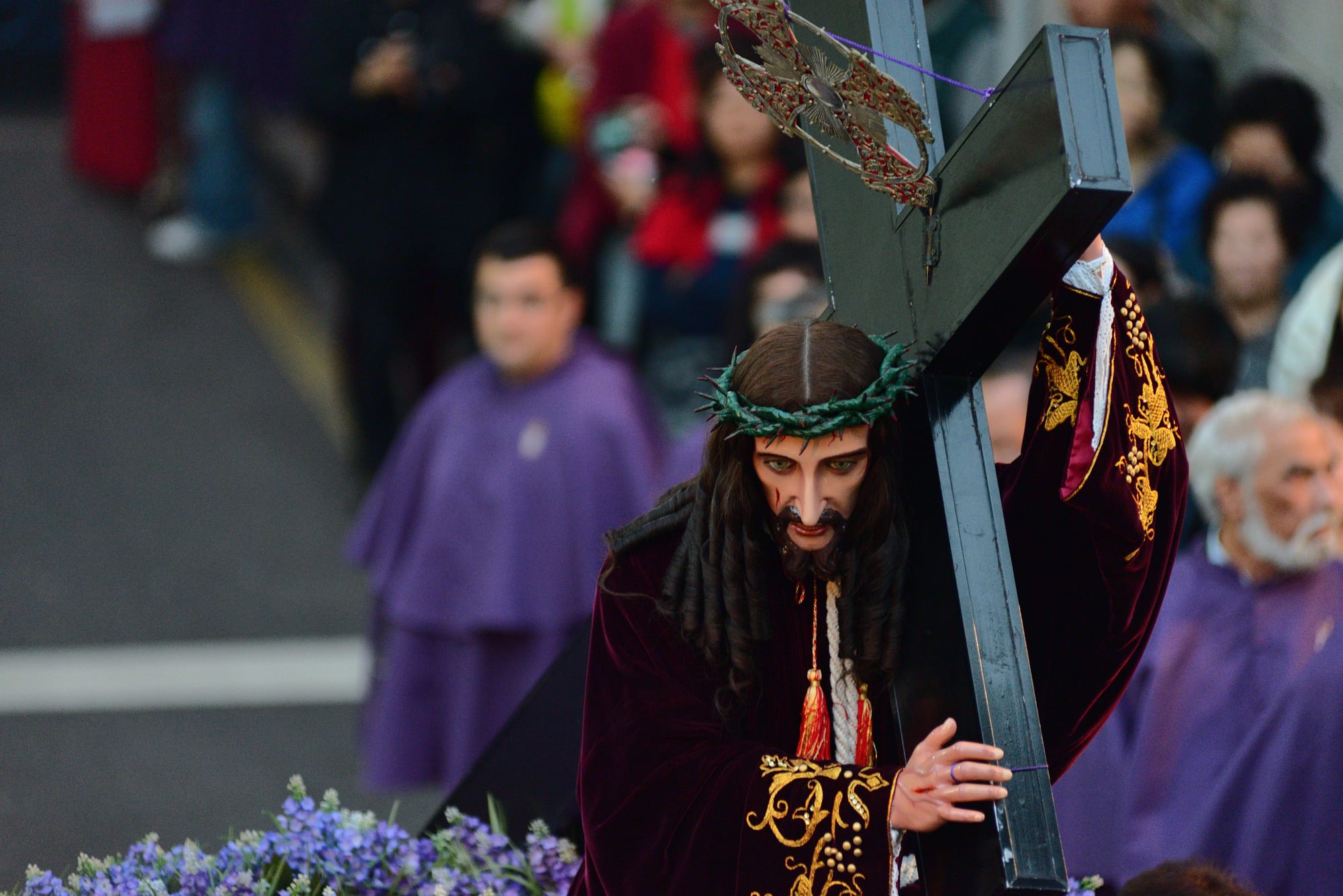
Catholicism is Macau's other inheritance. The churches of the historic centre date from the Portuguese era, and processions kept since colonial times still bring the Catholic calendar into the streets.
Everyday manners reflect a strong sense of public courtesy. The tourism office asks visitors to talk in a gentle voice at scenic spots, not to jump queues, and to treat cultural and historical relics with care. As elsewhere in the Cantonese-speaking world, face, the respect a person holds in the eyes of others, matters, and much of everyday etiquette is designed to make sure nobody loses it.
Greetings and meeting people
Macau shares its greeting customs with neighbouring Hong Kong and the wider Cantonese world. The western handshake has become the norm, and it is usually accompanied by a nod and direct eye contact. Older people may offer a lighter handshake and lower their eyes rather than hold a gaze. People are addressed by their title and surname until they suggest otherwise.
Language follows the city's layers. Cantonese is the everyday language, Portuguese remains an official language alongside Chinese, and English is widely used too, which is one reason the Macanese creole, Patuá, has so little room left in daily conversation.
Words themselves are handled with care. At Lunar New Year the standard greeting is "Kung hei fat choi", and at festivals people avoid saying anything unlucky. If someone lets slip a remark about death or misfortune, a listener may answer with the Cantonese exclamation "choi", with a wave of the hand as if brushing the bad luck away, and ask the speaker to say something better instead.
Hospitality and being a guest
Gifts carry a good deal of meaning, and the etiquette around them is shared across the Cantonese-speaking world. A gift is passed and received with both hands, may be politely declined more than once before it is accepted, and is usually set aside to be opened later rather than in front of the giver. Suitable gifts include sweets, fruit and spirits, while clocks, sharp objects, handkerchiefs, umbrellas, mirrors, green hats and white or yellow flowers all carry negative meanings, and nothing is given in a set of four, because the Cantonese word for four sounds like the word for death.
The most characteristic gift is lai see, lucky money in a red envelope. It is given above all at Lunar New Year, by married people to unmarried relatives and friends, by managers to their staff, and by many residents to the guards, cleaners and drivers who serve them through the year; husband and wife each hand out their own. The notes should be newly printed, sums in multiples of four are avoided, and even amounts are preferred. The envelope must be red, since white envelopes and odd sums belong to funerals.
Public space has its own courtesies. Smoking is restricted to designated areas, and littering and spitting are firmly discouraged. In restaurants and bars, many add a 10 per cent service charge to the bill. It is not required by law, but once it is shown on the price list it becomes part of the deal, and it is meant to be shared among the staff as part of their pay.
Festivals and life's big moments
The Chinese lunar calendar sets much of the year's rhythm, from the Spring Festival and the Lantern Festival through the Dragon Boat Festival, the Yu Lan or Hungry Ghost Festival and the Mid-Autumn Festival to the Winter Solstice. The A-Ma Festival, on the twenty-third day of the third month, is marked at the goddess's temple over several days, with incense, lanterns, banquets and Cantonese opera.
Lunar New Year follows the customs of the wider Lingnan region. Families make offerings to the Kitchen God, gather for a reunion dinner and put up fai chun, red couplets bearing auspicious phrases. Rubbish is not thrown out, nor water poured away, in the first days, so that good fortune is not lost with it, and the third day is traditionally spent at home to avoid quarrels.
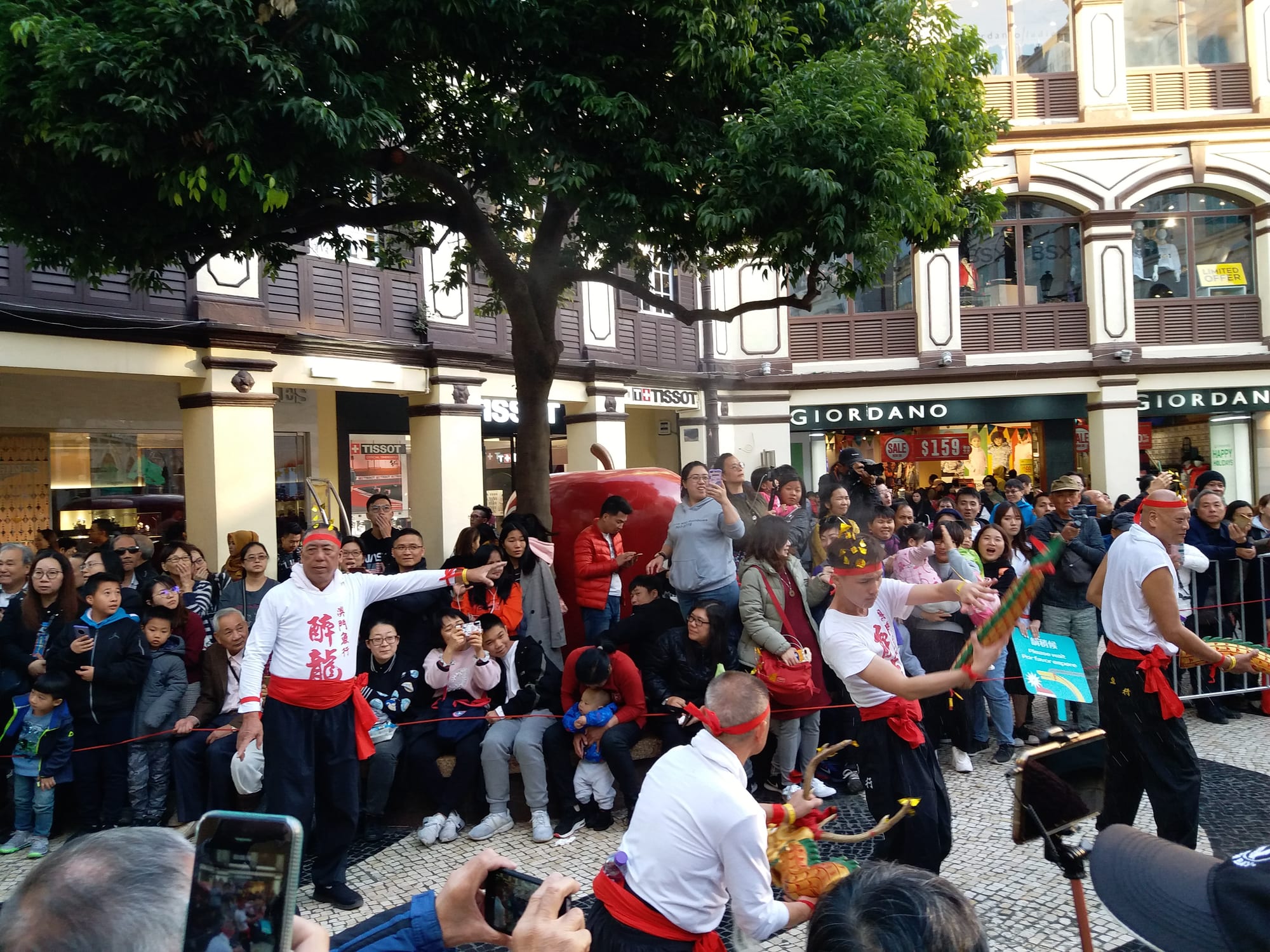
Macau's most distinctive festival belongs to the fishmongers. On the eighth day of the fourth lunar month, after a shared meal the evening before, their associations hold the Festival of the Drunken Dragon. Performers dance with carved wooden dragons while drinking and spraying rice wine, a wooden dragon is made to dance on the incense table to pray for blessings, lion dances follow, and free "longevity rice" is handed out to the public as a token of good fortune. The festival is on China's national list of intangible heritage as well as Macao's own.
The Catholic year brings its own processions. In the early weeks of Lent, the Procession of the Passion of Our Lord carries a statue of Christ bearing the cross through the city over two days, and on Good Friday the Procession of the Dead Lord recalls the crucifixion, with statues carried through the old streets. On 13 May, the Procession of Our Lady of Fátima, held since 1929, includes young people dressed as the shepherd children to whom the Virgin is said to have appeared.
Honouring the dead is central to Chinese family life. At the Cheng Ming festival in spring, families visit cemeteries to sweep and tend the graves of their ancestors, bringing incense, food and paper offerings, The Chong Yeong festival is another occasion for remembering ancestors. At funerals, Taoist ritual music, with its large drums, bells and wooden fish blocks, may accompany the rites, and a family that has lost someone close in the hundred days before Lunar New Year is excused from handing out lai see.
Weddings blend old ritual with modern display. On the morning of the ceremony the groom comes to fetch the bride at an auspicious hour, but his party must first get past the bridesmaids, who demand a door-opening lai see. The bride's father gives her hand to the groom, and the couple offer incense to the gods and ancestors and serve tea to the bride's parents, and later to the groom's, as a mark of respect. The day ends with a banquet, often of twelve courses, and guests usually bring red envelopes to help with the costs. Traditional Chinese wedding cakes are among the confections on Macao's heritage list.
Arts, crafts and music
Macao's official list of intangible cultural heritage, and the wider inventory of nearly a hundred items behind it, give a fair picture of the city's living arts.
Cantonese opera, or Yueju, is the leading performing art. It combines string and percussion music with singing, elaborate make-up and embroidered costumes, and stunts and fights drawn from martial arts, and UNESCO describes it as a cultural bond among Cantonese speakers. It is performed for the gods at temple festivals as well as in theatres. Alongside it are naamyam, narrative songs from the Pearl River Delta, and Taoist ritual music, all three of them on China's national list as well as Macao's own.
Patuá theatre is the Macanese community's great contribution: comedy that lampoons current affairs and social issues, drawing on the tradition of Portuguese revue, and enjoyed by Macanese and Chinese audiences alike. Portuguese folk dance is also on the heritage list, as are dragon and lion dancing and tai chi.
The city's crafts show the same meeting of traditions. Bamboo scaffolding is still used on building sites and for temporary festival stages, and Portuguese-style painted tiles sit alongside the listed skills of religious woodcarving, herbal tea brewing and the baking of custard tarts and almond biscuits.
Dos and don'ts for visitors
- Do shake hands with a nod, and address people by title and surname until invited to do otherwise.
- Do offer and accept gifts with both hands, and let the recipient open them later rather than on the spot.
- Don't give clocks, sharp objects, umbrellas or anything in a set of four.
- Do use red, never white, envelopes for gifts of money, with new notes and no multiples of four.
- Do check restaurant bills for the 10 per cent service charge that many places add.
- Do keep voices low at temples, churches and historic sites, and treat old relics with care.
- Don't smoke outside designated areas, and never litter or spit in the street.
- Don't jump queues; waiting patiently is part of everyday courtesy.
What to take away
Macau's customs follow two calendars and two heritages at once, Chinese and Portuguese, and visitors who meet both with the same quiet courtesy will find a city far richer than the casinos on its skyline suggest.