Daily Life · Luxembourg
Luxembourg: Two Hundred Thousand Commuters
A small, wealthy country where nearly half the workforce crosses a border every morning to get there, children are taught in three languages before they turn twelve, and every train, tram and bus has been free since 2020
By Worldlore Editorial · 30 September 2026
Every weekday morning, Luxembourg's population effectively swells by around 200,000 people, cross-border commuters driving or taking the train in from France, Belgium and Germany to make up close to half the country's workforce. For the roughly 690,000 people who actually live there, the day runs in at least two languages before breakfast is over, on trains, trams and buses that have cost nothing to ride since 2020, in one of the wealthiest countries in the world by income per head. It is a small, comfortable, thoroughly international place to live an ordinary day.
Family and home life
Nearly half of Luxembourg's resident population holds a foreign passport, so a household here is as likely to be a mixed French-Portuguese or German-Luxembourgish family as a purely Luxembourgish one, and multiple languages spoken under one roof are unremarkable. Housing is expensive by almost any European standard, and affordability has become a genuine pressure on families raising children in or near the capital, pushing some towards the edges of the country or across the border entirely. Public childcare and free music lessons help offset the cost of family life, and social life tends to be reserved and family-centred, with a fairly firm line kept between work hours and time at home.
Work, school and the rhythm of the day
The defining fact of the Luxembourgish working day is the commute: around 200,000 people cross into the country for work each morning and back out again each evening, a flow that shapes the country's roads, trains and timetables more than almost anything else. Schooling is trilingual by design. Luxembourgish is spoken with children from pre-school, they learn to read and write in German from age six, French is introduced the year after, and French takes over as the teaching language in the upper years of the classical secondary schools, meaning a child educated locally moves between three languages before adulthood. Office hours are broadly daytime ones, with the evening commute out of the city often as congested as the morning one in.
Community life and public spaces
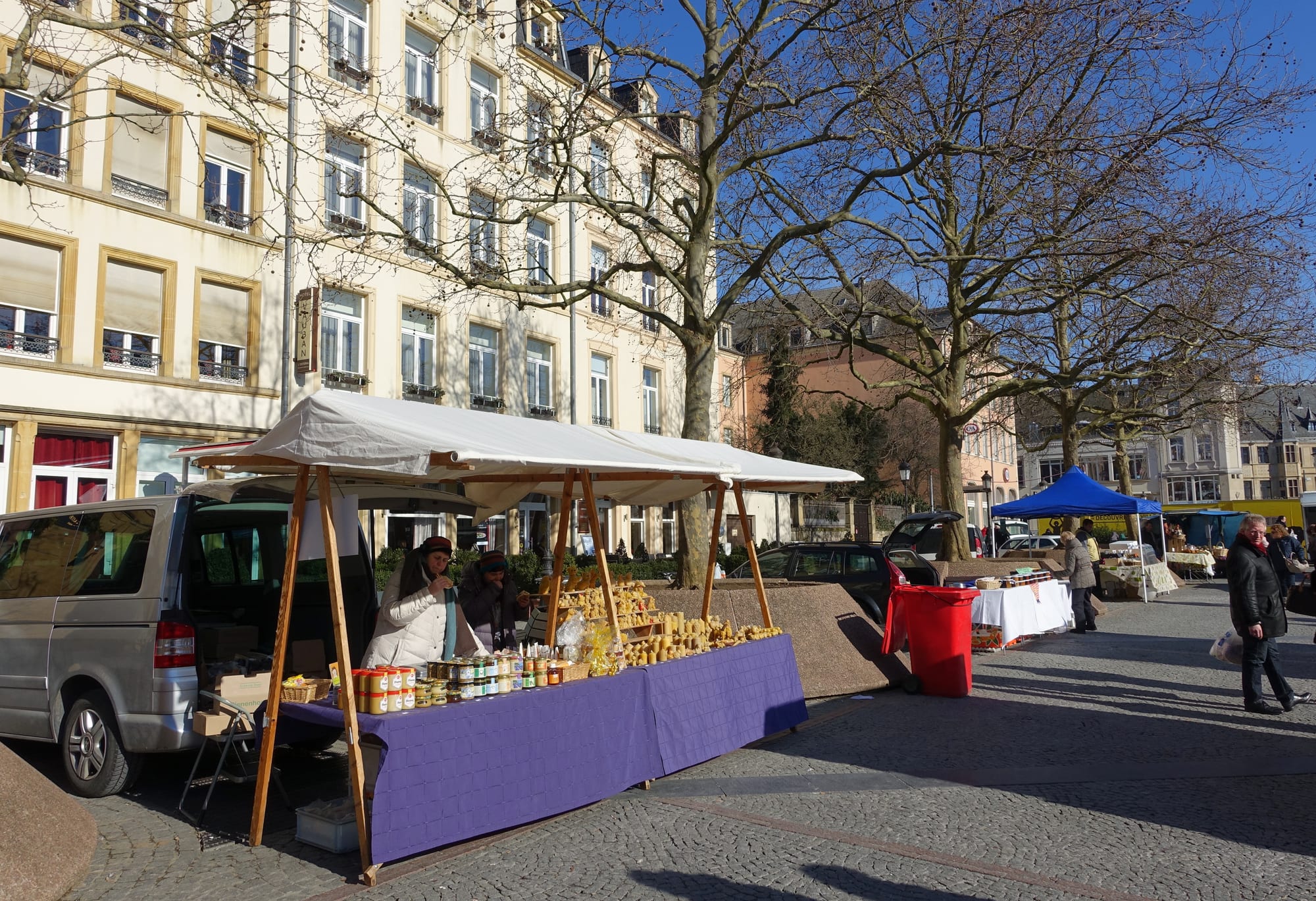
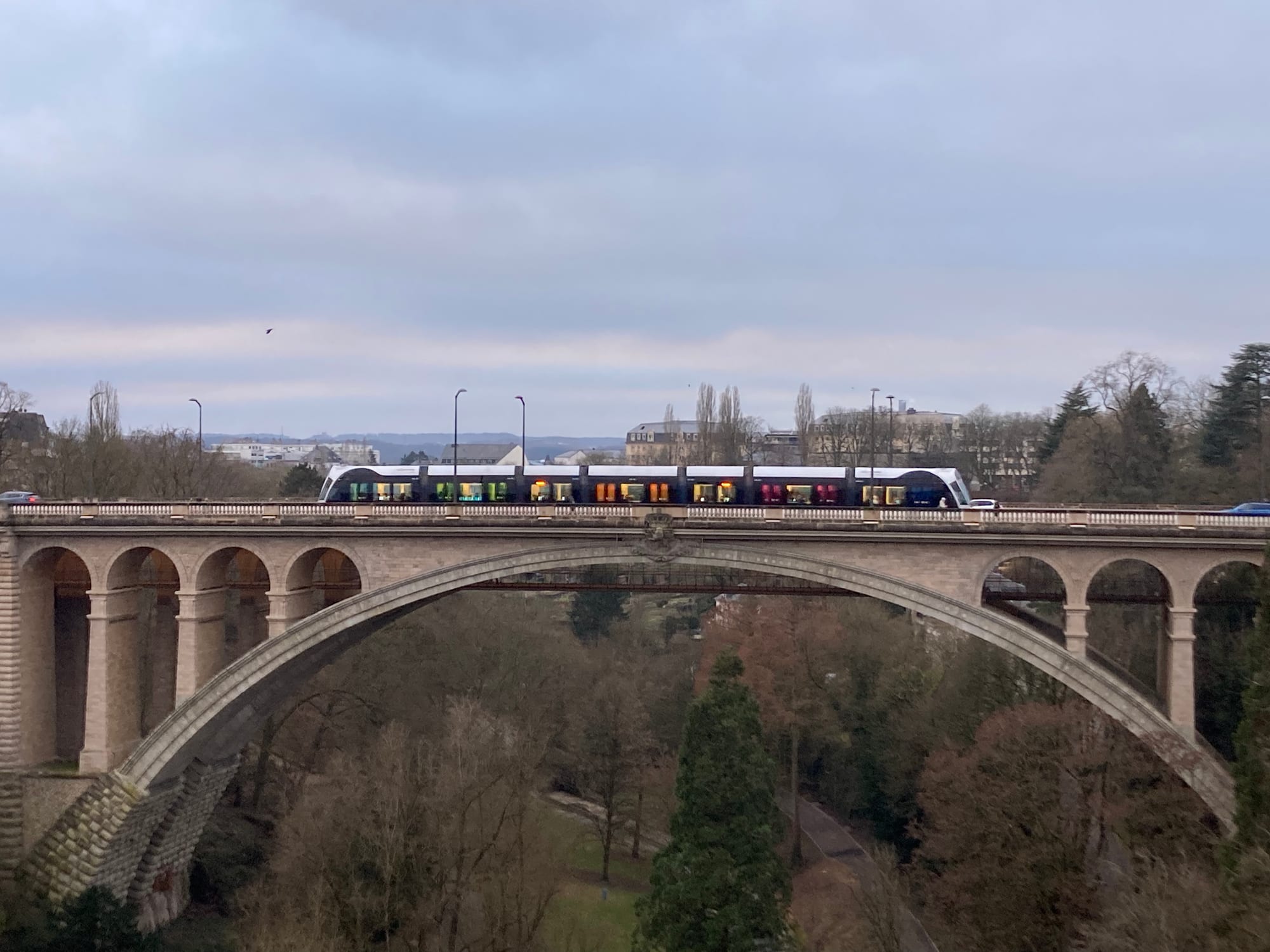
Since 29 February 2020, every train, tram and bus in Luxembourg has been free to ride, for residents, commuters and visitors alike, making public transport itself one of the country's most-used shared spaces rather than a paid service. The tram, running from the airport through Kirchberg's EU quarter to the city centre, and the trains fanning out to the borders, carry most of the daily cross-border and city traffic. Markets remain a fixture of public life too: Luxembourg City's Place Guillaume II hosts a produce market every Wednesday and Saturday morning, and smaller town squares across the country keep to their own market days, a slower counterpoint to the rush-hour flow of commuters.
Free time and weekends
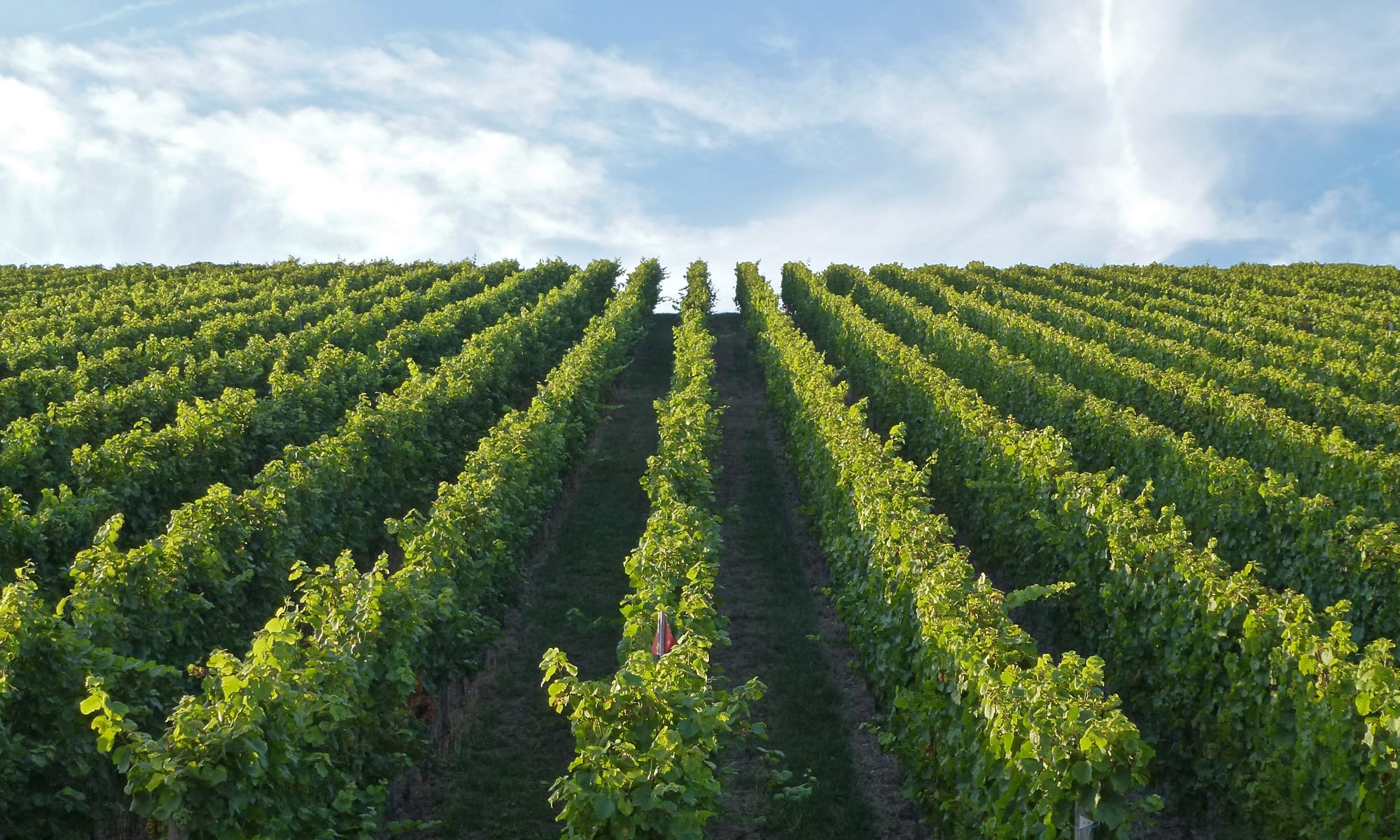
The Moselle valley in the southeast, a ribbon of terraced vineyards running some 40 kilometres along the river, is the classic weekend destination for wine tasting, riverside walks and village festivals in towns such as Remich and Grevenmacher. Hikers head instead to the Mullerthal's rocky gorges or the forested Ardennes in the north, both criss-crossed with waymarked trails suited to families. Given the country's size, a weekend day trip across the border into France, Belgium or Germany is entirely normal rather than a special occasion.
A visitor's ordinary day
Public transport being free removes one of the biggest planning headaches of any trip: trains, trams and buses need no ticket at all within the country; only first class and the stretch beyond the border on routes into Trier, Metz or Arlon are paid for. Shops generally open Monday to Saturday during the day, but Sunday trading is more limited, with plenty of shops closed, so plan grocery stops accordingly. Cards are accepted almost everywhere. Findel Airport and direct trains from Brussels, Paris and Trier are the main ways in, and the whole country is small enough to cross by public transport in a morning.
What to take away
Luxembourg's ordinary day is defined less by any single custom than by motion across borders and languages — a workforce that commutes in from three neighbouring countries, children taught in three languages, and a public transport system built to move all of it for free.