Culture & Customs · Liechtenstein
Liechtenstein: Hearts on the Barn Wall
A Catholic Alpine principality where Lent opens with a bonfire and a witch, the best cows come down from the mountains wearing carved wooden hearts, and the prince invites the country into his garden once a year
By Worldlore Editorial · 30 September 2026
On the first Sunday of Lent, as darkness falls, people gather at the edge of the village around a tower of stacked wood built by the young people of the community. On top sits a life-sized witch, sometimes stuffed with powder. When the fire is lit, the flames climb quickly, torches are swung in the dark, and women in traditional costume hand out küachle, small fried pastries. If the witch explodes, it is said to bring good fortune. Funkensonntag, or Spark Sunday, is one of the customs that the country's villages still keep with real commitment, and it captures much of Liechtenstein's culture: Catholic in its calendar, rooted in the village, and carried on by the people who live there rather than staged for anyone else.
Faith, identity and values
Liechtenstein is a Catholic country by heritage and by constitution. At the 2020 census roughly seven in ten people were Catholic, with smaller Protestant and Muslim communities and a growing share of people with no religious affiliation. The constitution guarantees freedom of religion and conscience for everyone, but it also names the Roman Catholic Church as the National Church, entitled to the full protection of the state. Attempts to reform that arrangement have not succeeded, and the constitution also makes Sundays and state-recognised holidays public days of rest.
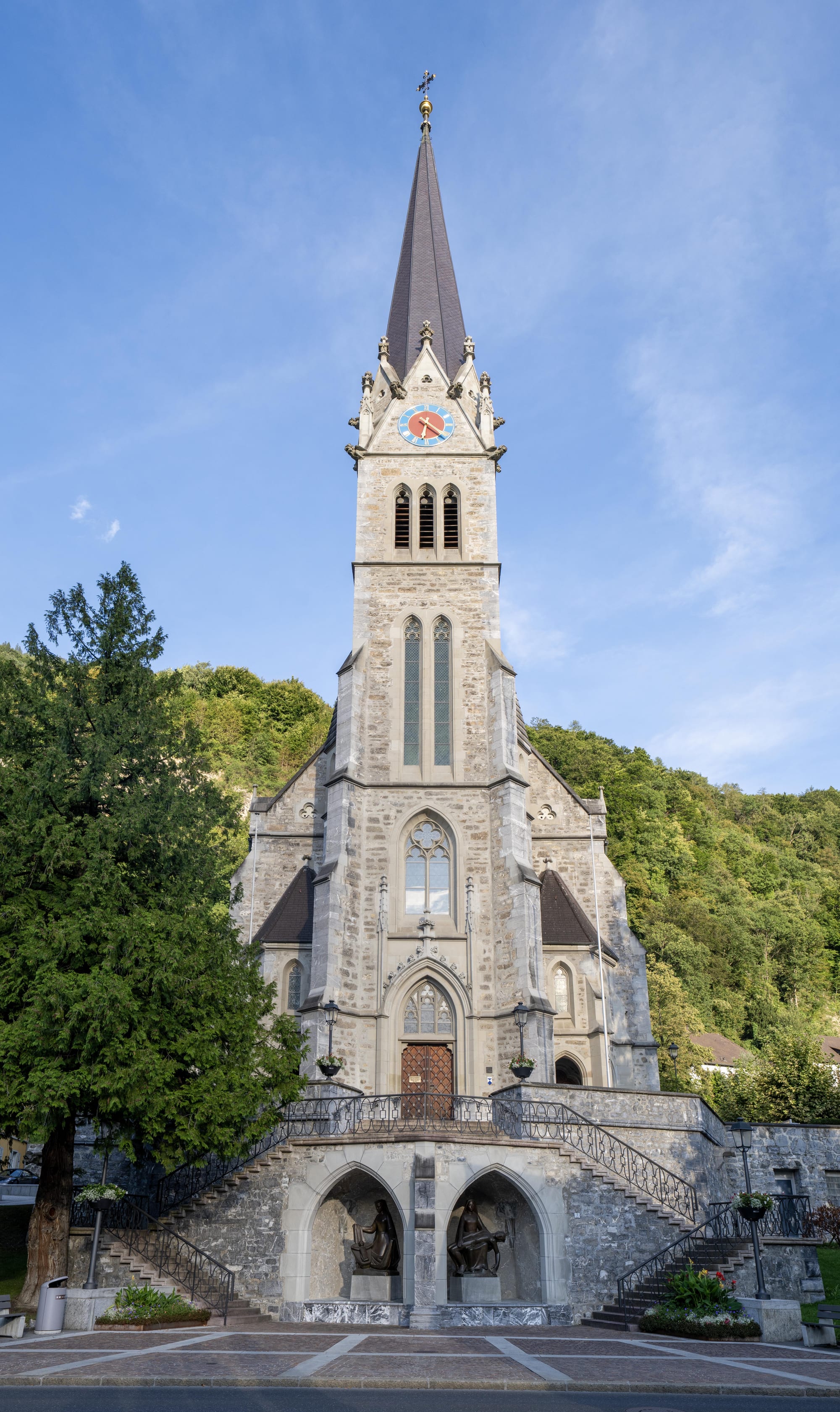
The church's own story has not always run smoothly. For centuries the country's parishes belonged to the Swiss diocese of Chur, and religious life was organised around shared observance, from parish pilgrimages to rosary brotherhoods. In 1997 the Holy See separated the parishes from Chur and created a new Archdiocese of Vaduz, turning the parish church of St Florin into a cathedral. The move proved divisive: the government and almost the whole of parliament boycotted the inauguration, an association for an "open Church" was founded, and the episode revived debate about separating church and state.
Alongside faith, identity rests on the village and its dialect. Standard German is the official language, but most people speak an Alemannic dialect close to Swiss German among themselves, and the mountain community of Triesenberg keeps its own distinct Walser dialect. People dress neatly and conservatively in public. The Princely House is central to national life, and an old motto, first spelled out in fireworks above the castle on the national day in 1943, still sums up the traditional order of loyalties: "For God, Prince and Fatherland".
Greetings and meeting people
A handshake is the usual greeting, on meeting and on leaving. With strangers and in formal situations the spoken greeting is "Grüezi", which is also used across the border in Switzerland, or "Grüss Gott", the greeting familiar from southern Germany and Austria. Among friends, young and old alike, the greeting shrinks to a quick "Hoi!", so the choice of word itself signals how well two people know each other.
The national anthem, "Oben am jungen Rhein", is performed standing. By a custom dating from the nineteenth century, hands are raised during particular passages as a gesture of respect for the prince, and an official arrangement for choir and brass band has been in use since 1983.
Hospitality and being a guest
Invitations into a family home follow much the same pattern as in neighbouring Austria. Punctuality is valued, and arriving on time for a meal is expected. Guests usually bring a modest gift, such as flowers, chocolates or a bottle of wine, chosen to be thoughtful rather than lavish. It is polite to offer to take off one's shoes on entering a home.
At the table, nobody begins until everyone has been served and the host has given the signal, usually with "Guten Appetit" or, in the middle of the day, "Mahlzeit". When glasses are raised, people look each other in the eye as they say "Prost" or "Zum Wohl". The traditional rhythm of meals puts the main one at midday: breakfast is called zmorga, and zmittag, the midday meal, is the substantial sit-down meal of the day, with soup, a main course, salad and dessert.
Sundays and state-recognised holidays are protected by the constitution as public days of rest, a provision meant to allow both recovery and religious observance. The best-known house in the country, Vaduz Castle, is not open to visitors at all. It is the private home of the Reigning Prince and the Hereditary Prince and Princess, and it opens its garden to the public only on the national day.
Festivals and life's big moments
The year is shaped by the Catholic calendar, and several of its customs belong to Liechtenstein's own Alemannic tradition. Fasnacht, the carnival before Lent, begins in earnest on the Thursday before Ash Wednesday, known as Schmutziger Donnerstag, when the street carnival begins. Masked balls and street parades follow, many of them organised by local clubs and guilds, and much of the noise comes from Guggenmusik bands, whose deliberately rough brass and drums have been part of the carnival since the first lasting band formed in 1970. Big "monster concerts" bringing many bands together have been held since 1976.
Funkensonntag follows on the Sunday after Ash Wednesday. The bonfires are organised by youth guilds, most of them founded from the 1960s under a Funkenmeister. Although the custom is often explained as a way of driving out winter, historians in Liechtenstein see its roots more in Roman practice and the Christian calendar of Lent than in pagan ritual. Easter brings decorated eggs and nests hidden for children.
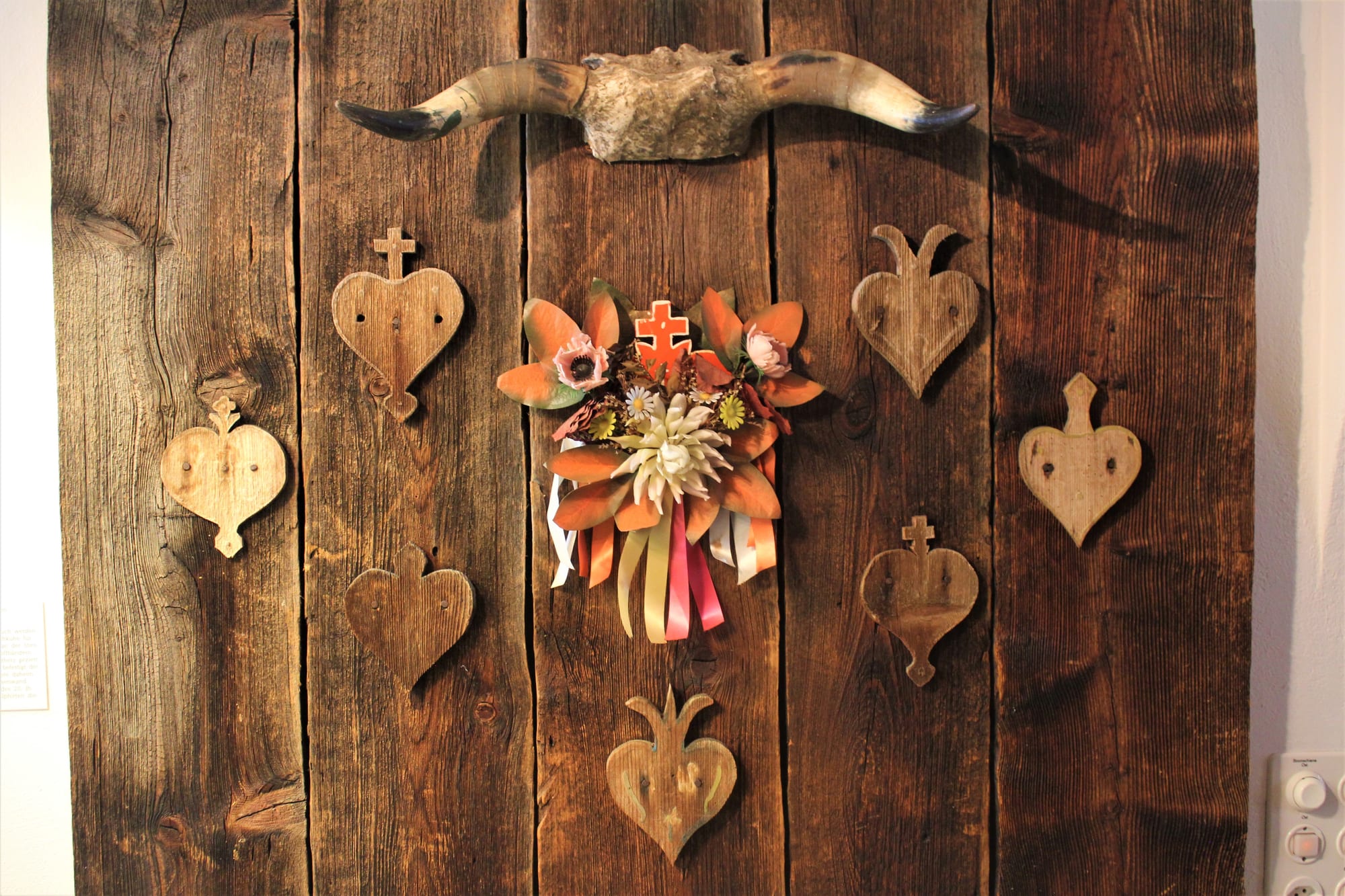
In autumn comes the Alpabfahrt, the descent of the cattle from the high summer pastures to the valley. When the summer on the alp has passed without serious accidents, the herd is decorated with flowers and ribbons, and the best milk cows wear large bells and a carved wooden heart on their foreheads, a custom recorded since 1830 and found only in Liechtenstein. At home, the farmer nails the hearts to the outside wall of the cowshed, where they remain as a record of good summers on the alp.
The national day on 15 August, the Feast of the Assumption, is the great civic occasion. It was fixed in 1940, the day before the birthday of Prince Franz Josef II, partly as a statement of unity and independence at a dangerous moment in the Second World War. Since 1991 it has opened with a state ceremony on the meadow below the castle, with speeches and music, after which the prince invites those present to an aperitif in the castle garden. The afternoon brings a public festival in Vaduz, and the evening fireworks, bonfires on the mountain peaks and a torchlit procession.
Winter has its own rhythm. St Nicholas visits children on 6 December, sometimes accompanied by the dark figure of Krampus, and at Christmas it is the Christ Child who brings the presents. At New Year, good wishes for the year ahead are exchanged.
Life's milestones are marked in church and in the village. Baptism, first communion and confirmation remain important family occasions. On a wedding day, an evergreen wreath may decorate the door of the bride's parents' house, and when the couple leave the church they often find their way barred by a rope held by village children, who must be paid off by the best man. Since 1962 the country has also held a civic ceremony welcoming each year's young adult citizens. When someone dies, death notices often ask for donations to a named cause instead of flowers, memorial masses are paid for in the dead person's name, and graves are tended with particular care, above all on All Saints' Day.
Arts, crafts and music
Music is the country's most widespread living art. Brass bands spread through the villages in the nineteenth century: one early group in Triesenberg switched from strings to brass in 1857, inspired by a band from Bohemia, and after the constitution of 1862 guaranteed freedom of association, brass music societies were founded in every municipality. A national federation was set up in 1926 and began organising music festivals the following year; since 1952 they have been held every year, alternating between the upper and lower parts of the country. The bands play at church feasts, civic celebrations and village events, and most run youth bands to train the next generation.
The country's greatest composer, Josef Gabriel Rheinberger, was born in Vaduz in 1839 and spent his career in Munich, where he became a professor of composition. He is remembered above all for his twenty organ sonatas, along with masses and chamber music, and he kept close ties with home, where as a boy of seven he had already served as organist at the Vaduz parish church. His remains were brought back to Vaduz in 1949.
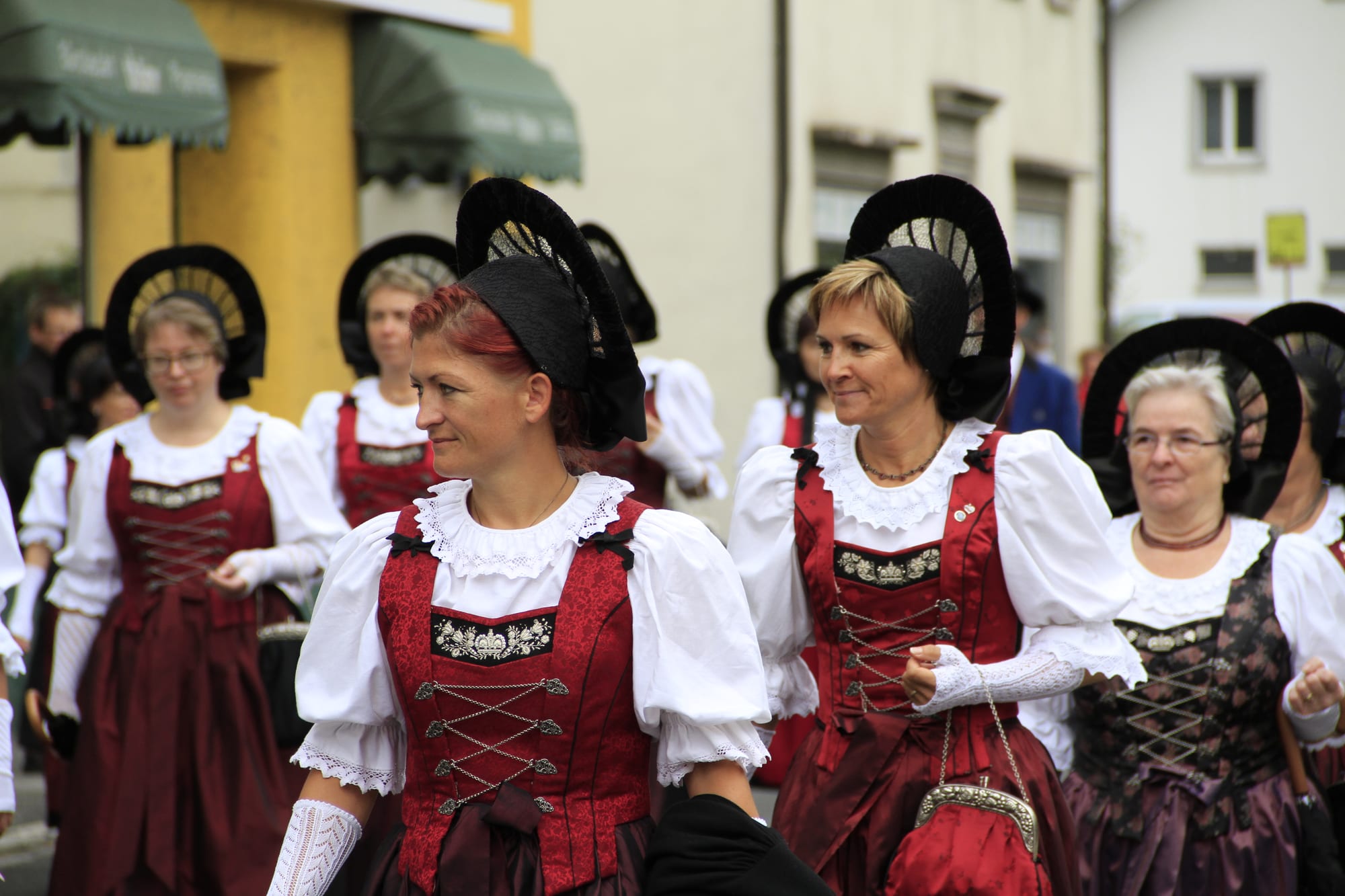
Traditional costume has had a revival of its own. The Liechtenstein Tracht goes back to the eighteenth century, faded away during the nineteenth, and returned in the mid-twentieth century, and a national costume association now looks after it. The recognised women's costume has a red bodice, white lace-trimmed blouse, black skirt, white patterned stockings, silver jewellery and a black and silver headdress, and there are versions for men, boys and girls. It is worn at national, municipal, church and association events rather than in daily life.
Folklore survives in stories too, and local legends are still collected and retold.
Dos and don'ts for visitors
- Do greet people with a handshake and a "Grüezi" or "Grüss Gott"; the casual "Hoi" is for friends.
- Do arrive on time when invited to a home, and bring a modest gift such as flowers or chocolates.
- Do wait for the host to say "Guten Appetit" before eating, and make eye contact when toasting.
- Do keep Sundays and public holidays quiet; they are protected in the constitution as days of rest.
- Do stand when the national anthem is played.
- Do dress neatly and conservatively in public, as Liechtensteiners themselves do.
- Don't expect to tour Vaduz Castle: it is the Princely Family's home and not open to the public.
What to take away
Liechtenstein's customs are those of a small, close Catholic countryside that has kept its bonfires, bands and carved hearts going into an age of banks and factories, and visitors who meet it with punctual courtesy and a friendly "Grüezi" will find it quietly welcoming.