Culture & Customs · Lesotho
Lesotho: Peace, Rain and the Blanket
A deeply Christian mountain kingdom that still honours its ancestors, greets its elders as mother and father, and wraps itself in a patterned woollen blanket in every season
By Worldlore Editorial · 30 September 2026
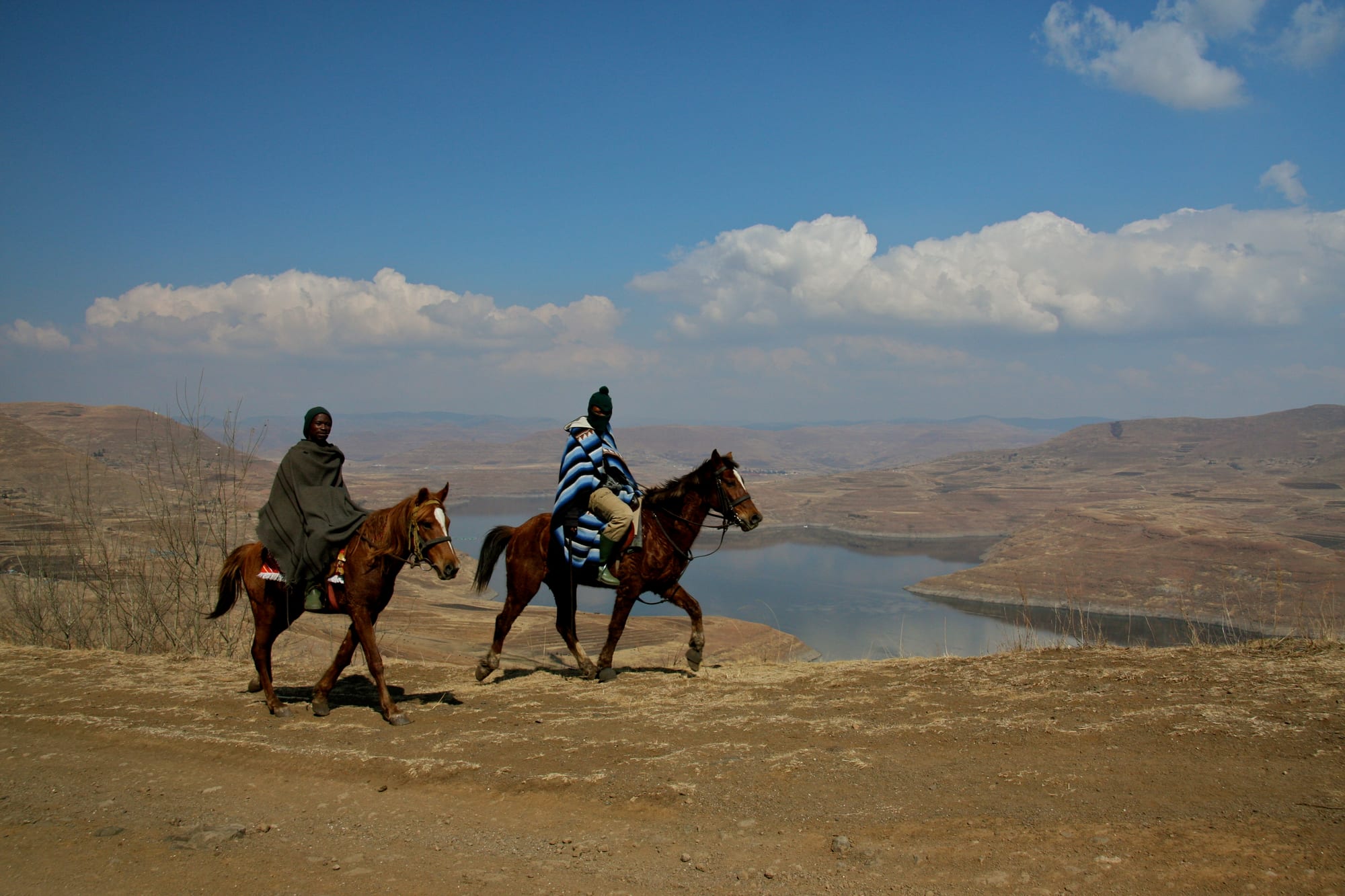
A rider comes down a dirt track on a cold mountain morning, wrapped to the chin in a heavy woollen blanket patterned in bold colours. Passing a group of women at a gate, he slows his horse and greets them before anything else is said: "Lumelang bo 'M'e", greetings, mothers. They answer in kind, calling him "Ntate", father, though he is no relation, and ask how he is living. The exchange takes seconds, but it carries much of what matters in Lesotho: courtesy woven into every encounter, a society in which almost everyone is addressed as family, and a blanket worn as a cloak whatever the season. Lesotho's national motto sums up what people wish for one another: "Khotso, Pula, Nala" — peace, rain and prosperity.
Faith, identity and values
Lesotho is an overwhelmingly Christian country. According to the Christian Council of Lesotho, cited by the US State Department, around nine in ten people are Christian, and the Catholic and Protestant churches rooted in missionary work are well established. Their influence, along with traditions inherited from the colonial period, helps explain why Basotho society is generally conservative. Church services often bring in indigenous elements such as chanting, drumming and traditional dress.
Christianity has not replaced older beliefs so much as joined them. Religion in Lesotho is often described as a blend of Christian faith and reverence for ancestors. Many cultural rites still call for the sacrifice of a cow, and cattle have long represented wealth; many Basotho still value cows more than money.
The Basotho nation took shape in the nineteenth century, when King Moshoeshoe I brought together a number of clans into a single people, and his descendant, King Letsie III, is head of state today. Clan identity survives alongside the national one: among the principal clans are the Bafokeng, the Bakoena, whose emblem is the crocodile, and the Bataung, the lion. Villages keep a meeting place, the khotla, where community business is conducted. Communities share responsibility for one another, and the saying that it takes a village to raise a child describes Basotho practice closely: any village woman may correct a child who misbehaves or help one in difficulty. Politeness, good manners and a willingness to serve are strongly encouraged, and appearance matters as a sign of respect, with neat, modest dress expected in public, at work and at church.
Greetings and meeting people
Greetings come first, and they are rarely skipped. Basotho are a talkative and sociable people, and exchanging greetings, with neighbours and strangers alike, is part of what holds a community together. A greeting opens with "Lumela", or "Lumelang" for several people, or with "Khotso", peace, which becomes "Khotsong" for a group. It moves quickly to a question: "U phela joang?", literally "how are you living?", or in the morning "U tsohile joang?", "how did you wake?". The usual answer is "Ke phela hantle", I am living well. Shorter, more casual forms such as "U kae?" are common among friends but best avoided when meeting a chief or an official for the first time.
Every greeting carries a title, and titles are used alone or with a person's name as a mark of respect. "Ntate", father, is used for a man and "'M'e", mother, for a woman who is married or roughly over the age of twenty-five; "Abuti", brother, and "Ausi", sister, are for younger, unmarried people; and "Ntate-moholo", grandfather, and "Nkhono", grandmother, are for the elderly. An elder should always be answered with ntate or 'm'e at the end of the sentence, and children learn to add the title even to a simple yes or no. Being called older is taken as a compliment, so when in doubt, the more senior title is the safer choice. A group may be greeted all at once as "bo 'M'e le bo Ntate", ladies and gentlemen. In small, close-knit communities it is common to exchange names after the greeting, and men are often addressed by their surname, so that a man may simply be called Ntate followed by his family name.
Basotho do not say goodbye as such. The one leaving says "Sala hantle", stay well, and the one staying replies "Tsamaea hantle", go well. Visitors from abroad are generally treated as guests and received with respect and care. Basotho society is traditional in many ways, and gender roles remain significant, particularly in the countryside, where women are often expected to take on domestic duties and to defer to men in some settings.
Hospitality and being a guest
Social life in Lesotho is informal and generous. People are welcoming and often persistent in their friendliness, and it is normal to stop by a friend's or neighbour's home unannounced; a formal invitation is rare, and anyone who wants to see someone simply calls in. Basotho hosts expect the same freedom in return. Even households with very little will often share their food with visitors, and in the villages, home-brewed beer, joala, has long been at the centre of informal gatherings between neighbours.
How a guest looks is part of how a guest behaves. Clothing that is clean, mended and pressed, and shoes that are clean, are read as signs of respect for the household and the community; shorts and revealing clothes are out of place in most settings, and sleeves are preferable in the countryside. Visible tattoos may raise eyebrows among older and more conservative people.
Food is at the heart of hospitality on the big occasions. A family's honour is judged partly by the quality and quantity of food served at weddings and funerals, where roasted beef and chicken are expected, and such gatherings can drain a family's resources. For a guest, eating what is offered and taking part in the gathering are the surest ways to honour the host.
Festivals and life's big moments
Moshoeshoe Day, on 11 March, honours the founder of the nation on the anniversary of his death in 1870. Dignitaries, soldiers and schoolchildren gather at Thaba-Bosiu, the mountain stronghold where he is buried, and the day begins with the laying of wreaths at his grave. Traditional performances, horse racing and talks about his legacy follow, and Basotho communities in South Africa hold their own commemorations. Independence Day, on 4 October, brings state ceremonies that often include performances by traditional dance groups. The annual Morija Arts and Cultural Festival, organised by the Morija Museum and Archives, fills the village of Morija with choral music, traditional dance, storytelling, fashion and food.
Names mark a life from the start. Sesotho names usually carry a meaning that reflects the parents' feelings or the circumstances of the birth: a girl born during a storm might be called Pulane, from pula, rain, and parents giving thanks for a child might choose Relebohile, "we are thankful". Most children are given a Christian name as well. When a woman has her first child, she traditionally becomes known by the child's name with the prefix Ma-, so that the mother of Thato becomes 'Mathato. In the past, mother and newborn were traditionally kept in seclusion for a period after the birth.
For many young men, initiation, known as lebollo, marks the move from boyhood to adulthood. Boys spend a period at an initiation lodge, the mophato, secluded away from the village, where they are taught the conduct expected of married men, the traditions of initiation and praise songs; girls have their own initiation, held closer to home. Much of what is taught is reserved for initiates, and it is considered deeply disrespectful for an outsider to stumble upon an initiation school.
Marriage joins two families as much as two people. Most people now choose their own partners, and weddings are usually held in church, but the older custom of bohali, or mahadi, the bride wealth paid by the groom's family, continues alongside them. It was traditionally counted in cattle, and cattle still serve as the symbolic measure even when the payment is made in money. The amount is settled through formal negotiations between the two families, led by representatives, usually uncles and aunts, and completion is marked by the slaughter of an animal. Families see mahadi less as a purchase than as a thank-you to the bride's family and as proof that the marriage is recognised by both sides; a couple is regarded as married even before the full amount has been paid.
Funerals are among the most important social events in Lesotho, and many community gatherings are connected with them. Weeks may pass between a death and the burial, to allow relatives to gather and plans to be made. Most funerals are held on a Saturday and last much of the day. Tents are put up beside the family home to shelter the mourners, relatives keep vigil overnight, and the day itself brings a long series of speeches by relatives, friends, neighbours and colleagues, hymns, a church service and the burial. Male relatives begin filling the grave, and everyone stays until it is finished. Afterwards, all who attended wash their hands, a ritual observed whether or not they helped with the burial, before the family serves a meal to the mourners. The cost can be heavy, since a cow is expected for the occasion.
Arts, crafts and music
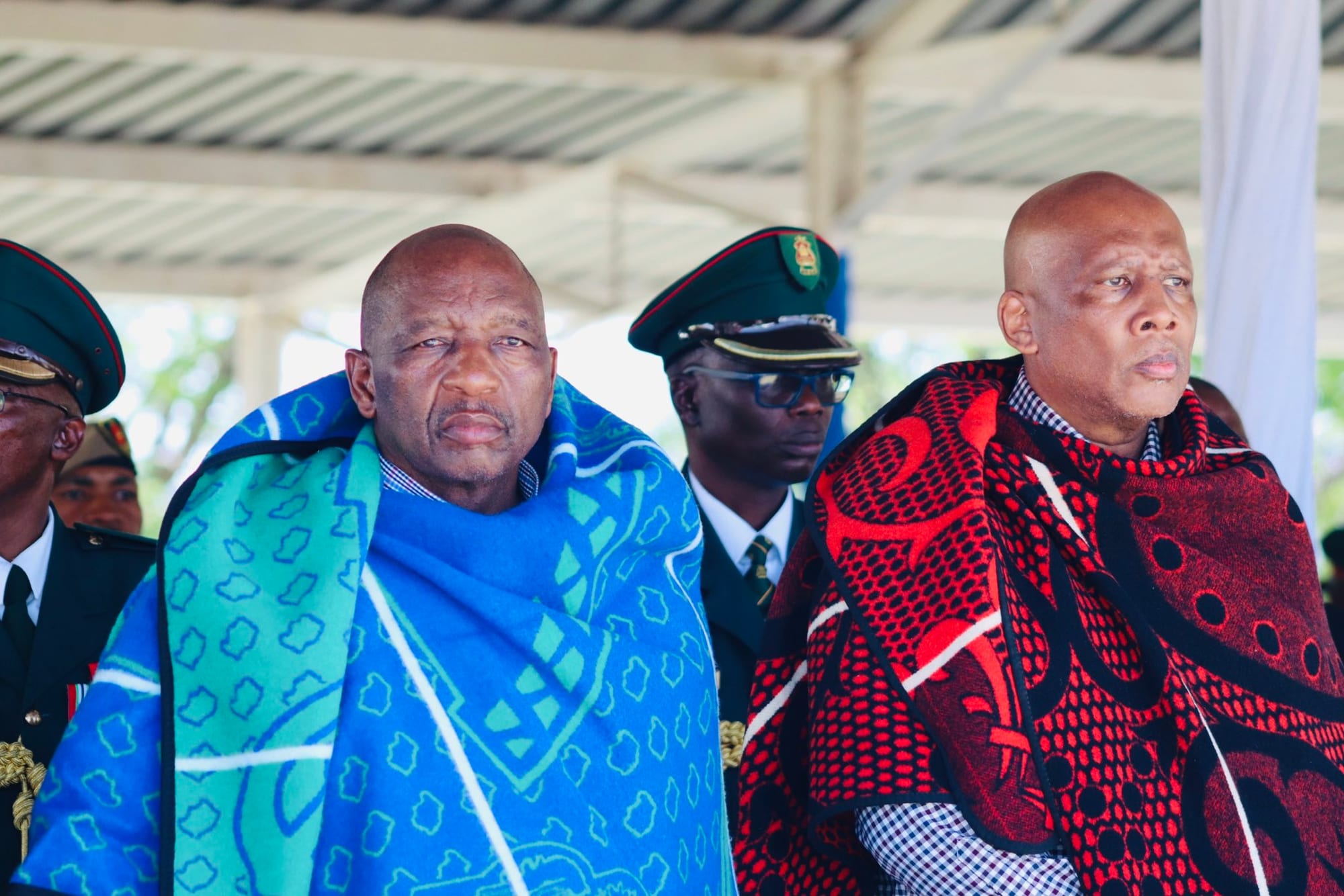
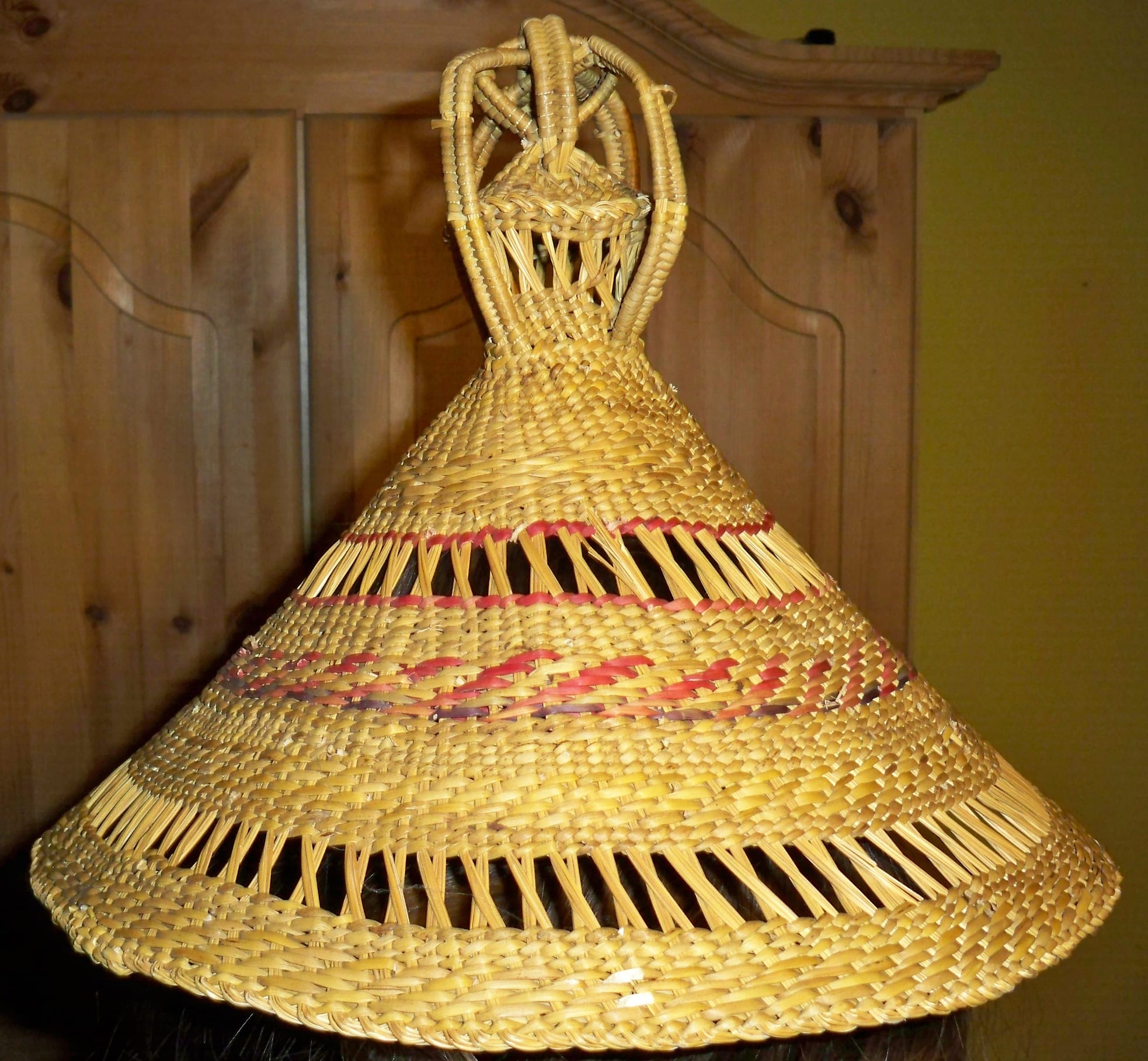
The Basotho blanket is the country's most visible tradition. Men and women alike wear the heavy woollen blanket as a cloak in every season, in place of a coat, and its designs range from geometric patterns to crowns and other emblems. Leaders wear blankets on formal occasions, including national commemorations. The mokorotlo, a conical woven hat with a distinctive knotted crown, is a symbol of the unification of the Basotho and one of the country's foremost cultural emblems. The knowledge and skill of making it has been nominated for UNESCO's list of intangible cultural heritage, with a decision pending, and hat-makers today sell much of their work to visitors.
Other crafts draw on the same rural world. Sleeping mats, baskets and beer strainers are still woven by hand from grass, alongside beadwork, pottery and house decoration. Litema, whose name comes from the Sesotho verb meaning "to cultivate", is the art of decorating the walls of homes with engraved patterns, relief mouldings and painted designs, traditionally made by Sesotho-speaking women.
Traditional music places great weight on group singing, chanting and hand-clapping as an accompaniment to dance, with drums, rattles, whistles and handmade stringed instruments. The most popular modern style is famo, a genre built on the accordion, drum and bass that took shape among Basotho migrant workers in South Africa's mines and spread home to Lesotho. In recent years some famo groups have become linked to violent feuds, and in 2024 the government banned several of them, though other famo artists continue to perform.
Dos and don'ts for visitors
- Do greet people before anything else, with "Lumela 'M'e" for a woman and "Lumela Ntate" for a man, and ask how they are.
- Do use titles of respect with everyone, and choose the more senior one when unsure; being thought older is a compliment.
- Do dress neatly and modestly, in clean clothes and clean shoes; appearance is read as a sign of respect.
- Do join in when invited to a gathering, and eat what is offered; hospitality is a matter of family honour.
- Do stay to the end if attending a funeral, and wash hands with everyone else after the burial.
- Don't be surprised by unannounced visits; calling in without warning is normal, and Basotho friends will welcome the same.
- Don't approach an initiation school; when walking in the hills, it is polite to ask locally whether one is nearby.
What to take away
Lesotho's customs rest on a simple courtesy: greet everyone, respect those older and senior, and share what there is — a spirit captured in the three words of its national motto, peace, rain and prosperity.