Daily Life · Lesotho
Lesotho: Herding Boys and Factory Floors
Small boys wrapped in Basotho blankets minding sheep on horseback, women setting out before dawn for a shift at the garment factory, and a whole country living above 1,000 metres
By Worldlore Editorial · 30 September 2026
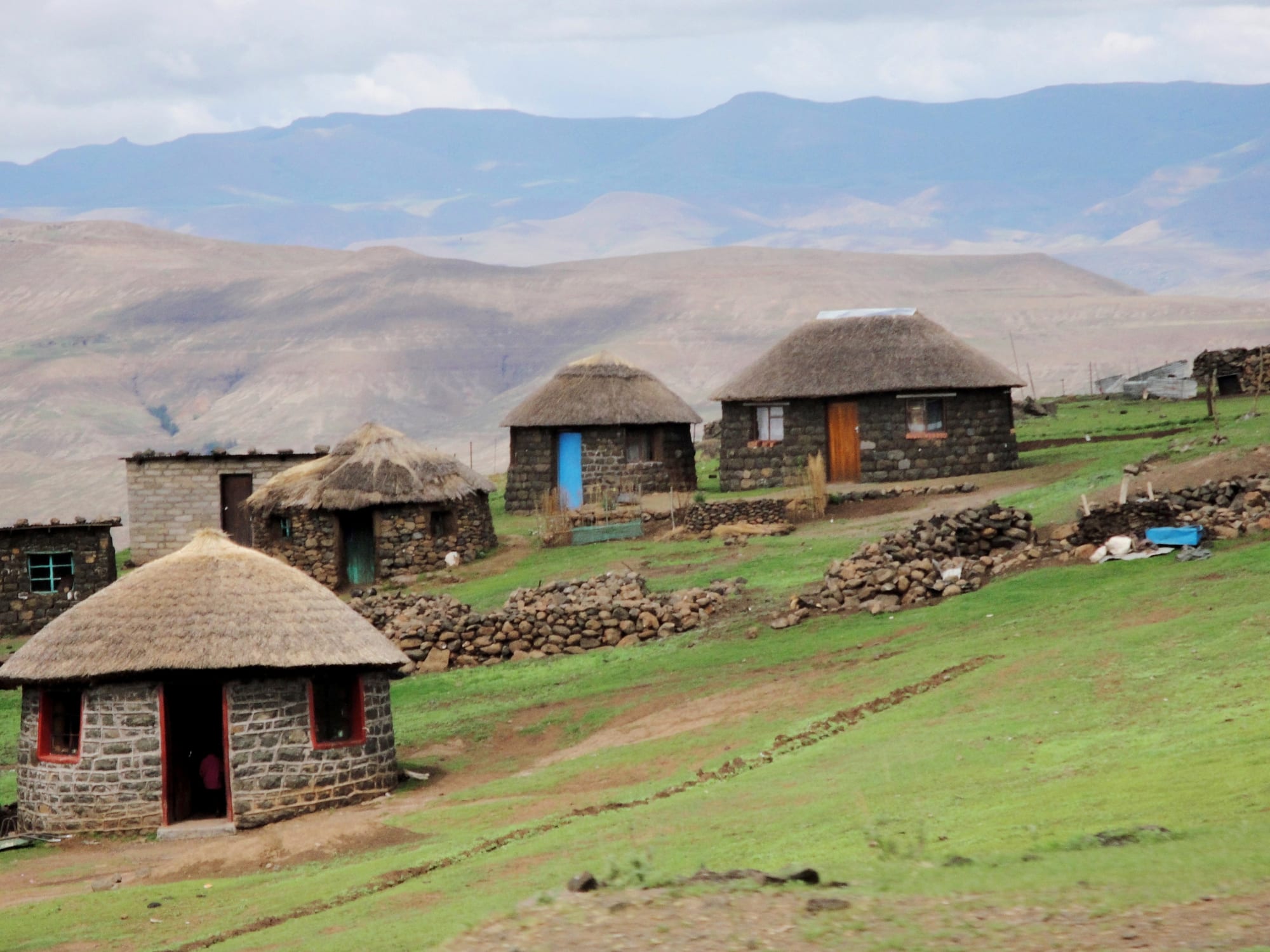
Lesotho is the only country in the world that lies entirely above 1,000 metres, and altitude shapes an ordinary day everywhere in it. In the highlands, life still runs on herding and the seasons: small boys wrapped in thick Basotho blankets watch over sheep and goats, often on horseback, from an early age. In the lowland strip along the South African border, where most of the 2.3 million people actually live, the day looks more industrial: factory shifts, minibus taxis, and a currency tied one-to-one to the South African rand. Family, chieftaincy and the church hold both worlds together.
Family and home life
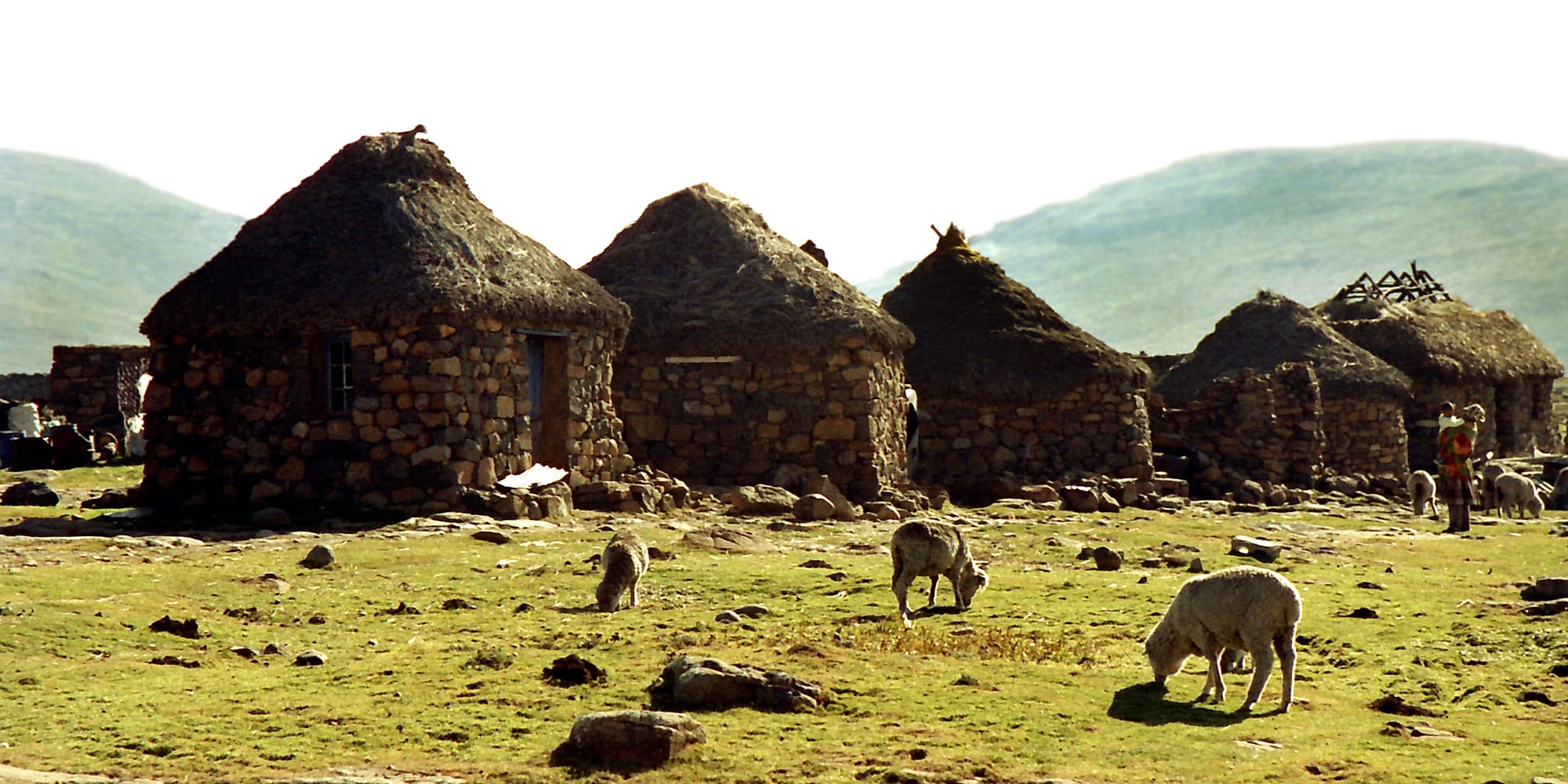
The family remains the central unit of Basotho life, and respect for elders runs deep, structured further by a system of local chiefs who administer land communally on the king's behalf. Traditional roles are still visible: boys as young as five or six are sent out to herd livestock, sometimes living for long stretches in small stone huts called motebo on the high pastures, while girls are taught homemaking and fieldwork alongside their mothers. For generations, men left for long spells to work South Africa's mines, a pattern now shrinking, which left many rural households effectively run by women. The traditional home is the rondavel, a round hut of stone or mud brick with a thick thatched roof built low against the mountain wind, and the Basotho blanket, a heavy patterned wrap traditionally made of wool, is worn by men and women alike in every season, as much a practical garment as a marker of status and identity.
Work, school and the rhythm of the day
Primary education has been free since 2000 and compulsory since 2010, running seven grades from around age six, followed by three years of lower and two years of upper secondary school; even so, secondary enrolment stays low in many rural areas because of distance, fees for books and uniforms, and the pull of herding or work. Off the land, the garment industry has long been the country's largest formal-sector employer, overwhelmingly of women, sewing clothing for export, much of it for the United States. At its peak in the mid-2000s the sector employed more than 50,000 workers, and for many women the working day starts early with a journey to the factories in Maseru's industrial areas; a sharp change in US trade policy in 2025, when steep tariffs were imposed on Lesotho's exports, hit many of those jobs hard. In the highlands, the working day still follows the herd and the weather far more than any clock.
Community life and public spaces
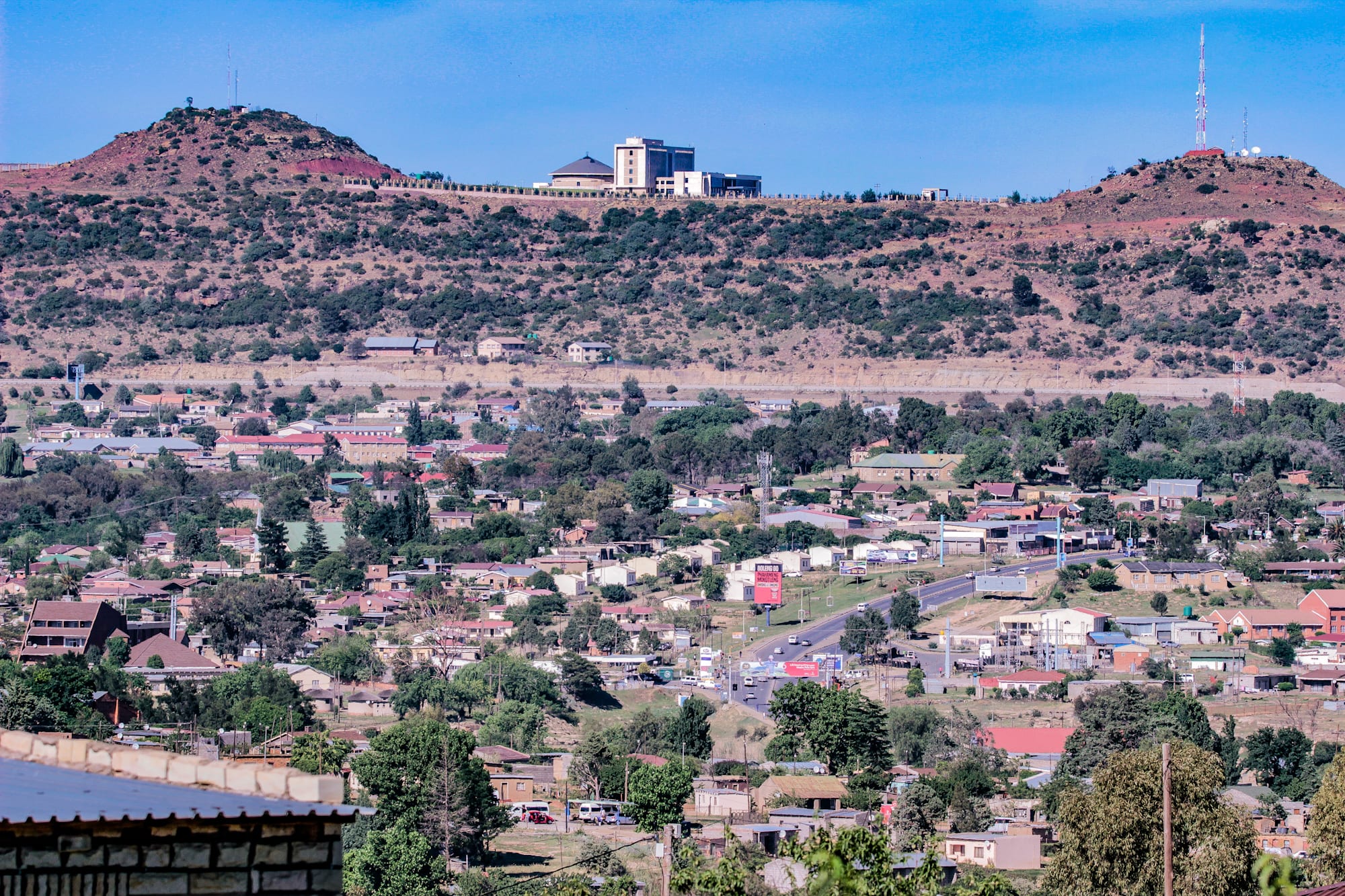
Maseru, the capital, is a low-rise, spread-out city where most daily business happens along a handful of main roads, at the central market, and around the minibus taxi ranks that are the backbone of getting around, both within the city and between towns. Shared taxis, flagged down roadside and run on a fill-and-go basis rather than a timetable, connect lowland towns cheaply, while a 4x4 or a pony is often the most practical way to reach many highland villages. Villages themselves are organised around the chief's homestead and the local church, which between them handle much of the everyday business of a rural community, from settling disputes to organising communal work.
Free time and weekends
Church is a major fixture of free time nationwide, filling Sunday mornings and structuring much of village social life around it. Choral singing is a strong and genuinely popular pastime, alongside famo, the accordion-driven music style closely associated with Lesotho, and the mouth-blown lesiba string instrument used in older herding traditions. Weekends in herding communities still bring livestock to be checked, moved or traded, and the Basotho pony, sure-footed on steep, rocky ground, remains a normal way to get around rather than a novelty for tourists. In Maseru and the lowland towns, the weekend market is a bigger, more social version of the weekday one, and a chance to catch up with news from other villages.
A visitor's ordinary day
The Lesotho loti is pegged one-to-one to the South African rand, and rand notes circulate freely and are accepted everywhere, so there is no need to change money at the border. Cards work in Maseru and at established lodges, but cash is necessary almost everywhere else, including on minibus taxis. Distances that look short on a map can take hours on mountain roads, so plan travel times generously and expect weather, fog and ice on the passes to matter more than the odometer. Shops and the central market in Maseru keep fairly standard daytime hours, while in the highlands, a lodge or a village homestead, rather than a shop, is usually the only source of a meal or a bed.
What to take away
An ordinary day in Lesotho depends enormously on altitude and distance from the border: a factory shift and a taxi rank in the lowlands, a herd of sheep and a stone hut in the highlands, and, joining the two, a family structure and a chieftaincy system that have held the country together through both.