Daily Life · Latvia
Latvia: A Life Lived Close to the Forest
Reserved by nature, close-knit at home, and a country that spends its weekends picking mushrooms, sweating in a sauna, or, once every five years, singing in a choir tens of thousands strong
By Worldlore Editorial · 30 September 2026
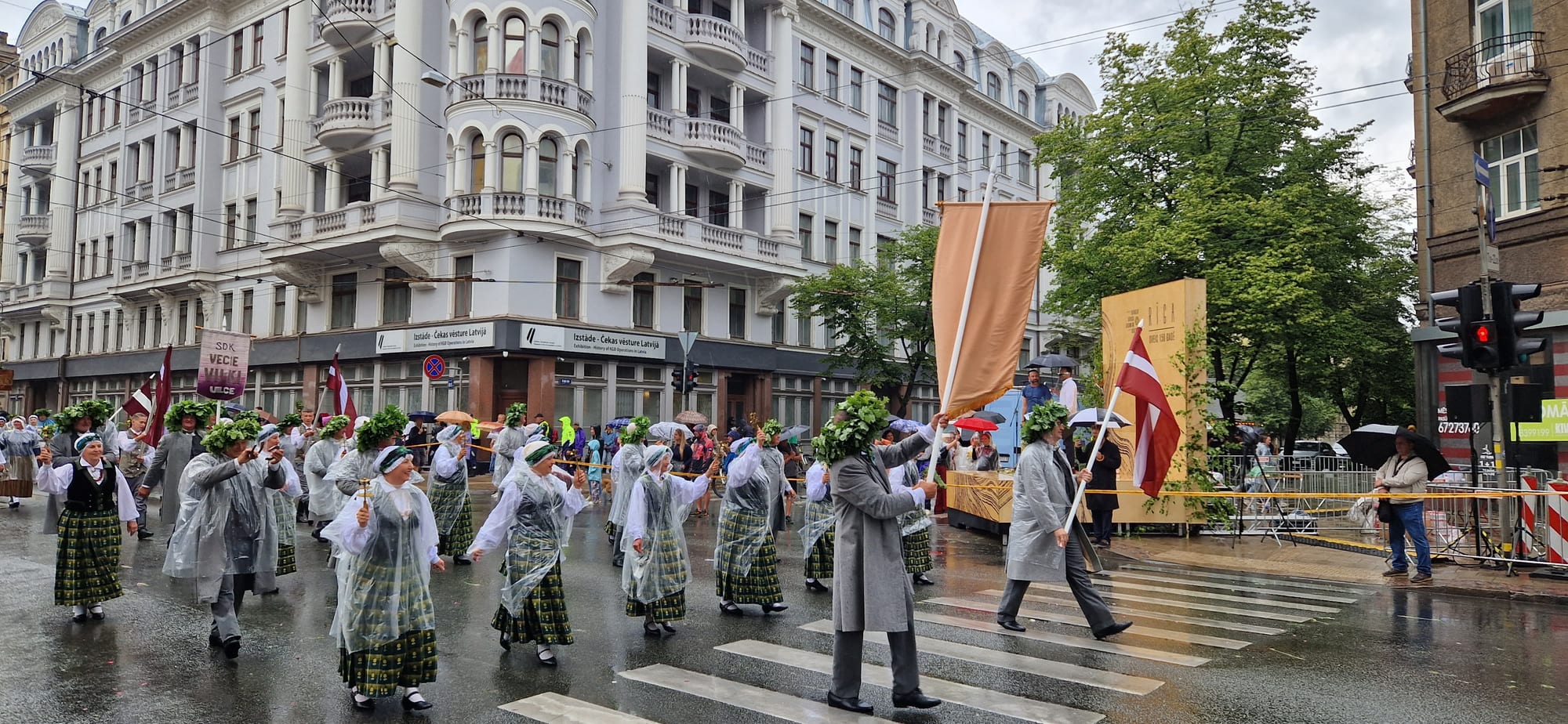
Latvia keeps its own company. People are polite, formal with strangers and slow to open up, but warm and steady once they do, and much of that warmth happens indoors or outdoors rather than in the street. Roughly a third of the country's 1.8 million people live in Riga itself; the rest are spread through smaller cities, farmland and forest, and the forest itself, which covers over half the country, is never far from daily life. An ordinary day runs quietly: work, a market stop, a sauna or a walk, and, for a great many families, a strong pull back to whichever region they grew up in.
Family and home life
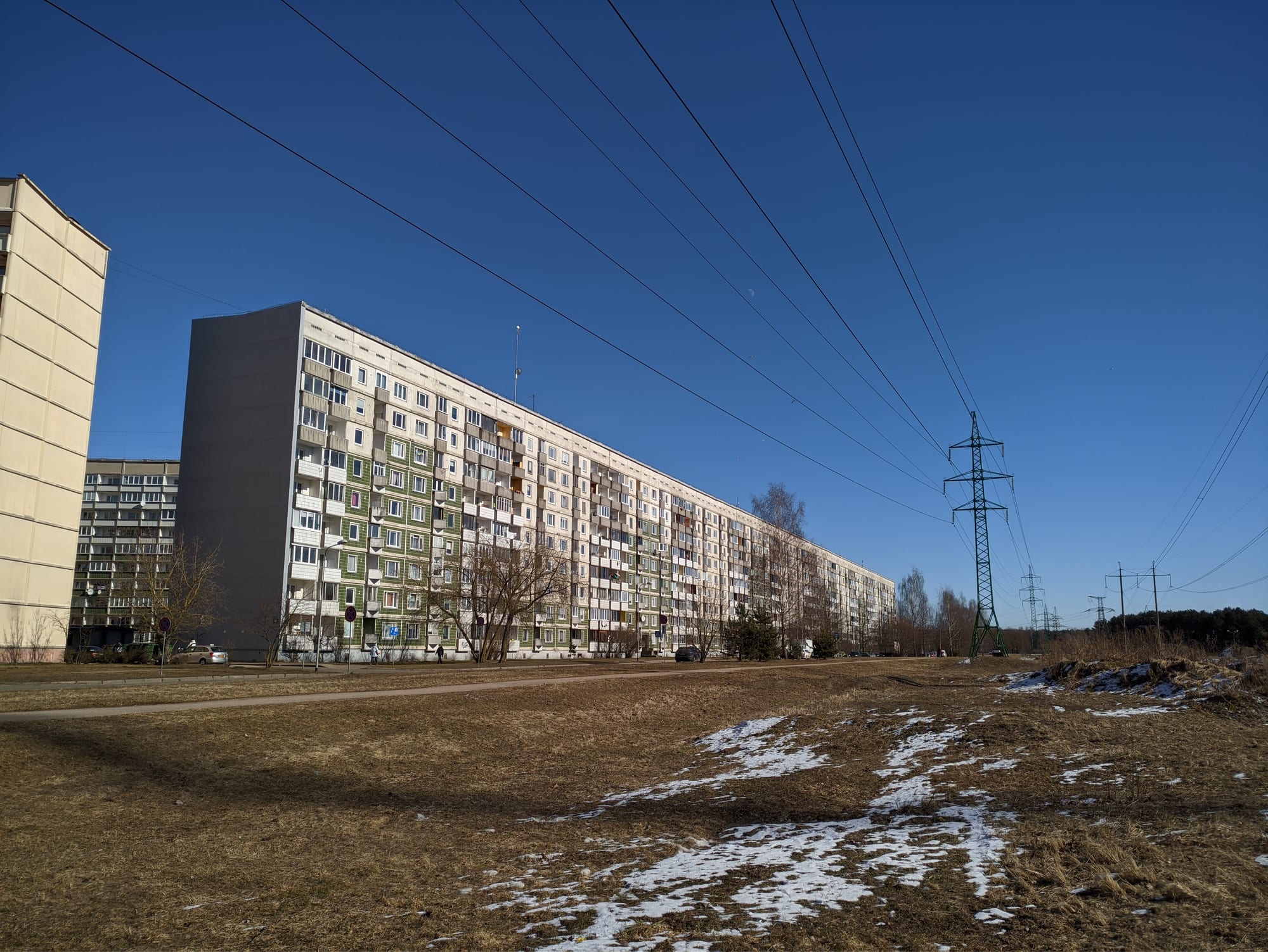
Latvian households have grown smaller in recent decades, and a couple with one or two children is a common shape of a home, especially in Riga and other cities. It remains common, though, for grandparents to live nearby or in the same household and to help raise grandchildren, and Latvians tend to stay attached to their home region rather than move away from it. Many city dwellers live in apartment blocks, many built during the Soviet period and since renovated to varying degrees, while rural households are more often a single house with a garden and, frequently, a small plot for vegetables.
Work, school and the rhythm of the day
The standard working week is five days, roughly eight hours a day, typically starting between eight and half past eight in the morning and finishing by mid to late afternoon; some offices keep shorter hours on Fridays. Teachers in Latvia average around 35 hours of work a week, somewhat less than the EU average, according to OECD survey data. Compulsory education begins with two years of pre-school, usually from the age of five, and continues as a continuous nine-year "basic education" stage before an optional three years of upper-secondary school, so the rhythm of a school day is set for a long stretch of a family's life without the sharper primary-to-secondary break found in some other countries.
Community life and public spaces
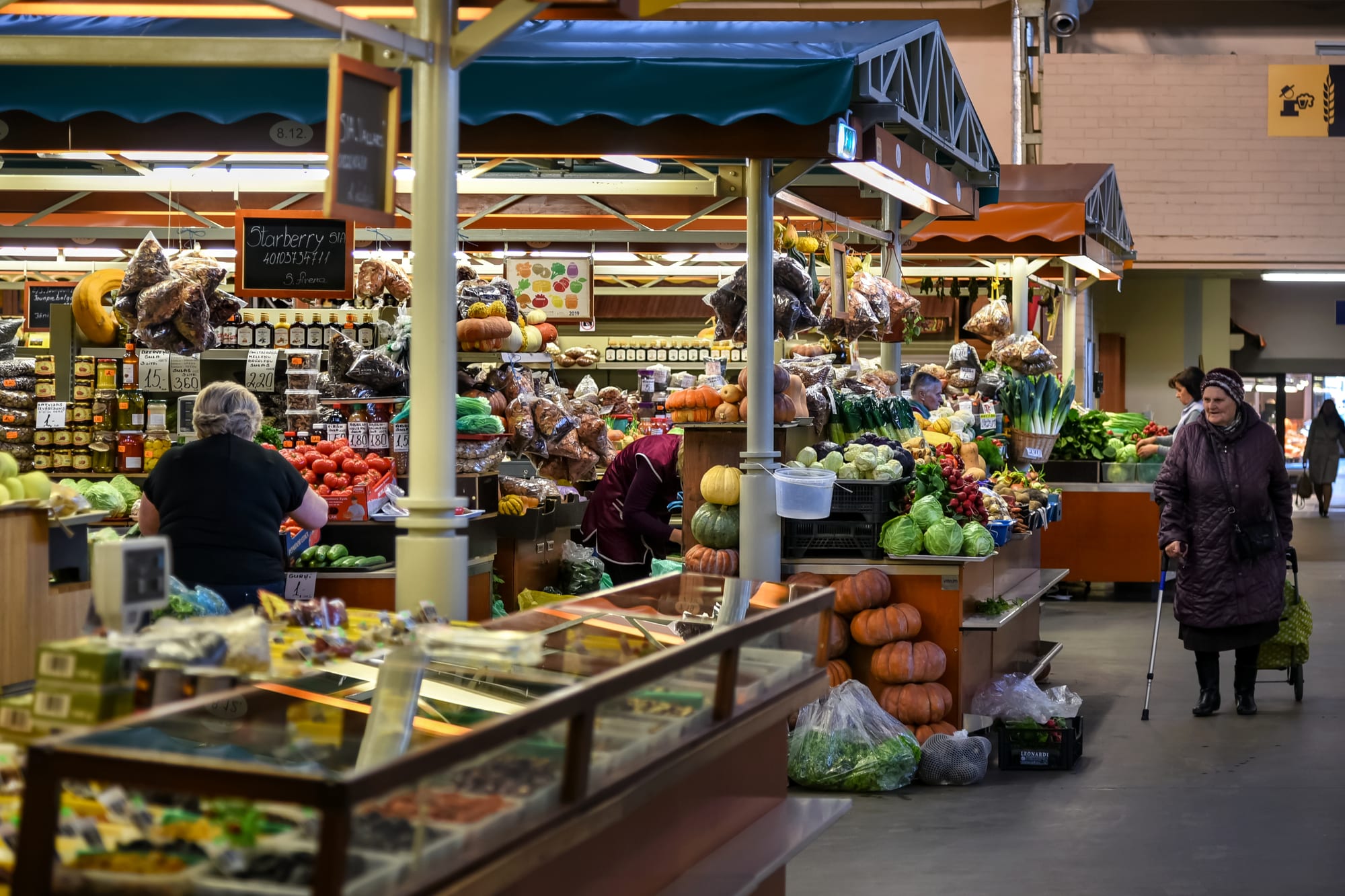
Markets remain a genuine daily fixture rather than a weekend novelty. Riga's Central Market, built into a set of former Zeppelin hangars and one of the largest markets in Europe, is the best known, but every sizeable town has its own covered or open-air market for produce, bread, preserves and household goods, generally busiest in the morning. Riga's trams, trolleybuses and buses run from early morning to late evening and form the backbone of city life, while intercity buses, cheap and frequent, link smaller towns where a car is otherwise the only option. Churches — Lutheran in the west and centre, Catholic in the eastern region of Latgale, Orthodox among the Russian-speaking minority — anchor community life on Sundays and at major festivals, though everyday religious observance is generally low.
Free time and weekends
Nature is where Latvians spend their free time by preference. Weekends bring forest walks, mushroom and berry picking in season, and time at a lake or, for those who have one, a modest countryside cottage kept in the family for exactly this purpose. The sauna, taken seriously and often followed by a plunge into cold water, is a regular ritual rather than an occasional treat. In summer, the seaside resort of Jūrmala draws day-trippers from Riga by train, and ice hockey and basketball are followed closely nationwide, watched at home or, for a big match, in a bar with friends.
A visitor's ordinary day
Latvia uses the euro, and cards and contactless payment are widely accepted, though a little cash is useful at some market stalls. Shops in cities generally open by nine or ten and stay open into the evening, and supermarkets often trade on Sundays too. Riga's public transport is easy to use with a rechargeable card, and trains are a practical, scenic way to reach nearby towns such as Sigulda or Jūrmala without a car. Latvian is the everyday language of signage and service, though Russian is widely understood, particularly in Riga and the east, and younger Latvians generally speak English.
What to take away
An ordinary day in Latvia is quiet by design: a fixed working day, a stop at the market, and, whenever the weekend allows, a retreat to the forest, the lake or the sauna that the whole country seems to treat as a genuine need rather than a luxury.