Daily Life · Kyrgyzstan
Kyrgyzstan: When the Whole Family Moves to the Mountains
Multigenerational households that pack up for the high jailoo pastures each summer, a bazaar economy anchored in Bishkek and Osh, and a country kept running in large part by hundreds of thousands of workers sending money home from Russia
By Worldlore Editorial · 30 September 2026
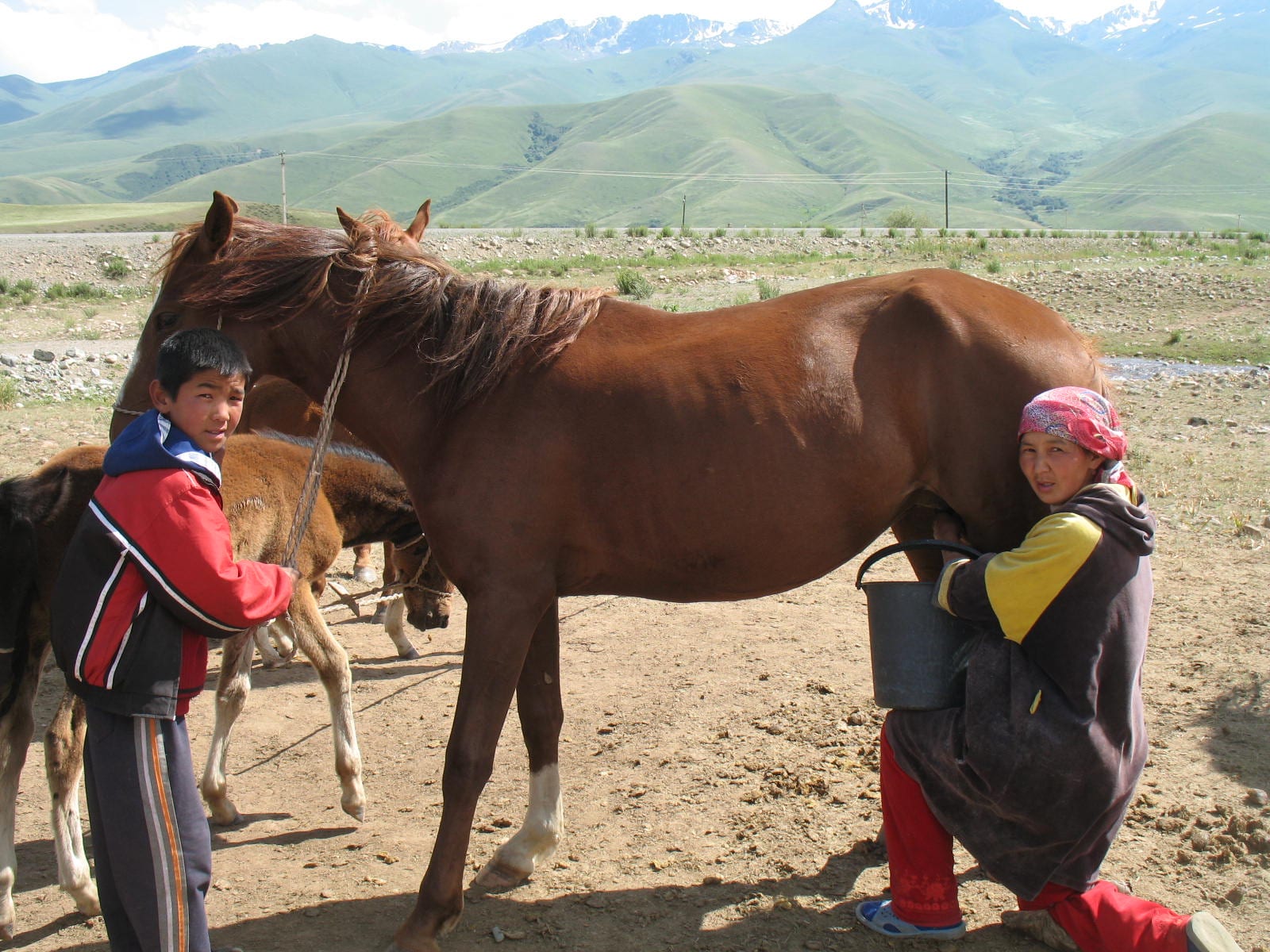
Kyrgyzstan is a country the mountains never let you forget: almost ninety per cent of the country lies more than 1,500 metres above sea level, and daily life nationwide is shaped by that geography as much as by any calendar. Most people now live settled lives in valley towns, in Bishkek's Soviet-planned streets, or in the older, hotter city of Osh, but the rhythm of herding still runs underneath everything, most visibly each summer, when whole families load up their belongings and move to the high jailoo pastures with their animals. Underneath the daily routine sits another, quieter fact: a large share of household income nationwide arrives by transfer from relatives working abroad, mostly in Russia.
Family and home life
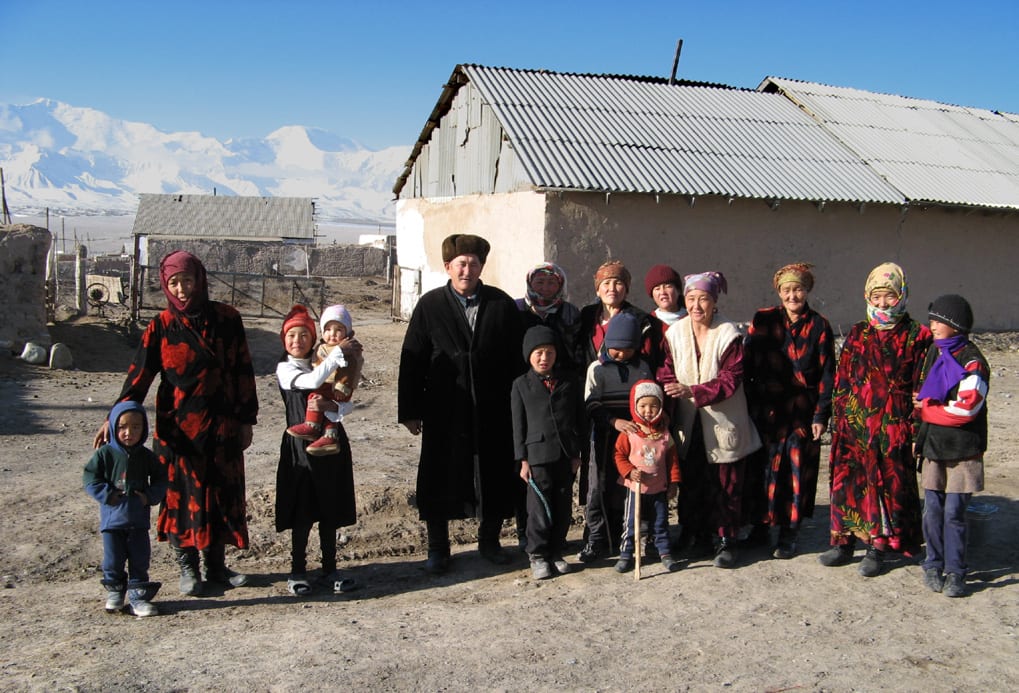
Kyrgyz households are commonly large by regional standards, and it remains normal, especially outside Bishkek, for several generations to share one roof or one household compound: grandparents, a married son and his wife and children, sometimes an unmarried sibling too. Households tend to be larger in the countryside than in the capital. The elder generation typically retains real authority over family decisions, and a daughter-in-law moving into her husband's family home at marriage remains a common pattern. For part of the year, the shape of "home" itself changes: with the move to the jailoo through the summer months, an extended family may live together in one or more yurts rather than a fixed house, sharing the work of herding, milking and cooking in a much smaller space.
Work, school and the rhythm of the day
A standard working day runs around eight hours, though bazaar traders and herders work to the demands of the animals and the customers rather than a clock. Schools mostly teach in Kyrgyz or Russian, sometimes both, and education is compulsory for nine years, from age seven. Outside the cities, the working day still bends around livestock: milking is done several times daily through the grazing season, and haymaking and the seasonal moves to and from the jailoo set the calendar as firmly as any office hours do. One fact now shapes the household economy nationwide more than almost any other: hundreds of thousands of Kyrgyz citizens work in Russia at any given time, and the money they send home is currently equal to about 15 per cent of the country's entire economic output, down from a past high of around 35 per cent — a scale that makes labour migration a normal, expected stage of working life for many families rather than an exceptional one.
Community life and public spaces
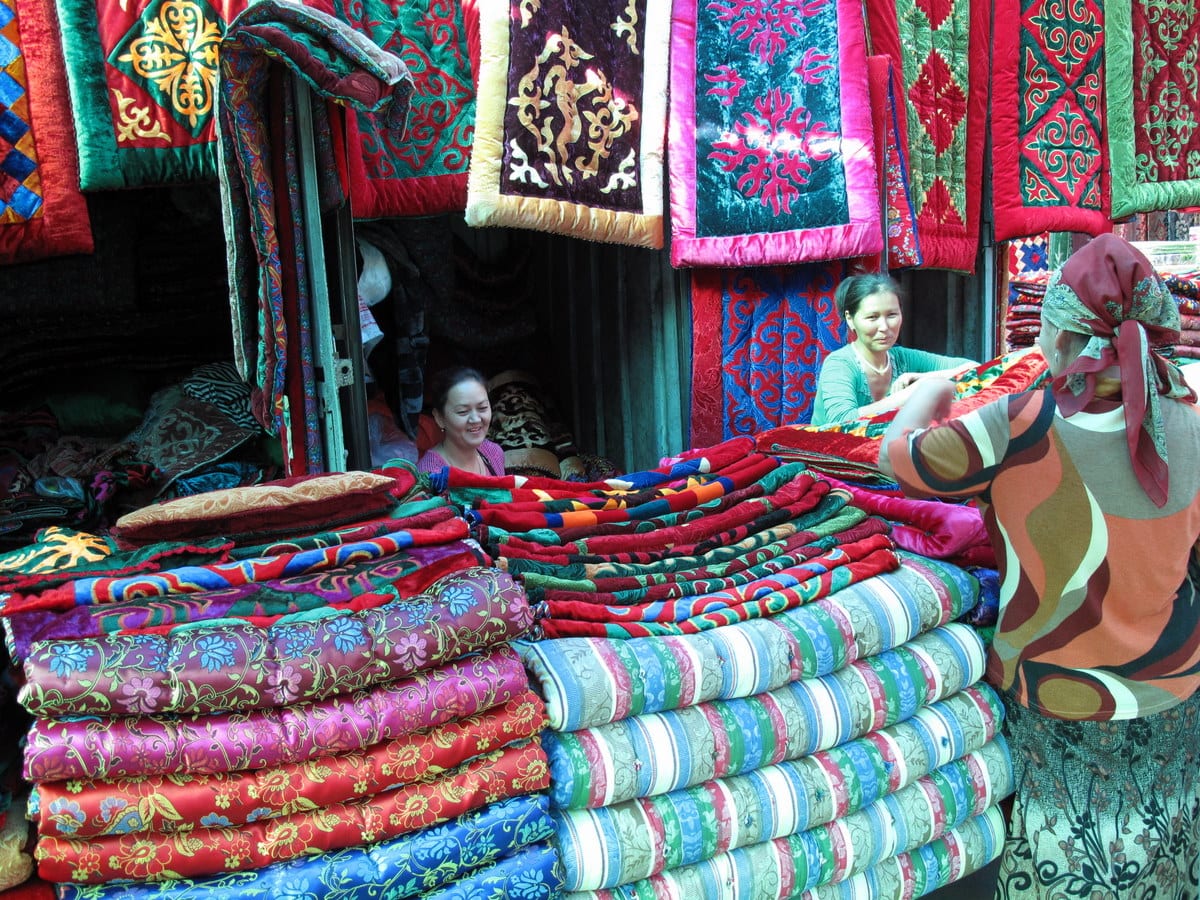
The bazaar is the country's everyday public square, especially Bishkek's Osh Bazaar and its counterpart in the city of Osh itself, sprawling covered markets where produce, dried fruit, meat, bread and household goods are bought and where much of the day's contact with people outside the family actually happens. Shared minibuses, marshrutkas, are the backbone of transport in the cities and between towns, leaving when full rather than on a fixed timetable. Bishkek's wide Soviet-era squares and tree-lined avenues, laid out around Ala-Too Square, function as the capital's main outdoor gathering space, while in smaller towns the market and the mosque or church anchor community life instead.
Free time and weekends
Weekends centre on family visits and, where the season and distance allow, a trip out of the city to relatives in the countryside or up into the mountains. Football and horseback games, particularly kok-boru, the traditional contest played with a goat carcass, draw real crowds, especially around festival dates, and Kyrgyzstan has hosted the World Nomad Games, a celebration of these traditional sports. In the cities, younger people meet at cafés and parks; in summer, weekend trips to Lake Issyk-Kul's shore are common enough among those who can afford them to be treated as a normal seasonal outing rather than a rare holiday.
A visitor's ordinary day
Cash is still the practical default outside Bishkek and Osh, and it is sensible to carry Kyrgyzstani som in small notes for marshrutkas and market stalls; cards work in the two main cities but are far less reliable elsewhere. Shops and bazaars generally open by mid-morning and run into the evening. Marshrutkas cover both city routes and intercity travel, leaving once full rather than to a schedule, and a hired driver is the standard way to reach rougher tracks such as the road to Song-Köl. Outside the main towns, expect patchy mobile coverage, basic infrastructure, and a pace of life set by the season rather than the clock.
What to take away
What defines an ordinary day in Kyrgyzstan is less a fixed routine than a household economy stretched across three places at once: the home village, the summer pasture, and, for a great many families, a relative working hundreds of miles away in Russia.