Culture & Customs · Kyrgyzstan
Kyrgyzstan: The Epic and the Blessing
A mostly Muslim, constitutionally secular mountain country where an epic longer than Homer is still recited from memory, elders bless every new beginning, and a guest may be kept at the table for half a day
By Worldlore Editorial · 30 September 2026
In her parents' house, a young bride is about to leave for her new family. Traditionally, before she goes, her first elechek is wrapped around her head: a cap covered by a very long band of white fabric, wound like a turban and decorated with embroidery, ribbons and jewellery. As it is tied, the elders of the family speak blessings over her, wishing her good health, children and harmony in her new home. It is the groom's family who will first receive her wearing it. The moment captures something that runs through Kyrgyz life: important beginnings are not simply celebrated but blessed, and the words of elders, and the goodwill of the community, are thought to carry real weight.
Faith, identity and values
According to government estimates cited by the US State Department, about 90 per cent of people in Kyrgyzstan identify as Muslim, the great majority of them Sunni, and about 7 per cent as Christian, of whom around 40 per cent are Russian Orthodox and the rest Catholics, Lutherans, Baptists, Pentecostals and Seventh-day Adventists. Jews, Buddhists, Baha'is and people with no affiliation make up the remainder. Followers of Tengrism, a revived folk religion tied to the search for national roots since the 1990s, were estimated at around 50,000 in 2014. The constitution is secular. Ethnic Kyrgyz form more than three-quarters of the population, with Uzbeks at about 14 per cent and Russians at about 4 per cent.
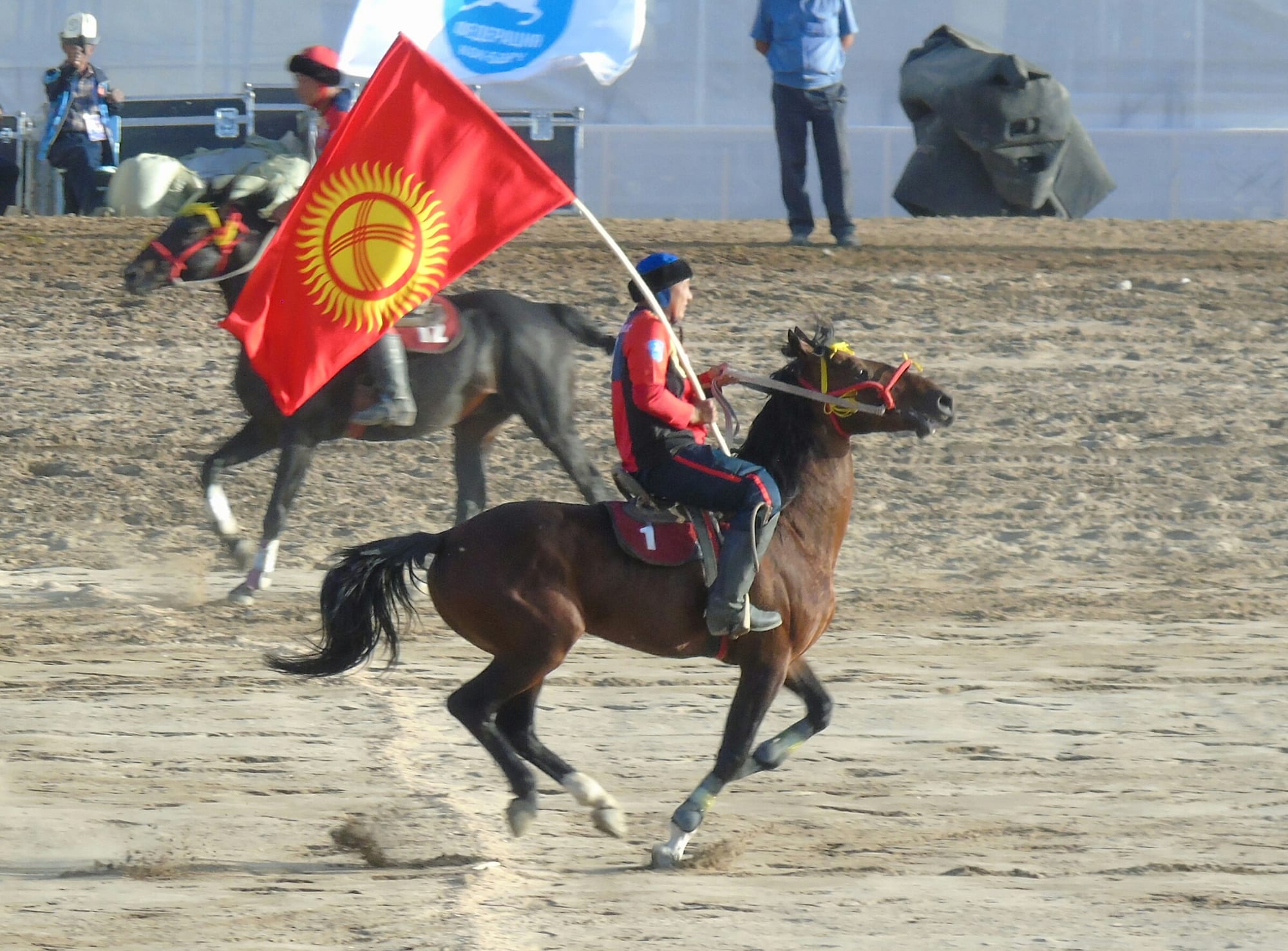
Much of the country's sense of itself comes from its nomadic past and its oral tradition. The great epic trilogy of Manas, Semetey and Seytek describes the unification of scattered tribes into one nation, and UNESCO notes that it carries the historical memory of the Kyrgyz people while promoting ideas of tolerance and multiculturalism. Other traditions express the same wish to hold people together. Kok boru, the horseback team game, is valued for bringing communities together. The white felt ak-kalpak hat is likewise worn as a shared symbol of Kyrgyz identity.
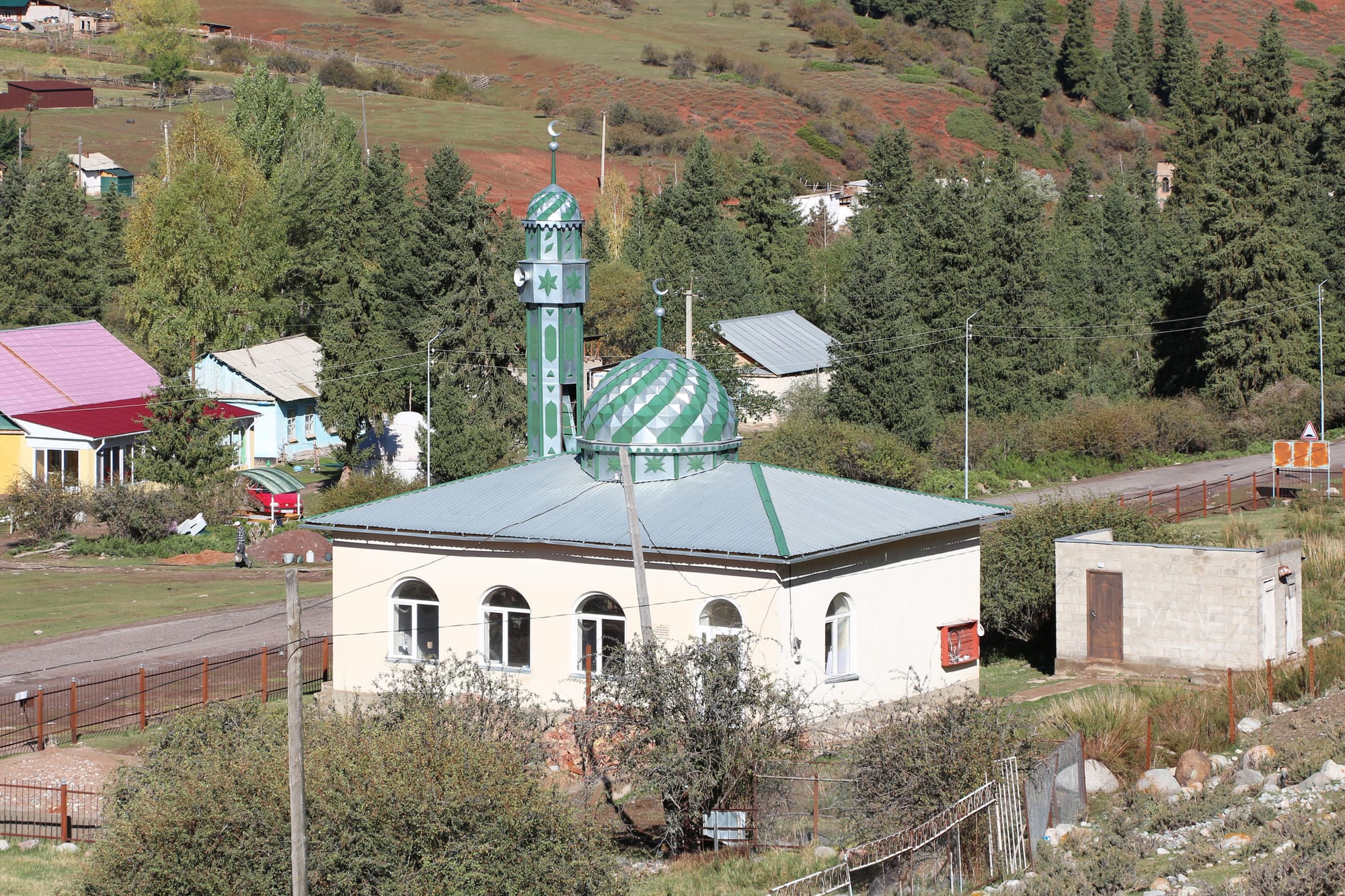
Respect for elders and for community approval runs deep. Family celebrations were traditionally held in order to receive bata, the blessing of the community. In recent years that ideal has come under strain: one member of parliament, proposing limits on spending, argued in 2025 that the focus had shifted from blessings to material concerns, with families competing over how much guests would bring and sometimes taking out loans to keep up.
Greetings and meeting people
First impressions in Kyrgyzstan are closely tied to appearance. The Peace Corps, which places volunteers in communities across the country, advises that people take pride in how they look, tend to dress up for social occasions and daily life alike. Clean, ironed clothes matter even where wardrobes are small, and people are judged by the way they dress. Western styles are common for women in all but the most rural and conservative areas, but modest, neat dress is the safest choice for visitors.
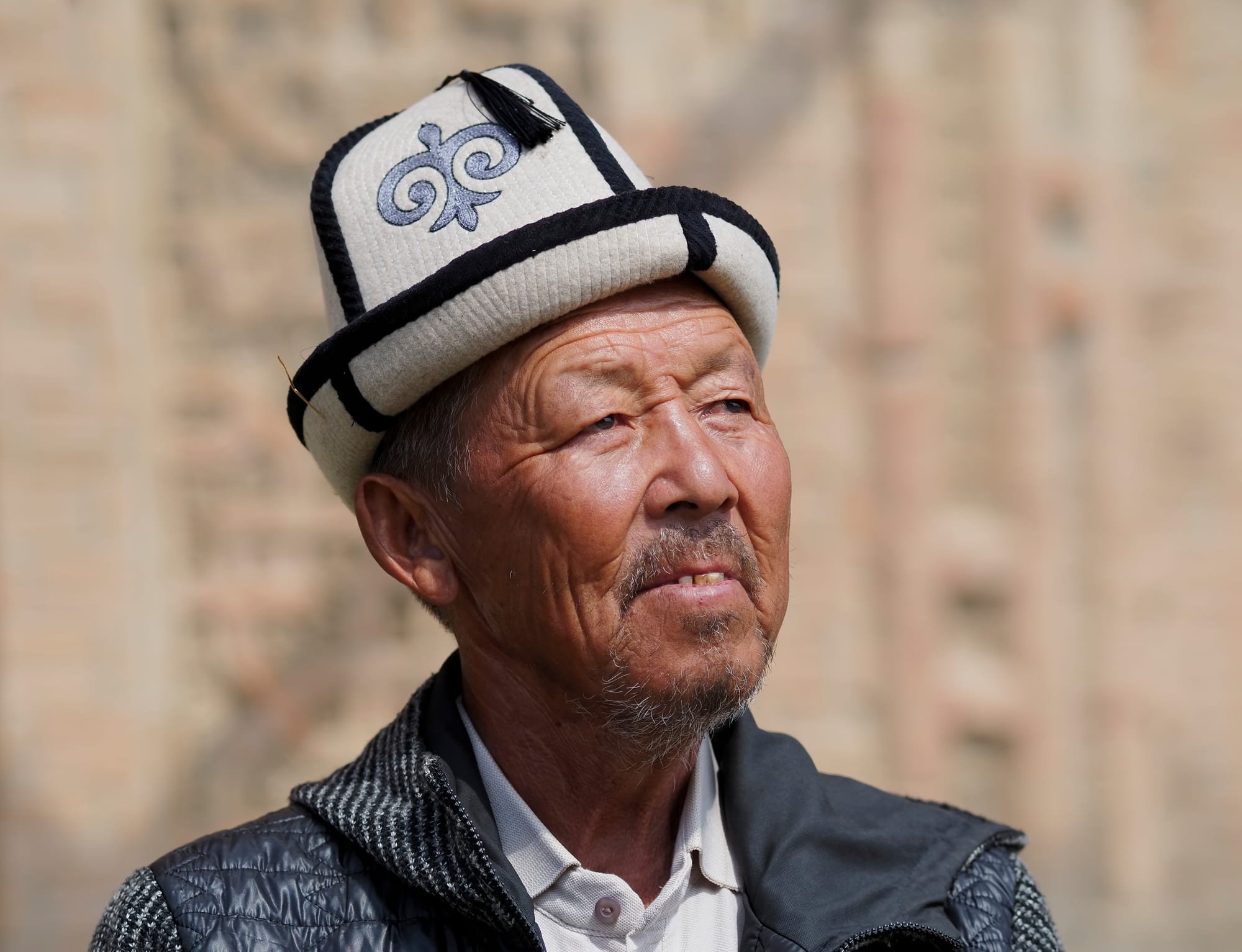
Traditional headwear still says a good deal about the person wearing it. The ak-kalpak, a tall hat of white felt, is worn by many Kyrgyz men, in daily life as well as on holidays and days of mourning. Its shape is said to resemble a snowy peak, its four sides stand for air, water, fire and earth, its tassels for the memory of ancestors, and its patterns for the family tree; there are more than eighty varieties. For married women, the elechek serves a similar purpose on important occasions, its style reflecting the wearer's age, social position and marital status.
Conversation often draws on a shared stock of humour. The anecdotes of Nasreddin, the witty sage known across Central Asia, are used to enrich a conversation, strengthen an argument or explain a situation, and many have passed into everyday idioms and proverbs.
National symbols deserve care. The UK government warns that images or comments about public buildings, the Kyrgyz flag, national food or customs posted on social media can cause offence, and that disrespectful content can lead to fines or detention.
Hospitality and being a guest
Hospitality remains one of the country's defining traits. Much social life revolves around what Peace Corps volunteers call guesting: being invited to a home for a meal and conversation that can last for hours. Hosts, whether Kyrgyz, Uzbek or Russian, are generous and insistent, and a guest will be constantly encouraged to eat and drink more; conveying that one has had enough can be a challenge. It is the custom to take off shoes before entering someone's home.
Food and drink carry much of the meaning of a visit. Sharing flatbread is bound up with hospitality and solidarity, and it accompanies weddings, births, funerals, holidays and prayers. Maksym, a slightly fizzy drink made by fermenting grain, plays a similar role in bringing people together and expressing care, and bread itself is treated as sacred: a good host offers at least bread and tea to any guest. Alcohol is common at social gatherings, and guests may feel pressed to drink, but drinking in public places is prohibited by law.
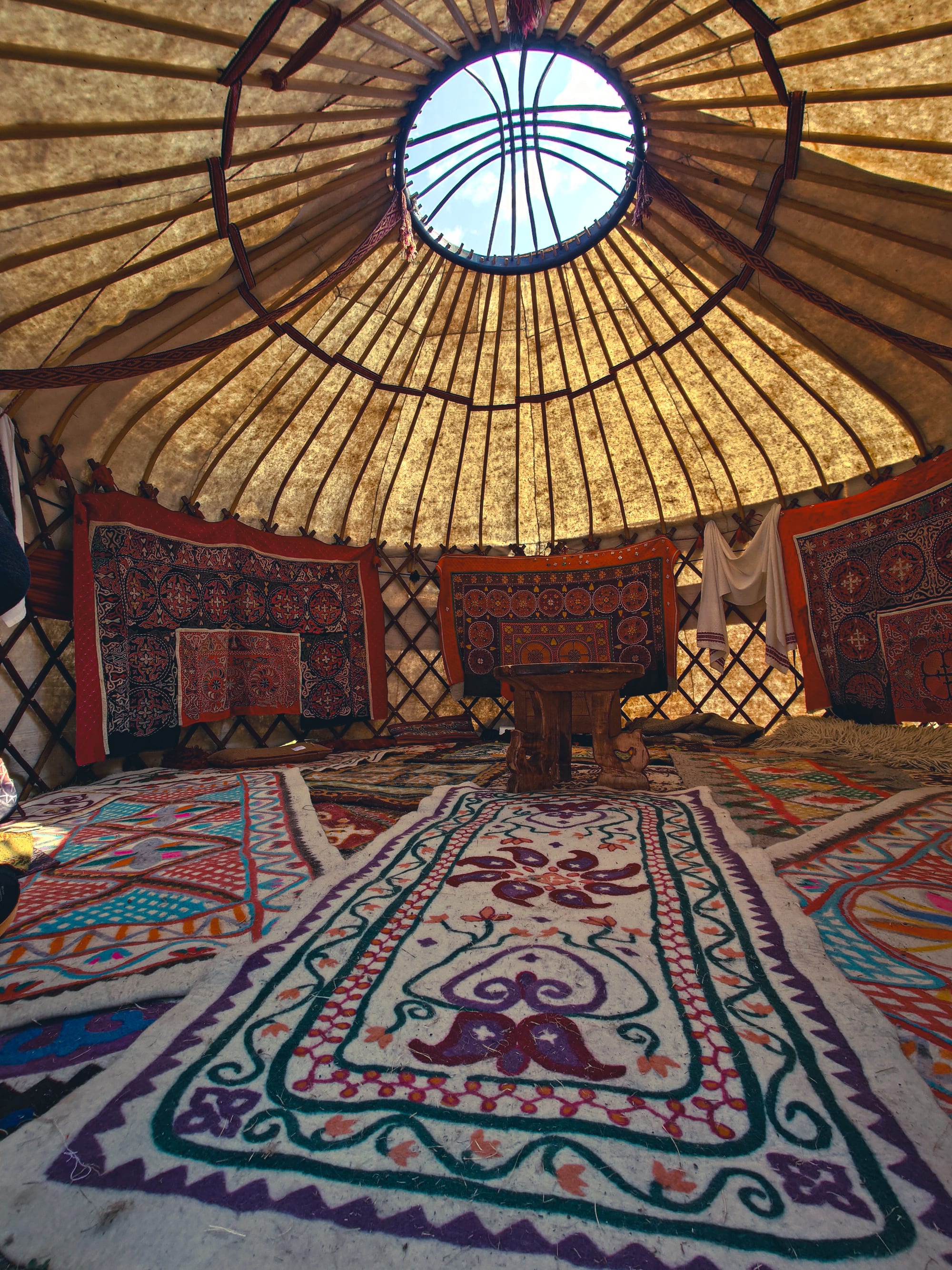
The yurt, meanwhile, remains the setting for many of life's gatherings. Its collapsible wooden frame is made by men, while women produce the felt coverings and the decorations inside, ornamented with organic or geometric patterns. Yurts host festivities, ceremonies, births, weddings and funeral rites, and a family yurt may be handed down from parents to children as an heirloom.
Festivals and life's big moments
Nooruz, the spring new year, is one of the celebrations Kyrgyzstan shares with a wide group of countries on UNESCO's list, a folk festival of nature and the sun marked with games, sports competitions, music, song and dance. The Islamic calendar shapes the year too, and during Ramadan areas around mosques are busy at prayer times and cafés fill around the evening breaking of the fast. Horseback games are the high point of many festivals. In kok boru, two mounted teams struggle for a goat carcass and score by delivering it into a goal; the name means grey wolf, recalling the days when shepherds played with a wolf carcass. A Kyrgyz programme to revive traditional nomad games is listed by UNESCO as a good safeguarding practice.
Weddings bring together a sequence of customs. The bride's send-off from her family, known as kyz uzatuu, is a celebration in its own right, and felt carpets were traditionally part of a bride's dowry and used to decorate yurts for weddings. The darker side of courtship is also part of the picture: bride kidnapping, the abduction of a woman to force her into marriage, was already a crime, and in 2013 the maximum penalty was raised to ten years in prison. UN Women has described it as a grave violation of human rights, and enforcement remains weak.
Funerals and memorials are major community events. It is customary to slaughter several animals and share the meat among those who come, and funerals often draw large crowds. Memorial gatherings have traditionally followed on the third, seventh and fortieth days after a death and on its anniversary. The cost of these customs has become a political issue: the government has campaigned against wasteful spending at ceremonies, and a draft law put forward in 2025 proposed limiting wedding guests, livestock slaughter and memorial meals.
Arts, crafts and music
The oral epic is Kyrgyzstan's most celebrated art. The akyns, the epic tellers, combine singing, improvisation and musical composition, and the shorter epics are accompanied by the komuz, a three-stringed lute. Manas performances take place on public occasions from village events to national holidays, and the manaschy enter a near-trance state as they narrate, using special rhythms, tones and gestures. Improvisation lives on in aitysh, a contest in which two akyns trade improvised verses on social, political and personal themes, and the wittiest, most inventive replies win the most praise.
Felt is the great domestic craft. Ala-kiyiz and shyrdak carpets, with their symbolic patterns, have traditionally been made by older women in rural and mountain areas and passed on to younger women in the family. UNESCO has placed them, since 2012, on its list of heritage in need of urgent safeguarding, as fewer young people take up the craft. The ak-kalpak, by contrast, is made through felting, cutting, sewing and pattern embroidery, skills passed on through hands-on training and joint work in workshops.
Games of skill sit alongside the arts. Toguz korgool, a strategy game played by distributing stones among two rows of nine holes, is a popular pastime, and Kyrgyzstan shares it with Kazakhstan and Turkey on UNESCO's list, alongside falconry and the anecdotes of Nasreddin.
Dos and don'ts for visitors
- Do take your shoes off before entering a home.
- Do accept an invitation to a meal if you can, and expect a long visit and repeated offers of more food and drink.
- Do dress neatly and modestly; appearance is noticed and clean, ironed clothes matter.
- Do respect local sensitivities during Ramadan and at religious sites.
- Don't drink alcohol in public places; it is prohibited and can bring a fine or even imprisonment.
- Do carry your passport, or a notarised copy, at all times; police can arrest people without ID.
- Don't photograph military sites, border checkpoints or police stations, and take care posting about the flag, national food or customs online.
- Do stay clear of the border zones in the Fergana Valley and along the Tajik frontier, where there have been deadly clashes.
What to take away
Kyrgyzstan's customs, from the elechek to the epic, rest on a belief that what matters is carried forward by the community — and a visitor who accepts a long meal, dresses with care and listens to the elders will share in that blessing too.