Culture & Customs · Kiribati
Kiribati: A Place on the Maneaba Floor
A deeply Christian atoll nation where every family has its seat in the great meeting house, humility is prized above display, and a request from a relative is not easily refused
By Worldlore Editorial · 30 September 2026
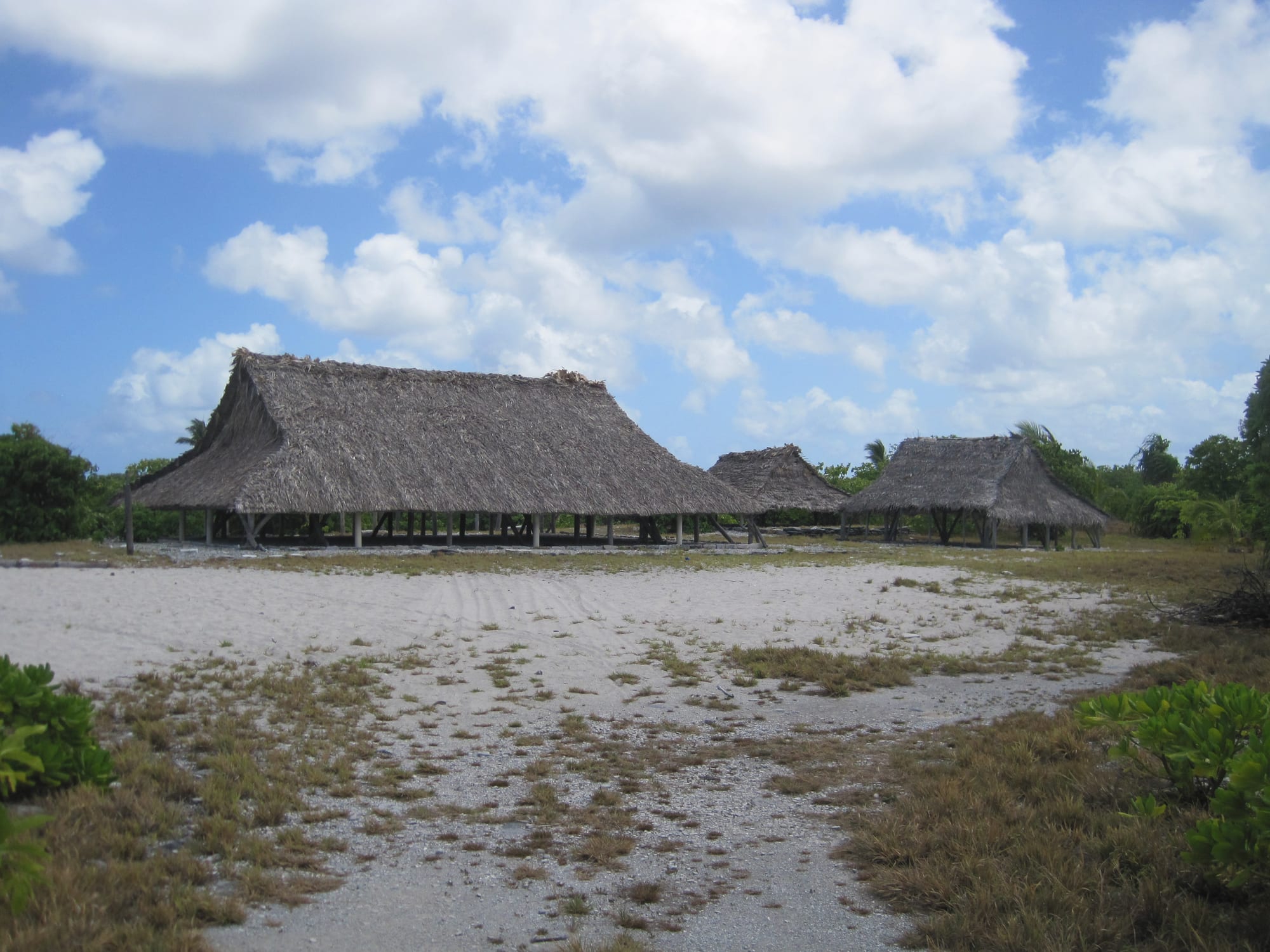
Inside a maneaba, the great open-sided meeting house found at the heart of every I-Kiribati community, the floor looks bare. There are no chairs, no marked seats and no signs. Yet everyone who walks in knows exactly where to go. Each family has its own place around the edge, and it is from there that its representative speaks when the community gathers to talk, decide or celebrate. Visitors sit on the floor with legs crossed or tucked beneath them, careful that their feet point at no one. It is a small scene, but it holds much of what matters in Kiribati: belonging to a family, knowing one's place without being told, and treating shared space with quiet care.
Faith, identity and values
Christianity is woven through almost every part of life in Kiribati. It arrived with missionaries in the nineteenth century, and the country's tourism office describes it today as integral to both culture and livelihood. According to the 2020 census, cited by the US State Department, around 59 per cent of the population is Roman Catholic and about 21 per cent belongs to the Kiribati Uniting Church, with a further 8 per cent in the Kiribati Protestant Church, the group that kept the old name when the main Protestant church renamed itself in 2014. Smaller communities include Latter-day Saints, Seventh-day Adventists and members of the Baha'i Faith. Catholics are concentrated in the northern islands and Protestants form the majority in the south, where two islands have continued a "one church only" policy out of deference to the first Protestant missionaries who reached them.
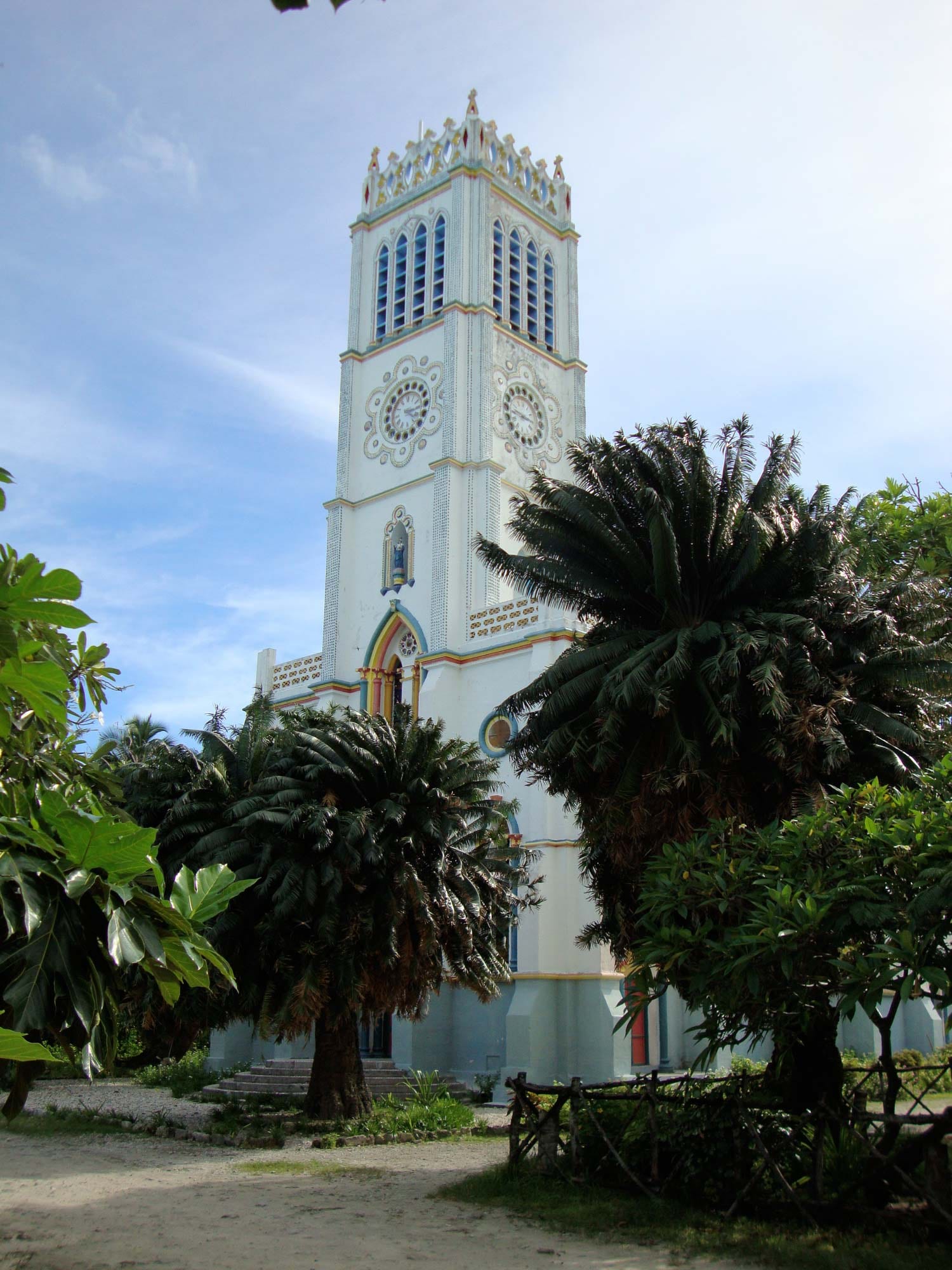
Older beliefs have not entirely disappeared. In I-Kiribati tradition the world was made by Nareau, the creator spider, and before the missionaries came worship centred on anti, spirits that are still treated with respect in everyday life. The State Department notes that alongside the churches, Kiribati culture keeps a strong traditional element.
The values that guide behaviour are closely tied to family and community. The tourism office lists respect for family, for the elderly, for friendship and for guests, known as iruwa, among the core principles of I-Kiribati life. Humility and humbleness are admired in all aspects of life. Authority in community affairs has traditionally rested with the unimwane, the male elders, who lead discussion in the maneaba on political, social, economic and religious matters.
Family itself is understood in layers. Countries and Their Cultures distinguishes the mwenga, or household, defined by who lives together; the utu, the wider circle of related family; and the kainga, the larger group linked by shared land and descent from a common ancestor. Kinship and property are traced through both the mother's and the father's families, and in rural areas a married woman traditionally moves to live on her husband's family land.
One custom sums up the strength of family obligation. Under bubuti, a relative in need may make a request that, by custom, should not be refused. Refusing brings shame, since it suggests a lack of compassion, and the practice means that anyone who does well is expected to share their good fortune across the wider family. Alongside this sits a relaxed attitude to time, summed up by the tourism office as a philosophy of living one day at a time and following the rhythm of the tides.
Greetings and meeting people
The everyday greeting is "Mauri", which the tourism office translates as both "hello" and "good health". It is used with strangers and friends alike, and visitors who learn it, along with a few other words of Kiribati, are warmly received; the effort itself is taken as a sign of respect.
Much of I-Kiribati courtesy is expressed through the body rather than through words. Direct eye contact is uncommon, and looking straight at a person of higher status is considered inappropriate. The head is regarded as the most personal part of the body: touching someone's head is taboo, and even raising an arm above another person's head is avoided. Walking between two people who are talking, or cutting across the line of their gaze, is considered rude. When there is no way round, a person stoops low as they pass and says "matauninga", a polite way of asking to be excused.
This general modesty extends to appearance. Modest dress is considered important, especially for women, and cleanliness of the body and of clothing is valued.
Hospitality and being a guest
Guests are treated with warmth and generosity, and much of the hospitality a visitor is likely to meet takes place in the maneaba. Here there are proper ways to sit and to move. People sit on the floor with legs crossed or tucked to the side, a posture known as kabari, and face towards the host group. Feet should never be pointed at anyone. When moving among people who are already seated, it is polite to stoop low rather than walk upright over them.
Formal functions follow their own protocol. A guest invited to one is expected to offer a mweaka, a gratuity presented to the master of ceremonies as a mark of respect. According to the tourism office, it is also customary to present tobacco at cultural shrines on a first visit. For formal maneaba functions, a sarong or lavalava is expected, and women are encouraged to wear a sarong with a local blouse. Bikinis and short clothing are not appropriate in villages, and nude or topless swimming and sunbathing are not acceptable anywhere.
The feast, or botaki, is the high point of I-Kiribati hospitality, held for the community's major occasions. The size of the occasion is read from what is served: a whole roasted pig is the most symbolically valued dish, and a botaki without one is considered a small affair.
Some visitors now experience this hospitality through homestays, which the tourism office promotes as a way to share meals, learn words of the language and take part in daily tasks such as fishing and weaving alongside a host family.
Festivals and life's big moments
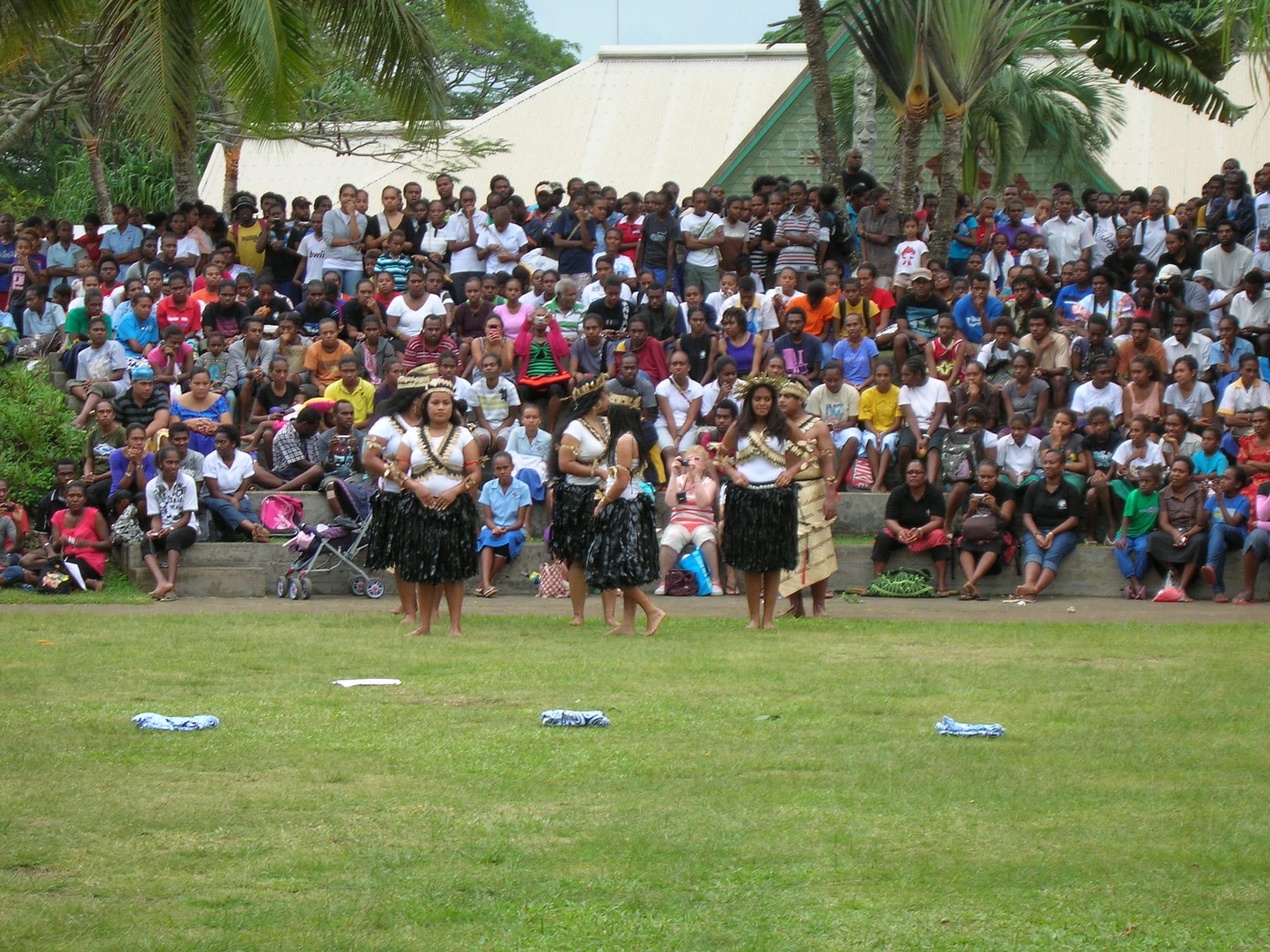
The biggest celebration of the year falls in July. National Day on 12 July marks independence from Britain in 1979, and it sits at the centre of a cluster of public holidays that includes Gospel Day and National Culture and Senior Citizens Day, whose exact dates shift from year to year around the weekend. The festivities stretch well beyond the official days. For the 45th anniversary in 2024, RNZ reported that the government planned a three-week programme of sports events, singing and a beauty contest involving the whole community. Faith is part of the occasion too: during the 2023 celebrations, the president convened an all-faith service that brought together the leaders of the country's churches.
The rest of the calendar follows the church year and the civic one. Good Friday, Easter Monday, Christmas Day and Boxing Day are public holidays, alongside New Year's Day, National Youth and Children's Day in early August, and days marking health, labour, teachers, women and human rights.
Big gatherings in the maneaba, the tourism office notes, bring together traditional dances, songs and shared food, and they mark the occasions that matter most to a community. Marriage is almost universal and divorce is uncommon. Arranged marriages remain common, particularly away from the capital, although matches made for love, and even elopements, have become more usual and are now tolerated by most families.
Children are at the centre of family life. Countries and Their Cultures describes Kiribati as a pro-natal society in which a new baby is showered with attention by both parents and the wider family, and mothers traditionally stay at home with a newborn for the first few months. Adoption, especially between close relatives, is widely practised, a reflection of how fluid and far-reaching the idea of family is.
Arts, crafts and music
Dance is Kiribati's defining art form. The traditional dances, known together as te mwaie ni Kiribati, are unlike those of other Pacific islands: outstretched arms and sudden movements of the head recall birds such as the frigate bird, which appears on the national flag. The tourism office names several main forms, including te buki, te ruoia, te kabuti, te tirere, te kaimatoa and te bino, a sitting dance. Dance is a fixture of maneaba gatherings, where it is performed alongside songs and shared food.
Craft skills grew from the coconut palm and the sea. The traditional canoe, te waa, is built entirely from natural materials and lashed together with sennit, an extremely strong twine made from dried coconut husk, and it remains a symbol of the seafaring skill that once connected the scattered islands. Weaving, too, remains a living household skill, and it is one of the activities visitors on homestays are invited to try.
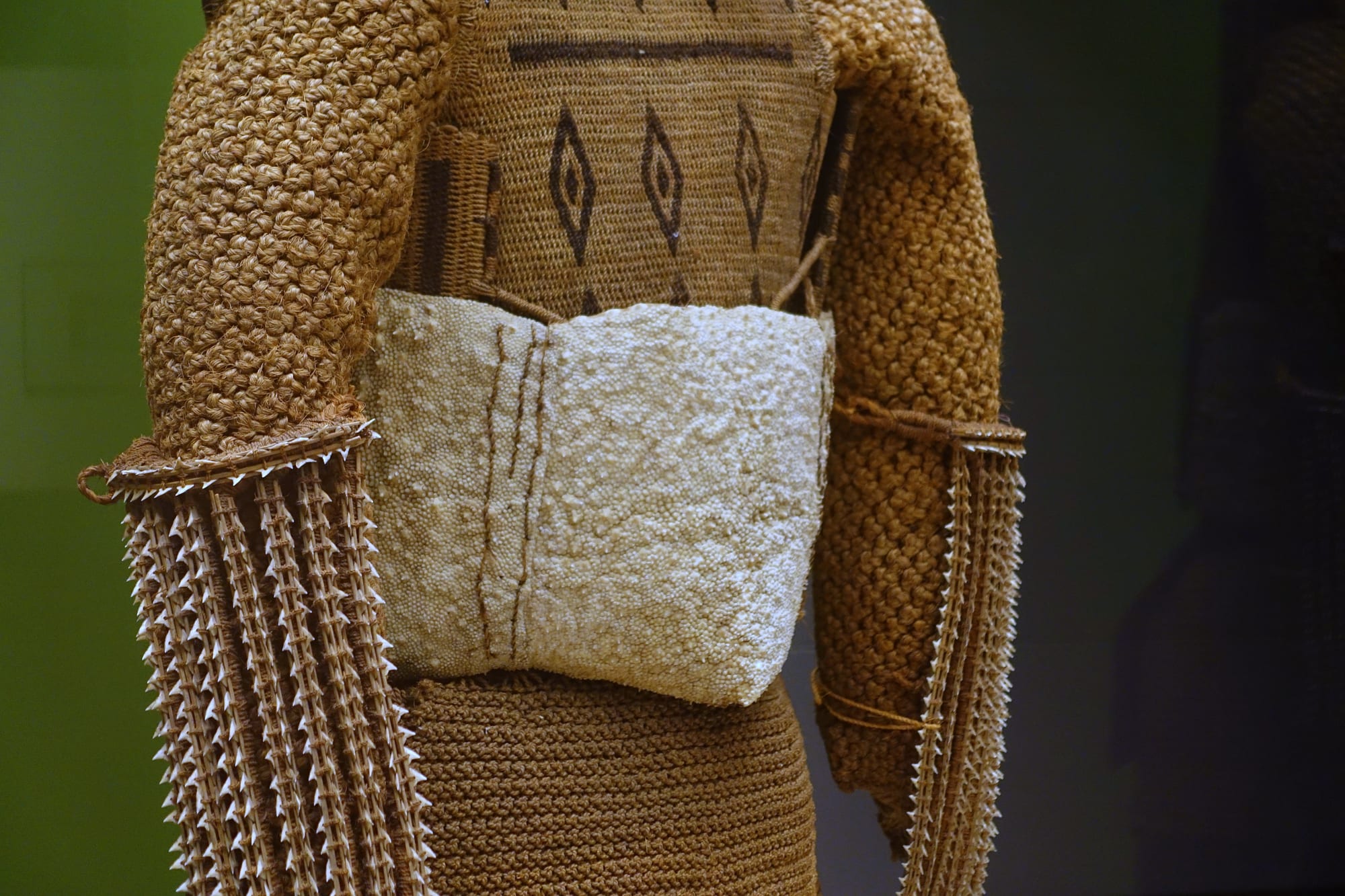
The most remarkable examples of that craft now sit in museums around the world: full suits of armour made from coconut fibre. According to the Fondation Gandur pour l'Art in Geneva, the fibre was soaked in seawater for several months, dried, and spun by women into sennit; men then knotted the cord into dense body armour using a fishbone needle, passing the technique from father to son. A single suit could take more than 400 metres of cord, and dark lozenge patterns were worked into the chest with women's hair. The armour was worn in ritualised combats over land or honour, and weapons edged with rows of shark teeth completed the warrior's equipment.
Dos and don'ts for visitors
- Do greet people with "Mauri" and try a few words of Kiribati; the effort is appreciated.
- Do stoop and say "matauninga" when passing people who are talking, and never cut between them.
- Don't touch anyone's head or raise an arm above it.
- Do sit cross-legged or with legs tucked in a maneaba, and never point the feet at anyone.
- Do dress modestly in villages and wear a sarong or lavalava to formal maneaba functions; bikinis, short clothing and topless or nude bathing are not acceptable.
- Do offer a mweaka to the master of ceremonies if invited to a formal function.
- Do ask permission before photographing people.
- Don't hurry noisily past a maneaba or church while a gathering or service is under way.
What to take away
Kiribati asks little of visitors beyond humility and care for shared space — and those who take their place on the maneaba floor quietly, with feet tucked and head lowered, will find themselves welcomed as part of the family.