Culture & Customs · Kenya
Kenya: Walking the Guest Part of the Way
Forty-odd peoples, a shared Swahili greeting, a handshake for everyone in the room, and a courtesy that sees a visitor off down the road rather than at the door
By Worldlore Editorial · 30 September 2026
It is a Sunday afternoon, the favourite time for visiting in Kenya, and a guest arrives at a family home rather later than the hour that was mentioned. Nobody minds; arriving exactly on time might even have unsettled the hosts. Everyone in the room is greeted in turn with a handshake and a round of questions about family, health and work. A small gift of tea leaves or sugar is handed over in a woven kiondo bag, which will go home again with something inside it, since returning a kiondo empty would be impolite. Tea is poured, and the talk runs on. When the visit ends, the host does not say goodbye at the door but walks the guest some distance down the road first. In that small act lies much of what Kenyans value: time given freely, respect paid to every person present, and a sense that a guest is not truly on their way until they have been properly seen off.
Faith, identity and values
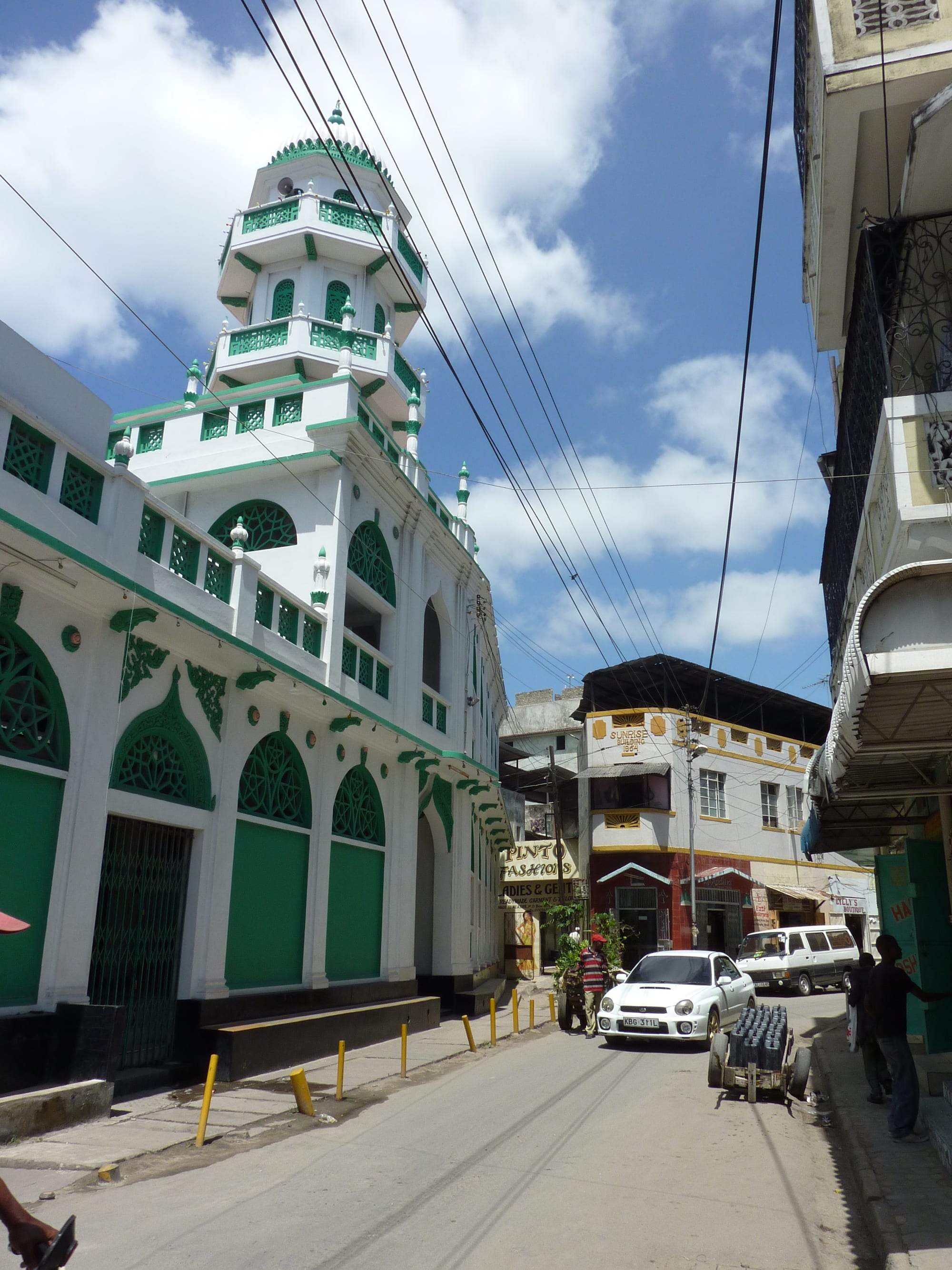
Kenya is a strongly religious country. In the 2019 census, around 85 per cent of Kenyans described themselves as Christian — Protestants the largest group, followed by Roman Catholics and Evangelicals, together with a smaller share belonging to African Instituted Churches, congregations that grew up independently of the missionary churches. Worship tends to be exuberant, with music, rhythm, singing and dancing at its heart, and religious symbols appear everywhere: on the walls of homes and offices, and painted or stuck on the backs of vehicles. Muslims make up about 11 per cent of the population, most of them Sunni, and are concentrated on the coast and in the north-east, where Islam has shaped the Swahili culture of the Indian Ocean shore for more than a thousand years. A small minority follow Hinduism or other faiths.
Older beliefs have not disappeared. Traditional worldviews differ from one community to the next but often share a sense that the human and spirit worlds overlap, a reverence for ancestors, and the idea that the divine is best approached through intermediaries. Among the Mijikenda, nine related peoples of the coast, sacred forest settlements known as kayas remain places of prayer, oath-taking, naming ceremonies, initiations and burials, overseen by councils of elders. Rules on what may be taken from these forests have helped to conserve them, and the traditions tied to the kayas are on UNESCO's list of heritage in urgent need of safeguarding.
Kenya is home to more than 40 ethnic groups, the largest being the Kikuyu, Luhya and Kalenjin, and each has its own language and customs. Ethnicity has long influenced whom people marry and where they feel they belong, and Kenyans can be sensitive to stereotypes, though younger people increasingly put a shared national identity first, with Swahili serving as the common tongue across ethnic lines. Beneath this diversity sit common values. Society is collective rather than individualistic: people feel a real duty to those around them, and supporting relatives — paying a niece's school fees, for instance — is expected rather than admired as exceptional. Elders are treated with great respect, and education, land and wealth all confer standing. The tradition of the baraza, a community meeting at which each person is given the chance to speak, reflects a wider belief that decisions belong to the group.
Communication follows from this. Kenyans tend to be indirect, preferring to keep the peace rather than confront. A request that cannot be met may be answered with "yes" or "no problem" rather than a flat refusal, and points are often softened with a story or a metaphor. Criticism is given privately and gently, and humour is a favourite way of easing tension.
Greetings and meeting people
Greetings matter, and they are never rushed. On entering a room, it is polite to greet everyone individually, usually with a few words followed by a handshake. When greeting an elder or someone senior, a person supports their own right forearm with the left hand as a mark of respect; if hands are dirty, offering an elbow to be grasped is an accepted alternative. Close male friends may hug, and women often exchange hugs and kisses on the cheek with friends and relatives. A greeting is also a conversation in miniature, with enquiries after the other person's family, home and well-being that are expected to be answered, not waved away.
Swahili supplies the everyday phrases. "Hujambo", or the casual "Jambo", is answered with "Sijambo" — "I am well" — while younger and more informal speakers trade "Sasa" or "Mambo", answered with "Poa". Forms of address signal respect. A man may be addressed as "bwana", and an older man, roughly from middle age, as "mzee", a title that honours his experience; women of any age can be addressed as "mama". Visitors who attempt a few words of Swahili will find the effort warmly received, however imperfect the pronunciation.
Kenyans generally stand within arm's length in conversation, and keeping a greater distance can seem aloof. Friends of the same sex often hold hands in public, which carries no romantic meaning, whereas public displays of affection between couples are considered inappropriate in most communities. Eye contact varies: in towns, looking someone in the eye signals honesty and interest, while in rural areas, and when speaking to elders, people may lower their gaze. Pointing at someone with the index finger is rude; Kenyans tend to indicate a direction with the chin or the lips instead, and beckon with all the fingers of the hand.
Hospitality and being a guest
Sunday is the great day for visiting, and many visits are unplanned and short, built around conversation and a cup of tea. A longer stay, on the other hand, calls for advance notice. Timekeeping is relaxed: arrivals 30 to 45 minutes after an agreed time are common, and turning up exactly on the hour can catch hosts unprepared, so arriving around half an hour late is often the more considerate choice. Guests usually bring something small, such as flowers or tea leaves in town, or practical items like coffee and sugar in rural areas.
The hands carry meaning. Food, drinks, money and gifts should be passed and received with the right hand, or with both hands; using the left hand alone is regarded as improper. In many rural homes food is eaten by hand, and hands are washed before and after the meal. Men are frequently served first, and in some traditional households children eat separately from the adults. Sharing food carries real weight as an expression of welcome, and afternoon tea is a fixture of daily hospitality.
Dress is part of showing respect to a host. Going shirtless, wearing tops with thin straps that bare the shoulders, or skirts above the knee can be seen as too revealing in someone's home or at a place of worship. On the coast, where most people are Muslim, modest clothing matters even more once away from the beach resorts and hotels. Finally, a visit ends as it began, with care: the host will usually accompany departing guests some way along the road before turning back, and it is gracious to let them do so.
Festivals and life's big moments
The national calendar is anchored by three days written into the story of independence. Madaraka Day, on 1 June, marks the achievement of internal self-government; Mashujaa Day, on 20 October, honours the country's heroes and heroines; and Jamhuri Day, on 12 December, celebrates independence and the republic. Labour Day falls on 1 May.
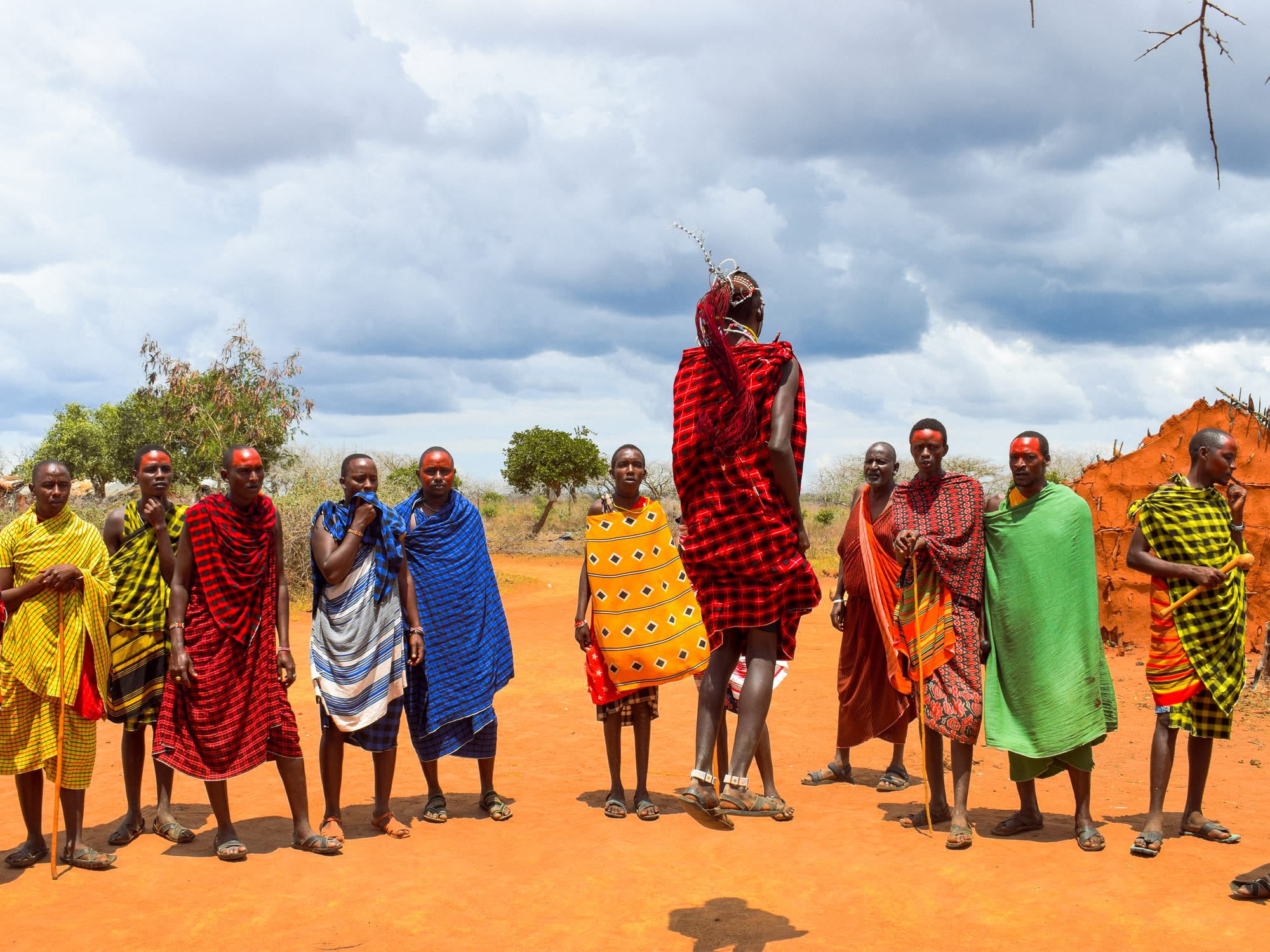
The passage from youth to adulthood is still marked with ceremony in many communities. Among the Maasai, three linked rites guide young men through life: enkipaata, which prepares boys for initiation; eunoto, at which the young warriors, or morans, are shaved as they move towards adulthood; and olng'esherr, a meat-eating ceremony marking the end of warriorhood and the start of eldership. Together they pass on lessons about livestock, conflict, lineage and responsibility, and they are on UNESCO's urgent safeguarding list.
Marriage usually comes in the mid to late twenties, once education is finished or finances are secure. Many people still choose a partner from their own ethnic group, while avoiding anyone from their own clan, and among Muslim families marriages are commonly arranged by the families. Bride price remains widespread: in rural areas it is often paid in livestock, while urban families more commonly pay money to the bride's family in instalments. At some weddings the bride walks on lengths of kanga cloth laid out so that her feet stay clean.
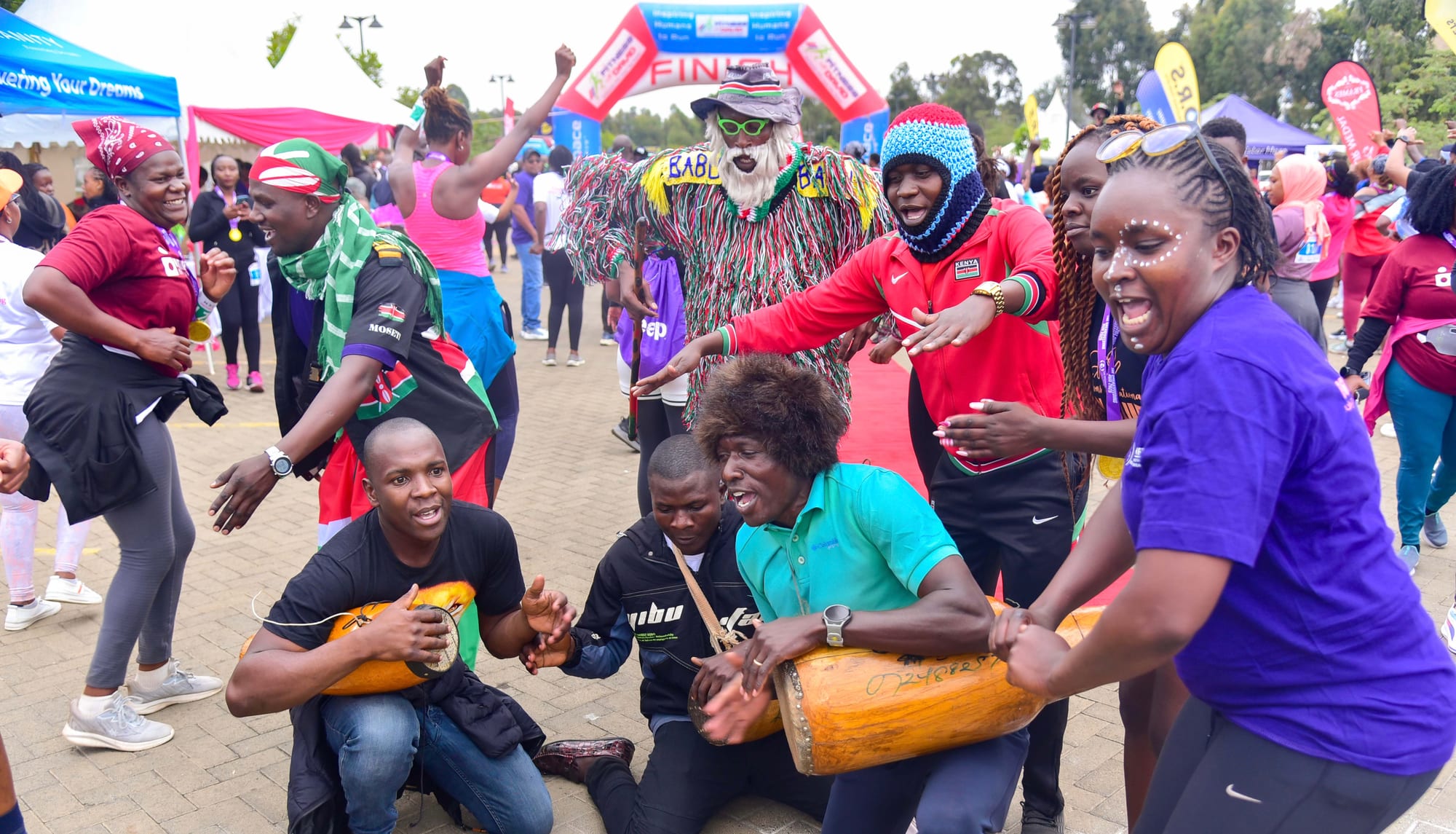
The kanga appears again at the beginning and end of life. In some communities newborns are given kangas as a wish for prosperity, while at funerals the cloth may be used to wrap or cover the dead, and kangas are given to mourners as a gift of condolence. Music accompanies many of these moments, too: among the Isukha and Idakho, Isukuti drumming and dancing is performed at births, initiations, weddings and funerals alike, as well as at public celebrations and sporting events.
Arts, crafts and music
The Isukuti dance shows how music and community life are woven together. It is played on sets of three drums — large, medium and small — with an antelope horn and metal rattles, and it is fast, energetic and passionate. A lead singer calls out verses in time with the drumbeat as men and women dance in separate rows. Its practitioners worry that elderly drummers are not finding successors and that younger audiences are drifting towards other entertainment.
Kenya's best-loved popular music, benga, grew out of the same kind of tradition. It took shape between the late 1940s and the late 1960s, drawing on Luo folk songs, as guitarists sought to imitate the nyatiti, the Luo eight-stringed lyre. Instead of strumming, benga guitarists pick rapid single notes that echo the lyre, over a fast, bouncing beat that builds to long instrumental climaxes. Bandleaders such as D.O. Misiani gave it a national following, and it travelled well beyond Kenya's borders. Today benga competes with newer genres and imported music, but it remains a touchstone of Kenyan sound.
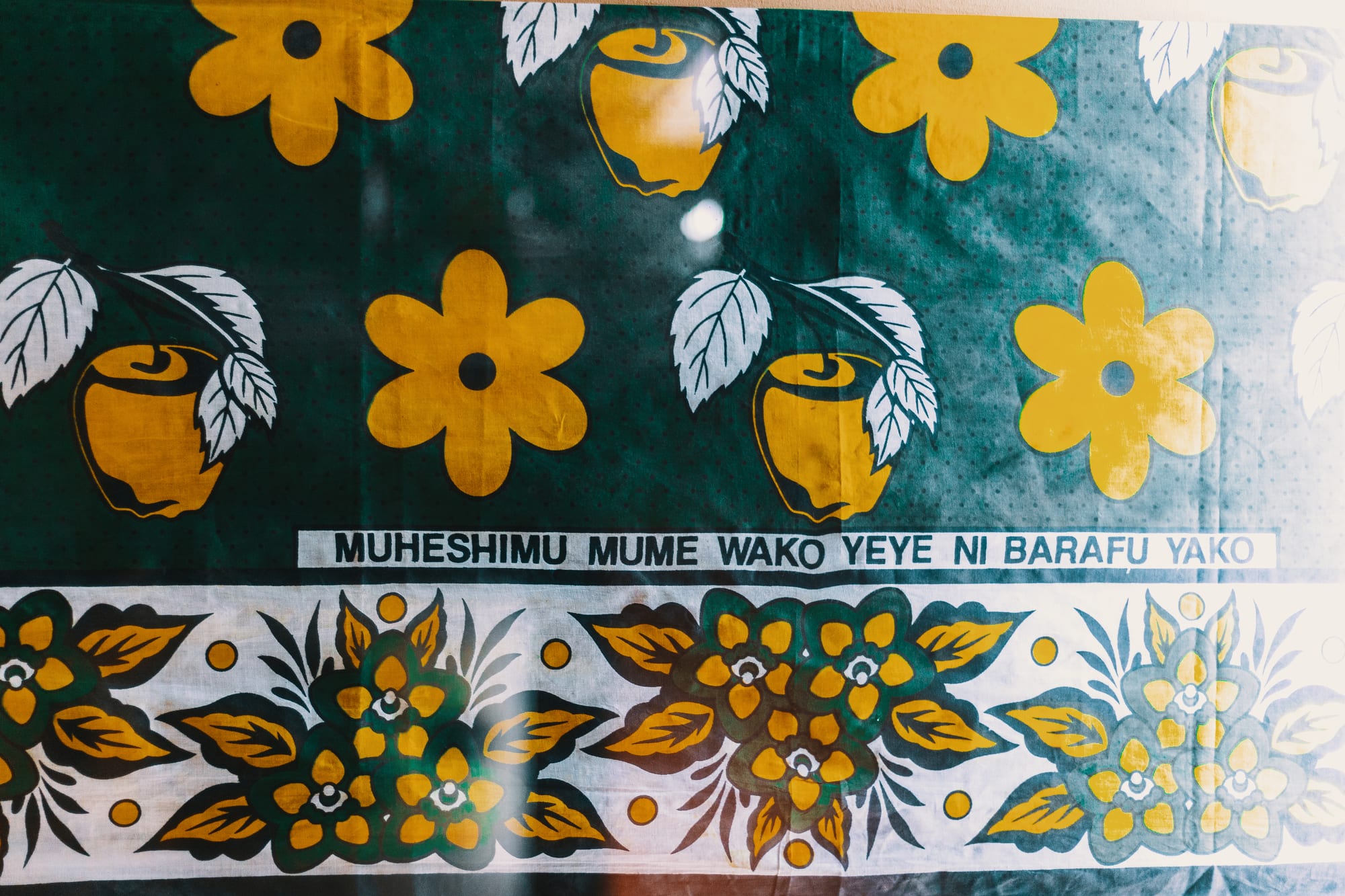
No object is more characteristically Kenyan, or more versatile, than the kanga. This rectangle of printed cotton, roughly 150 by 110 centimetres, has three parts: a patterned border called the pindo, a central motif called the mji, and the jina, a printed Swahili saying. The cloth took shape on the East African coast in the nineteenth century, when imported cotton cloth began to be decorated and printed; the earliest designs were spotted in black and white, which is said to have given the cloth its name, after the speckled guinea fowl. The sayings are what make a kanga speak. They can be affectionate, pointed, religious or political — "Siri haidumu milele", "a secret does not last forever", is one example — and a wearer may choose a particular cloth to make a point without saying a word. Kangas are worn as wraps and head coverings, used to carry babies and cushion loads, and turned into curtains, bags and clothing.
UNESCO lists further living traditions in need of protection, among them the Mwazindika spiritual dance of the Daida community. What unites them is that, for most Kenyans, the arts are not kept for the stage but performed where people gather — at weddings, funerals, churches and celebrations.
Dos and don'ts for visitors
- Do check the latest government travel advice before any trip; several governments advise against all or all-but-essential travel to counties near the Somali border and parts of the northern coast because of the risk of terrorism.
- Do greet everyone present individually with a handshake, supporting the right forearm with the left hand when greeting an elder.
- Do pass and receive money, food and gifts with the right hand or both hands, never the left hand alone.
- Do ask before photographing people, and never photograph official buildings, embassies or airports, which is illegal.
- Do dress modestly in homes and places of worship, and conservatively away from the resorts on the largely Muslim coast.
- Don't point at people with the index finger; a nod of the chin is the Kenyan way to indicate someone or something.
- Don't criticise Kenya, mock Christianity or contradict elders, and avoid offering unsolicited advice.
- Don't smoke in public places outside designated smoking areas, which is illegal, and avoid public displays of affection; same-sex sexual activity is illegal in Kenya, and same-sex couples showing affection in public risk arrest and imprisonment.
What to take away
Kenyan courtesy is generous with time and attention — a handshake for everyone, a question about the family, a guest walked part of the way home — and visitors who slow down enough to return it will find themselves welcomed as warmly as any relative.