Culture & Customs · Italy
Italy: Bell Towers and the Bella Figura
A Catholic calendar kept by a largely secular people, a fierce loyalty to the home town, and a lifelong concern with making a good impression — at the table, in the street and in the eyes of the family
By Worldlore Editorial · 30 September 2026
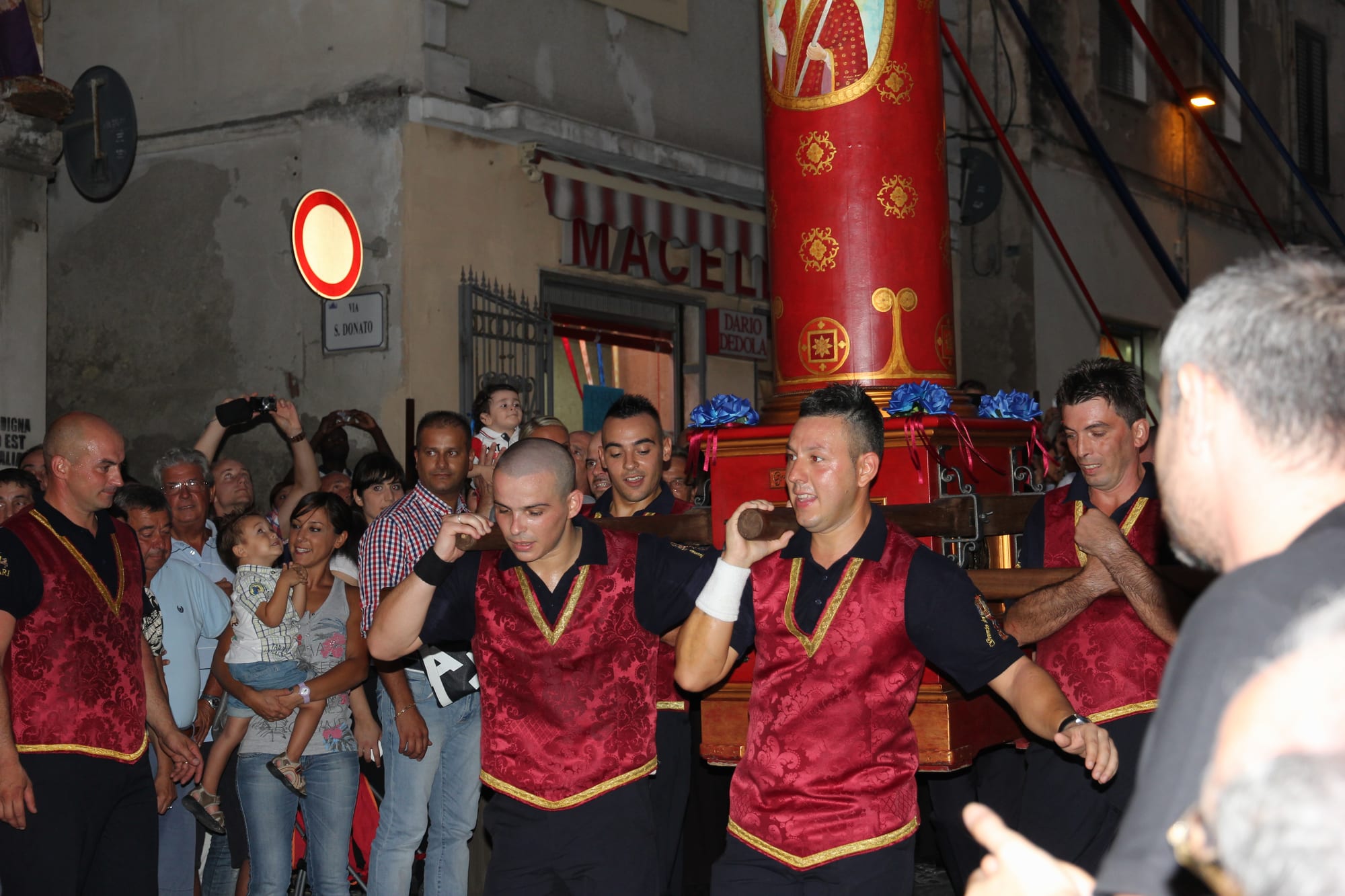
On the feast of a town's patron saint, a narrow street fills with people. A team of bearers, dressed alike, braces beneath a towering wooden structure decorated in the saint's honour, and on a signal they lift it onto their shoulders and begin to move it, step by step, through the crowd. Every movement depends on each bearer doing his part, and the whole town watches as if its own reputation were being carried along with it — which, in a sense, it is. Italy is a country where the local still matters enormously, where faith and public celebration remain closely bound even as churchgoing declines, and where how something is done, and how it looks to others, is rarely an afterthought.
Faith, identity and values
Catholicism has shaped Italian culture for centuries, and it remains the country's dominant faith. In a 2018 Eurobarometer survey, around 79 per cent of Italians identified as Catholic, under 1 per cent as Protestant and about 12 per cent as non-religious, and a small but growing Muslim population has since been added to the mix. Practice is another matter: national statistics show fewer than one in five Italians attending a religious service regularly, and by 2022 almost a third never did. Even so, the Church still frames the great moments of life — baptism, first communion, confirmation and marriage — and there are churches in every town, with Rome alone holding hundreds of them around the Vatican, the seat of the Pope.
The family, la famiglia, is widely described as the most important part of an Italian's life, a source of emotional, economic and social support. Extended families are often closely involved in one another's daily lives, and elders are treated with deep respect; residential care is avoided unless there is no other option, since children are expected to look after their parents in old age.
Two further ideas help to explain everyday behaviour. The first is fare la bella figura, "making a good impression": presenting oneself with confidence, style and an elegant manner. It covers much more than clothes, since how a person carries themselves is taken as a reflection of their family and upbringing, and a good reputation opens doors. It is one reason why dressing smartly and looking neat and well groomed is noticed and appreciated, even on ordinary days, and why tact is valued when delivering criticism or bad news. The second is campanilismo, loyalty to one's own town or region, named after the campanile, the bell tower that stood at the heart of every community — as in the old boast that "our bell tower is taller than yours". Italy was for most of its history a patchwork of separate states, and regional dialects, traditions and identities remain strong. Social life leans towards the public and the communal, played out in piazzas and on the early-evening stroll, the passeggiata.
Greetings and meeting people
The usual greeting is a handshake with direct eye contact and a smile. When several people are greeting at once, it is considered bad form to reach across another pair's handshake, and someone whose hands are wet or dirty may simply nod instead. Among friends and family, air kisses on both cheeks are common; the gesture is known as il bacetto. "Ciao" is the casual hello and goodbye, while "buongiorno" (good day) and "buonasera" (good evening) are the more formal choices, and the right ones with strangers and older people. Titles matter at first: people are addressed as Signore or Signora with their surname until invited to move to first names, and older Italians in particular prefer the polite form.
Conversation is expressive and physical. Italians often speak loudly, talk over one another and use their hands freely to add emphasis; a raised voice is more likely to signal excitement than anger. People stand close — sometimes under a metre apart — and may touch an arm or a shoulder while talking, and stepping back can look like avoidance. Direct, steady eye contact is expected, though staring at strangers is considered rude. Some gestures carry specific meanings: rubbing the thumb against the fingers refers to money, and in the south an upward jerk of the head, which can look to outsiders rather like a nod, means "no". Many Italians also avoid making phone calls in the early afternoon, between about two and four, a time some still keep for a rest.
Hospitality and being a guest
Visiting friends is a normal part of Sundays and holidays, and an invitation to a home is a mark of warmth. Punctuality is relaxed for social occasions: arriving a little after the stated time is generally acceptable. A guest who arrives shortly before a meal will usually be expected to stay for it, and a compliment on the home — its cleanliness and decoration — is always well received.
Dinner guests typically bring wine, chocolates or flowers. Flowers need some care, since chrysanthemums are associated with death and used at funerals, yellow flowers can suggest jealousy, and red ones love or passion. Gifts are better not wrapped in black or purple, colours linked with mourning and bad luck, and knives and scissors are avoided as unlucky. Making a show of how much a present cost is considered bad taste.
At the table, guests wait for the host to sit before taking their own seat. Hands should stay visible, resting on the table rather than in the lap, though elbows are kept off it, and stretching at the table is poor form. Bread is used at the end of a course to gather up the last of the sauce, and no one leaves the table until everyone has finished eating. When eating out, tipping is not built into the service culture: many diners simply pay the bill, and the coperto that appears on many bills is a cover charge for the table setting and service, not a tip.
Festivals and life's big moments
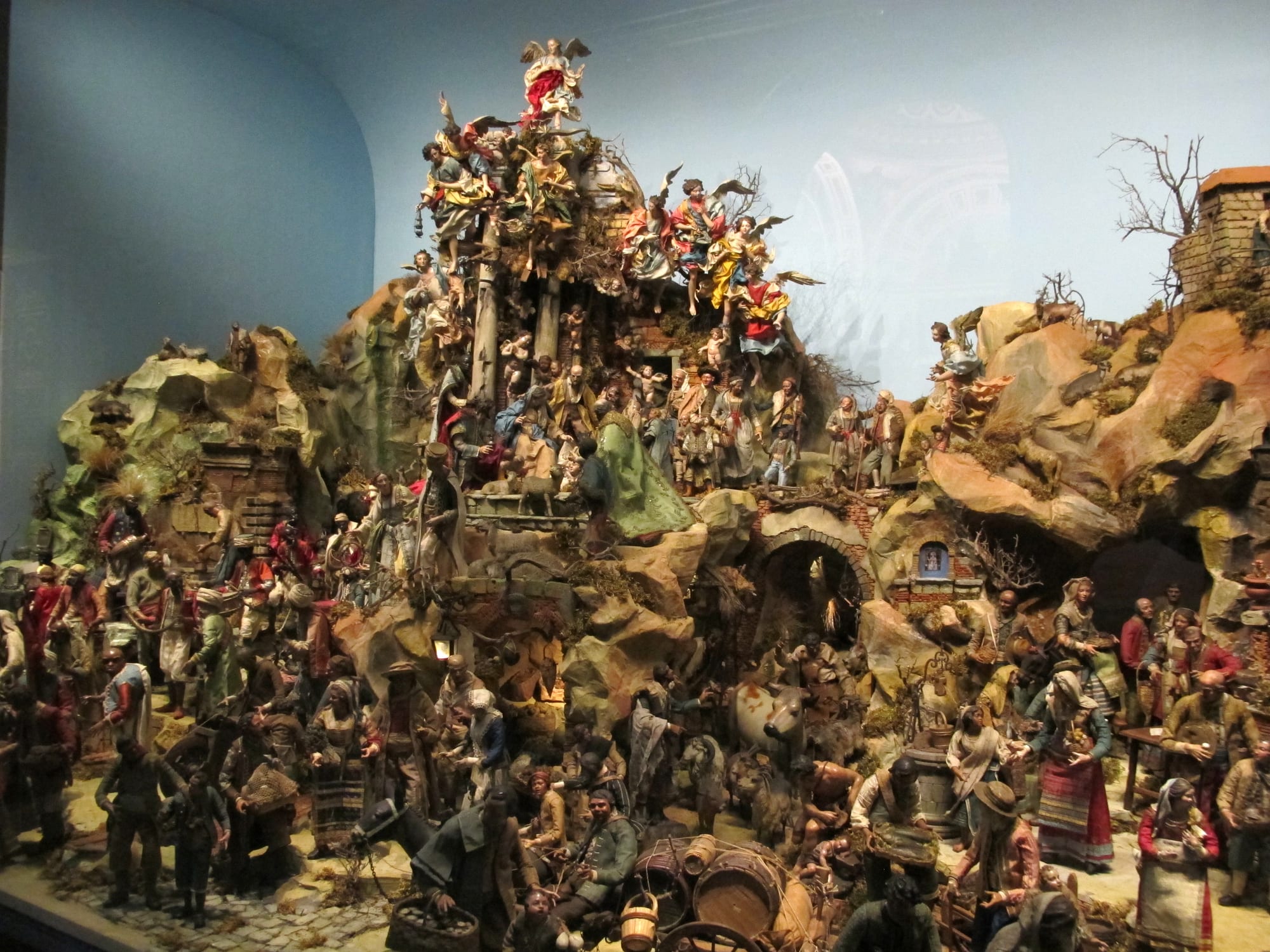
The festive calendar follows the Church year. The Christmas season opens on 8 December, the Feast of the Immaculate Conception, which also marks the unofficial start of Christmas shopping, and when presepi — nativity scenes — go up in homes, churches and public squares, staying in place until after Epiphany. The custom is traced to Saint Francis, who staged a living nativity in 1223, and building the family presepe, often with figures handed down through generations, remains a cherished ritual. Epiphany, on 6 January, belongs to the Befana, an old woman of folklore who fills children's stockings overnight with sweets if they have been good and coal if they have not; as the saying goes, the Epiphany carries all the holidays away. Easter is followed by Easter Monday, a day for picnics.
Civic holidays mark the modern nation: Liberation Day on 25 April commemorates the end of the Fascist regime and the Nazi German occupation in the Second World War, and Republic Day on 2 June recalls the 1946 vote in which Italians chose a republic over the monarchy. Ferragosto, on 15 August, coincides with the Catholic feast of the Assumption but has roots reaching back to Roman times. On All Saints' Day, 1 November, many families visit cemeteries to remember their dead. Above all, every town honours its patron saint, and some of these feasts are spectacular. The celebrations of big shoulder-borne processional structures — giant wooden and papier-mâché towers and obelisks carried through the streets of four historic towns — are on UNESCO's list of intangible cultural heritage, recognised for the way the shared work of carrying them binds each community together.
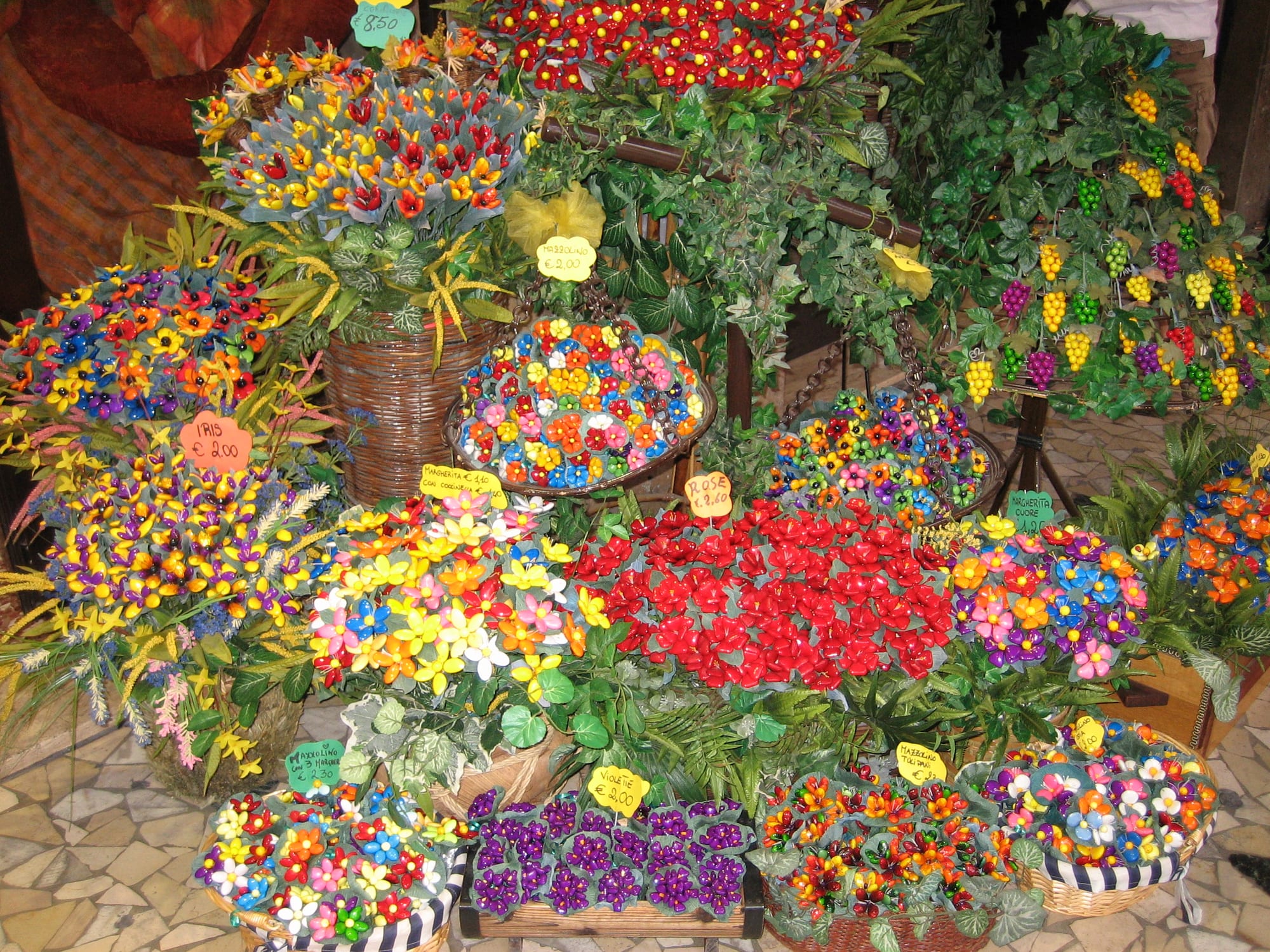
Life's milestones have their own sweet shorthand in confetti, sugared almonds given to guests. Tradition assigns colours to different occasions, with white above all for weddings, and they are often presented in odd numbers for luck. Weddings are still very often held in church, and the Church remains central to baptisms and first communions, which are family occasions in their own right. At funerals, chrysanthemums are the customary flower — which is exactly why they are never given as a gift.
Arts, crafts and music
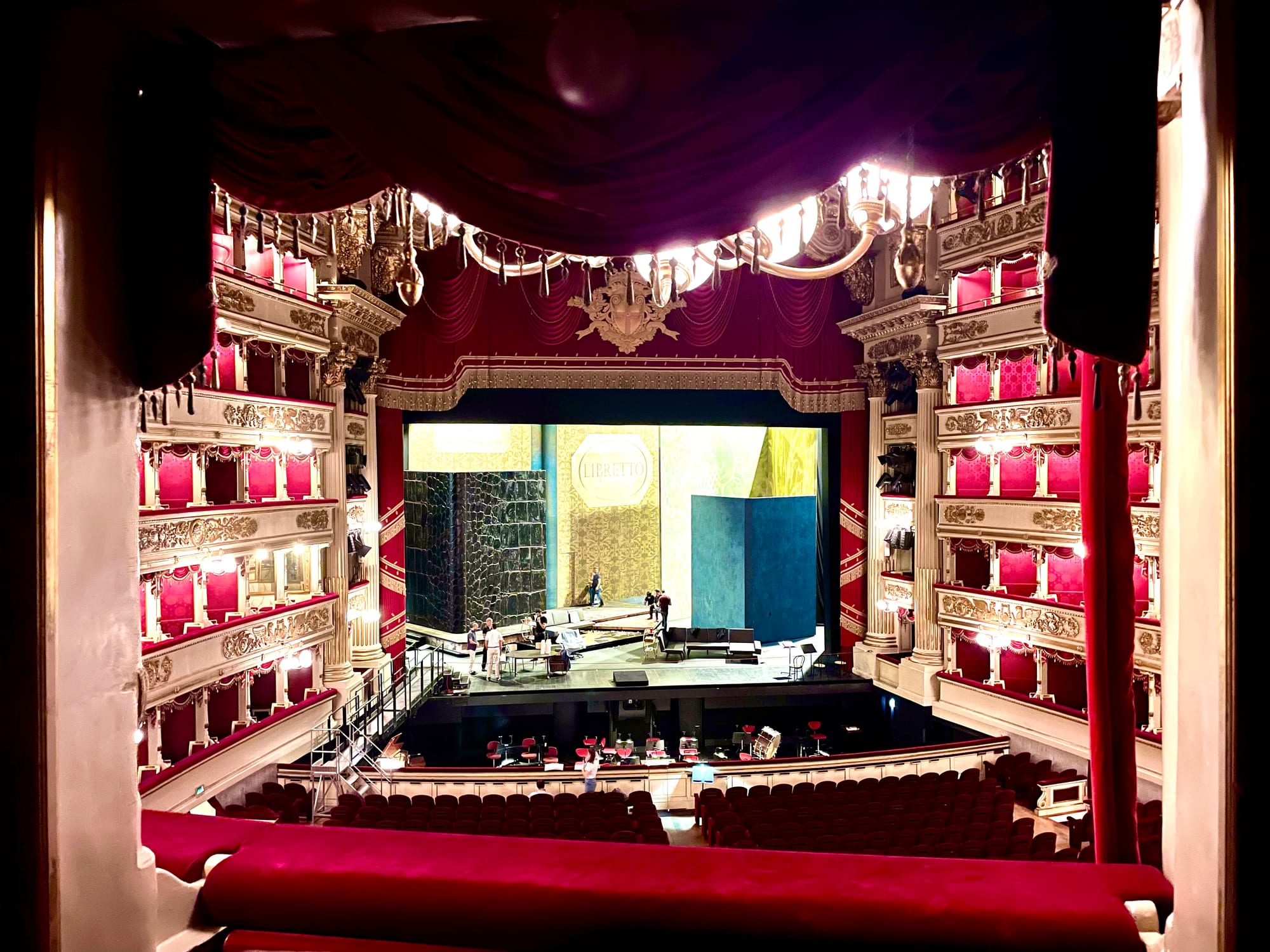
Italy's living traditions are protected with some pride, and the country has around twenty elements on UNESCO's intangible heritage lists. Among the most recent are the practice of opera singing, inscribed in 2023, and Italian cooking, added in 2025. Italian bel canto is described as a controlled way of singing that carries the voice across large spaces without amplification, and it encompasses all the arts of opera — music, theatre, acting and staging. It is still passed on orally from maestro to pupil, and the Italian terms and gestures that grew up around it are now used by singers and teachers across the world.
Crafts and folk performance sit on the same list. The traditional violin craftsmanship of Cremona is inscribed, as is the Opera dei Pupi, the Sicilian puppet theatre of marionettes, and canto a tenore, the pastoral songs of Sardinia, along with manual bell ringing and the art of glass beads. The nativity scene is a craft in its own right: in eighteenth-century Naples, elaborately made presepi became prized possessions of the nobility, and their figures, crowded with ordinary people at work, are still collected and made today.
Dos and don'ts for visitors
- Do greet people with "buongiorno" or "buonasera", and use Signore or Signora with a surname until invited to use first names.
- Do cover shoulders and knees in churches; at St Peter's Basilica and the Vatican Museums, sleeveless or low-cut clothing, shorts above the knee, miniskirts and hats are not permitted.
- Do bring wine, chocolates or flowers when invited to a home — but never chrysanthemums, which are funeral flowers.
- Do keep hands visible on the table, elbows off it, and wait for the host to sit before taking a seat.
- Don't worry about arriving a little late to a dinner invitation; a short delay is normal for social occasions.
- Don't mistake loud voices and talking over one another for anger; it is usually enthusiasm.
- Don't criticise Italian food or suggest how it could be improved, and avoid jokes about the Church or the Pope with older Italians.
- Don't treat the coperto on a restaurant bill as a tip; it is a cover charge, and further tipping is optional.
What to take away
Italian customs reward care and attention — to family, to the home town, to the table and to appearances — and visitors who show a little of that same care will find themselves drawn into a culture that is, above all, sociable.