Culture & Customs · Israel
Israel: The Siren and the Open Table
A country of several faiths and many shades of observance, where a national siren can halt traffic for two minutes, arguments are a form of warmth, and the guest at the Friday table is rarely a stranger for long
By Worldlore Editorial · 30 September 2026
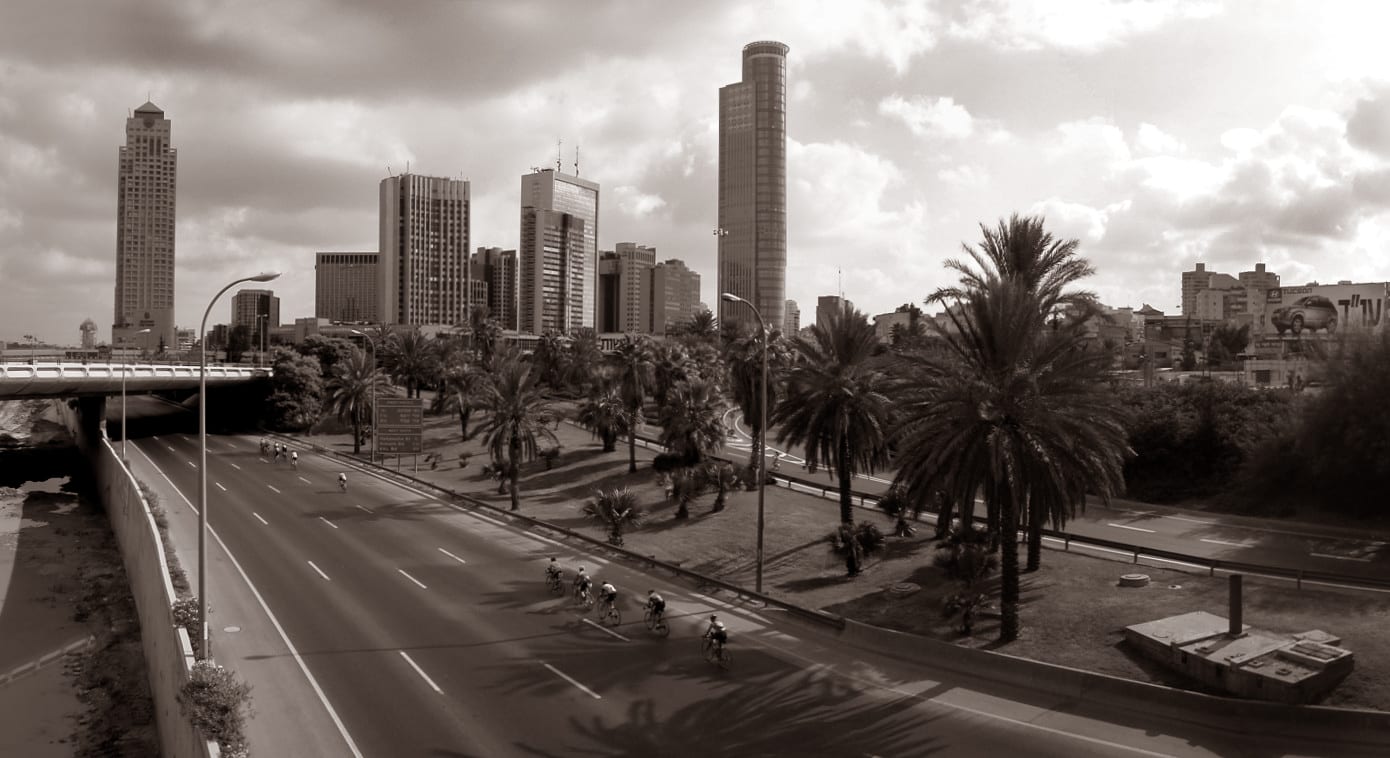
At ten o'clock on a spring morning, a siren begins to wail across the whole of Israel. For two minutes, the country stops. Pedestrians stand where they are, traffic halts, and on the highways drivers pull over and stand beside their cars in silence until the sound dies away. It is Holocaust Remembrance Day, and the sirens return about a week later — once in the evening and again the next morning — for the Memorial Day that honours fallen soldiers and victims of terror. Then the siren ends, the traffic moves off, and within moments the country is back to its usual pace: loud, quick, argumentative and informal. Both halves of the scene say something true about Israel — a society that can fall silent together in an instant, and one that otherwise rarely stops talking.
Faith, identity and values
Israel has a large Jewish majority and substantial religious minorities. Figures gathered by the Cultural Atlas put the population at roughly 73 per cent Jewish, 18 per cent Muslim, and just under 2 per cent each Christian and Druze, with the remainder following other faiths or none. The Muslim community is described as largely observant: surveys have found more than four in five Muslim Israelis fasting during Ramadan, and a majority praying daily.
Being Jewish in Israel covers a wide range of practice. Israelis commonly sort themselves into four broad groups: hiloni, or secular, the largest; masorti, or traditional, who keep some customs while living largely secular lives; dati, or religious; and Haredi, or ultra-Orthodox. The religious and ultra-Orthodox keep closely to Jewish law, above all in honouring Shabbat, the day of rest from Friday sunset to Saturday nightfall, when the observant refrain from many everyday activities, among them writing and using electronic devices. Kashrut, the dietary law, keeps meat and dairy apart, and many restaurants, cafés and shops across the country follow it.
Christians, most of them Arab, are a small community that has continued to grow in recent years, according to the Central Bureau of Statistics. The largest churches are the Melkite Greek Catholic and Greek Orthodox, followed by Roman Catholic and smaller Orthodox communities, and most Arab Christians live in the north. The Druze follow a faith that emerged in the eleventh century, is closed to converts and keeps its spiritual teachings guarded; religious leaders known as the uqqal lead its observances, and marriage outside the community is rare and strongly discouraged. The Druze are also the only Arab community whose men are conscripted into the army.
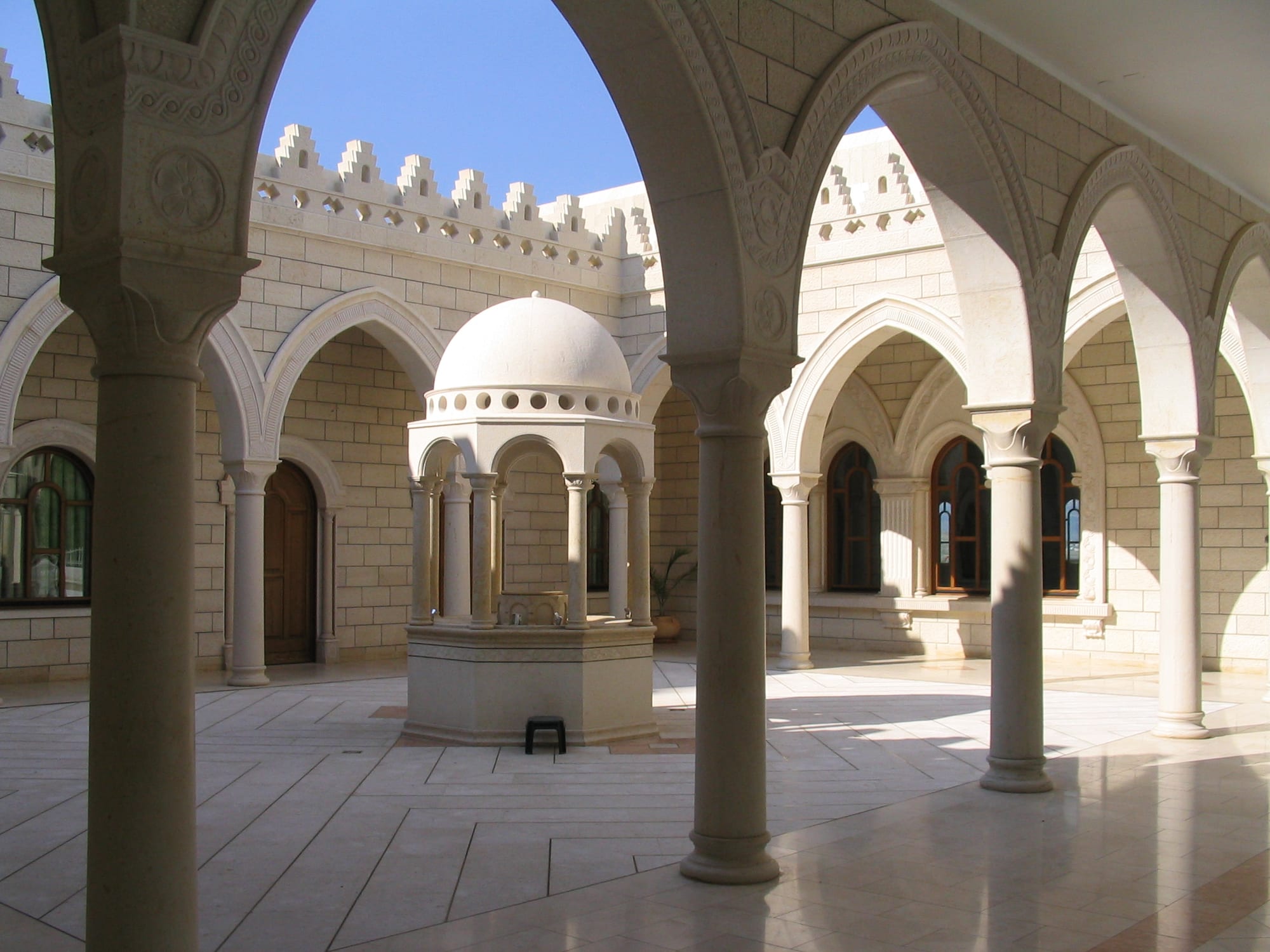
Beneath this diversity, some values are widely shared, above all among the Jewish majority. Chutzpah — literally cheek or nerve — is used with some pride to describe assertiveness, directness and confidence. Dugriut, straight talk, means saying what one thinks without softening it, and criticism and ideas are usually offered in the same spirit. The sabra, the native-born Israeli, is imagined as tough and prickly on the outside but soft and sweet within, like the cactus fruit that gives the word. Military service is compulsory for Jewish, Druze and Circassian citizens and is widely seen as an expression of duty to the nation and a shared rite of passage, while education is prized as the surest route to getting on in life.
Greetings and meeting people
The everyday Hebrew greeting is shalom, meaning peace, used both on arrival and on leaving. It is often followed by a casual "ma nishma?" — what's up? — or a more formal "how are you?". From Friday evening through Saturday, and at the synagogue at those times, the greeting becomes "Shabbat shalom". Among Arabic speakers, ahlan (hello, welcome) and salaam (peace) are common, and Muslim Israelis use the right hand when shaking hands.
Handshakes are the standard greeting between men, and close male friends may add a firm pat on the back or shoulder. Many women shake hands too, and hugs and kisses on the cheek are common among people who know each other. Some Orthodox women, however, prefer to avoid physical contact with men, so it is wise to wait and see whether a hand is offered. First meetings may start with "Mr" or "Mrs" and a surname, but Israelis move to first names very quickly, and friends and acquaintances often call one another ahi, "my brother".
Conversation is animated and physical. People speak fast and loudly, talk with their hands, stand closer than many visitors are used to and hold direct eye contact as a sign of interest. Interrupting is a normal part of lively discussion, and what sounds like shouting usually signals passion, not hostility. Among the religiously observant, some women may avert their eyes when speaking with men.
Hospitality and being a guest
Israelis tend to be generous hosts and informal ones. A short unannounced visit is not unusual, though some people prefer a call ahead, and a caller can expect coffee, tea or a cold drink with cake, fruit or snacks such as nuts and seeds. The classic invitation is to a meal on Friday evening or Saturday, during Shabbat, when families gather at the table. In Orthodox homes, the meal opens with kiddush, a blessing over wine, followed by a blessing over two loaves of bread, and many Jewish families say a grace after the meal.
A gift is appreciated. For a Jewish host, wine, flowers or fruit are all suitable, and a mezuzah is considered a thoughtful present. Alcohol should not be given to Muslim hosts unless it is known that they drink, and nothing connected with pigs — pork, or even pigskin leather — should be given to Jewish or Muslim hosts. At the table, guests usually finish what is on their plate, since leaving food uneaten can be taken as a slight on the host.
Many Jewish homes have a mezuzah, a small case holding a parchment scroll, fixed to the doorposts of some or all of the rooms other than the bathroom. A common custom is to touch it on passing and then kiss the fingers that touched it, though non-Jewish guests are not expected to do so. Wherever people are praying — at home, in a synagogue, church or mosque, or in a public place — it is considered very rude to talk to them or walk directly in front of them.
Festivals and life's big moments
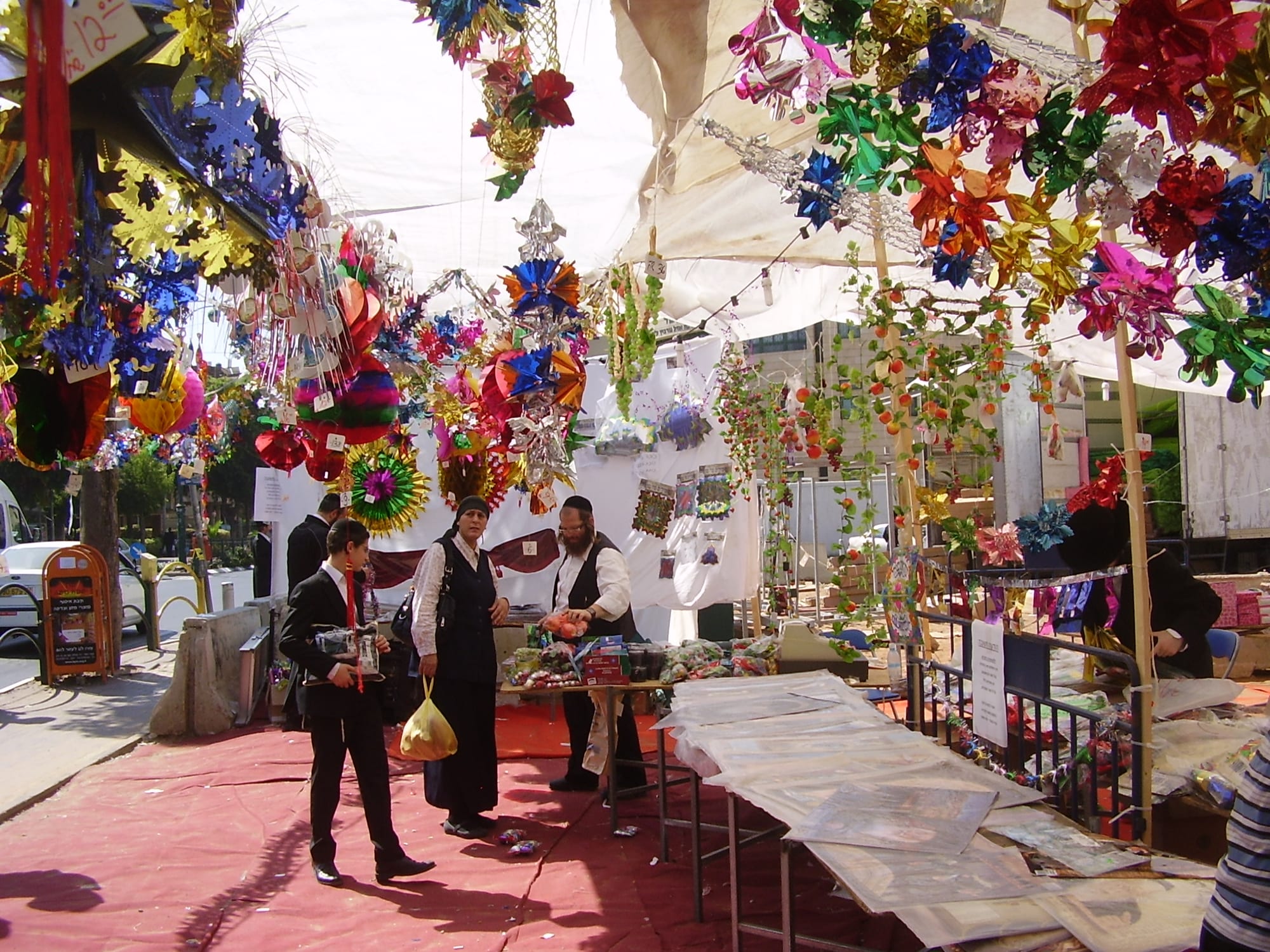
The Jewish calendar sets the rhythm of public life. The year opens in autumn with Rosh Hashanah, the New Year, when apples are dipped in honey in the hope of a sweet year ahead and the ram's horn, the shofar, is sounded. On the tenth day of the new year comes Yom Kippur, a day of fasting and prayer for the observant and near-total stillness for everyone else. Five days after that, families build a sukkah, a temporary booth roofed with branches or thatch, for the week-long festival of Sukkot, and the season ends with Simchat Torah, when worshippers dance in circles with the Torah scrolls. Hanukkah candles are lit for eight winter nights, Purim is a day of costumes and carnival, and at Passover homes are cleared of leavened bread and families gather for the Seder, the evening meal at which the Exodus is retold. Lag BaOmer brings bonfires, and Shavuot, in early summer, all-night study.
The national calendar places its most emotional days back to back. Memorial Day, with its siren at eight in the evening and again at eleven the next morning, closes places of entertainment and fills radio and television with the stories of the fallen. At sundown it passes directly into Independence Day, when families head out on hikes and picnics and crowds gather in the evening for free public shows, singing and dancing. The other communities keep their own calendars alongside. Muslims fast through Ramadan, and Eid al-Fitr, which ends the month, is marked with festive meals and celebrations across Arab towns. Christians celebrate Christmas and Easter according to the calendars of their own churches. The Druze mark the pilgrimage of Nabi Shu'ayb each year from 25 to 28 April at a shrine in the north that they associate with Jethro, the father-in-law of Moses; the state recognises it as an official Druze holiday, and it is one of the few public windows into Druze spiritual life.
Life's milestones follow religious lines. Jewish boys become bar mitzvah at 13 and girls bat mitzvah at 12, the age at which religious obligations begin; the day is often marked by reading from the Torah or giving a learned talk, followed by a celebration. There is no civil marriage inside the country, so couples who cannot or will not marry through a religious authority have long married abroad, classically in nearby Cyprus, and had the marriage registered on their return. A Jewish wedding takes place beneath the chuppah, a canopy open on all sides; the marriage contract, the ketubah, is read aloud, seven blessings are recited, and the groom breaks a wrapped glass, a reminder of the destruction of Jerusalem even at a moment of joy, to shouts of "mazal tov". Jewish mourning begins with the funeral and is followed by shiva, a week in which the mourners sit on low stools at home and receive a steady flow of visitors, many of whom bring meals. Callers take their cue from the family, sitting in silence if that is what the mourners want, and traditionally leave with a set phrase wishing them comfort among "the mourners of Zion and Jerusalem".
Arts, crafts and music
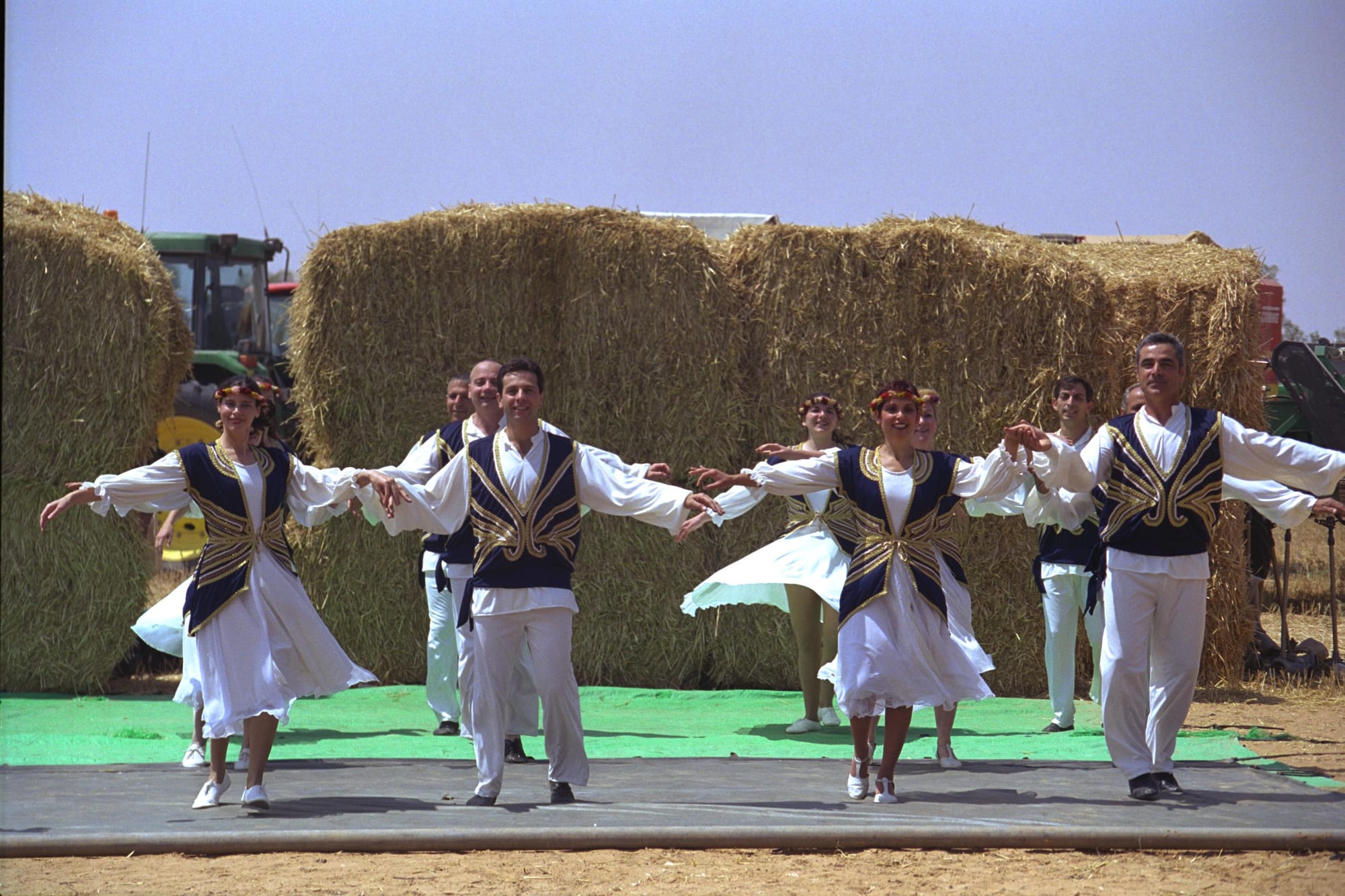
Few art forms say as much about the country's founding years as folk dance. The early Jewish pioneers danced the dances they had brought with them from the diaspora, and the hora, a circle dance, became the national dance. From the 1920s, dance teachers — many of them women — began creating new dances for festival pageants, and the Israeli folk-dance movement is often dated from the dance pageant that Gurit Kadman organised at Kibbutz Dalia in 1944. New dances are still being created, the Karmiel Dance Festival has been held since 1988, and group folk dancing remains a staple of national cultural life.
Literature carries equal weight. Hebrew has produced a rich modern body of fiction and poetry, and in 1966 Shmuel Yosef Agnon shared the Nobel Prize in Literature for his "profoundly characteristic narrative art with motifs from the life of the Jewish people". Immigration from many countries has shaped the wider culture, with Jewish communities from Europe, North Africa and the Middle East each bringing their own music and customs, alongside the Arabic-speaking traditions of the Muslim, Christian and Druze communities. Unusually, Israel is not a party to UNESCO's 2003 convention on intangible cultural heritage, so none of these living traditions appears on UNESCO's lists; they are sustained instead by festivals, community groups and families.
Dos and don'ts for visitors
- Do check the latest government travel advice before any trip; Israel has been at war with Iran since February 2026, governments advise against all travel to Gaza and give specific warnings for parts of the West Bank and the borders with Lebanon and Syria, and the situation can change quickly.
- Do stop and stand still if a remembrance siren sounds on Holocaust Remembrance Day or Memorial Day, as everyone around will; any other siren is an air-raid warning and means going to the nearest shelter at once.
- Do dress modestly at holy sites and in religious neighbourhoods — shoulders and knees covered, long trousers for men — and expect men to cover their heads at the Western Wall, where skullcaps are provided.
- Do wait for an observant person of the opposite sex to offer a hand before offering one.
- Do take a gift such as wine, flowers or fruit to a Jewish host — but never pork products, and no alcohol for Muslim hosts unless it is known to be welcome.
- Don't take photographs or use a phone at the Western Wall on Shabbat or Jewish holidays, and never talk to or walk in front of someone who is praying.
- Don't mistake loud voices, interruptions or blunt opinions for anger; directness is the normal style.
- Don't leave a full plate at a host's table, where finishing the meal is a compliment to the cook.
What to take away
Israel holds several faiths and many ways of living them within a small space, and visitors who respect the quiet moments — the siren, the Sabbath, the house of prayer — will find the rest of the time loud, frank and remarkably welcoming.