History · Ireland
Ireland: The Island and the Nation
Passage tombs older than the Pyramids, a monastic golden age, eight centuries of English involvement, the Great Famine, a war of independence, partition, the Troubles, and a late, rapid transformation
By Worldlore Editorial · 19 September 2026
An old country, a young state
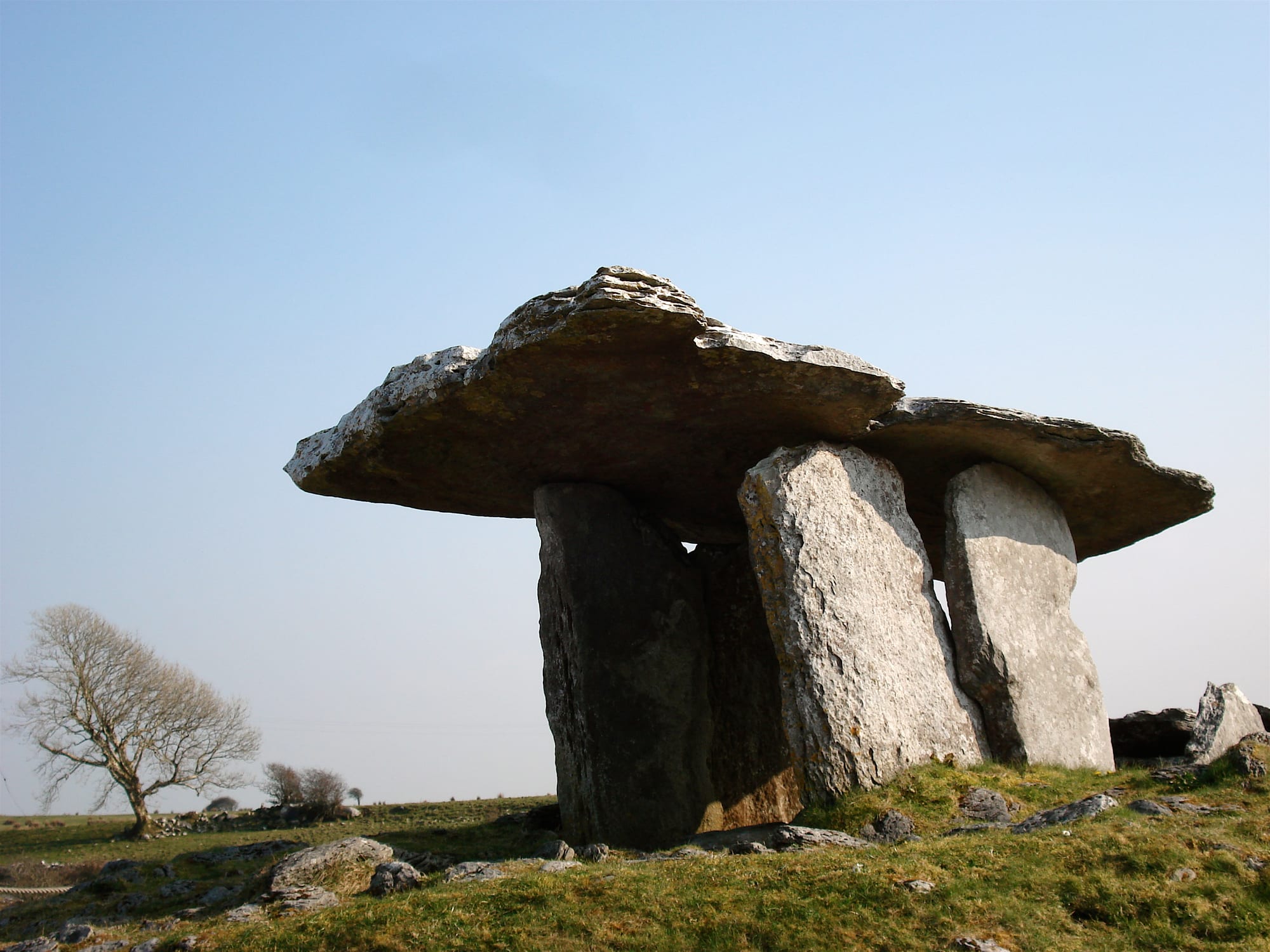
Ireland has been inhabited for ten thousand years and has left monuments from the Stone Age onward, but it has existed as an independent state only since 1922, and even then only across 26 of its 32 counties — the other six, in the north-east, remained part of the United Kingdom. Nearly all of modern Irish history bends around two facts: the long, often violent relationship with England and then Britain, and the partition of the island that it left behind.
A short history
- c. 3200 BCE
Newgrange
Neolithic passage tombs in the Boyne Valley.
- 5th century CE
Christianity
Ireland converts without ever being Roman.
- 795 onward
Viking raids
Norse settlers found Dublin and other towns.
- 1169–1171
The Norman invasion
English overlordship begins.
- 1609
Plantation of Ulster
Scottish and English Protestants are settled on confiscated land.
- 1801
Act of Union
Ireland is merged into the United Kingdom.
- 1845–1852
The Great Famine
A million die; a million or more emigrate.
- 1916–1921
Rising and War of Independence
The Easter Rising, then guerrilla war.
- 1921–1922
Partition and the Free State
The island is divided; civil war follows.
- 1968–1998
The Troubles
Three decades of conflict in Northern Ireland.
Saints, scholars, and Vikings
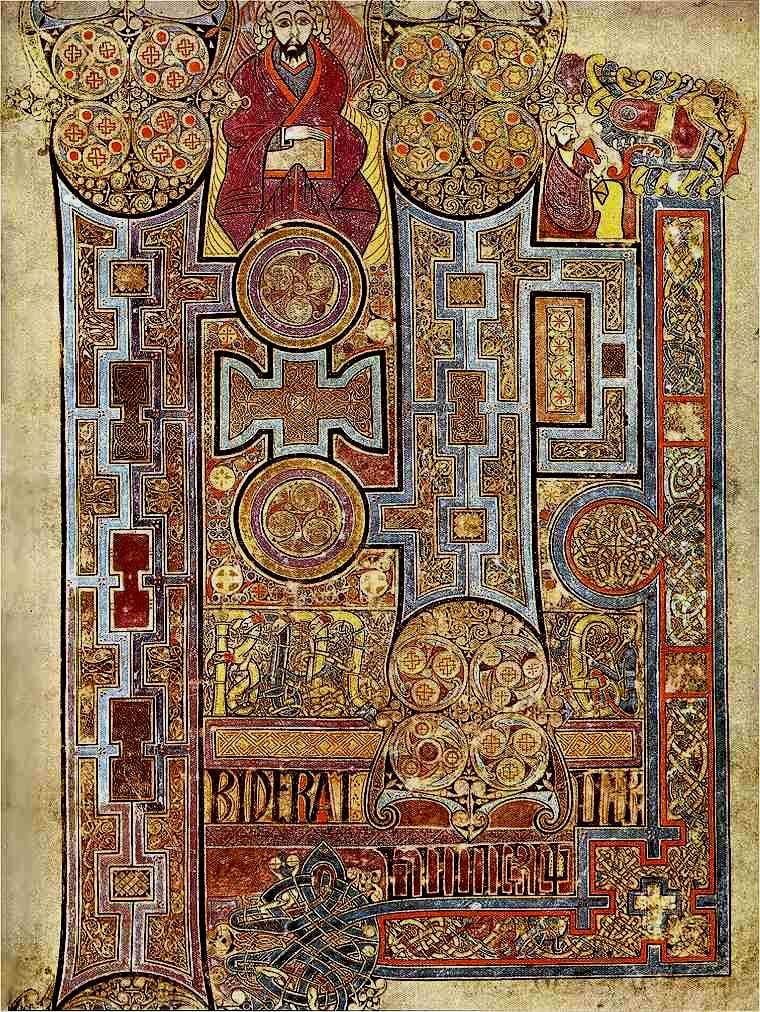
Ireland was never part of the Roman Empire. It converted to Christianity in the 5th century — Patrick, a former Romano-British captive, is the figure tradition remembers — and became a monastic society and a centre of learning at a time when much of Europe's had collapsed.
Viking raids began in 795 and turned into settlement: Dublin, Waterford, Wexford, Limerick and Cork all began as Norse trading towns. Gaelic Ireland remained a patchwork of small kingdoms with a shared language and law.
Normans, Tudors, and plantation
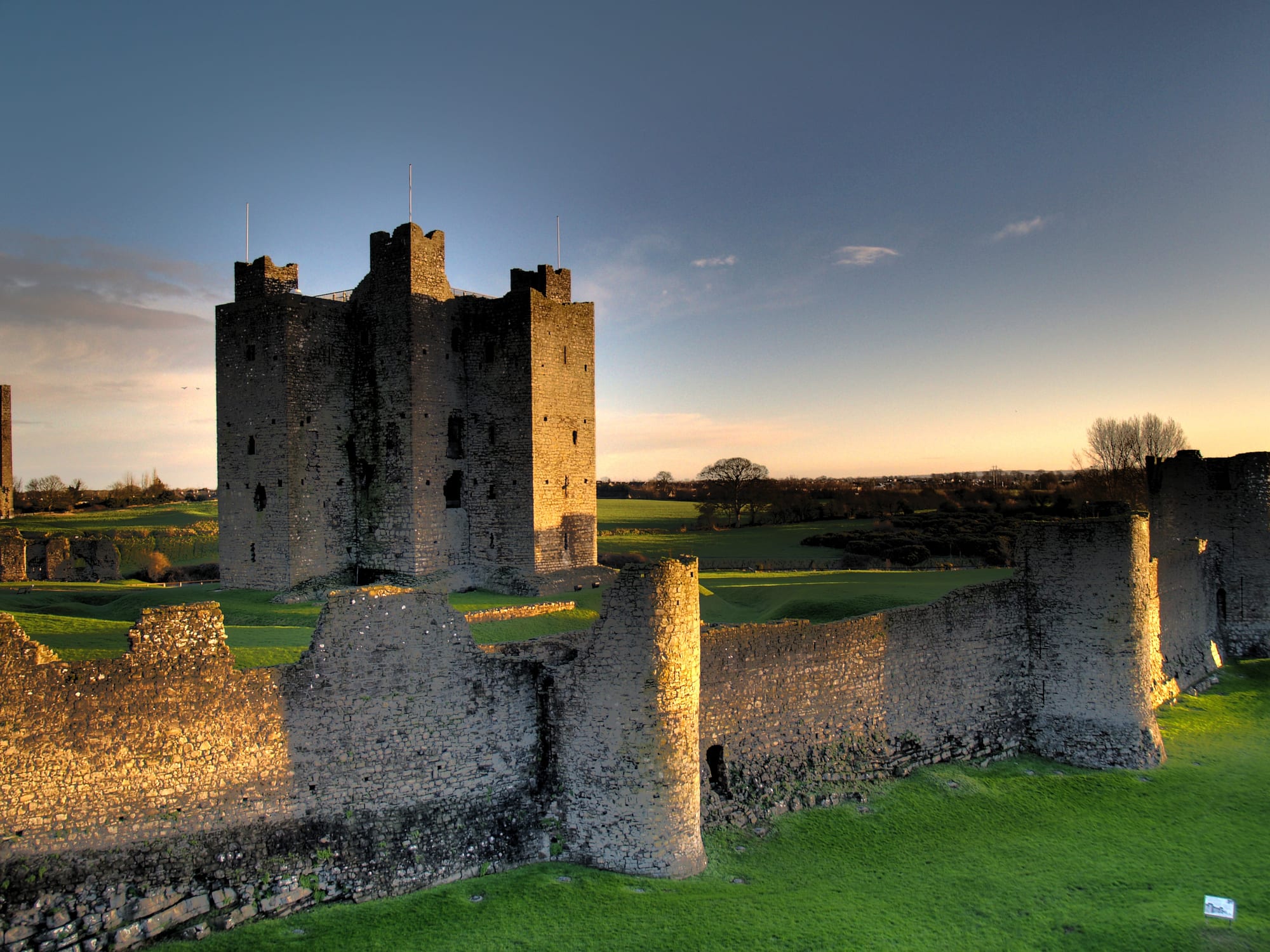
In 1169 a deposed Irish king invited Anglo-Norman lords from Wales, and in 1171 Henry II arrived to claim overlordship. The Normans built castles and towns across the east and south — but over centuries many of their descendants became thoroughly Irish, and by 1450 effective English control had shrunk to "the Pale" around Dublin.
The Tudor reconquest, completed under Elizabeth I, was followed by colonisation. The Plantation of Ulster from 1609 settled English and Scottish Protestants on confiscated land in the north — the root of the island's lasting religious and political division. Cromwell's conquest in 1649–53 brought massacre and mass land seizure, and the Williamite victory of 1690–91 entrenched the "Protestant Ascendancy": Penal Laws barred the Catholic majority from land, office and the professions. By the 1770s Catholics were about three-quarters of the population and owned roughly five per cent of the land.
Union and Famine
A non-sectarian republican rising by the United Irishmen in 1798 was crushed with tens of thousands of deaths, and in 1801 the Act of Union abolished the Irish parliament and merged Ireland into the United Kingdom. Daniel O'Connell's mass campaigns then won Catholic Emancipation in 1829.
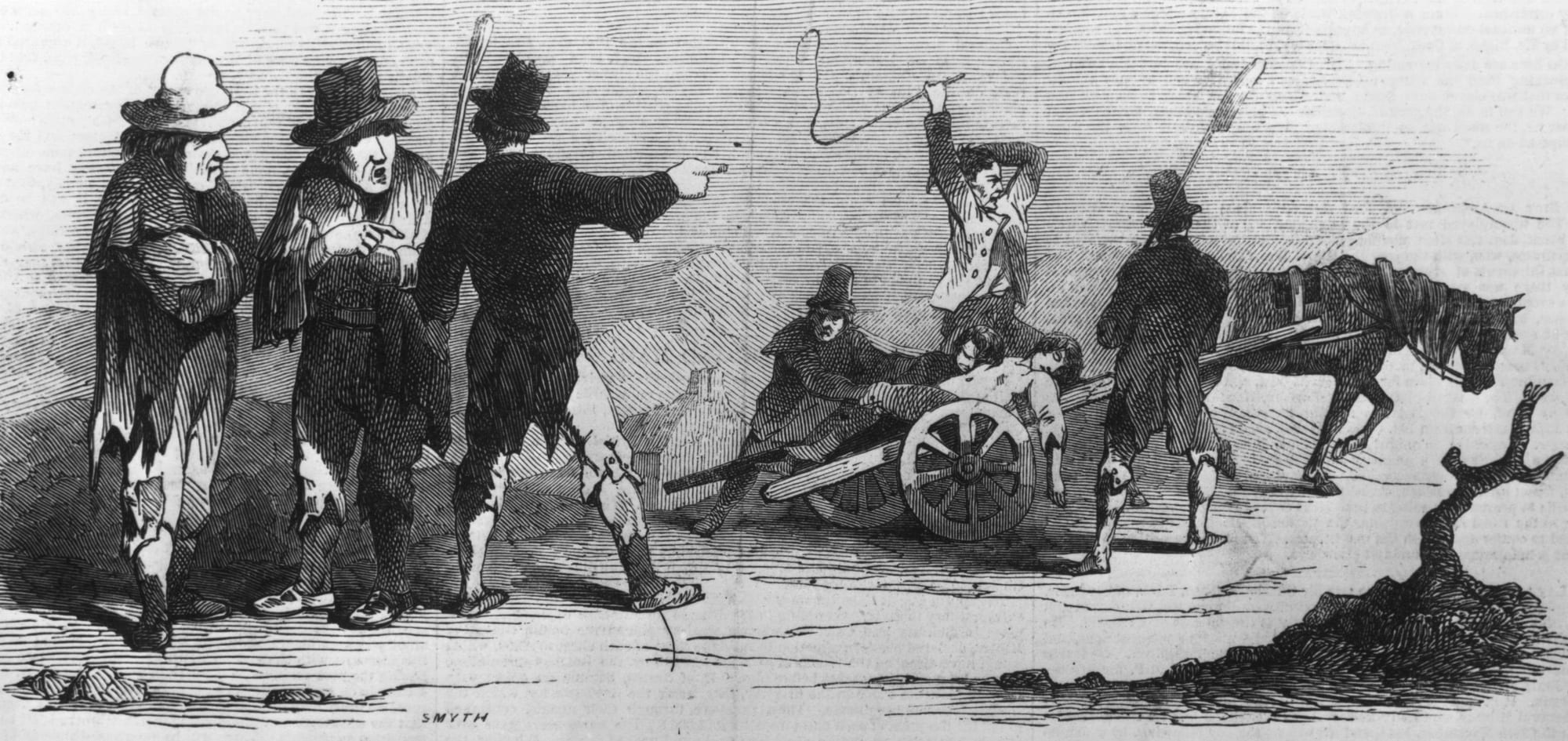
The Great Famine of 1845–52 destroyed the potato crop that a third of the population lived on. The population fell from about 8.5 million in 1841 to 6.5 million a decade later, and kept falling. The Famine, and the vast diaspora it created, became central to Irish national feeling.
Rising, war, and partition
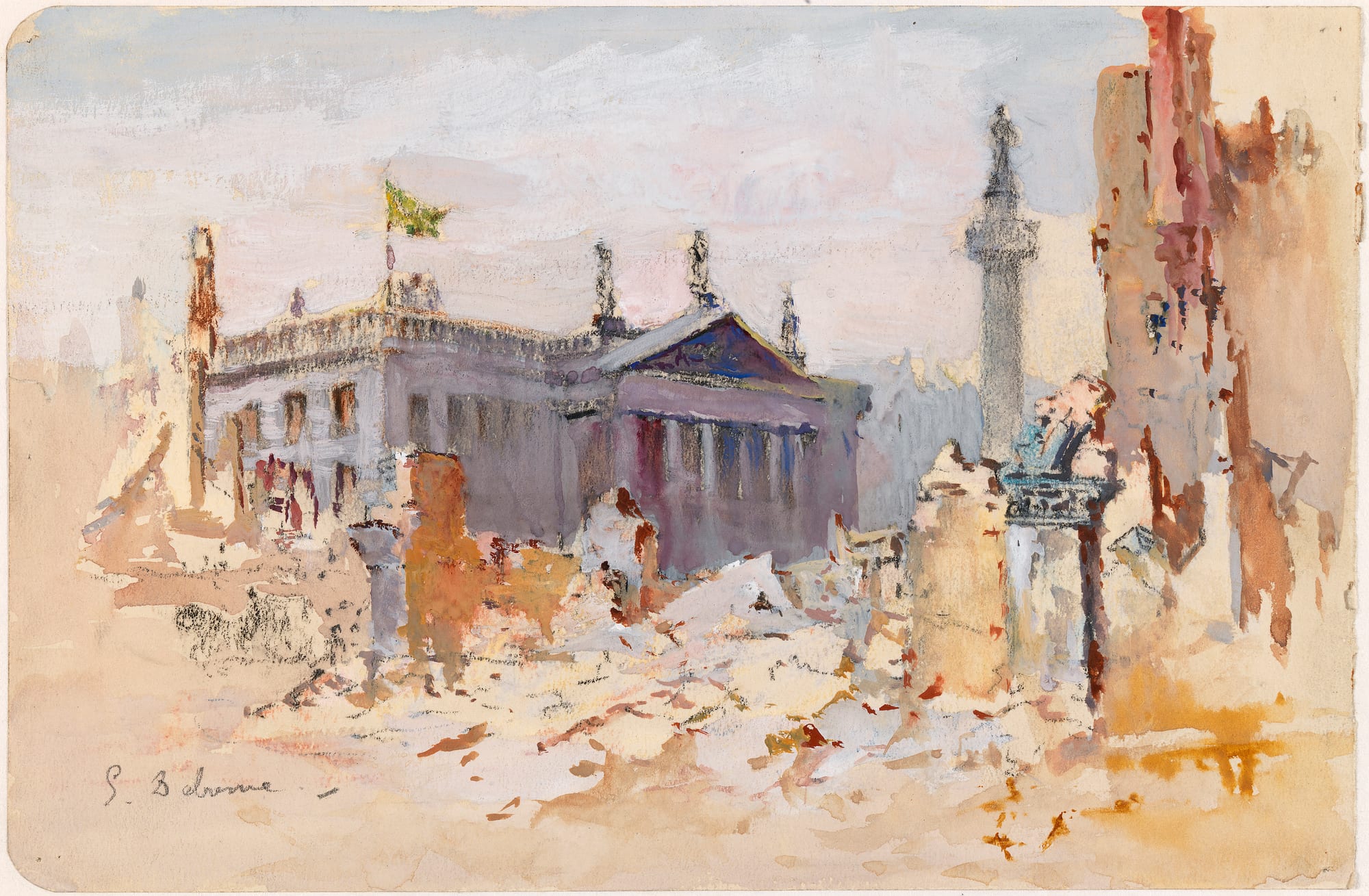
Constitutional nationalism pressed for Home Rule, which was passed in 1914 but suspended for the war and bitterly opposed by Ulster Unionists. On Easter Monday 1916, republicans seized buildings in Dublin and proclaimed a republic; the rising was crushed in a week, and the execution of its leaders swung public opinion behind independence.
Toward independence
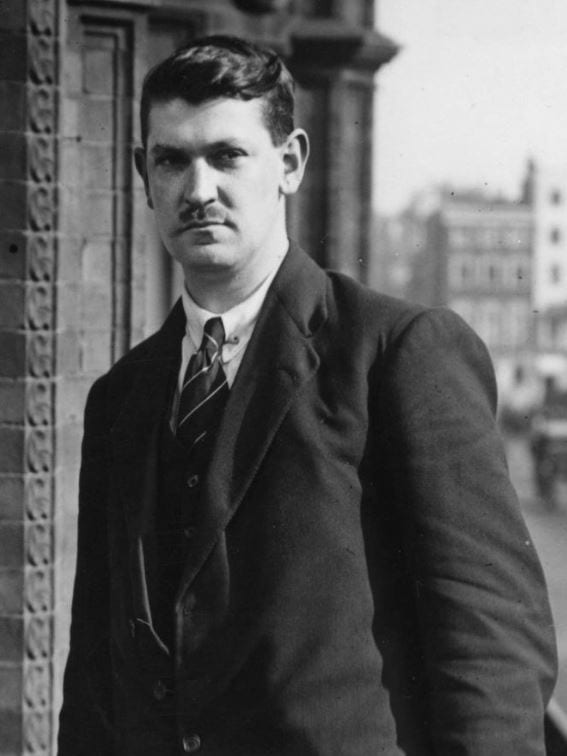
The War of Independence (1919–21) ended in the Anglo-Irish Treaty, which created the Irish Free State as a dominion within the Empire and confirmed the partition of Northern Ireland. The Treaty split the movement, and the pro- and anti-Treaty sides fought a civil war in 1922–23, won by the new government.
Two states, and the Troubles
The independent state turned inward — economically protectionist, socially conservative, dominated by the Catholic Church, neutral in the Second World War, and declaring a full republic in 1949. It joined the European Community in 1973.
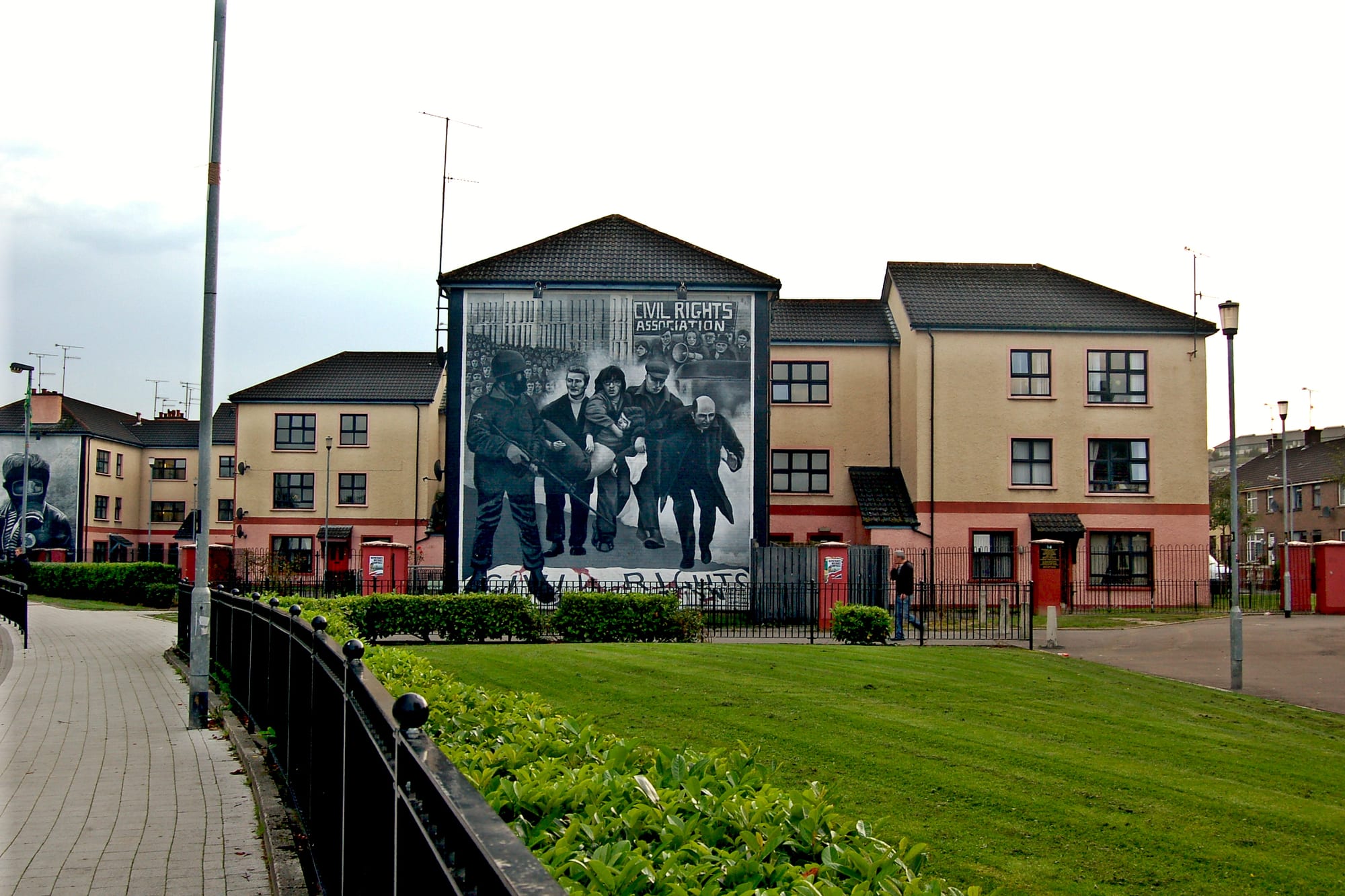
In Northern Ireland, the Catholic minority faced entrenched discrimination. A civil rights movement in 1968 was met with violence, British troops were deployed in 1969, and on Bloody Sunday in 1972 paratroopers shot dead 14 unarmed marchers in Derry.
The Good Friday Agreement of 1998 set up power-sharing devolution, the principle that the north's status can change only by consent, and cross-border institutions, and the Republic dropped its territorial claim. The peace has held despite repeated political crises.
The Celtic Tiger, and after
From the mid-1990s, low taxes, EU funds and an English-speaking workforce made Ireland a hub for US technology and pharmaceutical multinationals, and it went from one of Western Europe's poorest countries to one of its richest. A property crash in 2008 forced a bank bailout and an EU–IMF rescue, followed by austerity and then recovery. Alongside all this came a rapid social transformation and the collapse of Church authority: Ireland legalised same-sex marriage by popular vote in 2015 — the first country to do so — and repealed its abortion ban in 2018. Brexit put the Irish border back at the centre of politics, and Sinn Féin has become the largest party on both sides of it.
What Ireland carries
Ireland's history is dominated by its nearest neighbour — the conquest, the plantations, the Union, the Famine, and the war that ended in a compromise that divided the island. The Republic spent its first decades poor and clerical, and its recent ones prosperous and secular, changing faster than almost any country in Europe. Partition remains the unfinished business, now argued over ballots rather than bombs.