Culture & Customs · Ireland
Ireland: The Craic and the Round
A country where conversation is an art, every drink bought comes back in turn, and old festivals of fire, saints and spirits still turn the year
By Worldlore Editorial · 30 September 2026
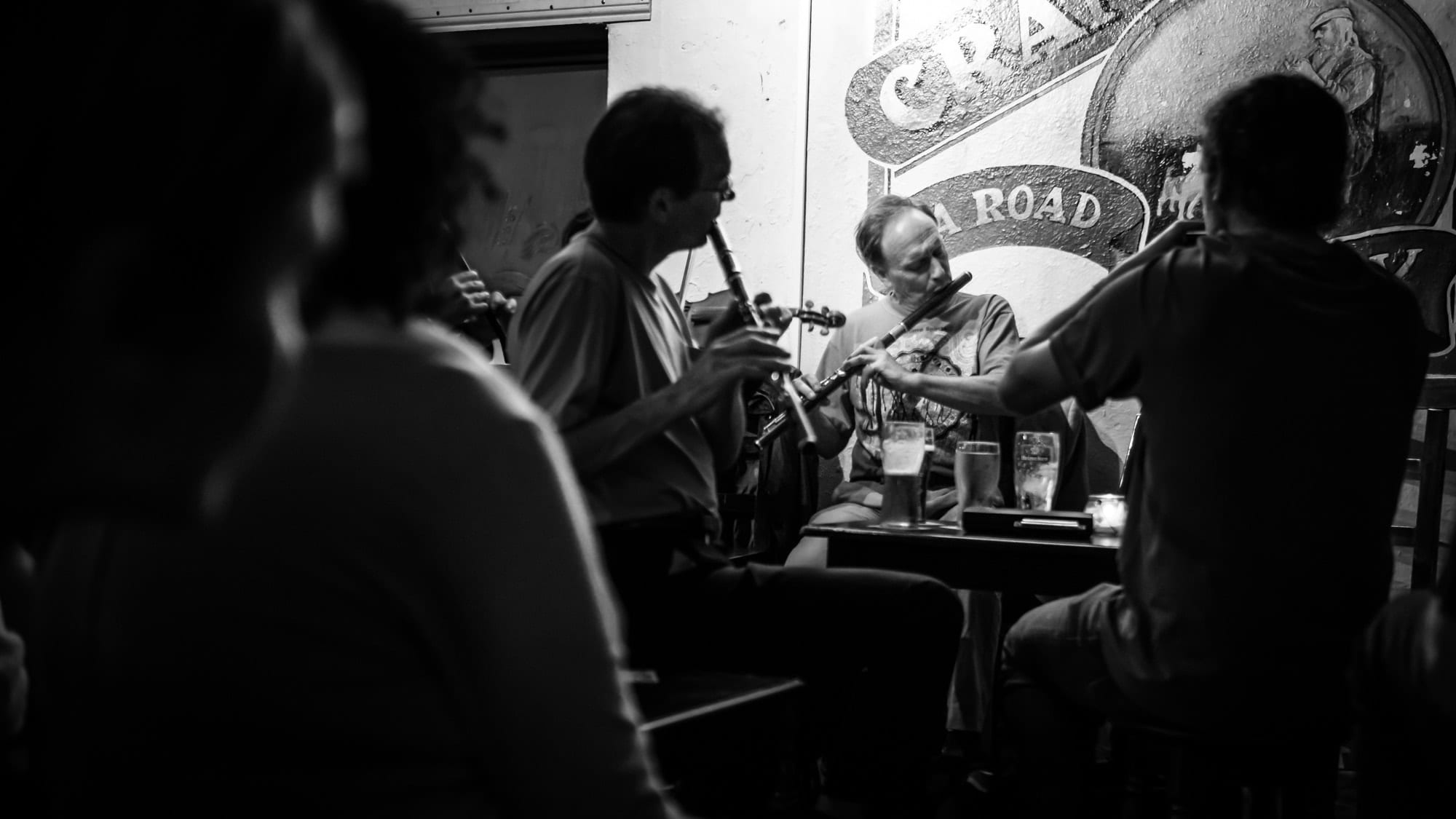
A small group gathers at the bar of an Irish pub. One of them orders a drink for everyone, and without anything being said, the others know how the evening will run: each will buy a round in turn, and nobody will leave before paying theirs. Around the table the conversation moves quickly — news, gossip, teasing, a story told well and then told again with improvements. In the corner, a few musicians have started a tune. Nobody would call it an occasion, and that is the point. In Ireland, what matters most is the craic: the company, the talk and the shared good time.
Faith, identity and values
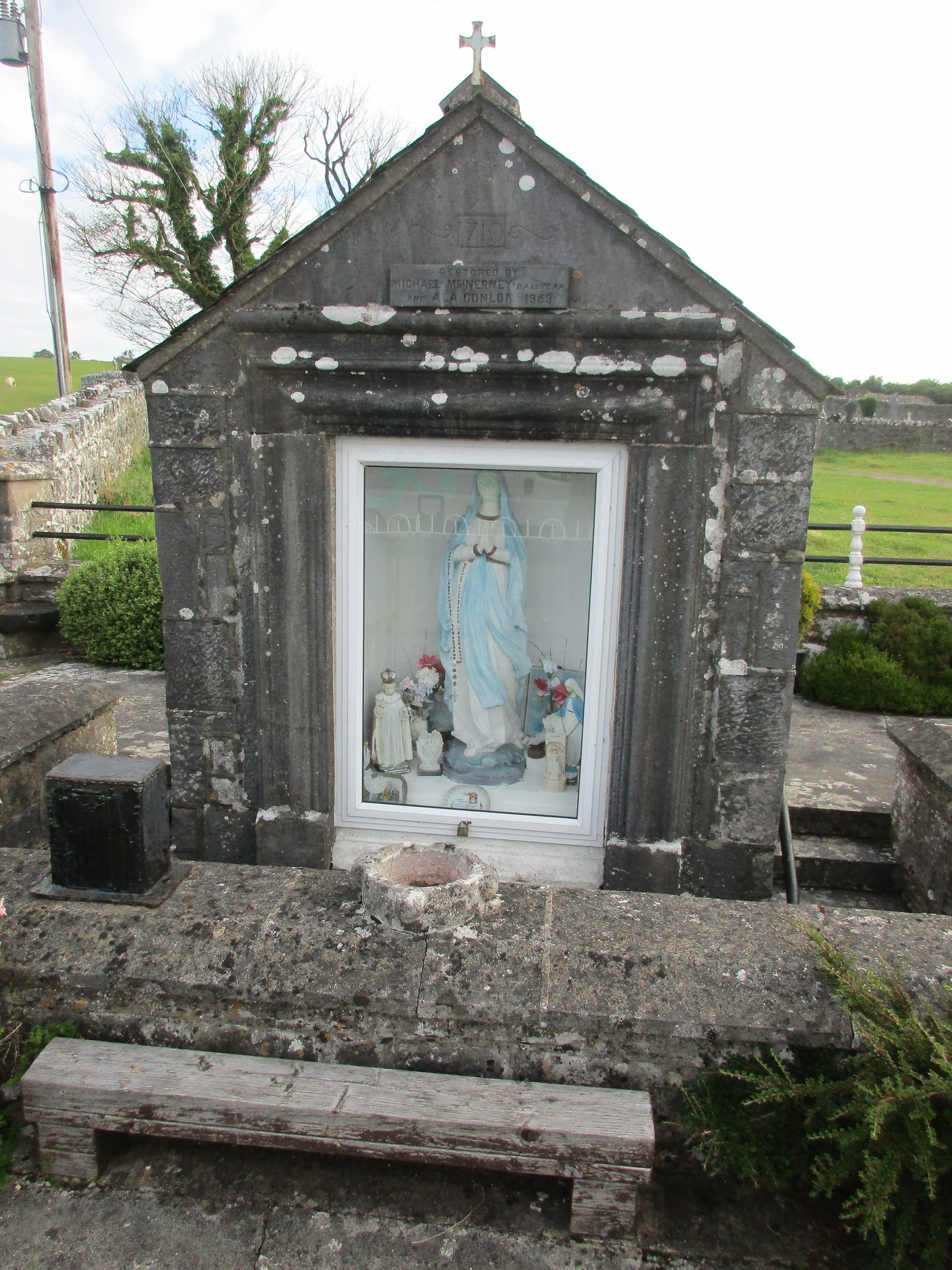
Ireland's religious history is overwhelmingly Catholic, and the faith has long been bound up with national identity. Christianity is traditionally said to have been brought by St Patrick in the fifth century, and when English rule imposed anti-Catholic laws from the 1600s onwards, Catholicism became a marker of Irish identity as well as a faith. At the 2022 census, just over two-thirds of people identified as Roman Catholic, with smaller numbers of Protestants, Orthodox Christians and Muslims, and one in seven stating no religion at all. Regular Mass-going has fallen sharply over recent decades, especially among younger people, a change linked both to rising prosperity and to the clerical abuse scandals that came to light from the 1990s onwards. Even so, religious rites of passage remain widespread: most children are baptised, and First Communion and Confirmation are still major family events. The Catholic Church continues to run most state-funded primary schools. Older traditions blending folk belief and Christianity also endure, among them the veneration of holy wells and local shrines.
Warmth and a sense of fellowship run through Irish social life. People are generous and expect generosity to be returned, and they value treating others as equals: education and wealth do not automatically earn respect, while effort and hard work do. Modesty is prized, and anyone who boasts or constantly exaggerates is viewed with suspicion. Humour, often self-deprecating, is a way of building closeness, easing awkward moments and keeping egos in check.
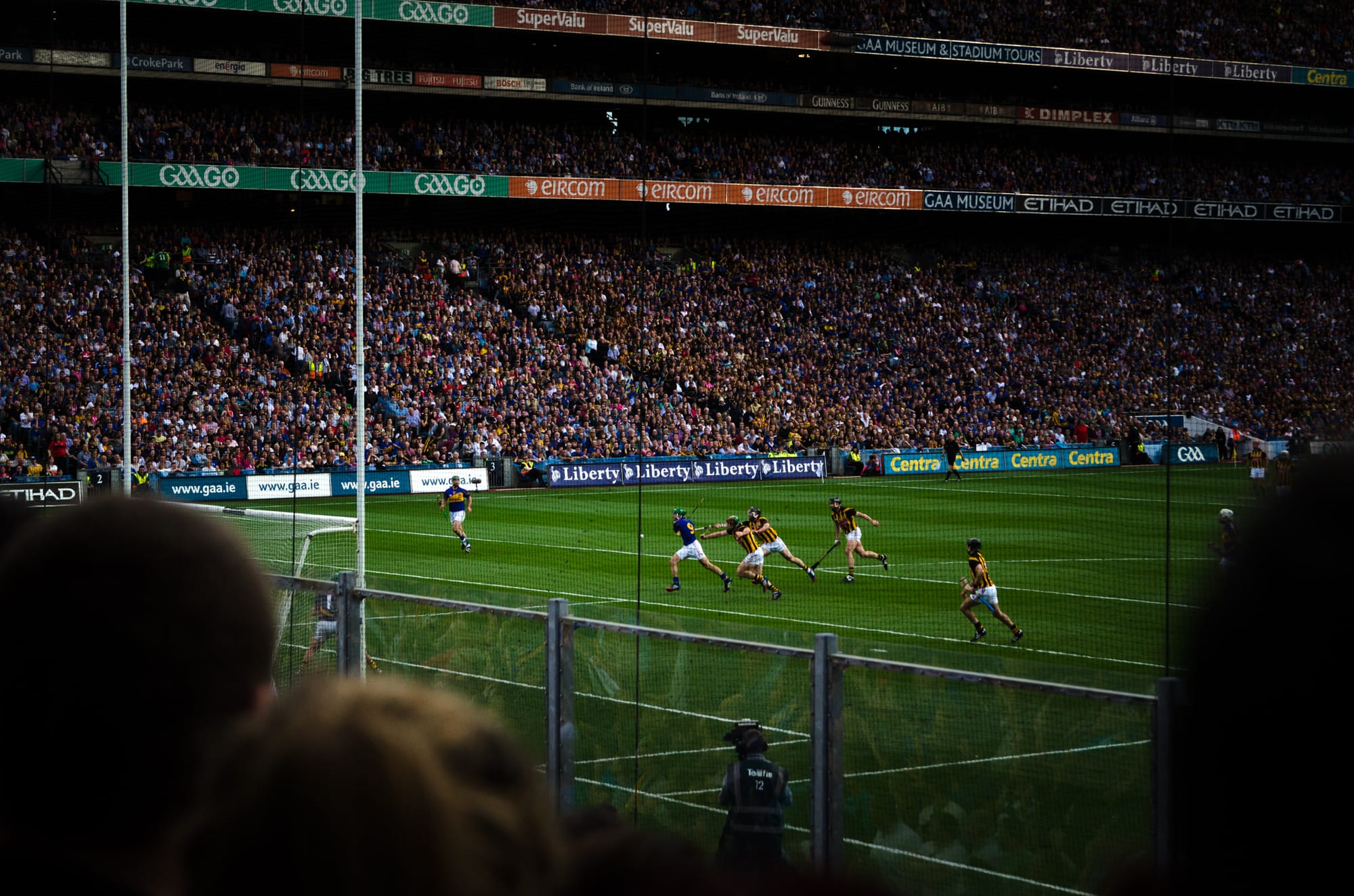
Identity is also closely tied to place. Loyalty to one's county runs deep and shows itself most clearly in sport, above all in hurling and Gaelic football. Hurling, a field game played with a wooden hurley and a small ball called a sliotar, is on UNESCO's list of intangible cultural heritage, recognised as a tradition passed on through schools and local clubs. The Irish language, Gaeilge, is an official language, compulsory in schools and visible on road signs and in broadcasting. Far more people learn it than use it every day: the 2022 census found around 72,000 people speaking Irish daily outside the education system, but it remains a powerful symbol of heritage.
Greetings and meeting people
A handshake is the usual greeting on first meeting, with steady eye contact. Close friends and family may hug or kiss on the cheek; women tend to kiss both male and female friends, while men usually kiss only female friends. First names are used quickly in most social settings, though titles and surnames are kept for formal occasions. In rural areas, people often greet passers-by on the street, a habit less common in cities. In conversation, eye contact is steady without being constant, people keep roughly an arm's length apart, and gestures are moderate — some prefer a nod or a jerk of the head to pointing. Public displays of emotion are widely accepted.
Alongside "hello" and "how are you?", a common friendly greeting is "What's the craic?" — in effect, asking for the news. The craic itself is a word with no neat translation, covering news, gossip, conversation and simply having a good time. Conversation is the backbone of Irish social life, and good talkers and storytellers are admired.
Communication is warm but often indirect. People go to some lengths to avoid open conflict, and disagreement is more likely to be handled by changing the subject or turning to humour than by confronting it head on. Teasing, known as slagging, is common among friends and is meant affectionately; being able to take it, and give some back, is part of belonging. Swearing is frequent in casual speech and is rarely meant to offend. Visitors will also find that it matters to people that the Republic of Ireland and Northern Ireland are distinguished correctly, since the two have developed separate identities over the past century.
Hospitality and being a guest
"Calling by" to visit friends is common, though some notice is usually expected. A guest invited to a home brings a small gift, such as flowers, wine or chocolates; the thought counts for more than the price, and gifts are usually opened straight away. Offers of tea or food may be politely refused at first, and a host may need to ask more than once. Punctuality matters, and a short message is expected if running late. After a meal, offering to help clear up is appreciated.
Table manners are relaxed but not careless. Elbows stay off the table, eating noisily is frowned on, and finishing everything on the plate is considered polite. The customary toast is "sláinte", meaning health.
The pub remains the great social meeting place, open to all ages, and it runs on the round. Each person in a group buys drinks for everyone in turn, and failing to stand one's round is quickly noticed and can earn a reputation for meanness. Smoking is banned in all indoor public places, including pubs. Tipping for table service is customary in restaurants, and since 2022 the law has given staff stronger rights to the tips left for them. Goodbyes are rarely quick; even a telephone call tends to end with several of them.
Festivals and life's big moments
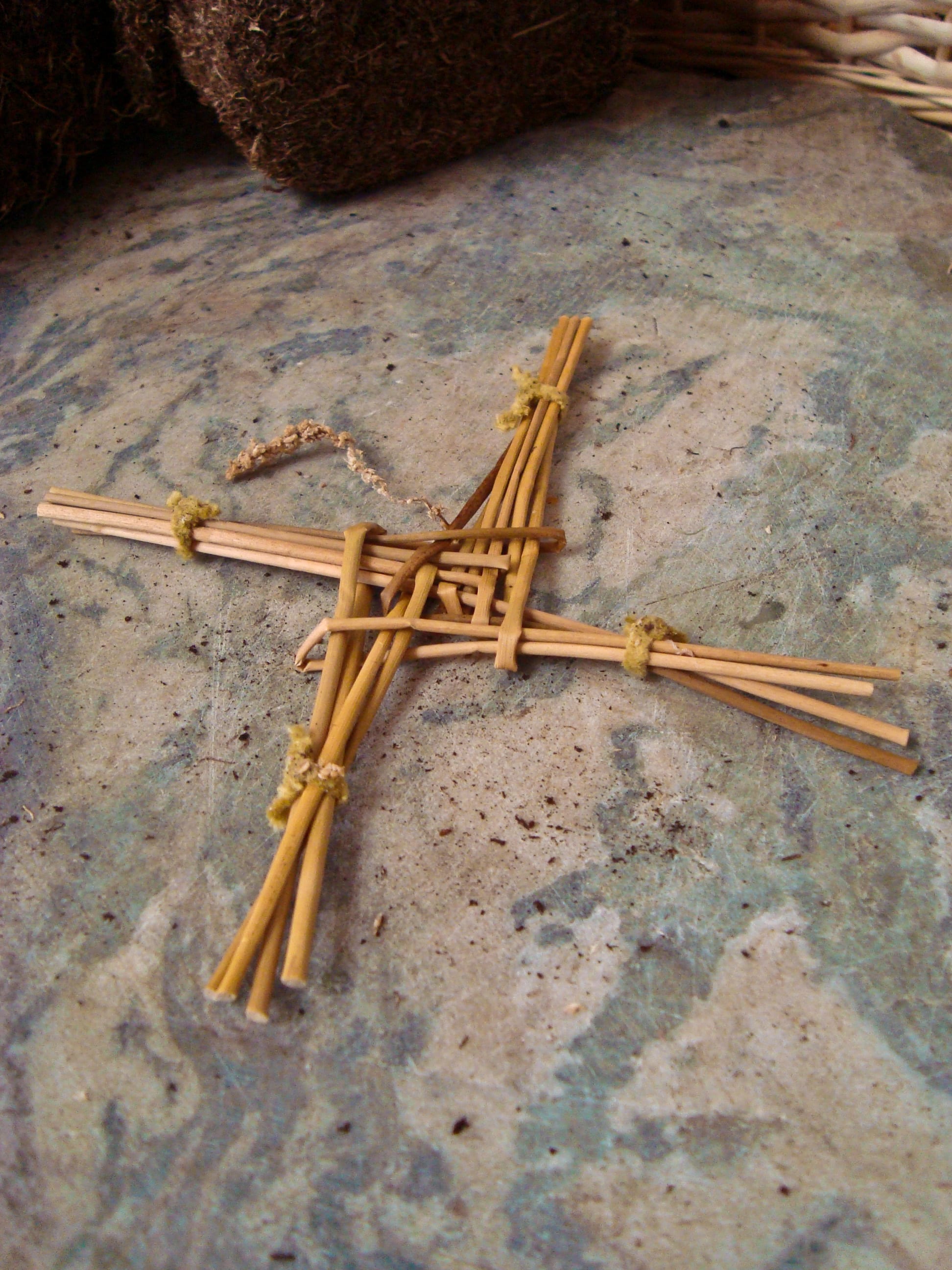
The year opens with St Brigid's Day on 1 February, the feast of one of Ireland's patron saints and, in folk tradition, the first day of spring, linked to the ancient festival of Imbolc. Since 2023 a public holiday has marked it, usually on the first Monday of February. Its best-known custom is the Brigid's cross, woven by hand from rushes or straw and hung over doors to bring the saint's blessing and protection to homes and farm buildings; old crosses were burned or buried when discarded, and crosses were given as gifts to friends and to newlyweds. Other customs of St Brigid's Eve have largely faded: leaving food out and doors unlatched for the saint as she passed through the land, and leaving a cloth, the brat Bríde, outside overnight in the belief that it would gain healing powers by morning.
St Patrick's Day on 17 March, the feast of the patron saint credited with bringing Christianity to Ireland, is the national holiday. It combines church services with parades and festivals across the country, and many people wear a sprig of shamrock or something green. At the other end of the year comes Halloween, with its roots in Samhain. Communal bonfires were once lit to protect people from wandering spirits, and in some places families relit their own hearths from the embers for luck; games such as apple bobbing and snap apple are still played. After Christmas, St Stephen's Day on 26 December is still marked in some places by the Wren Boys, groups in disguise and straw costumes who go from door to door with music, today often collecting for charity.
Religious ceremonies continue to mark many of life's milestones, and traditional music has its place at them: UNESCO describes uilleann piping, played on the Irish bagpipe, as an integral part of weddings and funerals.
Death is handled with particular care and a strong sense of community. Death notices are widely read online, and the days between a death and the burial typically include a wake, a removal and a funeral. At the wake, mourners call to the family, and at funerals hundreds of people may queue to shake hands with the bereaved and offer sympathy. There is an unspoken expectation that people attend the funerals of those close to anyone they know, and many travel long distances to do so. Food is central — tea, sandwiches and home-cooked dishes brought by neighbours — and a meal often follows the burial. Once the formalities are over, stories and laughter are part of the occasion, and humour often finds its way into the eulogy too. Some older customs have gone: professional keeners, women who lamented the dead aloud, had largely disappeared by the early twentieth century, and the clay pipes once handed out to visitors at wakes have gone too. Others linger in places, such as telling the bees — informing a family's hives of a death so that the bees will not leave.
Arts, crafts and music
Traditional music is a living tradition, heard at informal sessions in pubs as well as at concerts and family occasions. Uilleann piping, played on a distinctive Irish bagpipe, is on UNESCO's list; according to UNESCO, more people now play the pipes than at any time in the past, thanks in large part to the work of Na Píobairí Uilleann, founded in 1968, and to teaching passed from master to student. The harp, Ireland's national symbol and played for more than a thousand years, is on the list too. Early Irish harps were carved from a single piece of willow, strung with wire and played with the fingernails; today's instruments use gut or nylon strings and are played with the fingertips, and Irish harping has enjoyed a strong revival.
Words matter as much as music. The Irish have long used song, poetry and storytelling to carry their history and culture, particularly during the centuries when the Irish language itself was under pressure, and that tradition runs on through a remarkable body of literature. Irish dancing, too, has become known around the world. Among the crafts, the art of dry stone construction is on UNESCO's list, as is falconry.
Dos and don'ts for visitors
- Do shake hands and make eye contact when meeting someone, and use first names once invited.
- Do stand a round in the pub, and never leave a group without buying one.
- Do bring a small gift such as flowers, wine or chocolates when invited to a home, and offer to help clear up.
- Do leave a tip for table service in restaurants.
- Do take teasing in good humour; it is usually a sign of friendship.
- Don't boast or talk up personal achievements; modesty is valued.
- Don't smoke indoors in pubs, restaurants or other public places, where it is banned.
- Don't confuse the Republic of Ireland with Northern Ireland, which is part of the United Kingdom.
What to take away
Irish customs rest on something simple — good company, fairly shared — and a visitor who talks, listens, laughs and pays for the next round will soon find themselves part of the craic.