Attractions & Natural Wonders · Ireland
Ireland: Eleven Attractions and Natural Wonders
Sea cliffs on the edge of the Atlantic, a limestone moonscape full of wildflowers, a passage tomb older than the pyramids, and green peninsulas trailing into the ocean
By Worldlore Editorial · 19 September 2026
The green edge of Europe
The Republic of Ireland occupies most of the island of Ireland, off the west coast of Britain, with about 5.3 million people (Northern Ireland, six counties in the northeast, is part of the United Kingdom). It is a country of soft, wet weather and correspondingly green fields, a dramatic Atlantic coast in the west, a deep literary and musical culture, and a diaspora many times larger than the home population. Distances are short but roads are winding.
The eleven below are almost all along or near the western and southern coasts, where the scenery is, plus Dublin and the ancient sites of the east. May, June, and September usually have the best weather; summer is busiest, and the coast can be wild and beautiful in any season.
1. Dublin
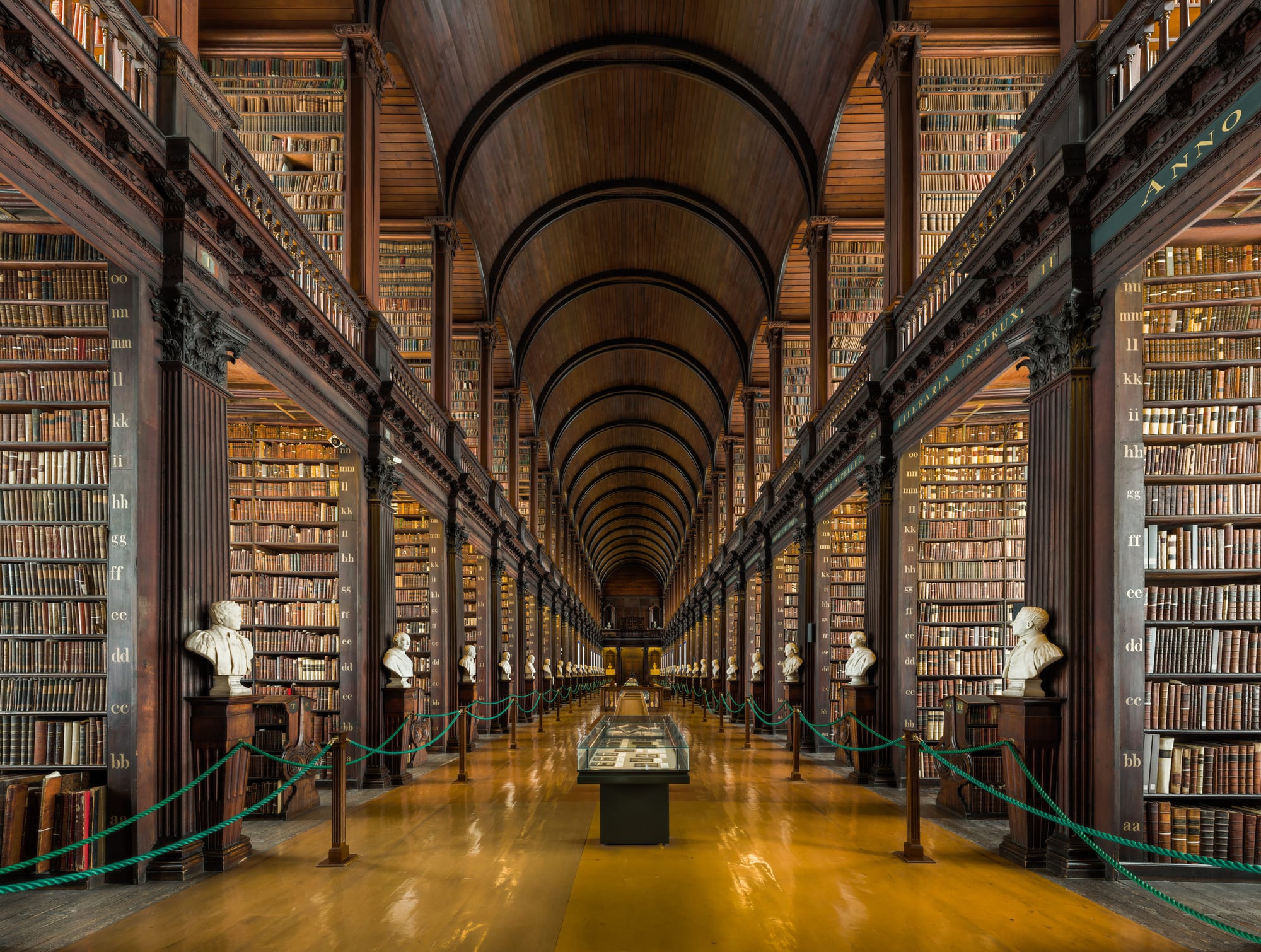
Dublin, the capital, is a compact, walkable, sociable city on the river Liffey. The set-pieces are Trinity College and its Long Room library (with the illuminated 9th-century Book of Kells), the National Museum's Iron Age bog bodies and gold, Kilmainham Gaol from the fight for independence, the Guinness Storehouse, and the Georgian squares. Literary Dublin — Joyce, Yeats, Beckett, Wilde — is marked all over the centre, and the pubs of Temple Bar and the older backstreets keep the music going.
Two days covers it, with an easy day trip to the coast at Howth or the Wicklow Mountains.
2. The Cliffs of Moher and the Burren
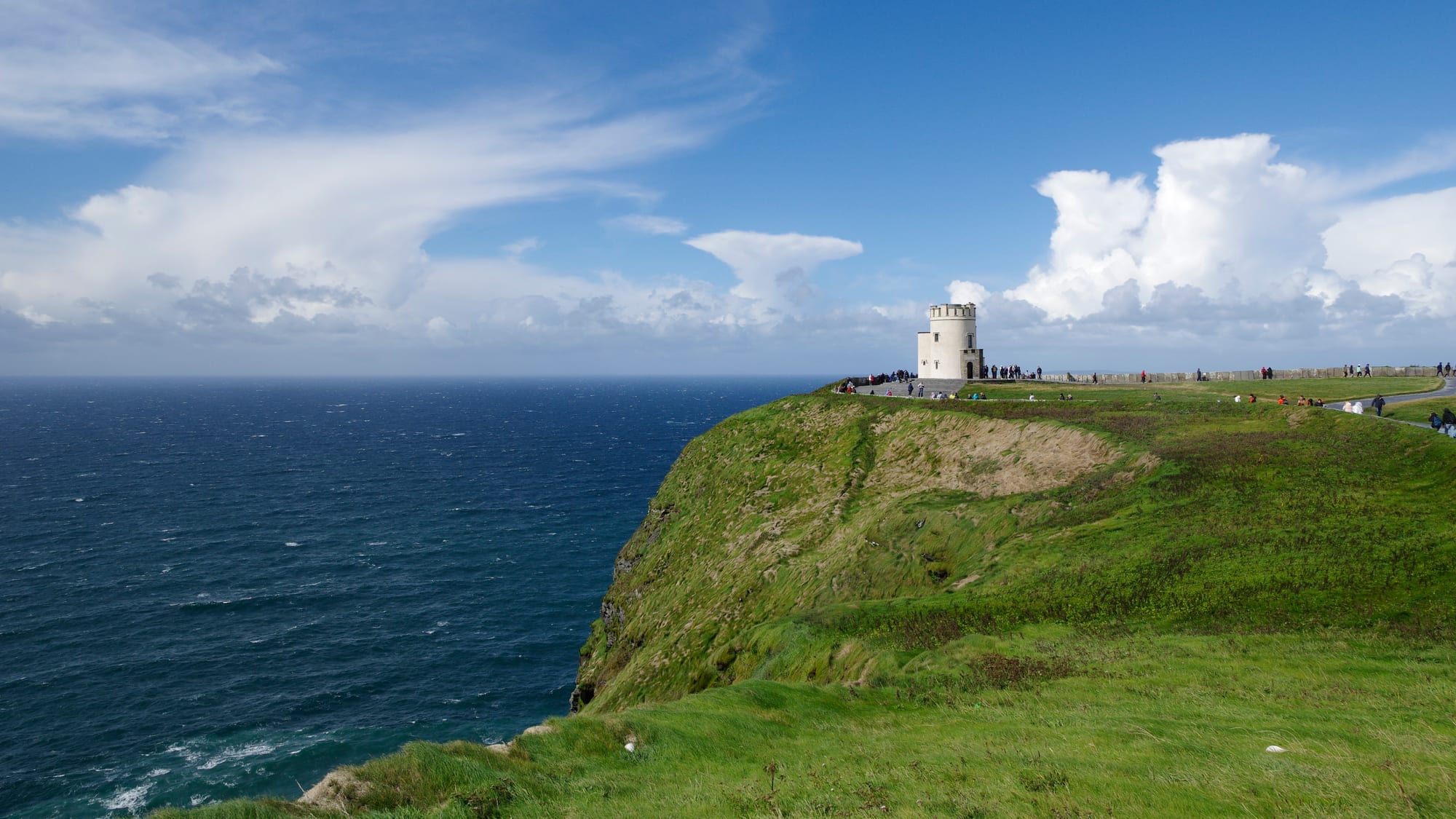
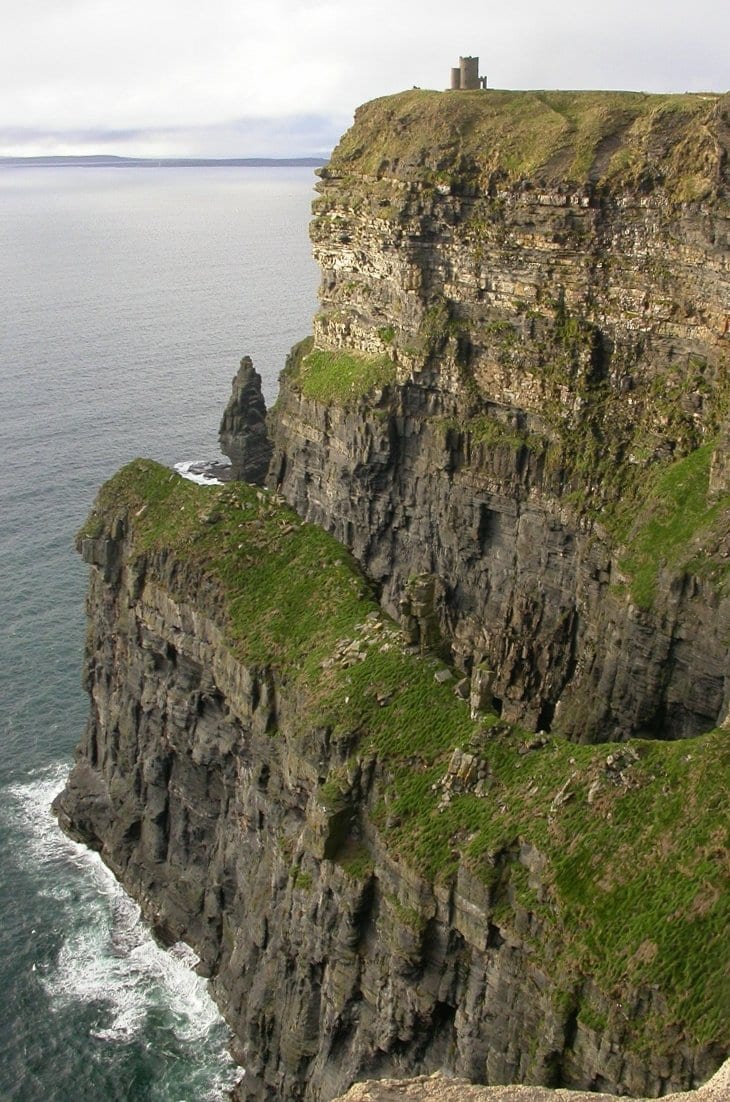
The Cliffs of Moher run for about 14 kilometres along the Clare coast, topping out at 214 metres, with a visitor centre, O'Brien's Tower, and a clifftop trail to quieter viewpoints; puffins nest on the ledges in early summer. Just inland is the Burren, a strange grey plateau of bare, fissured limestone that bursts with Arctic and Mediterranean wildflowers in May, dotted with ancient tombs like the Poulnabrone dolmen.
Boat trips from Doolin give the cliffs from below, past the sea stack "An Branán Mór".
3. The Ring of Kerry
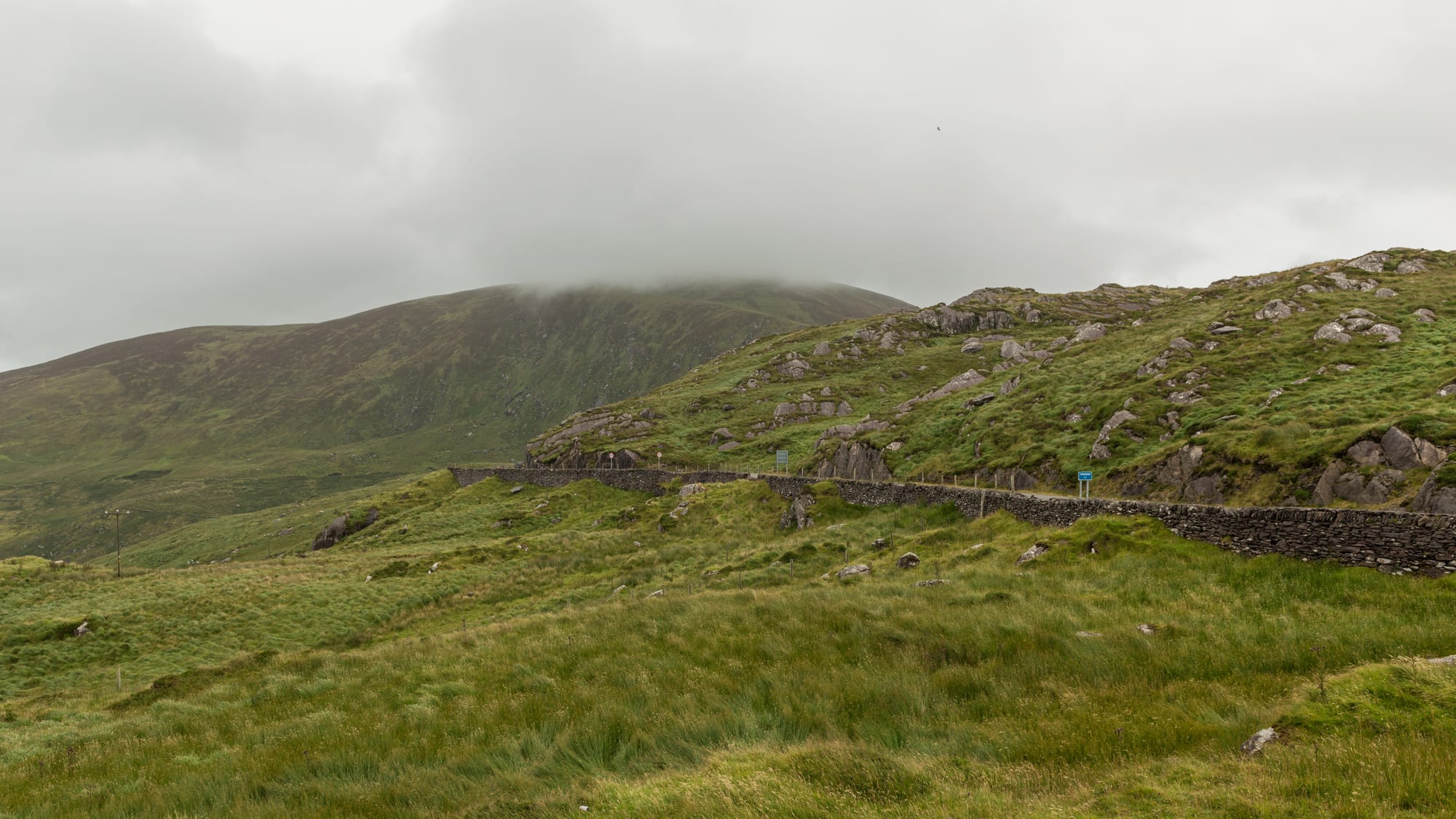
The Ring of Kerry is a 180-kilometre driving loop around the Iveragh Peninsula — mountains, lakes, beaches, stone forts, and villages like Sneem and Kenmare, with the Skellig Islands offshore (Skellig Michael, the UNESCO-listed monastic rock and Star Wars location, is reached by weather-dependent boat from Portmagee). Tour coaches run the loop anticlockwise, so many drivers go the other way.
The smaller Beara Peninsula next door is wilder and far quieter.
4. Killarney National Park
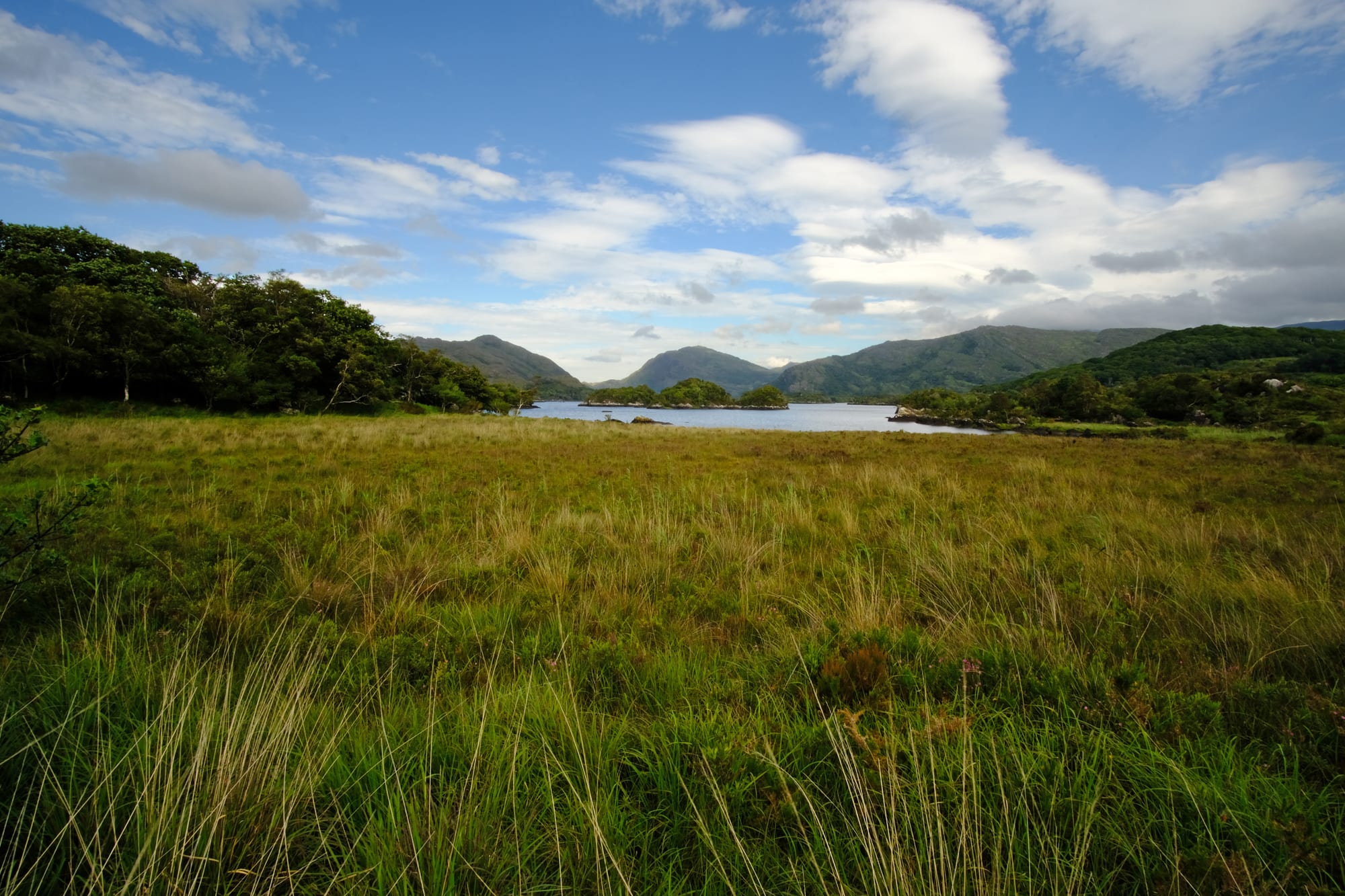
Killarney National Park wraps around three lakes below Ireland's highest mountains, the MacGillycuddy's Reeks. Within it are the Victorian Muckross House and gardens, the 15th-century Muckross Abbey, Torc Waterfall, the Gap of Dunloe (a narrow glacial pass done by pony trap or bike), and Ross Castle on the lake. Ireland's only wild red-deer herd lives here.
The town of Killarney is the tourist hub and a common base for the Ring of Kerry.
5. The Dingle Peninsula
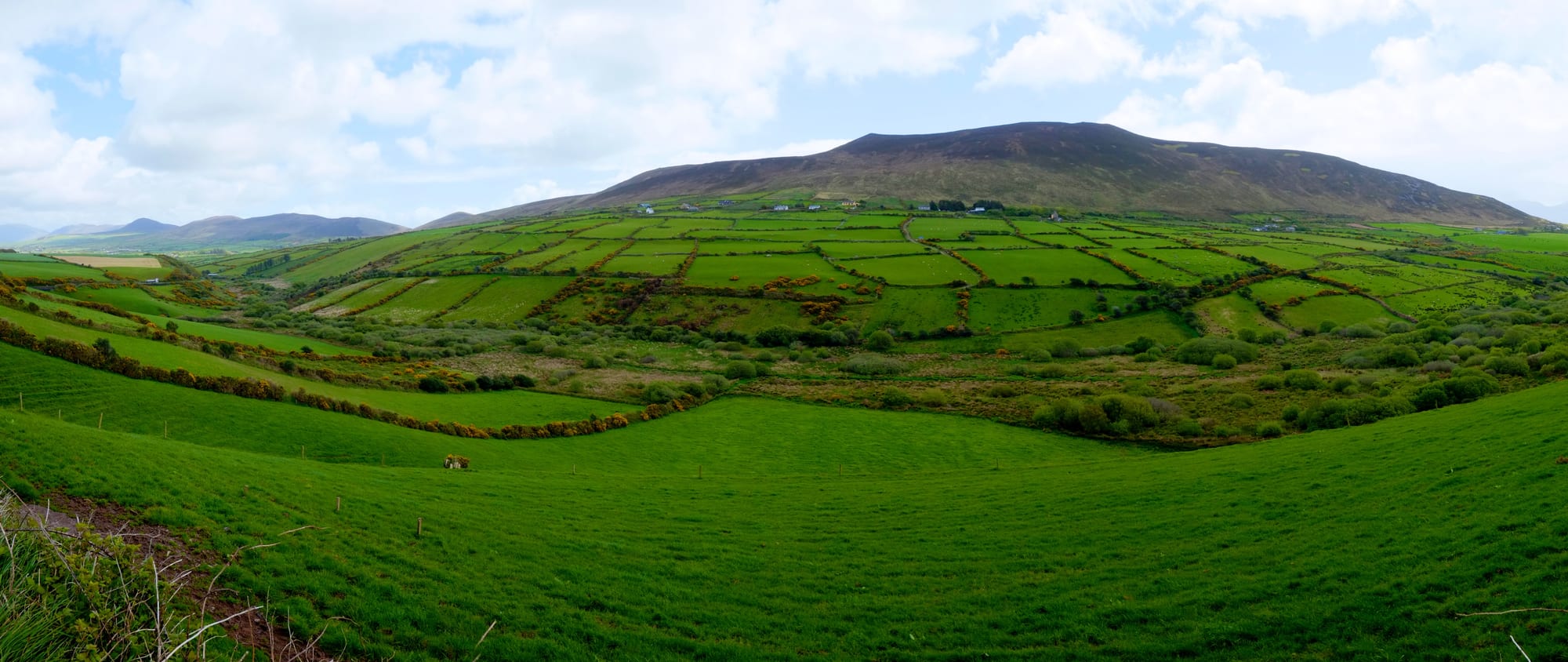
Dingle, north of Iveragh, is many people's favourite of the southwestern peninsulas — a Gaeltacht (Irish-speaking) area with the Slea Head loop drive past beehive huts and the 1,200-year-old Gallarus Oratory, the harbour town of Dingle with its music pubs, and views to the abandoned Blasket Islands. The higher Conor Pass road crosses the spine of the peninsula.
It featured heavily in the film Ryan's Daughter and, more recently, The Banshees of Inisherin (shot partly here and on Achill Island).
6. Connemara
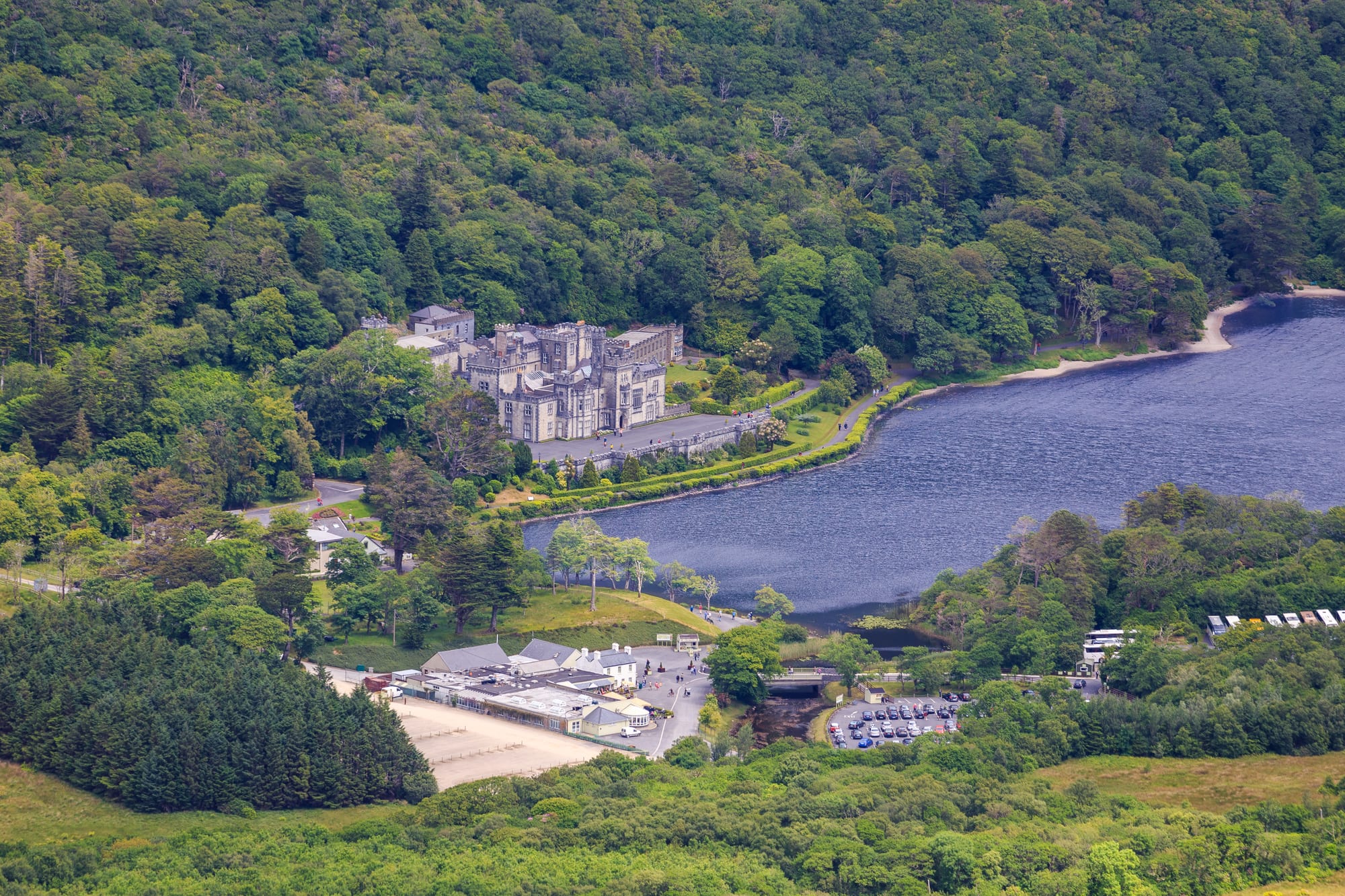
Connemara, west of Galway, is a starkly beautiful region of bog, quartzite mountains (the Twelve Bens), lakes, and a rocky Atlantic coast, with a strong Irish-speaking culture and the pony that bears its name. The lakeside Kylemore Abbey, a Victorian castle turned Benedictine convent with a walled garden, is the big set-piece; Connemara National Park, the fjord at Killary Harbour, and the white beaches near Roundstone round it out.
Galway city, with its buskers and pubs, is the gateway.
7. The Aran Islands
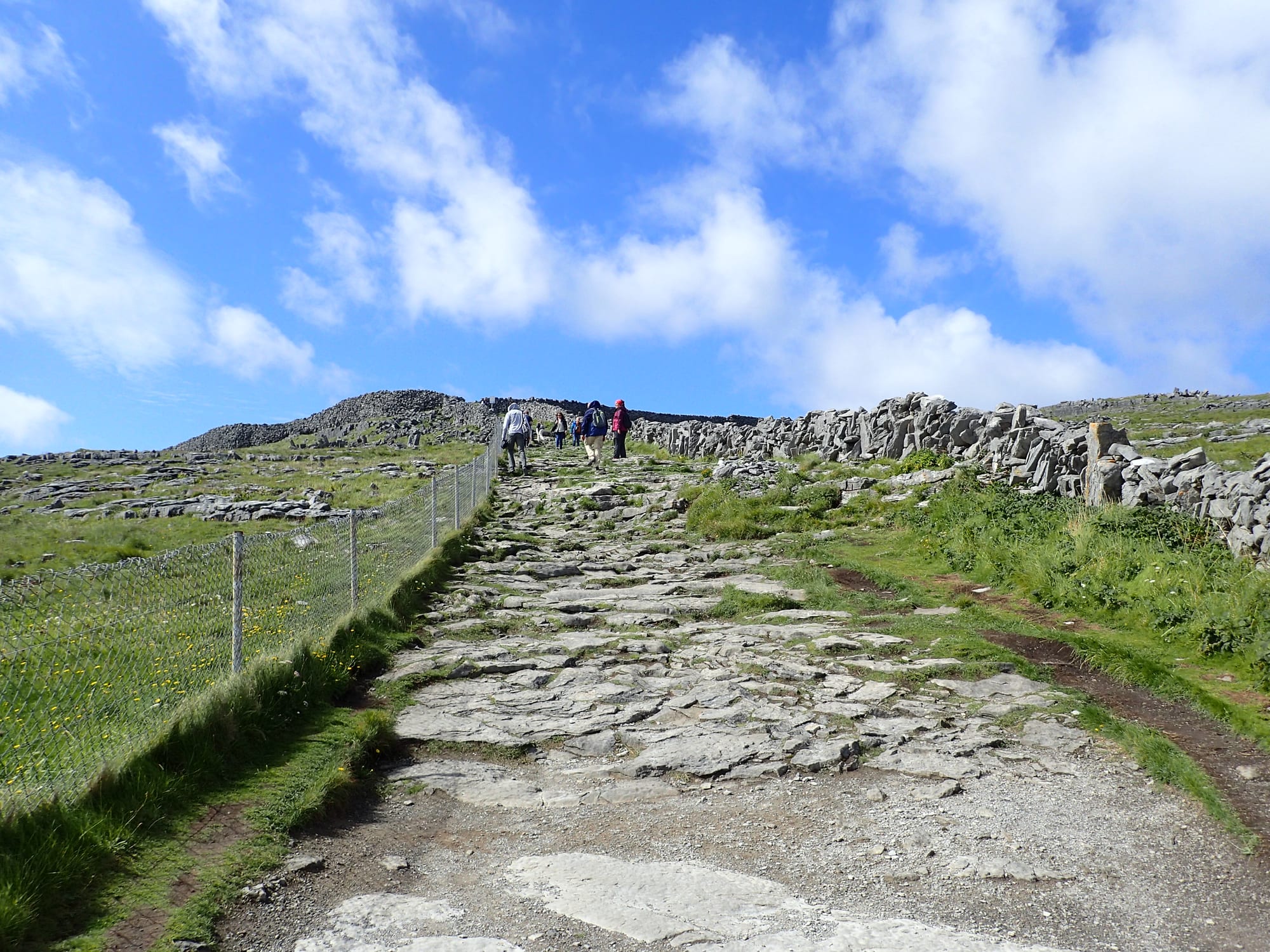
The three Aran Islands, in the mouth of Galway Bay, are windswept limestone outcrops — a continuation of the Burren — laced with dry-stone walls and dotted with early churches and forts, the most spectacular being Dún Aonghasa, perched on the edge of a 100-metre cliff on Inis Mór. Irish is the everyday language; bicycles and pony traps are the transport.
Ferries run from Rossaveel (near Galway) and Doolin (near the Cliffs of Moher).
8. The Rock of Cashel
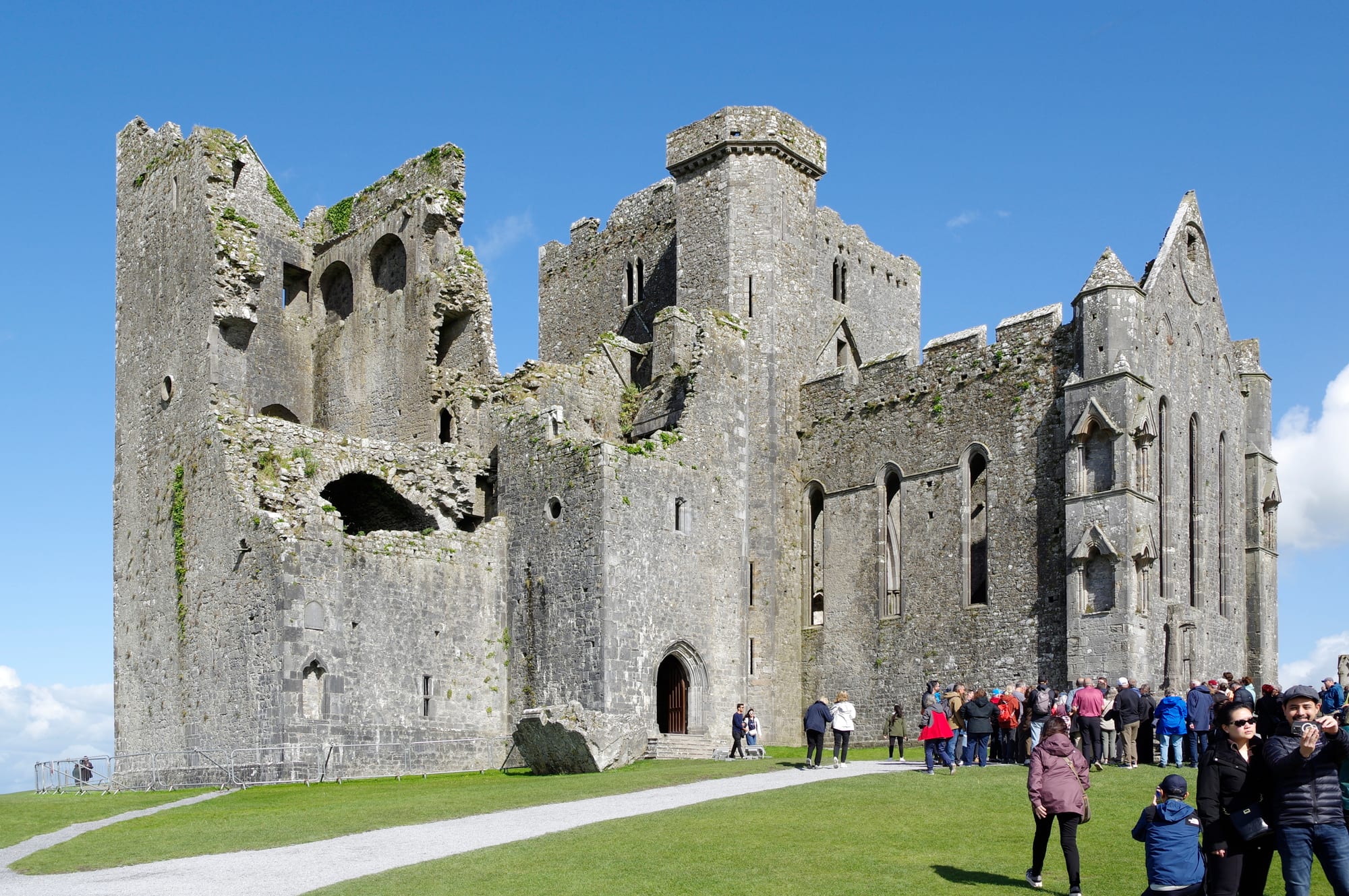
The Rock of Cashel, rising abruptly from the plain in Tipperary, was the stronghold of the kings of Munster and, from the 12th century, a great ecclesiastical centre. On top is a remarkable group: a round tower, the Romanesque Cormac's Chapel with rare surviving frescoes, a roofless Gothic cathedral, and a high cross. It is one of Ireland's most atmospheric ruins, especially in low light.
The town of Cashel is on the main Dublin–Cork road.
9. Newgrange and the Boyne Valley
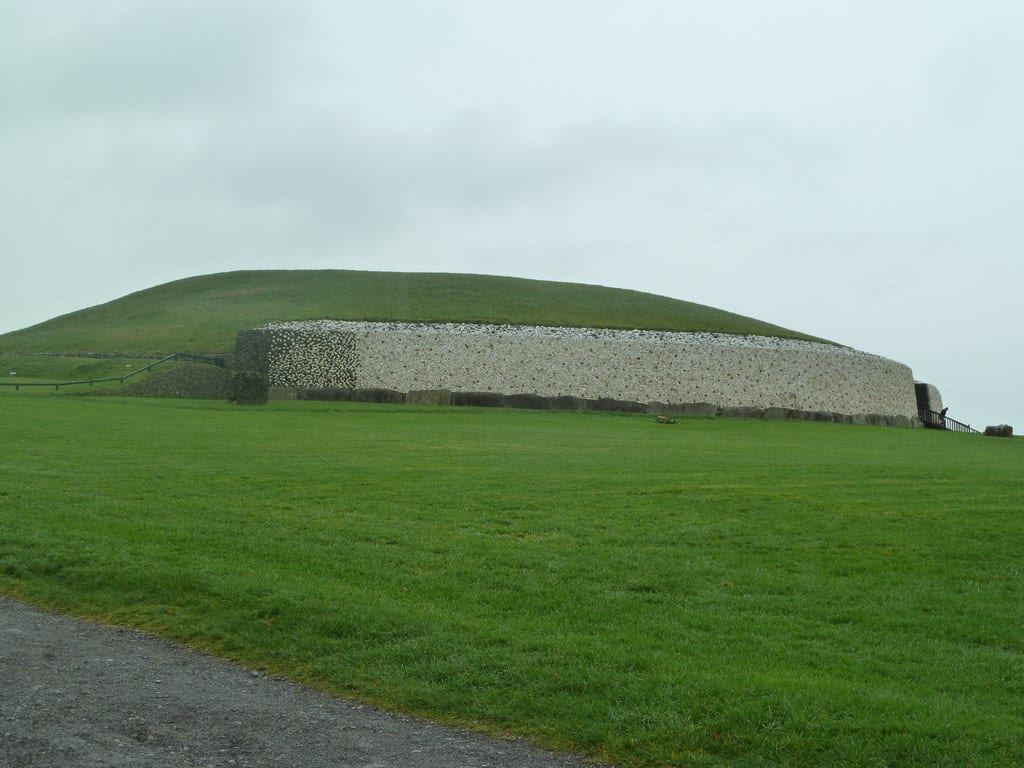
Brú na Bóinne, in County Meath, is a complex of Neolithic passage tombs — Newgrange, Knowth, and Dowth — decorated with spiral and lozenge carvings and aligned to the sun. At Newgrange, on the winter solstice, a shaft of dawn light enters a roof-box and creeps down the 19-metre passage to the central chamber (a lottery decides who gets in; a simulation runs for other visitors). It is a UNESCO World Heritage Site.
The wider valley holds the Hill of Tara, seat of the High Kings, and the monastic ruins of Monasterboice with their carved crosses.
10. Glendalough and the Wicklow Mountains
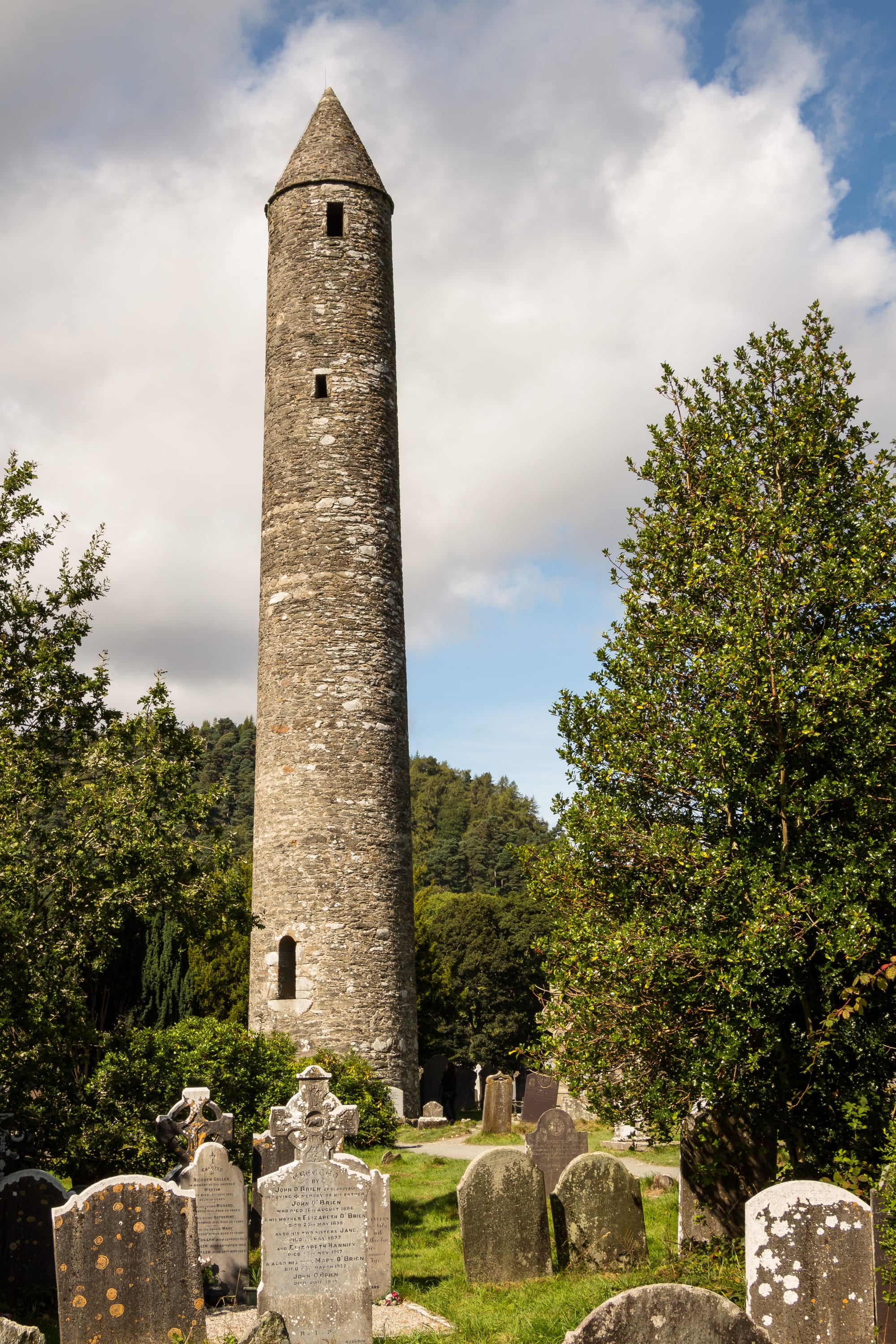
Glendalough ("the valley of the two lakes"), an hour south of Dublin, has one of Ireland's best-preserved early monastic sites — a near-complete round tower, churches, and crosses — in a steep, wooded glacial valley with two lakes and a network of hiking trails. It sits within Wicklow Mountains National Park, a sweep of blanket bog and heather crossed by the scenic Sally Gap and Wicklow Gap roads and the Wicklow Way long-distance path.
It is the classic day trip from Dublin.
11. The Wild Atlantic Way and the north

The Wild Atlantic Way is a signed 2,500-kilometre coastal route from Cork to Donegal, and its lesser-known northern half rewards the drive: the surf and cliffs of County Clare's Loop Head, the wild bogs and beaches of Mayo (Achill Island, the pilgrimage mountain Croagh Patrick), and the mountains and headlands of Donegal (Slieve League's sea cliffs, Glenveagh National Park, the Fanad and Malin Head tips).
North of the border, Northern Ireland adds Belfast, the Titanic museum, the Giant's Causeway, and the Antrim coast — an easy add-on for many trips.
Ireland suits a slow coastal road trip. A first week often does Dublin plus the southwest (Cork, Kerry, Dingle, the Cliffs of Moher); two weeks lets you add Connemara, Mayo, and Donegal, or Northern Ireland.