Culture & Customs · Iceland
Iceland: First Names and Hidden People
A small, informal and famously equal society, a calendar crowded with old festivals and mischievous folklore, and a handful of firm rules — shoes off at the door, a thorough shower before the pool — that visitors are expected to keep
By Worldlore Editorial · 30 September 2026
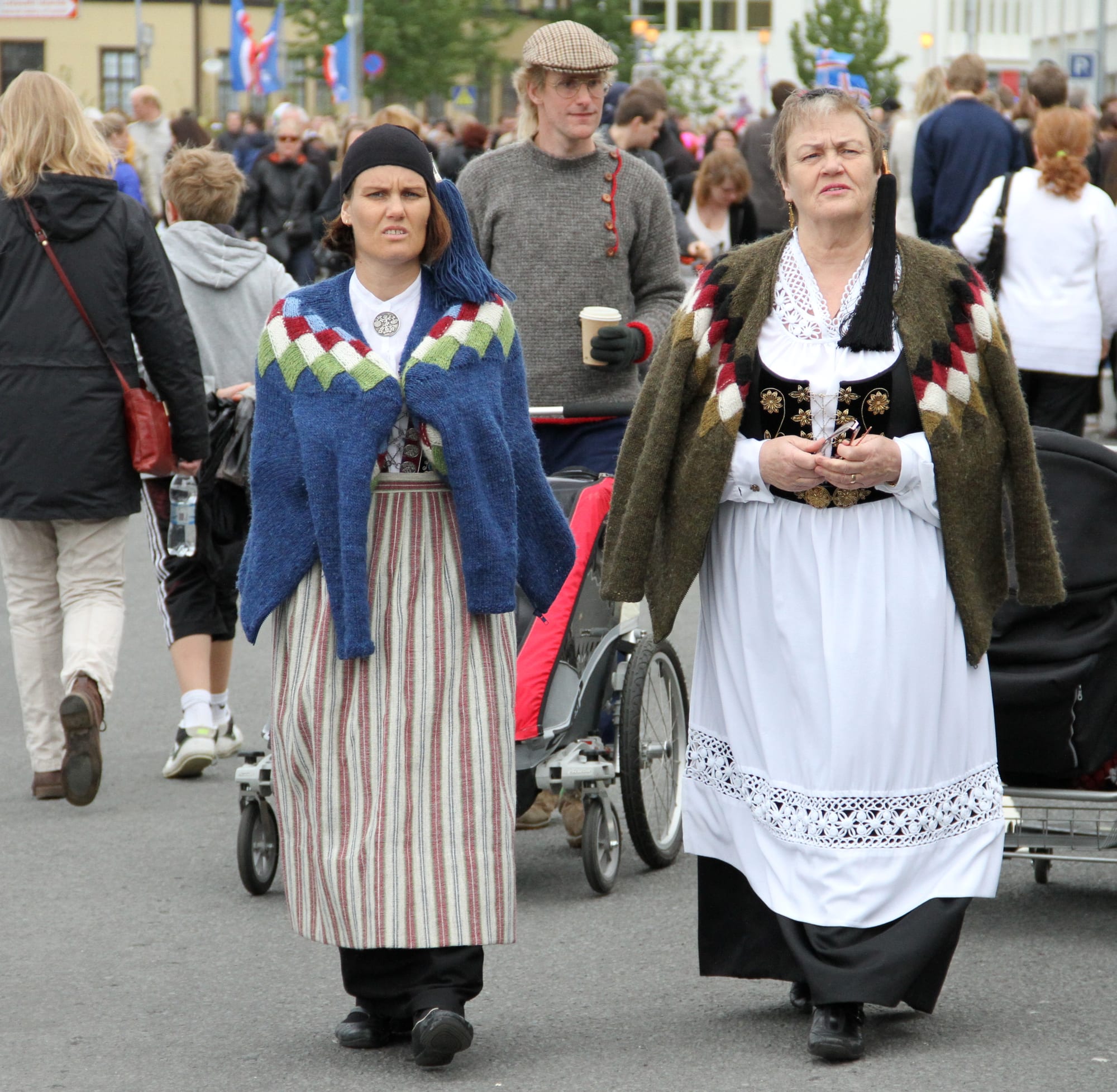
On the seventeenth of June, the day the republic was founded in 1944, towns across Iceland fill with parades, festivities and long tables of cakes. Among the crowds walk women in the national costume — dark bodices stitched with gold, striped or white skirts, a tasselled cap — and at the heart of the ceremonies a woman chosen as the Fjallkona, the Lady of the Mountain, stands in traditional dress to recite a poem for the nation. It is a proud, communal and slightly homespun occasion, and in that it says a great deal about Iceland: a country so small that much of public life runs on first names, where old stories are still told with a half-smile, and where the rules that do exist are kept with real conviction.
Faith, identity and values
The Evangelical Lutheran Church of Iceland is the national church, but its hold has loosened quickly. According to national registry figures reported by Iceland Review, 54.9 per cent of the population belonged to the Church of Iceland in August 2025, down from 65.2 per cent in 2019. The Catholic Church has around 16,000 members and the Free Church in Reykjavík close to 10,000, while roughly 92,000 people are registered with no specified affiliation and some 31,000 outside any religious organisation. Even so, church rites still mark the great moments of many lives, confirmation above all.
Equality is one of the country's defining values. Iceland has topped the World Economic Forum's Global Gender Gap Index for 16 consecutive years, and in 2025 remained the only economy to have closed more than 90 per cent of its gender gap. Social life is correspondingly informal: titles are rarely used, and people of every rank are addressed by their first names.
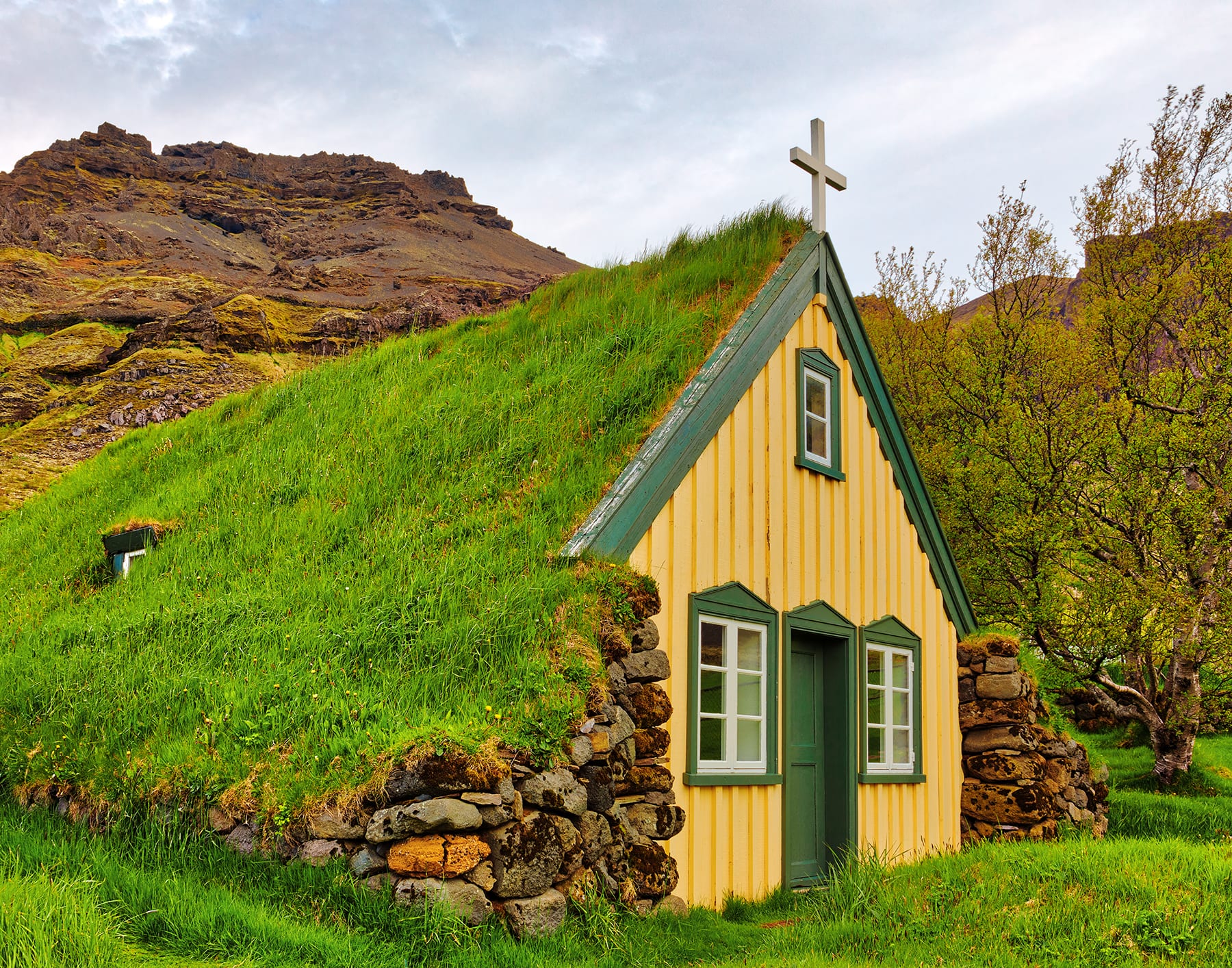
Folk belief survives alongside all this modernity. The huldufólk, or hidden people, are said to live in rocks and hillsides, and few Icelanders rule them out entirely. In University of Iceland surveys led by the folklorist Terry Gunnell, only a small minority of respondents said the existence of elves was impossible, around 8 per cent said they were certain elves exist, and many more thought it possible or likely. Gunnell observed that Icelanders seem more open than other nations to phenomena such as ghosts, forebodings and elves. Respect for the land runs just as deep, if more practically. Off-road driving is illegal and heavily fined, and walking on moss is strongly discouraged: footsteps can do lasting damage, and moss may hide cracks and holes in the ground.
Greetings and meeting people
A handshake with a smile is the usual greeting on meeting someone, and hugs and kisses are kept for close friends and family. Because most Icelanders carry a patronymic rather than a family name, people are addressed by their first name in almost every setting, formal or informal; using a title and surname, as visitors from many countries would, simply does not fit the system. Everyday exchanges are brisk and unfussy. "Halló" or "hæ" serves as hello, "góðan daginn" as good day, "takk" as thank you and "bless" as goodbye, and even a word or two of Icelandic is warmly received, since locals appreciate visitors who take an interest in a language spoken by so few.
Tipping is not part of the culture. Service wages are good, and while some restaurants and cafés now keep a tip jar, nobody expects a tip.
Hospitality and being a guest
Shoes come off at the door of an Icelandic home, usually without anyone needing to ask. The custom is rooted in cleanliness: floors are where babies crawl, and tracking in the grit of the street is regarded as inconsiderate. Guests who arrive in winter boots should expect to spend the visit in socks.
The same attention to hygiene governs the country's most important social space, the public swimming pool, whose culture has been added to UNESCO's list of the intangible cultural heritage of humanity. Every pool asks bathers to shower naked, without a swimsuit, and to wash thoroughly with soap before entering the water. It is not a suggestion, and it applies at every pool in the country. The rule exists for hygiene: Icelandic pools are often said to use comparatively little chlorine, so the water stays clean only if everyone washes first. Swimwear is then required in the pool itself. Once in the hot tubs, conversation is part of the ritual: they are places where people of every background meet and talk on equal terms.
Festivals and life's big moments
Midwinter belongs to Þorrablót, held from late January at the start of Þorri, a month of the old Icelandic calendar. Communities gather for feasts of traditional preserved foods, with storytelling, singing and dancing, and the season is bracketed by Bóndadagur, a day honouring husbands, and later Konudagur, for wives. Seven weeks before Easter comes a run of three days: Bolludagur, when cream buns are eaten; Sprengidagur, "bursting day", with salted lamb and split-pea soup; and Öskudagur, Ash Wednesday, when children dress in costumes and go from shop to shop singing in return for sweets. At Easter, chocolate eggs hide a paper slip bearing a proverb.
Spring is marked early. The First Day of Summer falls on the first Thursday after 18 April, whatever the weather, and children traditionally receive a small summer gift; folklore holds that if winter and summer "freeze together", a good summer lies ahead. Early June brings Sjómannadagurinn, Seafarers' Day, celebrated since 1938 in honour of the country's seafarers and its fishing industry, and National Day follows on 17 June.
December brings the Yule Lads, who come down from the mountains one at a time from 12 December. Children leave a shoe on the windowsill each night, to find sweets in the morning if they have been good and a rotten potato if they have not. The lads' mother, Grýla, and the Yule Cat, said to devour anyone who has not received a new piece of clothing for Christmas, complete the cast. Christmas itself begins on Christmas Eve at six in the evening, when church bells ring in the holiday.
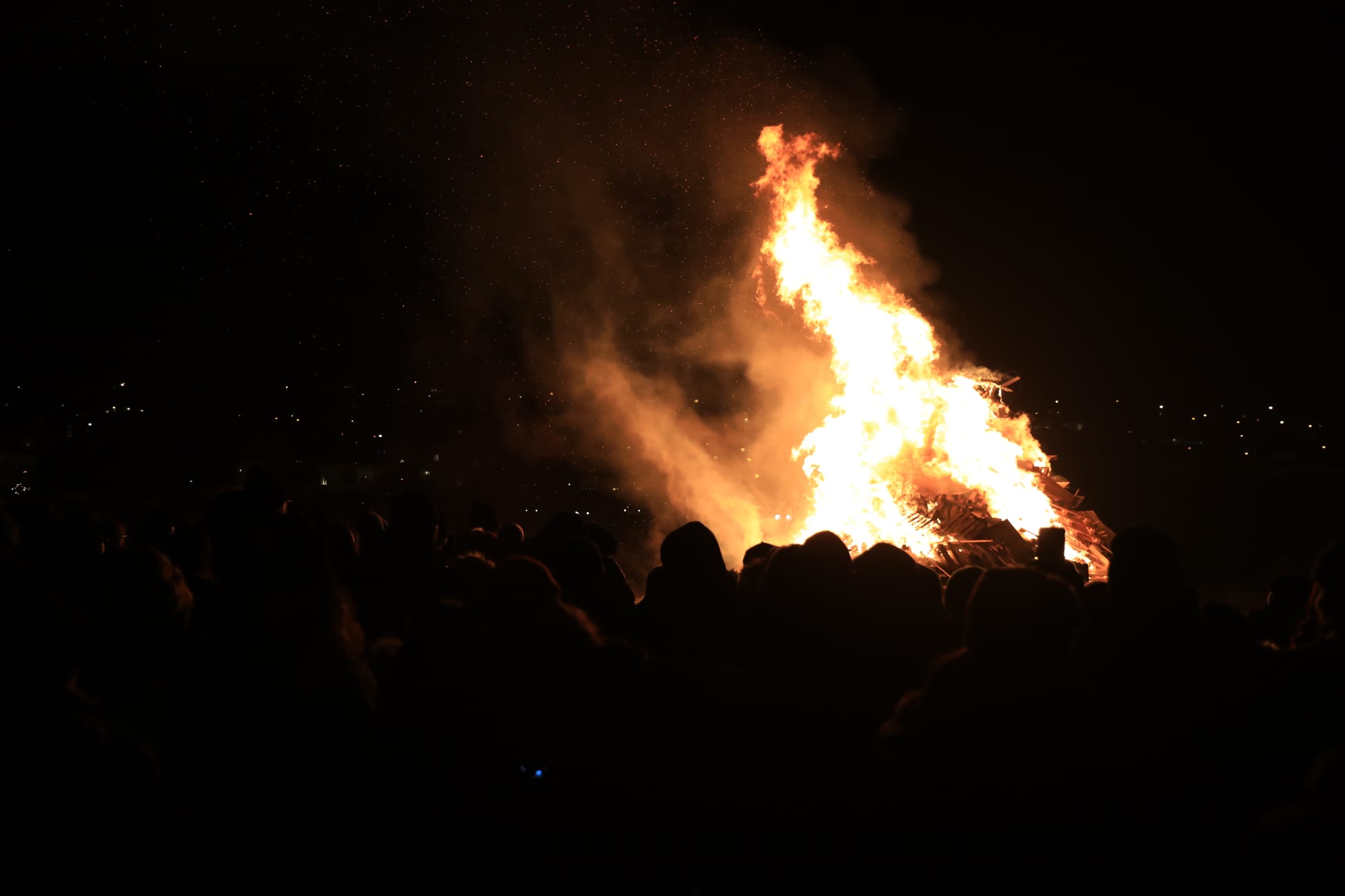
New Year's Eve is the loudest night of the year. After a family dinner, neighbourhoods gather at bonfires, brennur, meant to burn away the old year, before settling down to watch Áramótaskaupið, a satirical television review of the year's events. Towards midnight the sky erupts in fireworks let off from gardens and streets across the country — many of them bought from volunteer rescue teams, for whom fireworks sales are an important source of funding. The season closes on 6 January, Þrettándinn, with more bonfires and fireworks, on a night when folklore says elves and other creatures are abroad.
Life's milestones are often marked in church. Each spring thousands of teenagers, most aged about 14, are confirmed in the Lutheran church after months of classes, processing in white robes before a family celebration with a feast and gifts — generous enough that confirmation is sometimes debated as being more about presents than faith. Deaths are traditionally announced publicly, through the national broadcaster RÚV, the newspaper Morgunblaðið or an online memorial site, but close relatives and friends are told before an obituary appears. Obituaries usually follow a few days after a death, and a funeral notice is published several days before the service; where the deceased asked for a private funeral, the notice waits until afterwards.
Arts, crafts and music
Literature sits at the centre of Icelandic culture. The medieval sagas, the Eddas and the Book of Icelanders remain living texts, and in 2011 UNESCO named Reykjavík the world's fifth City of Literature, citing both that heritage and the central role that reading and writing play in everyday life. UNESCO also praised the way the city's publishers, libraries, writers and poets work together to keep that literary culture thriving.
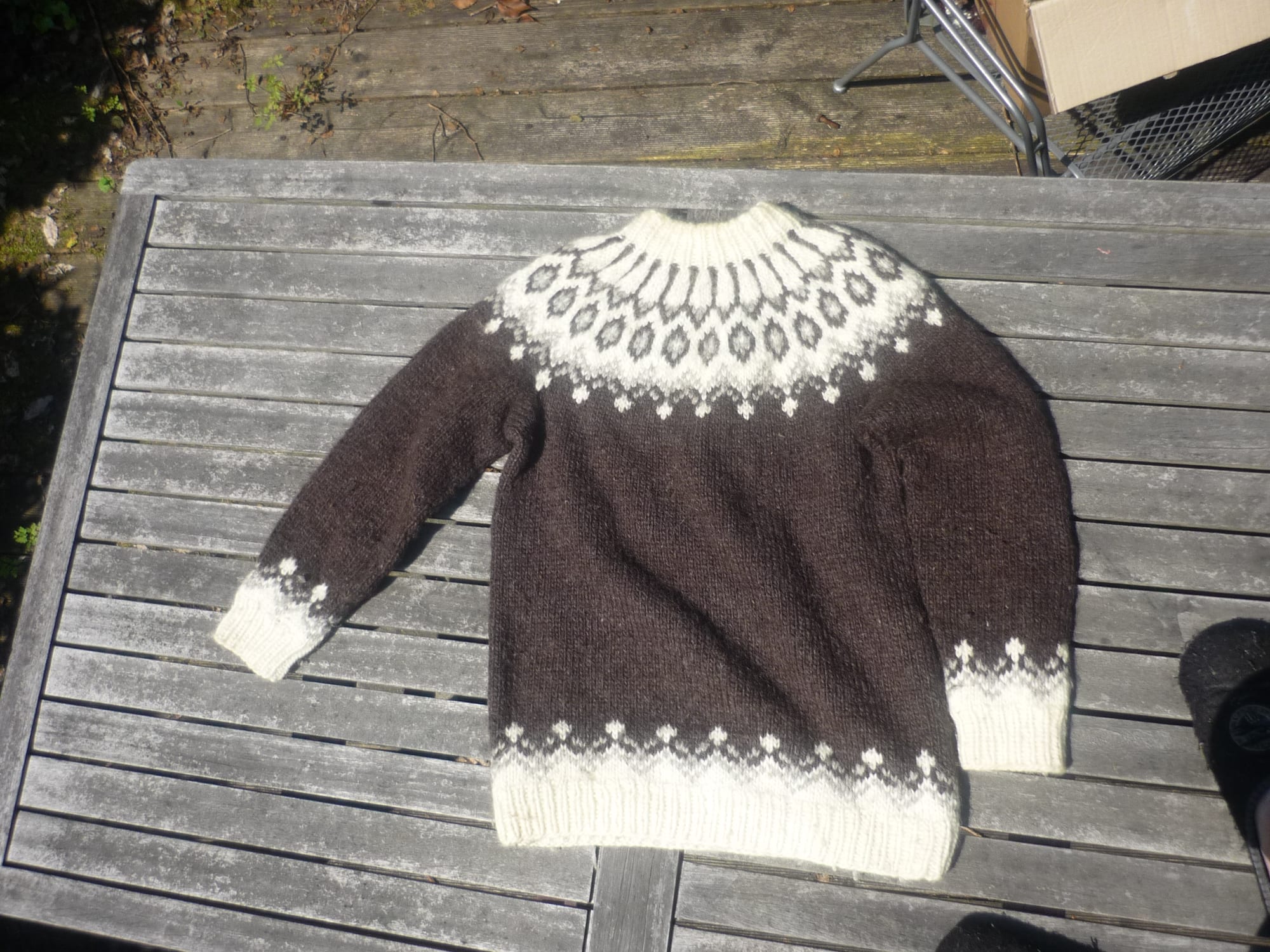
Wool is the other great tradition. The lopapeysa, the round-yoked sweater knitted from Icelandic wool, is so closely identified with the country that in 2020 the name "Icelandic sweater" received a protected designation of origin, only the second product name in the country to be protected after Icelandic lamb. To carry it, a sweater must be hand-knitted in Iceland from the wool of Icelandic sheep, knitted in the round without seams, and feature a patterned yoke running from shoulders to neck — a style that grew out of Icelandic knitting and pattern traditions of the mid-twentieth century.
The sea has shaped crafts too. Iceland shares in the Nordic clinker boat tradition, on UNESCO's list since 2021, in which small open wooden boats are built from overlapping planks fastened to a keel — a technique used across the Nordic region for close to two thousand years and still passed on through long apprenticeships.
Dos and don'ts for visitors
- Do shower naked and wash thoroughly with soap before entering any pool or lagoon, and wear swimwear in the water.
- Do take shoes off when entering someone's home.
- Do use first names; titles and surnames are not part of Icelandic address.
- Do learn a word or two, such as "takk" for thank you.
- Don't tip; it is not expected, though a tip jar may be offered.
- Don't drive off-road or walk on moss; both damage the fragile land, and off-road driving is illegal.
- Don't stop on main roads to take photographs; use designated stopping places.
What to take away
Iceland's customs are few and mostly unspoken, but the ones that matter — clean feet indoors, a thorough wash before the pool, care for the land and a first-name ease with everyone — reflect a small nation's shared sense of fairness, and visitors who keep them will find themselves treated as equals.