Culture & Customs · Hong Kong
Hong Kong: Face, Fortune and the Burning Coil
Incense spirals turning slowly in temple smoke, red envelopes passed with both hands, and a set of manners built around respect, reputation and a careful eye on luck
By Worldlore Editorial · 30 September 2026
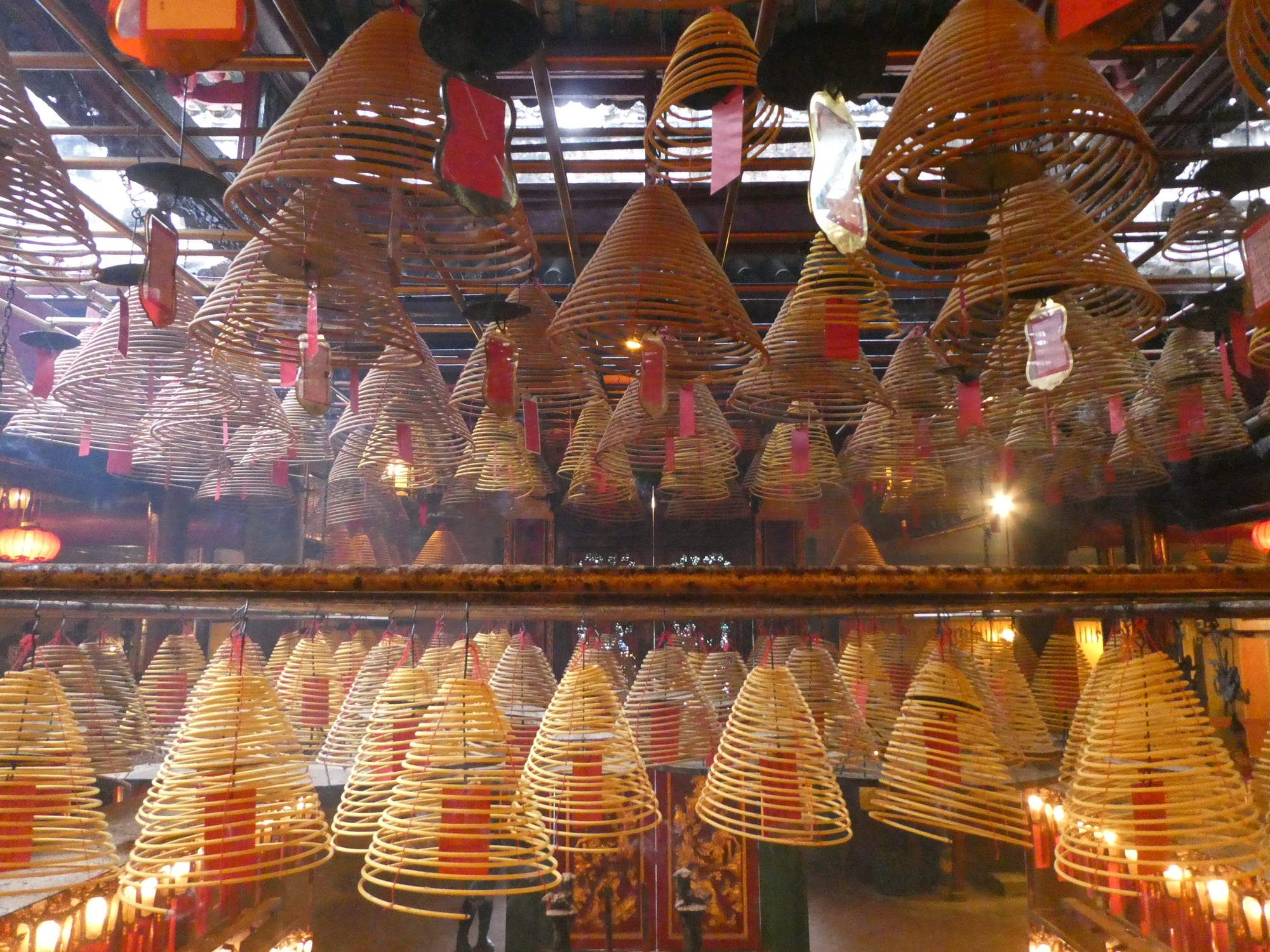
Inside an old temple, a few steps from traffic and glass towers, the air is thick and sweet. Great spirals of incense hang from the ceiling in tiers, each one smouldering slowly, each tagged with a slip of red paper. A worker lights a handful of joss sticks, bows before the altar and pushes them into an urn already bristling with others, then heads back out to the office. The moment captures something essential about Hong Kong: one of the world's fastest, most commercial cities is also one where luck is courted, ancestors are remembered and old courtesies are kept — usually without much fuss, and often on the way to somewhere else.
Faith, identity and values
Religion in Hong Kong is less a matter of formal membership than of practice. According to figures compiled by Cultural Atlas, around six in ten residents say they have no religious affiliation, roughly a fifth are Christian and about one in seven Buddhist, with smaller numbers of Taoists and followers of other faiths. Yet the label hides a great deal. Large majorities say they believe in fate, karma or unseen spirits, and temple visits and home altars for honouring ancestors are common even among people who describe themselves as non-religious. Many pray to Guanyin, the Buddhist figure of compassion, and others to Tin Hau, goddess of the sea, or to the Buddha himself. Christianity's influence runs through education in particular: churches run a large share of the city's schools, from kindergartens to secondary schools.
Beneath this sits a Confucian framework that shapes behaviour at home and at work. Filial piety — the respect and devotion owed by children to parents and elders — remains central, and age determines seniority within the family. Equally important is face: a person's reputation, dignity and standing in the eyes of others. Face can be given through respect and praise, and lost through public criticism, embarrassment or social blunders, which is why disagreement tends to be expressed carefully and why a flat "no" is rare. Hong Kong is also, famously, a place that prizes hard work, education and pragmatism; being busy is itself a sign of seriousness, and academic success weighs heavily on social standing.
Luck is taken seriously too. Red stands for prosperity and good fortune, while black and white are the colours of mourning. Certain numbers are welcomed for how they sound in Cantonese: eight resembles the word for prosperity and nine the word for eternity. Four, which sounds like "death", is avoided wherever possible. Feng shui — the arrangement of buildings, rooms and objects to encourage the flow of good fortune — informs choices from home layouts to the design of major towers. Identity, meanwhile, is often marked by language: Cantonese is the everyday tongue of most of the population, fluency in English carries real social weight, and Mandarin is spoken by many who have moved from the mainland.
Greetings and meeting people
The handshake is the standard greeting and is usually accompanied by a nod and eye contact. Grips can be noticeably softer than visitors from Europe or North America may expect, and some older people lower their gaze on first meeting as a mark of respect rather than evasion. People are addressed by title and family name until invited to do otherwise, and introductions in formal settings follow seniority, with the most senior person greeted first.
Business cards matter. They are offered with both hands, turned so that the text faces the recipient, and received the same way — then read properly and placed on the table during a meeting rather than pocketed at once. Folding a card, writing on it or tucking it into a back pocket is considered disrespectful. Punctuality is expected, and an apology is in order if running late. Meetings often begin with social conversation before any business is discussed, and moments of silence are left undisturbed rather than hurriedly filled.
Communication tends to be less direct than in many Western cultures, if more forthright than in some other parts of Asia. Understatement and ambiguity help preserve harmony and face, so hesitation or a vague answer can mean "no". Raised voices in public are regarded as impolite, although loud phone conversations are a familiar part of city life. Several gestures carry more weight than visitors might expect: pointing with an index finger is avoided in favour of an open hand, people are beckoned with the palm facing downwards, winking is considered rude and touching someone's head is poor manners. Personal space is closer than in many countries, a natural result of living at such density.
Hospitality and being a guest
When invited to a home, it is courteous to contact the host beforehand to confirm the visit. Guests usually bring a small gift — fruit, tea, sweets or a good bottle of spirits are all safe choices — and present it with both hands. Gifts are generally not opened in front of the giver, which spares both sides any awkwardness. Some gifts are firmly avoided for reasons of sound or symbolism: clocks, since the phrase for giving a clock sounds like preparing for someone's end; sharp objects, umbrellas, handkerchiefs and mirrors; green hats, which imply infidelity; white or yellow flowers; and anything in a set of four. Wrapping in red or gold is lucky, while black, white or blue wrapping carries negative associations.
At the table, others are served before oneself and guests are expected to taste everything offered as a sign of appreciation. The last piece on a shared plate is usually left rather than taken, a rice bowl is held close to the mouth while eating, and a second helping is politely declined once before being accepted. Writing in red ink — for a note, a card or a name — is avoided, since red writing was traditionally associated with bad news or the names of enemies.
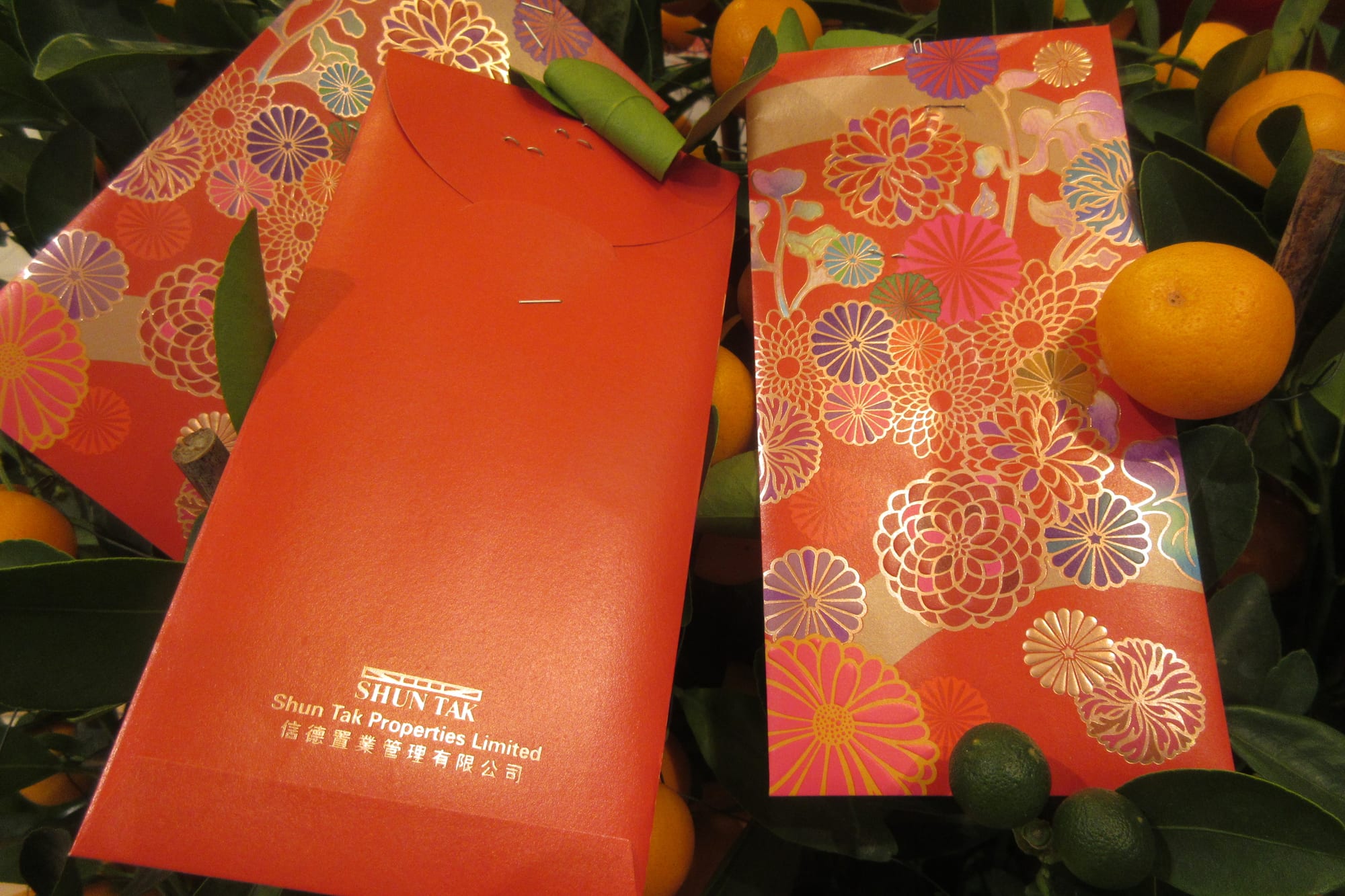
The most distinctive form of giving is lai see, the small red envelopes of money exchanged at Chinese New Year. They pass from those of higher standing to those below: married people give to children and younger unmarried relatives, employers to staff, and many residents also give to the doormen, security guards and others whose service they rely on through the year. Crisp new notes are preferred — so much so that the Hong Kong Monetary Authority and the note-issuing banks run a notes-exchange service before each New Year, offering new and "good-as-new" notes suitable for lai see, while also encouraging electronic lai see to cut down on paper and banknotes. Amounts are kept to even numbers, fours are avoided, and the envelope is given and received with both hands, never opened on the spot. A greeting such as "gung hei faat choy" — wishing prosperity — goes with it.
Festivals and life's big moments
The festival calendar follows the lunar year. Chinese New Year is the most important holiday, a time of family reunions, visits to relatives, temple trips and lion dances, preceded by busy flower markets selling peach blossom, orchids and other plants thought to bring luck in the year ahead. Spring brings Ching Ming, when families visit ancestral graves to sweep and clean them and leave flowers and food; its autumn counterpart, Chung Yeung, is the second grave-sweeping festival of the year.
Many festivals have a maritime flavour, reflecting a history of fishing communities. On the birthday of Tin Hau, goddess of the sea, worshippers fill the territory's many Tin Hau temples, communities and clans gather for worship and processions, and Cantonese opera is staged in her honour. The Cheung Chau Bun Festival, held on the island of the same name over several days of the fourth lunar month, combines Taoist ritual, lion dances, a parade in which children dressed as deities and heroes are held high above the crowd on hidden supports, and a competition to scramble up a tower of buns. In early summer the Dragon Boat Festival, held on the fifth day of the fifth lunar month, fills the water with racing crews.
The seventh lunar month is the time of the Hungry Ghost Festival, when the gates of the underworld are believed to open. Families burn paper offerings — imitation money and, increasingly, paper models of everything from handbags to cars — and leave food and incense at roadsides, while Chinese opera is performed on temporary stages for the entertainment of wandering spirits. The Mid-Autumn Festival follows, when lantern displays fill parks and waterfront promenades across the city.
Weddings bring together old ritual and modern celebration. Parents' approval of a match remains important, and couples often book an auspicious date well in advance. Traditional preparations include guo da li, the betrothal ceremony in which the groom's family presents gifts to the bride's, and a hair-combing ceremony for the bride and groom. On the wedding day, bridesmaids stage door games, blocking the groom's way until he has completed playful challenges — such as tasting something sweet, sour, bitter and spicy — and handed over red packets. The tea ceremony is the emotional heart of the day: the couple serve tea to their parents and senior relatives, who drink it and offer their blessings in return. Some couples register their marriage first and hold the larger celebration later, once they are financially settled.
Funerals are shaped above all by filial piety, which is the central theme of the rites. Traditional Taoist funerals may involve priests performing rituals to protect the soul of the deceased, while the family burns paper models of houses, servants and other possessions to provide for the afterlife. Mourners traditionally wear white, and black and white are both regarded as colours of mourning, which is why they are avoided at happy occasions.
Arts, crafts and music
Cantonese opera, known as Yueju, is the most celebrated of the performing arts. It combines singing, spoken passages, martial choreography, face painting and elaborate costume, accompanied by string and percussion instruments, and in 2009 it was inscribed on UNESCO's Representative List of the Intangible Cultural Heritage of Humanity as a tradition shared by Guangdong, Hong Kong and Macao. Its repertoire runs from historical epics to stories of everyday life, and it is still passed on through drama schools and apprenticeships.
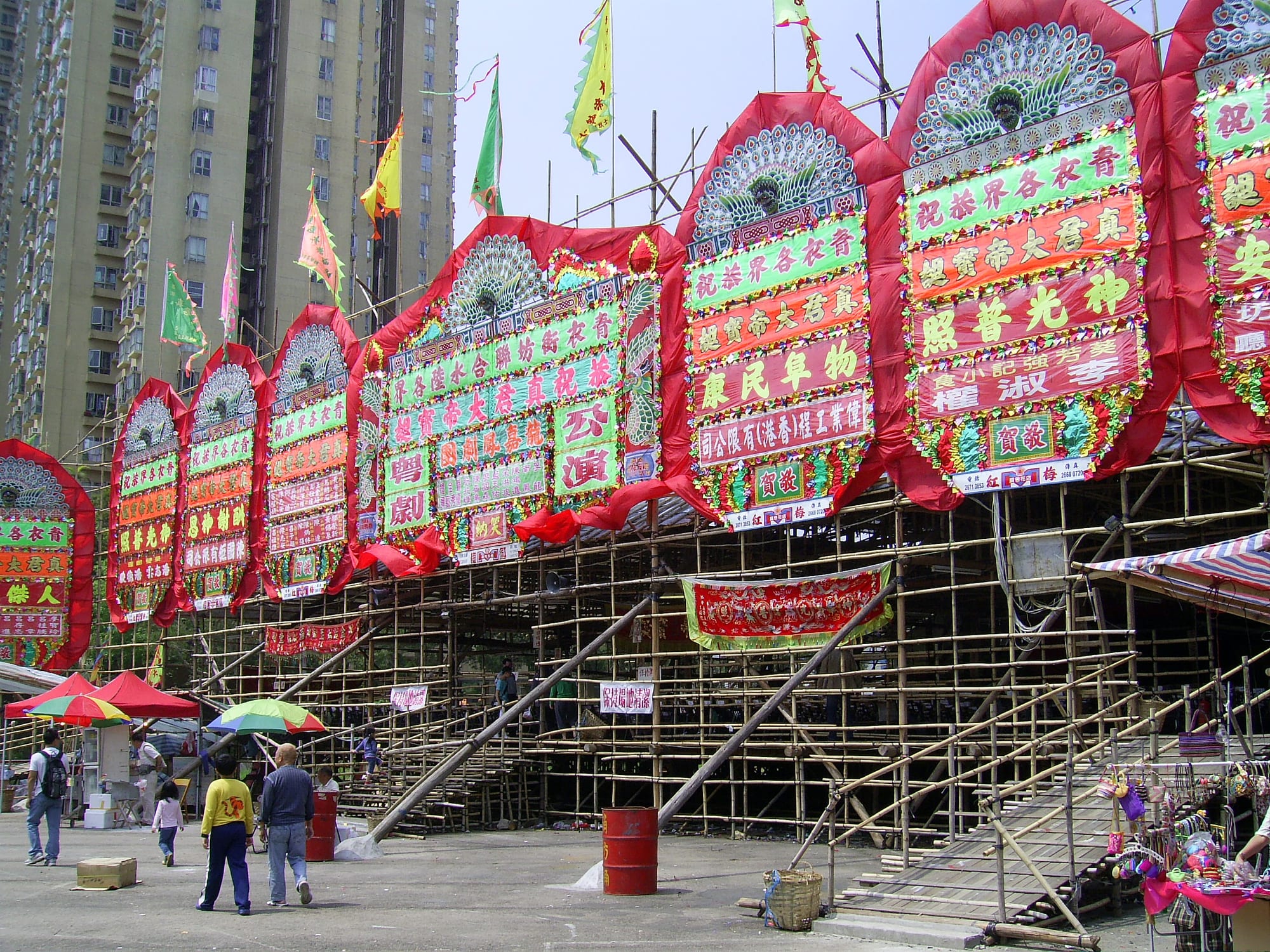
Much of Hong Kong's opera is staged not in theatres but in temporary bamboo theatres, built for festivals and temple celebrations from bamboo poles lashed together and hung with colourful decorated panels. Bamboo theatre building is one of the skills recognised by Hong Kong's Intangible Cultural Heritage Office, alongside the crafting of flower plaques and the paper offerings made for festivals.
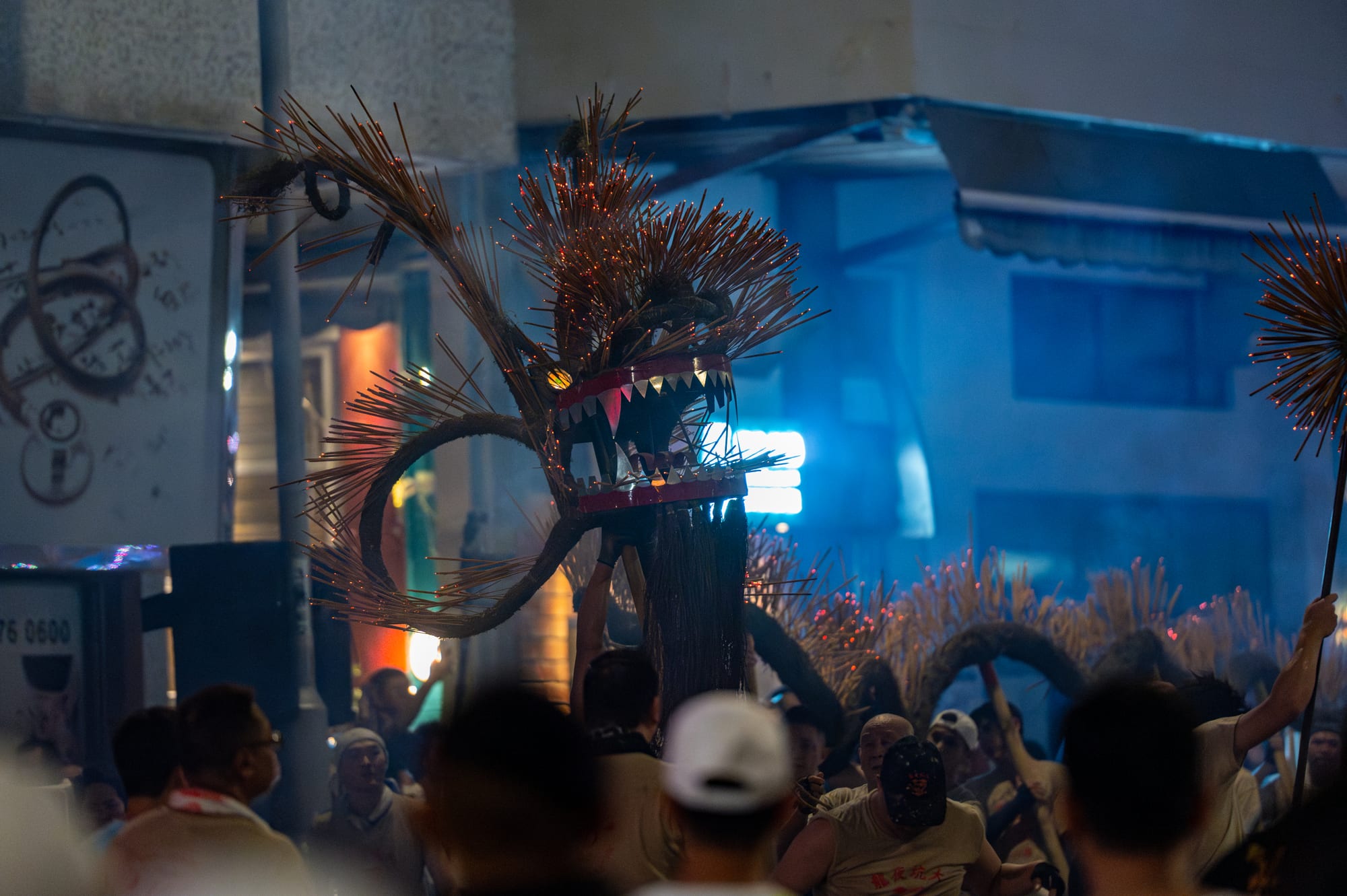
Lion dances are a fixture of New Year and of festivals such as the one on Cheung Chau, and the fire dragon of Tai Hang shows how a single neighbourhood tradition can become part of the wider cultural heritage. Twelve items on Hong Kong's own heritage list have been inscribed on China's national list, among them the Tin Hau Festival, the Cheung Chau Bun Festival, the Yu Lan Festival of the Chiu Chow community and the dragon boat water parade at Tai O.
Dos and don'ts for visitors
- Do give and receive business cards, gifts and lai see with both hands.
- Do address people by title and family name until invited to use first names.
- Do bring a small gift such as fruit, tea or sweets when visiting a home, and leave it unopened in front of the giver.
- Do use an open hand rather than a pointed finger to indicate people or things.
- Don't give clocks, sharp objects, umbrellas, green hats or anything in a set of four.
- Don't write someone's name or a message in red ink.
- Don't take the last piece from a shared plate, and decline a second helping once before accepting.
- Don't lose your temper or criticise someone in public; causing a loss of face is taken seriously.
What to take away
Hong Kong moves at a relentless pace, but its customs — the two-handed gesture, the careful choice of a gift, the incense lit on the way to work — all rest on respect for others and a watchful eye on fortune, and visitors who show the same respect will find it readily returned.