Culture & Customs · Honduras
Honduras: Faith on the Street, Welcome on the Porch
A tiny cedar Virgin who draws vast crowds, streets carpeted in coloured sawdust for Holy Week, a Garifuna coast with its own language and drums, and a handshake that comes twice, once to say hello and once to say goodbye
By Worldlore Editorial · 30 September 2026
It is the night before Good Friday, and in towns across Honduras whole families are kneeling in the street. Around them lie sacks of sawdust dyed in vivid colours, cardboard stencils and buckets of water to keep the designs from blowing away. By morning the road has become a carpet of crosses, doves, flowers and scenes from the Passion, some of them many metres long, and then the procession comes and walks straight over them. By the time the last mourners have passed, the work of a night is scattered dust. Nobody minds; that is the point. The carpets are made to be offered and lost. The scene says a great deal about Honduras, a country where faith is practised in public, where community effort is taken for granted, and where hospitality, like devotion, is generous and unshowy.
Faith, identity and values
Honduras is a deeply Christian country, but the balance between its churches has shifted. A 2020 poll cited by the United States government found that about 48 per cent of Hondurans identify as evangelical Protestant and about 34 per cent as Roman Catholic, although the Catholic Church itself puts its own share much higher. Evangelical congregations, many of them independent, meet frequently for prayer meetings and Bible study in small chapels, while many Catholics attend mass mainly on special occasions such as Christmas and funerals. In the east of the country the Moravian Church has a strong presence, and some Indigenous and Afro-descendant communities keep their own faiths or blend them with Christianity. The great majority of Hondurans believe in God, even if faith is often worn lightly, and in isolated communities it is frequently lay leaders who lead Catholic worship in the absence of a priest.
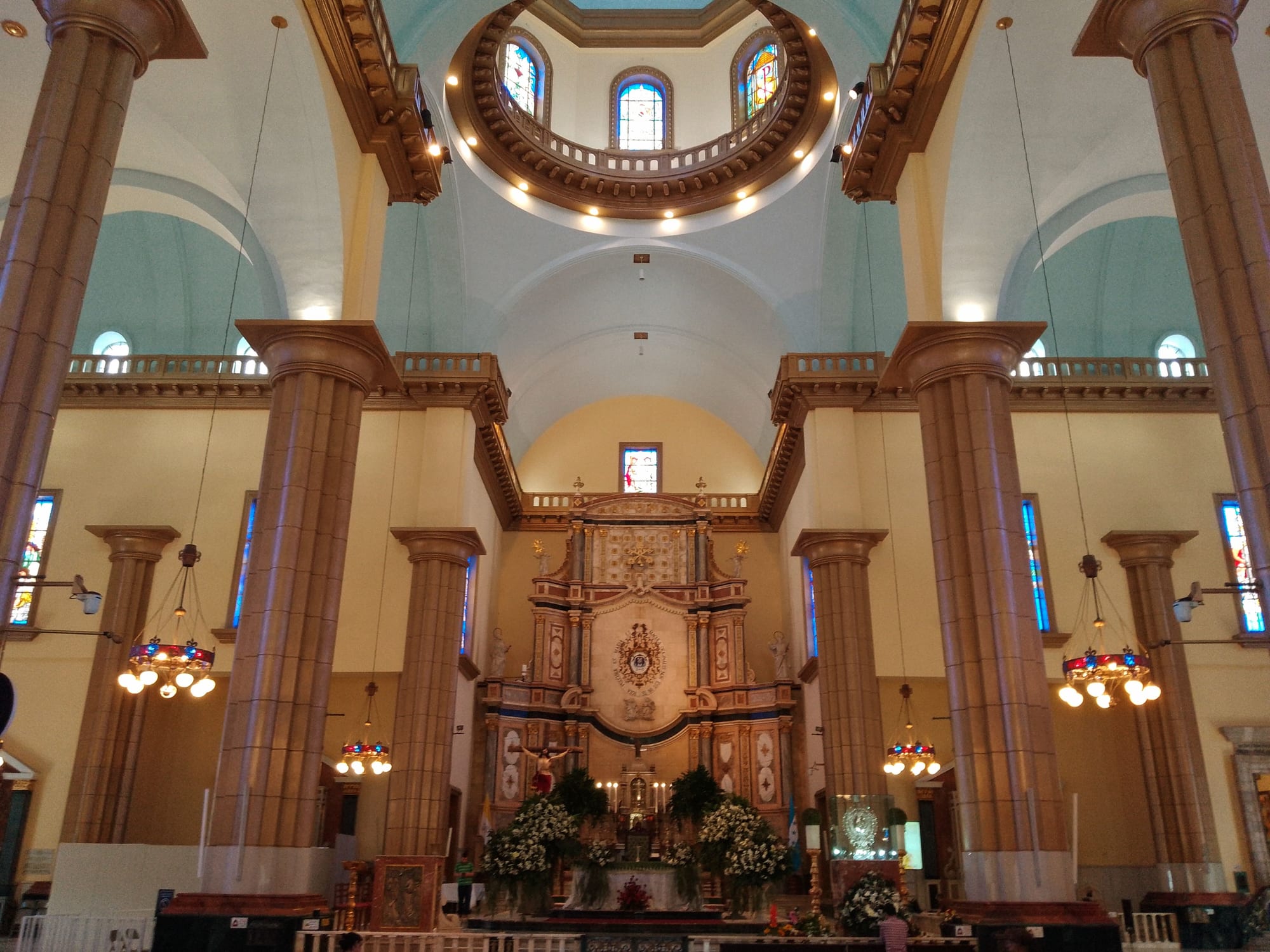
The country's most beloved religious figure is the Virgin of Suyapa. The statue at the centre of the devotion is a tiny, dark image carved from cedar, which according to tradition was found in 1747 by a labourer clearing cornfields in the hills near the capital. In 1953 Pope Pius XII declared her patroness of Honduras, with her feast fixed on 3 February, the anniversary of her discovery. A large basilica was built beside her original shrine from the 1950s onward to accommodate the pilgrims who come each year, and the statue is still occasionally taken on journeys to other parts of the country. For many Hondurans, Catholic and otherwise, she remains a symbol of hope and protection.
Older beliefs sit alongside formal religion. Traditional healers use herbal remedies, some farming communities still hold small rituals to protect their crops, and some Hondurans believe that contact with the dead leaves a kind of spiritual contamination, known as hejillo, which must be washed away.
Honduran identity is Central American as much as national. The five stars on the flag stand for the five nations of the old Central American federation, and Independence Day on 15 September is felt as a shared regional anniversary. Most Hondurans are mestizo, of mixed Indigenous and European descent, and the country is also home to several Indigenous peoples, among them the Lenca, Miskito, Pech, Maya Chortí, Tolupan and Tawahka, as well as the Garifuna of the Caribbean coast. Spanish is the main language; English is spoken on the Bay Islands and parts of the north coast, and Garifuna in Garifuna communities.
Greetings and meeting people
Greetings are warm and physical. A firm handshake is the basic greeting, and it is repeated when people part. Among many Hondurans, women greeting one another or greeting men will clasp right hands and press cheeks or give a light kiss on the cheek, while men who have not seen each other for some time may embrace with a slap on the back. In the countryside handshakes tend to be softer, and women may touch an acquaintance's elbow or shoulder as a sign of affection. People often meet the eyes of passers-by with a smile, and in workplaces colleagues greet one another throughout the day. Walking past someone without acknowledging them can seem cold.
Society is generally traditional and conservative, especially in smaller towns and villages, and gender roles can be more clearly marked than visitors may be used to. Appearance counts for a great deal. Hondurans like to be neat and well dressed, and a visitor will be judged, at least at first, by how they look. Shorts and flip-flops are fine at the beach but look out of place in offices, churches and many towns. Tattoos can be associated with criminal gangs, and it is sensible to keep them covered.
Family is at the centre of social life. Extended families gather for long Sunday meals and try to live close to one another, and children carry the surnames of both parents. Respect for relatives and for older people is expected, and questions about a person's family are a natural way to begin a friendship.
Hospitality and being a guest
Hondurans are known for their hospitality, and visitors who stay any length of time are likely to be invited into homes for a meal or a family celebration. Such invitations are a real mark of trust and are worth accepting. In the countryside, guests are often received on the porch, the social heart of a rural house, rather than taken inside, and a visitor should wait to be invited further in.
Meals are unfussy and generous, and on special occasions a household will stretch to more meat and extra dishes as a mark of respect for its guests. It is polite to accept what is offered and to thank the cook. Drinking customs vary a great deal: in some communities alcohol is freely consumed, while in others, particularly where evangelical churches are strong, it is frowned upon or avoided entirely, so it is wise to follow the lead of hosts.
Festivals and life's big moments
Holy Week, Semana Santa, is the most important period of the religious year. Processions re-enact the Passion through the streets, and in many towns families spend the night before Good Friday laying out carpets of coloured sawdust, a tradition that has spread across the country. For many other Hondurans, Holy Week is also a holiday, and beaches and rivers fill with families. On 3 February vast crowds honour the Virgin of Suyapa, and in May the Día de la Cruz, the Day of the Cross, sees wooden crosses decorated with flowers in anticipation of the rains.
Independence Day, 15 September, is the principal national holiday. On 12 April, Garifuna communities commemorate the arrival of their ancestors on the island of Roatán in 1797 after their deportation from Saint Vincent by the British. The day is celebrated with re-enactments of the landing by canoe, drumming, and dances such as the punta and the wanaragua.
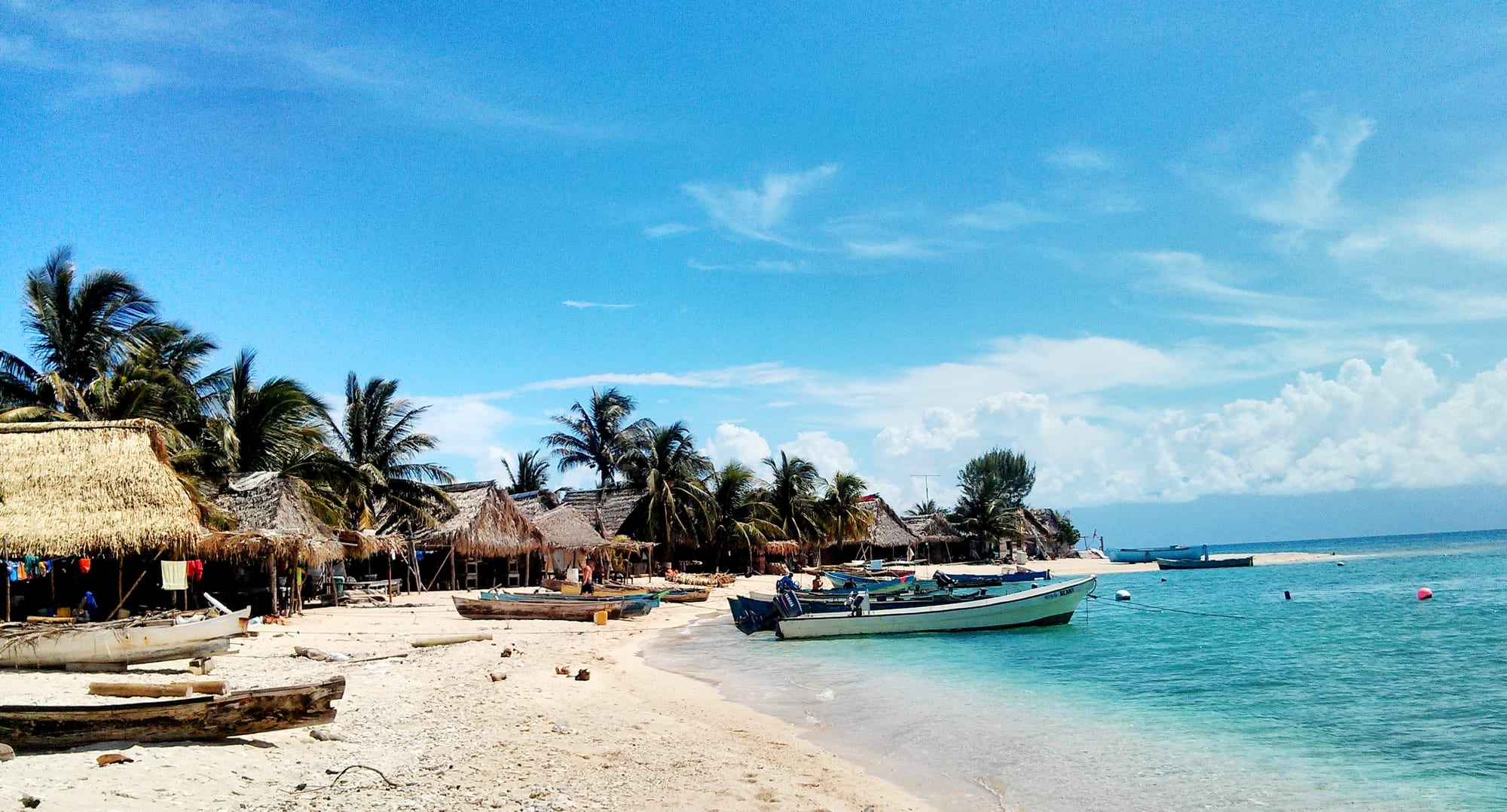
Family occasions follow the Catholic and evangelical patterns of the region, and marriage today is generally a matter of personal choice, often between neighbours or people who met at school or work. Death is treated with great seriousness. Among the Garifuna, wakes and large gatherings have traditionally been occasions for telling úraga, the tales that carry the community's history and values, and in many Honduran communities funerals bring together extended family and neighbours in a shared act of mourning.
Arts, crafts and music
The best-known living craft is Lenca pottery from the western highlands. It is made above all by women potters, who learn the craft within their families and shape every piece by hand, without wheels or moulds, from local clay, sand and water. Many pieces take their distinctive red colour from a local mineral, and some are painted in black and white. Potters traditionally made offerings to the earth, known as pagos a la tierra, to compensate the spirits for the clay they took, in the belief that a failure to do so could cause pots to crack in the firing or bring illness to the family. The practice is less common now, and pottery has moved from purely household vessels towards decorative pieces for sale, but it remains central to Lenca identity.
The Garifuna tradition is one of the most distinctive in Central America, and its language, dance and music were proclaimed by UNESCO in 2001 a Masterpiece of the Oral and Intangible Heritage of Humanity, an element Honduras shares with its Garifuna-speaking neighbours. The Garifuna language, of Arawakan origin, is rich in stories and songs; the music, driven by drums and other percussion, blends African and Amerindian roots; and the songs are often satirical, commenting on community life and values. Spectators at a performance are frequently drawn in to dance. Punta is the best known of the Garifuna dances, and songs drawing on the Garifuna language, such as Banda Blanca's "Sopa de Caracol", have been hits across the region.
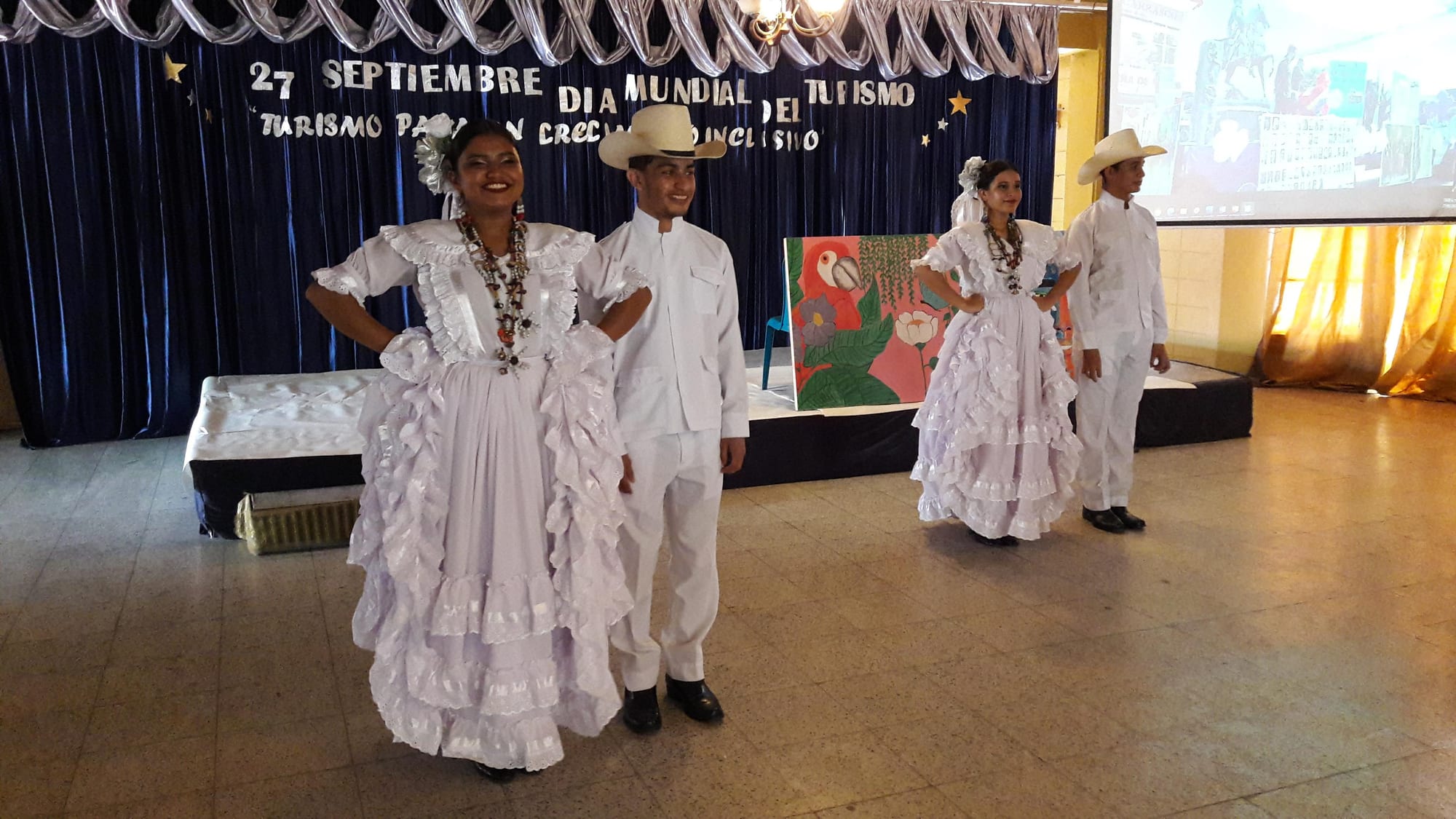
Folk music in the rest of the country leans on guitars and accordions, and folk dance troupes keep the traditional dances and costumes alive. In painting, the self-taught José Antonio Velásquez became internationally known for his detailed, luminous scenes of village streets.
Dos and don'ts for visitors
- Do shake hands when meeting and again when leaving, and greet people in passing.
- Do dress neatly; shorts and flip-flops belong at the beach, and tattoos are best kept covered.
- Do accept invitations to a family meal or celebration, and wait on the porch until invited in.
- Do keep off the sawdust carpets during Holy Week, and show respect during processions and in churches.
- Do follow the hosts' lead on alcohol, which some households and churches avoid.
- Do carry photo ID and keep a copy of the passport somewhere safe.
- Don't photograph people, especially in Indigenous and Garifuna communities, without asking first.
- Don't assume the whole country is the same; the Garifuna coast and the Bay Islands have their own languages and traditions.
What to take away
Honduras keeps its faith and its welcome in plain sight, on streets carpeted for a single morning and porches where guests are received, and visitors who greet warmly, dress with care and accept its hospitality will find a country far more generous than its reputation suggests.