Culture & Customs · Guinea
Guinea: The Sacred Balafon and the Long Greeting
A largely Muslim country where older beliefs still run beneath the surface, where no request is made before a proper greeting, and where a xylophone kept in a village hut carries eight centuries of memory
By Worldlore Editorial · 30 September 2026
A visitor steps into a compound to ask a simple favour, and nothing about the favour is mentioned for some time. First come the greetings: a handshake, a question about the host's health, then about the family, the children, the day's work, each answered and returned in turn. Only when the exchange has run its course does the conversation turn to the reason for the visit. To an outsider in a hurry it can seem a long way round, but in Guinea the greeting is not a preliminary to the relationship; it is the relationship. It signals that the person matters more than the business, and that sense of ordered, courteous respect runs through much of the country's culture, from the way elders are addressed to the way a meal is shared.
Faith, identity and values
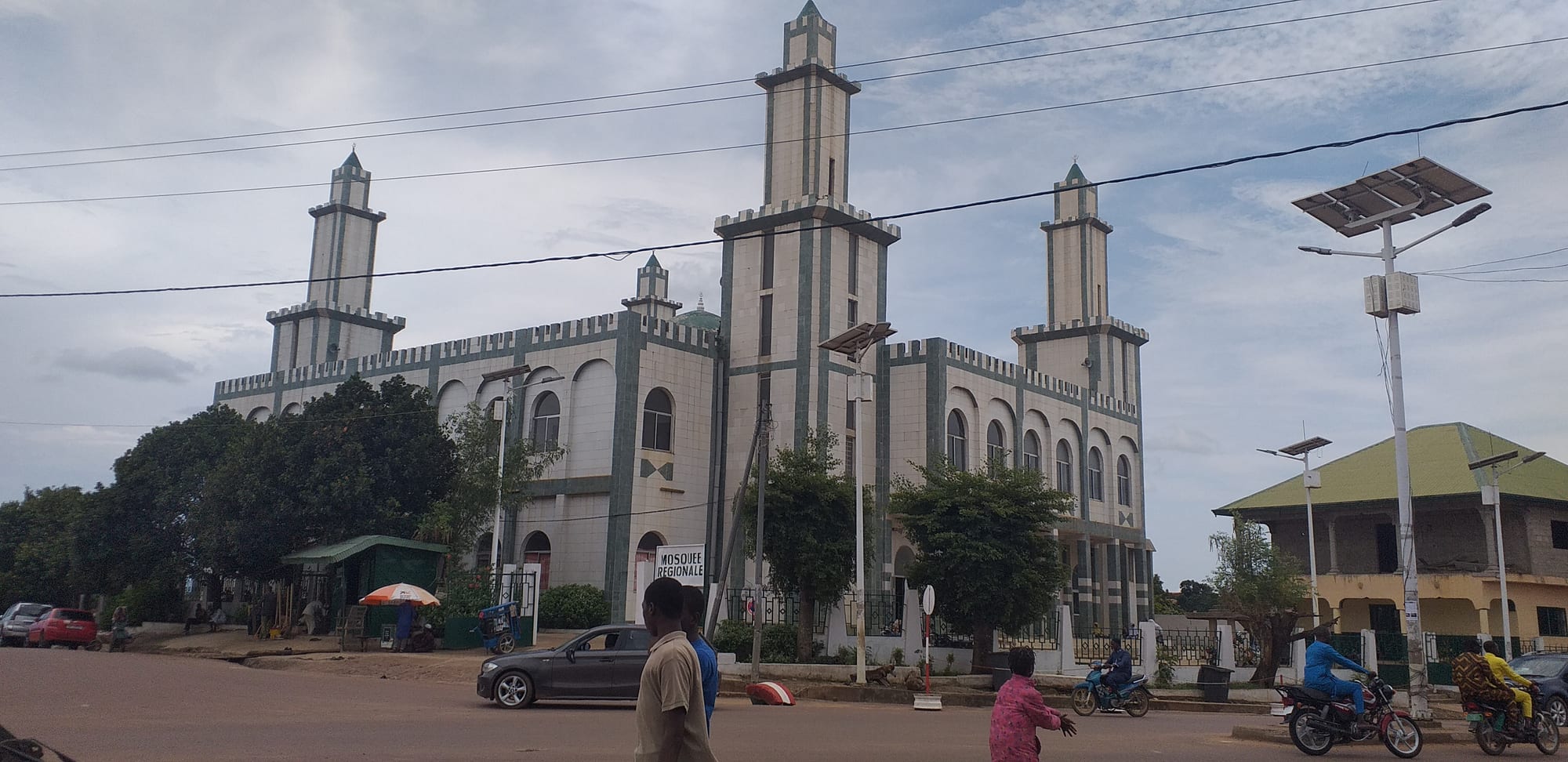
Guinea is a predominantly Muslim country. According to figures from the government's religious affairs office cited by the United States government, about 84 per cent of the population is Muslim, around 11 per cent Christian and about 5 per cent follows Indigenous or other beliefs. Most Muslims follow the Maliki school of Sunni Islam, and Sufi traditions are also present. Muslims form the majority in every region except the forested southeast around Nzérékoré, where they are the largest group but not a majority, while Christians are concentrated in the larger cities, parts of the southern coast and the forested southeast, where Indigenous religious practice is also strongest. Friday afternoon prayers are widely attended, and the Muslim holidays shape the rhythm of the year.
Formal religion is only part of the picture. Much of the Muslim and Christian population also incorporates Indigenous rituals into its religious life, and many people, whatever their stated faith, wear an amulet or charm for protection. Guineans are generally described as tolerant of other beliefs: the country is officially secular, and visitors of any religion or none are unlikely to meet hostility on that account, even where their views are not shared.
Beneath religion lie the bonds of family and community. More than twenty ethnic groups live in Guinea, the largest being the Fula, the Malinke and the Susu, alongside the Kissi, Loma, Kpelle, Baga and many smaller peoples, and in each region one group tends to set the tone for its neighbours. Across these differences, several values are widely shared. The extended family comes before the individual; age brings authority, since wisdom and experience are understood to come with years; and conduct in public reflects not only on a person but on their whole family. Appearance is part of that. Guineans put considerable care into how they dress, and a person is often judged by the quality and neatness of their clothes.
Greetings and meeting people
Greetings are important, and skipping them is one of the easiest ways to give offence. Before any request is made, it is expected that the other person will be asked about their health and the well-being of their family, and the same questions will come back in return. A firm handshake is the usual greeting, while among some urban and more affluent Guineans brief kisses on the cheek are also exchanged. The left hand is considered impolite in social dealings, so greeting, giving and receiving are done with the right.
Respect for elders shapes how people speak and behave. Young people are expected to show deference, and rather than holding an older person's gaze, a younger person will often lower their eyes as a mark of respect. Relatives and neighbours share in bringing up children and may correct a child who misbehaves, whoever the parent. Some relationships carry particular formality: a son-in-law, for example, is expected to treat his mother-in-law with great respect and never with familiarity. Visitors who are older tend to find that respect is extended to them readily, while younger ones may need to work harder to be taken seriously in professional settings.
Gender roles remain fairly clearly drawn. Heads of household are almost always men, and they hold formal authority within the family. Women, though, exercise considerable influence in the running of family compounds and in the marketplace, in raising children, earning an income and deciding how household resources are spent. Muslim women in Guinea generally do not practise seclusion.
Hospitality and being a guest
Hospitality is taken seriously. Anyone who arrives while a household is eating can expect to be invited to join the meal, and it is gracious to accept, even if only to take a little. Food is typically served from large shared bowls, eaten with the right hand or with spoons, and in bigger families men and women often eat separately. It is considered impolite to eat while walking along the street, so snacks are best eaten sitting down.
Gifts are welcome but need not be grand. For a host family or a new friend, a small token of friendship is enough, and what matters is the gesture rather than its value. Something from a visitor's home country, such as a book or pictures of home, is well received.
Modest, clean and tidy clothing is the safest choice for visitors. Shoulders should be covered, and long trousers or skirts that fall below the knee are appropriate in most settings, especially in villages, schools and offices. Dressing conservatively also tends to reduce unwanted attention on the street. During Ramadan, when many people fast from dawn to sunset, it is considerate to avoid eating, drinking or smoking conspicuously in public during the day.
Festivals and life's big moments
The religious calendar dominates. Ramadan is widely observed, and Tabaski, the feast marking the end of the pilgrimage season, is celebrated by families slaughtering a sheep or a goat for the festive meal. Christmas is marked by Christians and is also a social occasion that draws in friends of other faiths. Independence Day, on 2 October, is the principal national holiday.
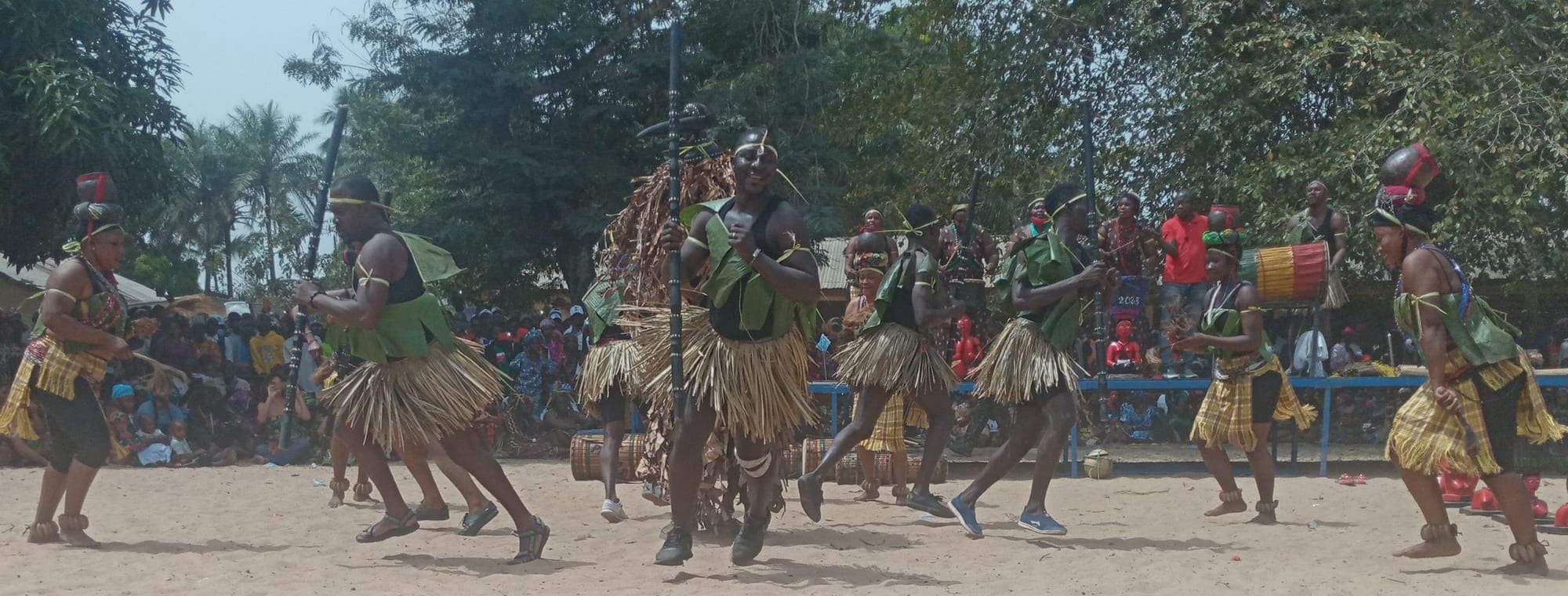
The great family occasions are weddings, the ceremonies held to name a new baby, commonly called baptisms, and funerals. All are communal events, usually with music and a meal for everyone present, and wealthier families may mark them with generous and costly spreads. Visitors who have made friends locally may well be invited, and accepting is one of the best ways to see Guinean social life at its fullest.
Marriage is understood as the union of two families rather than simply the choice of two individuals. The groom's family traditionally provides bridewealth, which may take the form of cash, cloth and livestock, and the negotiations and exchanges involved bind the two families together. Many couples marry under customary and religious rules rather than registering with the civil authorities, and local custom often carries more weight than the civil courts in family matters.
Arts, crafts and music
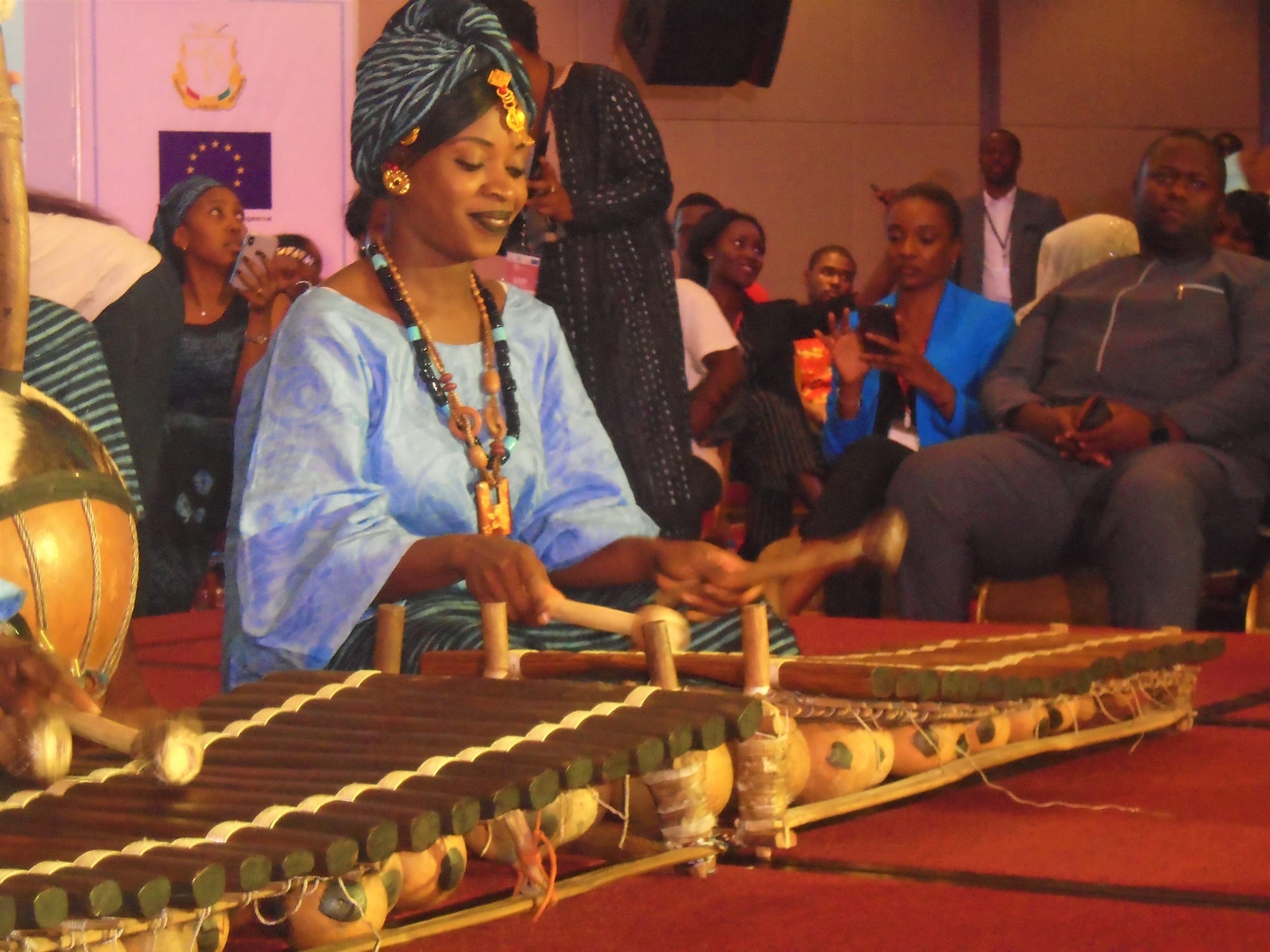
Music and oral tradition sit at the centre of Guinean culture. Griots, hereditary musicians and keepers of history, preserve and pass on epics and genealogies that have been remembered and recited over many generations, and radio has helped carry these stories to new audiences. The most famous of all is the epic of Sunjata, the founder of the Mali Empire, which has long been transmitted through the playing of the balafon, a wooden xylophone with gourd resonators. The Sosso-Bala, the instrument at the heart of this tradition, is described by UNESCO as a symbol of the freedom and cohesion of the Mande world, and its guardian is also responsible for teaching the balafon to children from a young age.
After independence, music became a matter of national policy. Private dance orchestras were dissolved and replaced by a network of state-supported ensembles, and the most successful of them became national orchestras. Bembeya Jazz, formed in a town in the forest region, blended Mande melodies played on electric guitars with Cuban music and jazz, and became one of the most celebrated bands in Africa. The national ballet, Les Ballets Africains, carried Guinean dance and drumming to stages around the world, and it continues to tour today.
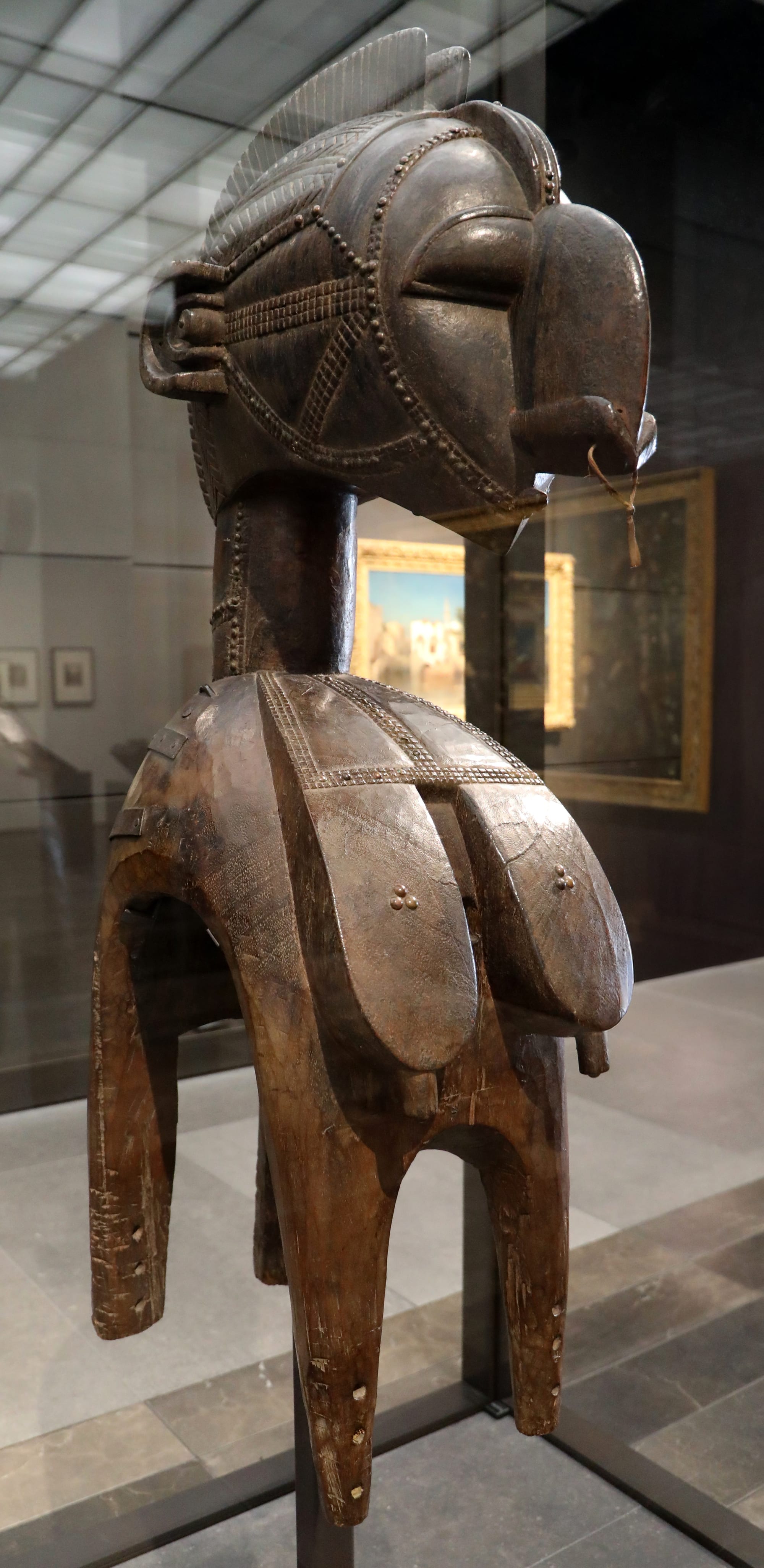
Sculpture has its own emblem. Among the Baga of the coast, the D'mba, widely known as Nimba, is a massive wooden headdress carved from a single piece of wood, with a great head, a long neck and a bust resting on four legs, worn on the dancer's shoulders with a costume of raffia and cloth. It represents an ideal of motherhood, and was believed to inspire women to bear and raise children, young men to work together in the fields, and the ancestors to watch over the community. It was traditionally danced before the rains and at weddings, funerals and in honour of special guests. Today the Nimba has become one of the best-known emblems of Guinean culture.
Everyday crafts are practical as well as skilled. Woodworkers make stools, chairs and cabinets, and metalworkers turn recycled materials into cooking pots and utensils.
Dos and don'ts for visitors
- Do greet people properly, asking after their health and family, before getting to the point.
- Do use the right hand for greeting, eating, and giving or receiving anything.
- Do show deference to elders, greeting them first and letting them lead the conversation.
- Do dress neatly and modestly, with shoulders covered and long trousers or skirts below the knee.
- Do accept an invitation to share a meal, a wedding or a naming ceremony if one is offered.
- Don't eat while walking in the street, and avoid eating or drinking openly by day during Ramadan.
- Don't photograph people, ceremonies or masked dancers without asking first, and never photograph government buildings, the military or the airport.
- Don't feel obliged to bring an expensive gift; a small, thoughtful token is enough.
What to take away
In Guinea courtesy takes time: a long greeting, a place at a shared bowl and a proper show of respect for elders, and visitors who make that time will find themselves welcomed far more warmly than any hurried request could achieve.