Daily Life · Guinea
Guinea: Life Measured in Rounds of Tea
A single rainy season that sets the farming calendar, a household firewood stove where electricity rarely reaches, and an unhurried three-round tea ritual that can stretch an afternoon into evening
By Worldlore Editorial · 30 September 2026
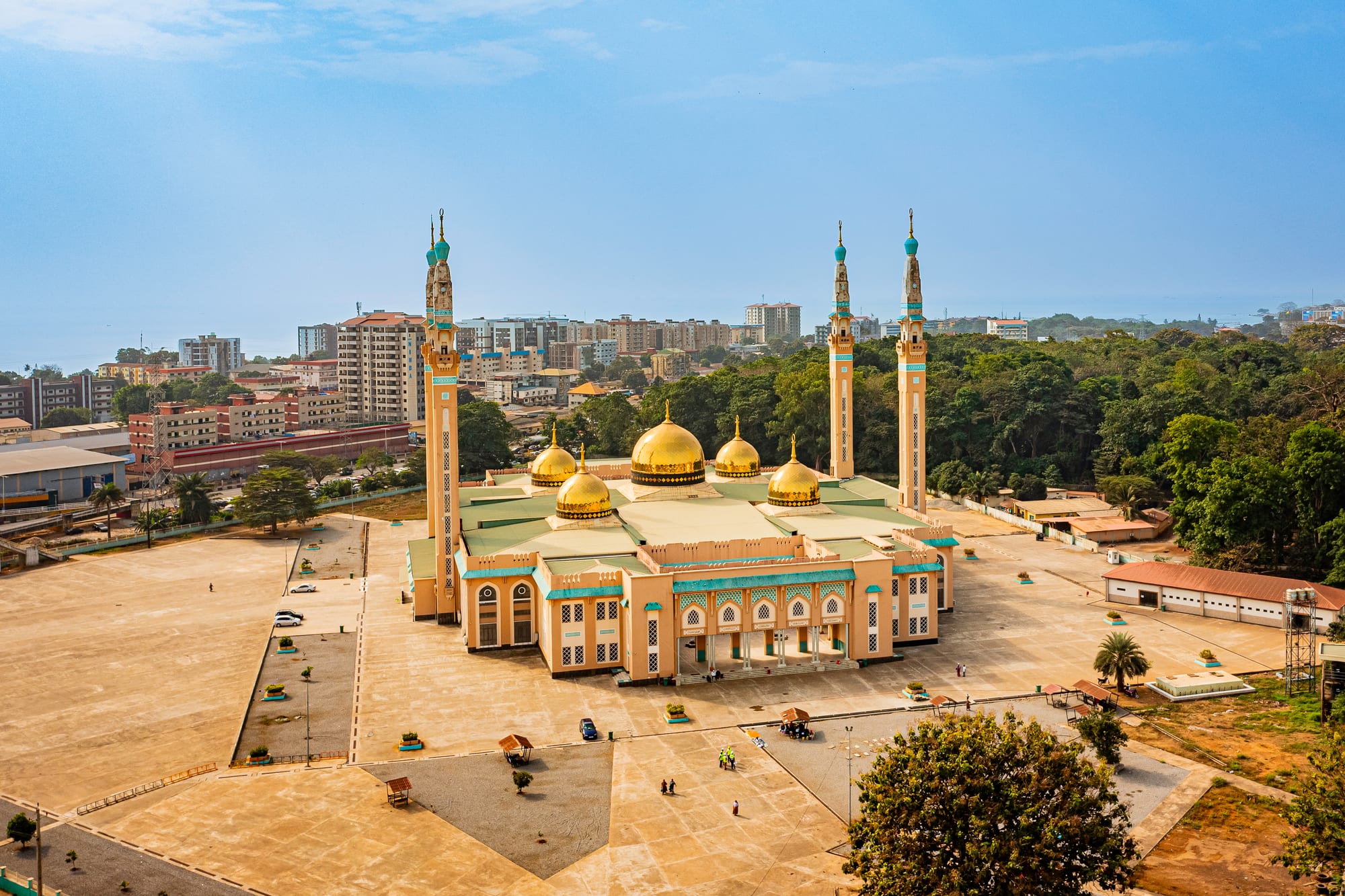
Guinea runs on one long wet season and one long dry one, and an ordinary day bends around whichever is under way: planting and heavy rain from roughly May to November, then drier months when tracks become passable again and the Harmattan haze settles over the highlands. Away from Conakry, most households still cook with firewood or charcoal, and electricity is the exception rather than the rule. Five calls to prayer punctuate the day nationwide, since the large majority of Guineans are Muslim, and free time is often organised around tea: a slow, three-round ritual that can turn a spare hour into an entire afternoon.
Family and home life
The extended family is the basic unit of Guinean life, often spanning several generations bound by ties of obligation even when they do not share one roof. In Upper Guinea, Maninka villages have traditionally been made up of family compounds of round, thatch-roofed houses; the Fula (Fulbe) of the Fouta Djalon highlands have historically combined settled farming with cattle herding. In rural areas work is still often divided along gendered lines, with women carrying much of the cooking, gardening and care of small livestock.
Work, school and the rhythm of the day
Guinean labour law sets a standard eight-hour working day, Sunday is the legal weekly rest day, and offices in Conakry generally work Monday to Friday. That formal working week, though, describes only a minority of Guineans: around three-quarters of workers have been counted in farming, herding, or informal trade, following the rainy season rather than an office calendar. Mining, chiefly bauxite, dominates the formal economy, providing about 80 per cent of Guinea's foreign exchange, but the wealth has translated only slowly into everyday infrastructure — in rural areas, home to a large share of the population, only about 7 per cent of people have access to electricity, and biomass, mostly firewood and charcoal, supplies around four-fifths of the country's energy.
Community life and public spaces
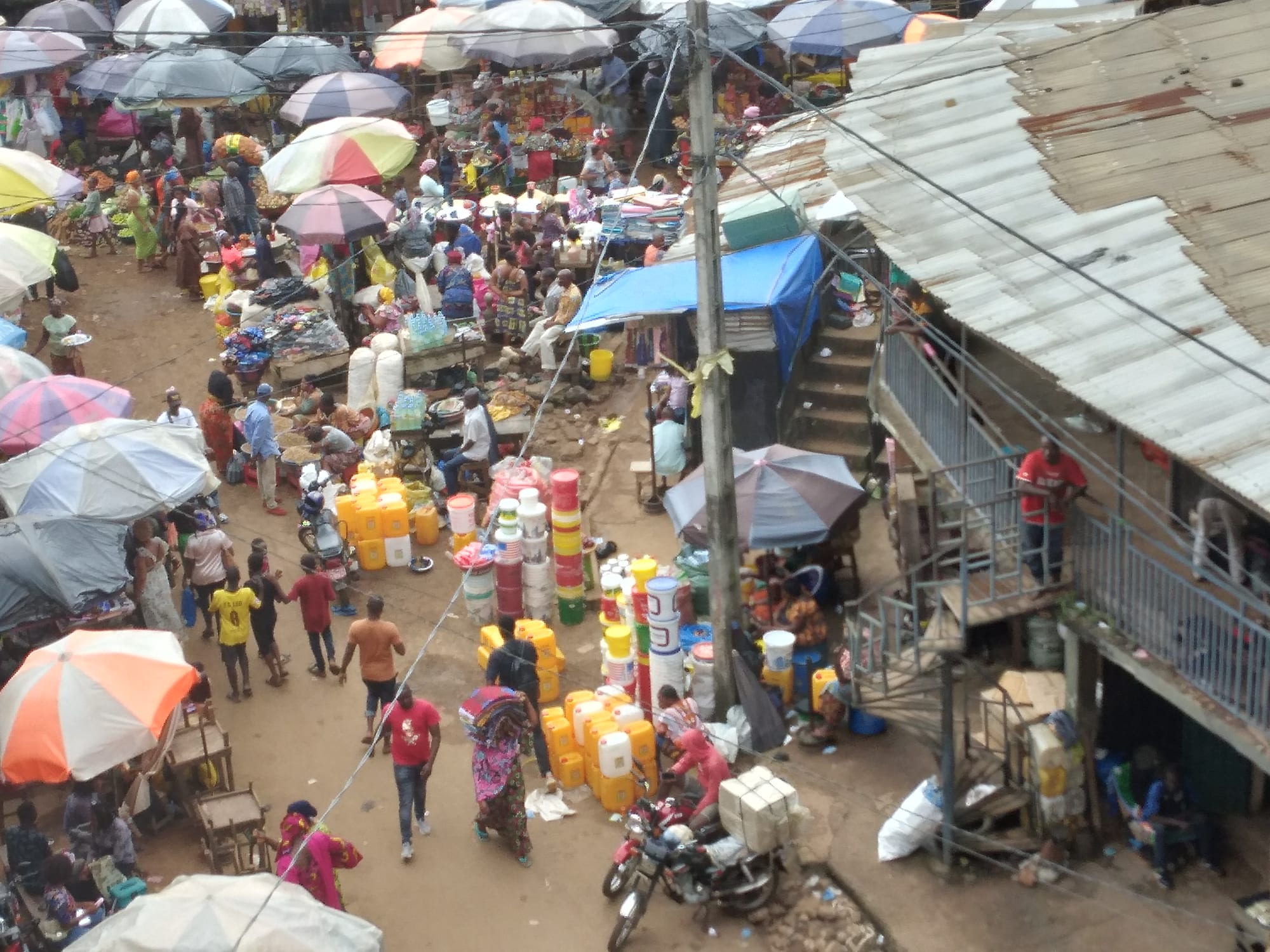
The market is the country's real public space, from small weekly village markets to Conakry's sprawling Madina Market, one of the largest in West Africa, where covered stalls spill into the surrounding streets under a patchwork of umbrellas. Getting around outside the capital generally means a bush taxi or shared minibus, which leaves its station only once it is full rather than on a timetable, so a journey's start time is always somewhat provisional. Mosques anchor community life further still: Conakry's Grand Mosque, opened in 1982, is one of the largest in Africa, and the call to prayer, from it and from smaller mosques nationwide, structures the day for the nearly nine in ten Guineans who are Muslim.
Free time and weekends
Free time in Guinea, as across much of West Africa, is often organised around ataya, a green tea brewed and served in three rounds from the same leaves, each sweeter and less bitter than the last, over the course of an hour or more. Making and sharing it is treated as an end in itself, often among men gathered on chairs or benches outside a shop or home, and a proper round of ataya is rarely rushed. Friday prayers draw large crowds to mosques nationwide, while Sunday, the legal rest day, is the usual day for family visits and ceremonies. Music runs deep in Guinean free time too: griots, hereditary musicians and oral historians, perform at family and community occasions, and Guinea's dance troupes, led by the national company Les Ballets Africains, remain a source of national pride.
A visitor's ordinary day
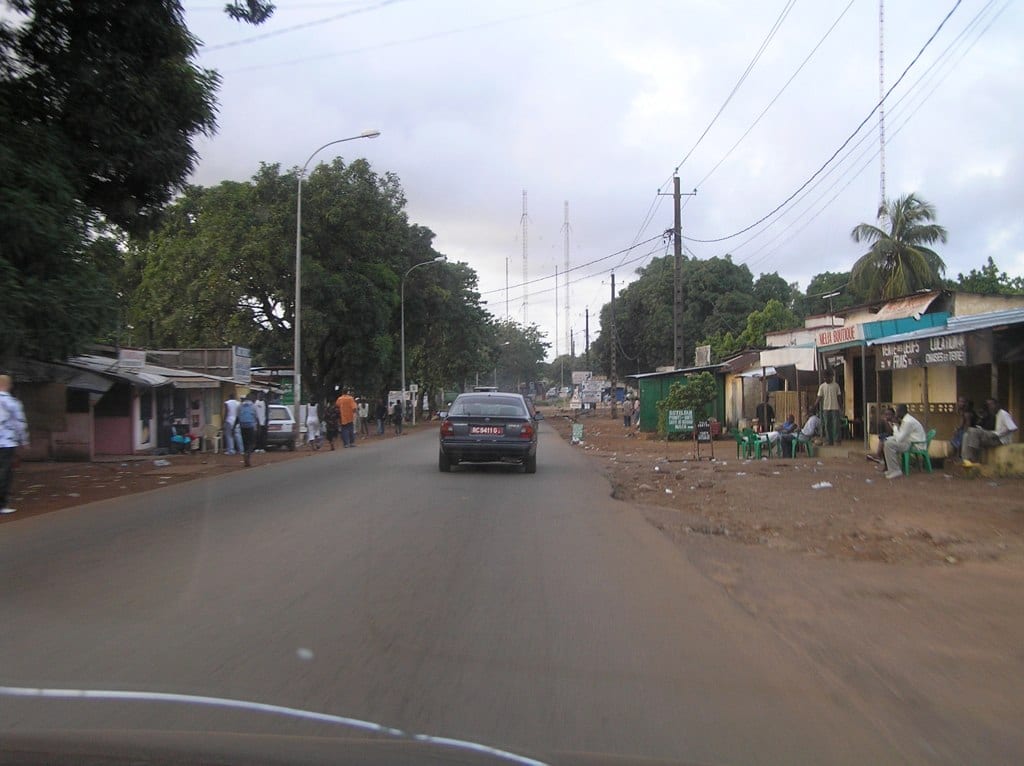
Guinea requires an e-visa, applied for online in advance, for most nationalities, and vaccination requirements, including yellow fever, should be checked before travel. The country runs on cash: the Guinean franc is hard to obtain abroad, and denominations are large enough that prices run into the tens of thousands, and euros are the easiest currency to bring and exchange in Conakry. ATMs are limited to the capital and a handful of larger towns and are not always reliable. Roads range from a few paved highways to deeply rutted tracks, and journeys take far longer than the map distance suggests, especially into the Fouta Djalon highlands during the rainy season, when Conakry itself is among the wettest capital cities in the world.
What to take away
An ordinary day in Guinea answers first to the rains and the mosque, and then, whenever there is a spare hour, to the slow, three-round ritual of tea that turns waiting into the day's real social occasion.