Daily Life · Guinea-Bissau
Guinea-Bissau: Life on Cashew Time
A large kinship household sharing land and labour, a single crop that touches almost every family's income, and a capital where far more homes now have electricity than a few years ago
By Worldlore Editorial · 30 September 2026
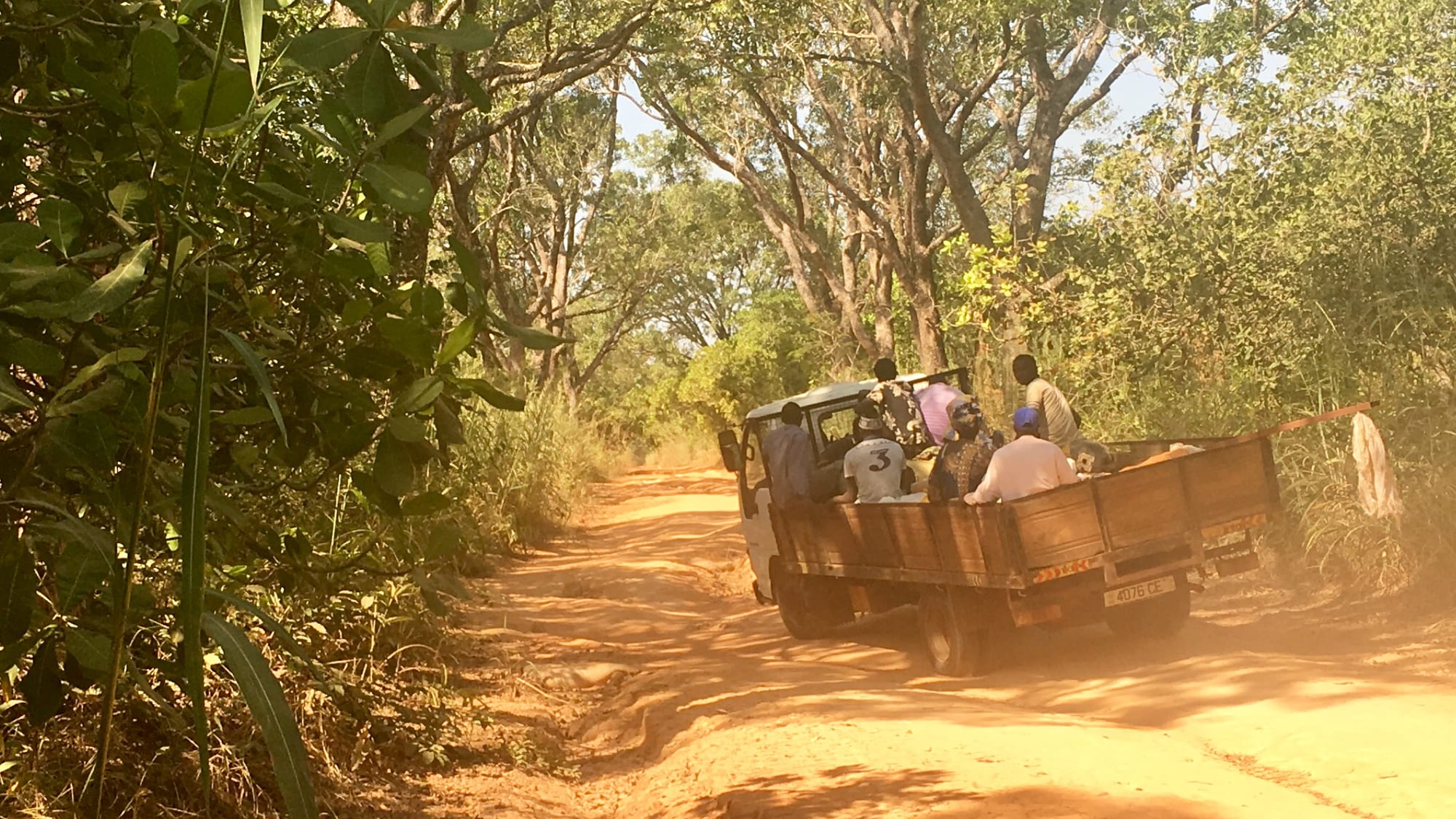
An ordinary day in Guinea-Bissau follows the tides and the seasons more than the clock. Rice farmers along the coast plant and harvest by the salt and fresh water moving through hand-built irrigation systems, and each spring the attention of most households turns to a single crop: the cashew, which underpins daily life here, for richer and for poorer, to a degree few other countries share. The state itself reaches unevenly; since the army took power in November 2025, a military-led transitional government has run the country, and outside Bissau health care, schooling, and electricity remain thin on the ground, so the extended family and the village remain what most people actually rely on to get through a day.
Family and home life
In the villages, the basic unit of daily life is not the nuclear family but a large kinship group with shared rights to farmland and mutual obligations to work it together. Guinea-Bissau's more than twenty ethnic groups organise kinship in different ways: some trace descent through the father's line, while others, including the Papel and the Bijagó, give the mother's line a central place, and among the Balanta a maternal uncle plays a key role in a young man's initiation. Women handle most food preparation, typically rice, or millet in inland areas, with a sauce of palm oil, groundnut, or fish.
Work, school and the rhythm of the day
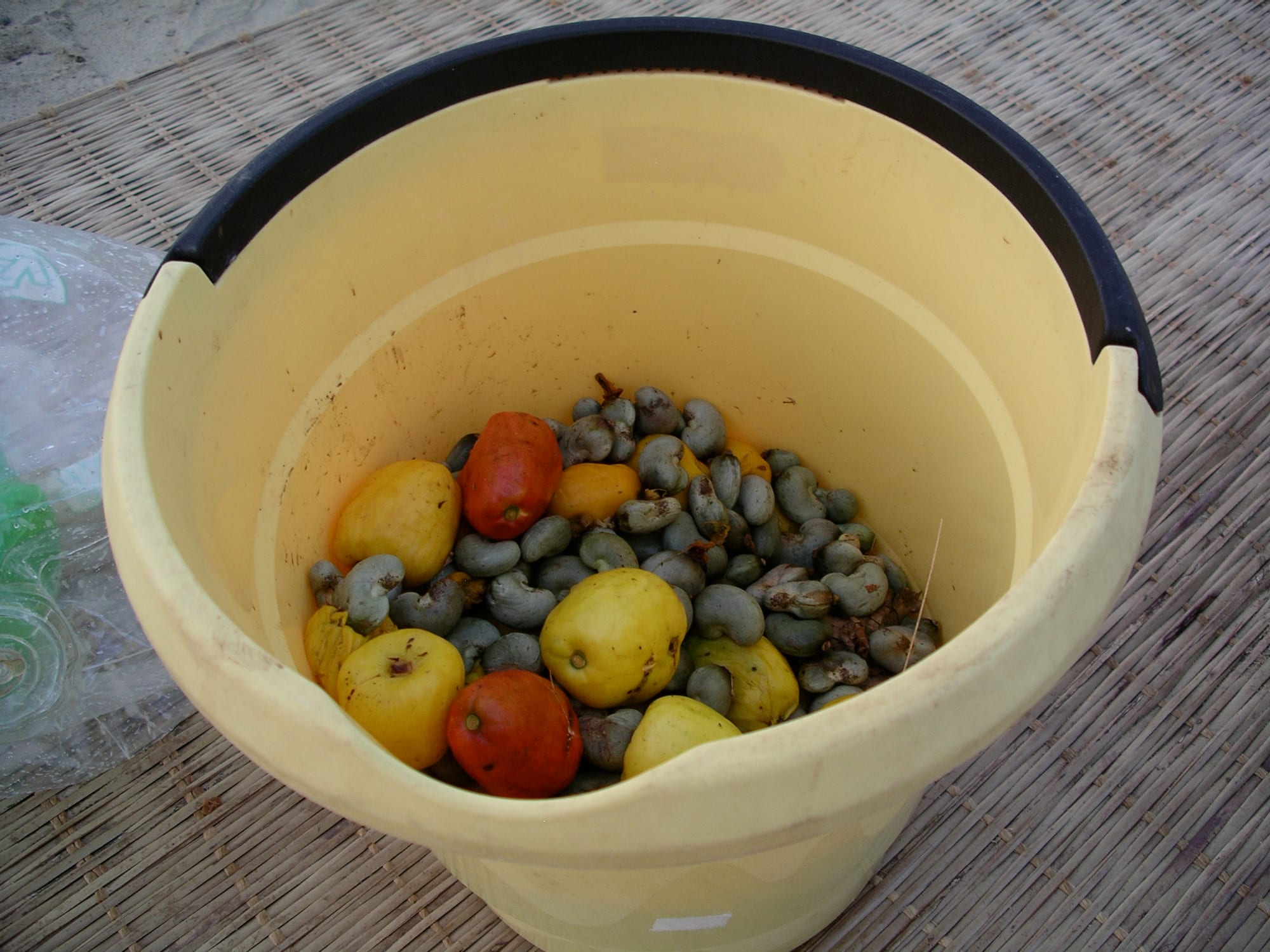
Cashew is not just an export line on a national accounts sheet: the UN mission in the country estimated that about 85 per cent of the population depends on it, and the World Bank that it provides income for two-thirds of households. The harvest season, which gets under way in April, effectively sets the national calendar, drawing whole families into the fields and orchards for weeks at a stretch. Rice, grown above all by the Balanta, who hold a reputation as expert farmers, depends on irrigation systems that carefully mix salt and fresh water across the tidal paddies, and maintaining them is constant, shared work. State services function only patchily outside the capital, so most households supplement or substitute what the government cannot reliably provide.
Community life and public spaces
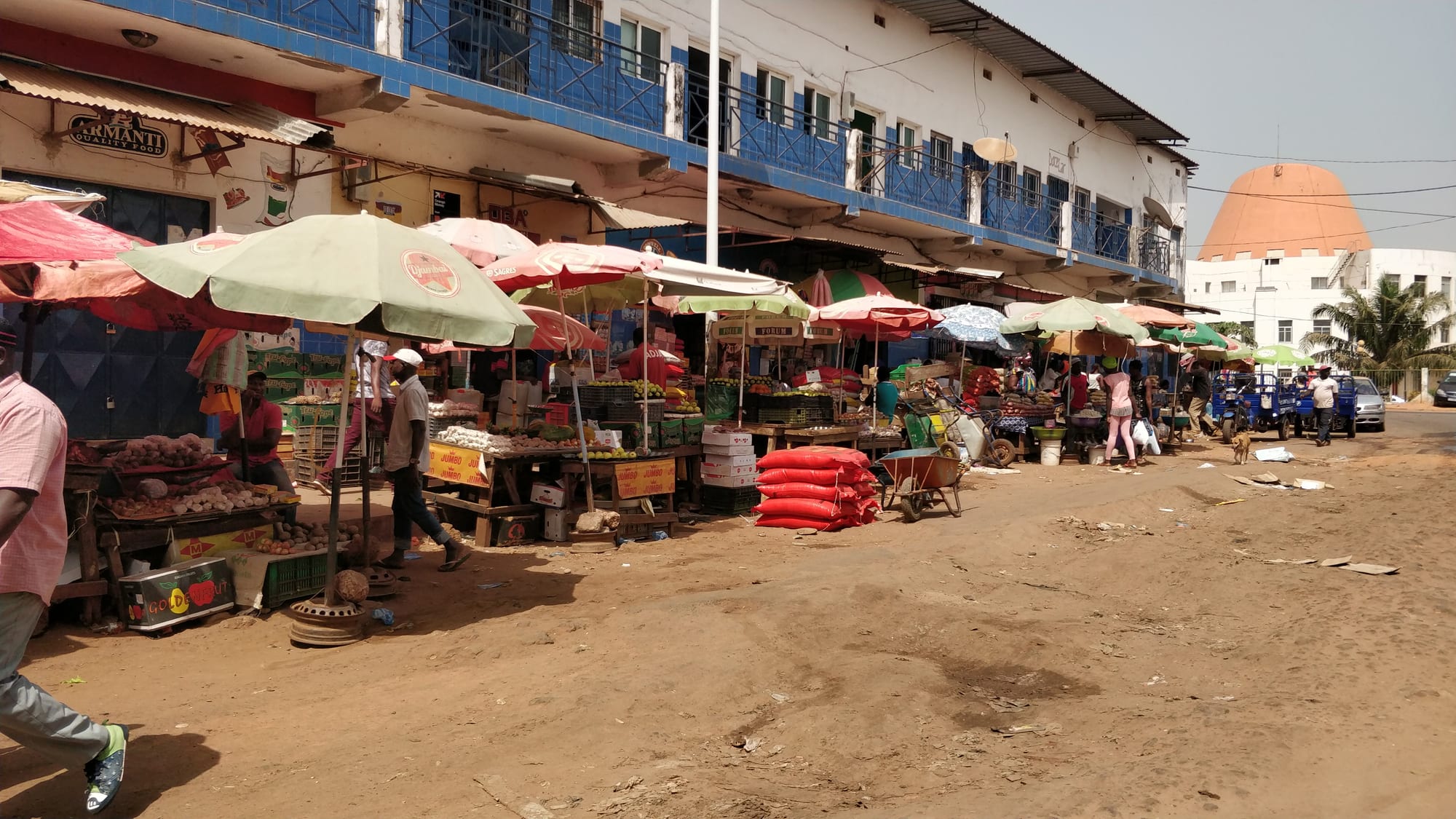
Markets are the country's real public infrastructure: Bandim market in Bissau and smaller markets in towns and larger villages are where much of the food, household goods, and news change hands. Streets around the market are typically lined with stalls under umbrellas rather than fixed shopfronts, and rural markets in particular still function as much as gathering places as commercial ones. Bissau's electricity supply has historically been unreliable, with frequent power cuts; in October 2023 the Turkish company supplying much of the city's power cut it off for over a day over an unpaid bill, though the capital's household electrification rate rose sharply, from around a fifth in 2021 to roughly four in five homes by 2023, even as national coverage remains far lower. Getting between towns generally means a shared minibus or bush taxi on a mainland road network that is poor outside the main routes, or, for the Bijagós Archipelago, a shared or chartered boat timed around the tides.
Free time and weekends
After the rice harvest, the Balanta traditionally hold a celebration called kussundé, in which men not yet through initiation compete in dance, one of several harvest and life-cycle occasions, alongside births, marriages, and funerals, that draw extended families and neighbours together around shared food and, often, the sacrifice of cattle. Football, the most popular sport, draws crowds wherever a match is on. The lead-up to Bissau's carnival, held before Lent, absorbs months of neighbourhood preparation, though the event itself belongs more to the festival calendar than to an ordinary week. For most people, though, free time is simpler: an evening at home, a visit to relatives, or time spent at the market as much for company as for shopping.
A visitor's ordinary day
Guinea-Bissau runs on cash, in West African CFA francs, with euros the easiest currency to bring and change in Bissau; ATMs are confined to the capital and cannot be relied on. A visa is required for most visitors, obtainable on arrival or in advance from a Guinea-Bissau mission (the online e-visa service is currently suspended), and vaccination requirements, including yellow fever, should be checked before travel. Boats to the Bijagós Archipelago run on an infrequent, tide-dependent schedule rather than a fixed timetable, so it is worth building spare days into any plan that includes the islands. Power cuts, while less constant in Bissau than they once were, are still common enough that guesthouses and hotels are used to planning around them.
What to take away
Guinea-Bissau's ordinary day is set less by any clock than by the tide, the season, and, more than almost anywhere else, by the health of a single crop that reaches into nearly every household's income.