Culture & Customs · Guatemala
Guatemala: Kites for the Ancestors
A country of Maya, Ladino, Garifuna and Xinca peoples, where Catholic and evangelical faith meet an older Maya cosmovision, Holy Week is laid out in carpets, and the dead are remembered with kites
By Worldlore Editorial · 30 September 2026
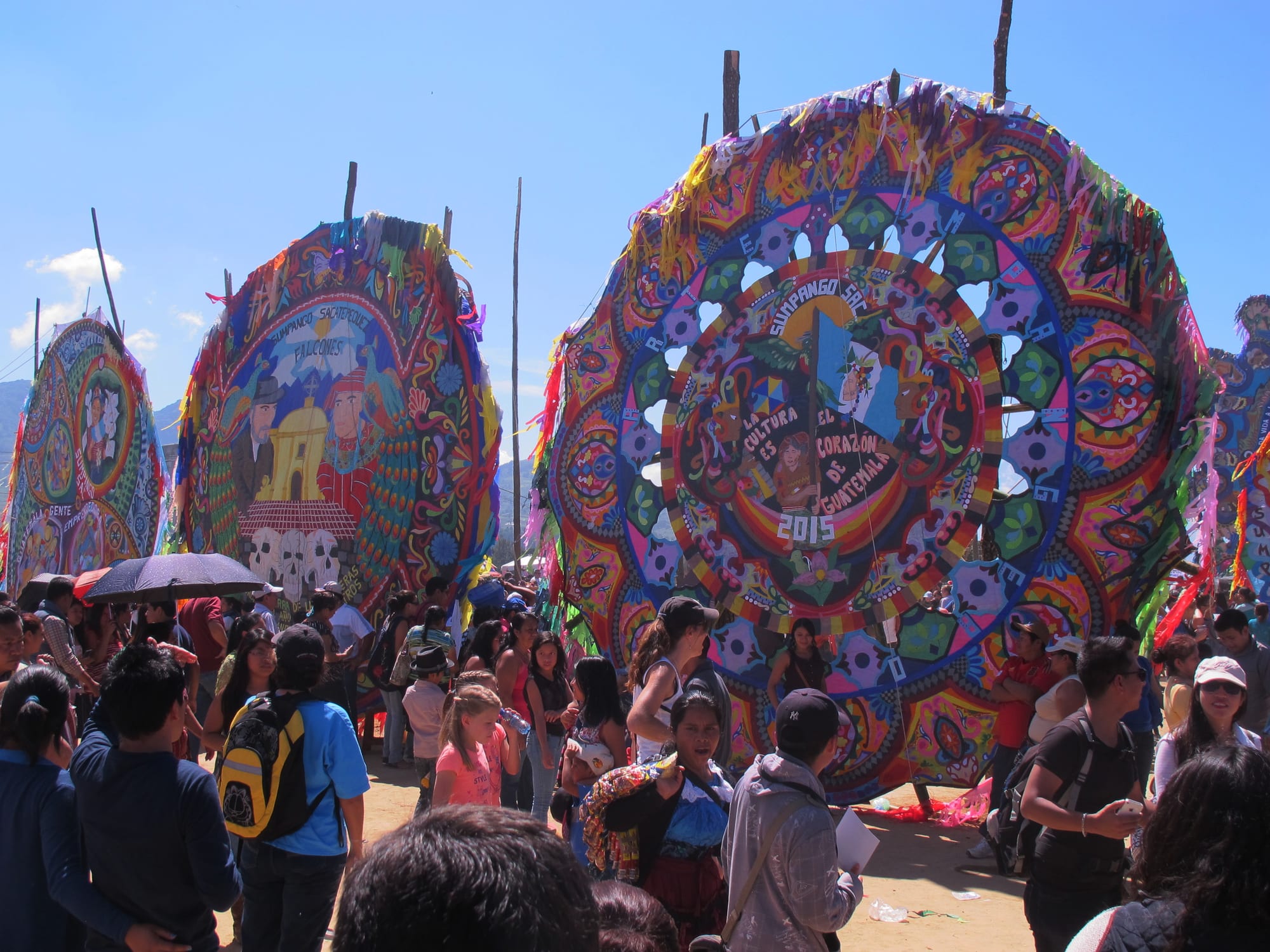
At the start of November, for the Day of All Saints and the Dead, two highland towns fill with people and colour. Crowds gather before kites of astonishing size, their round faces covered in multicoloured tissue paper and trailing fringes and tails. They have taken months to make, designed, decorated and assembled by groups of neighbours, and their faces carry messages about the environment, the fight against violence and human rights. Those who make them see the kites as a way of communicating with the ancestors, of warding off harmful spirits and of beginning again. The scene is uniquely Guatemalan, and it gathers much of the country into one frame: Catholic feast days and Maya ideas of the dead, craft and community, and a strong sense that the living and the departed still belong to each other.
Faith, identity and values
Guatemala is a country of several peoples. Maya communities, speaking many different Mayan languages, make up a large share of the population, alongside the Spanish-speaking Ladino majority, the Afro-Indigenous Garifuna of the Caribbean coast and the Xinca. In Maya villages, traditional dress is still common, and it varies from village to village and from one language group to another, so that clothing itself can signal where a person comes from.
Religious life has changed markedly. According to a 2016 survey cited by the US State Department, about 45 per cent of Guatemalans are Catholic and 42 per cent belong to other Christian churches, most of them evangelical Protestant congregations, which continue to grow. Around 11 per cent profess no religion, and small communities follow other faiths, including Maya spirituality, often called the Maya cosmovision, and the spiritual traditions of the Xinca and Garifuna.
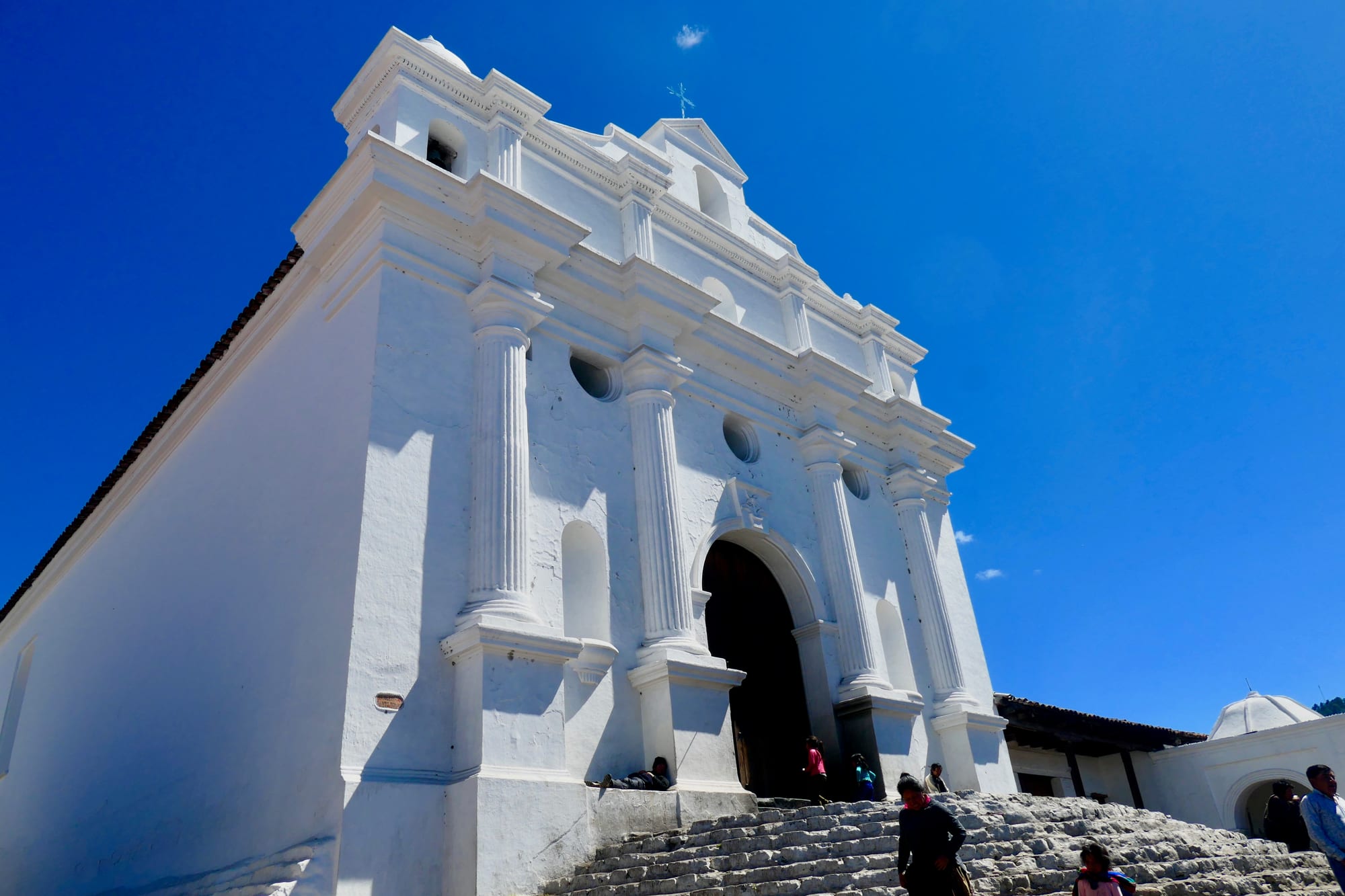
Maya spirituality is far older than either. The 260-day ritual calendar of the ancient Maya still survives in the Guatemalan highlands, and ceremonies are held at sacred places, natural or built, where participants seek to communicate with the creator, the universe and their ancestors. Guatemala's constitution protects Indigenous spiritual practice, and the law allows Maya spiritual groups to hold ceremonies at historic Maya sites on state land. Even so, spiritual guides report continuing discrimination, including accusations of witchcraft.
In many places the two worlds meet. Catholic brotherhoods known as cofradías, created after the Spanish conquest to spread Christian practice, have long blended Maya and Catholic devotion. In some highland communities they care for Maximón, or San Simón, a figure venerated as both a Maya deity and a saint and honoured with candles, incense, liquor and other offerings, though the Catholic Church officially disapproves of prayers to him. Family ties are strengthened by compadrazgo, the naming of godparents at baptism and marriage, which creates lasting obligations between families and a duty of respect from children towards their godparents.
Greetings and meeting people
Spanish is the language of government and much of daily life, but a visitor will hear Mayan languages spoken in markets, churches and homes across the highlands, and Garifuna on the Caribbean coast. A greeting in Spanish is always appropriate, and patience with a language barrier goes a long way in communities where Spanish is a second language.
Guatemala is, on the whole, a formal and courteous country, and a greeting is expected before anything else. Buenos días, buenas tardes or buenas noches is said on entering a room, a shop or a restaurant; at a first meeting the phrase is mucho gusto, "pleased to meet you". In business, people shake hands with a smile and steady eye contact, and greetings are not rushed. Among Ladinos, women usually greet men and each other with an air kiss, while men often shake hands firmly. Señor or Señora with the surname is the safe form of address, and titles are taken seriously: doctor or doctora for physicians and highly educated professionals, licenciado or licenciada for lawyers and university graduates. First names wait for an invitation.
Greetings in Maya communities are often quieter and unhurried, and asking after someone's health and family is a courteous way to begin.
The most important point of etiquette for visitors concerns cameras. The UK government's travel advice is clear: photographs should not be taken without permission, especially of children. In some remote areas, fears and rumours of child trafficking have led to violent incidents in which foreigners have been caught up. It may also be expected that a small fee is paid to photograph someone. Asking first, and accepting a refusal gracefully, is a sign of basic respect as well as good sense.
Attitudes are generally more conservative in rural areas than in the capital. Public displays of affection can attract unwelcome attention, and this is particularly true for same-sex couples.
Hospitality and being a guest
Guatemala's tourism institute describes its people as cheerful and hospitable, and much of that hospitality flows through family and ritual kinship, with celebrations shared among a wide circle of relatives and neighbours. Food is part of every occasion — UNESCO lists seasonal cooking among the elements of Holy Week — and a visitor invited to share in a family or community event is being offered something meaningful.
A guest invited into a home usually brings a small gift, such as chocolate or flowers. At the table, hands stay above the table, it is polite to try a little of everything, and buen provecho, "enjoy your meal", is said before starting; a toast is made with salud. Appearance counts too: dressing neatly is read as a sign of respect, shorts and trainers are too casual for many occasions, and in rural villages and churches shoulders and knees are best kept covered.
Religious occasions call for particular care. Visitors are welcome at many processions and fairs, but ceremonies at Maya sacred sites and cofradía shrines are acts of worship, not performances. Watching quietly from a respectful distance, dressing modestly and following the lead of those taking part are the natural courtesies of a guest.
Festivals and life's big moments
Holy Week is the high point of the religious year and is on UNESCO's list of intangible cultural heritage. Across the country, the week before Easter brings processions, vigils and funeral marches commemorating the passion, death and resurrection of Christ. Brotherhoods organise the processions, which move to the sound of percussion and wind bands, and many of the robed penitents who carry the floats are known as cucuruchos. Residents create elaborate carpets of coloured materials and natural dyes along the processional routes, alongside decorative altars.
Beyond Holy Week, fairs and religious festivals are held in every part of the country throughout the year. The Day of All Saints and the Dead at the start of November is a time of remembrance, and in two highland towns it is the occasion for the giant kite festivals. The kite-making tradition dates back to the late nineteenth and early twentieth centuries, and is itself on UNESCO's list.
On 25 January, the feast of Saint Paul, the town of Rabinal stages the Rabinal Achí, a masked Maya dance drama performed every year since the sixteenth century.
Some celebrations are small and fragile. The Nan Pa'ch ceremony, a Mam Maya ritual of thanksgiving for the maize harvest, is on UNESCO's list of heritage in need of urgent safeguarding. Its prayers are spoken in Mam, ceremonial corn cobs are dressed, and food is prepared and shared, in a ceremony that expresses the close bond between people and nature on which much of Maya life rests.
Life's milestones are marked in church and at home, with godparents at the centre. Being a padrino means taking a share of a godchild's spiritual and material care. A wedding begins with the pedida de mano, when the groom's family visits the bride's to ask formally for her hand. The custom still survives, though it varies from one part of the country to another and many younger couples now keep it simpler. A civil ceremony is often accompanied by a religious rite, and the wedding padrinos often help with the candles, the arras coins, the lazo cord that joins the couple, the wine, and sometimes even the bride's dress.
When someone dies, the wake is traditionally held at home, with the door left open and chairs set out for everyone who comes. There is no velorio without food: coffee and sweet bread are the basics, handed round to help mourners through the night, and neighbours pitch in to help; depending on the region and the family, there may also be tamales or a hot soup after the long vigil. The dead are not forgotten afterwards. On 1 and 2 November, families across the country decorate graves with flowers and candles and spend time at the cemetery, and many share fiambre, a cold salad of meats and vegetables made for the Day of the Dead, at home or beside the graves.
Arts, crafts and music
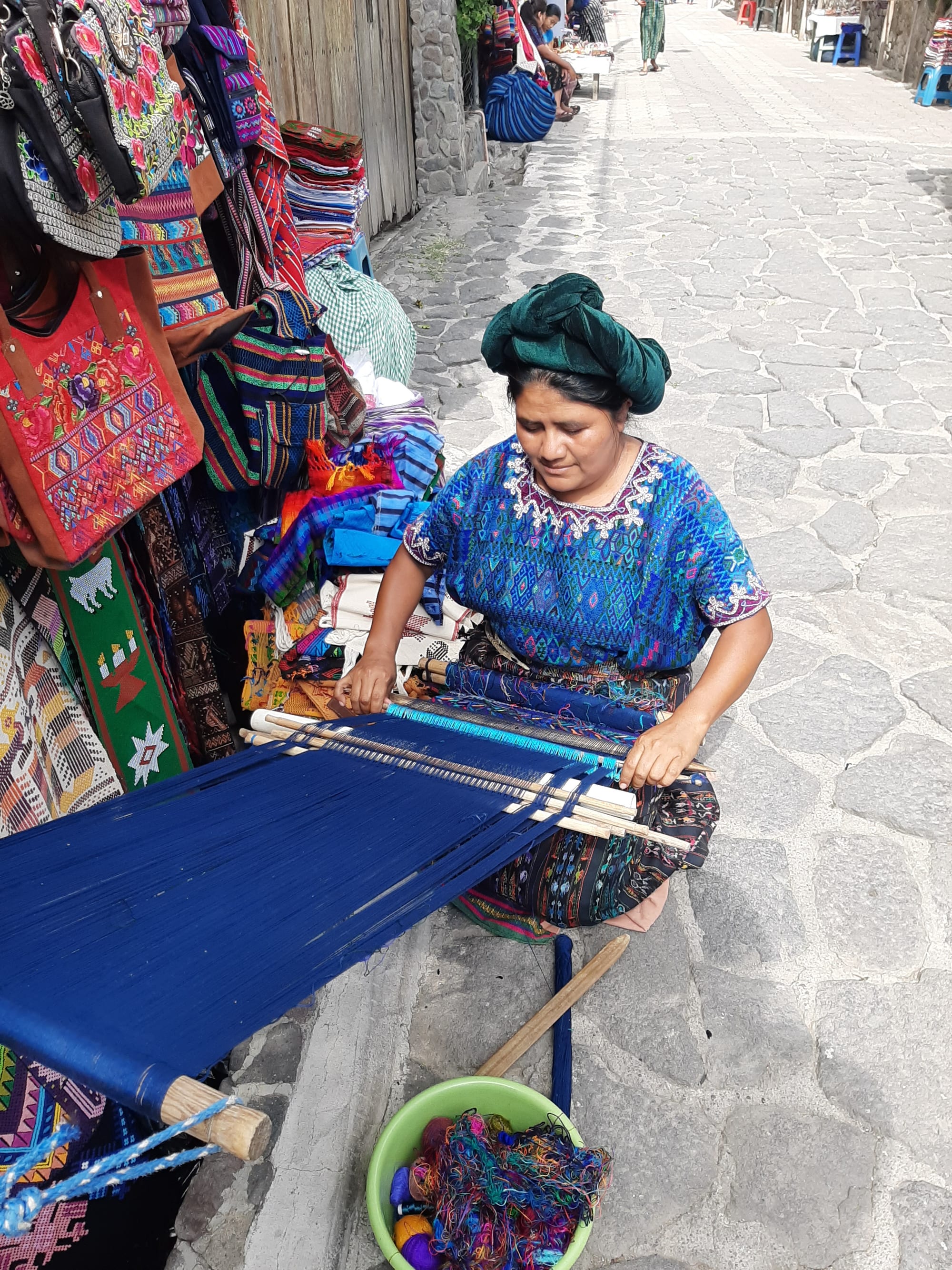
Textiles are Guatemala's best-known art. Traditional dress, woven and embroidered in patterns and colours that vary from village to village, is still worn daily in many Maya communities, and weaving remains both a livelihood and a way of carrying identity forward.
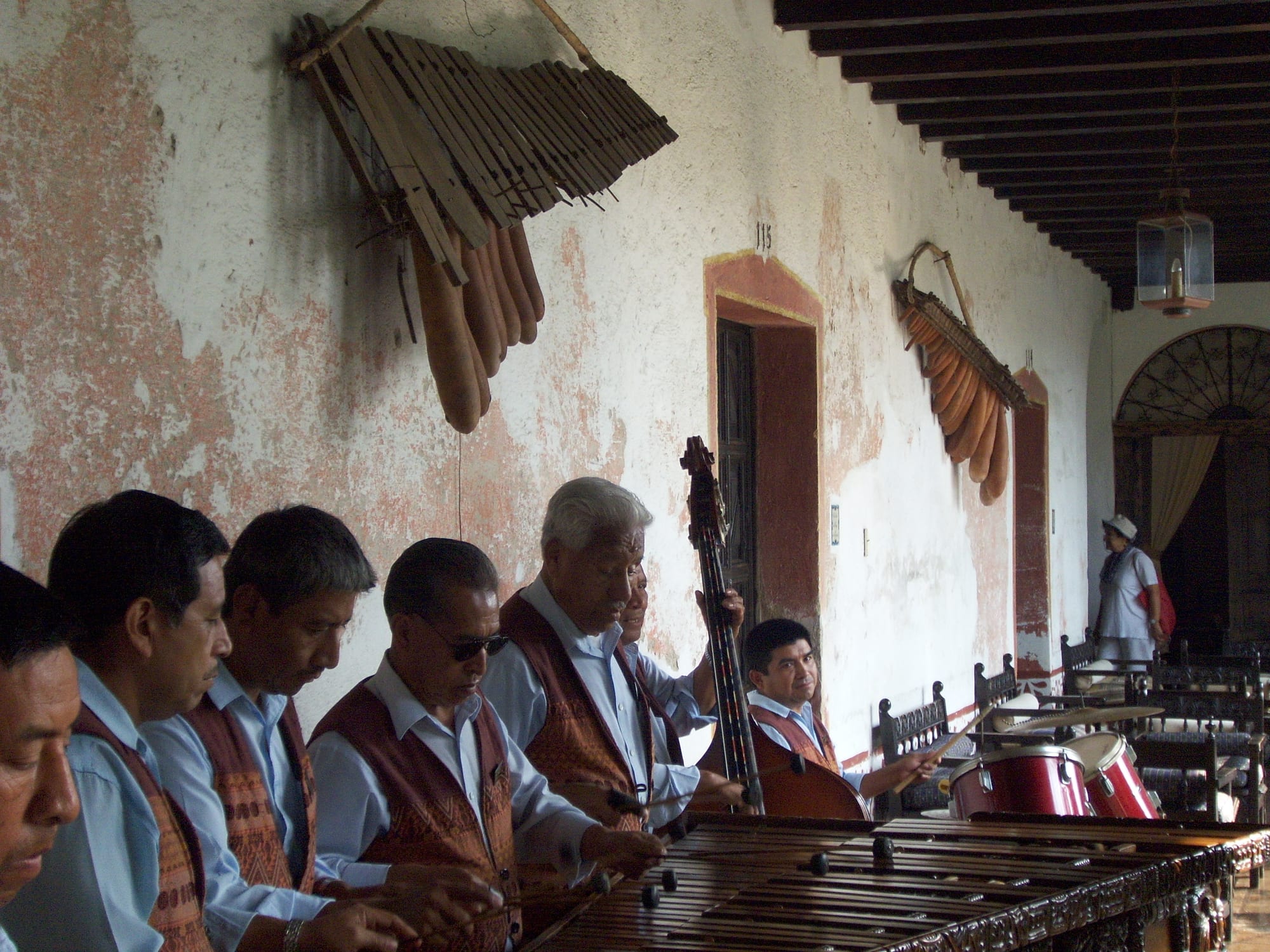
The marimba, a large wooden xylophone with resonators, is the sound of Guatemala. It is heard in streets and at celebrations across the country, and marimba bands are regarded as a national symbol of Guatemalan culture.
The Rabinal Achí, on UNESCO's list, is one of the rare surviving examples of pre-Hispanic Maya theatre. A dynastic drama that developed in the fifteenth century, it tells of the conflict between two princes, the Rabinal Achí and the K'iche' Achí, through masks, dance, speech and music. Its masks represent the ancestors, so that performing it is a way of entering into contact with the dead; UNESCO warns that poverty and folklorisation now threaten its transmission.
On the Caribbean coast, the Garifuna keep a distinct culture of their own, recognised by UNESCO. Their language belongs to the Arawakan family, their music mixes African and Amerindian roots and is often satirical, and their best-known dance, the punta, is accompanied by drums. Stories called úraga are traditionally told at wakes and gatherings, carrying knowledge of fishing, farming and canoe-building from one generation to the next.
Dos and don'ts for visitors
- Do ask before photographing anyone, never photograph children without a parent's clear permission, and accept a refusal or a request for a small fee gracefully.
- Do say buenos días, buenas tardes or buenas noches on entering a shop or restaurant, and use Señor, Señora or a professional title until invited to use first names.
- Do bring a small gift such as chocolate or flowers when invited to a home, and say buen provecho before starting to eat.
- Do cover shoulders and knees in churches and rural villages.
- Do watch Maya ceremonies and cofradía rituals quietly and from a distance unless invited to take part.
- Do carry a copy of the passport and keep the original somewhere safe.
- Don't dismiss Maya spirituality as folklore or witchcraft; practitioners still face discrimination.
- Don't make public displays of affection, especially in rural areas.
What to take away
Guatemala's customs bind together Catholic feast days, evangelical faith and a far older Maya sense of the sacred, and visitors who ask before they photograph and treat every ceremony as worship rather than spectacle will be met with the country's warm hospitality.