History · Guam
Guam: Where America's Day Begins
The CHamoru homeland in the western Pacific — settled 3,500 years ago, claimed by Spain for 230, taken by the United States in 1898, occupied by Japan, and a US military stronghold ever since
By Worldlore Editorial · 19 September 2026
A small island in a strategic spot
Guam is the largest of the Mariana Islands, in the western Pacific, about 210 square kilometres, with around 170,000 people. It is a territory of the United States — its people are US citizens, but they cannot vote for president and have only a non-voting delegate in Congress. Roughly a third of the island is US military base. Guam sits just west of the International Date Line, which is why it markets itself as the place "where America's day begins", and it sits within missile range of both China and North Korea, which is why the United States has never let go of it.
A short history
- c. 1500–1000 BCE
Settlement
CHamoru ancestors reach the Marianas from Southeast Asia.
- c. 900–1700 CE
The latte era
Stone-pillared houses across the island.
- 1521
Magellan
First European contact in the Pacific islands.
- 1668
Spanish rule
Jesuit missionaries arrive; the Marianas are named.
- 1668–1698
Spanish–Chamorro wars
War and disease collapse the CHamoru population.
- 1898
The US takes Guam
Seized in the Spanish–American War; ceded by Spain.
- 1941–1944
Japanese occupation
Nearly three years of harsh rule.
- 1944
Liberation
US forces retake the island in three weeks of fighting.
- 1950
Organic Act
CHamorus get US citizenship and civilian government.
The CHamoru world
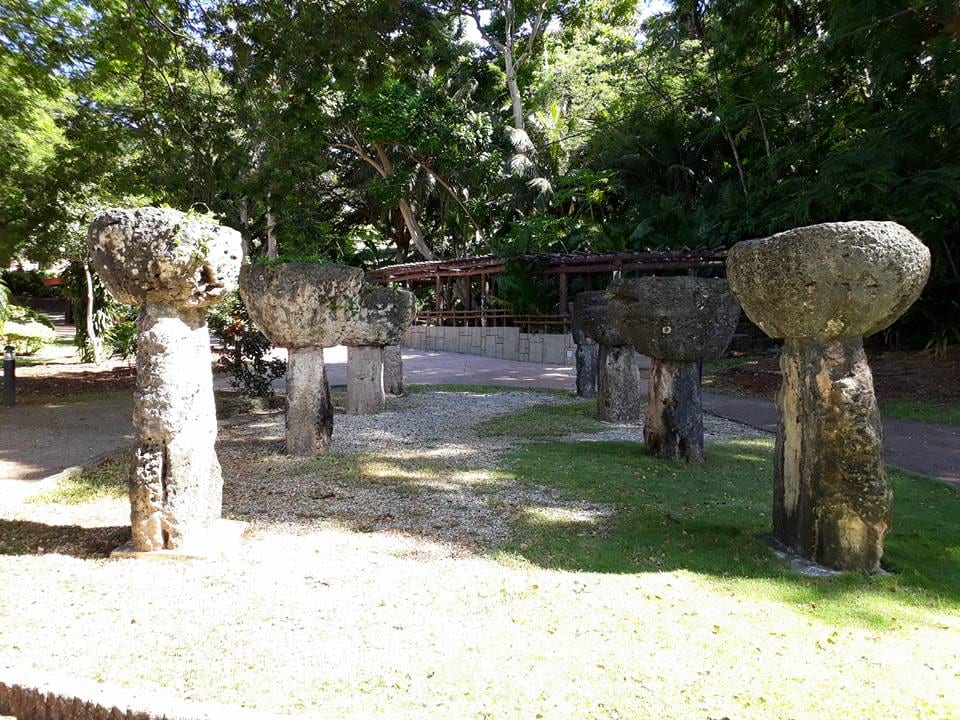
The CHamoru reached the Marianas from Island Southeast Asia around 1500–1000 BCE, in one of the longest open-ocean crossings anyone had then made. Theirs was a matrilineal clan society that grew rice — unusual in the Pacific — and built fast sailing canoes that later astonished Europeans. From about 900 CE they raised latte: paired stone pillars and caps that held up their houses, and which still stand across the island.
Spain, and the collapse
Magellan's expedition landed in 1521 — the first European contact anywhere in the Pacific islands. Spain claimed the Marianas in 1565 and, from 1668, sent Jesuit missionaries to convert the CHamoru and named the islands for Queen Mariana of Austria.
CHamoru resistance to missionisation led to three decades of war from 1668. Between the fighting and introduced epidemics, the CHamoru population fell from tens of thousands to under five thousand by 1700. Survivors were concentrated in mission villages on Guam and Rota, and CHamoru culture, though it endured, was deeply reshaped by Catholicism and the Spanish language.
1898, and the Navy
In June 1898, during the Spanish–American War, a US cruiser took Guam without a shot — the Spanish governor had not heard that a war was on. Spain ceded Guam to the United States and sold the rest of the Marianas to Germany, splitting the chain in two. The US Navy then governed Guam directly for fifty years, without granting citizenship, through a series of naval officers who ran the island by decree while also building schools and clinics.
Occupation and liberation
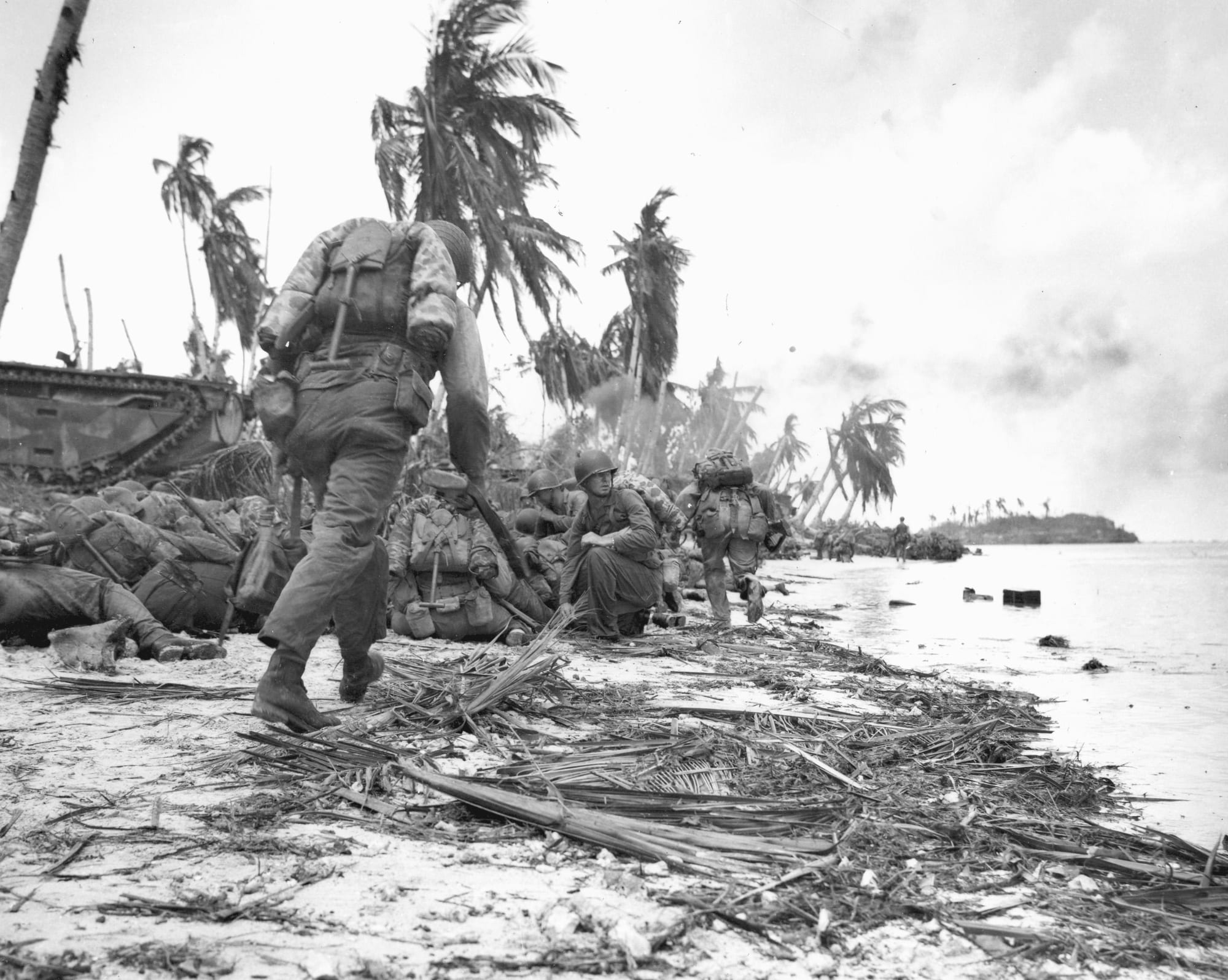
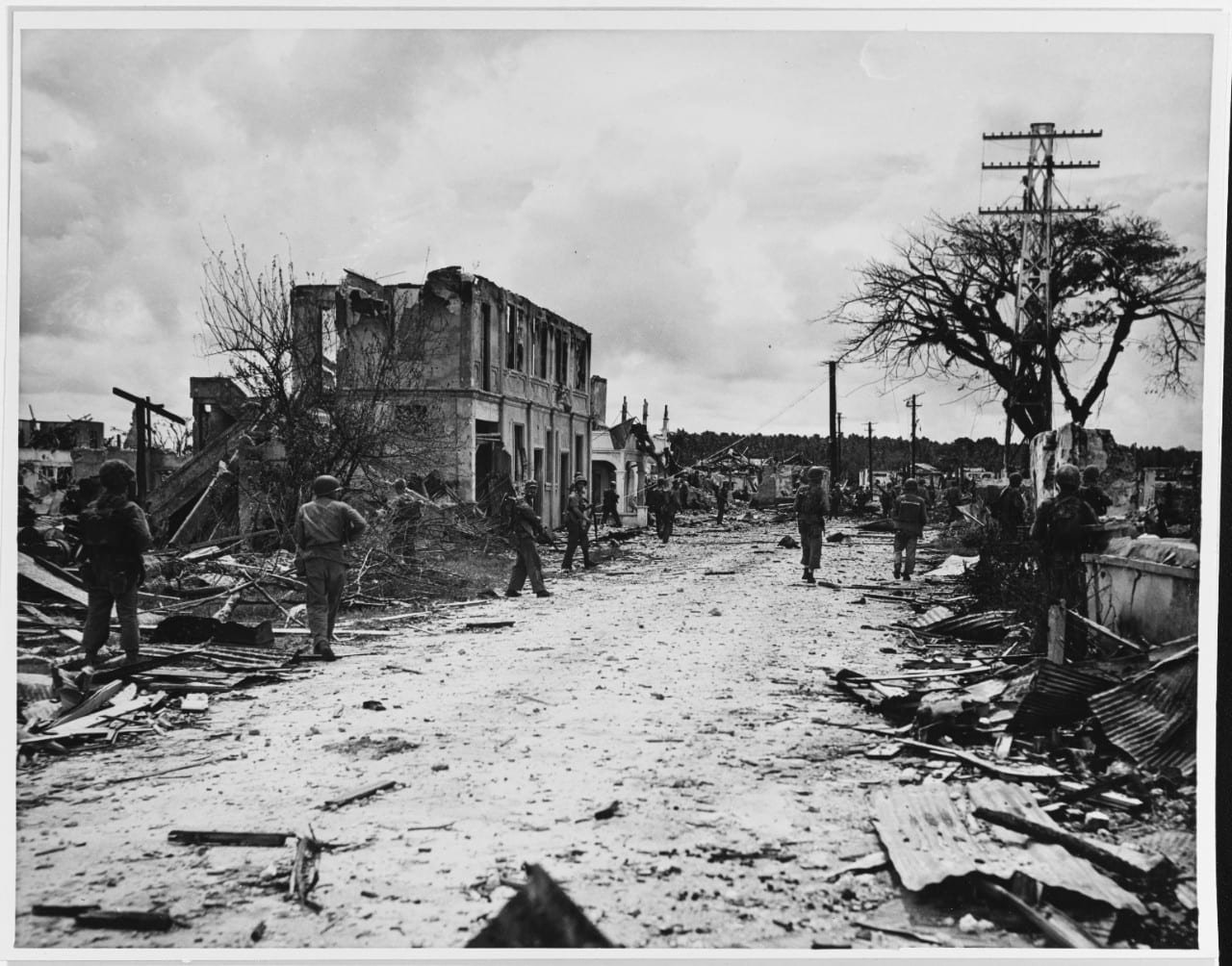
Japan captured Guam days after Pearl Harbor, in December 1941, and held it for nearly three years — a brutal occupation of forced labour, forced marches and massacres, especially in its final weeks.
July 1944
Territory and base
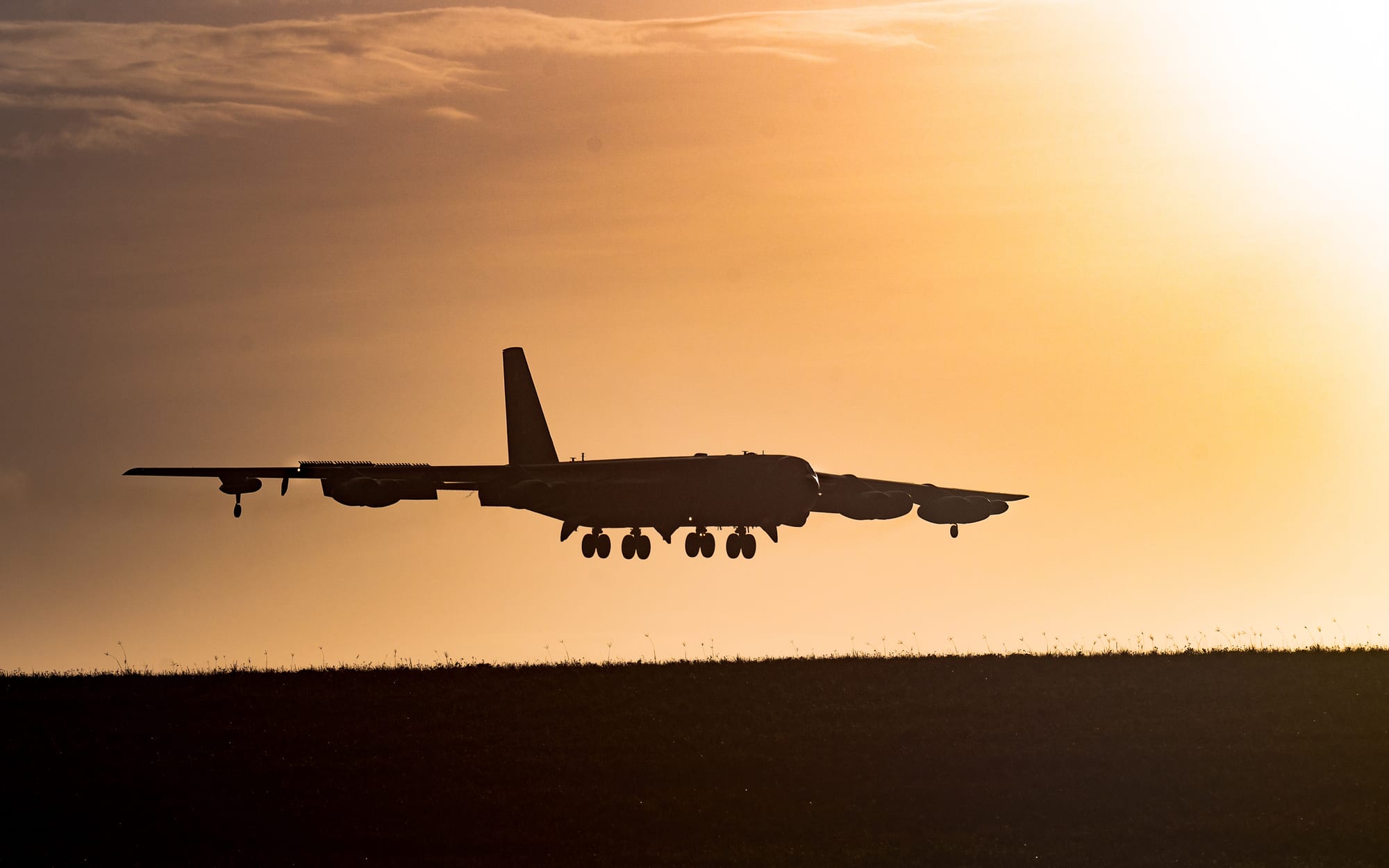
The 1950 Organic Act granted CHamorus US citizenship, set up a civilian government, and made Guam an "unincorporated territory". A huge military buildup followed, much of it on the island's best land — a grievance that partial returns have never settled. Guam was a major B-52 base for the bombing of Vietnam, and it remains central to US strategy in the Pacific.
Guamanians elect their governor, legislature and congressional delegate, but not the president. Efforts to change the island's status — toward commonwealth, or through a vote on independence, statehood or free association — have stalled, and a planned status plebiscite limited to "native inhabitants" was struck down by US federal courts in 2019. Guam remains on the United Nations list of territories yet to be decolonised.
What Guam carries
Guam's history turns on its position. The CHamoru settled it because it was reachable; Spain held it because it lay on the galleon route; the United States took it, and keeps it, because it is a fixed piece of American ground in the western Pacific. The island's people are US citizens who fought and suffered for that connection, and who are still without a full vote in the country they belong to.