Daily Life · Guam
Guam: Village First, Territory Second
Grandparents raising grandchildren under one roof, nineteen villages each with its own mayor and patron saint, and a small electrical grid that a snake can still switch off
By Worldlore Editorial · 30 September 2026
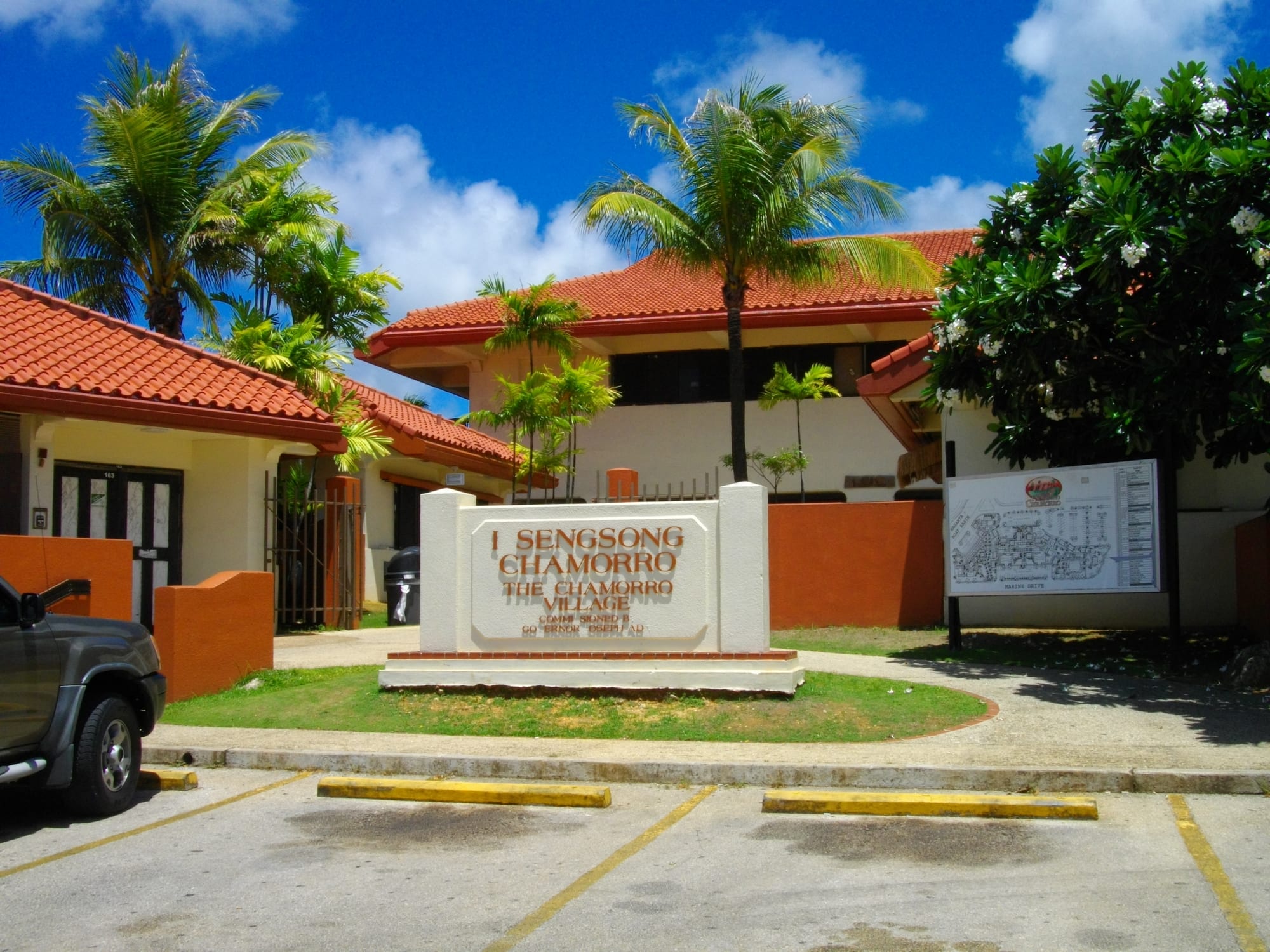
An ordinary day on Guam runs on two clocks at once. One is unmistakably American: school buses, a Monday-to-Friday work week, dollars, and American football on television. The other is older and more local, measured in villages rather than hours. Guam is made up of nineteen of them, from Yigo in the north to Umatac in the south, each with its own elected mayor, its own patron saint, and its own claim on the loyalty of the people who grew up there. Ask many CHamorus where they're from and the answer is a village, not just an address. Around 154,000 people live on the island, in concrete, typhoon-built houses that hold, more often than an American mainlander might expect, three generations at once.
Family and home life
The extended family, not the individual household, is still the working unit of CHamoru life. It is common for grandparents, parents, children, and a shifting cast of cousins to share a single home, and grandparents often take on real day-to-day authority over their grandchildren rather than a purely supporting role. A long-standing informal practice called poksai allows a childless relative, often an aunt, to raise a niece or nephew as her own, without any of the formality of legal adoption. Historically, CHamoru households traced descent and land through the mother's line, and women held considerable authority over the family's land and resources; colonial rule shifted formal power toward men, but the mother's clan and large extended families remain central to life on the island today.
Work, school and the rhythm of the day
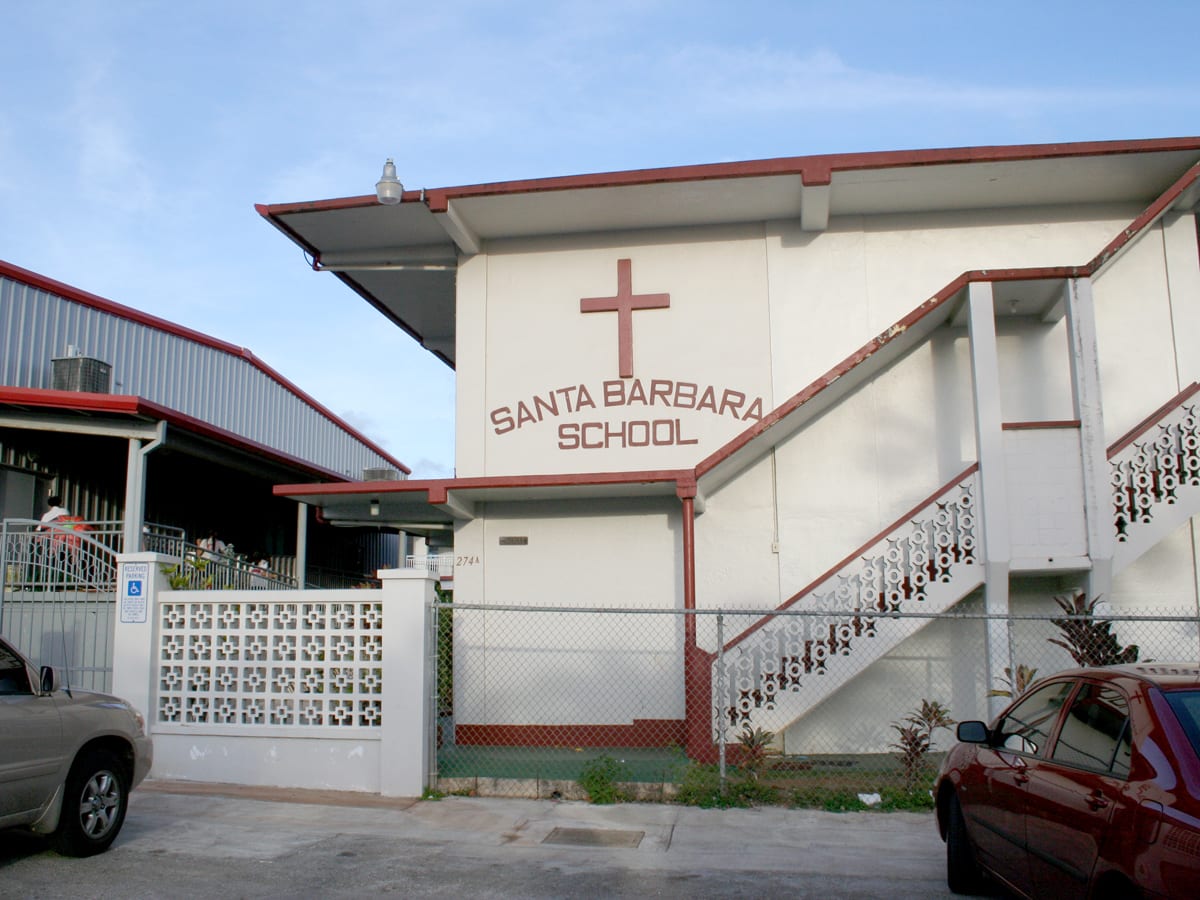
Guam runs on the standard American calendar: a Monday-to-Friday work week, standard American office hours, and a school system built on the same K-12 structure as any US state, with the added option of Catholic parish schools like Santa Barbara School in Dededo. The island's economy leans heavily on the US military, whose Defense Department owns about 29 per cent of Guam's land, and on tourism, dominated by visitors from Japan and South Korea; the territory's own government, GovGuam, is the biggest single employer. Many young CHamorus leave after school for military service, where enlistment rates are higher than anywhere else in the US, or for university on the US mainland or in Hawaii.
Community life and public spaces
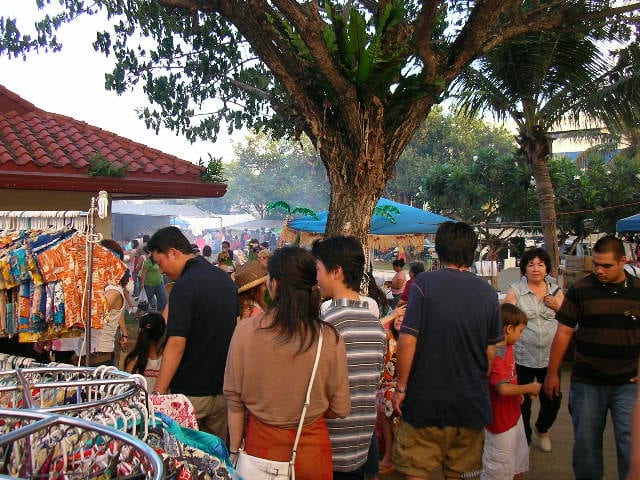
Each village has its own mayor's office, its own church, and, once a year, its own turn hosting the island for its patron saint's fiesta. The single biggest recurring gathering, though, happens weekly rather than annually: the Wednesday night market at Chamorro Village in the capital, Hagåtña, where dozens of food stalls, produce vendors, and craft sellers draw a broad cross-section of the island, from families with small children to groups of teenagers. Public buses run a limited network, and private shuttles serve the Tumon hotel strip, but for most of the island getting around means driving; a car is close to a necessity outside the capital area. Village fiestas aside, churches and the market function as the closest thing Guam has to a shared public square.
Free time and weekends
Weekends and holidays still belong to the village fiesta calendar: each parish's feast day for its patron saint draws large amounts of grilled meat, seafood, and side dishes prepared for reciprocal exchange among relatives and friends, a system of mutual obligation known as chenchule' that extends well beyond any single event. Family barbecues, fishing, and trips to the beach fill quieter weekends, and hiking Guam's back trails and jungle interior, locally called boonie stomping, is a common pastime for those who want to get away from the coast. Sport matters too: soccer is the island's most popular game, followed by American football and baseball, and because Guam sits a day ahead of the mainland, NFL Sunday games are watched live on Monday morning.
A visitor's ordinary day
Guam uses the US dollar, and cards are widely accepted, though vendors at the night market and other small stalls prefer cash. Shops and restaurants keep American-style hours. A rental car is close to essential for reaching anything beyond the Tumon hotel strip, since public buses are limited; driving is on the right, as in the rest of the United States. The wet season, July to November, is also the riskiest time for typhoons, and short power interruptions, whether from storms or the occasional snake on the grid, are common enough that households and hotels are used to planning around them.
What to take away
Guam runs its paperwork, its school system, and its shops on American time, but an ordinary day still answers to something smaller and older: the village a person comes from, and the family that shares their roof.