Culture & Customs · Guam
Guam: Respect Taken by the Hand
A CHamoru culture of harmony and give-and-take, a Catholic calendar of village fiestas, and a greeting that honours elders by drawing in their spirit
By Worldlore Editorial · 30 September 2026
A young man arrives at a family gathering and, before anything else, looks for the oldest people in the room. He goes to each in turn, bows slightly, takes the back of an elder's raised right hand and brings it close to his face, drawing in a breath. "Ñot," he says to a grandfather, "ñora" to a grandmother. "Dioste ayudi," comes the reply — "God help you." The whole exchange takes a few seconds, and it is repeated countless times at fiestas, christenings and Sunday lunches across Guam. It is called nginge', and it predates the Spanish, the Americans and the Catholic words now spoken with it: an old CHamoru way of taking in the essence of an elder's spirit. It also captures the heart of the culture in a single gesture — respect, family and continuity, offered by hand.
Faith, identity and values
The CHamoru, the Indigenous people of the Mariana Islands, have kept their culture alive through conquest, war, epidemics and changing governments. Today Guam is a US territory, and its population also includes a large Filipino community and people from across Asia, the Pacific and the United States, but CHamoru values set much of the island's tone.
The foundation is inafa'maolek, literally "to make good": the effort to keep, or restore, harmony within the family and community. It puts mutual support ahead of individual interest, and Guampedia lists the values that grow from it — respetu, respect for elders and people of standing; nginge', the greeting gesture; mamåhlao, a sense of shame or propriety that keeps behaviour in check; chenchule', the giving of gifts and help; close bonds between siblings; and a shared responsibility for raising children. Exchanges of food, money and labour are repaid over time, never quite evenly, so that families remain bound to one another.
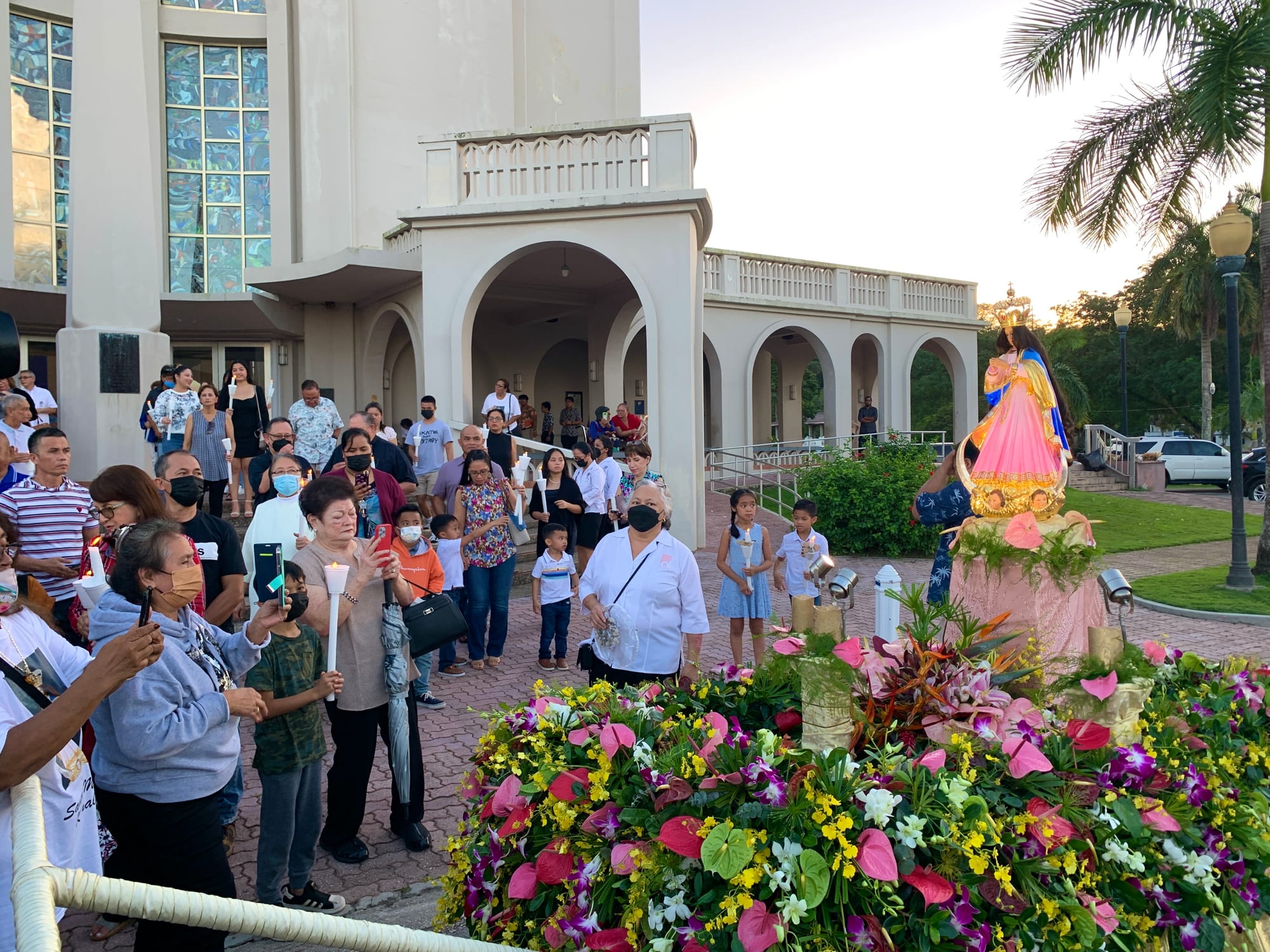
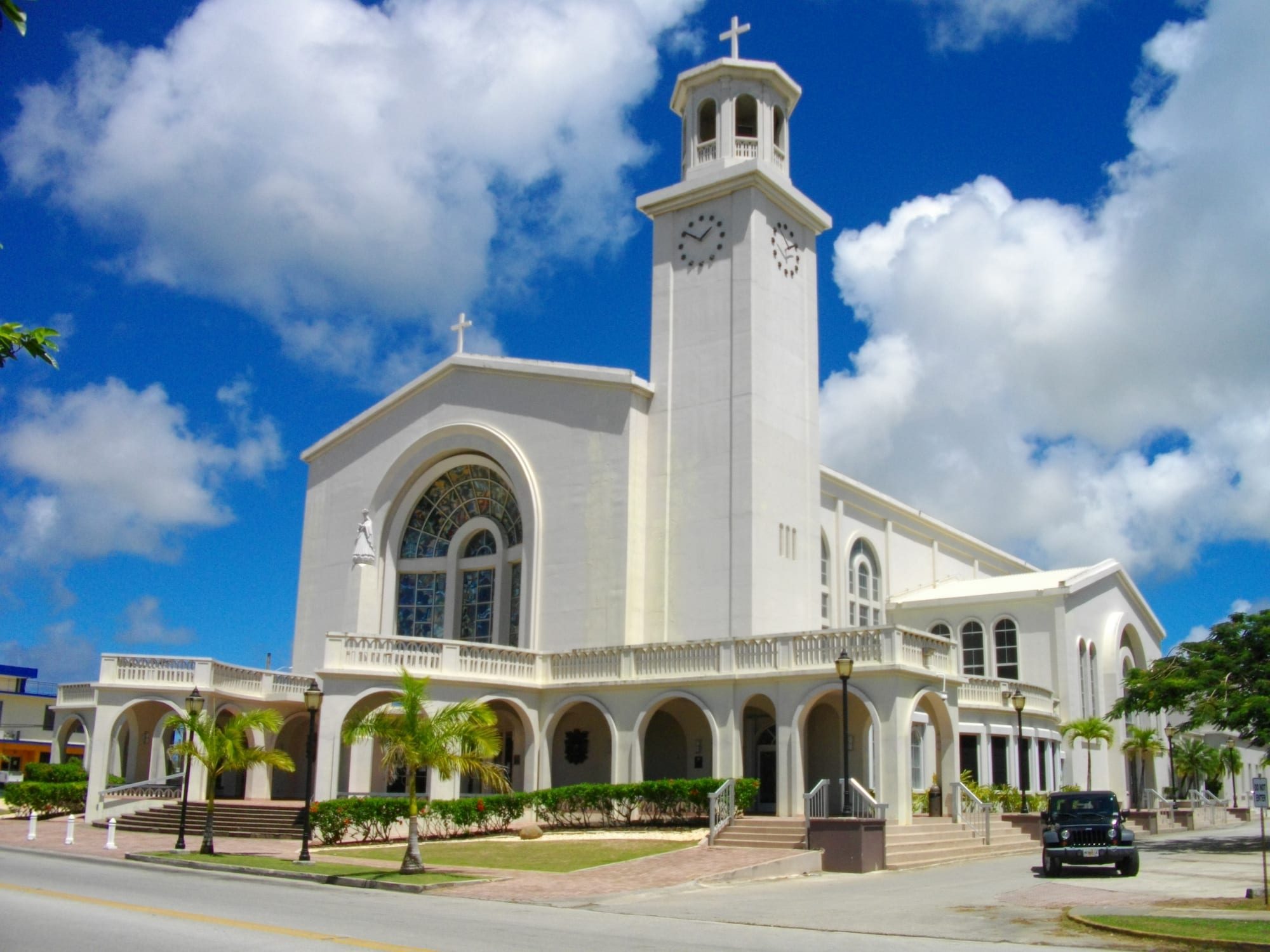
Catholicism, brought by Spanish missionaries from the seventeenth century, is woven deeply into CHamoru life. Every village has its church at its centre and its own patron saint, and family life is marked by christenings, weddings, novenas and rosaries for the dead. Above all stands Santa Marian Kamalen, Our Lady of Camarin, the patroness of Guam and the Marianas, whose centuries-old statue sits in a niche behind the altar of the cathedral-basilica in the capital.
Older beliefs have not disappeared. The taotaomo'na, "the people of before", are the ancestral spirits believed to share the land with the living. People unfamiliar to them are expected to ask permission before entering their territory, especially the jungle, or risk sickness or bad luck, or before taking fruit or wood from it. Latte — the stone pillars and capstones on which ancient CHamoru buildings stood, and between which the dead were sometimes buried — have become a modern symbol of CHamoru strength and identity, appearing in government, business and everyday settings across the island. Many CHamorus regard latte sites as sacred and treat them with reverence.
Greetings and meeting people
The everyday greeting is Håfa adai, "hello", heard in hotels, shops and schools across the island, and the tourism board encourages visitors to use it with everyone they meet. Si Yu'os ma'åse' means "thank you", adios is goodbye, and there are greetings for the time of day too: Manana si Yu'os for good morning, Ha'anen maolek for good afternoon and Pue'ngen maolek for good evening. English is spoken throughout Guam, and some older residents also speak Japanese, but the CHamoru language is being actively revived and is a source of real pride.
Elders receive particular deference. Nginge' is still commonly performed by younger CHamorus on meeting their elders, the manåmko', and in recent times it has broadened to include sniffing or kissing an elder's cheek with the same greeting and reply. Visitors are not expected to perform it, but they will see it often, and noticing who is greeted first in a room says a great deal about how respect works here.
A visitor's best approach, in the tourism board's words, is genuine curiosity: talking with local people, observing how a community behaves, and learning a little before arriving. The more a guest understands, the more they will recognise and appreciate the hospitality offered.
Hospitality and being a guest
Hospitality on Guam is bound up with chenchule', a system of reciprocity at the heart of both ancient and modern CHamoru society. Families show their care and obligation for one another by contributing money, food, drink, supplies or labour to each other's big occasions — weddings, the birth of a child, baptisms, funerals and even children's birthday parties. Money is now common, placed in a decorated box at the event in an envelope marked with the family's name and village. Families keep written records of what they receive, noting date, type and amount, so that the gift can be returned in kind when the giver's own turn comes; such obligations can pass from one generation to the next.
For a visitor invited to a family celebration, the lesson is that arriving empty-handed sits awkwardly with custom. A contribution, modest and suited to the occasion, is a way of taking part in the give-and-take that holds families together.
After a meal, chewing pugua, betel nut, remains customary among some CHamorus, a habit with deep roots in the islands.
Festivals and life's big moments
Each of Guam's villages celebrates its patron saint with an annual fiesta, a custom introduced by Spanish missionaries and quickly adapted to CHamoru social life. It begins with a nobena, nine days of rosary prayers, usually led by a techa, a traditional prayer leader, and culminates in a procession and festal mass. Devotees come from all over the island to fulfil a promesa, a pledge made to the saint in return for a favour asked. Afterwards comes the communal dinner for everyone who took part, paid for by villagers' contributions of food, drink or money, and families open their homes to relatives and friends. Visitors who are invited are welcomed warmly.
The largest religious occasion is the feast of Santa Marian Kamalen on 8 December, the Solemnity of the Immaculate Conception and an island-wide public holiday, when thousands of devotees from every village follow her statue, pulled on a cart, in procession through the capital.
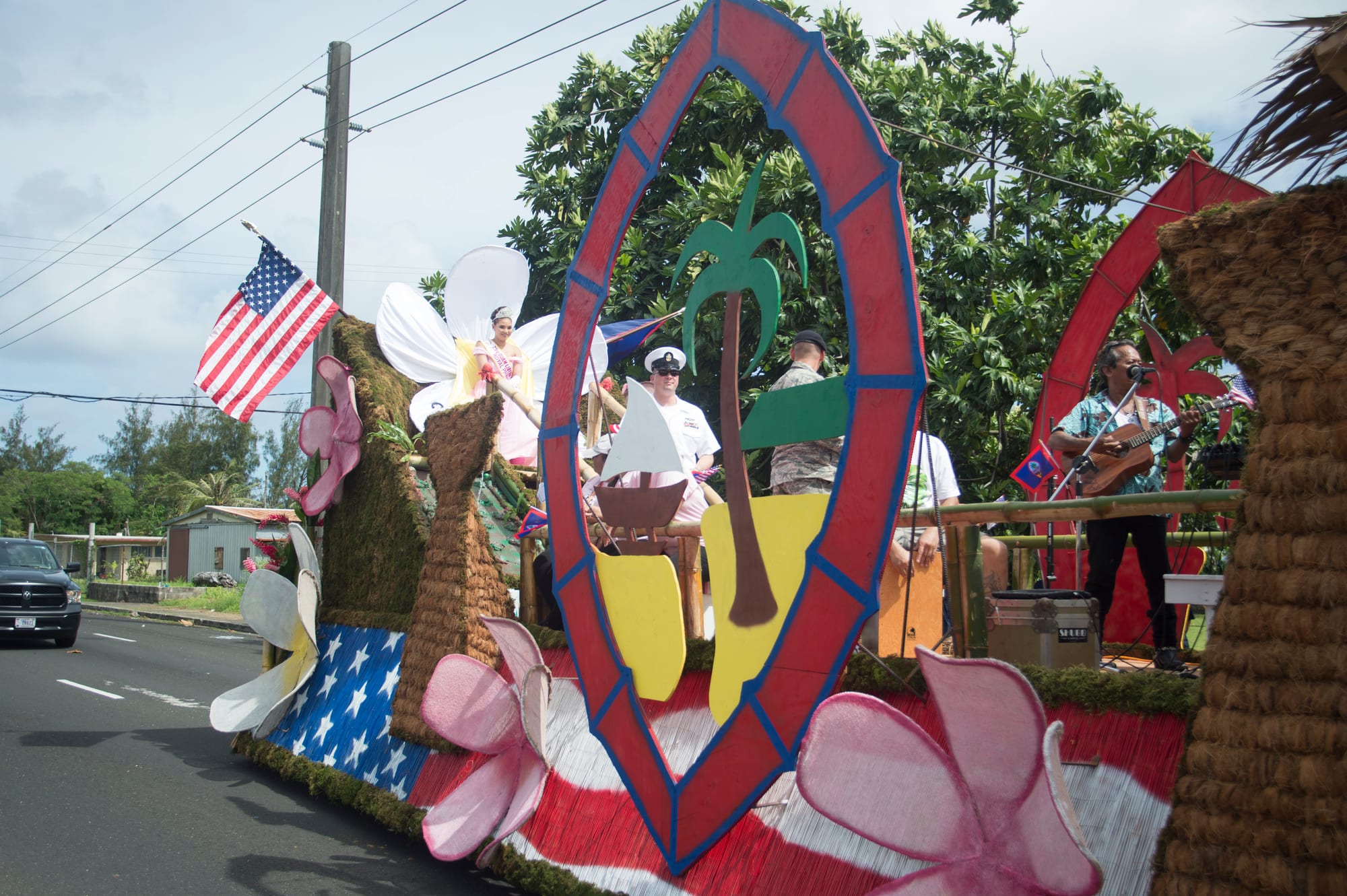
Liberation Day, on 21 July, is Guam's biggest civic holiday. It marks the day in 1944 when US forces returned to end the Japanese occupation, and honours the CHamorus who were killed and the many more who suffered during it. It is celebrated with a grand parade, a carnival and fireworks. In March, Mes CHamoru, the month of Guam history and CHamoru heritage, brings weaving, dance, cooking and language demonstrations to schools, offices, shopping centres and hotels.
Family milestones follow deep-rooted patterns. Traditional weddings once involved a formal presentation from the groom's family and ritual visits between the two families, with elders giving the couple their blessing. Death brings the extended family together. A rosary for the dead is said for nine nights, led by a techa; a wake, the bela, is held before the funeral, where visitors view the body, sign the book, pray with the family and offer comfort. Guests give ika', money to help with the costs of the burial, which is recorded and later reciprocated, and the dead continue to be remembered in the family's prayers.
Arts, crafts and music
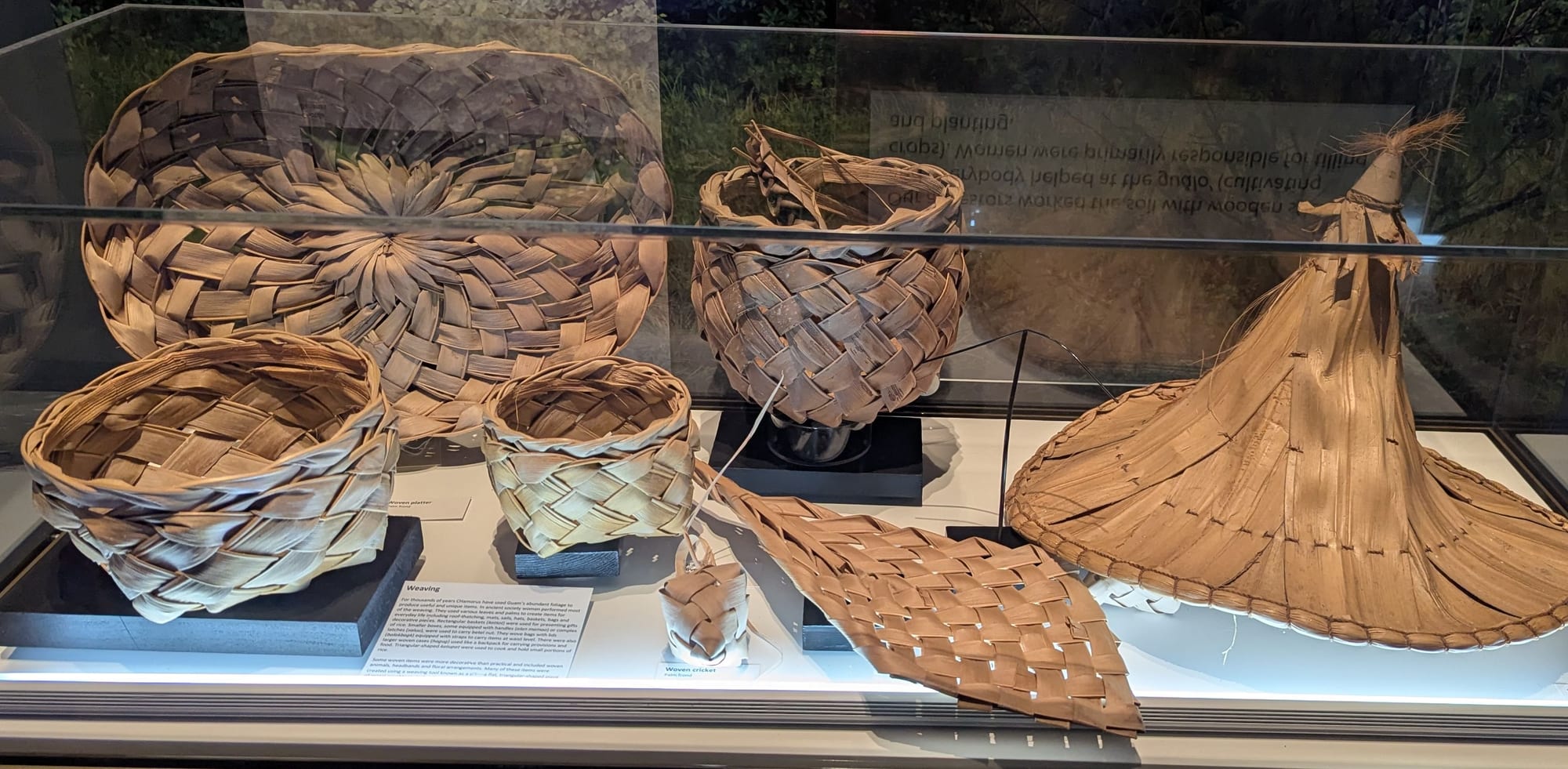
Many traditional skills are still passed on through apprenticeship. Master weavers turn pandanus and coconut leaves into baskets, purses, mats and hats; carvers work native hardwoods such as ifil; and blacksmiths forge tools for farming and fishing.
Music has old roots too. Kantan Chamorrita, an ancient style of improvised rhyming song, pits singers against one another in a verse-by-verse exchange, with each teasing or courting a rival who has to answer in rhyme. Traditional instruments include the belembaotuyan, a musical bow with a hollow gourd resonator. Catholic hymns and prayers in CHamoru, chanted by the techa at rosaries and novenas, remain one of the most widely heard forms of the language, and the revival of CHamoru in schools, songs and public life has become a cultural movement of its own.
Dos and don'ts for visitors
- Do greet people with Håfa adai and say Si Yu'os ma'åse' to thank them.
- Do show visible respect to elders; greet them first and let them lead.
- Do accept an invitation to a fiesta if one comes; it is the warmest welcome the island offers.
- Do bring a contribution if invited to a family occasion, and give it in an envelope marked with the giver's name.
- Do dress modestly for mass, processions and rosaries.
- Don't climb on or move latte stones; many regard latte sites as sacred.
- Don't wander into the jungle or ancient sites carelessly; local people ask permission of the taotaomo'na first.
- Don't photograph a wake or funeral without the family's permission.
What to take away
Guam's customs rest on one idea, inafa'maolek — keeping things good between people — and a visitor who greets with Håfa adai, defers to elders and understands that every gift begins a relationship will be welcomed into it.