Culture & Customs · Guadeloupe
Guadeloupe: A Circle Around the Drum
A Creole culture built from many origins, where a drum circle carries the memory of resistance, carnival runs for two months, and All Saints' night lights the graves with candles
By Worldlore Editorial · 30 September 2026
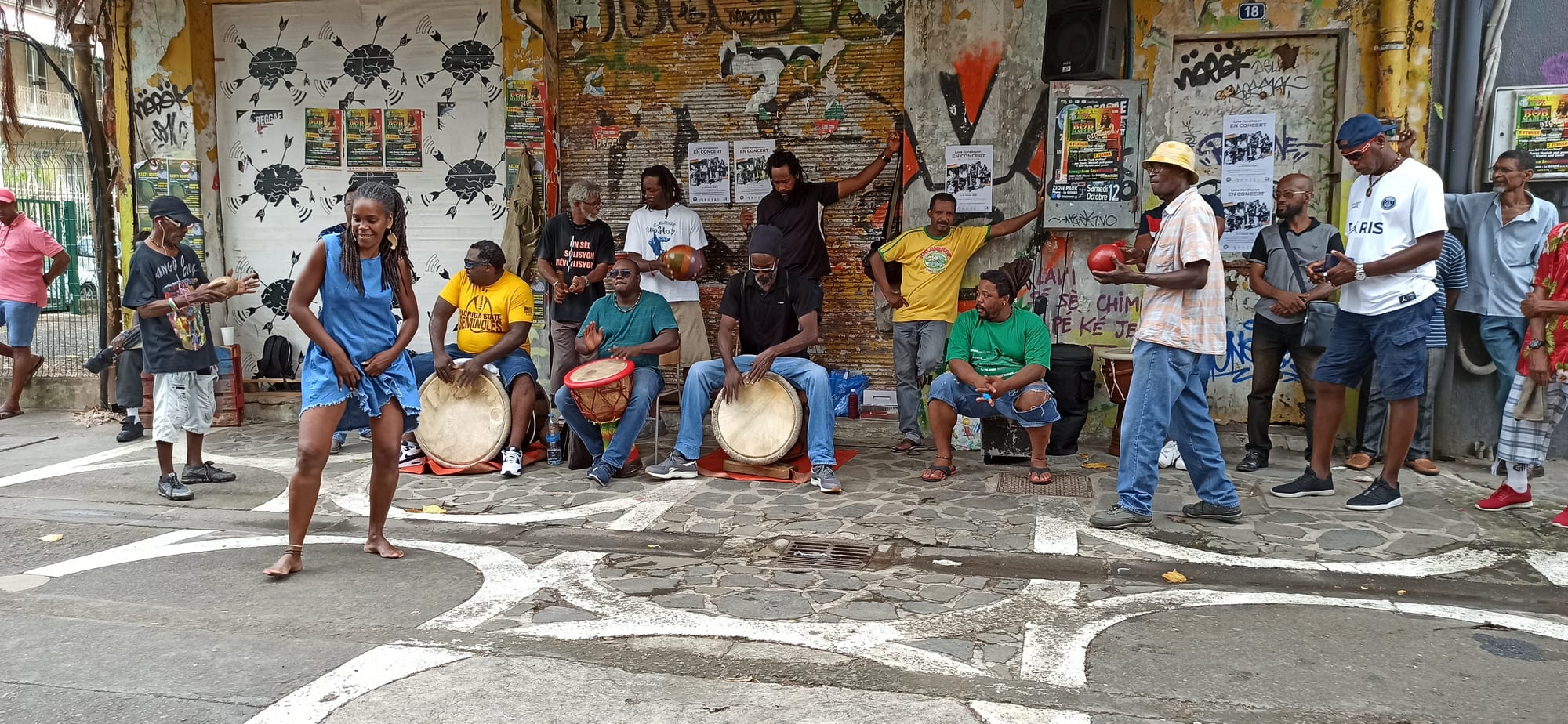
In the open air, a circle forms. On one side sit the drummers, their ka drums made from old barrels and stretched goatskin held between their knees. Around them stand neighbours, friends and passers-by. A singer calls out a line in Creole and the crowd answers it, clapping the beat; then someone steps out of the ring, faces the drums and dances alone, improvising, until another takes their place. There is no stage and no separation between performer and audience. This is gwoka, and it holds much of what makes Guadeloupe itself: a culture shaped in hardship, expressed in Creole, and built on the idea that everyone in the circle has a part to play.
Faith, identity and values
Guadeloupe is a French overseas department, with French institutions, the euro and French as its official language. Its culture, though, is Creole — the product of centuries in which people from Africa, Europe, the Americas and later India lived and worked side by side, often without a shared language. The tourism board describes a society of Amerindian, African, European and Indian influences, where popular festivals, oral traditions, beliefs and ancestral practices still shape everyday life. That layered inheritance is the key to understanding how Guadeloupeans see themselves: fully part of France in law, and distinctly Caribbean in music, language, faith and custom.
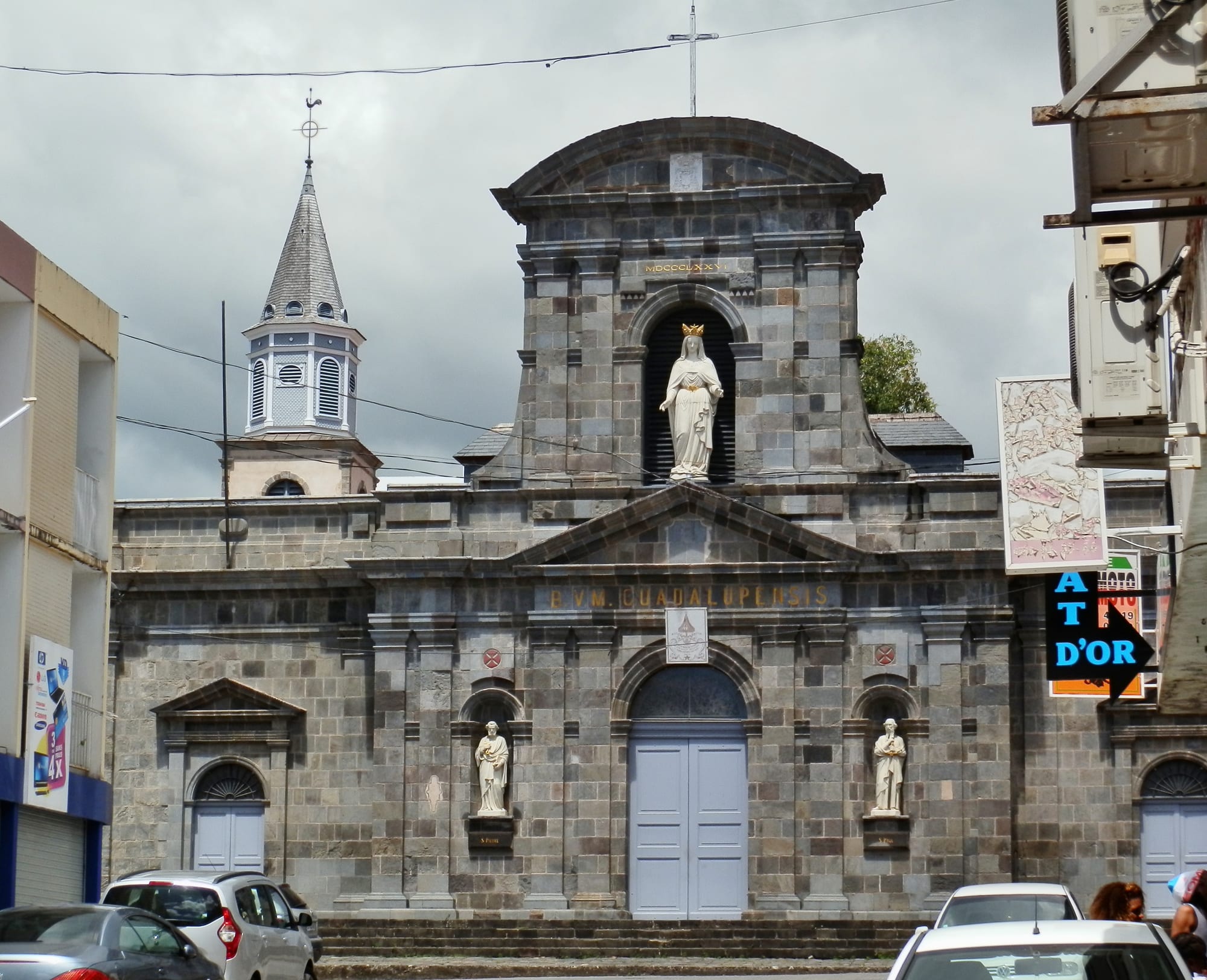
Roman Catholicism is the faith of the large majority — Britannica estimates about four-fifths of the population — with smaller Protestant and Jehovah's Witness communities. The Indo-Guadeloupean community, a key part of the archipelago's identity, keeps up its own heritage, with Hindu temples and festivals of its own. Catholic practice reaches well beyond Sunday services: food and cooking utensils are blessed in church at the Cooks' Festival, and the dead are honoured each year on All Saints' Day with a devotion that visitors rarely forget.
Memory is a value in its own right. The islands have many sites tied to slavery, resistance and the forming of Creole identity, and gwoka — which UNESCO says conveys values of conviviality, resistance and dignity — is valued not only as music but as a living link to the people who created it. Pride in that inheritance runs deep, and it is expressed less through solemnity than through music, dance and the shared experience of the crowd.
Greetings and meeting people
French is the language of school, administration and business, and tourism professionals speak it and often English. But Guadeloupean Creole is the language of daily life, family, markets and celebration, and most Guadeloupeans speak and understand it, though how much it is used varies with generation and setting. The tourism board is emphatic that Creole is not a broken form of French but a language in its own right, with its own grammar, vocabulary and rhythm, born on the plantations from French and the languages of enslaved Africans. It also differs from the Creoles of Martinique and Haiti in vocabulary, pronunciation and turns of phrase.
A few words go a long way. Bonjou is hello, mèsi is thank you, and kijan ou yé? asks how someone is; pa ni pwoblem means "no problem". The tourism board notes that making the effort to use them is highly appreciated, and that many Guadeloupeans are glad to teach visitors a few expressions at a market or on a tour.
The board's general advice for visitors is simple: kindness, warmth and respect for local customs. A relaxed, courteous manner, a greeting before getting down to business, and genuine interest in the island beyond its beaches are the surest ways to be well received.
Hospitality and being a guest
Hospitality in Guadeloupe blends two traditions. From France comes an art de vivre that prizes time at the table and coffee taken slowly on a terrace; from Creole culture comes a strong sense of sharing, whether at a family meal, in a small guest house where hospitality is part of the stay, or at a festival banquet. Food is treated as heritage, and those who cook it are honoured.
Nowhere is that clearer than at the Cooks' Festival, held each August in Pointe-à-Pitre on the Saturday nearest the feast of Saint Lawrence, patron saint of cooks. The cooks, mostly women, dress in madras cloth, embroidered aprons and headscarves, and carry baskets decorated with flowers. They process to the Cathedral of Saint-Pierre-et-Saint-Paul for a mass at which their dishes and utensils are blessed, then parade through the streets, baskets in hand, before a banquet and a ball. The tourism board describes the festival as a tribute to the women who have kept Creole cooking alive across generations, and to their central role as guardians of culinary memory and cultural life.
Madras, the bright checked cotton seen at the Cooks' Festival, is a fabric of identity, worn for festivals and traditional dress. Visitors who come to such occasions as guests, rather than spectators, tend to find themselves included — offered a taste, a place in the crowd, or an explanation of what is happening.
Festivals and life's big moments
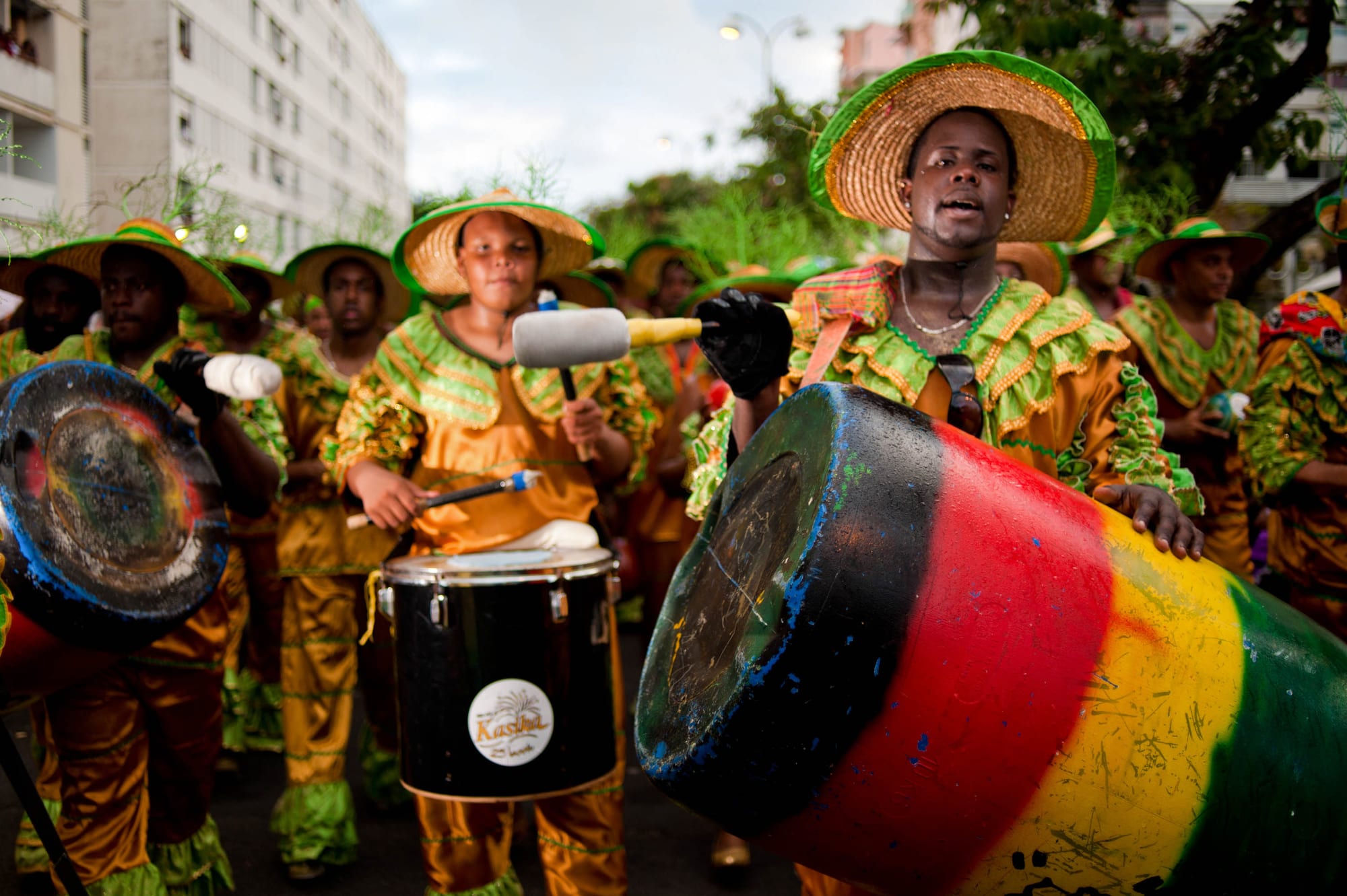
Carnival is a true institution. It has roots in both European festivities and the traditions of the enslaved, and has become a way for Guadeloupeans to express their joys, criticisms and hopes. Parades begin on Sundays in January and build to the most festive days: Fat Sunday with its big musical parades, a Monday given over to satire such as mock "burlesque weddings", and Mardi Gras with its most dazzling costumes. Many carnival groups rehearse all year, designing costumes, composing music and preparing choreography with a sharp satirical message. The most traditional of them, the groupes à peau, march to goat-skin drums and improvised Creole chants in costumes of burlap, recycled cloth or handmade outfits, keeping alive a rural and rebellious spirit; others favour masks and theatre, precise percussion, or modern keyboards and backing tracks. Children have their own parades too.
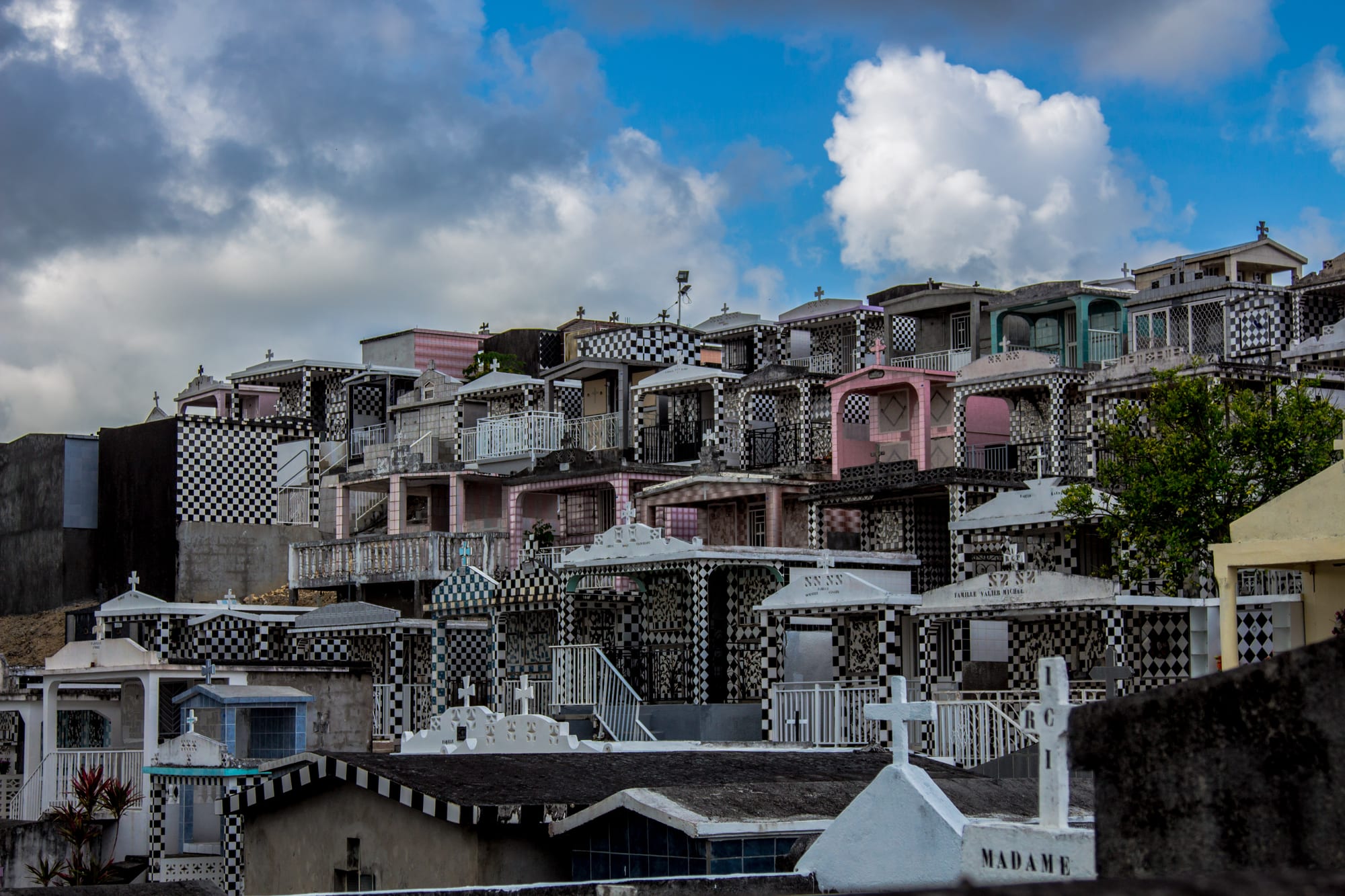
All Saints' Day, on 1 November, is the great family occasion of the year for honouring the dead, and in Guadeloupe it takes the place that Halloween holds elsewhere. Families gather at cemeteries to clean and decorate the graves of their loved ones with flowers, and as night falls they light candles on them, until whole cemeteries glow. The tourism board asks visitors to treat cemeteries as places of remembrance: to speak quietly, avoid festive behaviour, dress modestly, and never photograph families in mourning.
The calendar carries other gatherings as well. The Cooks' Festival in August honours Creole cooking and the women who keep it alive. A festival of gwoka, drawing drummers, dancers and masters of the ka, celebrates the tradition each summer, and quadrille gatherings bring young and old together around the traditional dance, in costume.
Arts, crafts and music
Gwoka is the heart of Guadeloupean music and has been on UNESCO's list of intangible cultural heritage since 2014. It unites three things: call-and-response singing in Creole, rhythms played on the ka drums, and dance. The tambouyé, the lead drummer, sets the pace, and the songs may be joyful, reflective or deeply emotional. The drums themselves are traditionally made from reused barrels covered with goatskin, and the skill of making them is passed down alongside the playing. Gwoka is built on a family of distinct rhythms, each tied to a feeling or to the daily life of the ancestors, from work dances that echo labour in the fields to a warrior rhythm recalling revolts on the plantations. It is heard at night vigils, neighbourhood gatherings and festive evenings known as léwòz, and its practitioners come from every part of Guadeloupean society.
The quadrille is gwoka's counterpart: a ballroom dance brought by French colonists in the eighteenth century, at first reserved for the colonial elite, then taken up by all classes and reshaped by African and Creole influences. It is danced in a series of figures, and in some forms a commandeur calls out the steps. Accordion, violin and percussion supply the music. There are several local styles across the islands, and the dance is valued as a link between generations.
Music did not stop with these traditions. Guadeloupeans also dance to biguine and to zouk, and festivals across the year bring jazz, blues and newer Caribbean sounds to the islands. Traditional crafts remain alive in workshops that welcome visitors — indigo dyeing, basketry, bakoua straw hats, seed jewellery and pottery among them — and buying directly from the makers supports a living heritage.
Dos and don'ts for visitors
- Do try a few words of Creole — bonjou for hello, mèsi for thank you — since the effort is warmly appreciated.
- Do join in the clapping and chorus if welcomed into a gwoka circle, and leave the centre to the dancers.
- Do dress for the occasion at carnival; costumes, glitter and colour are welcome, though never obligatory.
- Do buy crafts directly from the workshops and markets where they are made.
- Don't call Creole a dialect or broken French; it is a language in its own right.
- Don't photograph families in mourning, especially at cemeteries on All Saints' Day.
- Don't treat cemeteries as tourist sites; speak quietly, dress modestly and avoid festive behaviour.
What to take away
Guadeloupe's customs are those of a people who turned a hard history into music, language and celebration, and visitors who greet people in Creole and step respectfully into the circle will find they are welcome in it.