Culture & Customs · Grenada
Grenada: The Masquerade of Freedom
A carnival whose devils were born of emancipation, a courtesy that starts every exchange with "good morning", and traditions that still set a place for the ancestors
By Worldlore Editorial · 30 September 2026
It is still dark on Carnival Monday when the drums start. Out of the early-morning streets come the Jab Jab, devil masqueraders glistening with black oil, horned helmets on their heads and chains in their hands, dancing to a heavy, chanting rhythm. Some play at menace; most want only to smear a little of their paint on anyone standing too close. The masquerade is loud, joyful and faintly unsettling, and it is also a piece of history performed in the street: a devil masquerade created by Africans in the years after emancipation, built on drumming, masking, high spirits and parody. Few moments capture Grenada so well — a culture that remembers where it came from, and chooses to dance about it.
Faith, identity and values
Grenadian culture grew from many sources. The tourism authority describes it as a fusion of Amerindian customs, French and English settlement, and African, East Indian and wider Caribbean ancestry, and each strand has left its mark. African heritage runs through music, drumming and masquerade; the French period left place names, saints' days and an older French-based Patois still heard among some Grenadians; the British period left the English language, the legal system and cricket. The country is made up of three islands — Grenada itself, Carriacou and Petite Martinique — and each contributes something of its own to the national identity.
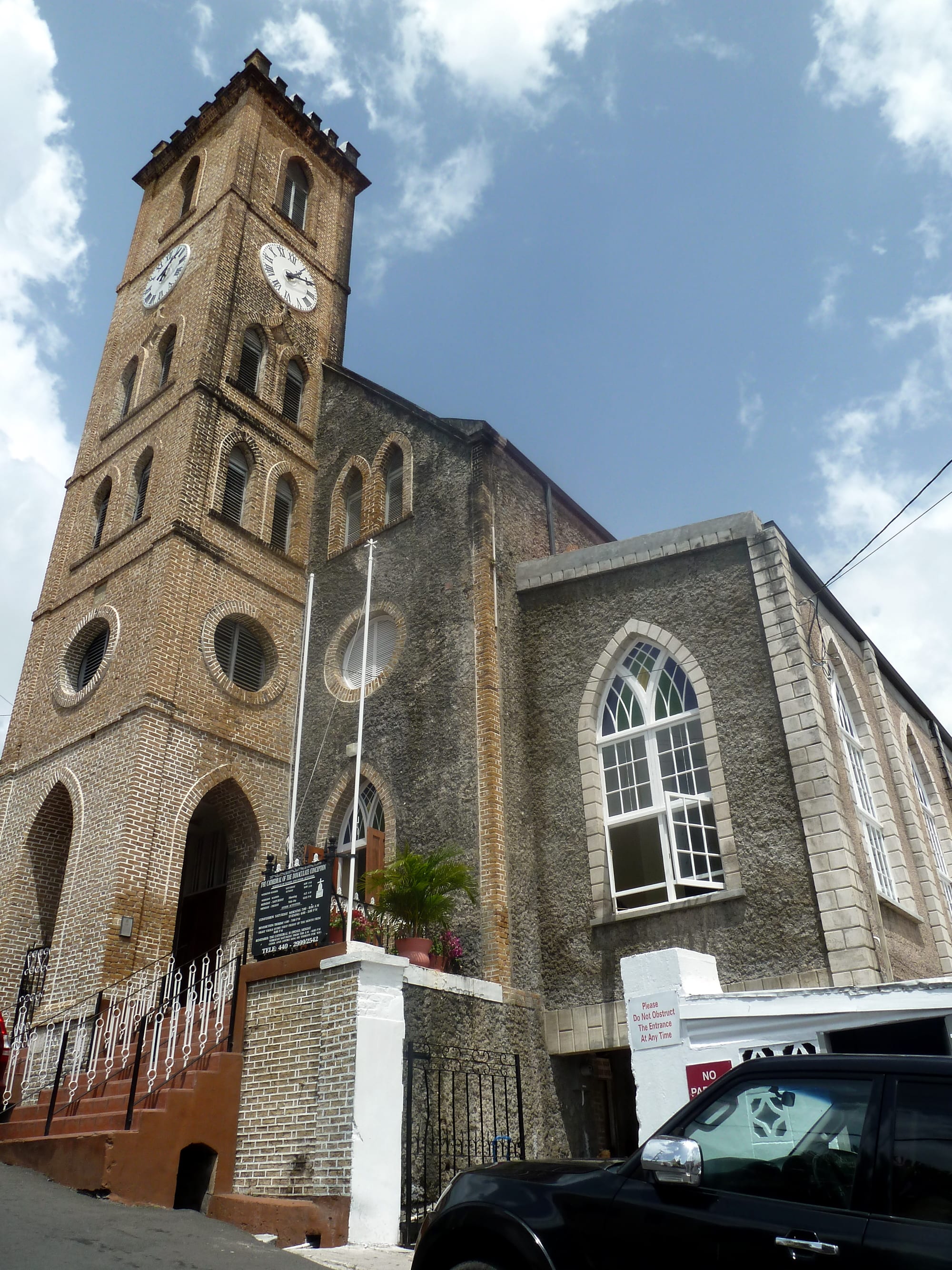
Christianity is the religion of the great majority. A government estimate cited by the US State Department puts Roman Catholics at around a third of the population, with Protestants together making up roughly half — Pentecostals, Seventh-day Adventists and Anglicans the largest groups among them — alongside smaller communities of Rastafarians and others. Churches of many denominations stand in almost every town and village, and faith shapes the calendar: Corpus Christi is a public holiday, and Christmas is a season of church services and family visits that runs on into Boxing Day.
Alongside the churches runs a deep respect for ancestry. Many traditions keep the dead close: rum and water poured for the ancestors, dances that name the African nations families descend from, and gravestones raised years after a death with the whole family present. Emancipation is commemorated each year on 1 August, the anniversary of the abolition of slavery in 1834 and of full freedom in 1838, with church and cultural groups of many kinds taking part in drumming, choirs and dance. Elders are respected as keepers of memory and, within families and communities, as figures whose word carries weight.
Greetings and meeting people
Courtesy begins with a greeting. Grenadians place real value on saying "good morning", "good afternoon" and "good night" as the day moves on, and a greeting is the natural way to open an exchange with a neighbour, a shopkeeper or a stranger. "Please", "excuse me" and "thank you" are expected in turn, and Grenadian commentators describe these small courtesies as part of what holds communities together.
English is the official language, and it is spoken with a Grenadian lilt and a rich local vocabulary of its own. The tourism authority notes that it is not uncommon to hear some Grenadians speak a French-African Patois, a reminder of the French colonial period. Grenadians are proud of their reputation for friendliness and are usually happy to talk about their islands, their music and their food; a relaxed, warm manner is returned in kind.
Public behaviour is more conservative than the carnival might suggest. Public displays of affection are uncommon, and attitudes towards LGBT+ people remain largely conservative, as in much of the Caribbean; certain same-sex sexual acts are illegal under Grenadian law.
Hospitality and being a guest
The tourism authority describes Grenadians as warm and inviting, and proud to share their culture and heritage, and many visitors find that a chance conversation leads to an invitation. A greeting for everyone present is the natural way to arrive, and taking an interest in the family, the food and the island is the surest way to be a good guest.
Dress matters more than many visitors expect. Light, casual clothing is normal, but swimwear is for the beach, and covering up is expected on the roads and in bars, restaurants and shops. Camouflage clothing is illegal for anyone, including children. Church services call for neat, modest dress.
Tipping is straightforward. Hotels and restaurants often add a service charge on top of government tax, and any further tip is at the guest's discretion.
Festivals and life's big moments
Spicemas, the national carnival, is the high point of the year. It reaches its peak on the second Monday and Tuesday of August. Weeks of calypso, soca and pageant competitions and parties lead up to J'ouvert, the pre-dawn street parade whose name means "daybreak", where the Jab Jab rule the road. Older Jab Jab were blackened with molasses, tar, grease or mud; newer versions come as blue, yellow or green devils, still wearing their horns. Monday night brings a parade of masqueraders lit up with glowsticks, and on Tuesday hundreds of costumed revellers in feathers and jewels take to the streets in the Parade of the Bands, dancing behind steel bands and DJ trucks.
Carnival also keeps older characters alive. The Shortknee, in its elaborate costume, dances and plays with the crowd; the Vieux Corps wears old-fashioned clothing and masks; the Dame Lorraine exaggerates dress and manners to poke fun at society; the Wild Indian recalls the islands' first peoples in feathers and elaborate costume; and the Moko Jumbie, a figure with roots in West African tradition, towers above everyone on stilts.
The rest of the calendar is full too. Independence Day on 7 February is marked with ceremonies and parades of police, scouts, guides and schoolchildren. Emancipation on 1 August brings drumming and cultural events across the country. Smaller festivals celebrate string band music, regattas, chocolate and, at Christmas, parang, a tradition of seasonal music.
Life's milestones gather families together, often from overseas. The Big Drum or Nation Dance, a ritual of drums, song and dance that honours the African nations from which families trace their descent — among them the Ibo, Congo, Temne, Mandinka and Kromanti — is traditionally held for weddings, boat launchings and tombstone feasts. On Carriacou, the tombstone feast takes place some years after a death, when relatives travel home to see a stone set in place bearing the name and dates of the person who has died.
Arts, crafts and music
Music is everywhere in Grenada. Calypso and soca dominate the carnival season, with competitions for each, and carnival masqueraders traditionally offer their own social commentary on the events of the past year. Jab Jab music has a style of its own, built on deep bass, conch-shell or flute blowing and repeated chants. Steel bands, playing tuned pans, accompany the carnival parades alongside the DJ trucks.
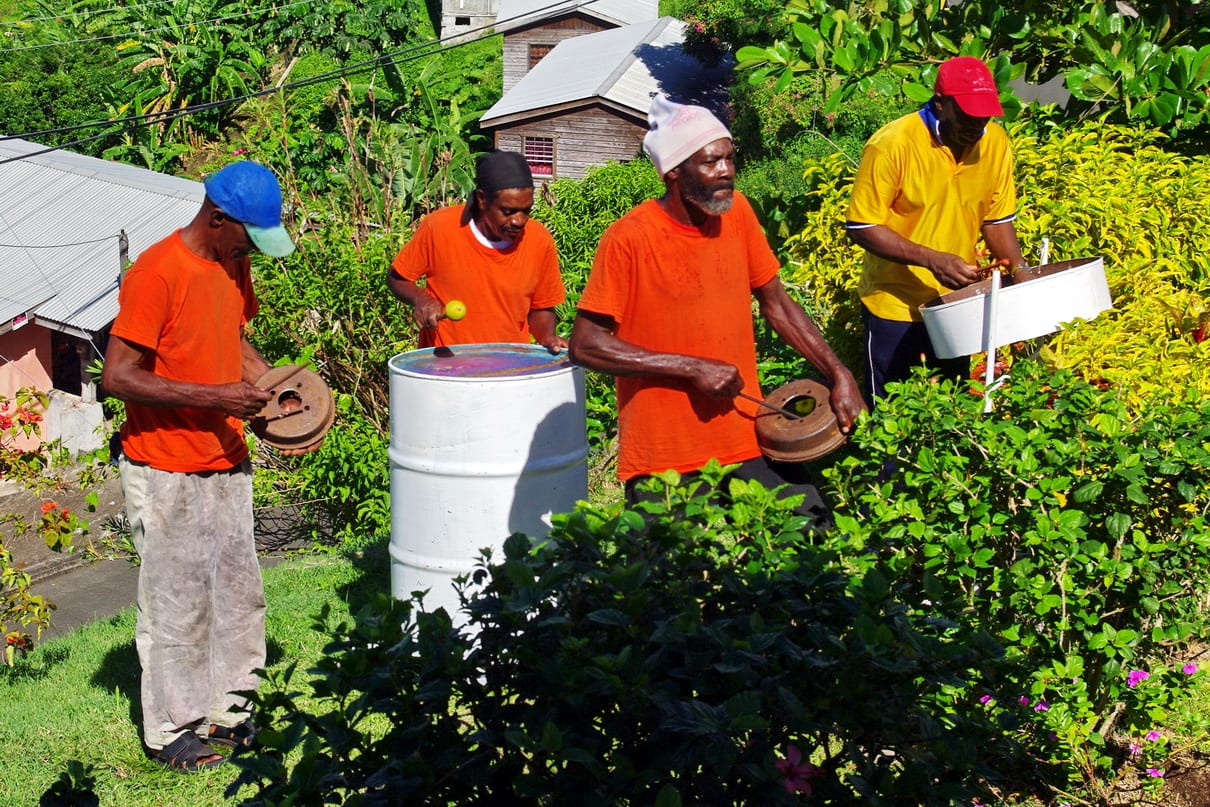
The Big Drum is one of the country's oldest musical forms. Its drums are now most often made from rum casks, and singing, chanting and shakers accompany the dancers as they move to its rhythms. It is as much a way of honouring the ancestors as a performance, and it remains closely tied to the country's African roots.
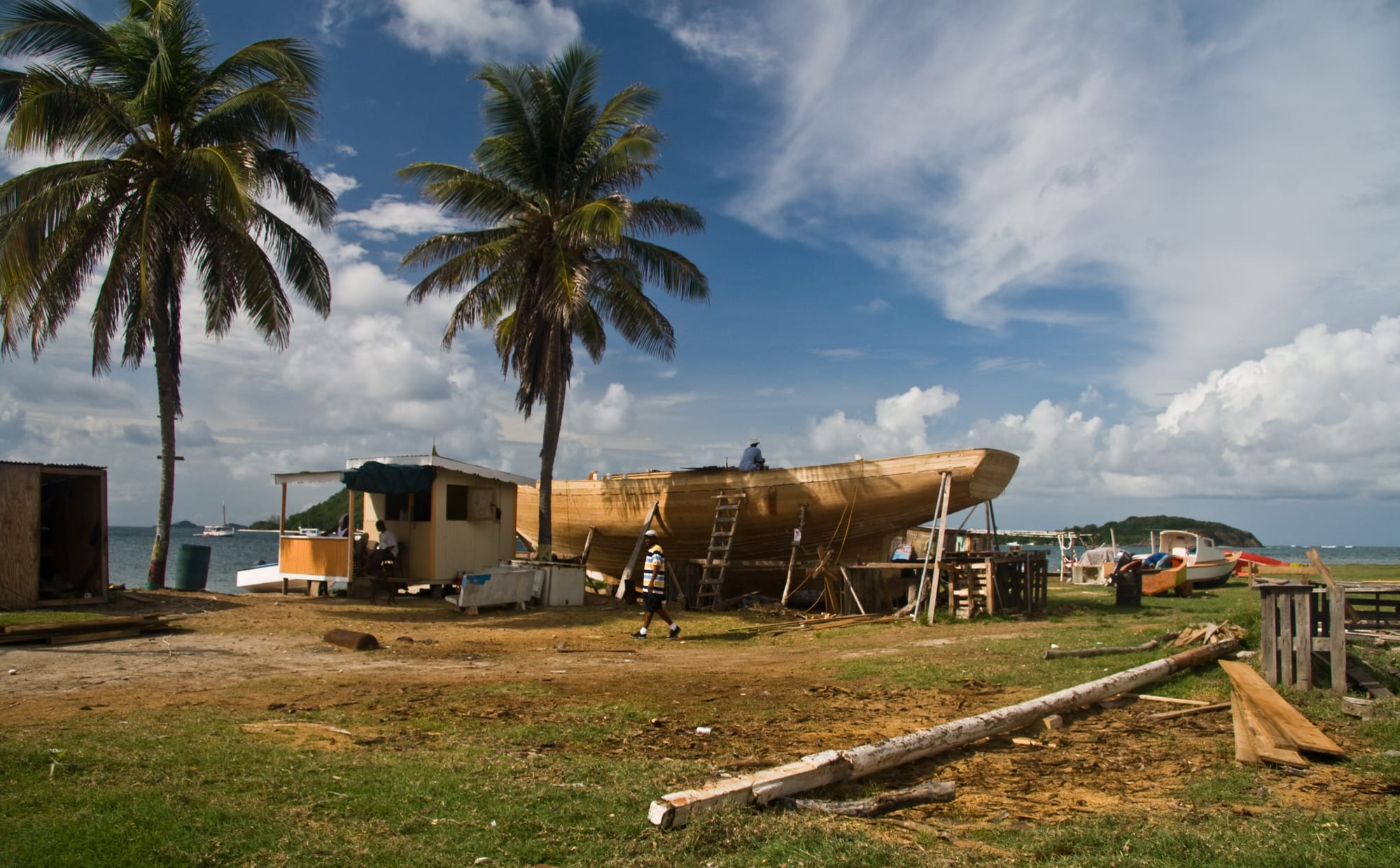
Traditional wooden boatbuilding on Carriacou and Petite Martinique is on UNESCO's list of intangible cultural heritage. Shipwrights select trees for the natural bends and curves of their wood, felling them at the right phase of the moon on the advice of elders. Before work begins in earnest, rum and water are sprinkled on the keel and stem for the ancestors. The launch is a community celebration: the boat is blessed, children under eight are chosen as its godparents and reveal its name, which is embroidered on a red flag flown from the deck, and women and girls prepare smoked food and cake for the occasion. The skills pass informally, by instruction and example, from experienced builders to the young.
The traditional masquerades, too, count as art. Shakespeare Mas' combines speech-making, costume design and public theatre; the kings compete with passages from Julius Caesar, historical texts, Bible verses and boasts, and the skill was traditionally passed from father to son, though women and girls now learn it through schools and community groups. Such traditions show how completely Grenada has made borrowed forms its own.
Dos and don'ts for visitors
- Do greet people with "good morning" or "good afternoon" before asking anything, in shops as well as on the street.
- Do cover up away from the beach; swimwear is not expected on the roads or in bars, restaurants and shops.
- Do wear old clothes to J'ouvert, since Jab Jab masqueraders like to share their paint.
- Do dress neatly and modestly for church services.
- Do check bills for a service charge before adding a tip.
- Don't wear camouflage clothing of any kind; it is illegal for anyone, including children.
- Don't expect public displays of affection to go unnoticed; they are uncommon.
- Don't treat masquerades or the Big Drum as mere spectacle; they carry real ancestral meaning.
What to take away
Grenada's customs turn remembrance into celebration, and the visitor who offers a proper greeting, dresses with care away from the beach and arrives at carnival ready to get a little paint on their clothes will find a warm welcome.