Daily Life · Ghana
Ghana: Where Family Runs Through the Mother's Line
A country where the largest ethnic group traces inheritance through the mother rather than the father, market women anchor the local economy, and getting anywhere still usually means flagging down a shared tro-tro
By Worldlore Editorial · 30 September 2026
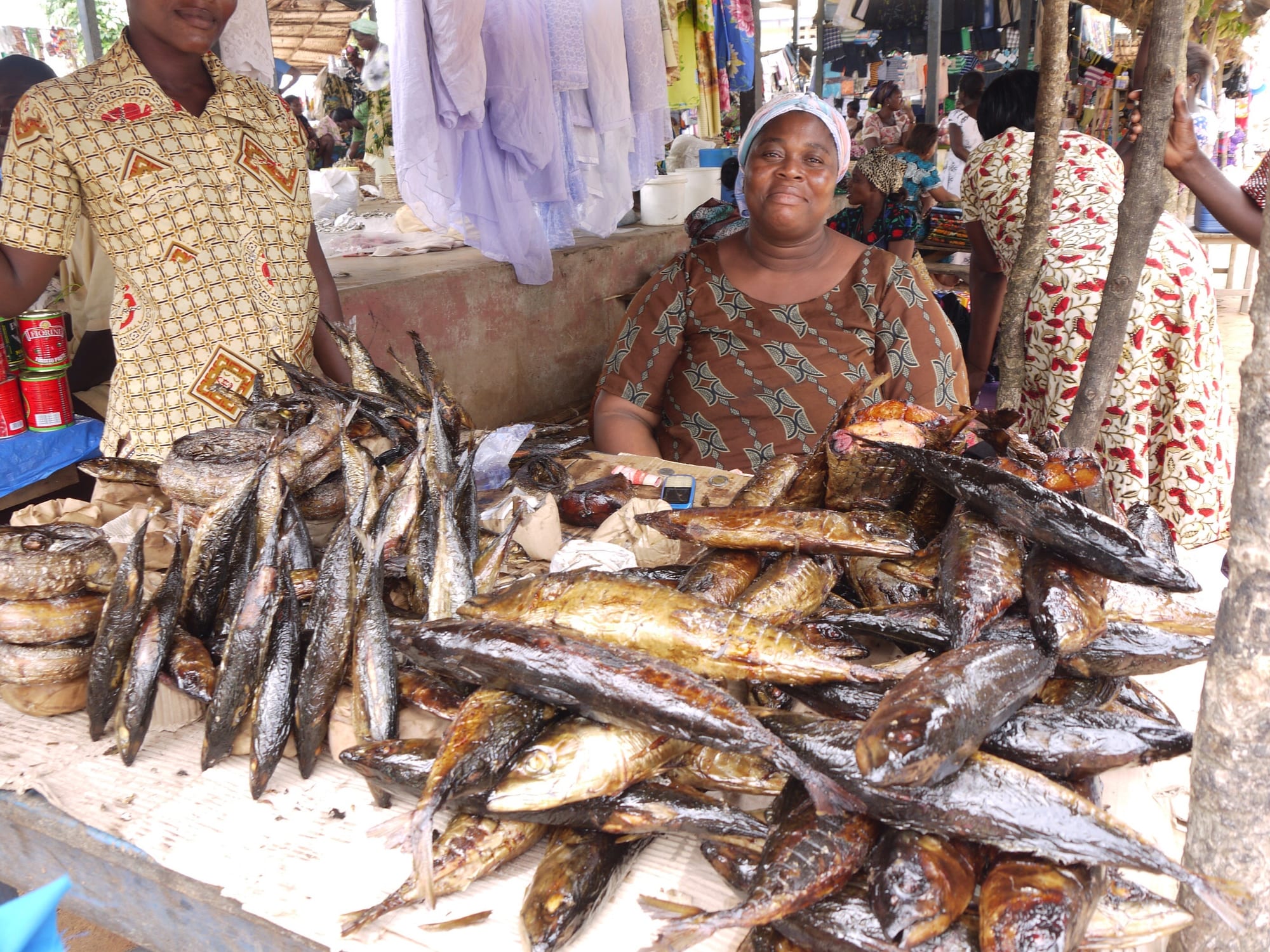
Ghana's roughly 35 million people belong to dozens of ethnic groups, each with its own rules for how a family and a household actually work, so an ordinary day looks a little different depending on where in the country it is spent. What holds true almost everywhere is that women run the markets that supply most everyday food, that getting from one place to another usually means a shared tro-tro rather than a private car, and that Sunday worship, for the roughly seven in ten Ghanaians who are Christian, and Friday prayers, for the one in five who are Muslim, both shape the week alongside work and school.
Family and home life
The Akan, Ghana's largest ethnic group at close to half the population, trace inheritance and lineage through the mother rather than the father: a child belongs to the mother's abusua, or clan, and in the traditional system a man's nephew, his sister's son, has historically had a stronger claim to inherit than his own son does. In the older version of this system, a mother and her children could even live and work in one household while the father lived and worked in another, though not all Akan still follow these customs, and some families have moved towards living as a single nuclear household. Other groups follow different rules entirely: the Ewe of the southeast, for instance, trace descent through the father's line instead. Across ethnic lines, including among the patrilineal Ewe, women have traditionally been the country's leading traders, alongside their roles running households.
Work, school and the rhythm of the day
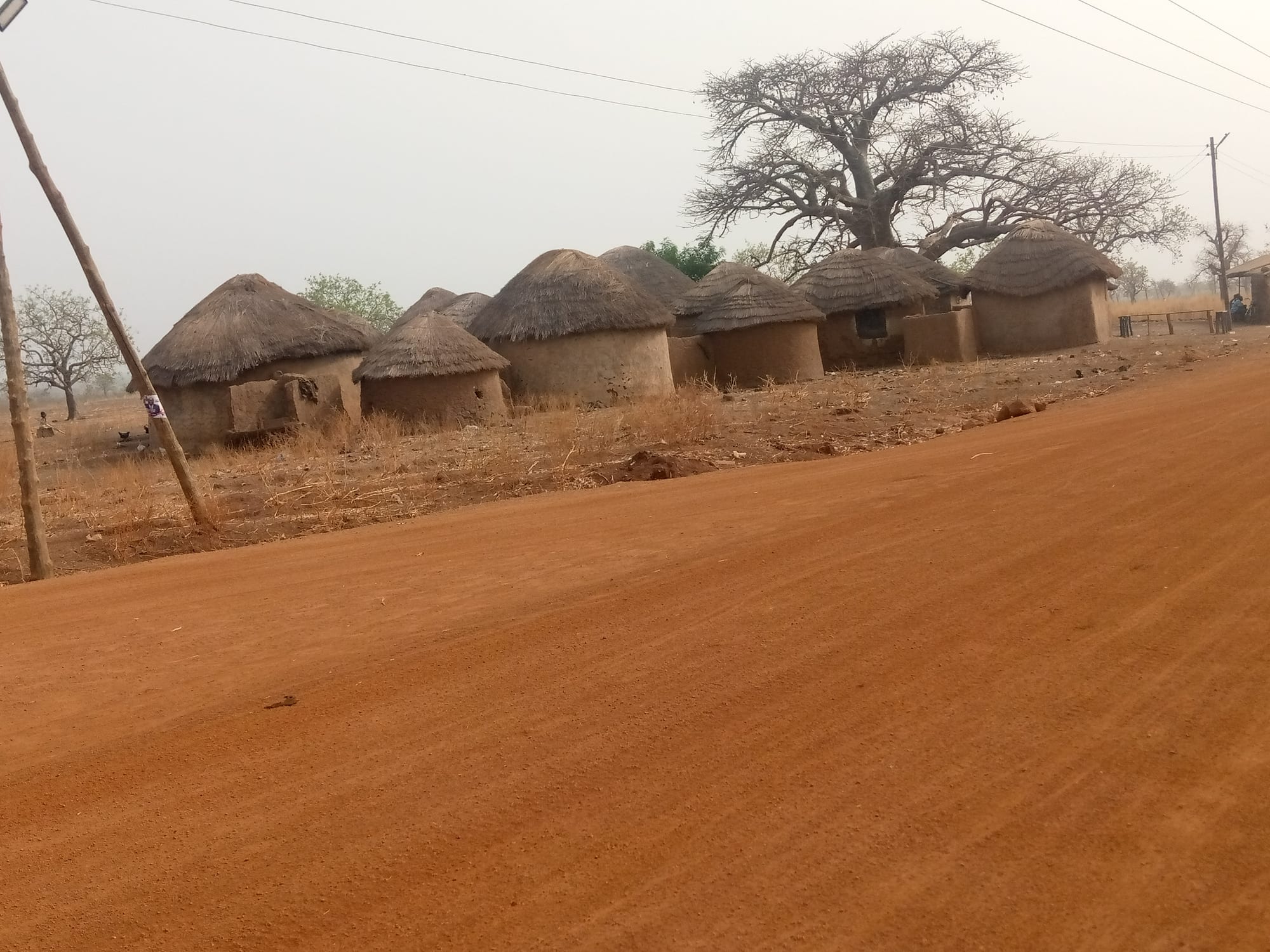
English is the language of school and government, though most Ghanaians grow up speaking an indigenous language such as Akan (Twi or Fante), Ewe, Ga or Dagbani at home first, with English layered on at school. Markets and small trade run on a long day, often from early morning into the evening, while offices in Accra and the other cities keep more conventional hours. Heavy Accra traffic routinely stretches commutes well beyond what the distance would suggest, and travel plans, especially outside the capital, tend to allow for delay as a matter of course rather than an exception — a flexible approach to scheduling often referred to locally as African time.
Community life and public spaces
Markets are the heart of daily public life: Makola Market in Accra and its equivalents in every Ghanaian town are dominated by women traders and are where many households buy food, cloth and household goods each day, doubling as the place where local news and gossip actually travel. Shared tro-tro minibuses, leaving informal stations once they are full rather than on a timetable, and shared taxis cover the country cheaply, with Intercity STC and other coach companies running more comfortably between the major cities. Churches and mosques are prominent and well attended nationwide, reflecting a population that is overwhelmingly religious, and their services, processions and choir practices are a regular part of weekly public life.
Free time and weekends
Weekends bring family visits, church or mosque attendance, and, for many households, a funeral, wedding or naming ceremony that draws in relatives from well beyond the immediate family. Football is followed with real intensity nationwide, watched together at home, in bars, or wherever a screen and a signal can be found. In the cities, a trip to the beach or a local park is a common way to spend a free afternoon, while in farming areas, weekends often still include work on the family's own land alongside any rest.
A visitor's ordinary day
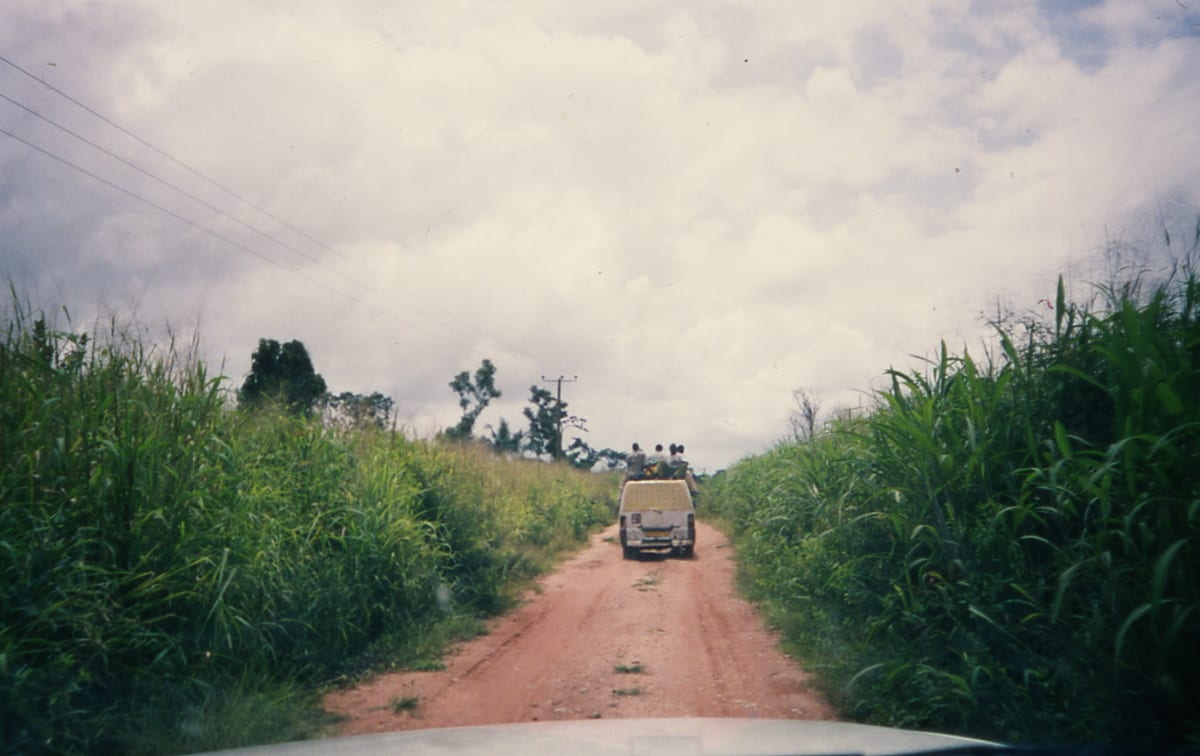
Ghana runs on the cedi, which has swung sharply in value in recent years, falling steeply until late 2024 and then recovering strongly in 2025, so prices in local currency can shift; mobile money is widely used for everyday payments alongside cash. Shops and markets typically open by mid-morning and stay busy into the evening, and it's worth carrying small notes since change for large bills can be hard to find in markets and shared taxis. Getting around by tro-tro or shared taxi means agreeing the fare and the route before boarding rather than expecting a metered or fixed price, and it's worth allowing considerably more time than the distance suggests, especially around Accra. Outside the main tourist routes, English is widely understood in the south, less consistently so in more rural areas.
What to take away
An ordinary day in Ghana is shaped less by any single national custom than by which family system a household actually belongs to — with market women, shared tro-tros and a strong weekly rhythm of worship as the threads that run through nearly all of them.