History · Ghana
Ghana: The Gold Coast, and the First to Be Free
Medieval gold-trading states, the greatest concentration of European forts in Africa, the Ashanti Empire, and in 1957 the first sub-Saharan colony to win independence
By Worldlore Editorial · 19 September 2026
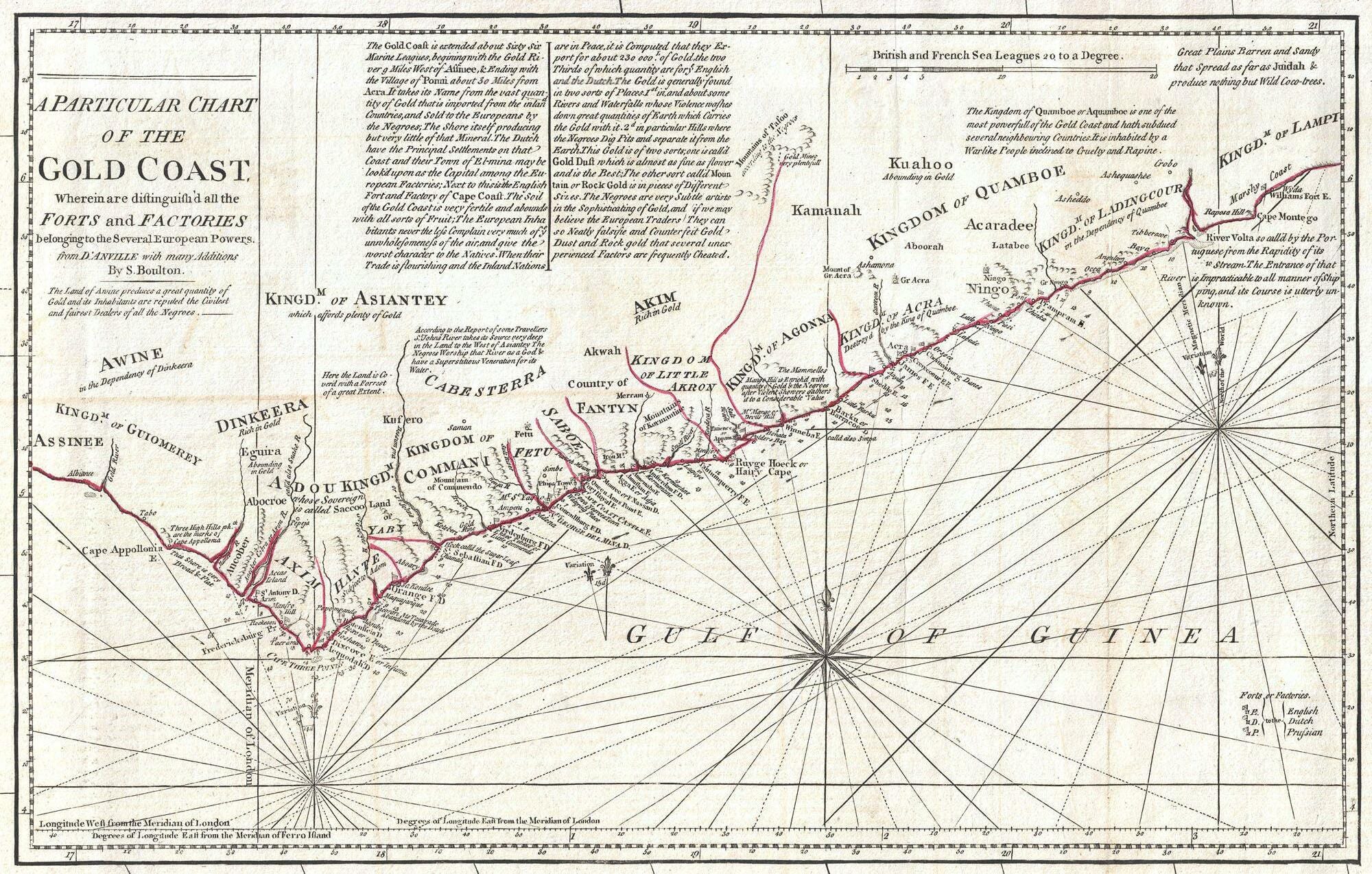
The country that went first
Ghana sits on the Gulf of Guinea in West Africa, a land of coastal lagoons, forest and northern savanna. For four centuries Europeans called it the Gold Coast, and its shoreline holds more old European forts and castles than anywhere else on the continent. In 1957 it became the first colony in sub-Saharan Africa to win independence — an event that set the pace for the decolonisation of a continent — and it took the name of a medieval empire that had actually lain far to the north-west, as a statement of African pride.
A short history
- 11th–15th centuries
Trade states
Gold and kola feed Akan and northern kingdoms.
- 1471–1482
The Portuguese
Traders arrive and build Elmina Castle.
- 1500s–1800s
The forts
Dutch, English, Danish and others line the coast; the trade turns to slaves.
- c. 1701
The Ashanti Empire
Osei Tutu unites the Akan around the Golden Stool.
- 1823–1900
Anglo-Ashanti wars
Five conflicts end with British annexation.
- 1874
The Gold Coast Colony
Britain formalises rule on the coast.
- 1957
Independence
Kwame Nkrumah leads Ghana to freedom, first in the region.
- 1966
Coup
Nkrumah is overthrown; decades of instability follow.
- 1992 onward
Democracy
Ghana becomes one of Africa's steadiest democracies.
Gold, and the forts
The trans-Saharan gold trade sustained states here long before Europeans came — the Bono kingdom in the forest, and the northern kingdoms of Dagbon, Mamprugu and Gonja, linked by trade to the Hausa cities and increasingly to Islam. Portuguese ships reached the coast in 1471 and, finding so much gold, built Elmina Castle in 1482 and named the stretch "the mine". Dutch, English, Danish, Swedish and Brandenburg traders followed, studding some 500 kilometres of coast with forts. As the Atlantic economy grew, the trade shifted from gold to people, and castles like Elmina and Cape Coast became major points of export for the enslaved.
The Ashanti Empire
Around 1701 the Akan chief Osei Tutu, advised by the priest Okomfo Anokye, united the forest states into the Ashanti Empire, with its capital at Kumasi.
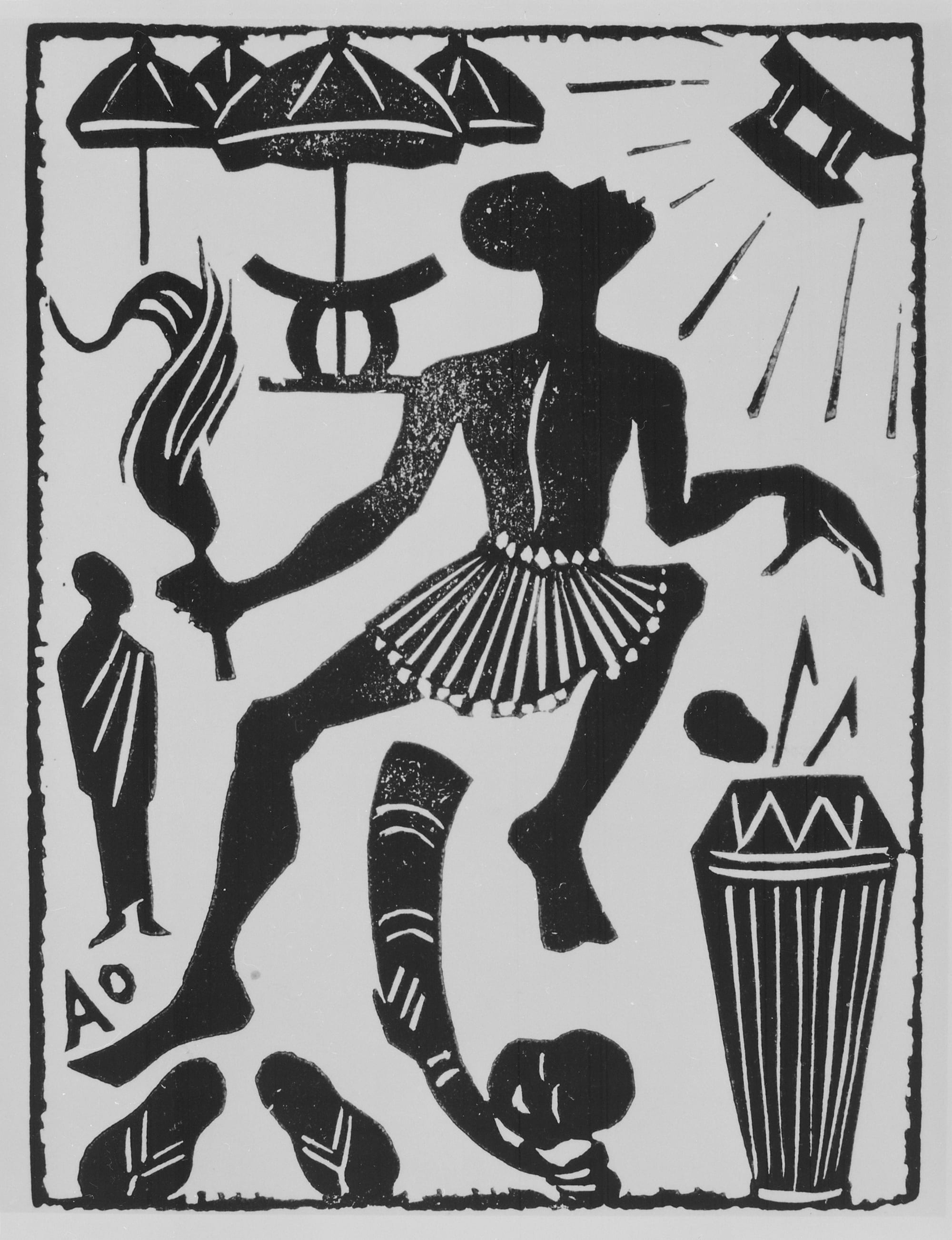
Ashanti became a centralised, militarised power controlling the gold and kola trades and much of what is now Ghana. From 1823 it fought a long series of wars with Britain and Britain's coastal Fante allies. Britain sacked Kumasi in 1874 and made the coast a crown colony; it exiled King Prempeh I in 1896; and in 1900, when the governor demanded to sit on the Golden Stool, the queen mother of Ejisu, Yaa Asantewaa, led a final uprising. Britain annexed Ashanti in 1901 and made the north a protectorate.
The cocoa colony
Cocoa, introduced in the 1870s and grown by African smallholders rather than on plantations, made the Gold Coast the world's largest producer by the 1910s. Combined with gold and manganese mining and a strong tradition of education and newspapers, it produced a relatively prosperous colony with an early, articulate nationalist elite.
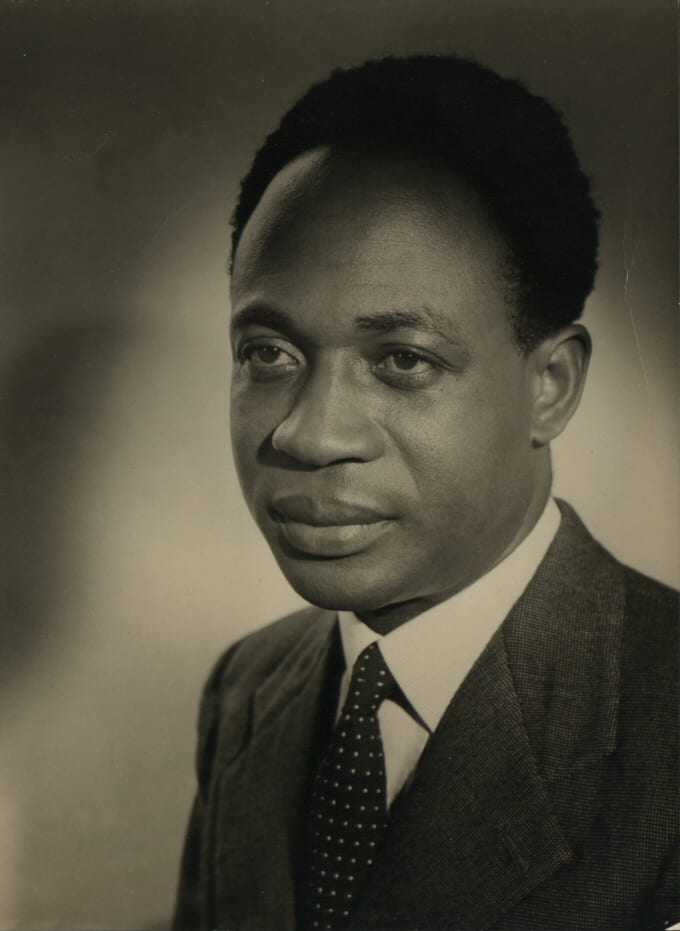
After the Second World War, Kwame Nkrumah broke from the cautious older leadership to found the Convention People's Party in 1949, demanding "self-government now" through strikes and mass action. His party swept the 1951 election, and he was released from prison to lead the government.
Independence, and the coup years
Ghana became independent on 6 March 1957. Nkrumah built the Akosombo Dam and pushed industrialisation and pan-African unity, helping found the Organisation of African Unity in 1963. But falling cocoa prices, mounting debt, a one-party state and a personality cult eroded his support, and in February 1966 the army overthrew him while he was abroad.
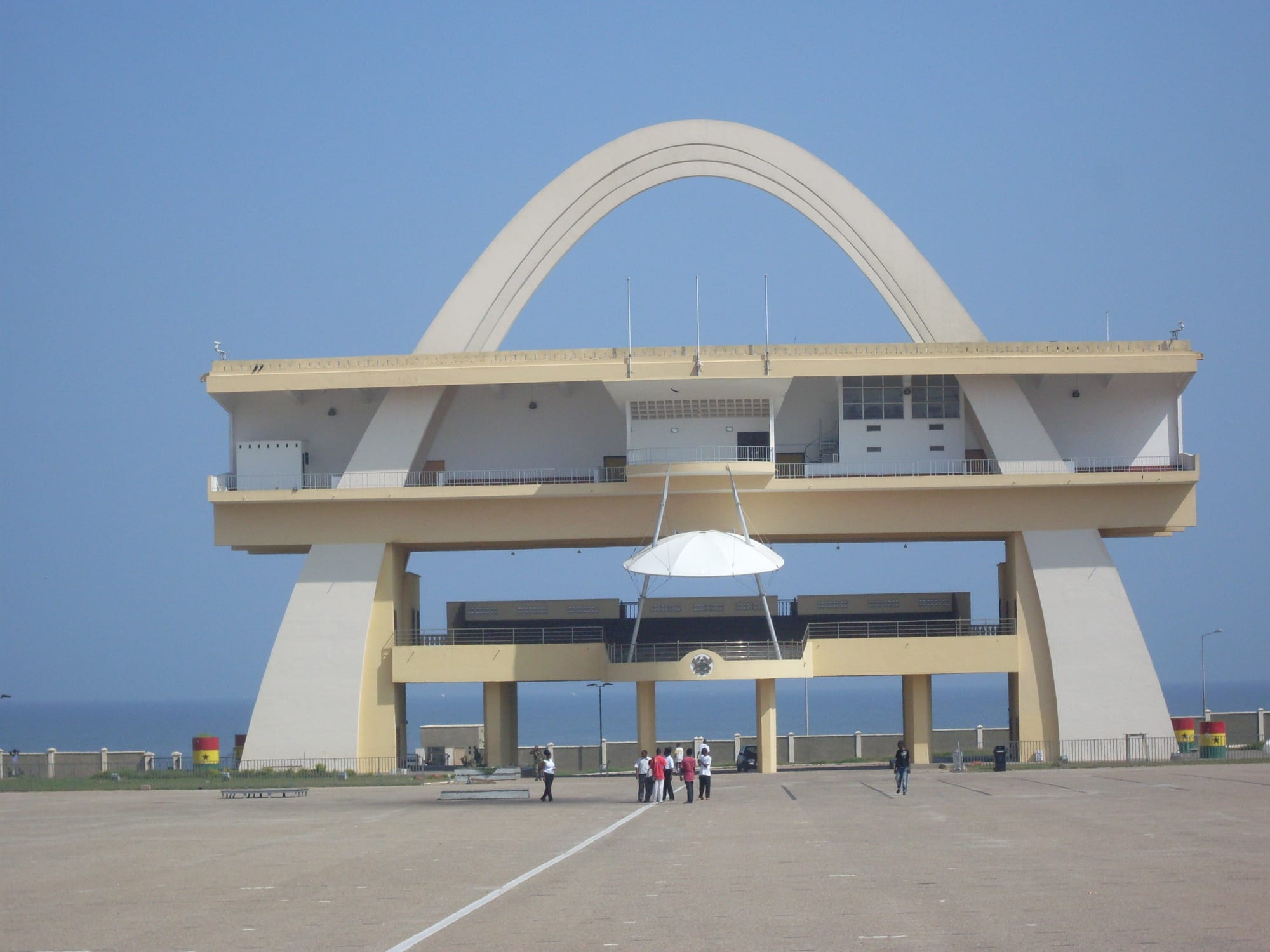
There followed two decades of instability — military governments, brief civilian republics, and two coups by Flight Lieutenant Jerry Rawlings, in 1979 and 1981. Rawlings ruled from 1981 to 2001, first as a populist radical and then as the manager of an IMF adjustment programme that stabilised the economy, and he oversaw the return to multiparty democracy under a 1992 constitution, winning two elections as a civilian president.
Democratic Ghana
Since 2000, Ghana has handed power peacefully between its two main parties four times, making it one of Africa's most reliable democracies. Offshore oil production began in 2010. The 2019 "Year of Return" drew large numbers of African-diaspora visitors and settlers, marking four centuries since the first enslaved Africans reached Virginia. The economy has had harder years too, including a debt crisis and IMF bailout in 2022, and persistent damage from illegal small-scale gold mining.
What Ghana carries
Ghana's coast recorded the full arc of Europe's engagement with West Africa, from the gold trade to the slave castles, in stone that still stands. Its interior produced in the Ashanti Empire one of Africa's most formidable states. And in 1957 it showed the rest of colonial Africa that independence was possible — then spent forty years learning how hard stable self-government is, before arriving somewhere steady.