Attractions & Natural Wonders · Ghana
Ghana: Ten Attractions and Natural Wonders
The slave-trade castles of the Gulf of Guinea, a rope walkway through the rainforest canopy, elephants in the northern savanna, and a village built on stilts over a lake
By Worldlore Editorial · 19 September 2026
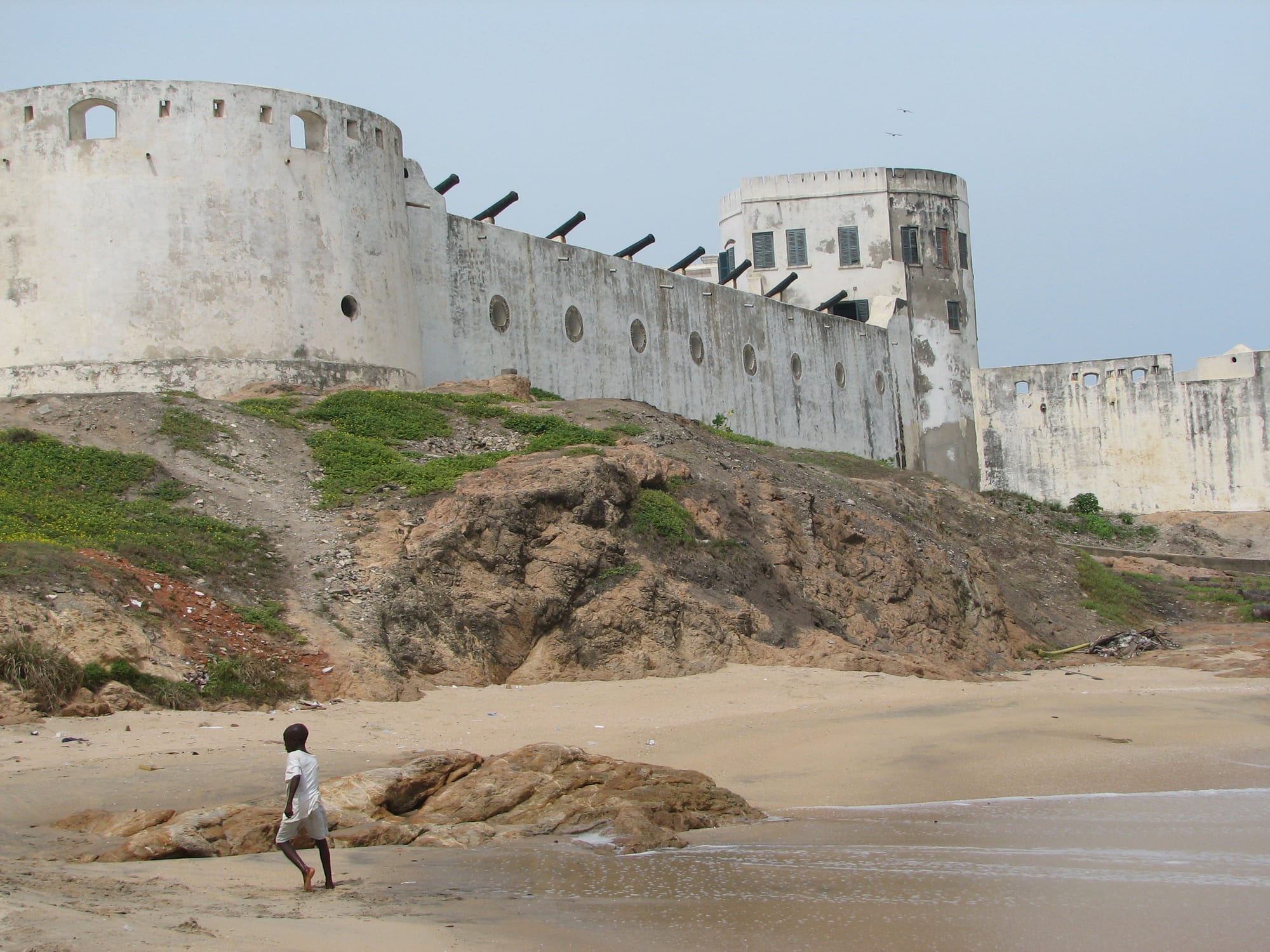
The Gold Coast
Ghana, on the Gulf of Guinea in West Africa, was the first sub-Saharan colony to win independence, in 1957, and takes its name from a medieval empire further north. It is one of the region's most stable and welcoming countries, English- speaking, with a coast of forts and fishing towns, a forested and cocoa-growing middle belt, and a drier savanna north. Its coastline holds the largest concentration of European colonial castles in Africa — the grim infrastructure of the transatlantic slave trade, and a place of pilgrimage for the African diaspora.
The ten below run from the coast up through Ashanti country to the northern savanna and the Volta Region. The main dry season (November to March) is the easiest time; the north is best from December to April, and the coast is warm year-round.
1. Cape Coast Castle
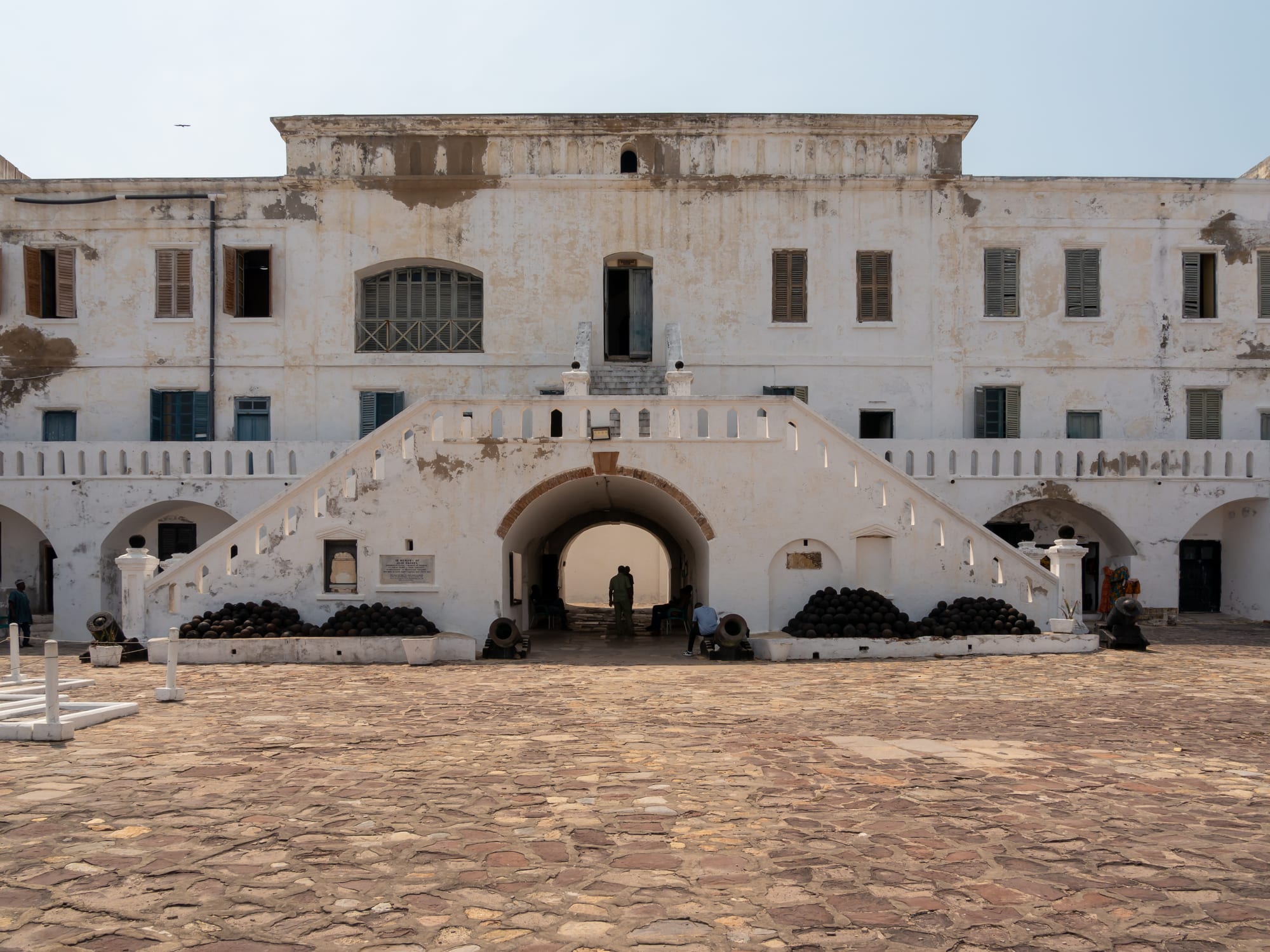
Cape Coast Castle, begun by the Swedes in 1653 and expanded by the British, was the largest of the "slave castles" and a headquarters of the trade. Guided tours lead through the dark holding dungeons, the "Door of No Return" opening onto the sea, and an affecting museum. Barack Obama, and many diaspora visitors during Ghana's 2019 "Year of Return", have made the same walk.
The town outside is a lively fishing port; the castle and its neighbours are a UNESCO World Heritage Site.
2. Elmina Castle
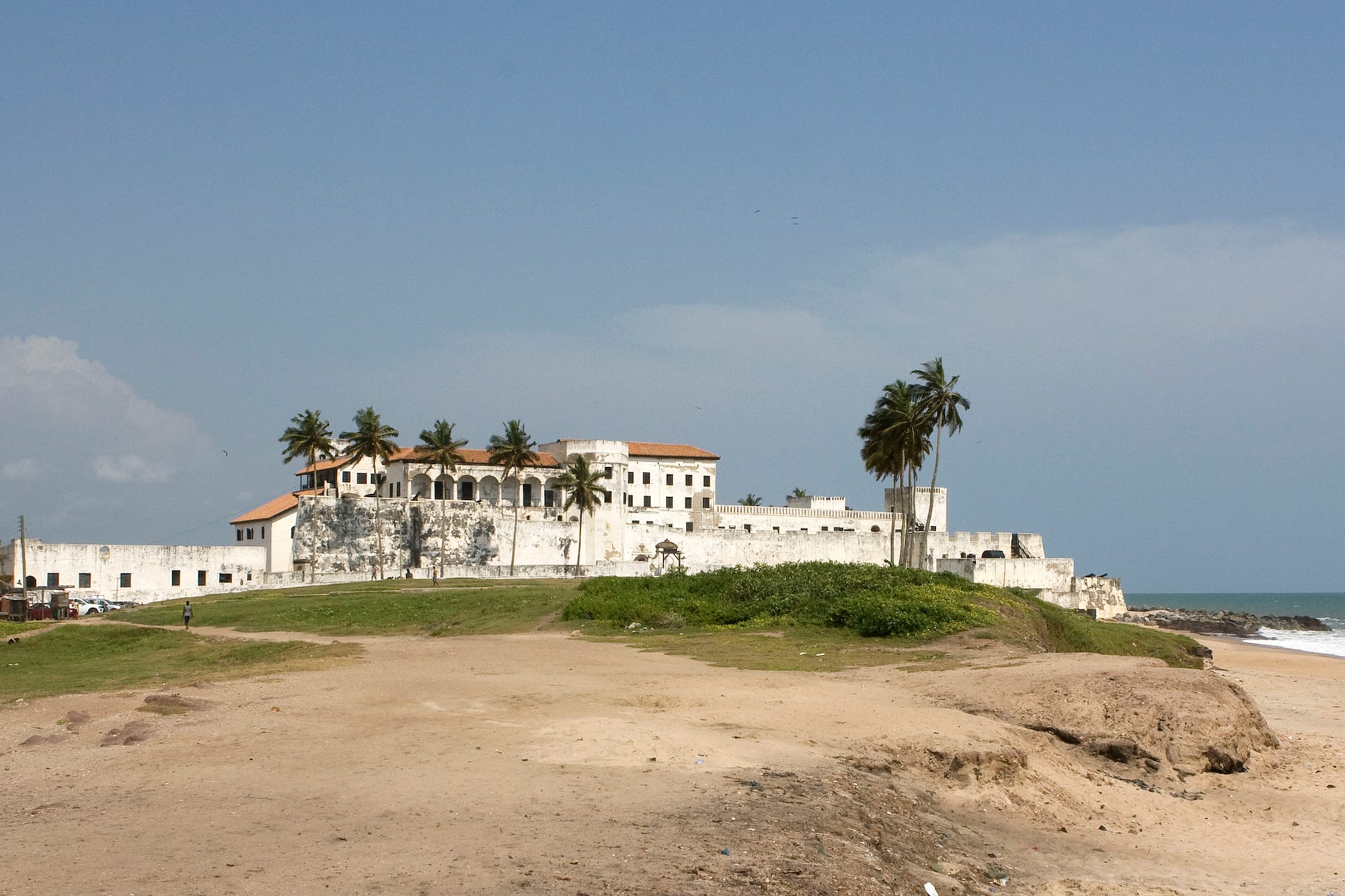
Just west of Cape Coast, Elmina (São Jorge da Mina) is the oldest of the forts, raised by Portugal in 1482 to trade gold and later people, then held by the Dutch and the British. Its whitewashed bulk sits above one of the busiest fishing harbours in Ghana, a chaos of colourful pirogues. Tours cover the dungeons, the church the Dutch built over the male slave yard, and the governor's quarters.
The two castles are usually visited together on a day from Cape Coast or Accra.
3. Kakum National Park
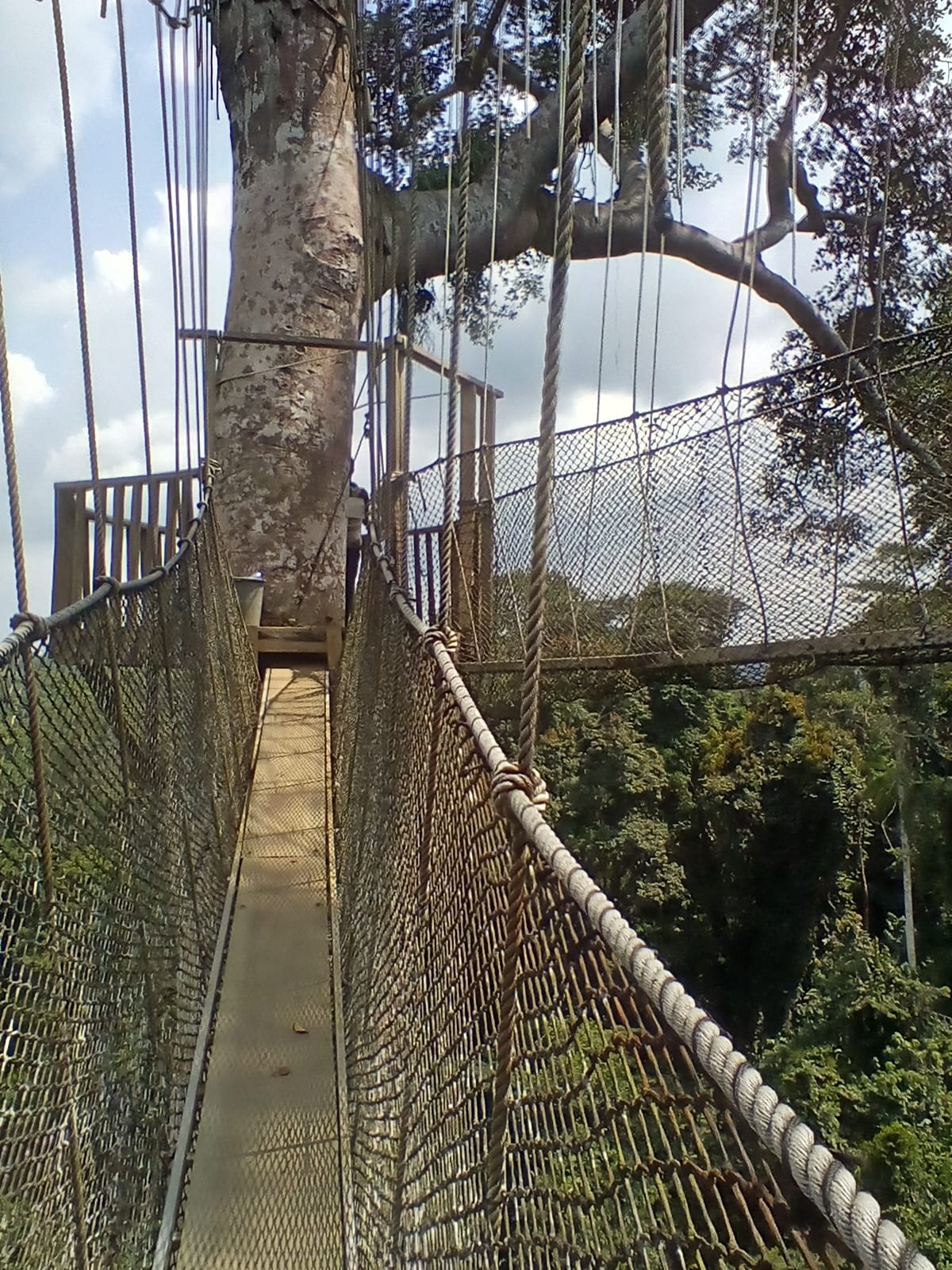
Kakum, about 30 kilometres inland from Cape Coast, protects a tract of tropical rainforest with forest elephants, bongo antelope, and hundreds of butterfly and bird species. Most visitors come for its canopy walkway — a chain of swaying rope bridges high in the treetops, one of only a handful in Africa. Early-morning guided walks give the best wildlife and birdlife.
It combines easily with the coast castles into a full day.
4. Accra
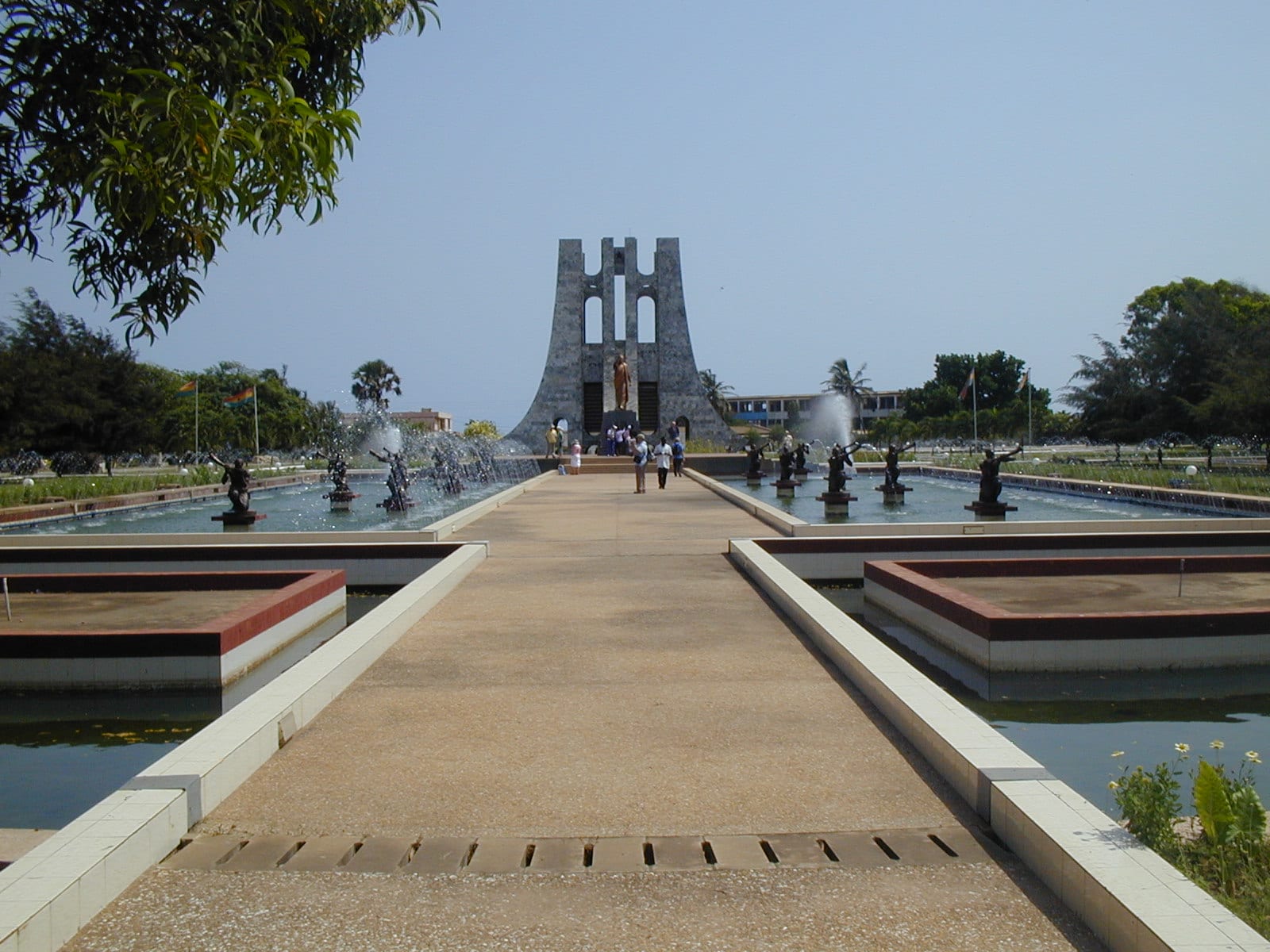
Ghana's capital is a sprawling, energetic city of markets, highlife and hiplife music, and street food. The set-pieces are the Kwame Nkrumah Memorial Park, on the spot where independence was declared; the huge Makola market; the Independence (Black Star) Square; the W. E. B. Du Bois Centre; and the fishing and stilt district of Jamestown with its colonial lighthouse and annual street festival.
The beaches immediately east, at Ada and around the Volta estuary, are the usual weekend escape.
5. Kumasi and the Ashanti kingdom
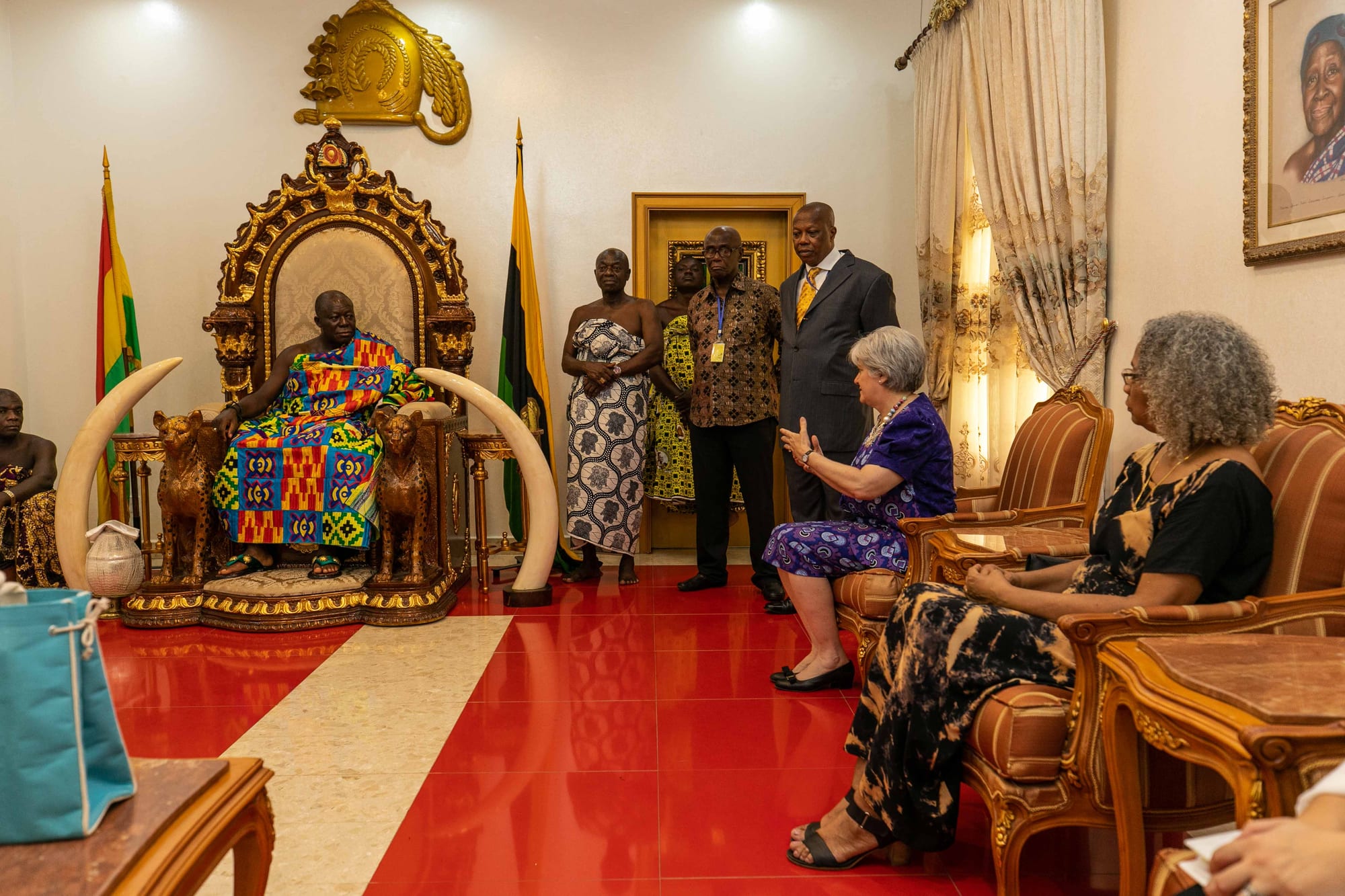
Kumasi, the second city, is the heart of the Ashanti (Asante) kingdom, still a living institution with its own king. The Manhyia Palace museum tells its history and its wars with Britain; the enormous Kejetia market is one of the largest in West Africa; and craft villages nearby specialise in kente weaving (Bonwire), adinkra cloth stamping, and brass casting. Ten surviving Asante shrine buildings in the region form a UNESCO World Heritage Site.
Kumasi is a long day's drive or a short flight from Accra.
6. Mole National Park
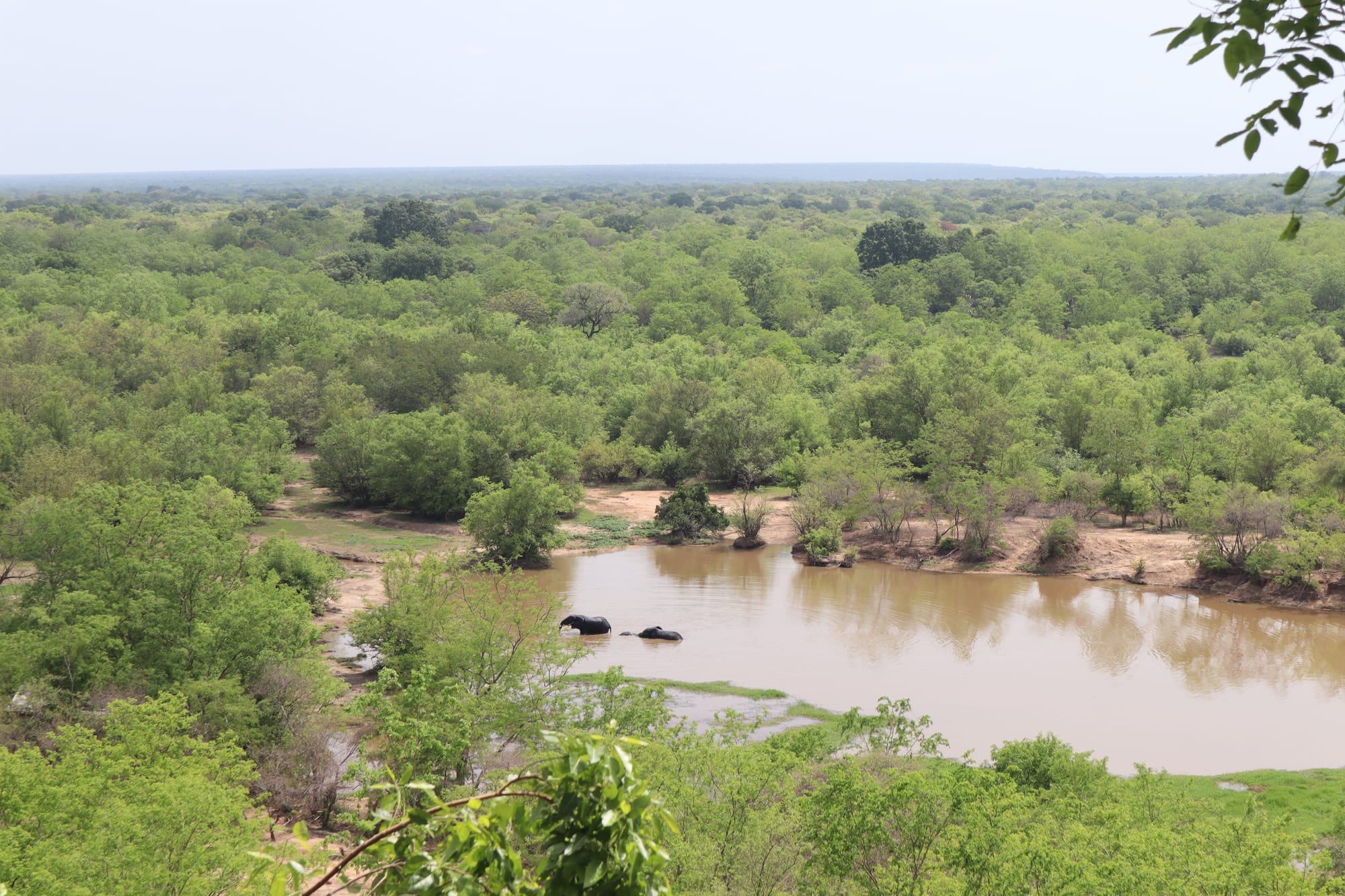
Mole, in the northwest, is the country's flagship savanna park — around 4,800 square kilometres of grassland and woodland with elephants (often seen close, even around the park lodge), antelope, warthogs, baboons, and over 300 bird species. Walking safaris with an armed ranger, as well as vehicle drives, set it apart from many African parks.
The motel and campsite sit on an escarpment above two waterholes, so wildlife comes to you.
7. The Larabanga mosque
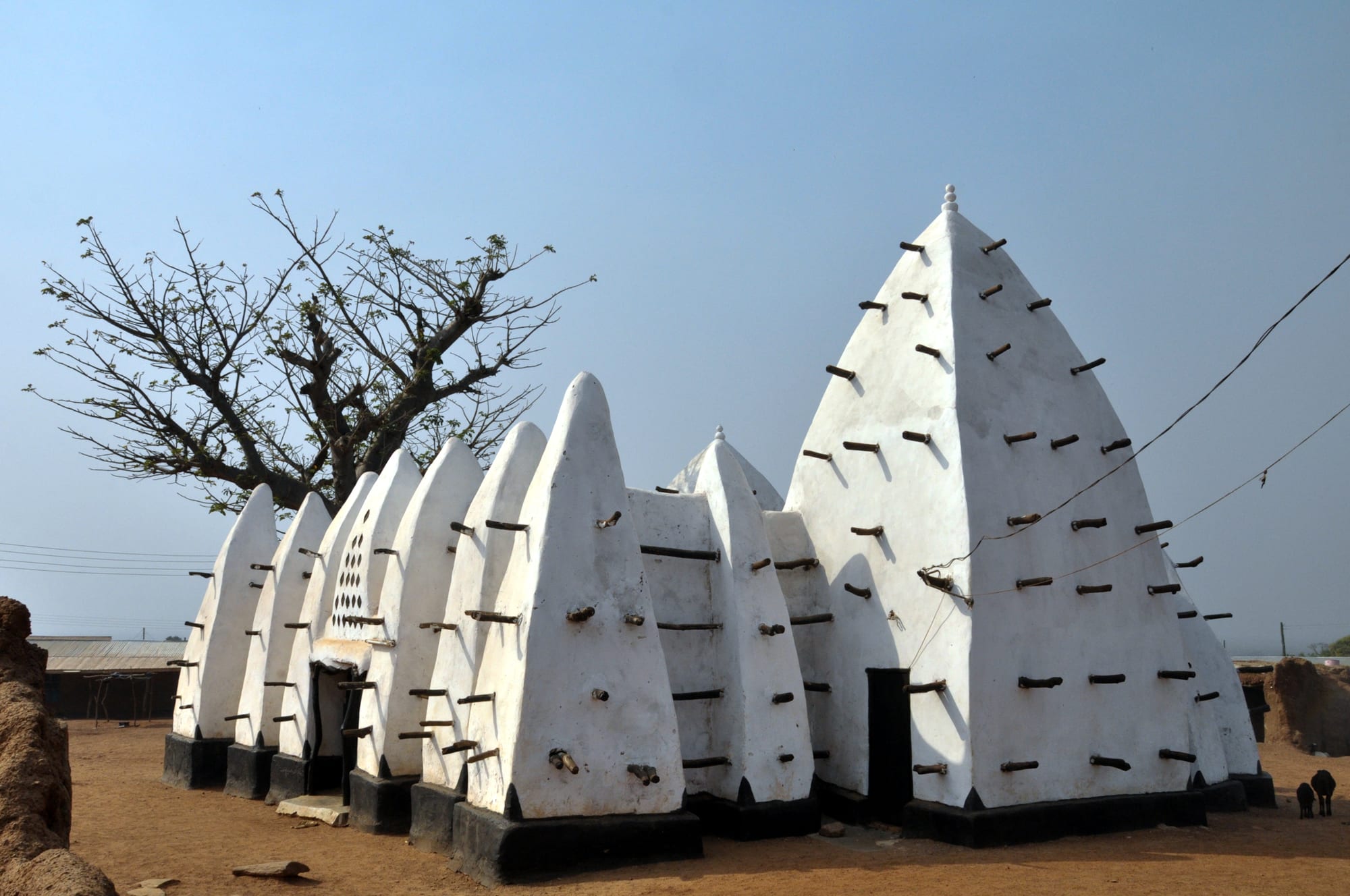
A few kilometres from the Mole park gate, the village of Larabanga has the best-known of Ghana's ancient Sudanese-style mud mosques — a small, brilliant- white structure of earth packed around a timber frame, its origins traditionally dated to the 15th century. It is one of a cluster of similar mosques in the north (Nakore, Bole, Maluwe, Wuriyanga) built on West African trans-Saharan trade routes.
Visitors view it from outside; a small fee supports upkeep.
8. Wli Falls and the Volta Region
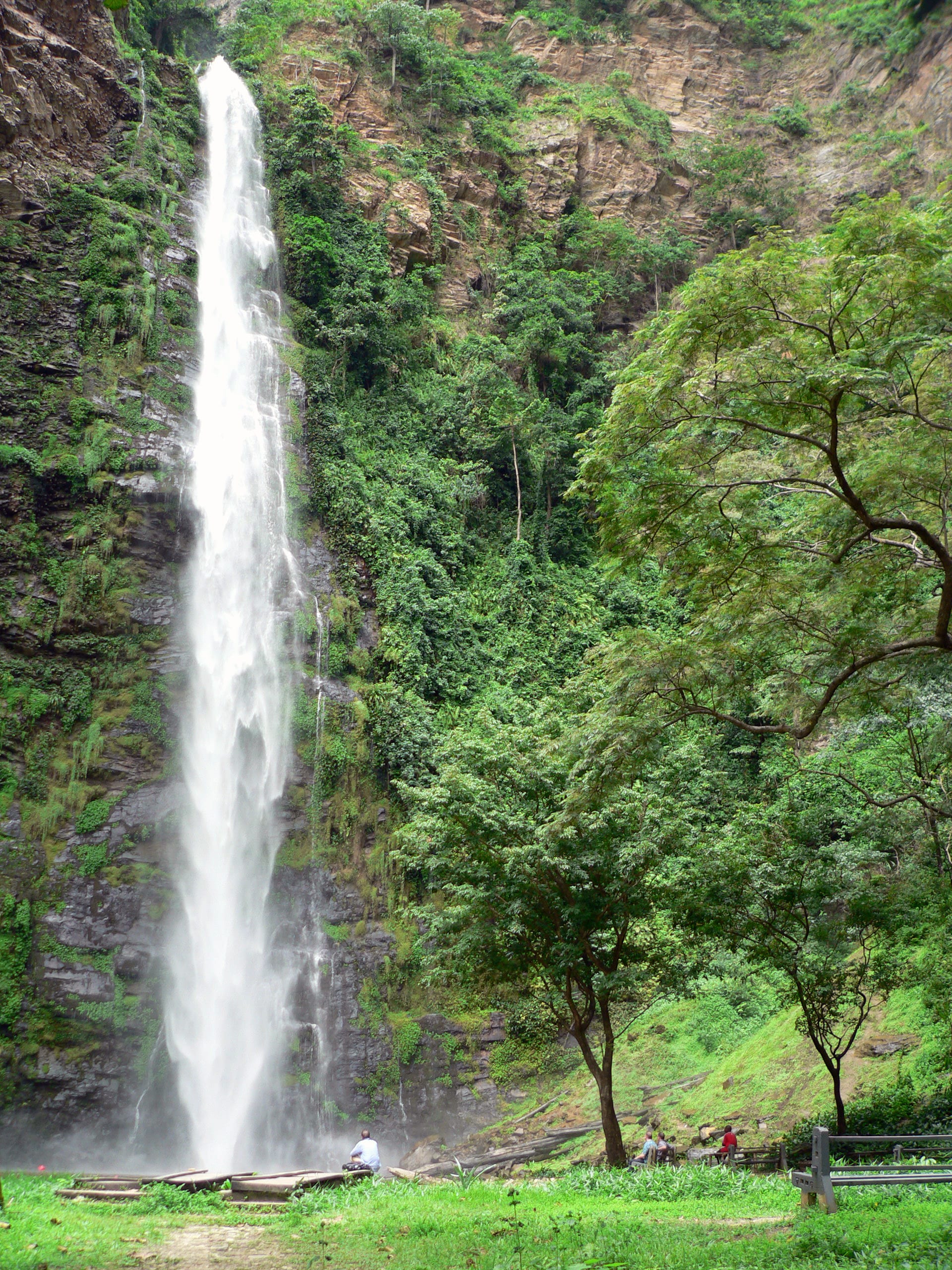
The hilly Volta Region, along the Togo border east of Lake Volta, is Ghana's greenest and best hiking country. Wli (Agumatsa) Falls, reached by an easy forest walk past colonies of fruit bats, drops in two tiers and is the highest in the country; nearby, Mount Afadja (Afadjato) is Ghana's highest peak, and the Tafi Atome monkey sanctuary protects a troop of sacred mona monkeys.
Ho, the regional capital, and the lakeside town of Amedzofe make good bases.
9. Nzulezo stilt village
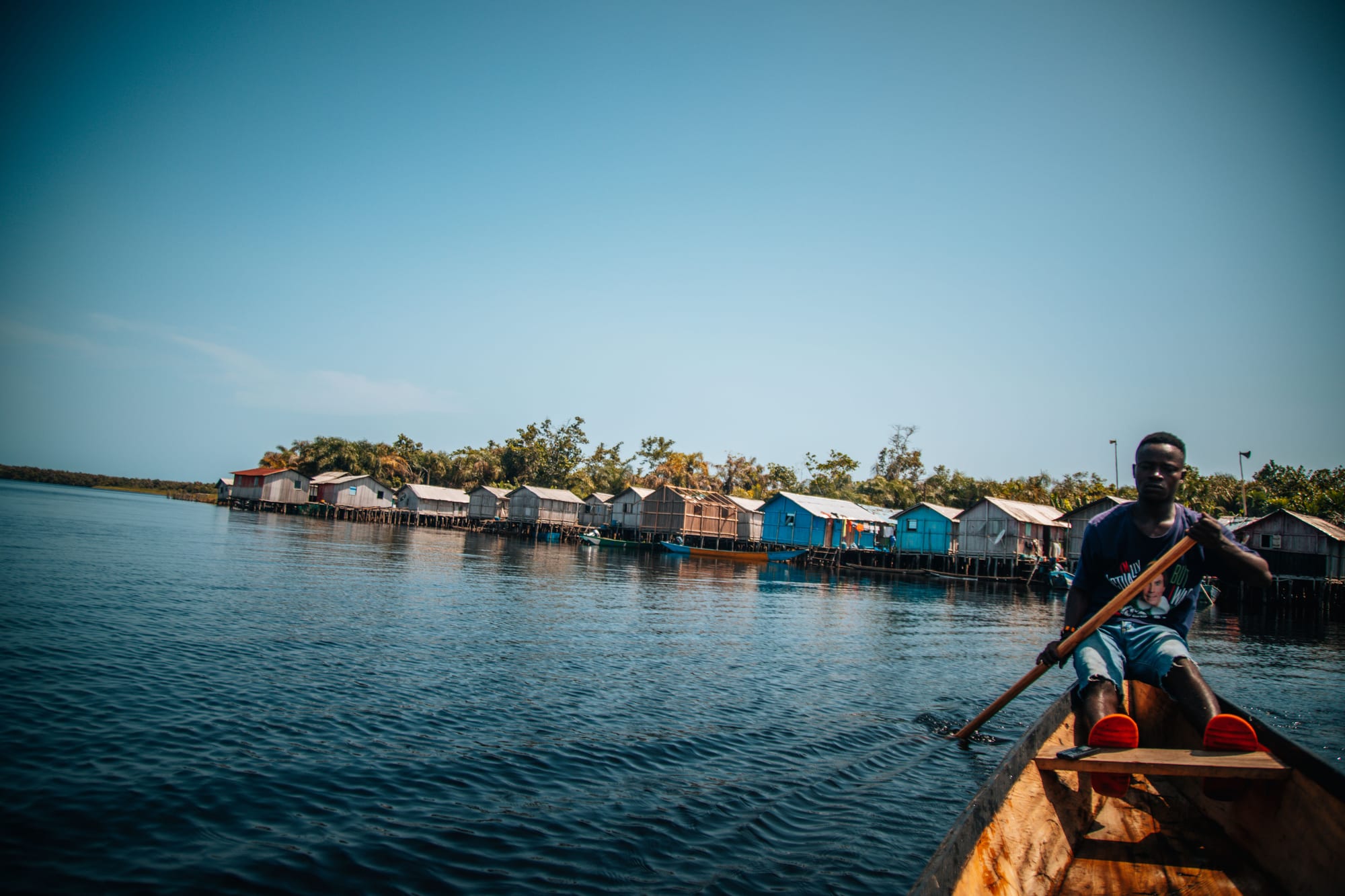
In the Western Region near the Ivorian border, Nzulezo ("surface of water") is a village of raised wooden houses, a church, a school, and a bar, all built on stilts and connected by plank walkways over a lake. Its people trace their move here to a migration guided, they say, by a snail. Visitors reach it by an hour- long dugout-canoe paddle through the Amansuri wetland, itself rich in birds and crocodiles.
It is usually visited from Beyin, near the beach resorts of Axim and Busua.
10. Lake Volta
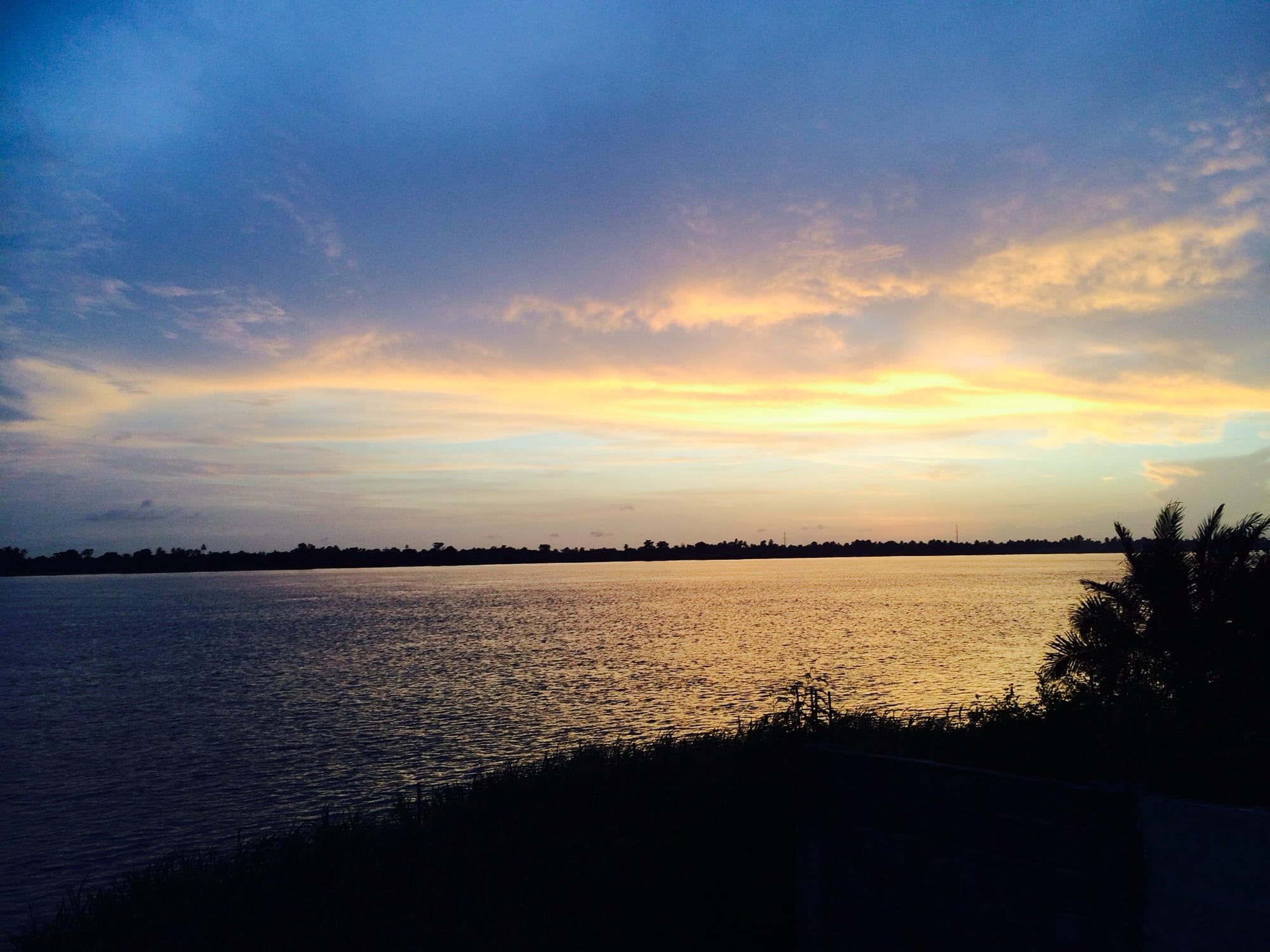
The damming of the Volta at Akosombo in 1965 created a lake that stretches some 400 kilometres up the middle of the country — by area, among the largest artificial lakes on earth. It powers much of Ghana and neighbouring countries. Day cruises from Akosombo run out to Dodi Island; the long-distance Yapei Queen ferry links the south with Yeji in the north; and the surrounding hills at Akosombo and the Boti Falls area are a popular weekend break from Accra.
The dam and the botanical gardens at Aburi, on the drive up from Accra, are common add-ons.
Ghana is friendly, English-speaking, and reasonably easy to travel, though roads can be slow. A week covers Accra, the coast castles, Kakum, and Kumasi; adding the north (Mole, Larabanga) or the Volta Region needs 10 days or more.