History · Georgia
Georgia: The Crossroads of the Caucasus
An ancient Christian kingdom with its own alphabet — a medieval golden age, centuries caught between Persia and the Ottomans, two centuries under Russia, and a fierce modern argument about which way to face
By Worldlore Editorial · 10 September 2026
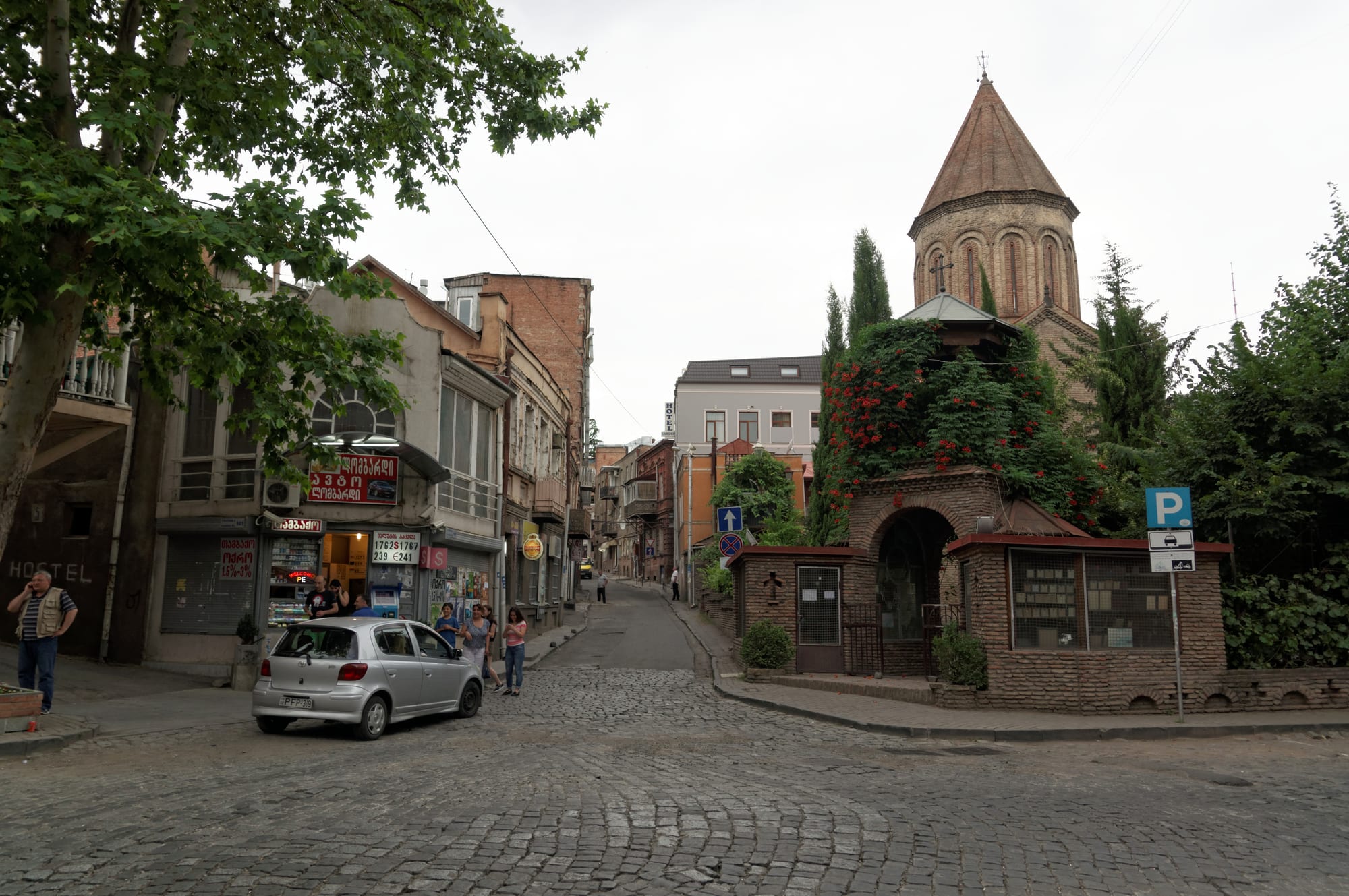
A small nation with a long memory
Georgia occupies the southern slopes of the Greater Caucasus, between the Black Sea and the mountains, on the land bridge between Europe and Asia. The Georgians are a Kartvelian people, speaking a language unrelated to any other family and written in its own alphabet, and they have been Orthodox Christian since the 4th century — one of the oldest Christian nations in the world. Their history has a familiar Caucasus rhythm: brilliant when the surrounding empires were weak, occupied when they were strong.
A short history
- 1st millennium BCE
Colchis and Iberia
Two Georgian kingdoms take shape west and east.
- c. 327 CE
Christianity
King Mirian III converts through St Nino.
- c. 1008
Unification
Bagrat III becomes first king of a united Georgia.
- 1089–1213
The golden age
David the Builder and Queen Tamar make Georgia the Caucasus power.
- 1220s–1403
Invasions
The Mongols, then Timur, shatter the kingdom.
- 1783
Treaty of Georgievsk
Kartli-Kakheti accepts a Russian protectorate.
- 1801
Annexation
Russia abolishes the kingdom.
- 1918–1921
First republic
A short-lived independent Georgia, then Soviet invasion.
- 1991
Independence
Georgia leaves the collapsing USSR.
- 2003
Rose Revolution
Mass protests bring a pro-Western government.
Colchis, Iberia, and the faith
In antiquity, western Georgia was the Kingdom of Colchis — the land of the Golden Fleece in Greek myth — and the east was Iberia, or Kartli. Georgia also has some of the oldest evidence of winemaking anywhere, from around 6000 BCE. Around 327 CE the Iberian king Mirian III adopted Christianity, following the preaching of St Nino, making Georgia one of the first states to do so. A Georgian Bible and the Georgian alphabet followed within two centuries.
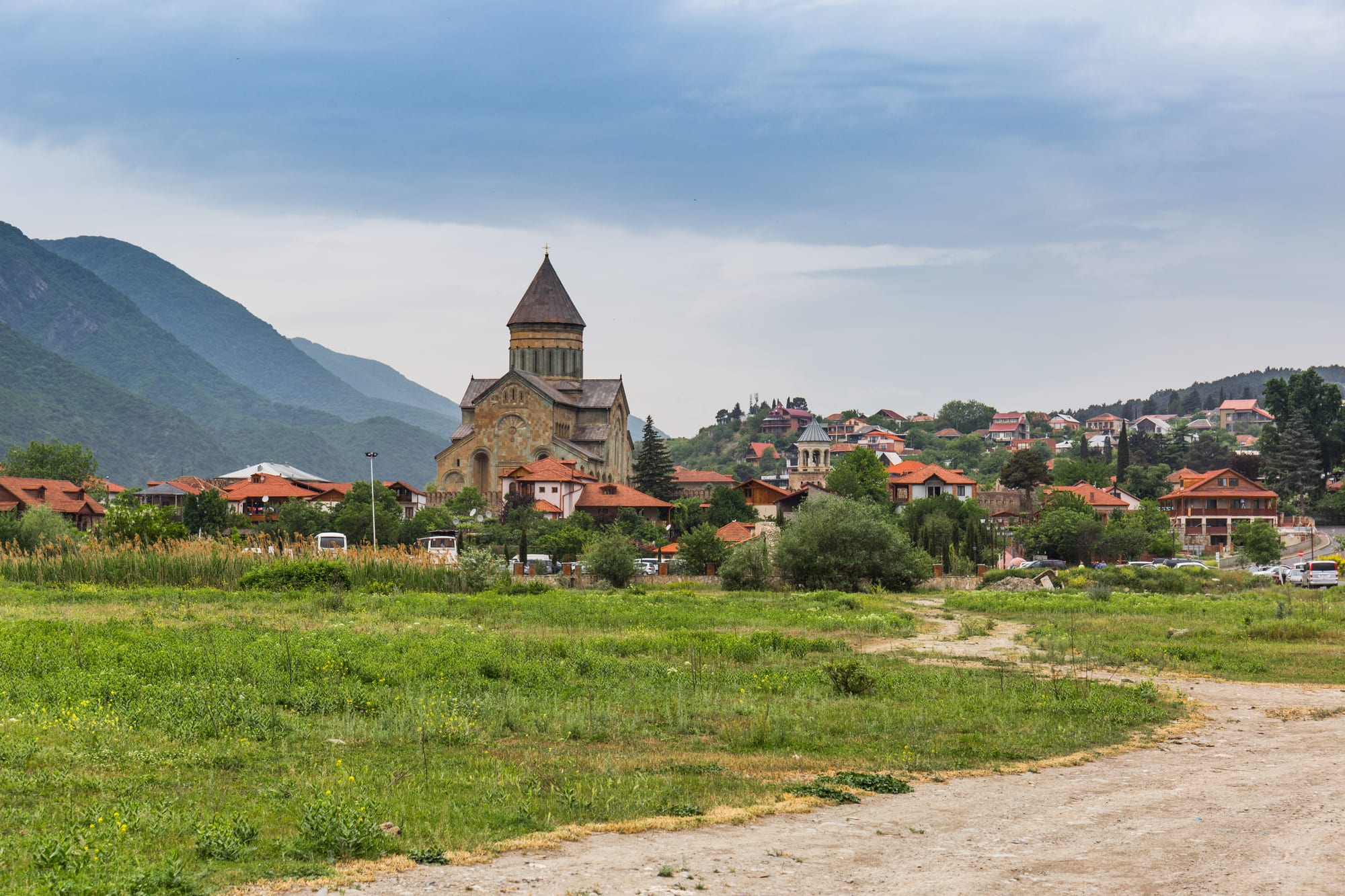
For centuries Georgia was fought over by Rome and Byzantium against Sasanian Persia, and then conquered by the Arabs, who held Tbilisi as an emirate. Georgian kingship survived in the mountains.
The golden age
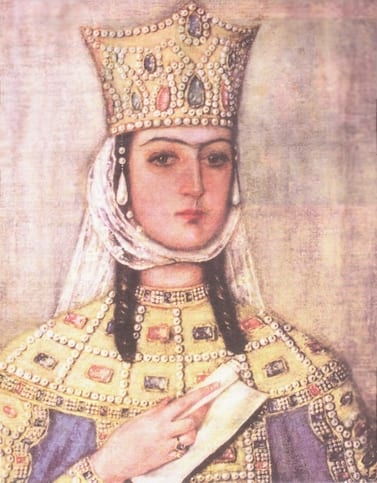
The Bagrationi dynasty united Georgia around 1008. Under David IV, "the Builder", Georgian armies broke the Seljuk Turks at Didgori in 1121 and retook Tbilisi; under his great-granddaughter Queen Tamar, Georgia was the dominant Christian power of the Caucasus, its writ running from the Black Sea to the Caspian.
David and Tamar
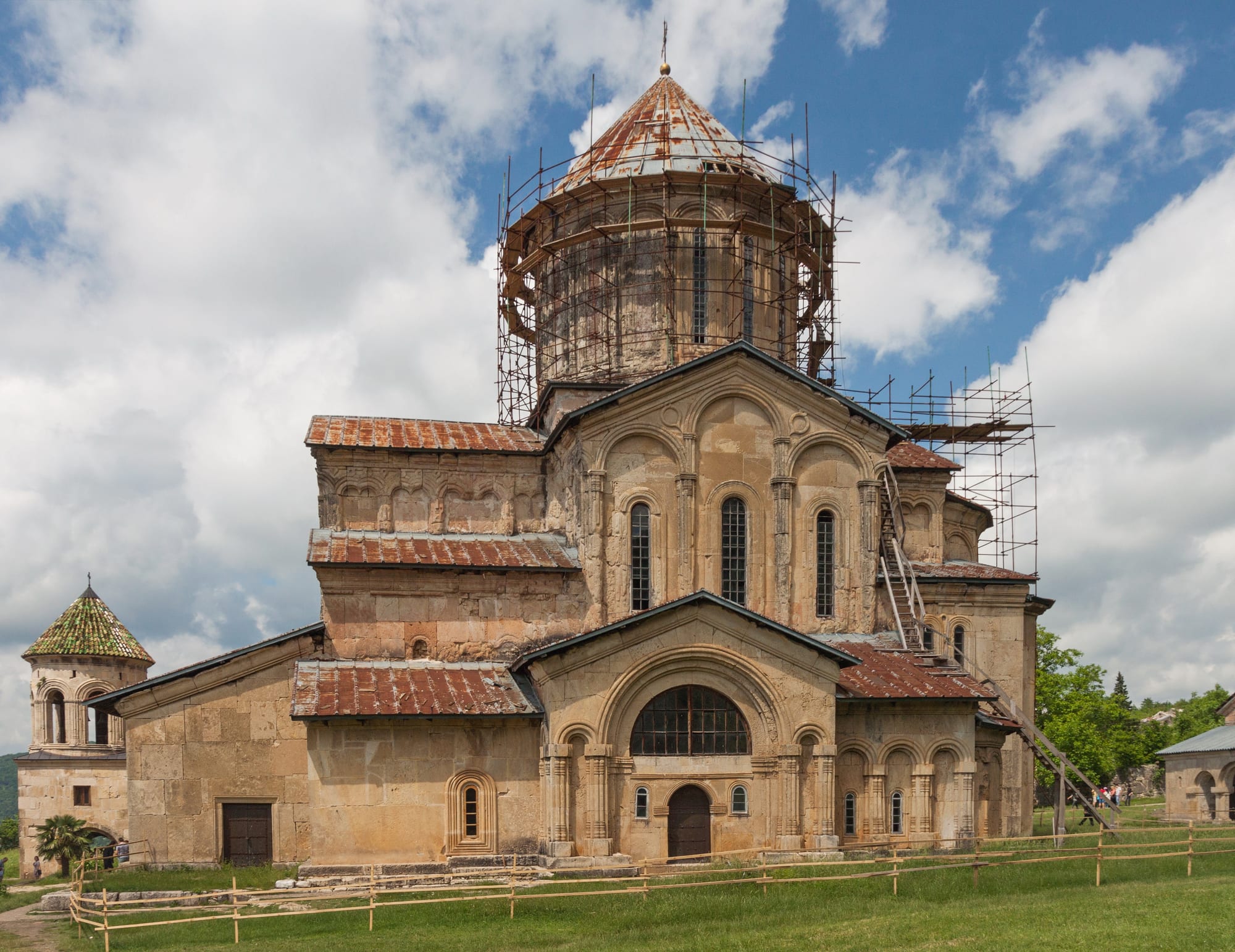
The Mongol invasions from the 1220s ended it. A brief 14th-century recovery was wiped out by Timur's eight campaigns between 1386 and 1403, and Georgia broke into rival kingdoms — Kartli, Kakheti, Imereti — and principalities.
Between Persia and the Ottomans, then Russia
For the next three centuries Georgia was divided between an Ottoman sphere in the west and a Persian one in the east. Shah Abbas I devastated Kakheti in the 1610s and 1620s, killing or deporting much of its population. Seeking a Christian protector, King Erekle II of Kartli-Kakheti signed the Treaty of Georgievsk with Russia in 1783 — but when the Persians sacked Tbilisi in 1795, Russia did not come. Then, in 1801, Russia simply abolished the kingdom and annexed it, absorbing the western Georgian states over the following decades.
Georgia spent 117 years in the Russian Empire. Tbilisi became the administrative capital of the Caucasus, connected by railway to the Baku oilfields and the Black Sea. It also became a centre of revolutionary socialism — the young Stalin, born in Gori in 1878, was a Georgian.
The Soviet century
An independent Democratic Republic of Georgia, led by social-democratic Mensheviks, lasted from 1918 until February 1921, when the Red Army invaded and annexed it; an uprising in 1924 was crushed. Soviet Georgia became a full union republic in 1936, dominated by two Georgians — Stalin and his secret-police chief Beria — and hit hard by the purges of 1937–38.
Late Soviet Georgia had a reputation for private enterprise operating around the plan, and a strong nationalist current. When Soviet troops killed twenty pro-independence demonstrators in Tbilisi in April 1989, the outcome was no longer in doubt.
Independence, and the argument over direction
Georgia declared independence on 9 April 1991. The first years were catastrophic: the first president was overthrown in a civil war, Eduard Shevardnadze returned to govern a collapsing economy, and Russian-backed separatist wars stripped Abkhazia and South Ossetia from Georgian control, displacing hundreds of thousands.
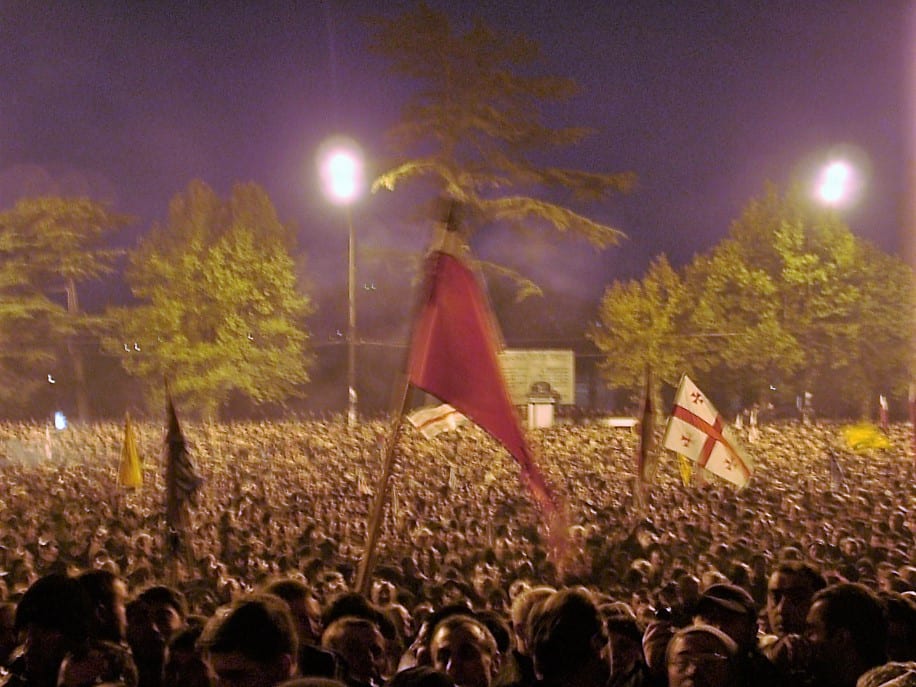
Saakashvili's government slashed petty corruption and rebuilt the state, but concentrated power. In August 2008 a war over South Ossetia drew in a full Russian invasion; Russia then recognised both breakaway regions as independent and has occupied roughly a fifth of Georgia's territory since. From 2012, power passed by election to the Georgian Dream party, which won EU candidate status for Georgia in 2023 while steering the country toward Moscow at home — a "foreign agents" law and a disputed 2024 election set off sustained mass protests by a public that polls strongly pro-European.
What Georgia carries
Georgia's history is a long demonstration of a single problem: a small, distinct Christian nation on a strategic isthmus, surrounded by larger powers that have all, at times, ruled it. The golden age is the reference point; the two centuries under Russia and the seventy years under the USSR are the wound. The current fight — over whether Georgia's future lies with Europe or under Russian influence — is the same question in modern dress.