Food · Georgia
Georgia: Food and the National Dish
A boat-shaped cheese bread cracked open with a raw egg, dumplings eaten by hand and never with a fork, and a wine tradition that predates almost every other in the world
By Worldlore Editorial · 16 September 2026
A crossroads cuisine at the edge of Europe and Asia
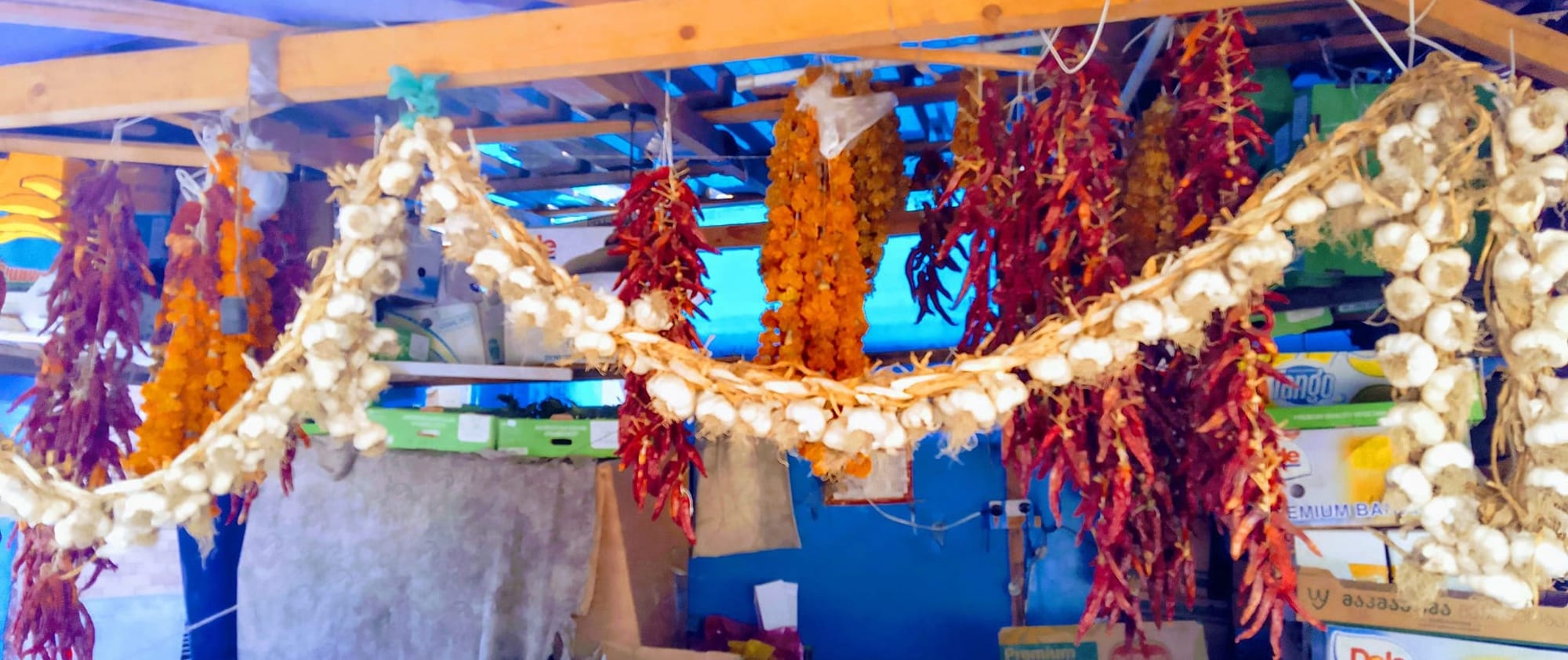
Georgian food sits at a genuine crossroads, shaped by the country's position between Europe, the Middle East and Central Asia along the ancient Silk Road, and built on walnuts, herbs, cheese and one of the oldest wine-making traditions in the world. It is a cuisine of big, communal meals — the supra, a traditional feast with a designated toastmaster, remains central to Georgian hospitality and social life.
The national dish: khachapuri
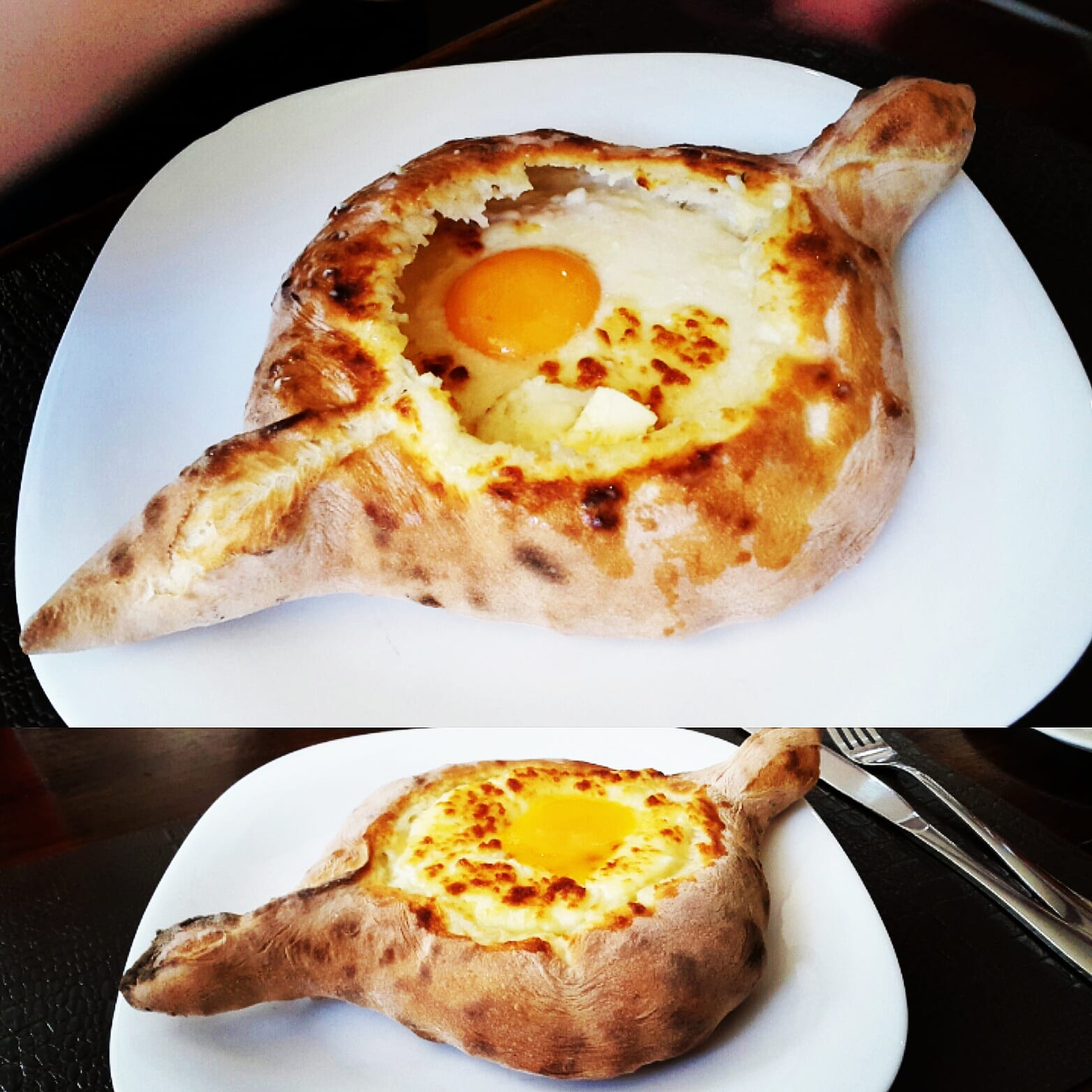
Khachapuri, a bread filled with cheese and baked until golden, is Georgia's national dish, though its most famous form is the Adjarian version, an open, boat-shaped loaf filled with melted cheese and topped with a raw egg and a pat of butter, stirred together tableside before eating. Regional variations exist across the country, but Adjarian khachapuri, from the coastal Adjara region around Batumi, has become the version most associated with Georgian food internationally.
Khinkali, cheese and the pantry behind the table
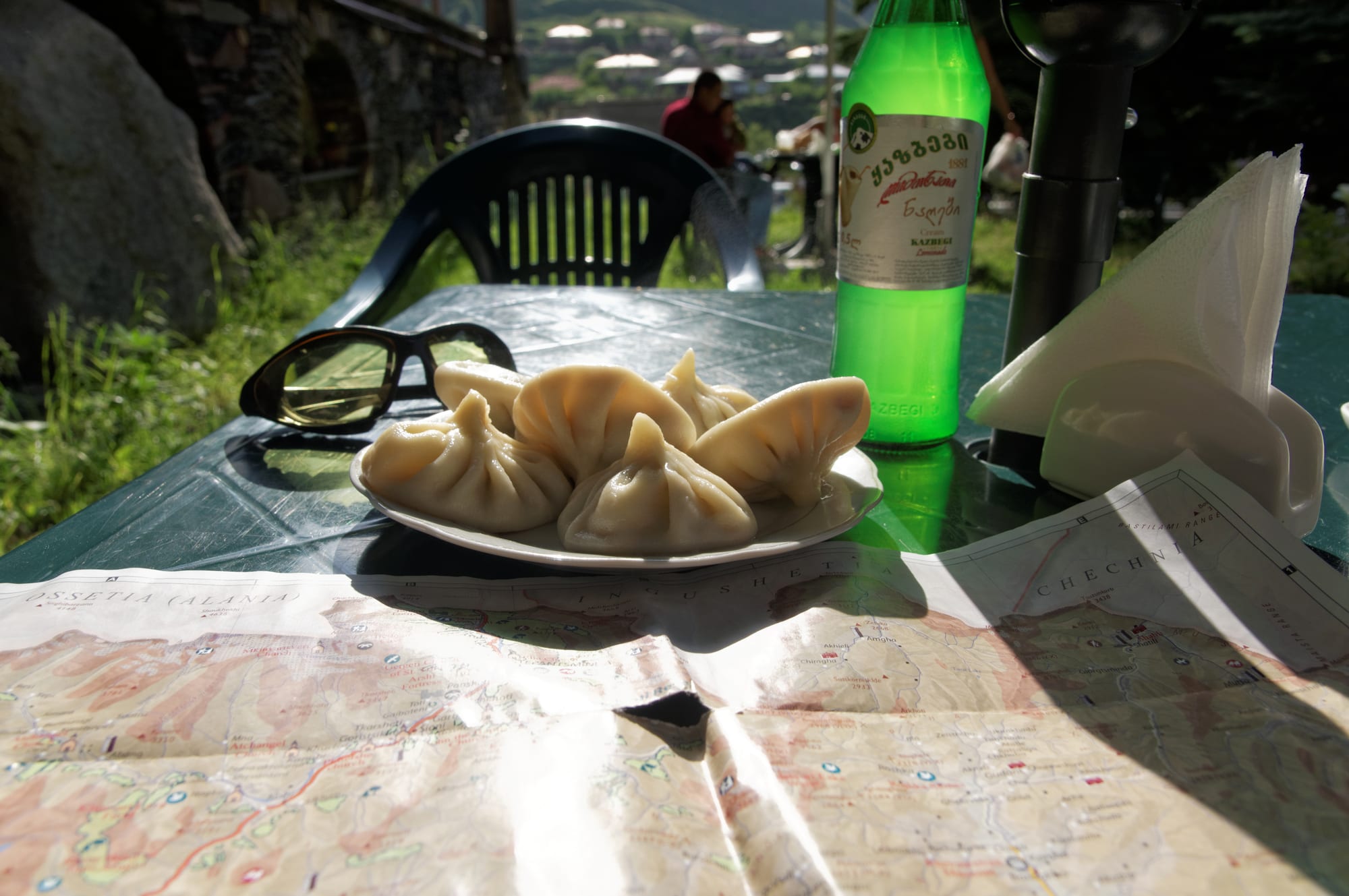
Khinkali, twisted dumplings filled with spiced meat or cheese and eaten by hand rather than with a fork or knife, are Georgia's other great national dish and, alongside khachapuri, the two most internationally recognised. Walnuts, ground and worked into sauces such as satsivi and bazhe, along with a wide range of fresh herbs and a distinctive spice blend called khmeli-suneli, define much of the rest of Georgian cooking's flavour.
An 8,000-year-old wine tradition
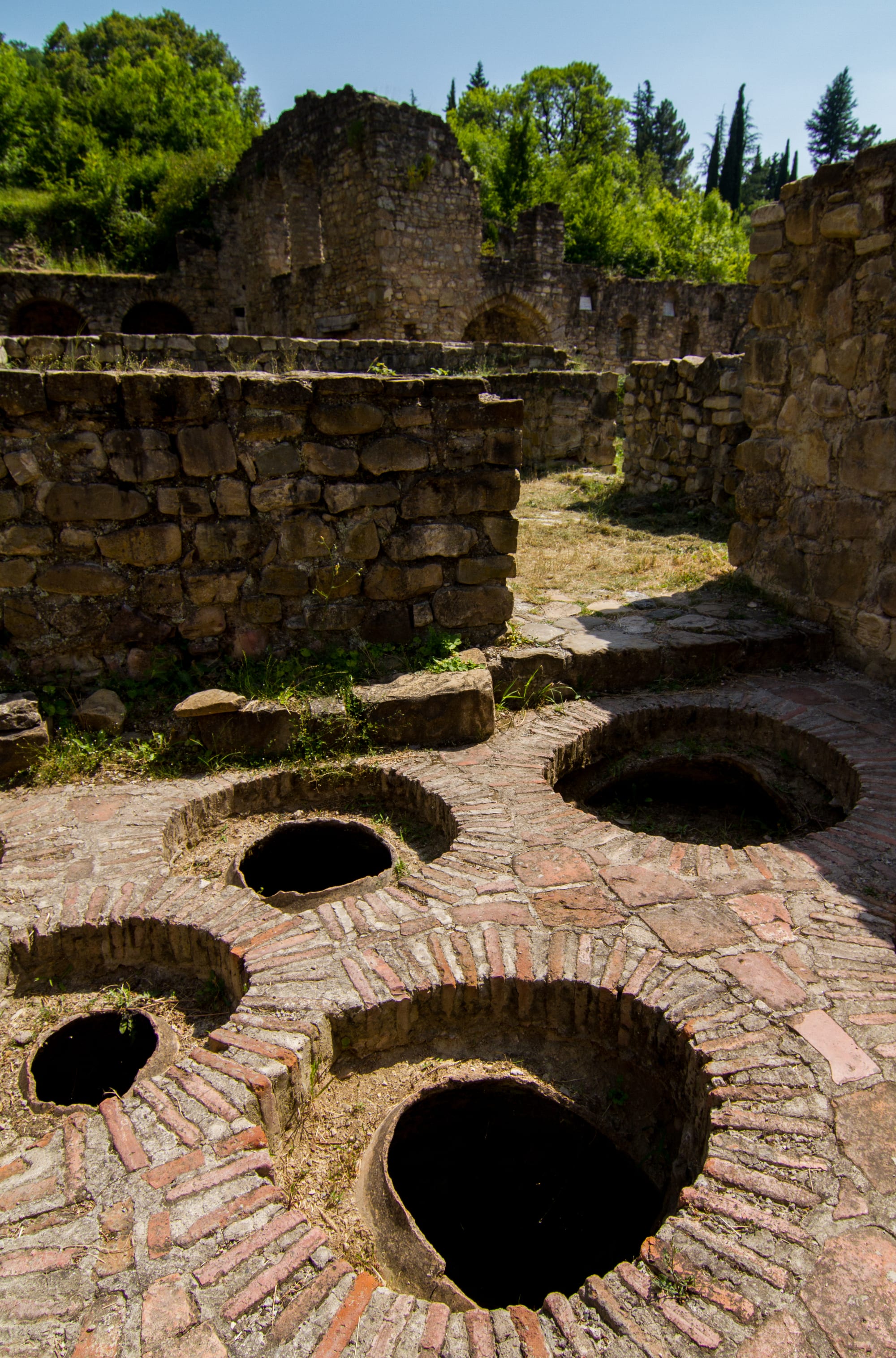
Georgia is widely credited as one of the earliest sites of wine-making in the world, with archaeological evidence of wine production dating back roughly 8,000 years. The traditional method, fermenting and ageing wine in large earthenware vessels called qvevri buried underground, was recognised by UNESCO as intangible cultural heritage in 2013 and is still practised today alongside more modern winemaking.
Regions of the table
Adjara, on the Black Sea coast around Batumi, gave the country its best-known khachapuri; Mingrelia, in the west, is known for spicier food and its own distinct khachapuri variant topped with extra cheese; and the mountainous regions of Khevsureti and Kazbegi lean on heartier, meat- forward dishes suited to a harsher climate.
Dishes to know
Five more to recognise across Georgia:
- Mtsvadi — skewered, grilled meat, Georgia's answer to the shashlik
tradition found across the wider Caucasus and Central Asia.
- Satsivi — chicken or turkey in a cold walnut sauce, a classic
celebration dish.
- Lobio — a spiced kidney bean stew, often served in a clay pot with
cornbread.
- Churchkhela — walnuts threaded on a string and dipped repeatedly in
thickened grape juice, sometimes described as Georgia's original candy bar.
- Badrijani nigvzit — fried aubergine rolled around a walnut paste
filling.
Eating as a traveller
Vegetarians will find khachapuri, lobio, badrijani nigvzit and a wide range of vegetable dishes genuinely easy to build a meal around. Tap water is generally safe in Tbilisi and most cities. If invited to a supra, expect a long, toast-driven meal led by a tamada, or toastmaster — declining the food or the wine outright can come across as rejecting the hospitality itself, so pace yourself rather than skip courses.
What to take from the table
Khachapuri, cracked open with a raw egg at the table, is the dish that best welcomes a first-time visitor to Georgian food — but a proper supra, with its toasts and unhurried pace, is what actually shows how central food and wine are to Georgian life.