Culture & Customs · Georgia
Georgia: A Guest Is a Gift from God
An ancient Orthodox faith, a greeting that means "victory", a feast run by a toastmaster, and songs sung in three interlocking voices — the culture of a small nation that treats every visitor as a blessing
By Worldlore Editorial · 30 September 2026
A long table is laid for a family celebration, crowded with plates from end to end. Before anyone drinks, one man rises with his glass. He is the tamada, the toastmaster, chosen because he is respected, quick with words and able to hold his wine. His early toasts may be to God and to peace, and as the evening unfolds he will raise the table's thoughts to the homeland, to the parents, to the children and to those who are no longer alive. Between toasts someone begins a song and the others join in, each voice taking its own line. A visitor at the table may be toasted too, for Georgians have a saying that sums up much of what follows: a guest is a gift from God.
Faith, identity and values
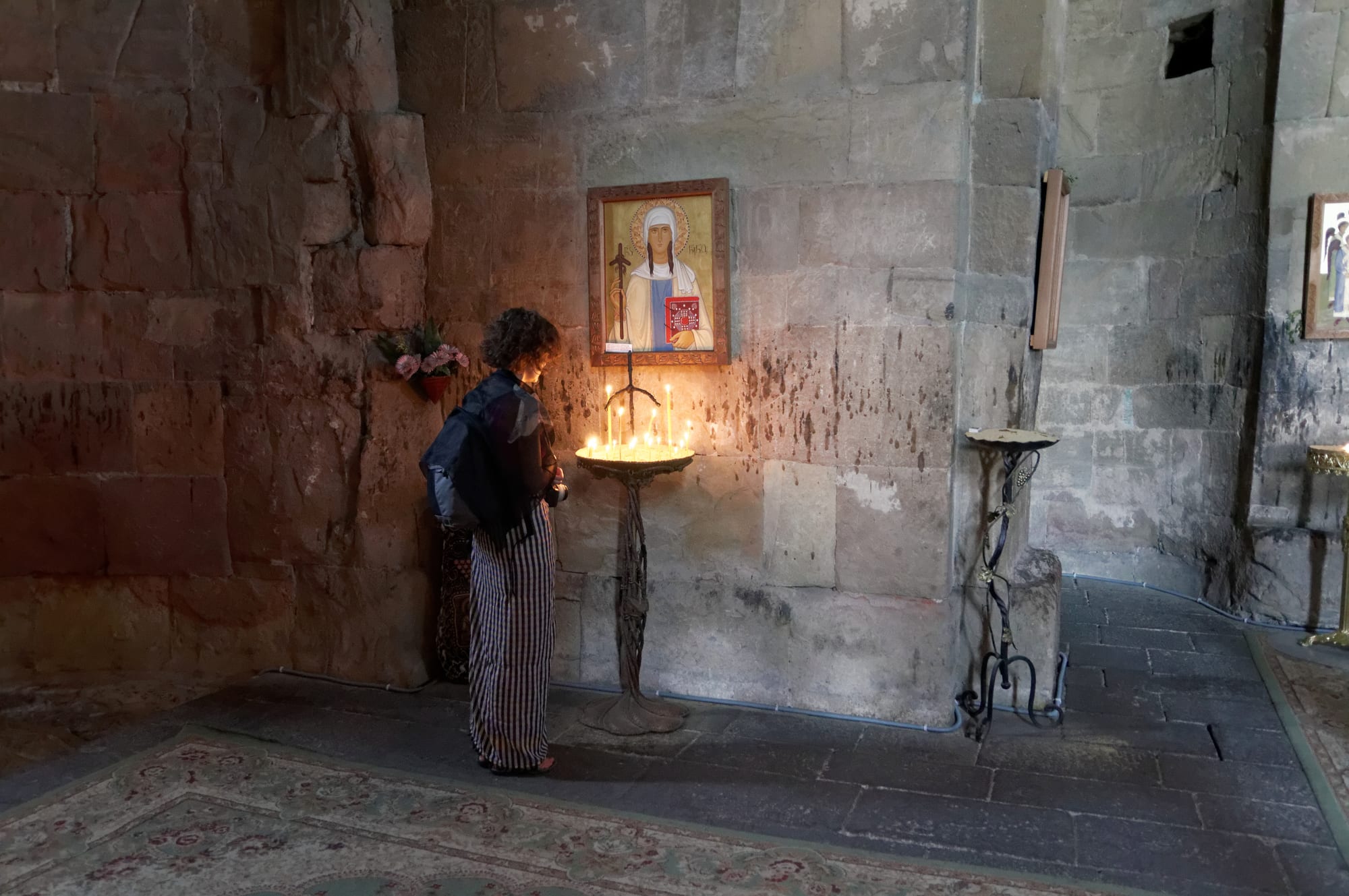
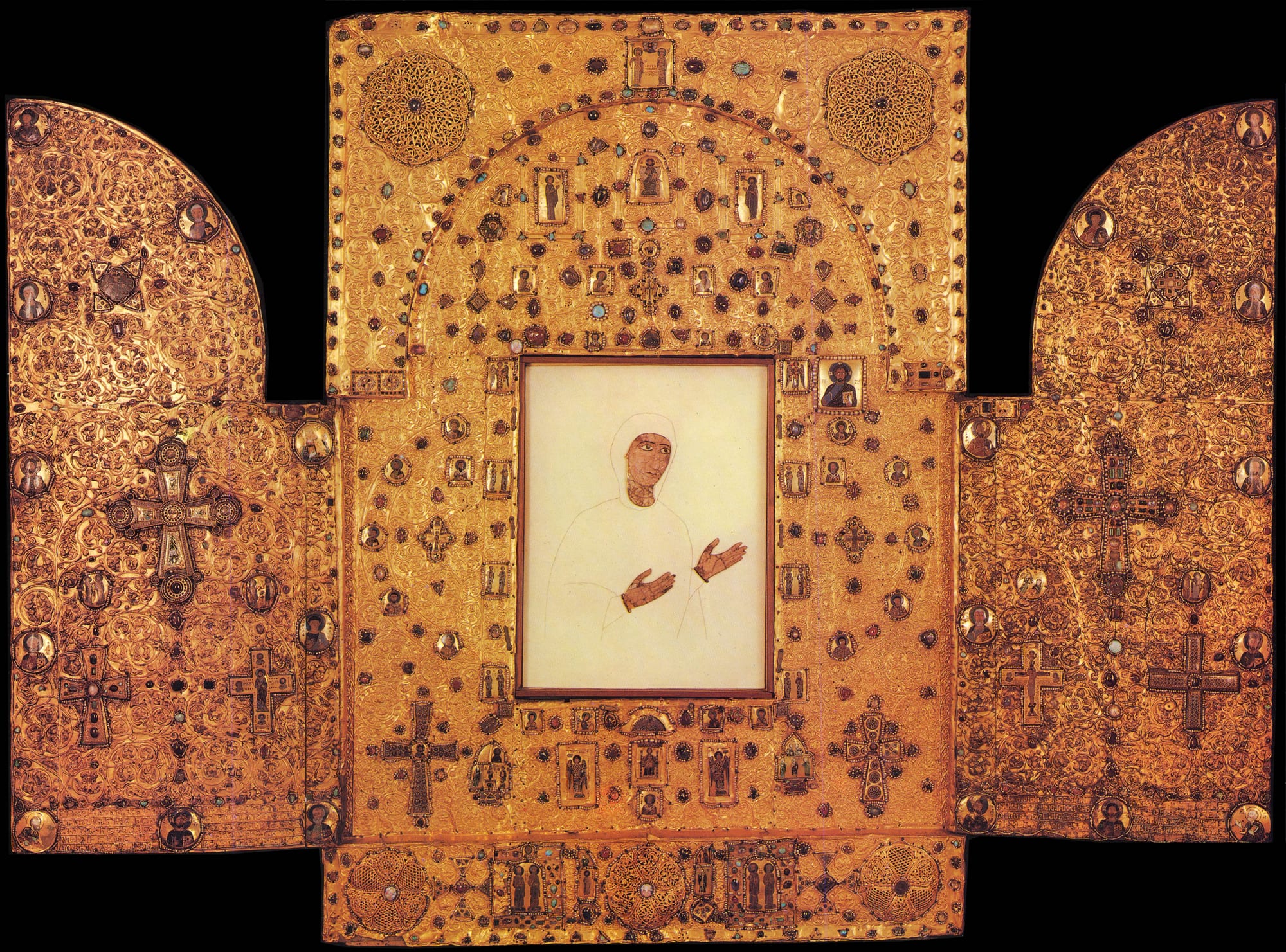
Georgian identity rests on three pillars that most Georgians would name without hesitation: the language, with its own alphabet; the Georgian Orthodox Church; and the tradition of hospitality. The Church is one of the oldest in Christendom and is self-governing within the wider Eastern Orthodox communion. At the 2024 census, about 82 per cent of the population identified as Orthodox, 11.1 per cent as Muslim and 2.6 per cent as members of the Armenian Apostolic Church, with smaller Catholic, Yazidi, Jewish and Protestant communities. For many Georgians, being Orthodox is bound up with being Georgian, and churches — from small stone chapels on hilltops to large modern cathedrals — are busy with people lighting thin candles in front of icons.
Visitors are welcome in almost all churches, but dress matters. Arms and legs should be covered, which means no shorts, short skirts or sleeveless tops. Women are expected to cover their heads, and men to remove hats, so a light scarf is worth carrying on any day that includes a church visit. Inside, people speak quietly, and eating, drinking and loud laughter are out of place. Services are held on Saturday evenings and Sunday mornings, and visitors who arrive during one are expected to watch quietly.
Beneath the religious calendar sit values that shape everyday behaviour. Relationships come first, in business as much as in private life, and trust is built face to face before anything else is agreed. Respect for older people is shown openly: they are often introduced and served first. Communication tends to be warm, expressive and direct. Raised voices and animated hand gestures in a discussion usually signal engagement rather than anger, and steady eye contact is read as sincerity. Among older and more traditional Georgians, public displays of affection are frowned on, and conversations about politics, religion and sexuality can become uncomfortable quickly.
Greetings and meeting people
The everyday greeting, gamarjoba, literally means "victory". A firm handshake with eye contact is the usual greeting on first meeting and in business, repeated when leaving, and an older or more senior person will often be the one to offer a hand first. As acquaintance warms into friendship, many Georgians move quickly from a handshake to a hug or a kiss on the cheek, and close friends and relatives often greet one another this way.
People are addressed politely with batono, "sir", or kalbatono, "madam", placed before the first name or surname; the use of first names alone follows once a relationship is established. Georgian women, especially outside the cities, have traditionally been more reserved with men in public than is usual in Western Europe, and visitors who follow the lead of the people around them will rarely go wrong.
Hospitality and being a guest
Hospitality in Georgia is less a courtesy than an obligation, and it can be overwhelming for the unprepared. A guest invited to a home should bring a small gift: sweets, chocolates, a bottle of wine, flowers, or something from their own country, with something small for any children. Flowers are given in odd numbers, since even-numbered bunches are for funerals. Hosts will usually insist on paying for any meal out, and arguing over the bill is likely to cause more offence than accepting graciously.
At home or in a restaurant, the defining social ritual is the supra, the traditional feast. Its ruler is the tamada, whose toasts, in the words of the national tourism board, belong to "the genre of praise and plea, almost a prayer". The order varies by region — in some parts the first toast is to peace, in others to God or to the country's icons and shrines — but the pattern of compulsory toasts followed by freer ones is the same everywhere, and the sequence traditionally ends with a toast to all the saints, after which the guests toast the tamada himself. Only the tamada proposes toasts. A guest who wishes to speak waits for him to offer an alaverdi, a formal passing of the floor, and then adds his or her own thoughts on the theme. Chatting while someone is giving a toast is considered rude. When the toast ends, the table responds with gaumarjos, "to victory", glasses meet, and everyone drinks. A good tamada is expected to be witty and well versed in tradition, to know something of singing and dancing, and, for all the wine, to drink in moderation and keep the table in order.
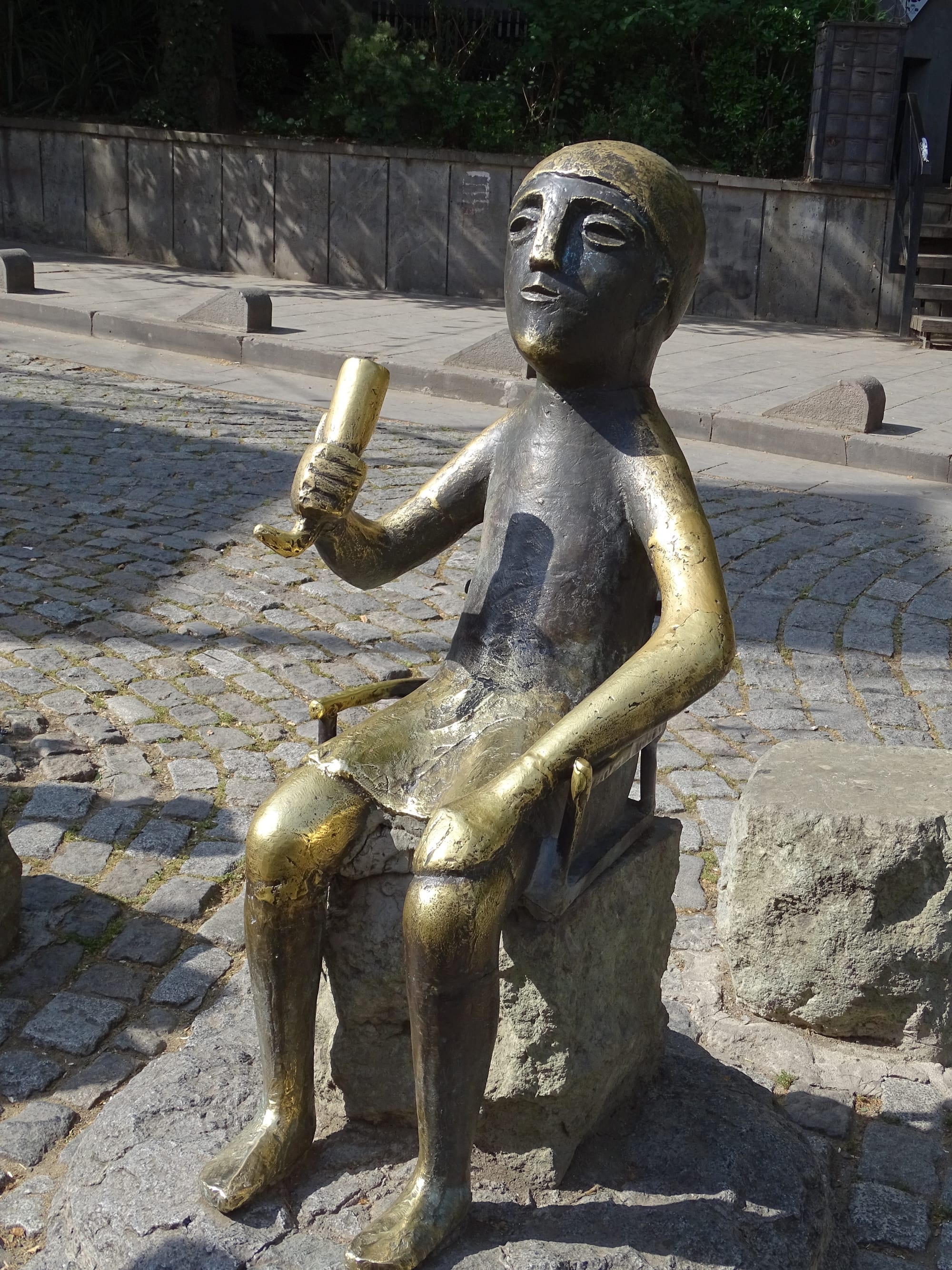
The image of the toastmaster is old. An ancient bronze figurine of a seated man holding a drinking horn, unearthed at Vani in western Georgia, dated to the seventh or sixth century BC and now in the Georgian National Museum, is popularly known as the bronze tamada. Drinking horns, called kantsi, are still brought out at weddings and other festive occasions, while everyday supras use ordinary glasses. Wine is the proper drink for a toast; the strong grape spirit chacha appears at celebrations too, and should be treated with respect.
Guests are expected to eat and drink with enthusiasm, and plates are refilled almost as soon as they empty. The practical approach is to take small helpings at first, and to drink in sips rather than draining every glass. A guest who would rather not drink can usually say so politely without giving offence, especially if it is done early. Customs around gender remain more traditional in the countryside: at many rural supras, women have traditionally drunk little and taken no part in the toasting, except at weddings and similar occasions.
Festivals and life's big moments
The Georgian Orthodox Church follows the Julian calendar, so Christmas falls on 7 January. Its most visible custom is Alilo, a tradition whose name comes from "alleluia": groups walk through the streets singing carols, and food and gifts are collected along the way for those in need. Suppressed in the Soviet period, the processions were revived in the years after independence and now wind through towns and cities across the country. New Year is celebrated twice, on 1 January and again on the Old New Year of 14 January. Homes are decorated with the chichilaki, a small tree of shaved hazel wood curled into a white beard, and the first person to cross the threshold after midnight, the mekvle, is chosen with care, since the family's luck for the year is said to depend on them.
Easter is the greatest feast of the Church year. Eggs are dyed a deep red, traditionally with madder root, a sweet, spiced Easter cake is baked, and families attend the midnight service. On the Monday after Easter, known as Mitsvalebulta, much of the country goes to the cemeteries, laying red eggs, Easter cake, wine and candles on the graves of relatives. Saints' days are important too. Saint George, one of the country's patron saints, is honoured twice a year, and on Giorgoba, 23 November, a public holiday, church bells ring across the country before families gather for a feast.
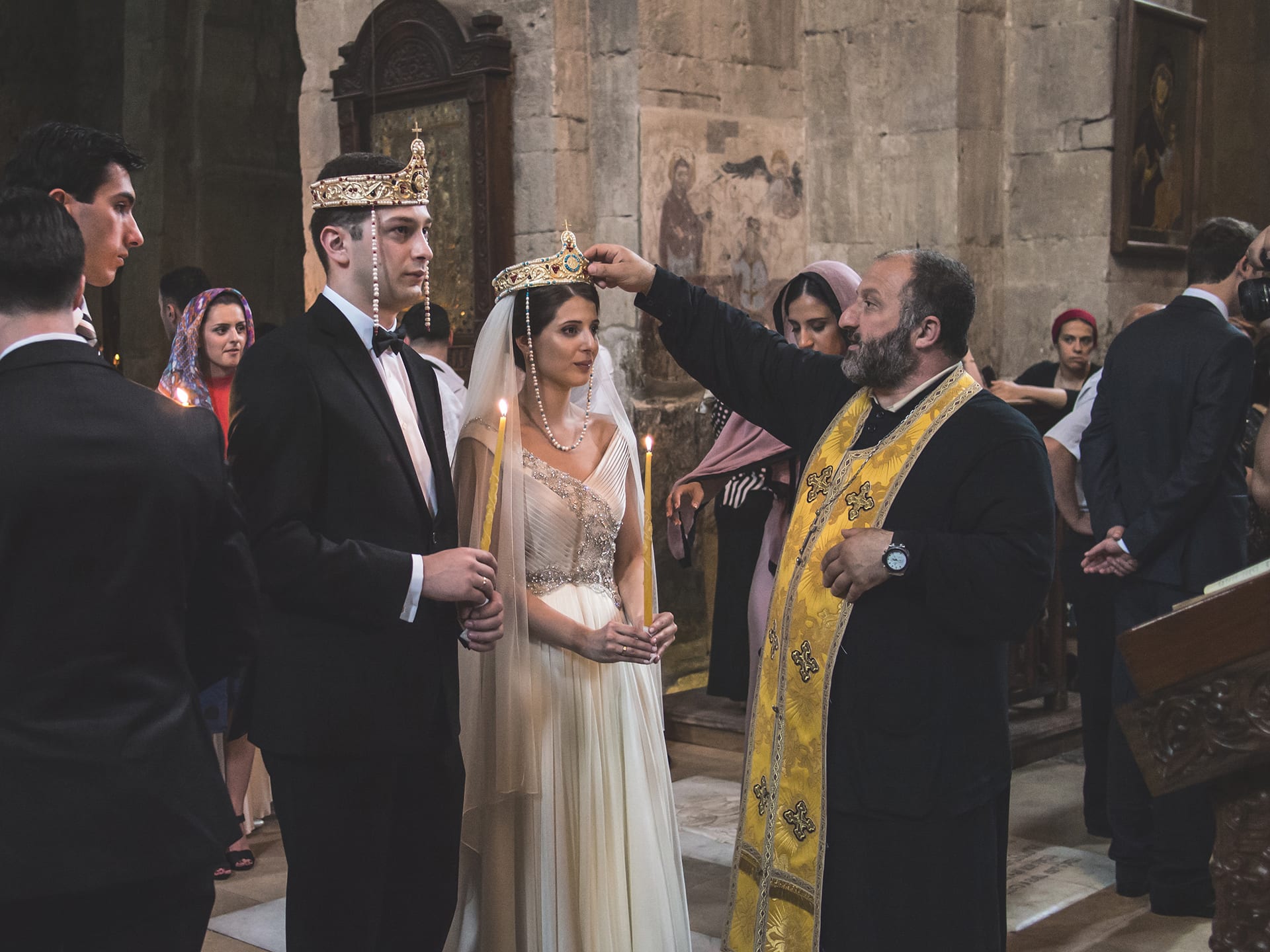
Weddings are large and joyful, with long guest lists of relatives. The Orthodox service centres on the crowning of the couple, who hold lit candles as the priest places crowns on their heads, and the celebration that follows is a wedding supra — held in the past in family courtyards and tents, now usually in a restaurant or banquet hall — with its own toasts, songs and dances.
Funerals draw just as much of the community. The body has traditionally lain at home, where relatives, neighbours and acquaintances come to offer condolences, and many people who knew the deceased only slightly still attend. Relatives often contribute money towards the costs. After the burial, mourners return to the family for the kelekhi, a memorial meal at which toasts are raised to the dead. A further memorial is held on the fortieth day, and close relatives remain in mourning for a year.
Arts, crafts and music
Song is the art most Georgians hold dearest. Georgian polyphonic singing, on UNESCO's list of intangible heritage, weaves three voices together, from the dense harmonies of the high mountains to the drone-backed dialogue of the east and the improvised three-part singing of the west. The tradition once ran through every part of life, from songs sung during field work to healing songs and the Alilo carols at Christmas, and it shaped the liturgical chant of the Church. Around the supra table, unaccompanied singing remains one of the surest signs that an evening is going well.
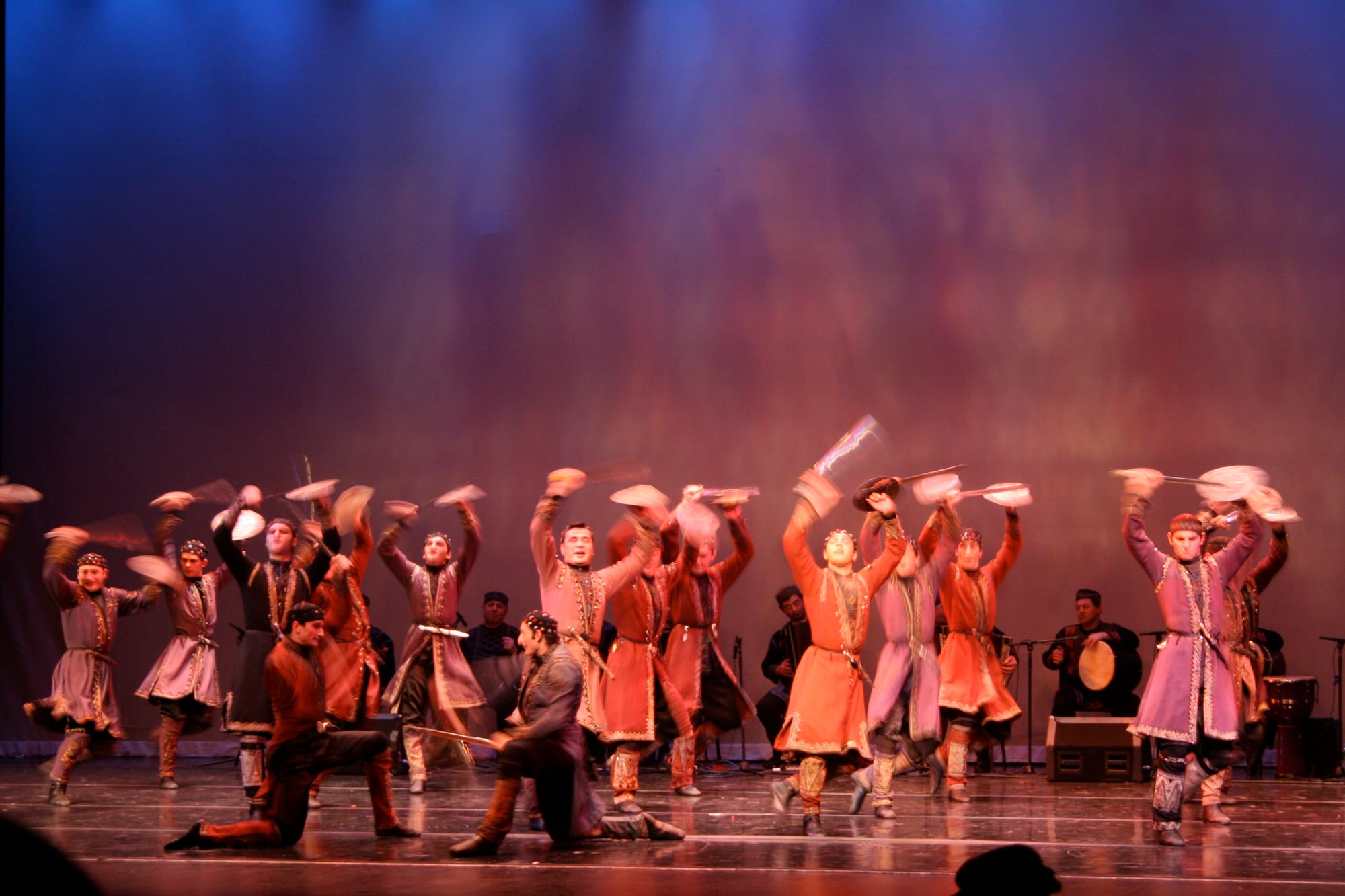
Dance is performed with the same national pride. The Georgian National Tourism Administration counts among the classic forms kartuli, a couple's dance of great restraint in which the man must never touch his partner; perkhuli, an ancient circle dance with singing; and khorumi, a war dance traditionally performed by men. The tourism board notes that pottery and other finds show dance was already part of life in the Bronze Age, and professional ensembles have since carried these dances to stages around the world.
Georgia's own script is a source of great pride. Three alphabets have developed over the centuries and all three are still in use, a living culture recognised by UNESCO: the modern Mkhedruli for everyday life and schooling, and the two older scripts in church books, icons and the work of goldsmiths, embroiderers and icon painters. Georgia's other UNESCO-listed traditions include winemaking in buried clay vessels; chidaoba, a form of wrestling fought to the sound of the zurna pipe and doli drum by men in the traditional long coat, the chokha, under a chivalric code; and, most recently, the rituals surrounding the country's local varieties of wheat, from the first ploughing to the breads baked for births, weddings and funerals.
Dos and don'ts for visitors
- Do learn gamarjoba ("hello") and gaumarjos ("to victory", the answer to a toast); both are warmly received.
- Do cover arms and legs in church; women should cover their heads and men remove their hats.
- Do bring a small gift when invited to a home, and give flowers in odd numbers, since even numbers are for funerals.
- Do wait for the tamada to lead the toasts, and stay quiet while anyone is making one.
- Don't propose a toast at a supra unless the tamada passes the floor with an alaverdi.
- Do take small helpings at first; plates are refilled again and again, and a full glass can be sipped rather than drained.
- Don't try to split or pay the bill when a Georgian host has issued the invitation; accept graciously.
- Don't raise politics, religion or sexuality with new acquaintances, and keep public displays of affection low-key, especially near churches.
What to take away
Georgian customs can seem elaborate, but nearly all of them turn on one idea — that a guest is to be honoured — and visitors who accept that generosity with warmth, and return it with respect, will find themselves treated less as strangers than as friends.