Culture & Customs · Gabon
Gabon: Masks, Mvet and the Iboga Root
A largely Christian nation where an initiatory forest faith endures, epics are sung to a harp-zither, whitened masks once danced at funerals, and mourning ends in celebration
By Worldlore Editorial · 30 September 2026
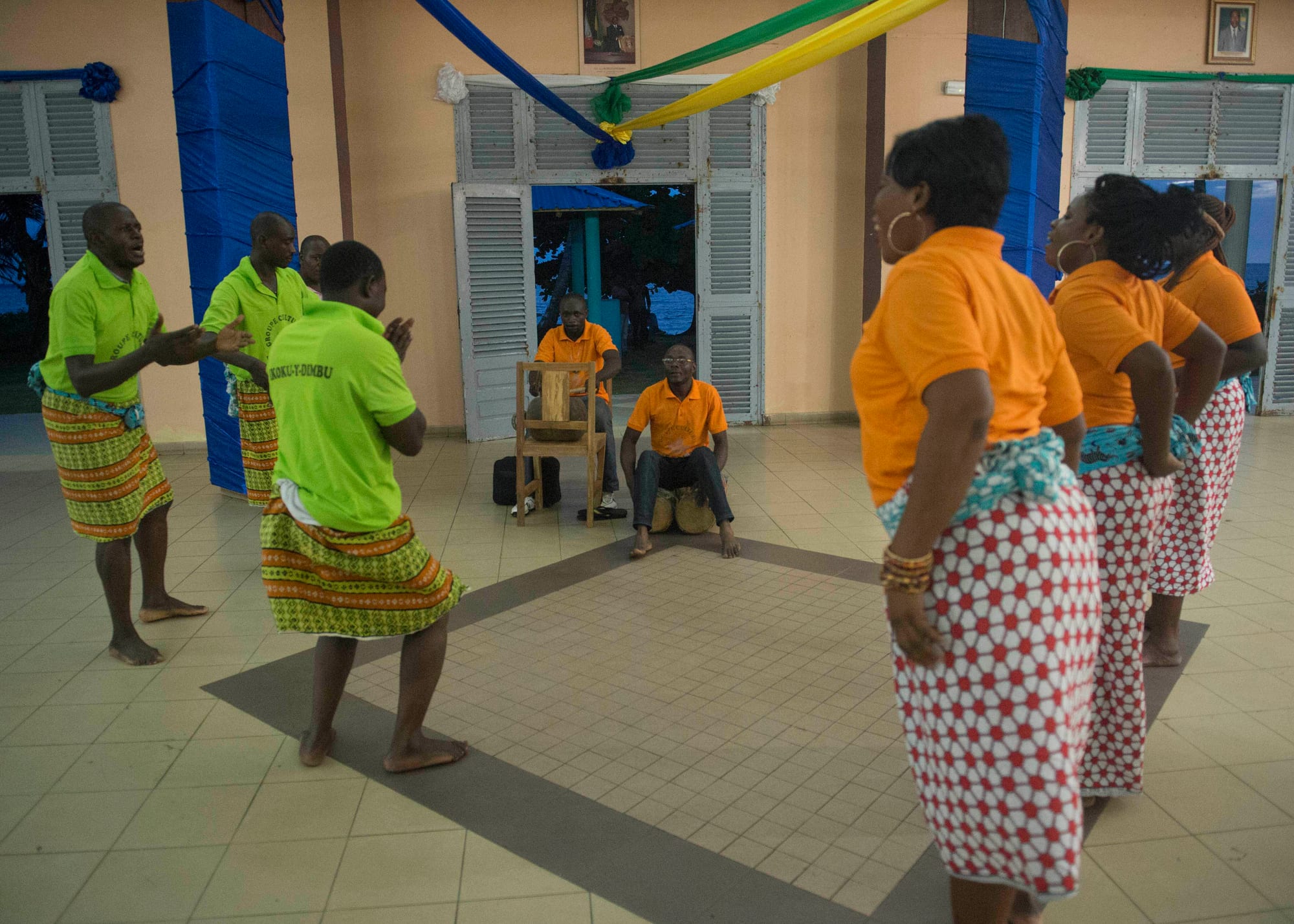
A storyteller stands before a gathered crowd, a stringed harp-zither in his hands, and begins to sing. The tale is long and heroic, an epic of the Ekang peoples, and it is not performed to a silent audience. Listeners beat out rhythms with sticks, clap, sing back the refrains and call out to the narrator, and dancers join in as the story unfolds. This is the mvet, an art that carries history, language and moral teaching from one generation to the next, and in 2025 it became the first Gabonese tradition inscribed on UNESCO's list of the intangible cultural heritage of humanity. It captures something essential about Gabon: a country whose modern, largely urban life still rests on old forms of knowledge passed on by voice, music and ritual.
Faith, identity and values
Gabon is a largely Christian country. According to the Catholic bishops' conference and the High Council of Islamic Affairs, as cited by the US State Department, about 80 per cent of the population is Christian, roughly two-thirds of them Catholic and one-third Protestant or evangelical. Around 15 per cent is Muslim, many of them West African residents who are not Gabonese citizens, and the remainder includes followers of traditional religions and people with no affiliation. Freedom of religion is protected in law.
Formal affiliation tells only part of the story. Many Gabonese practise a syncretic faith that combines Christianity with older traditions, and the best known of these is Bwiti. Its origins are attributed to the forest peoples of the region, and it spread to Bantu peoples including the Punu, Mitsogo and Fang; scholars describe it as one of Gabon's officially recognised religions. At its heart is the root of the iboga shrub, which has powerful psychoactive effects. Initiation, overseen by a spiritual leader called a nganga, usually lasts several days, and in the course of it the initiate is said to undergo a symbolic death, shedding the old self and gaining knowledge. Men and women are initiated in separate huts, and music is central to both. Some followers have woven Christian elements into the Bwiti rite itself, while others follow Bwiti as an independent religion. Other traditional faiths, including Mwiri and Ndiobi, also have followers. Iboga is regarded as part of the national heritage, and exporting it is illegal under a 1994 cultural protection law.
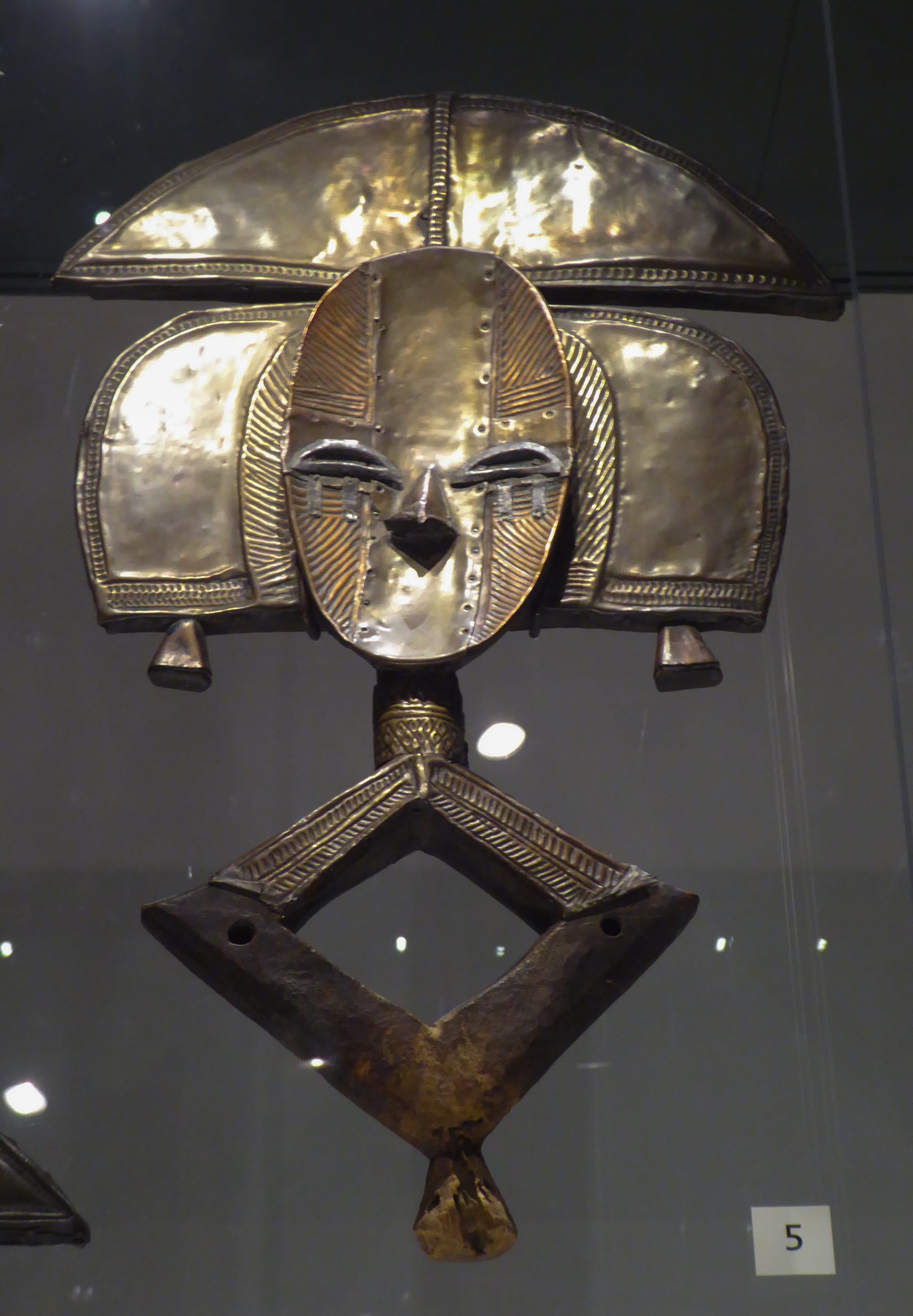
Older still is the reverence for ancestors. Among the Fang, the byeri cult held that the prosperity, fertility and wealth of the whole community depended on the ancestors of the lineage. The skulls and bones of important forebears were kept in cylindrical bark boxes, out of sight in the house of the family chief, each guarded by a carved wooden figure, and the ancestors were consulted before the great decisions of life: alliances, marriages, wars, moving a village, planting, hunting and fishing. Only ritual specialists and initiated men handled the relics; women and uninitiated boys were kept away from them. The Kota tied the bones of their ancestors into reliquary bundles crowned by guardian figures covered in sheets of copper and brass, prized metals that marked the sacred importance of the ancestors they protected.
The values carried by traditions such as the mvet, among them respect, justice, cooperation and peace, are held up as the foundations of community life, and the mvet also serves as a means of settling disputes and strengthening social ties.
Greetings and meeting people
French is the language of government, schooling and public life, spoken by the great majority of Gabonese, and it is the natural choice for greeting strangers, officials and shopkeepers. Alongside it, the country's many peoples, among them the Fang, Punu, Nzebi, Myene and Kota, each have their own language and their own forms of greeting, used at home and within the community.
Greetings between strangers are reserved. A quick handshake is the standard greeting on both social and business occasions, and new acquaintances avoid too much familiarity, which is seen as a way of keeping respect on both sides. Among friends things warm up considerably, and friends often greet each other with kisses on the cheek, as people do in France. Gabonese life is also strongly communal, and personal space is generally less guarded than in much of Europe.
Some encounters come with formal rules. By law, everyone must be able to show proof of identity if asked by the authorities, and photographing government and military buildings or airports is illegal and can lead to arrest. Social attitudes are generally conservative.
Hospitality and being a guest
Much of Gabonese hospitality is expressed at gatherings rather than around a single table, and guests at them are expected to take part. At a mvet performance, the audience is part of the show: people play sticks, clap, sing and respond to the storyteller, and joining in is the natural way to show appreciation. Family ceremonies, from customary weddings to the end of mourning, bring together extended families and communities, and they are occasions for gratitude as much as celebration. In a private home, a guest can expect to be offered a drink, and accepting it is a courteous way to begin a visit.
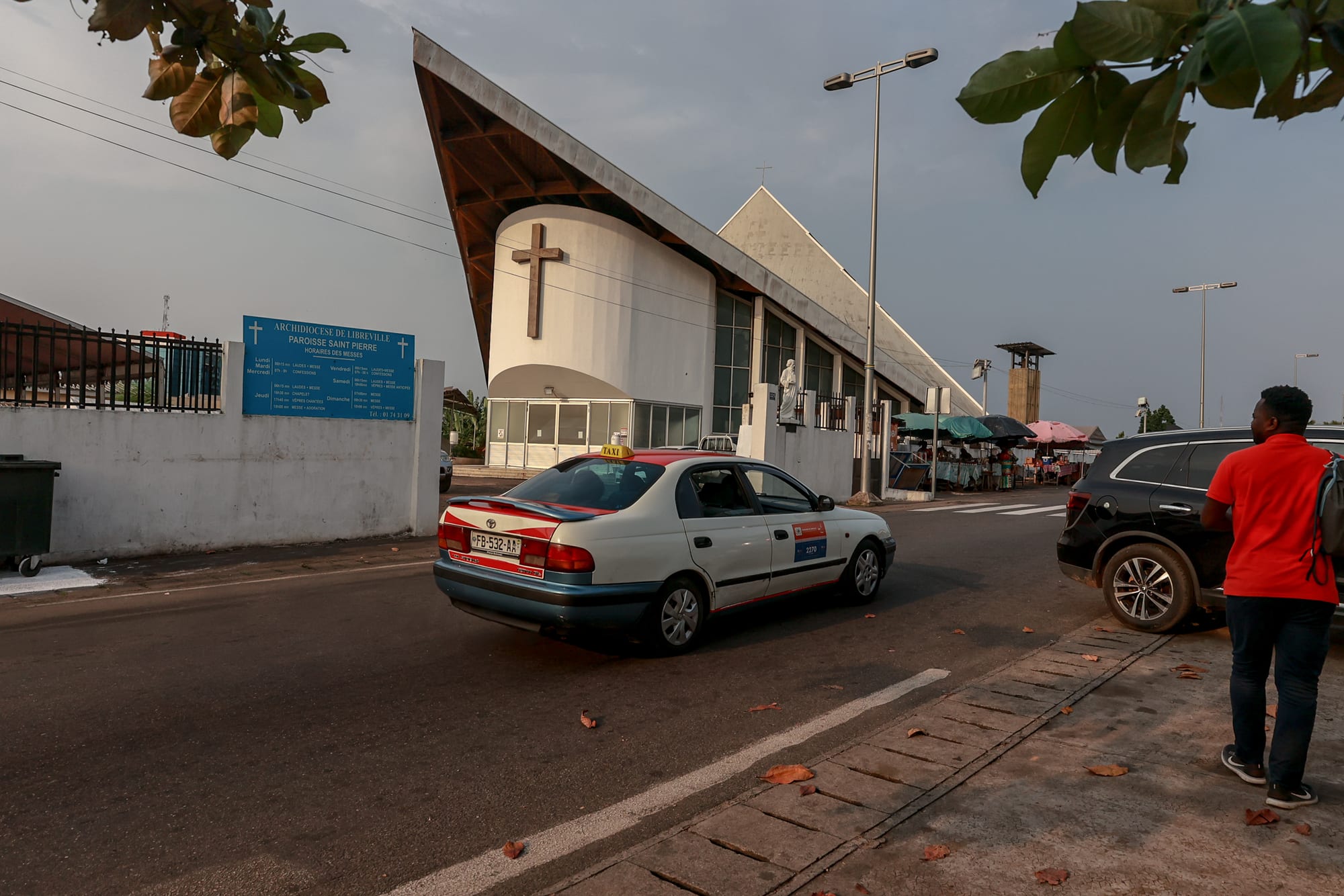
Bwiti ceremonies call for particular care. Guidance from ICEERS, an organisation that works with iboga communities, stresses that visitors should come to a ceremony only with sincere intentions rather than out of curiosity, follow every part of the community's protocol even when it is uncomfortable, and bring generous gifts for those who take part, with musical instruments especially valued. The ceremonies take place in dedicated temples, often at night, and participants wear ceremonial dress, commonly in red, white and black cloth. Initiation is a demanding and serious commitment, supported by many members of the community over several days, and it is not a performance put on for outsiders.
Festivals and life's big moments
The national day falls on 17 August, the anniversary of independence from France in 1960, and is marked by a military parade in Libreville and celebrations across the country.
Weddings often take place in several forms. Customary marriage has deep roots, and it is understood as a union of two families rather than two people alone. Among the Fang, marriage has traditionally been forbidden inside one's own clan, particularly on the father's side. The heart of the customary wedding is the dot. Representatives of the two families negotiate it in a contest of oratory, reciting and tracing each family's genealogy, and the groom's contribution, in cash and in goods, varies from one community to another. Symbolic objects such as a hoe, a pestle and a knife may also be exchanged, and the union is described as a pact carrying values of fertility, protection, solidarity and forgiveness. For many families, a civil marriage without the dot carries little standing in the community. Many couples have married only by custom, and the 2020 law set out to give customary unions legal standing, so that wives whose marriages had no official recognition would no longer lose their rights and property when a husband died. Some now argue that the dot should become a largely symbolic gesture rather than a heavy financial burden.
Death is regarded as the most meaningful passage of all, because of the importance of the ancestors' spirits, and funerals are elaborate affairs. Those closest to the dead keep vigil, and relatives and friends gather in the family's house or under tents set up outside, keeping the bereaved company through the night; some commentators now lament that these vigils are drifting into bars.
The most striking of life's rituals comes at the end of mourning. Some time after a death, often during the summer holidays, families hold the retrait de deuil, the lifting of mourning. It marks the end of grief and the beginning of a festive communion in honour of the dead person's life. Performers wear costumes and white kaolin make-up, and dances are performed to the beat of drums. The ceremony is also a moment for the family to thank everyone who supported them through the funeral, to take stock of the life that has ended, and to settle questions of succession and the reorganisation of the household.
Arts, crafts and music
The mvet is at once an instrument, a musician, a storyteller and a body of epic narratives: the single name covers all of them. It exists in two forms. The sacred mvet is reserved for important occasions and passed on through strict initiation, while the popular mvet is performed more freely at public celebrations and modern shows, and women may act as narrators in this form, though they do not usually make or play the instrument. Learning is by apprenticeship rather than formal teaching. The tradition is shared with Ekang communities in neighbouring Cameroon and the Republic of the Congo.
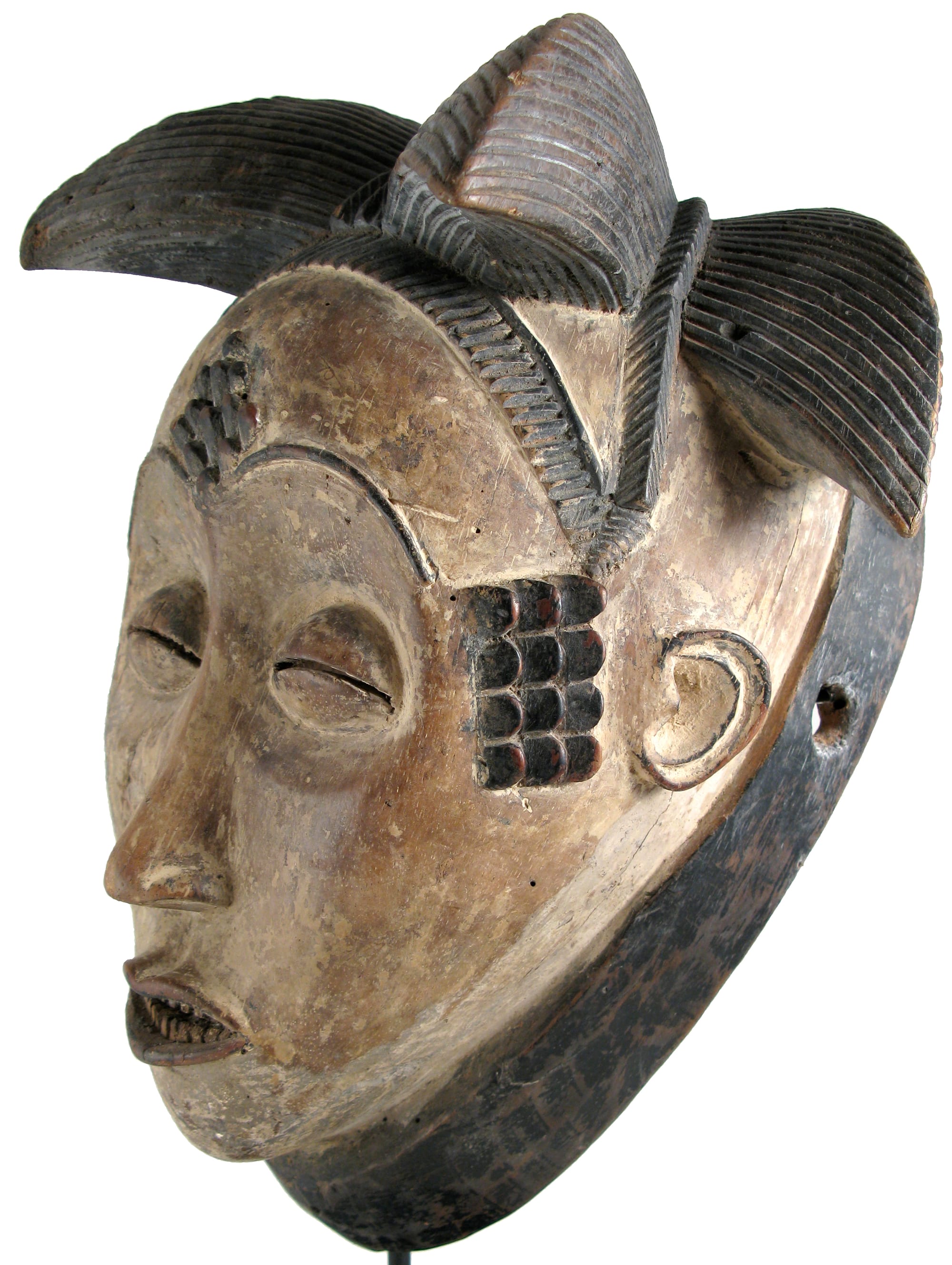
Gabon's masks are among the most admired works of African art. The white-faced masks of the Okuyi society, made by peoples of the south of the country, are coated in kaolin, a white clay whose colour is associated with the ancestors and the world of the spirits. Worn with a bulky costume by a dancer on tall stilts, the mask created a supernatural presence. Such masks were once danced in masquerades at funerals, and today they are also performed at celebrations and cultural shows.
Music runs through every part of this culture, from the drums that set the rhythm of the retrait de deuil to the instruments played in Bwiti ceremonies, where each gender's ritual has its own sound. Cultural groups and dance troupes, such as those that perform at the retrait de deuil, keep these forms of song and dance in regular practice.
Dos and don'ts for visitors
- Do greet people in French with a quick handshake, and keep first meetings courteous and reserved rather than overly familiar.
- Do join in at a mvet performance by clapping or singing when the storyteller invites a response.
- Do attend a Bwiti ceremony only by invitation, with sincere intentions, and follow the community's protocol.
- Don't try to take iboga out of the country; exporting it is illegal.
- Don't photograph government or military buildings or airports, which is illegal and can lead to arrest.
- Do carry proof of identity, since the authorities can ask to see it.
- Don't use or carry drugs; possession is a serious offence with severe penalties.
What to take away
Gabon's traditions live in sung epics, whitened masks and forest rites, and visitors who approach them as living faith and memory rather than spectacle will find them generously shared.