Daily Life · French Polynesia
French Polynesia: Life Between the Lagoon and the Supply Ship
Nearly 70 percent of the population on a single island, family land held undivided for generations, and a cost of living shaped by how far everything has to be shipped in
By Worldlore Editorial · 30 September 2026
An ordinary day in French Polynesia runs on two overlapping systems: French administrative structures, the mairie, the euro-pegged franc, the school calendar, and a much older Polynesian rhythm of family land, church, and the lagoon. Nearly 70 percent of the territory's roughly 280,000 people live on the single island of Tahiti, where Papeete is the only real city; the rest are spread thinly across dozens of other inhabited islands scattered over more than 2,000 kilometres of ocean. Because almost everything beyond what the lagoon and the garden provide has to be shipped or flown in, the cost of daily life is shaped, more than almost anything else, by distance itself.
Family and home life
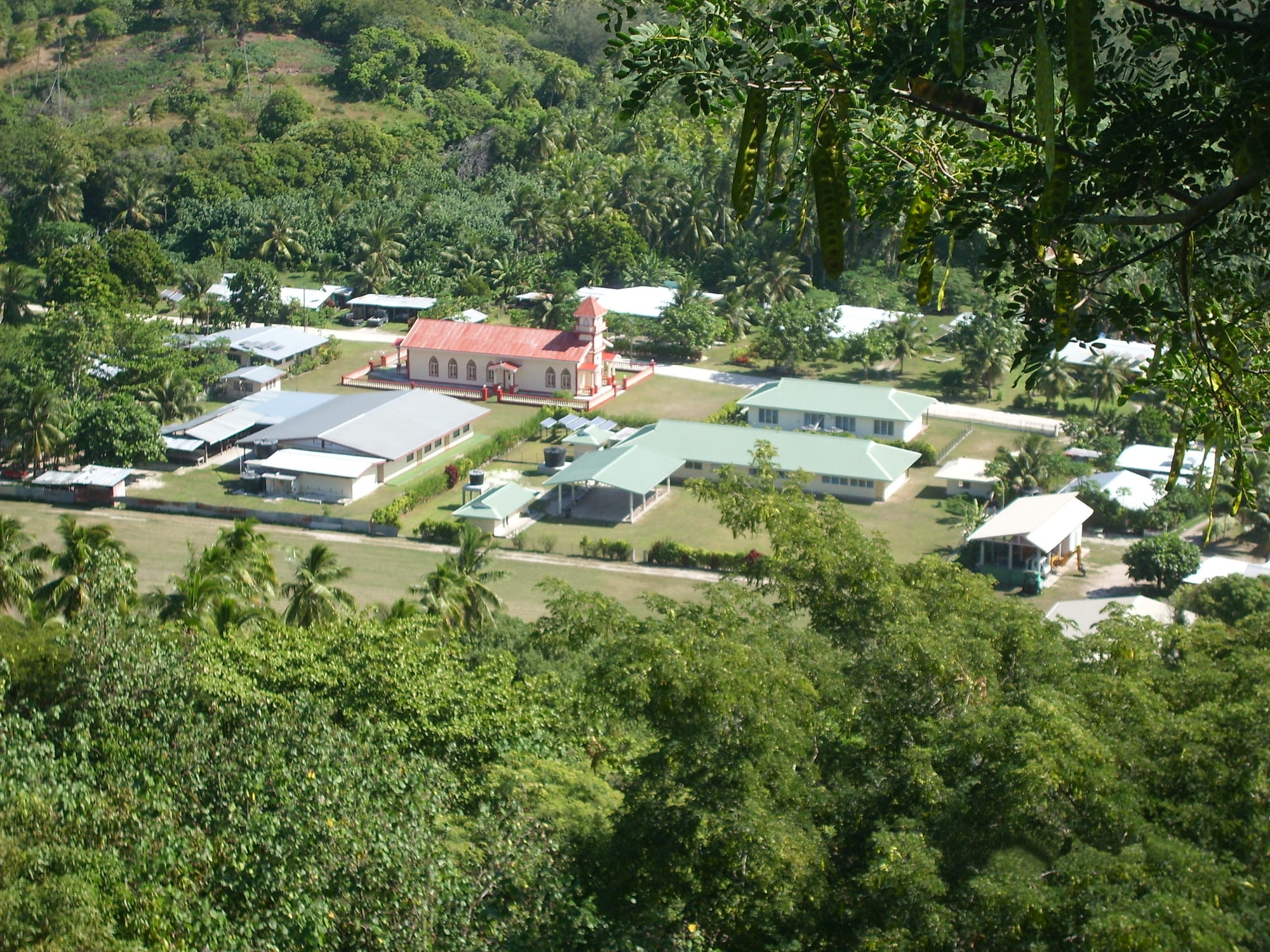
Land in French Polynesia is very often held undivided by extended families rather than split among individual owners, a pattern that keeps generations tied to the same plot but also complicates building and development, and shapes where and how new housing gets added over time. Outer-island villages, like those on Maiao, Huahine, or in the Tuamotus, are typically small and close-knit, organised around a church, a handful of public buildings, and family homes with metal roofs strung along a single road. Households often include members who have moved to Tahiti for work or school, kept in close contact with family on the home island; the outer islands have steadily lost younger people to Papeete and to mainland France as a result.
Work, school and the rhythm of the day
The economy rests on high-end tourism, black-pearl farming in the Tuamotus, subsidised copra production, and substantial transfers from the French state, which also funds health care and social benefits. Because nearly everything beyond fish and garden produce is shipped in, the cost of living is very high by regional standards, a fact that shapes household budgeting far more than it does in mainland France. Schooling follows the French system, though on a local calendar that starts the year in mid-August, and French is the main language of administration and education, spoken at home by the large majority of the population, while Tahitian and other Polynesian languages remain widely spoken alongside it, especially on the outer islands. The legal working week is 39 hours rather than mainland France's 35, though the pace runs noticeably slower than in mainland France, and the local word fiu, roughly "fed up" or "over it", is often used affectionately for the island tempo.
Community life and public spaces
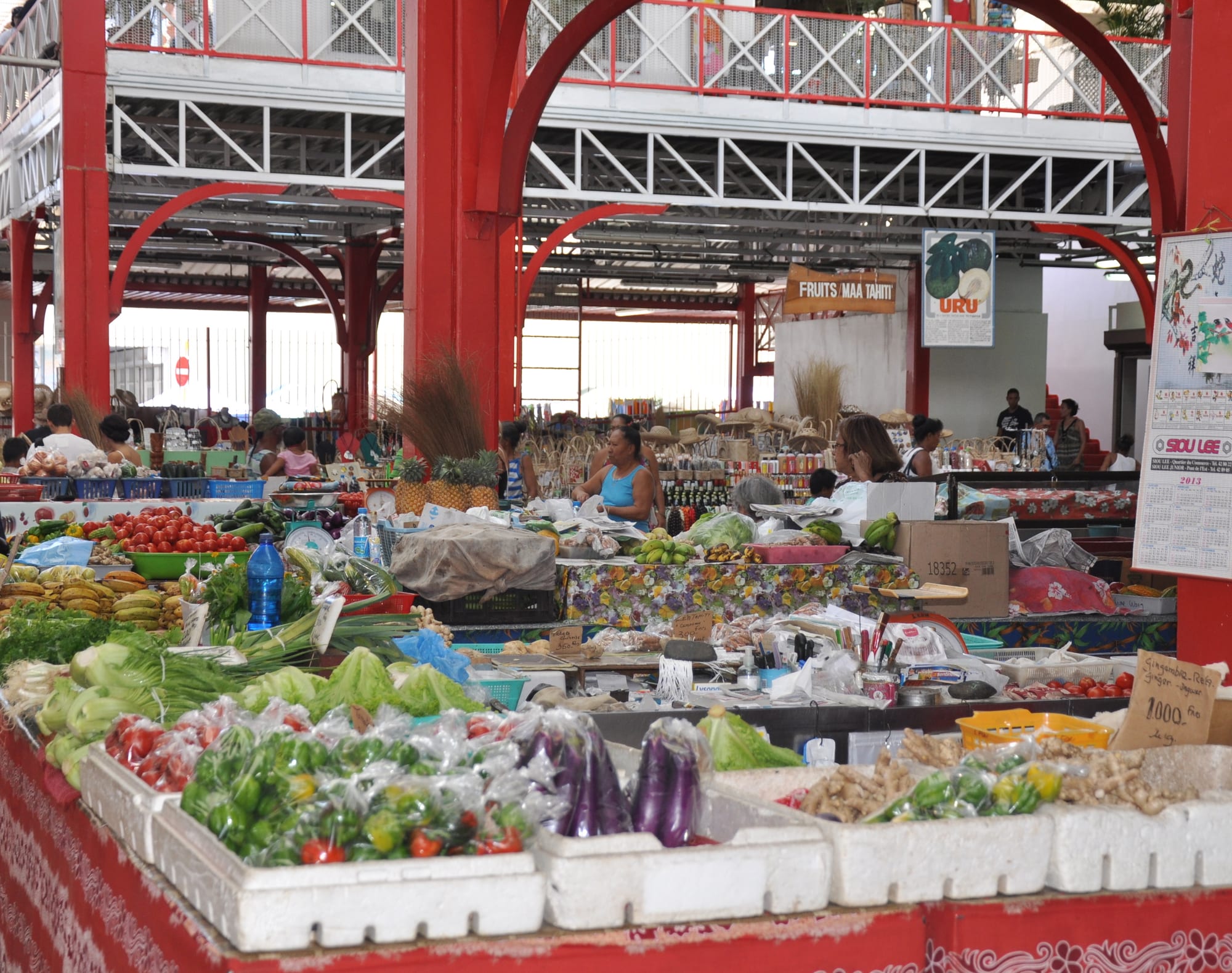
Papeete's covered municipal market is one of the territory's busiest public gathering points, its stalls of tropical produce, flowers, and fish drawing shoppers from across Tahiti most mornings. Church, Protestant for the majority and Catholic for a large minority, anchors weekly life well beyond Sunday itself, particularly in outer-island villages where it also functions as the main public building. On Tahiti, the Papeete–Mo'orea ferry and Air Tahiti's inter-island network are the practical extension of public life between islands, since there is no inter-island bridge or tunnel network of any kind, and most travel between islands means a boat or a plane.
Free time and weekends
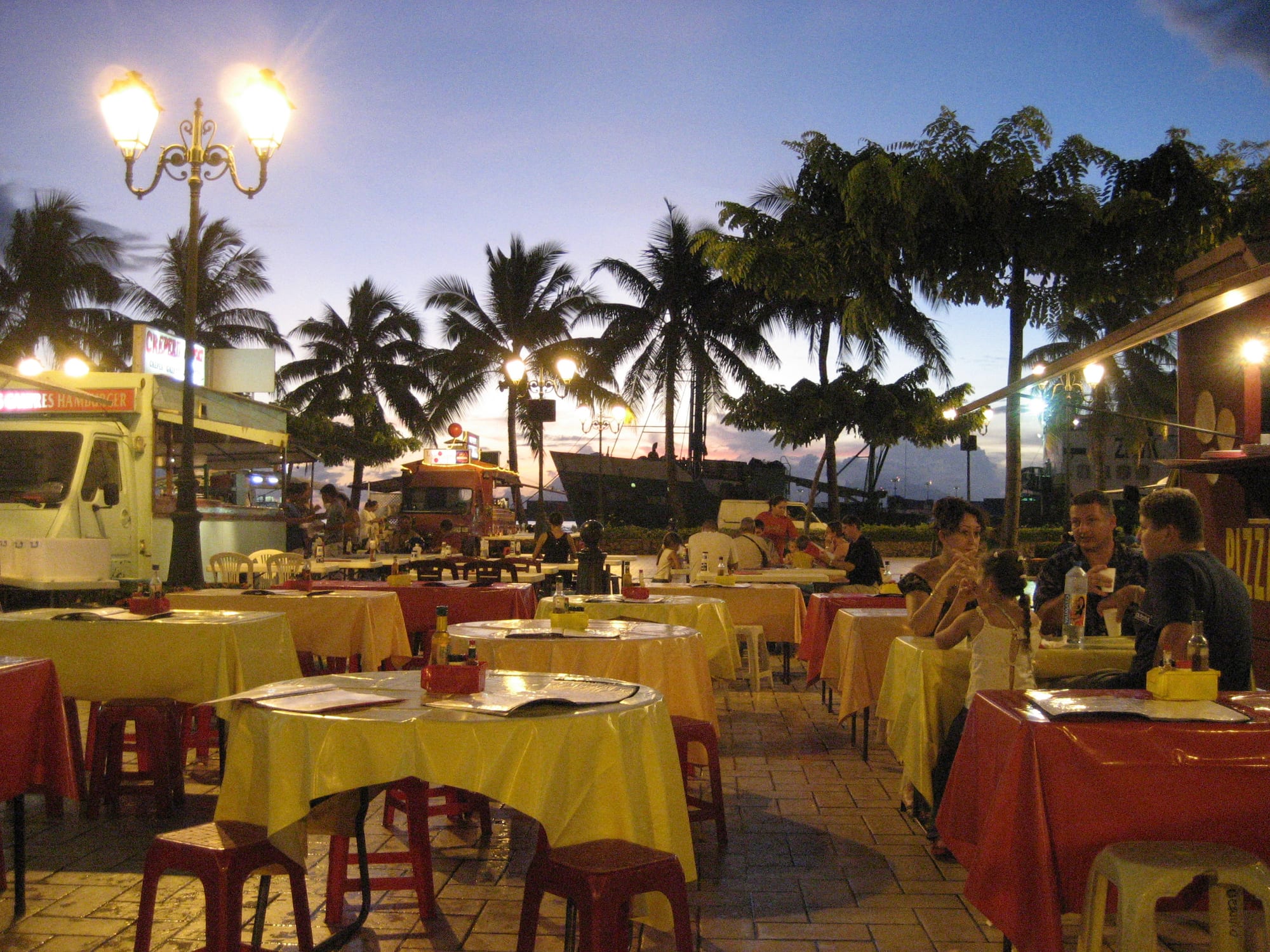
Evenings on the Papeete waterfront often mean the roulottes, mobile food trucks that gather each evening to serve steak-frites, chow mein, grilled fish, and crêpes at shared outdoor tables, a genuinely everyday habit rather than a tourist event. Weekends bring church, family meals, and, for many, time on or in the lagoon, along with outrigger-canoe (va'a) training and racing, practised on all the islands and regarded as the national sport. The Heiva i Tahiti festival each July, with its dance, singing, and sporting competitions, is one of the year's biggest shared events, drawing performers and spectators from across the islands to Papeete.
A visitor's ordinary day
The currency is the CFP franc, fixed to the euro; cards work on the main islands and in resorts, but cash is needed at pensions, roulottes, and on the remote atolls. Almost everything is imported, so food, transport, and accommodation all cost more than the same things would in mainland France or most neighbouring Pacific countries, and independent travellers save significantly by staying in family-run pensions rather than resorts and eating at roulottes rather than restaurants. Inter-island flights on Air Tahiti should be booked well ahead, particularly in the high season, while the Tahiti–Mo'orea ferry runs frequently enough to need no advance booking. A Schengen visa does not cover French Polynesia, so travellers who need a visa should confirm they hold one specific to the French overseas territories.
What to take away
What defines an ordinary day in French Polynesia is less any single custom than the distance every part of it has to cross to reach the household — land held by the family for generations, produce grown close to home, and almost everything else arriving, at real cost, by boat or by plane.