Attractions & Natural Wonders · French Polynesia
French Polynesia: Nine Attractions and Natural Wonders
A hundred and twenty islands scattered across an ocean the size of Europe — jagged volcanic peaks, turquoise lagoons, coral atolls, and the wave at the end of the road
By Worldlore Editorial · 19 September 2026
Islands across an ocean
French Polynesia is an overseas country of France made up of about 120 islands across five archipelagos, spread over more than 2,000 kilometres of the South Pacific — a land area smaller than a mid-size US county, in a slice of ocean bigger than western Europe. The high volcanic islands of the Society group (Tahiti, Moorea, Bora Bora) have the jagged peaks and lagoons of the postcards; the Tuamotus are low coral atolls famous for diving; the remote Marquesas are steep, surf-battered, and forested. The culture is Mā'ohi Polynesian, with a strong revival of language, dance, and voyaging.
The nine below concentrate on the Society Islands and the Tuamotus, where almost all visitors go, with the Marquesas for those with time. It is warm year-round; the drier, cooler season (May to October) is the best time to visit.
1. Bora Bora
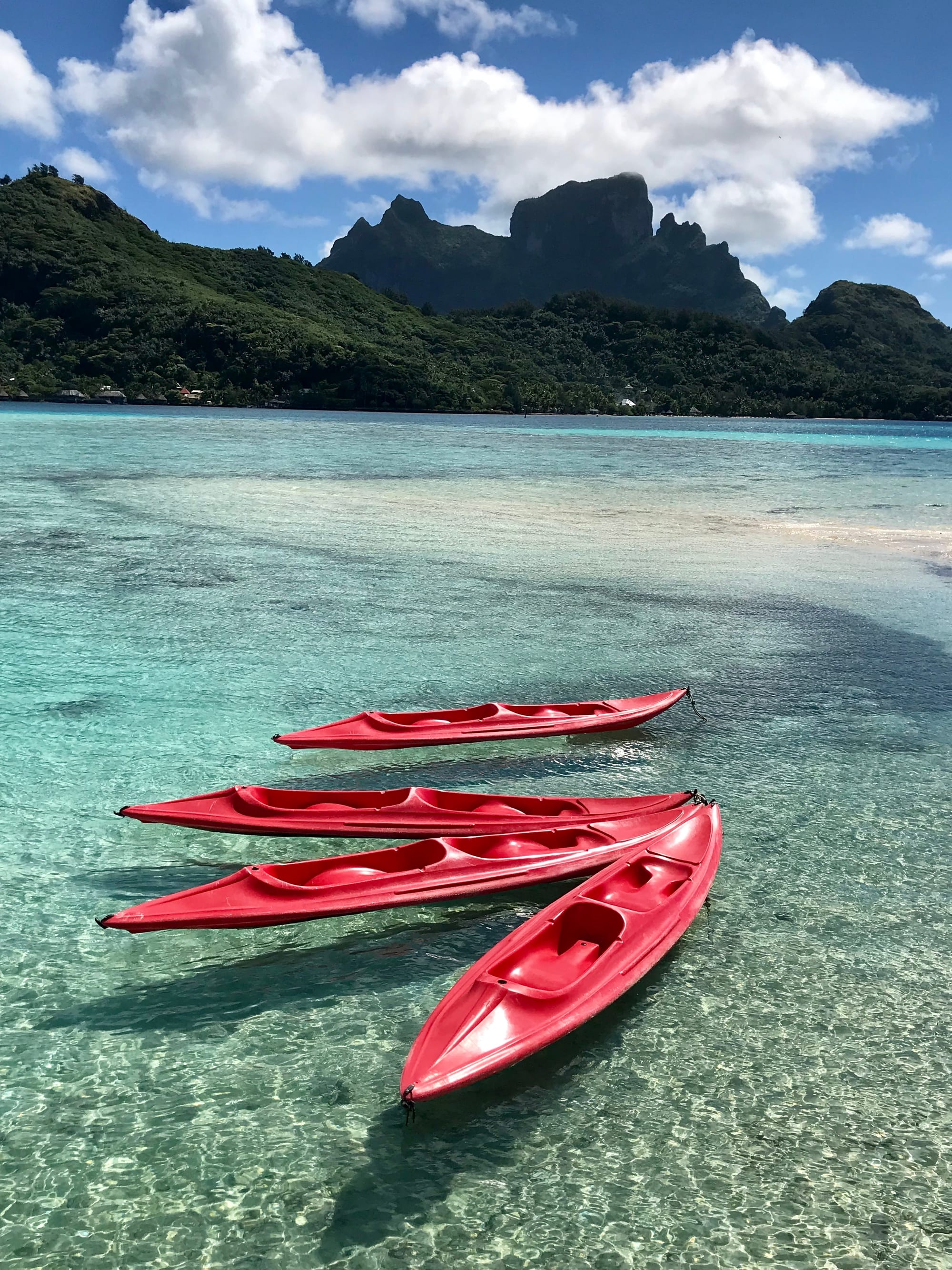
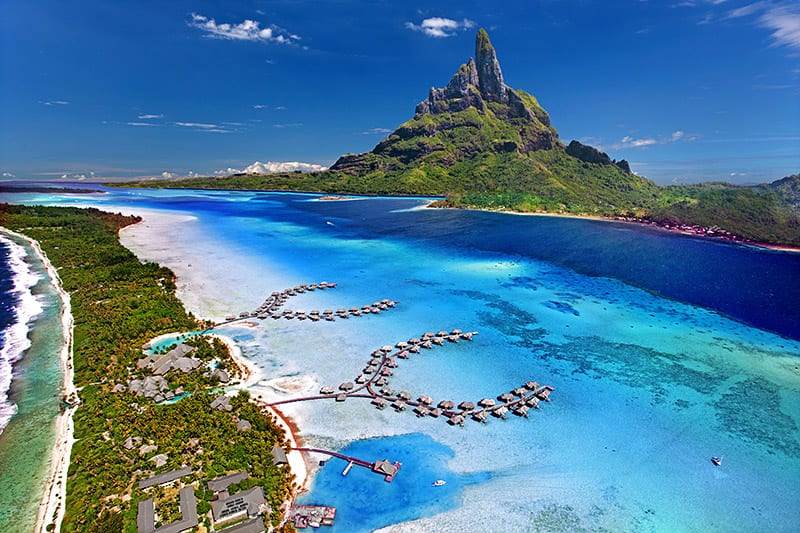
Bora Bora is the island the whole destination is sold on: a double peak of black basalt — Otemanu and Pahia — rising from a lagoon of impossible colour, ringed by a barrier reef and a necklace of palm-covered motu carrying the famous overwater-bungalow resorts. Lagoon tours snorkel with rays and blacktip sharks at the "Coral Gardens" and "Lagoonarium"; a 4x4 track and a tough hike climb toward the peaks past wartime coastal guns.
It is a 50-minute flight from Tahiti, and the most expensive island in the group.
2. Tahiti
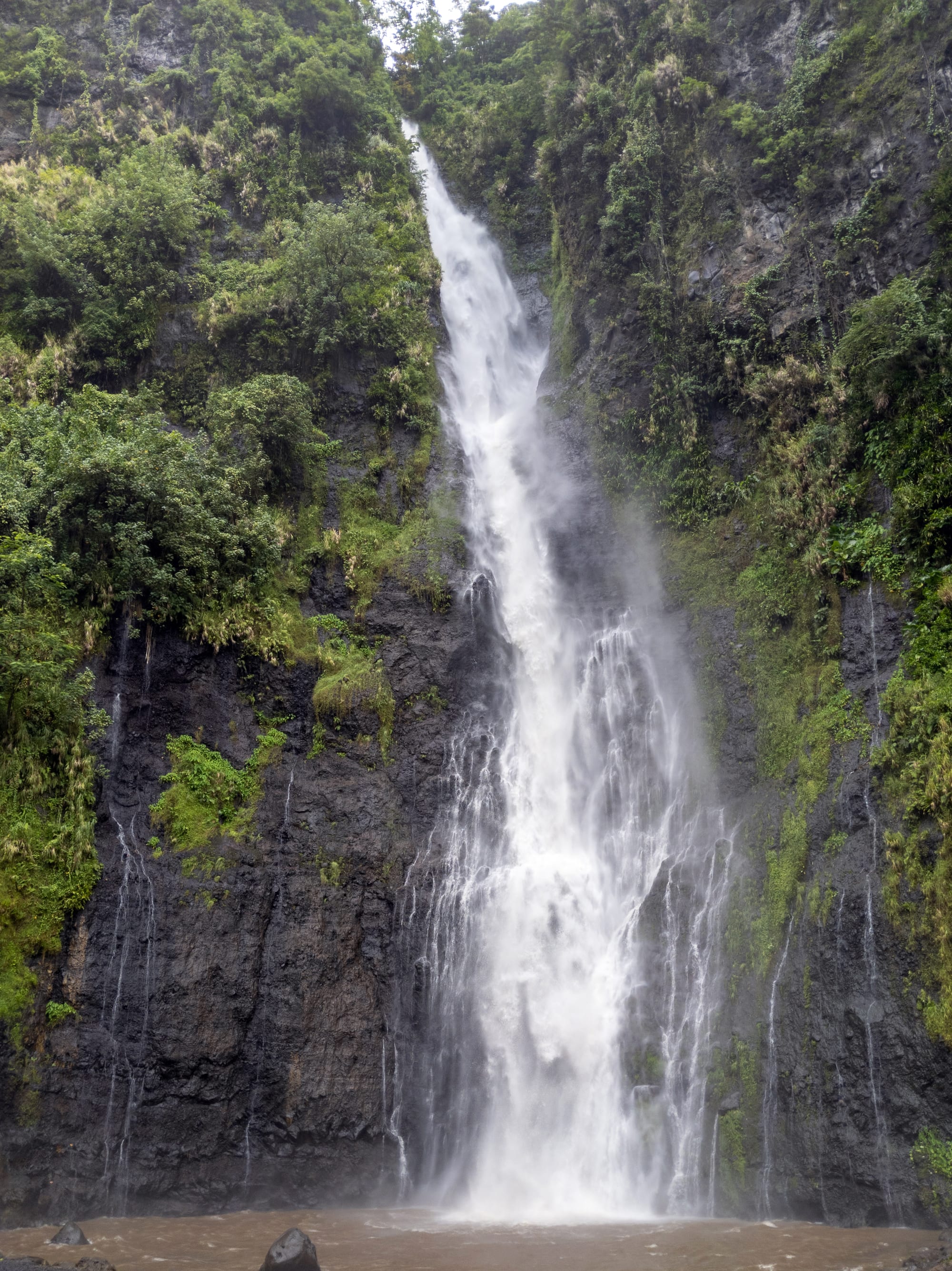
Tahiti, the largest island and home to about 70 percent of the population, is where every visitor arrives. Papeete, the capital, has a good covered market, the Museum of Tahiti and the Islands, the black-sand surf beaches of the west coast, and a waterfront that comes alive with roulottes (food trucks) at night. The mountainous interior holds the Papenoo valley, the Faarumai waterfalls, lava tubes, and the Belvédère lookout over the caldera.
Most people spend a night here at the start or end and island-hop from its airport and ferry quay.
3. Moorea
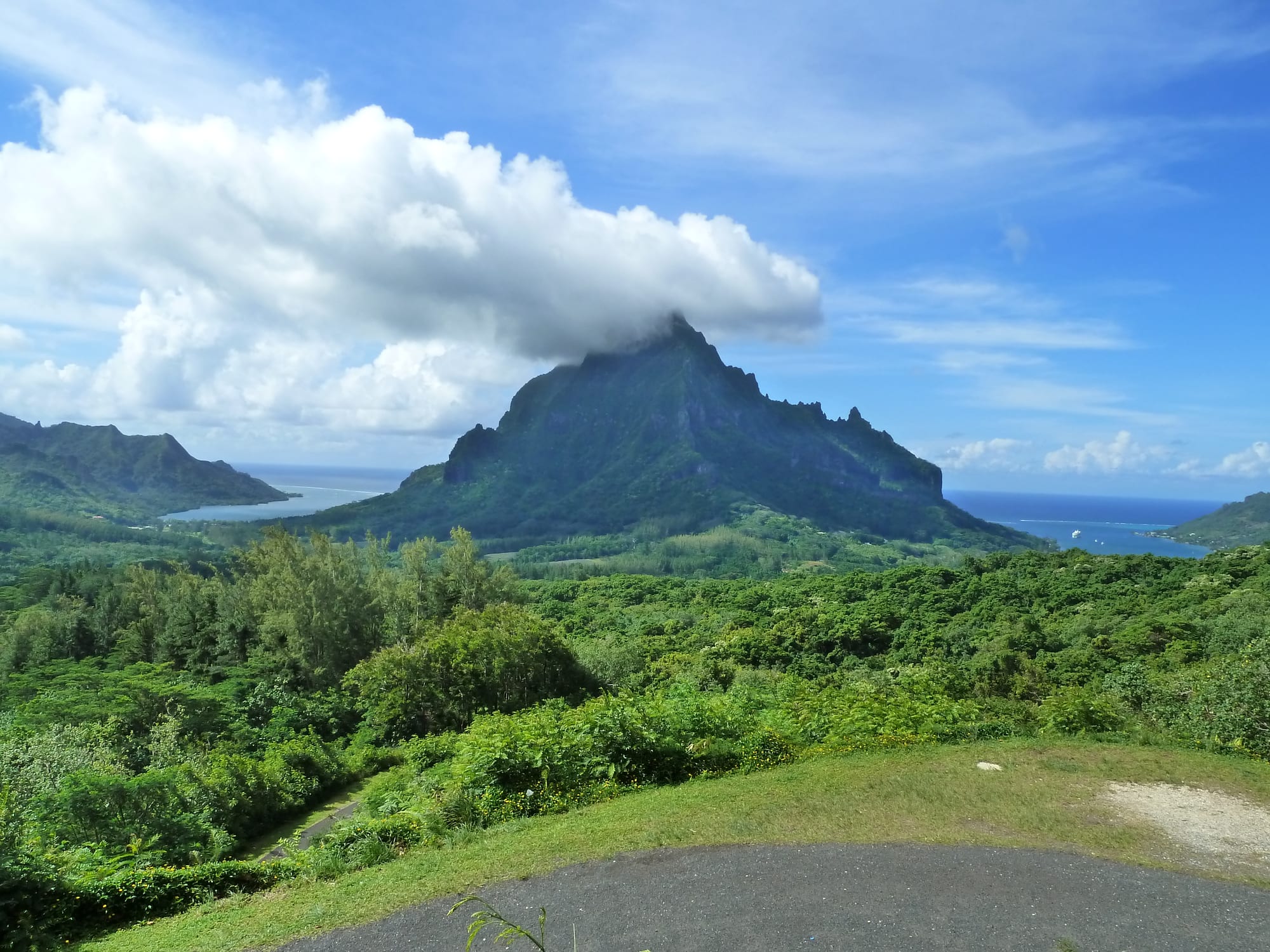
Moorea, a heart-shaped island just across a 17-kilometre channel from Tahiti, is the easy favourite — a wall of green shark's-tooth peaks around two deep bays, pineapple plantations, and a shallow lagoon good for snorkelling and stand-up paddling. The Belvédère road climbs past an ancient marae to a lookout over both bays; the lagoon has stingray and whale-watching (July–October) and a small public beach at Temae.
The ferry from Papeete takes about 30 minutes, making it an easy add-on or day trip.
4. Huahine
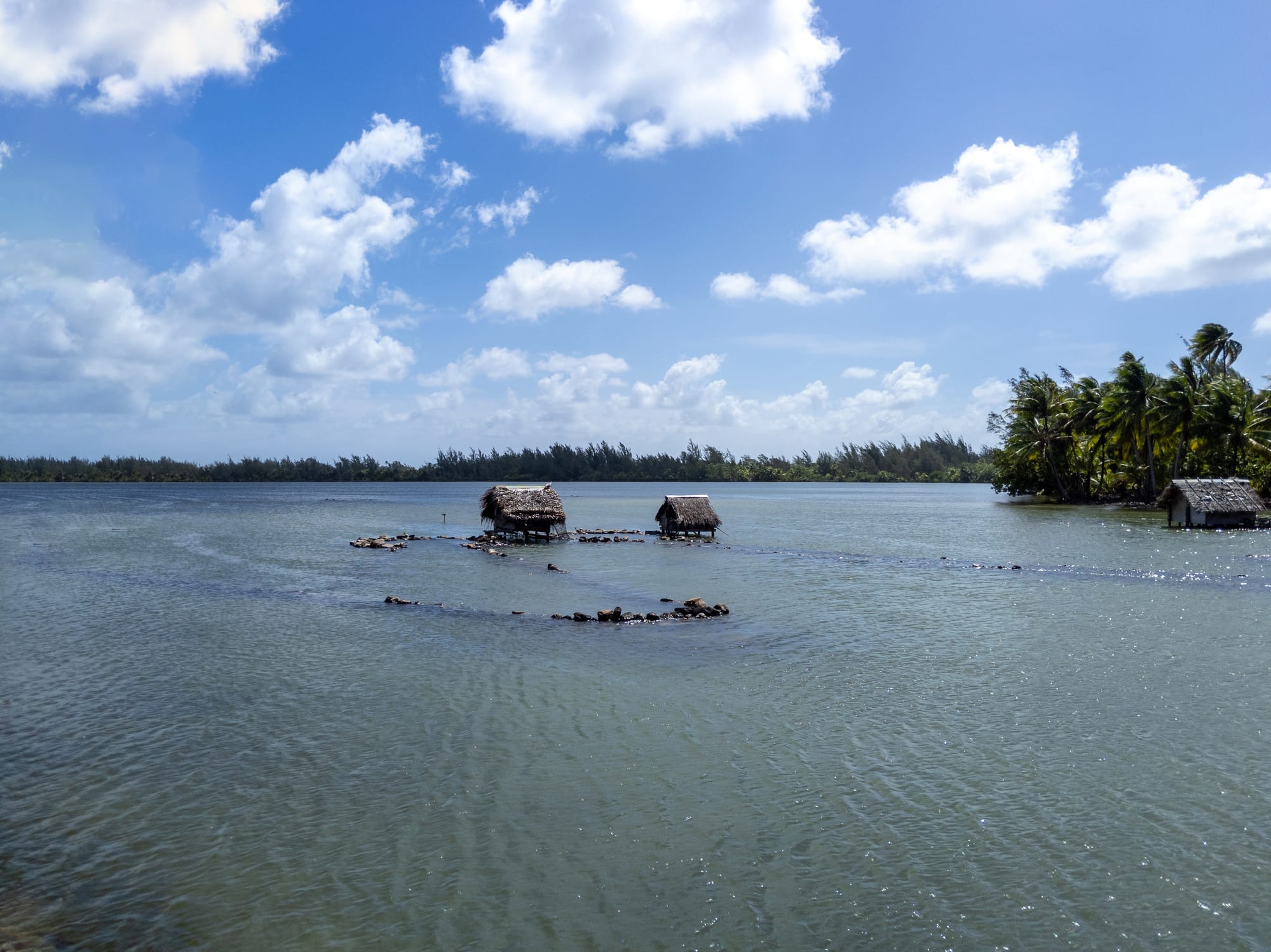
Huahine, an hour by boat or a short flight from Bora Bora, is two islands — Huahine Nui and Huahine Iti — joined by a bridge over a turquoise channel. It is the quiet one: vanilla and melon farms, a slow main village at Fare, blue-eyed sacred eels in a stream at Faie, and one of the richest concentrations of pre-European temple sites (marae) in Polynesia around Lake Fauna Nui.
It rewards renting a bike or scooter and simply circling the coast.
5. Raiatea and Taha'a
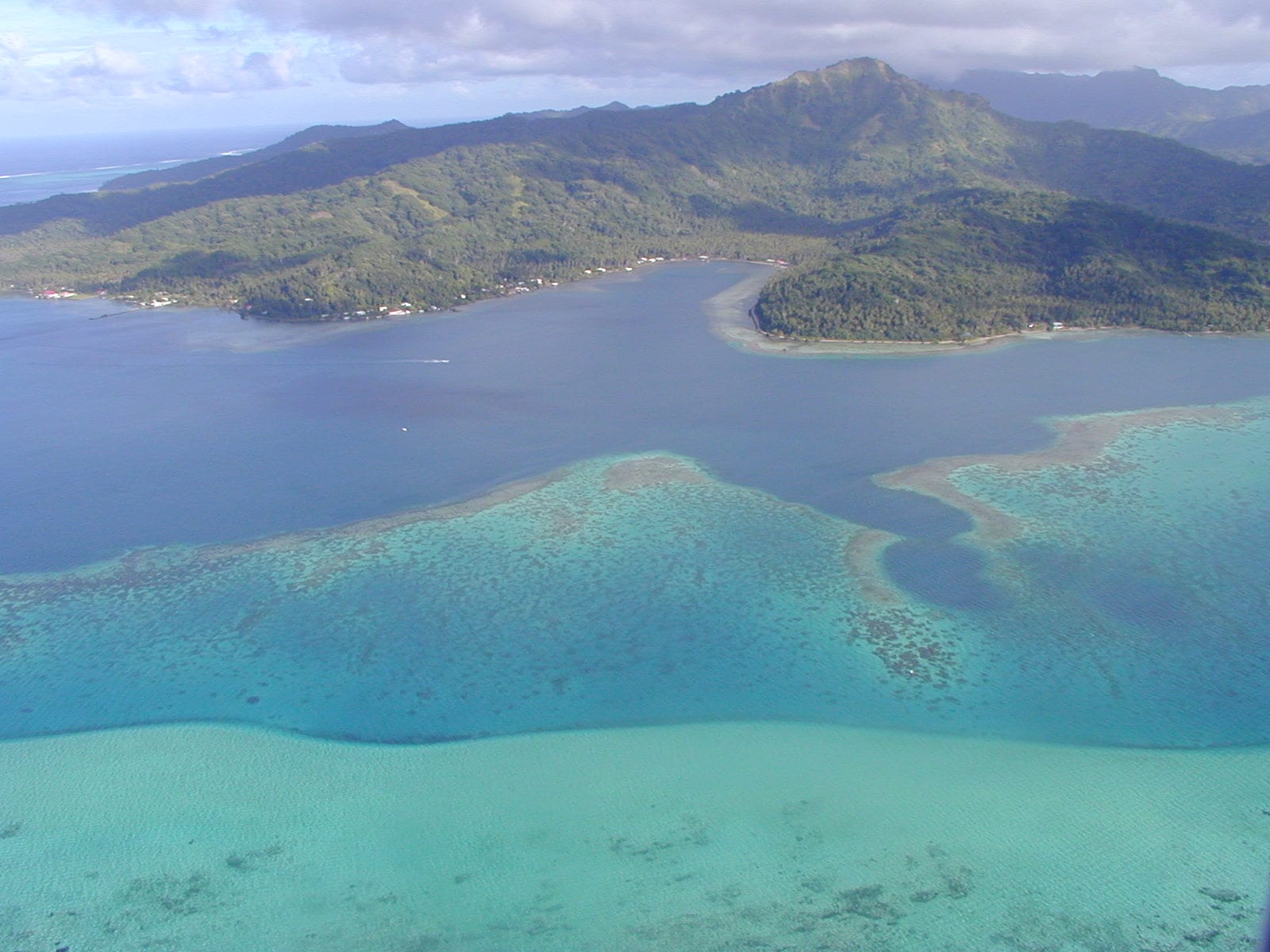
Raiatea, the second-largest island, was the ancient religious and voyaging centre of eastern Polynesia; its Taputapuātea marae, a great open-air temple complex, is a UNESCO World Heritage Site and the point from which canoes are thought to have set out to settle Hawaii and New Zealand. Raiatea shares a lagoon with Taha'a, the "vanilla island", ringed by motu with a famous drift-snorkel "coral garden" between two of them.
Raiatea is also the yacht-charter base for the Leeward Islands.
6. Rangiroa
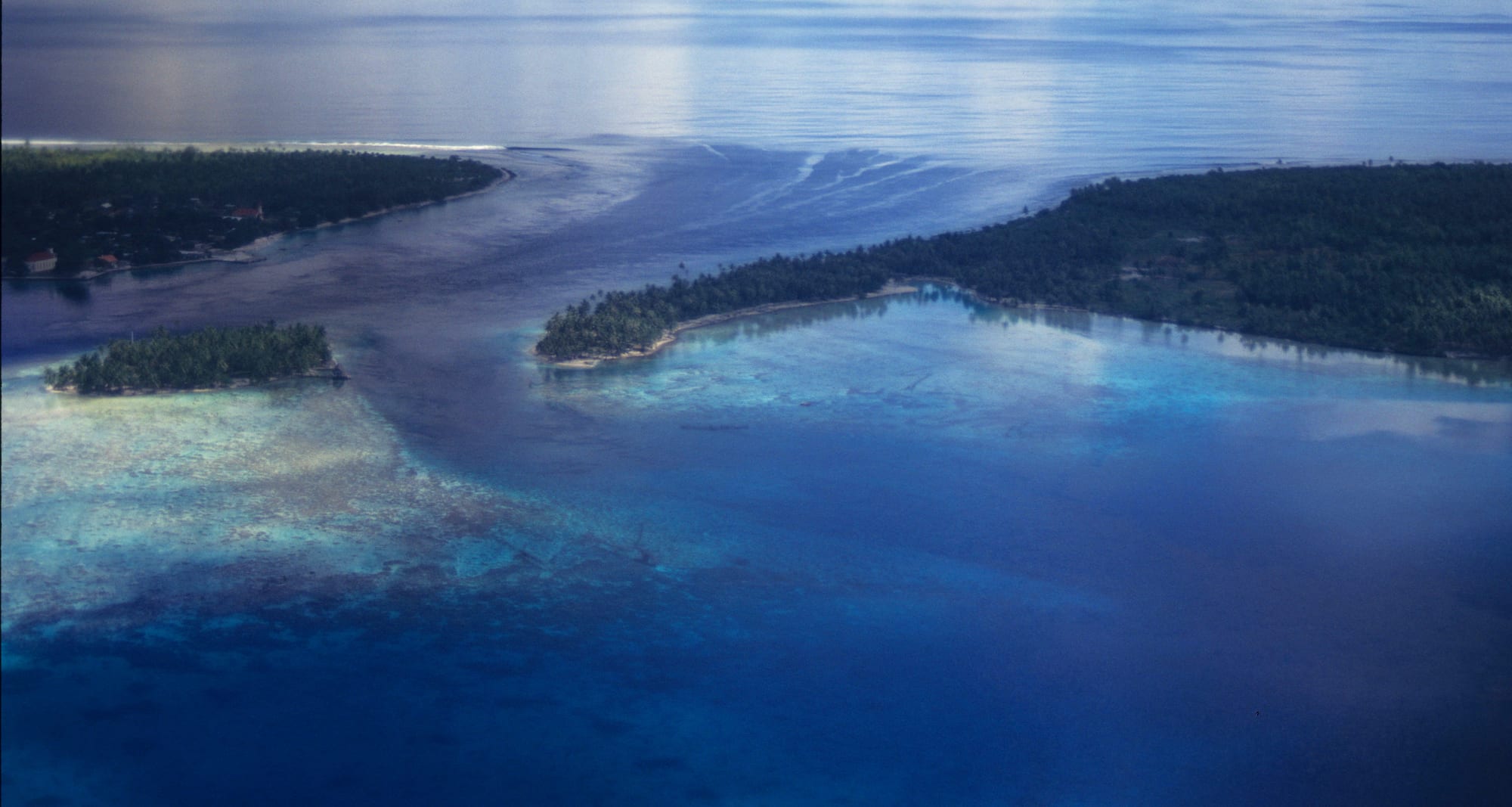
Rangiroa, in the Tuamotus, is one of the largest atolls in the world — a ring of coral 80 kilometres across enclosing a lagoon so big the far side drops below the horizon. The two reef passes, Tiputa and Avatoru, are world-class drift dives: the incoming tide sweeps you past grey reef sharks, hammerheads, manta rays, and resident bottlenose dolphins. The "Blue Lagoon" and the pink-sand islet are boat-trip highlights.
It has a handful of small hotels and pensions and its own vineyard.
7. Fakarava
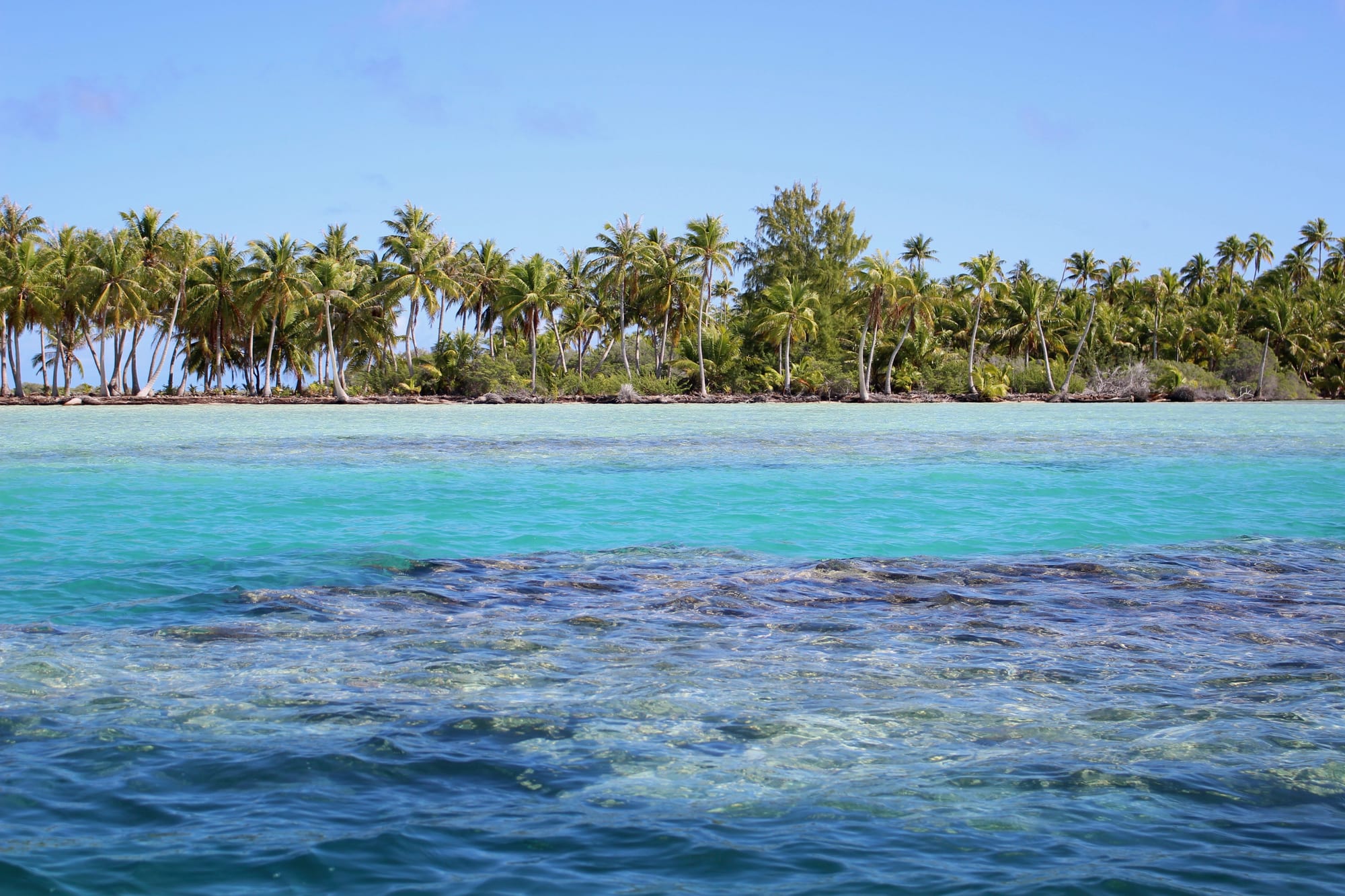
Fakarava, a long rectangular atoll southeast of Rangiroa, is a UNESCO Biosphere Reserve and a diver's pilgrimage. Its southern pass, Tetamanu, is famous for the "wall of sharks" — hundreds of grey reef sharks hanging in the current in a single line — and for the grouper spawning aggregation each June that draws them. The northern village of Rotoava is the base; the pink-sand beaches of the southern motu are among the finest in the territory.
Getting to the south pass means a boat transfer and a stay at a rustic dive pension.
8. The Marquesas
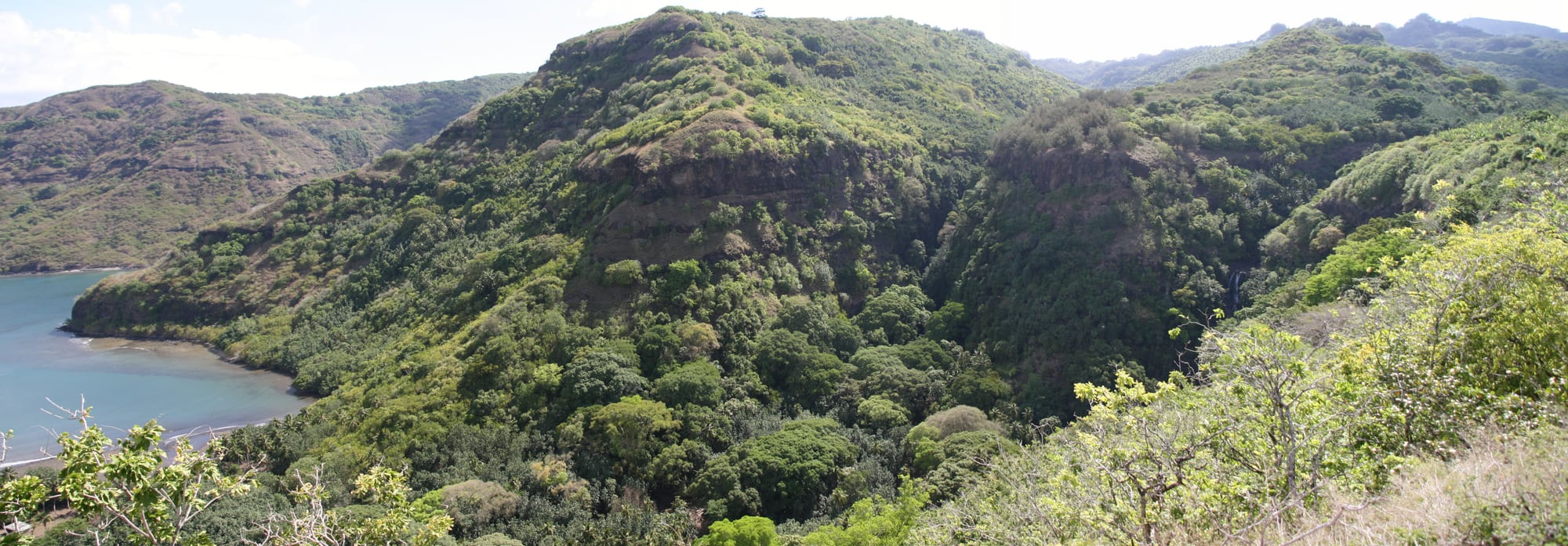
The Marquesas, about 1,400 kilometres northeast of Tahiti, are a world apart: young volcanic islands with knife-edge ridges, plunging valleys, wild horses, and Pacific swell breaking straight onto black cliffs, with no lagoon. They have the largest surviving stone temple platforms (tohua and me'ae) and tiki in Polynesia, a distinct language and tattoo tradition, and the graves of Paul Gauguin and Jacques Brel on Hiva Oa.
Most visitors arrive on the supply ship Aranui or fly to Nuku Hiva or Hiva Oa for a hiking- and archaeology-focused trip.
9. Teahupo'o and the surf coast
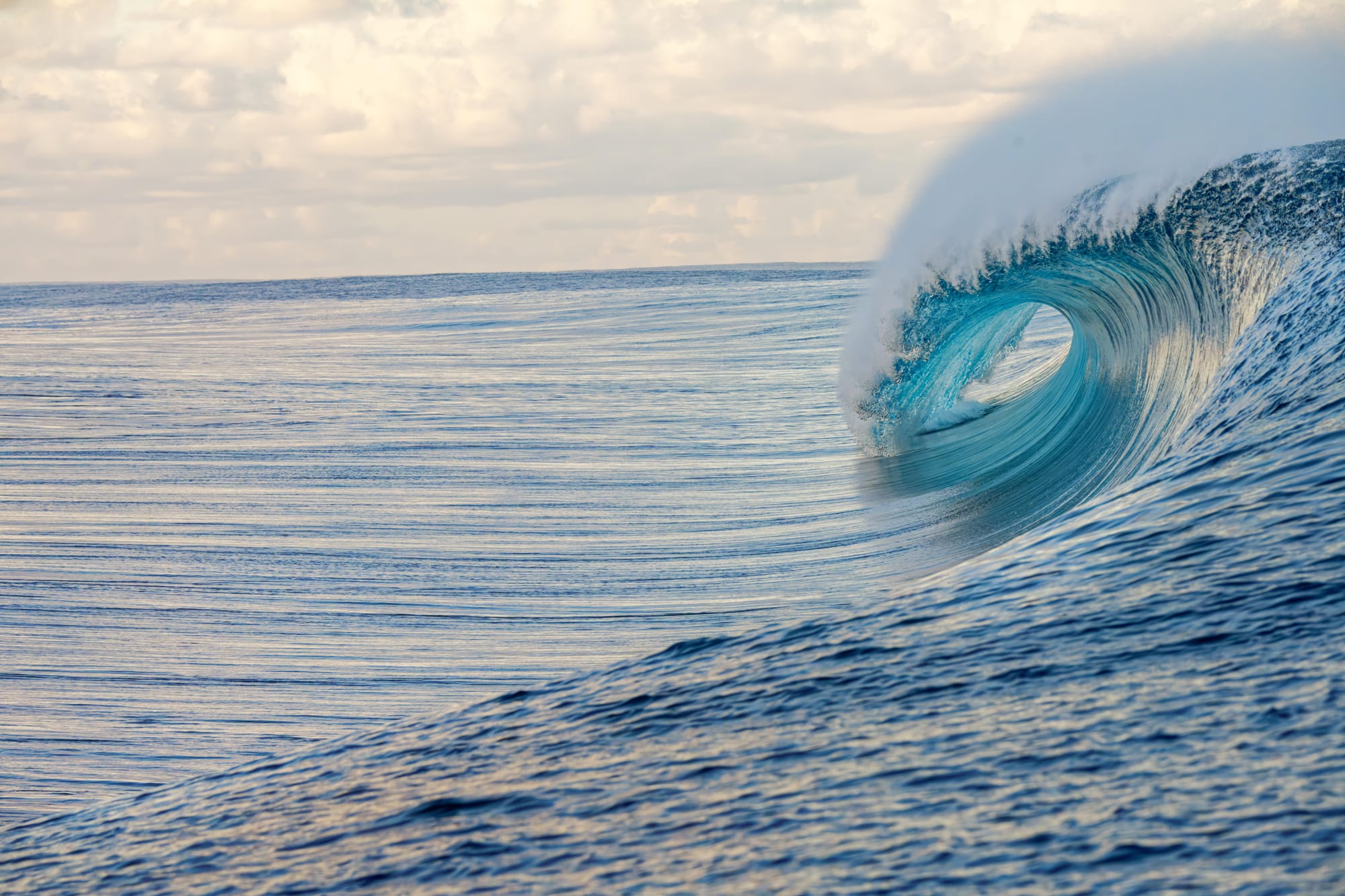
At the end of the road on Tahiti Iti sits Teahupo'o, home to one of the heaviest, most photographed waves on earth — a thick slab that breaks in shallow water over a sharp reef, ridden only by experts and surfed at the 2024 Paris Olympics. Even for non-surfers, a boat trip out to watch from the channel is a spectacle, and the green, sleepy end of the island — the "Fenua Aihere" coast reachable only by boat or on foot — is a quiet contrast to the resorts.
The village has simple pensions and is about a 90-minute drive from Papeete.
Distances and airfares make French Polynesia a trip to plan carefully. A common route is a night on Tahiti, then Moorea, then one or two of Bora Bora, Huahine, or Raiatea; adding a Tuamotu atoll for diving or the Marquesas for hiking needs 10 days or more.