Culture & Customs · Finland
Finland: Silence, Sauna and the Midsummer Fire
A largely secular Lutheran country where most teenagers still go to confirmation camp, a handshake that is brief and firm, a sauna treated almost as a church, and a year lit by bonfires, candles and a national epic
By Worldlore Editorial · 30 September 2026
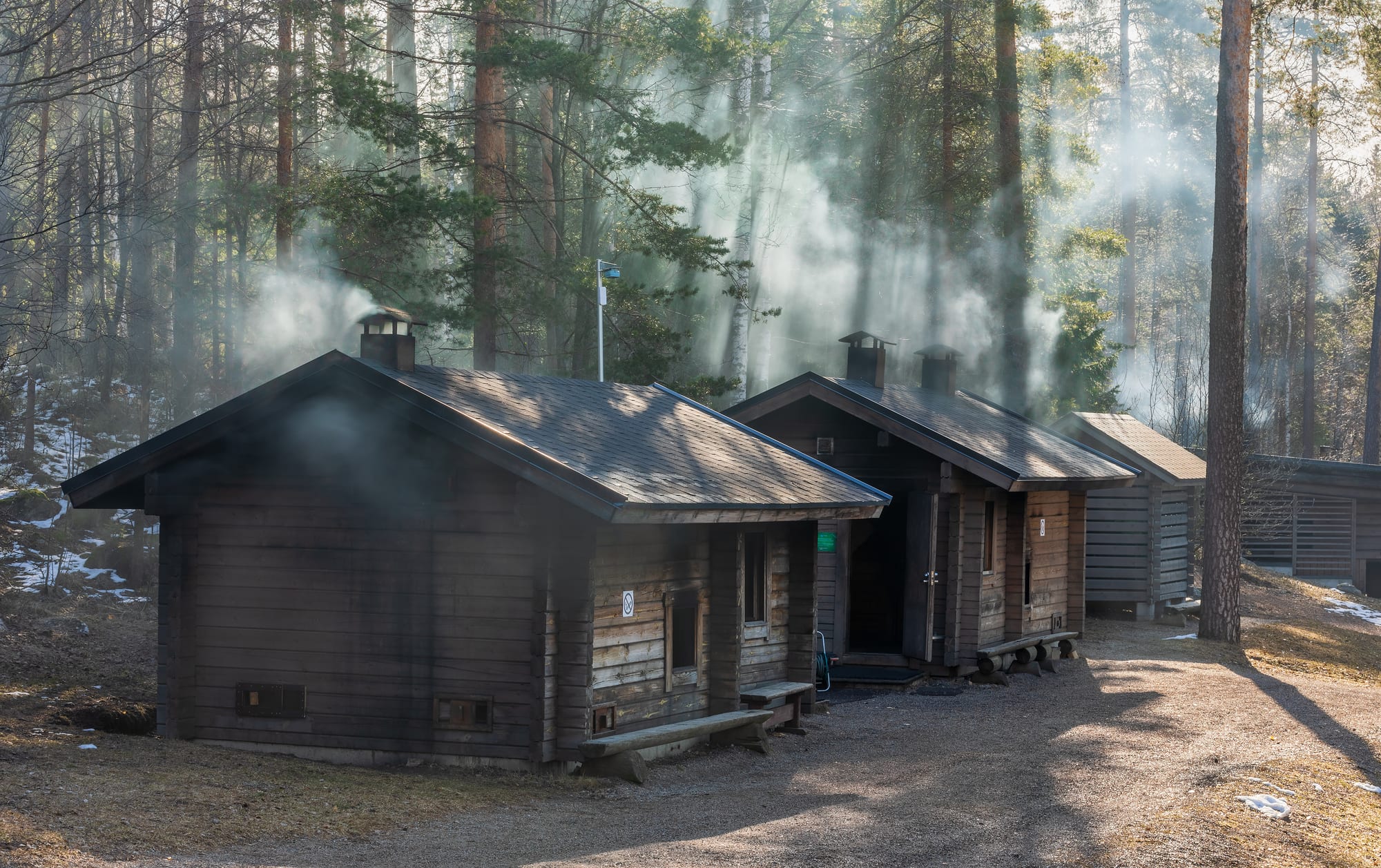
In a small wooden room, a handful of people sit on the benches in near silence. Someone ladles water onto the hot stones of the stove, and a wave of steam, the löyly, rolls up to the ceiling and down over their shoulders. Nobody gives a speech, nobody tells anyone else how hot it should be, and after a while someone gets up, walks out and slips into the lake. Finns sometimes say that one should behave in a sauna as one would in church, and the comparison is more than a joke. The sauna gathers up much of what Finland values: equality, calm, honesty, a closeness to nature, and a comfortable relationship with silence.
Faith, identity and values
Finland is formally a Lutheran country and in daily life a largely secular one. The Evangelical Lutheran Church of Finland counts just over 3.5 million members, about 60 per cent of the population, a share that has been falling for years. The Orthodox Church of Finland, with around 57,000 members, or about one per cent, shares the status of a national church. Finns rarely talk about faith, but the church still frames many of life's milestones, and religious views, whatever they are, are treated with respect.
The values that shape everyday behaviour are clear and widely shared: equality and fairness, trust, honesty and individual freedom. Modesty is prized. People tend not to single themselves out in a group, and they avoid loud talk and boasting. Privacy and personal space matter a great deal. Gender equality is taken for granted, and chauvinistic attitudes are simply unacceptable.
Communication follows the same principles. Finns speak directly and mean what they say, so a verbal agreement is treated as binding and even a casual invitation is taken seriously. Interrupting is considered rude. Pauses in conversation are not awkward: silence is regarded as part of communication, and there is no pressure to fill it with small talk. Punctuality is part of this reliability. Arriving on time is expected, a few minutes early is better, and being more than about a quarter of an hour late calls for an apology or an explanation.
Finland is also home to the Sámi, an Indigenous people of the far north with their own languages, their own music, the joik, and a way of life in which reindeer herding remains a cornerstone. The Sámi Parliament of Finland has drawn up ethical guidelines for tourism, which ask visitors to remember that they are guests in an area with its own customs.
Greetings and meeting people
The Finnish handshake is brief and firm, with direct eye contact and none of the supporting gestures, such as a hand on the shoulder or upper arm, common elsewhere. It is used on meeting and in formal situations. Hugs are kept mostly for close friends, and kissing on the cheek is rare; three kisses would strike most Finns as excessive. People introduce themselves with their first name followed by their surname.
Forms of address are informal. First names are widely used, even between colleagues and people who have only just met, and titles such as Doctor or Professor are kept mainly for professional settings, though visitors are not expected to use them. Looking people in the eye while talking is a sign of honesty and sincerity. Finns appreciate it when visitors know something about their country and its achievements.
Hospitality and being a guest
Visits to other people's homes are agreed in advance rather than made on the spur of the moment, and shoes are taken off at the door. Flowers or a bottle of wine make a suitable gift. At a meal, guests wait until everyone has been served before starting, and at more formal dinners the host proposes the first toast, with eye contact exchanged over the raised glass, while speeches are made between courses. Coffee rounds off most meals and is served at almost every celebration. Anyone who wants to smoke in a private home should ask first.
In restaurants, service is included in the bill. Tipping is not expected, though it is not refused, and rounding up a bill paid in cash is common. An invitation to a summer cottage may mean simple, even basic, conditions, and casual clothes are the rule.
The sauna is the most Finnish form of hospitality, and it has a handful of unwritten rules. Finns usually bathe naked, even with strangers, although a towel or swimsuit is perfectly acceptable for visitors, and it is polite to shower first. Groups of men and women usually take their sauna separately, while families go together; public saunas mark areas for men, women or mixed use. There is no rule about how often to throw water on the stove, only a courtesy to consider the people on the benches. The mood is calm and quiet. Some bathers gently swat themselves with a vihta, a bundle of fresh birch twigs, and many take a cooling dip in a lake or the sea between rounds. Above all, no one tells anyone else how to take a sauna: it is a matter of personal preference.
Festivals and life's big moments
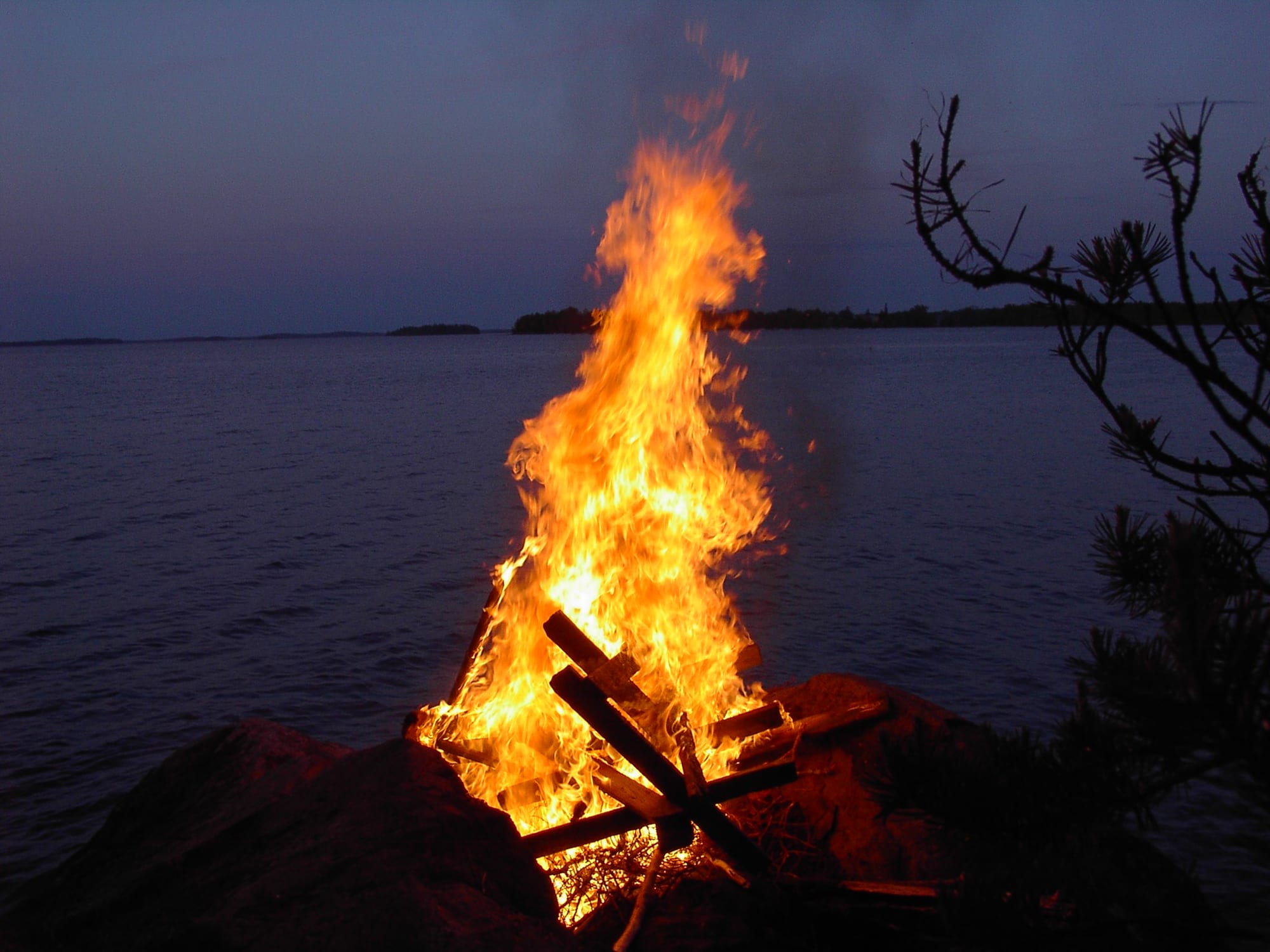
Midsummer, juhannus, is celebrated on the weekend nearest the summer solstice, when the sun hardly sets or, in much of the country, does not set at all. Many Finns head for a summer cottage for bonfires, sausages, sauna and swimming. Great bonfires, kokko, are traditionally lit on lakeshores and by the sea on Midsummer Eve, and fire was once believed to drive away evil spirits. Birch branches are placed on either side of front doors to welcome visitors, and by a custom that lives on, unmarried women sleep with seven kinds of wild flower under their pillow in the hope of dreaming of a future husband. After Midsummer, much of the country slows down for the summer holiday season.
The rest of the year has its own rituals. Vappu, on 1 May, turns the streets into a carnival as students and graduates put on their white student caps and people drink sima, a homemade mead, with doughnuts and funnel cakes. Independence Day, on 6 December, is quieter and more reflective: candles are placed in windows, there are torchlit processions, and families watch the President's Independence Day reception on television. At Easter, children dress up as witches on Palm Sunday or Holy Saturday and go from door to door for sweets. On 13 December, a crowned Lucia leads a procession of light through the darkest time of the year.
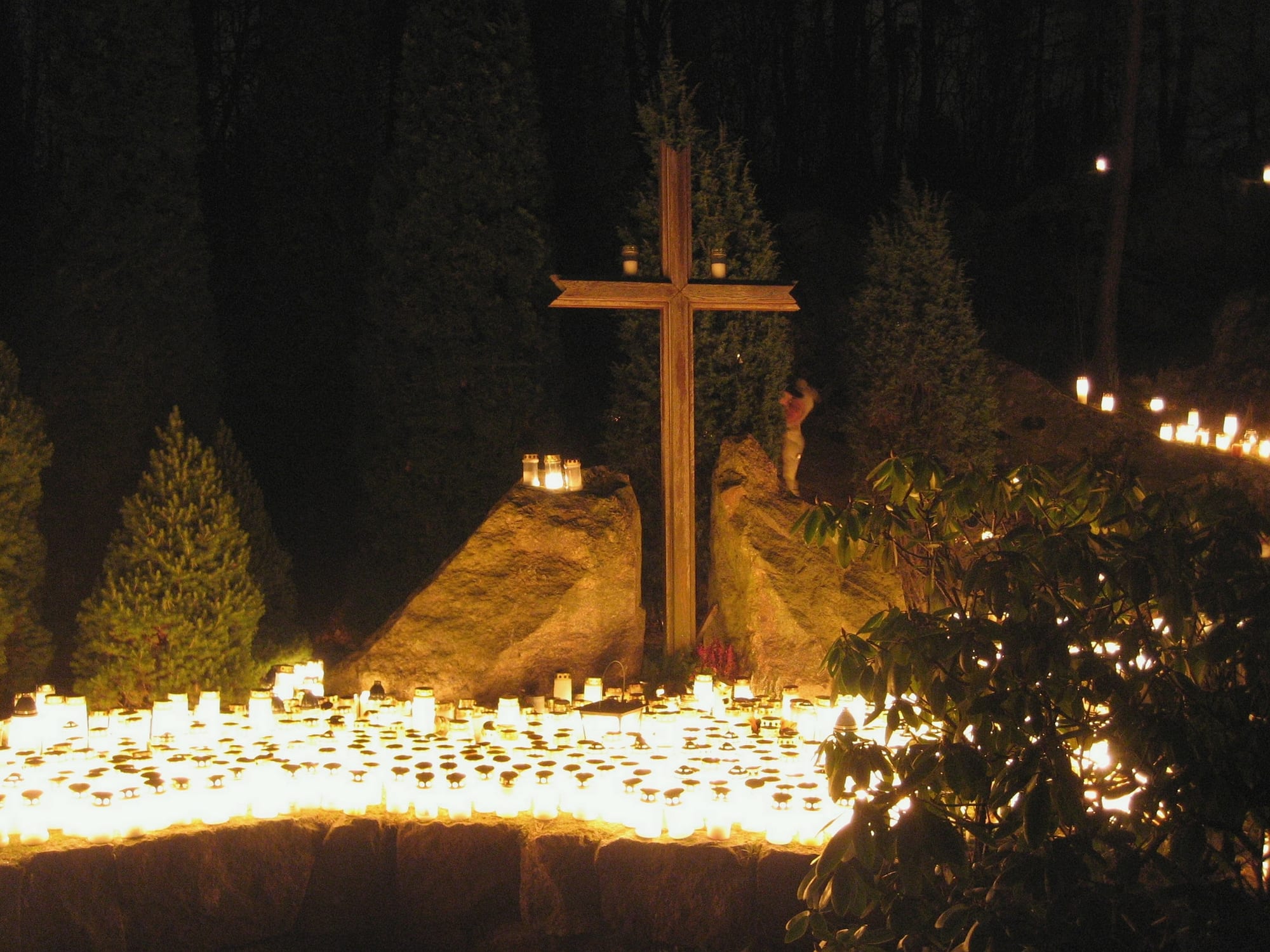
Christmas is celebrated at home with family, and Christmas Eve is the main day. At midday the Declaration of Christmas Peace, a tradition rooted in the Middle Ages, is broadcast across the country on television and radio. The Christmas sauna, marking a break from work and a chance to cleanse body and mind, is a ritual in many homes. As darkness falls, families visit cemeteries to light candles on the graves of their dead, a custom that became a national tradition after the Second World War and fills cemeteries with light regardless of people's religious affiliation.
Life's milestones still often pass through the church. Weddings, particularly popular in summer, may be held in church, where the couple kneel at the altar and exchange rings, and they are often preceded by a stag or hen party, a custom that has taken distinctly Finnish shape with the help of sauna and silly costumes. Funerals usually take place two or three weeks after a death, in a church, chapel or at the graveside, and are followed by a memorial gathering, often in the parish hall, where relatives and friends share memories and comfort one another.
Arts, crafts and music
The Kalevala, Finland's national epic, sits at the heart of its cultural identity. Compiled by the physician and scholar Elias Lönnrot from folk poetry he collected in eastern Finland and Karelia, it was first published in 1835 and in its final form in 1849, with more than 22,000 lines in a distinctive trochaic metre. The epic strengthened the standing of the Finnish language and fed the national awakening that led to independence in 1917. It inspired the music of Jean Sibelius and the paintings of Akseli Gallen-Kallela, and it is celebrated every year on 28 February, Kalevala Day, also known as Finnish Culture Day.
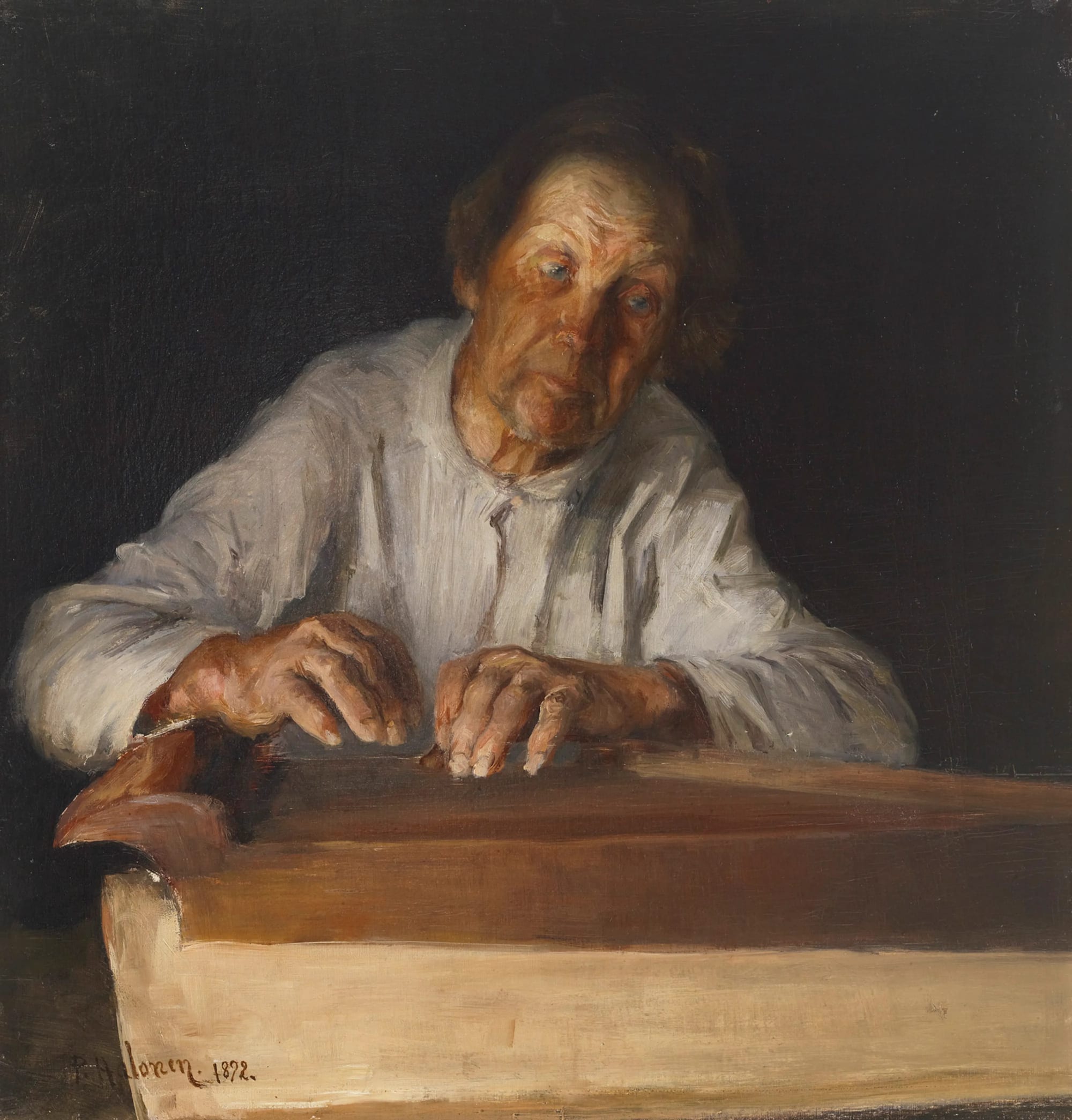
The epic's hero plays the kantele, a plucked instrument related to the zither that has been played in Finland for centuries. The simplest kind has five strings, concert instruments many more. Its gentle, harp-like sound was fading from use until a revival from the mid-20th century brought it back into wide use, and today it turns up in everything from traditional music to rock and metal. Fiddle music has deep roots too: the fiddle playing of Kaustinen, with its syncopated, dance-friendly rhythms and a large repertoire of tunes learned by ear, is on UNESCO's list of intangible cultural heritage, alongside Finnish sauna culture, handmade glass production and the Nordic tradition of clinker-built wooden boats.
Among the Sámi, the joik is far more than a song: it is a way of evoking a person, a place or an animal. Sámi clothing, the gákti, is likewise not a costume but part of a person's identity, and the Sámi Parliament asks that it be worn only by those who understand and respect it.
Dos and don'ts for visitors
- Do arrive on time; more than a few minutes late calls for an apology.
- Do take off shoes when entering a home, and agree visits in advance rather than dropping in.
- Do shake hands briefly and firmly with eye contact; save hugs for close friends.
- Do shower before the sauna, keep the mood calm, and never tell others how to take theirs.
- Do let silences be; there is no need to fill every pause with conversation.
- Don't take photographs of Sámi children or enter reindeer enclosures without permission, and never chase or disturb reindeer.
- Don't wear Sámi dress as a costume.
- Don't feel obliged to tip; service is included, though rounding up is welcome.
What to take away
Finnish customs rest on honesty, equality and respect for other people's space, and visitors who keep their word, keep to time and are content to share a comfortable silence will find the Finns warmer than their reputation.