Food · Faroe Islands
Faroe Islands: Food and the National Dish
Wind-dried mutton hung for months in open-sided sheds, a North Atlantic diet built on sheep and fish long before refrigeration existed
By Worldlore Editorial · 16 September 2026
Food shaped by wind, not sunshine
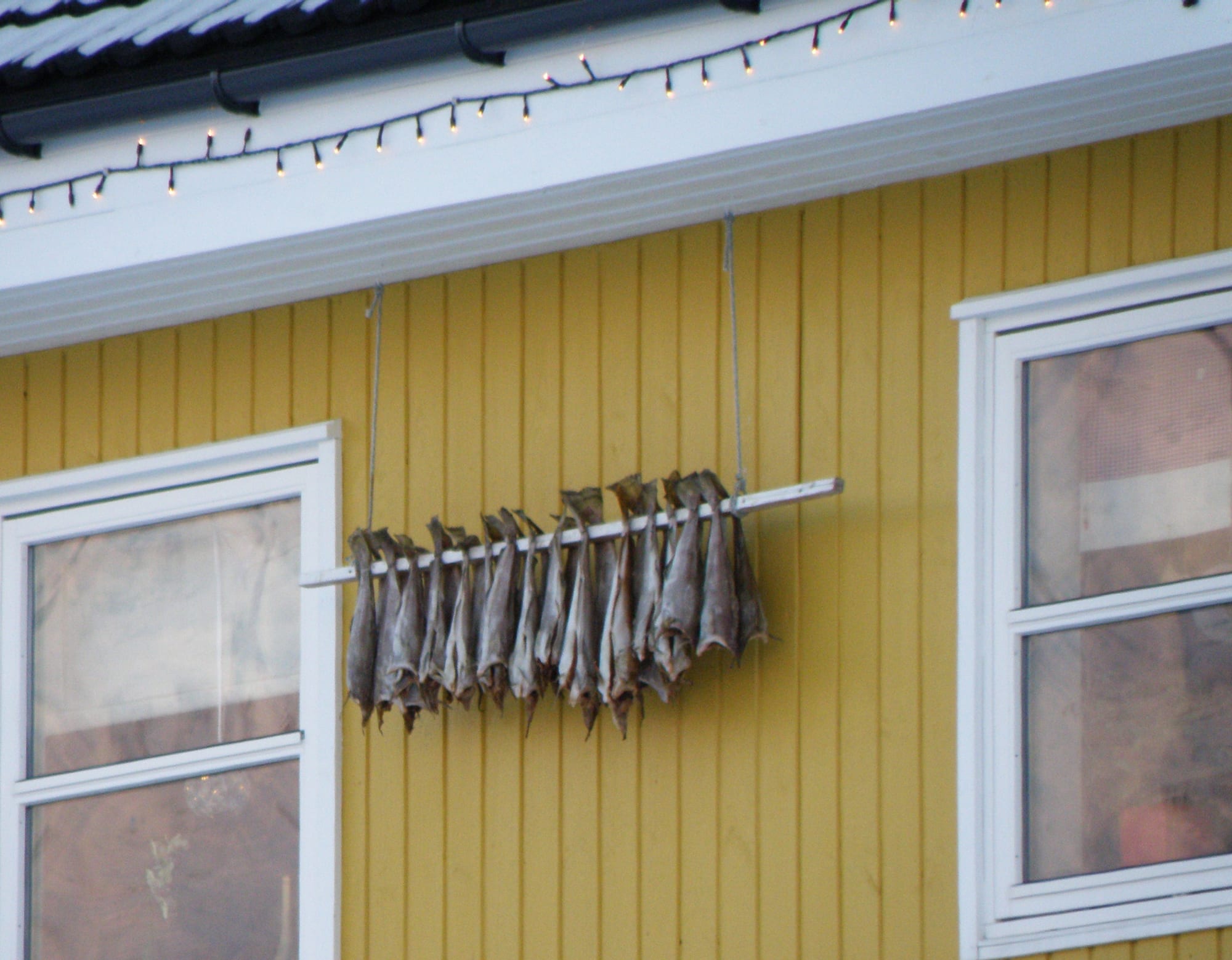
The Faroe Islands sit exposed in the North Atlantic, too windswept and cool for most farming, so their food culture grew instead around sheep, fish and a method of preservation the islands' near-constant wind made possible: hanging meat and fish to air-dry, unrefrigerated, in open-sided sheds. That technique still defines Faroese food today, as much a point of national identity as a cooking method.
The national dish: skerpikjøt
Skerpikjøt, mutton wind-dried and fermented for months, sometimes close to a year, in a hjallur (a traditional open-sided drying shed), is the Faroe Islands' national dish. The result is intensely flavoured and firm enough to be sliced paper-thin, closer in character to a cured ham than a fresh roast, and is treated as a genuine delicacy, often served thinly sliced on dark rye bread.
The pantry: sheep, fish and the ræst tradition
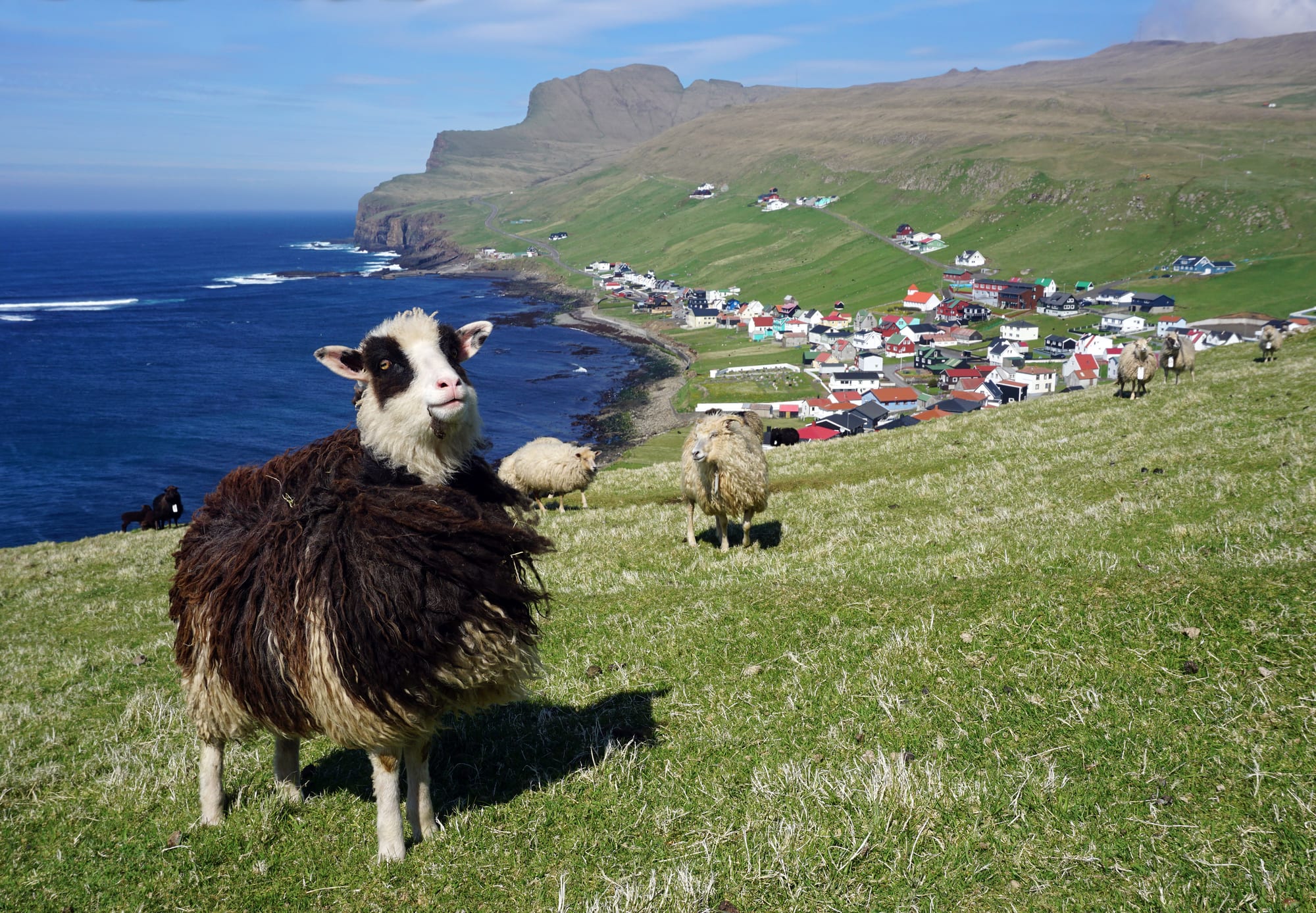
Sheep have outnumbered people in the Faroe Islands for generations, and mutton, alongside fish caught in the surrounding waters, forms the backbone of the diet. Ræst, the Faroese term for the wind-fermentation process used for both meat and fish, produces not only skerpikjøt but also ræstur fiskur, fermented fish prepared the same way, and ræst kjøt, a less intensely dried mutton eaten sooner than skerpikjøt. Little grows locally beyond potatoes and rhubarb, so imported staples fill in the rest of the everyday table.
History behind the hjallur
Isolated in the North Atlantic and without refrigeration until well into the 20th century, Faroese households relied on wind-drying to preserve meat and fish through the winter, a Norse-era technique that never fell out of use even after refrigeration arrived. The hjallur, found attached to many Faroese homes, remains a working part of the household kitchen rather than a historical relic.
Dishes to know
Five more to recognise across the Faroe Islands:
- Ræstur fiskur — fish preserved by the same wind-fermentation process
used for skerpikjøt.
- Ræst kjøt — mutton wind-dried for a shorter period than skerpikjøt, less
intensely flavoured.
- Garnatálg — a traditional dish of minced sheep innards and fat, once
everyday food and now more of a delicacy.
- Tvøst og spik — pilot whale meat and blubber, a historically important
and still-debated traditional food.
- Rhubarb desserts — one of the few crops that grows reliably in the
Faroese climate, widely used in cakes and jams.
Drinks
Tea and coffee are the everyday drinks, and Faroese beer, brewed locally by breweries such as Föroya Bjór, is widely drunk. Akvavit-style spirits, common across the Nordic countries, appear at celebrations, though Faroese alcohol sales were historically restricted and remain more tightly regulated than in much of Europe.
Eating as a traveller
Vegetarians will find options limited outside Tórshavn, since so much of the traditional diet is built on mutton and fish; the capital's small restaurant scene, including several internationally recognised kitchens in recent years, offers considerably more variety. Tap water is safe to drink throughout the islands. Trying skerpikjøt or ræstur fiskur is a genuinely distinctive, if strong-flavoured, introduction to Faroese food culture.
What to take from the table
Skerpikjøt, thin-sliced and intensely flavoured, is the dish that most directly explains Faroese food: a North Atlantic answer to the same basic problem every isolated island culture has faced, solved here with wind, a shed, and patience measured in months.