Attractions & Natural Wonders · Faroe Islands
The Faroe Islands: Ten Attractions and Natural Wonders
A waterfall that pours straight off a cliff into the sea, a lake that seems to hang above the ocean, turf-roofed villages, and bird cliffs loud with puffins
By Worldlore Editorial · 19 September 2026
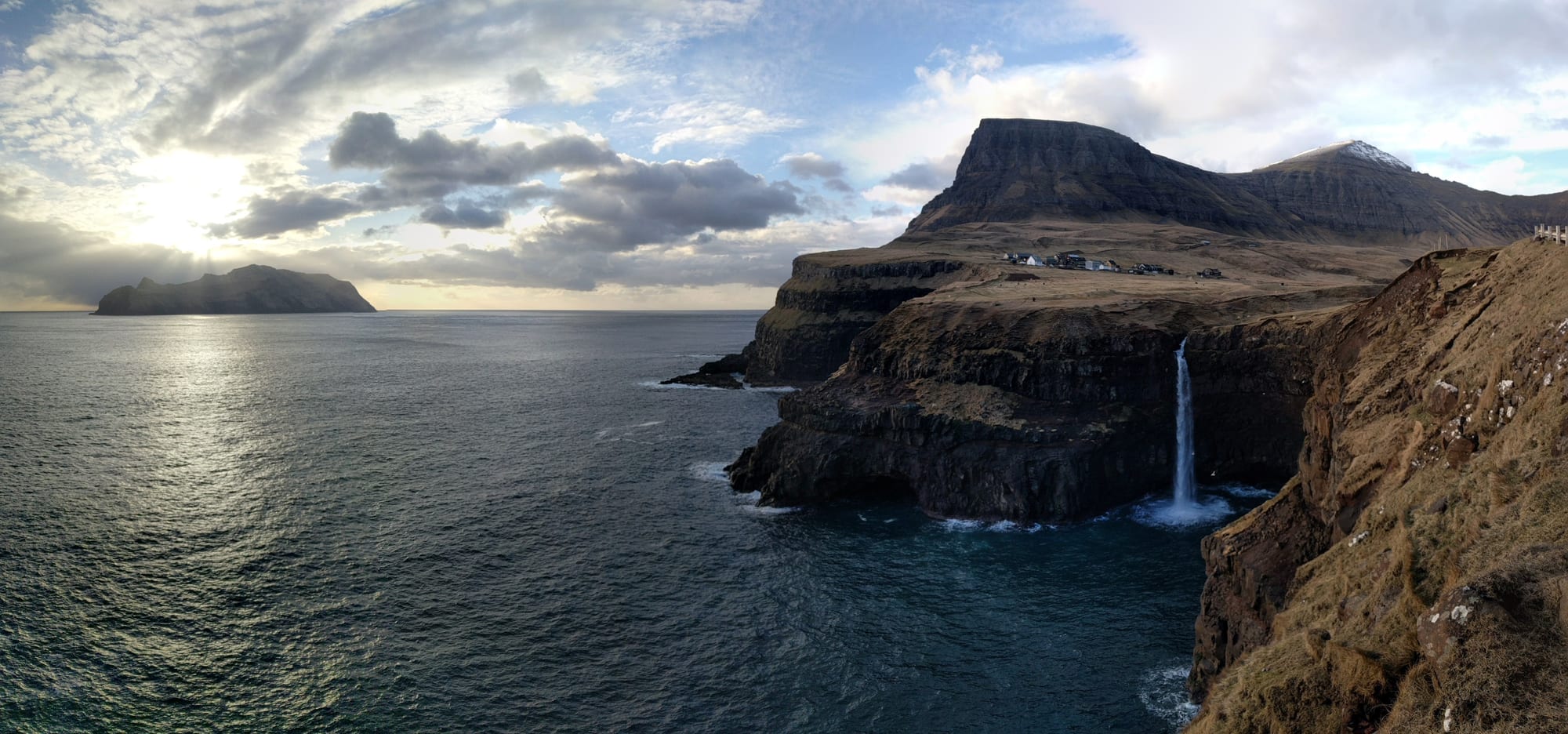
Eighteen islands in the North Atlantic
The Faroe Islands are a self-governing part of the Kingdom of Denmark — eighteen steep, treeless, grass-green islands in the North Atlantic between Scotland, Iceland, and Norway, home to about 54,000 people and rather more sheep. The weather is famously changeable ("you can have all four seasons in a day"), the light is dramatic, and a network of sub-sea tunnels, causeways, and ferries links the islands into one easy driving loop.
The ten below are spread across the archipelago but all within a day's drive or short ferry of Tórshavn. Late spring to early autumn is the practical season; summer has near-endless daylight, and puffins are ashore roughly May to August.
1. Sørvágsvatn — 'the lake above the ocean'
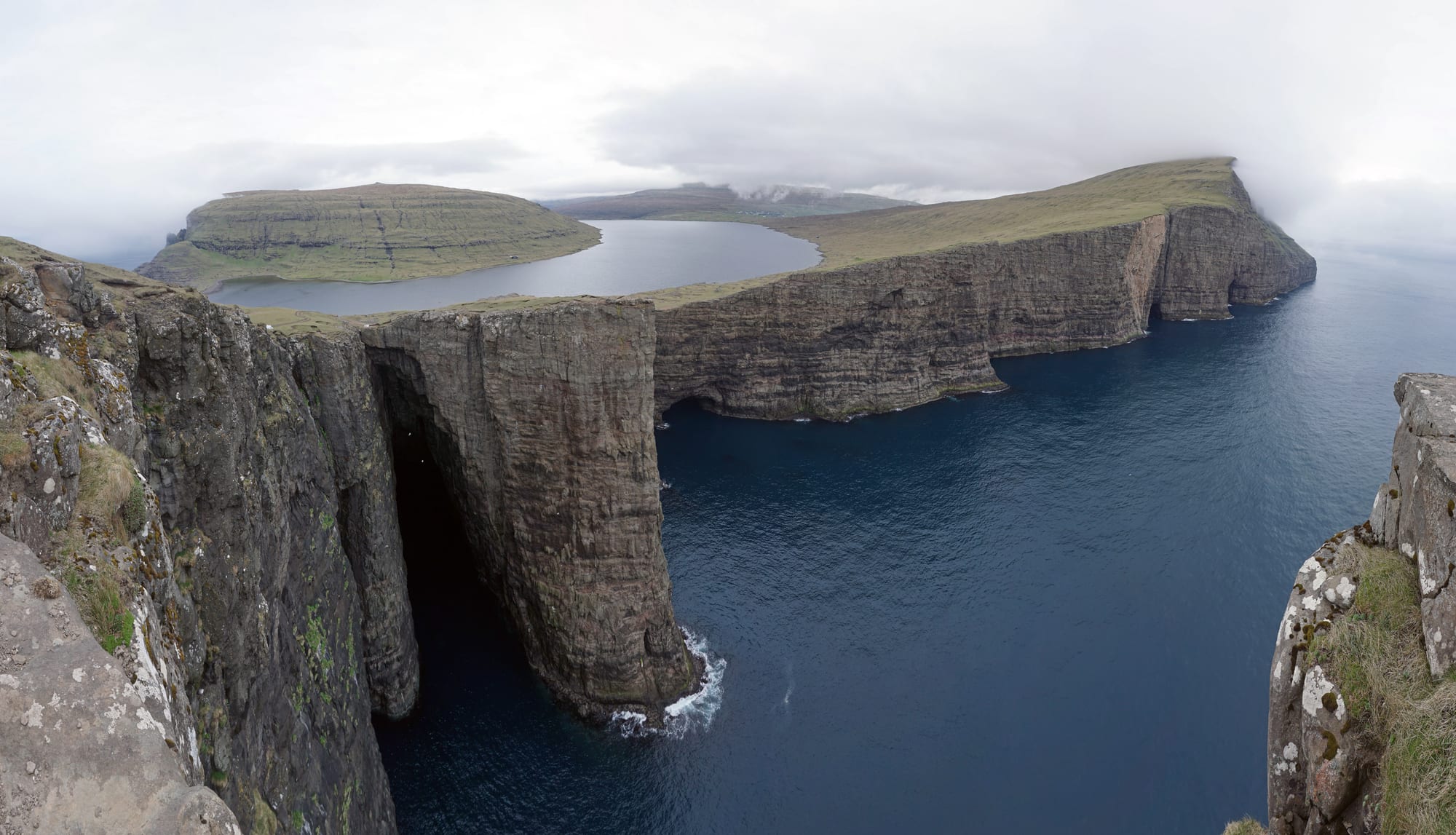
The Faroes' most-photographed view: the largest lake in the islands sits behind a low ridge on Vágar, and from the cliff of Trælanípa a trick of perspective makes it look as if the whole lake is hovering 100 metres above the sea. A well-worn path (about 45 minutes each way, now with a small landowner's fee) leads along the lakeshore to the viewpoint and the Bøsdalafossur waterfall, where the lake overflows straight into the ocean.
It is on Vágar, the airport island, so often the first or last stop of a trip.
2. Gásadalur and Múlafossur
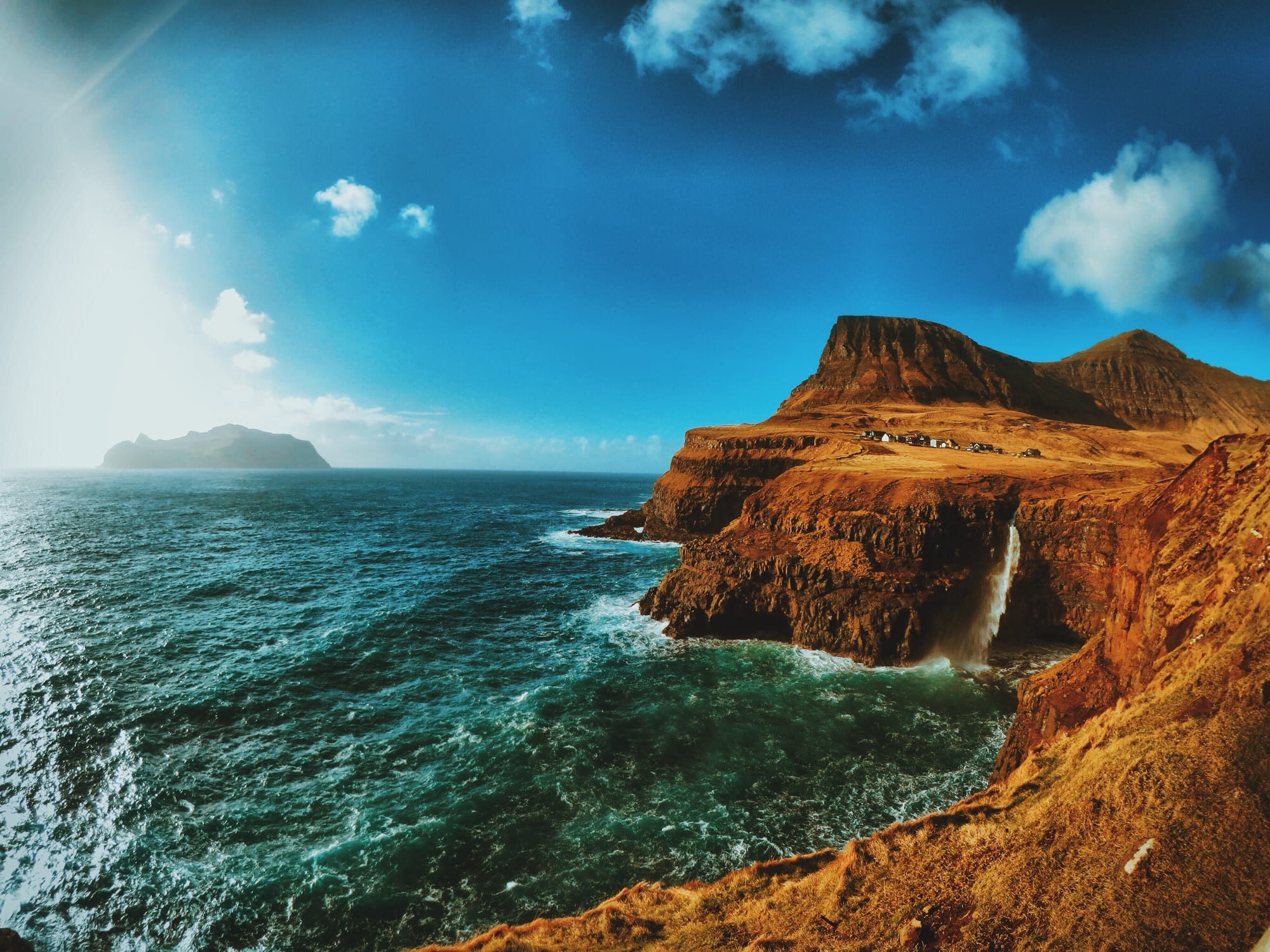
Gásadalur, a hamlet of a handful of houses on a green ledge above the sea on western Vágar, has the islands' signature waterfall: the little Múlá river runs off the cliff edge in a single drop to the Atlantic, framed by the village and the peaks of Mykines beyond. It is a five-minute walk from the car park.
It is at its best in soft light or with the sun low; midday tour buses can make the small viewpoint crowded.
3. Saksun
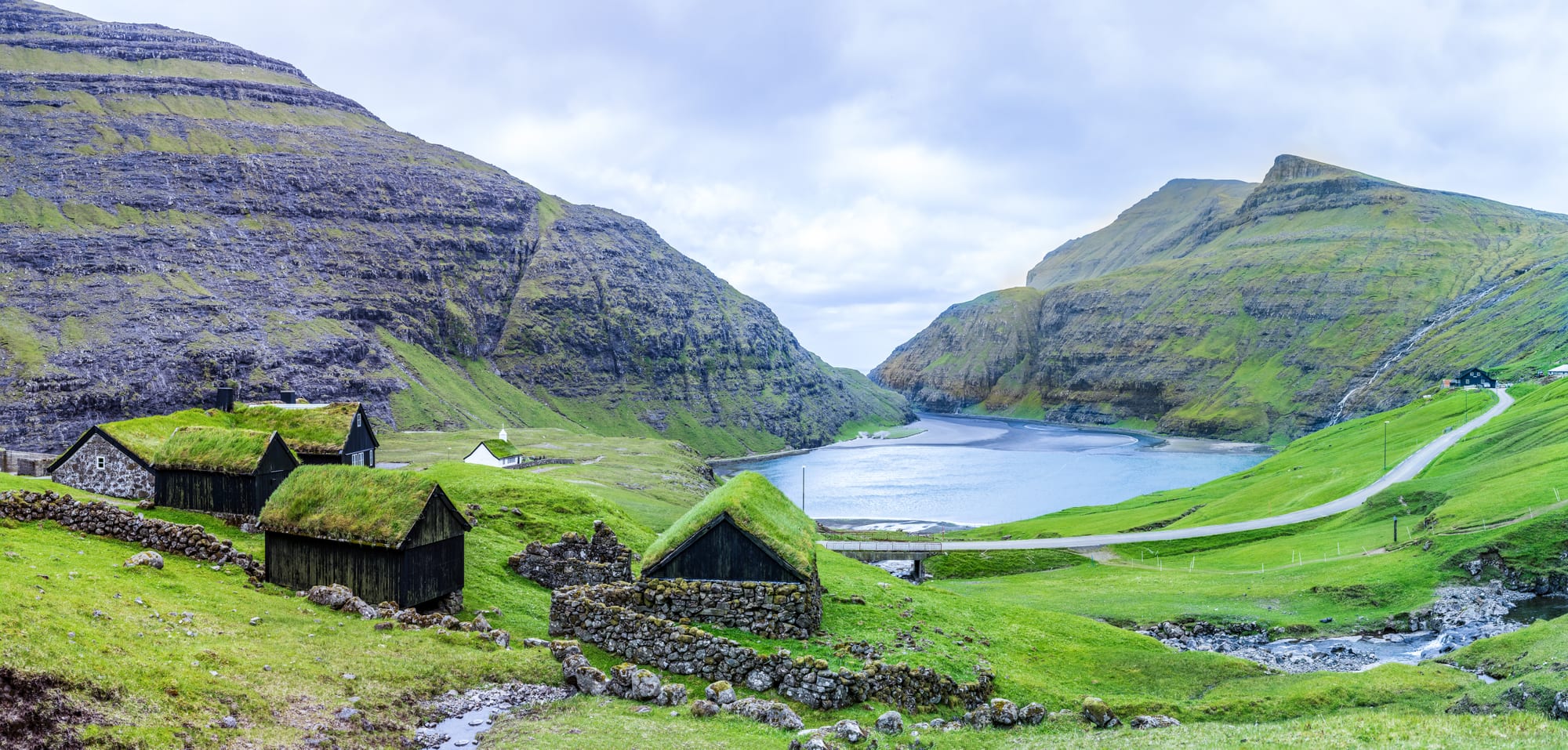
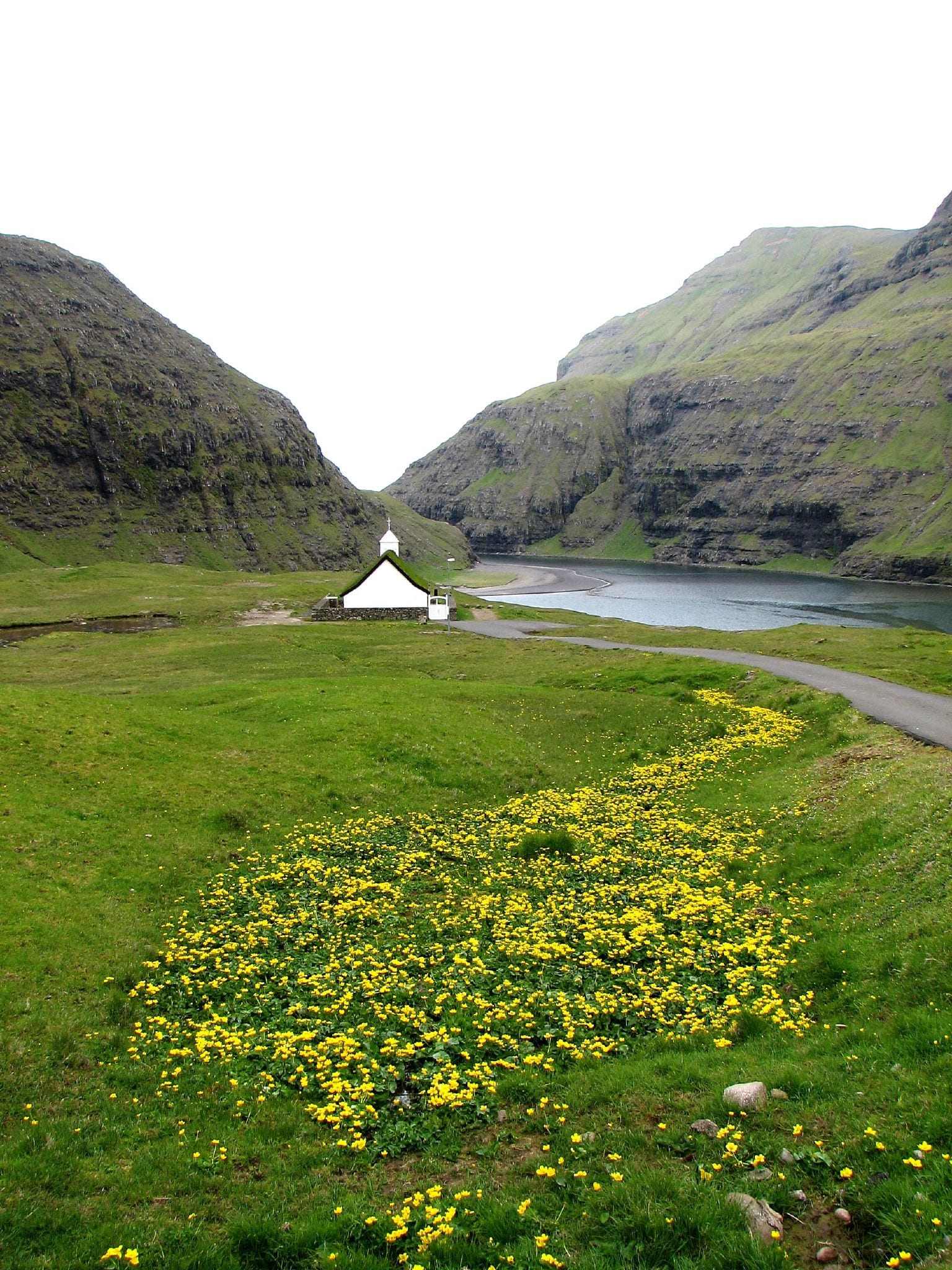
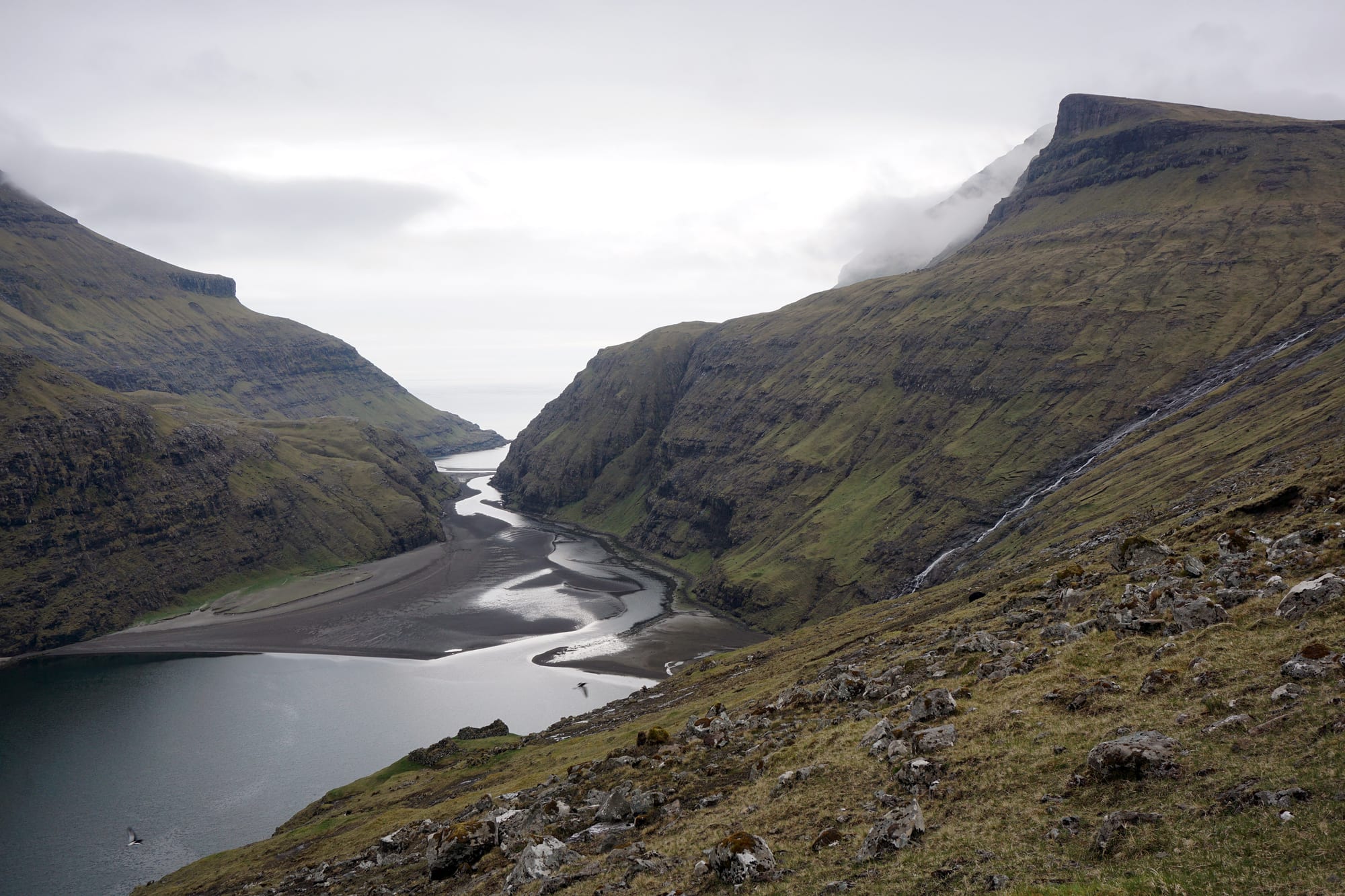
Saksun, at the head of a valley on northwest Streymoy, is a scatter of turf-roofed farm buildings and a small black church around a near-circular tidal lagoon, once a natural harbour until a storm silted up its entrance. It is one of the most idyllic spots in the islands.
Access disputes between landowners and tourists have flared here; stay on marked paths and pay any fees asked. The turf-roofed Dúvugarðar farmhouse is a small museum.
4. Tórshavn and Tinganes
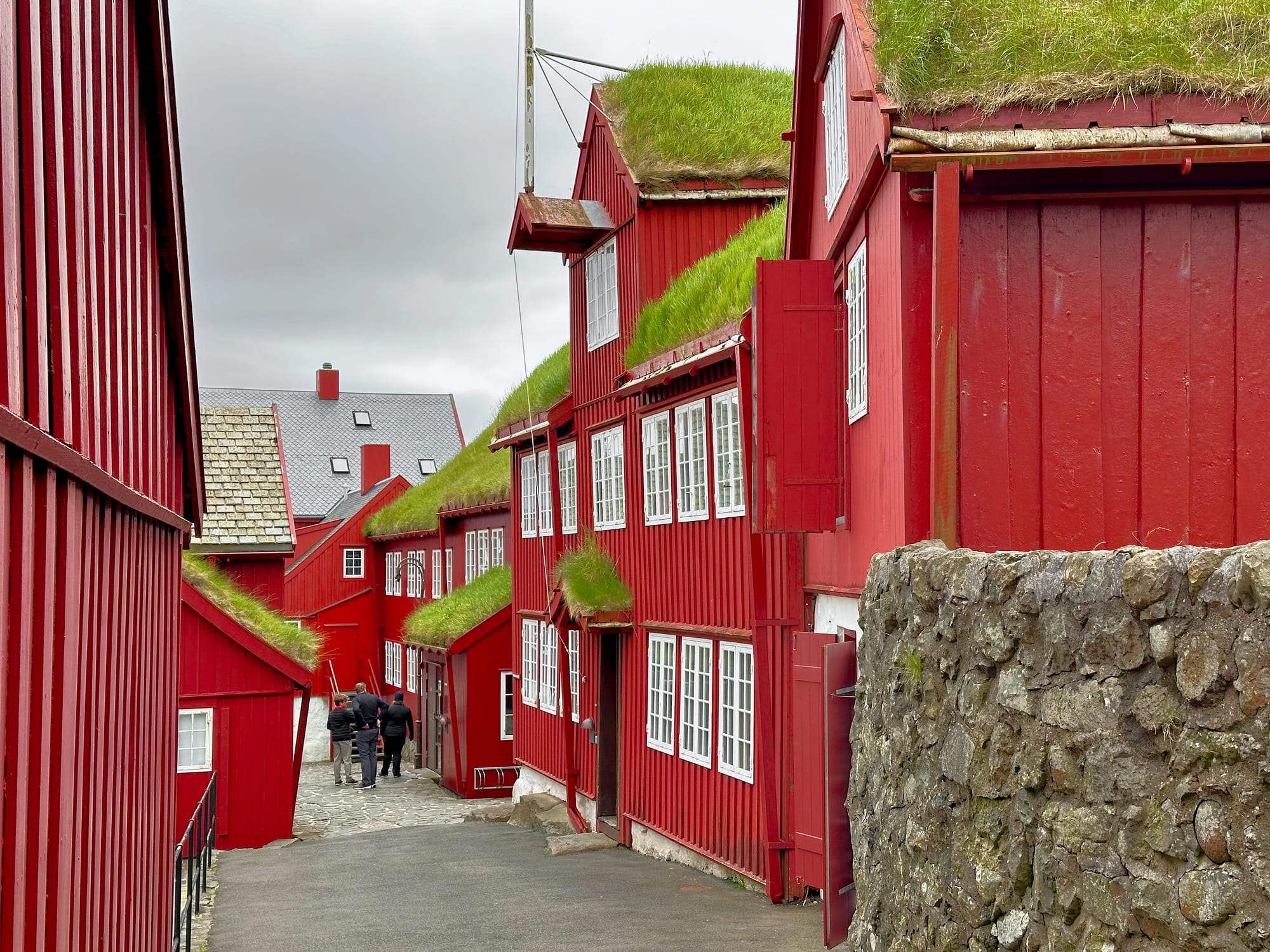
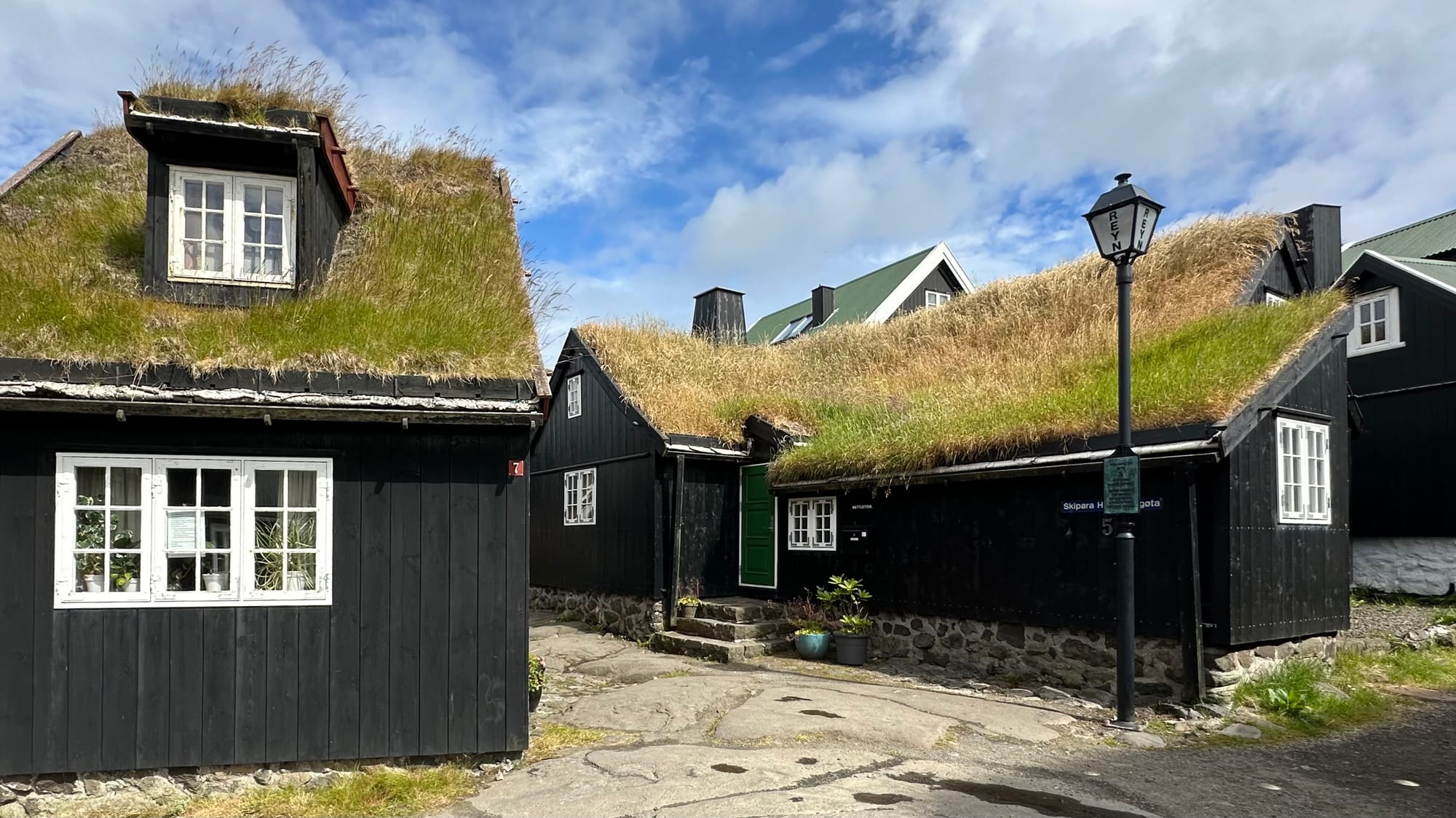
Tórshavn ("Thor's harbour") is one of the smallest capitals in the world, and its old core, Tinganes, is a knot of red-ochre timber houses with grass roofs on a rocky spit between two harbours — home to the Løgting, the Faroese parliament, which has met on this spot on and off since around AD 900, one of the oldest parliamentary sites anywhere. The old town lanes of Reyn behind it, the fortress of Skansin, and a lively small-scale food and music scene fill a day.
5. Mykines
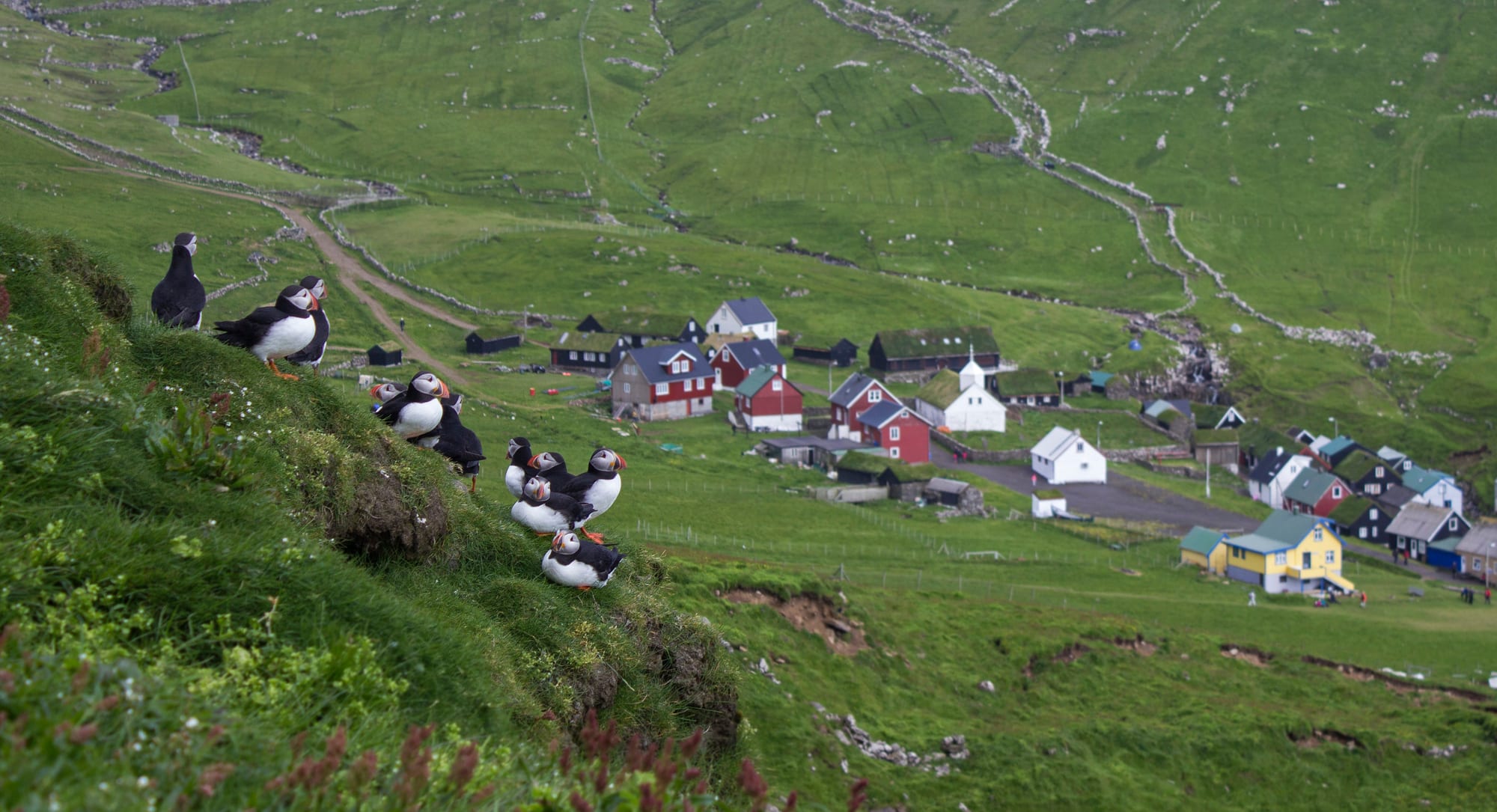
Mykines, a single-village island at the western edge of the archipelago, is the puffin island — a clifftop walk past thousands of burrow-nesting puffins to a lighthouse on an islet reached by a footbridge, with gannets, fulmars, and guillemots on the surrounding cliffs. It is reached by a small ferry from Sørvágur or by helicopter, both weather-dependent and often cancelled.
Numbers of hikers are now capped and a guide fee applies on the puffin trail; book ahead.
6. Kalsoy and the Kallur lighthouse
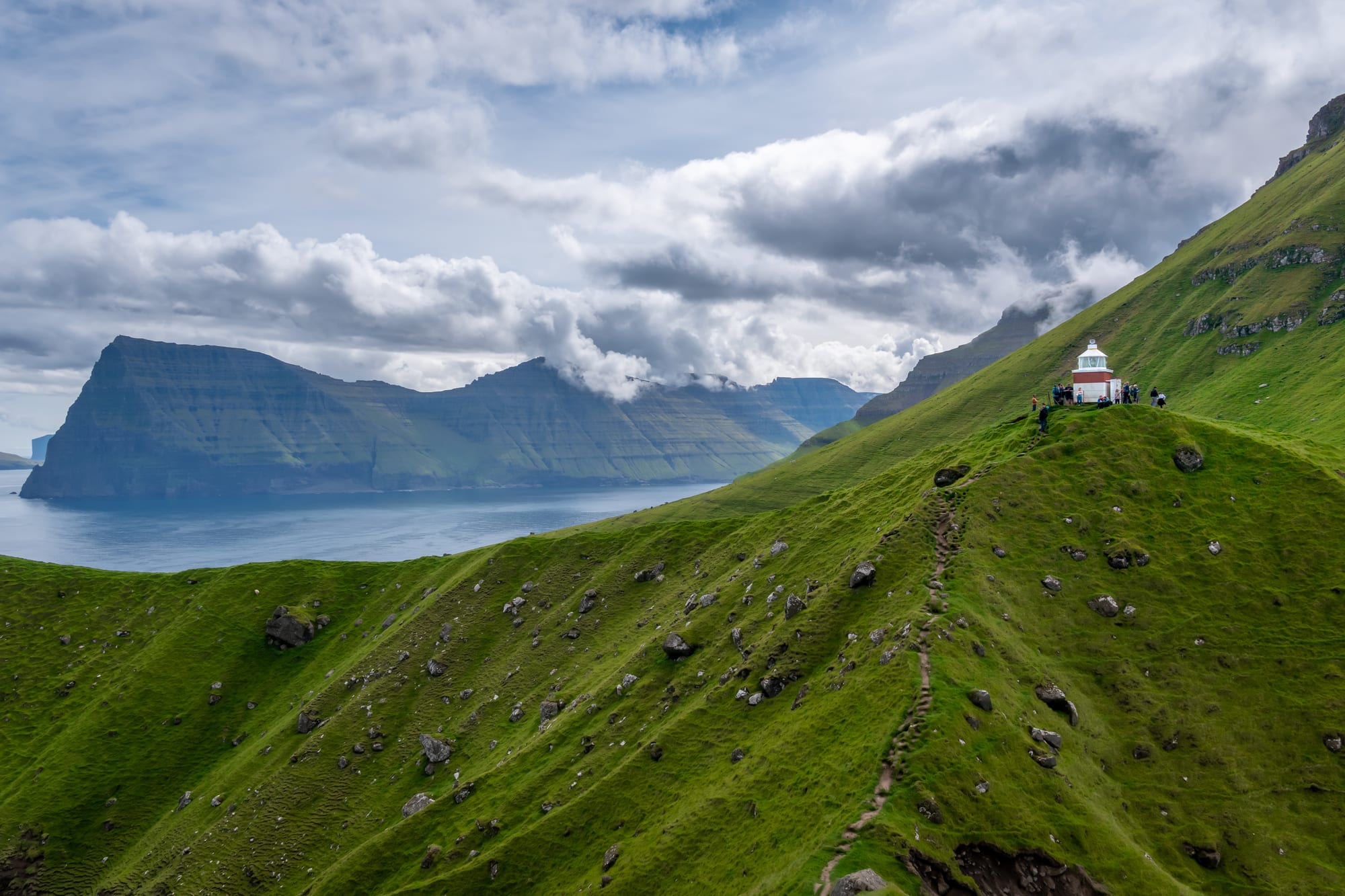
Long, thin Kalsoy — "the flute", for the tunnels bored through it — is reached by a small car ferry from Klaksvík. From the end-of-the-road village of Trøllanes, a walk of about 40 minutes leads out to the small Kallur lighthouse on a spectacular grassy spine, with cliffs dropping away on both sides and views to neighbouring islands. It featured in a James Bond film (No Time to Die).
The path can be dangerous in wind or cloud; a local guide is recommended, and a landowner fee applies.
7. Tjørnuvík and Streymoy's north
Tjørnuvík, at the northern end of Streymoy, is a black-sand-beach village facing two sea stacks off the island of Eysturoy — Risin og Kellingin, "the Giant and the Witch", of a folk tale about trolls turned to stone by the sunrise while trying to tow the Faroes to Iceland. The drive there, over the Streymoy mountains past the Fossá waterfall (the highest in the islands), is one of the best in the country.
Surfers use the beach; the water is cold and the currents strong.
8. The Vestmanna bird cliffs
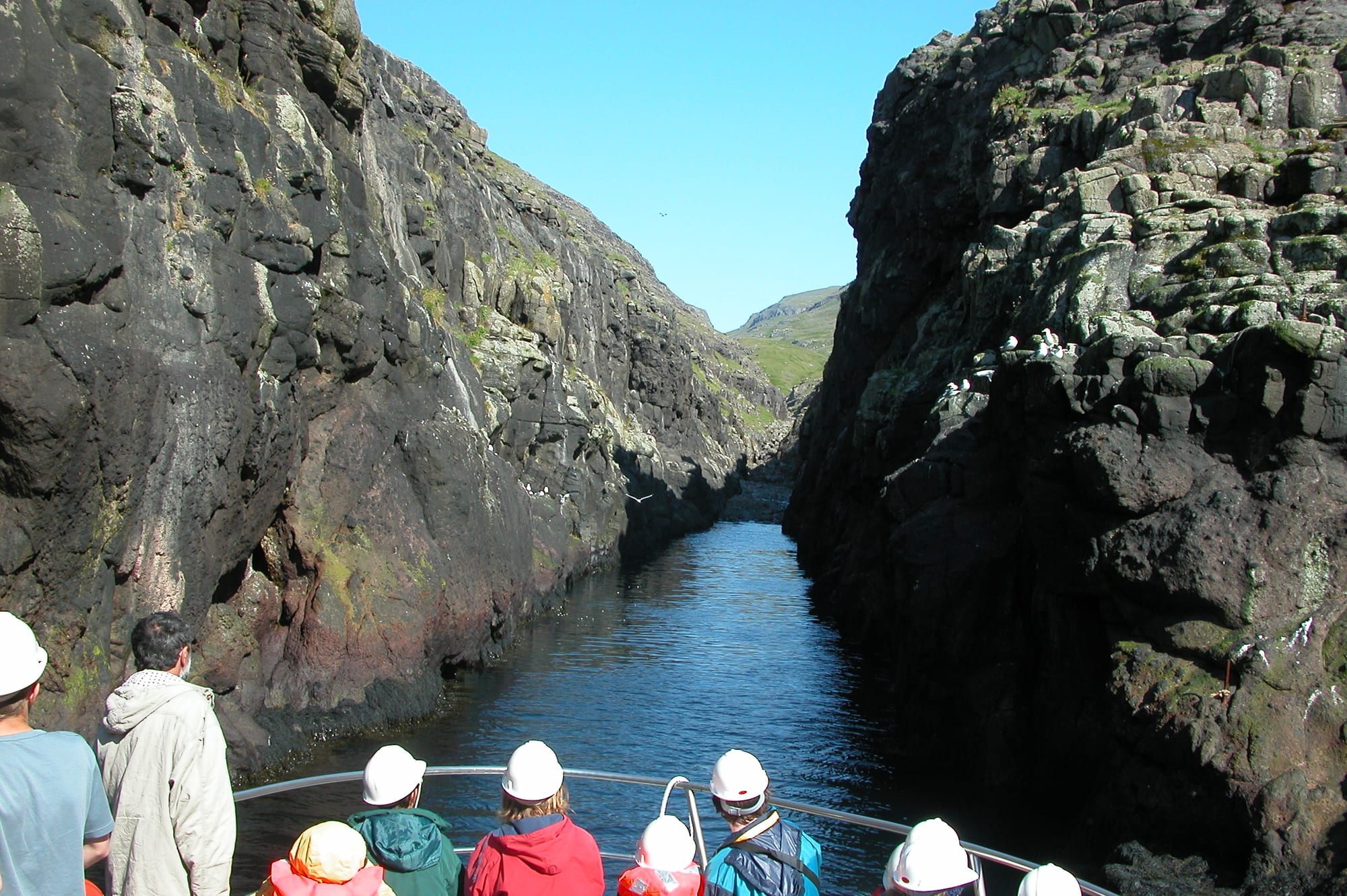
On the northwest coast of Streymoy, near the village of Vestmanna, boat trips run along a wall of 600-metre sea cliffs, nosing into caves and narrow gorges beneath ledges packed with nesting guillemots, kittiwakes, fulmars, and puffins. It is the classic Faroese boat excursion, weather permitting, in season.
Similar trips run to the sea stacks off Vágar (Drangarnir and Tindhólmur) and, from the north, around the cliffs of Viðoy and Fugloy.
9. Klaksvík and the northern islands
Klaksvík, on Borðoy, is the second town — a working fishing port wrapped around a narrow inlet, with a striking modern church (Christianskirkjan) hung with a Faroese fishing-boat as a votive offering. It is the gateway to the six northeastern islands (the Norðoyar), linked by tunnels and the Kalsoy ferry, with the villages of Viðareiði (the northernmost) and Gjógv, famous for its natural harbour cut into the cliff.
10. The villages and the sheep tracks
Beyond the headline spots, the pleasure of the Faroes is in wandering: Bøur and its church looking out to the sea stacks; Trøllkonufingur, "the Witch's Finger", a rock spike on Vágar; the hike from Norðradalur; the Kirkjubøur farm on Streymoy with the ruined 13th-century cathedral of Magnus and the oldest inhabited wooden house in Europe.
A note on the grindadráp, the traditional communal pilot-whale hunt: it is legal, defended locally as sustainable, and widely condemned abroad. Visitors may come across it or its aftermath.
The Faroes are a compact self-drive trip — four or five days links most of this list from a Tórshavn base, with an extra day for a Mykines crossing if the weather cooperates.