History · Ethiopia
Ethiopia: The Country That Was Never Colonised
A cradle of humanity, an ancient Christian empire, the African state that beat a European army at Adwa — and a modern history of revolution, famine and federation
By Worldlore Editorial · 19 September 2026
The exception
Ethiopia is the great exception in African history. Almost every other part of the continent was ruled from Europe at some point; Ethiopia was not, apart from five years of Italian military occupation between 1936 and 1941 that no one else recognised and that never controlled the countryside. It is also one of the oldest Christian states in the world, one of the oldest continuously distinct polities anywhere, and — in the Afar desert, where the fossil skeleton "Lucy" was found in 1974 — one of the places where humanity itself began.
A short history
- c. 1st century CE
Aksum
A trading empire rises in the northern highlands.
- c. 330
Christianity
King Ezana converts; Ethiopia becomes an early Christian state.
- c. 1137–1270
Zagwe dynasty
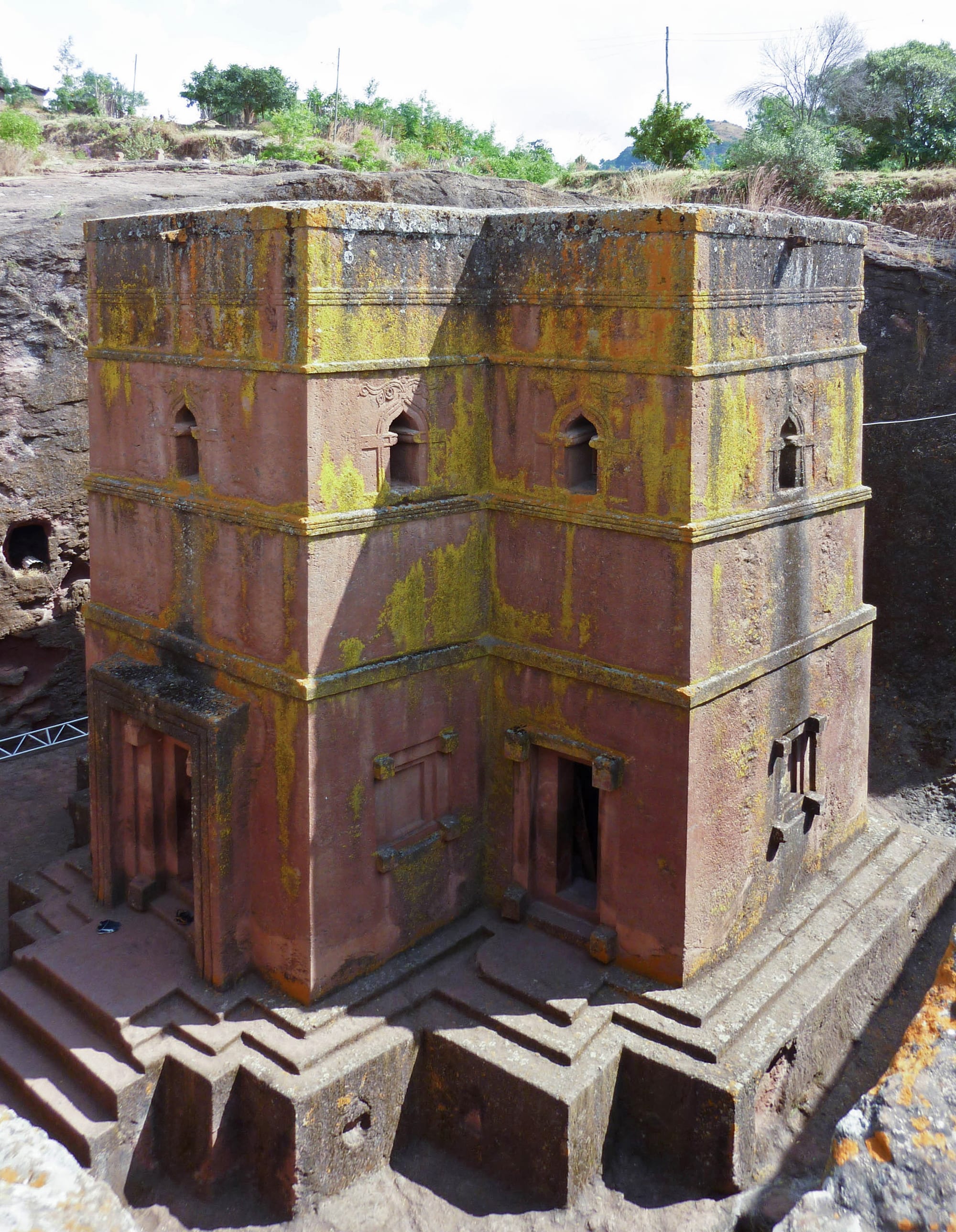
The rock churches of Lalibela are carved.
- 1270
The Solomonic line
A dynasty claiming descent from Solomon takes the throne.
- 1636
Gondar
Emperor Fasilides founds a permanent castle-capital.
- 1896
Adwa
Menelik II destroys an invading Italian army.
- 1930
Haile Selassie
The last emperor is crowned.
- 1935–1941
Italian occupation
Invasion, exile, and liberation.
- 1974
Revolution
The Derg deposes the emperor and declares a Marxist state.
- 1991
The EPRDF
Rebels take Addis Ababa; a federal republic follows.
Aksum and the Christian empire
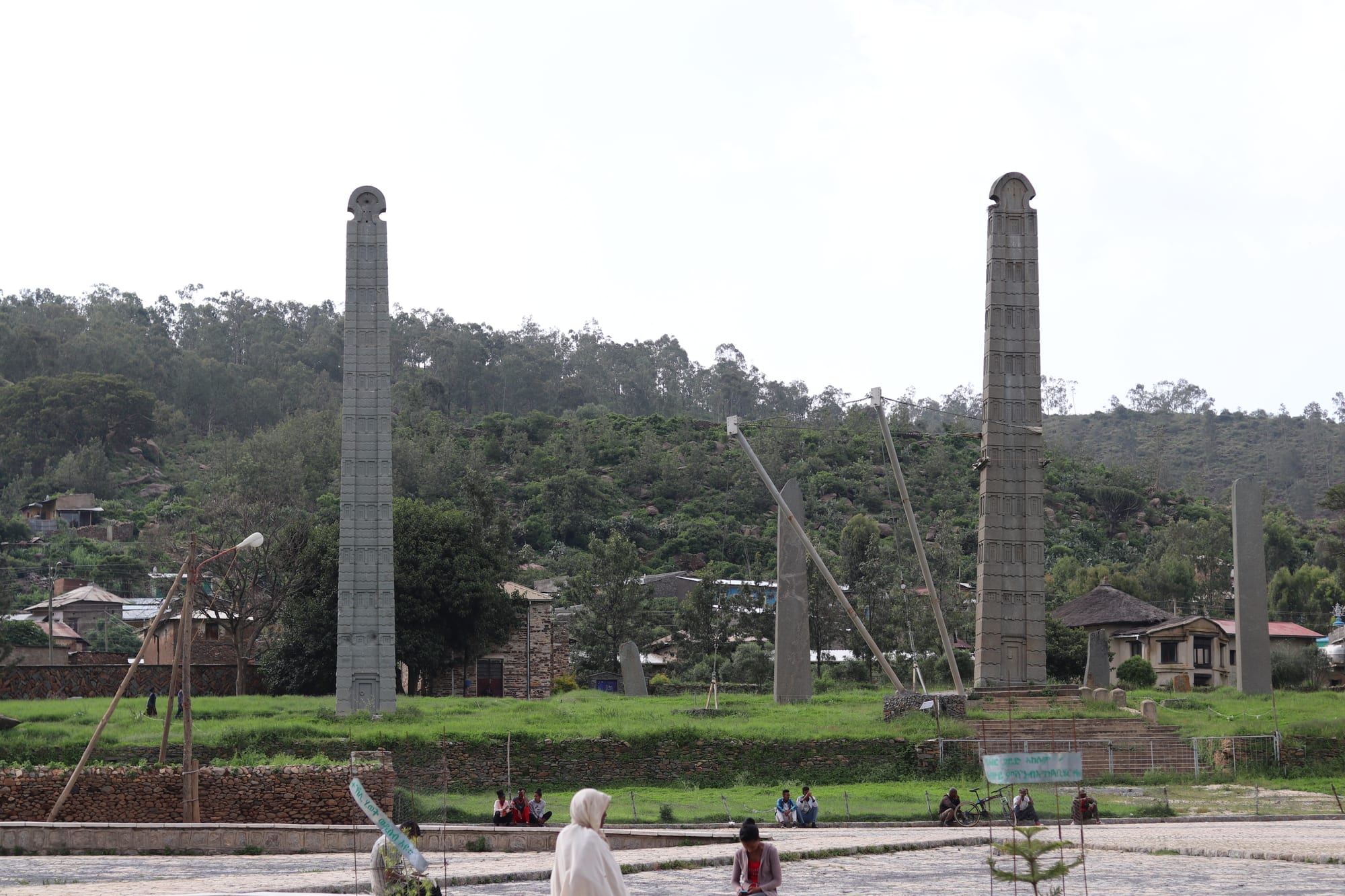
In the first centuries CE the Kingdom of Aksum, trading ivory and gold through its Red Sea port of Adulis, minted its own coins and raised giant carved stelae. Around 330 its king, Ezana, adopted Christianity, tying Ethiopia to the faith more than a millennium before most of Europe's neighbours converted. Ethiopian tradition goes further back still: the Kebra Nagast holds that the royal line descended from Menelik I, son of King Solomon and the Queen of Sheba, who brought the Ark of the Covenant to Aksum — where the Orthodox Church says it remains.
Aksum faded after the 7th century as Islam redrew Red Sea trade. Power moved south. The Zagwe kings built the rock-hewn churches of Lalibela; in 1270 a dynasty claiming Solomonic descent took over and ruled, with breaks, until 1974. The medieval Christian highland empire had a mobile court, expanded and contracted, and fought long wars with the Muslim sultanates of the eastern lowlands — one of which, under Ahmad ibn Ibrahim in the 1530s, nearly destroyed it before Portuguese musketeers helped turn the tide. Jesuits later converted an emperor to Catholicism, triggering civil war; his son expelled them and founded Gondar, whose castles still stand.
Reunification and Adwa
After a long "Era of the Princes", when regional warlords ruled and emperors were ornaments, three rulers rebuilt the state: Tewodros II reunified it by force in the 1850s–60s; Yohannes IV fought off Egyptians and Sudanese Mahdists; and Menelik II, king of Shewa, roughly doubled the empire's size by conquering the peoples of the south and east, founded Addis Ababa, and began building railways and schools.
The making of modern Ethiopia
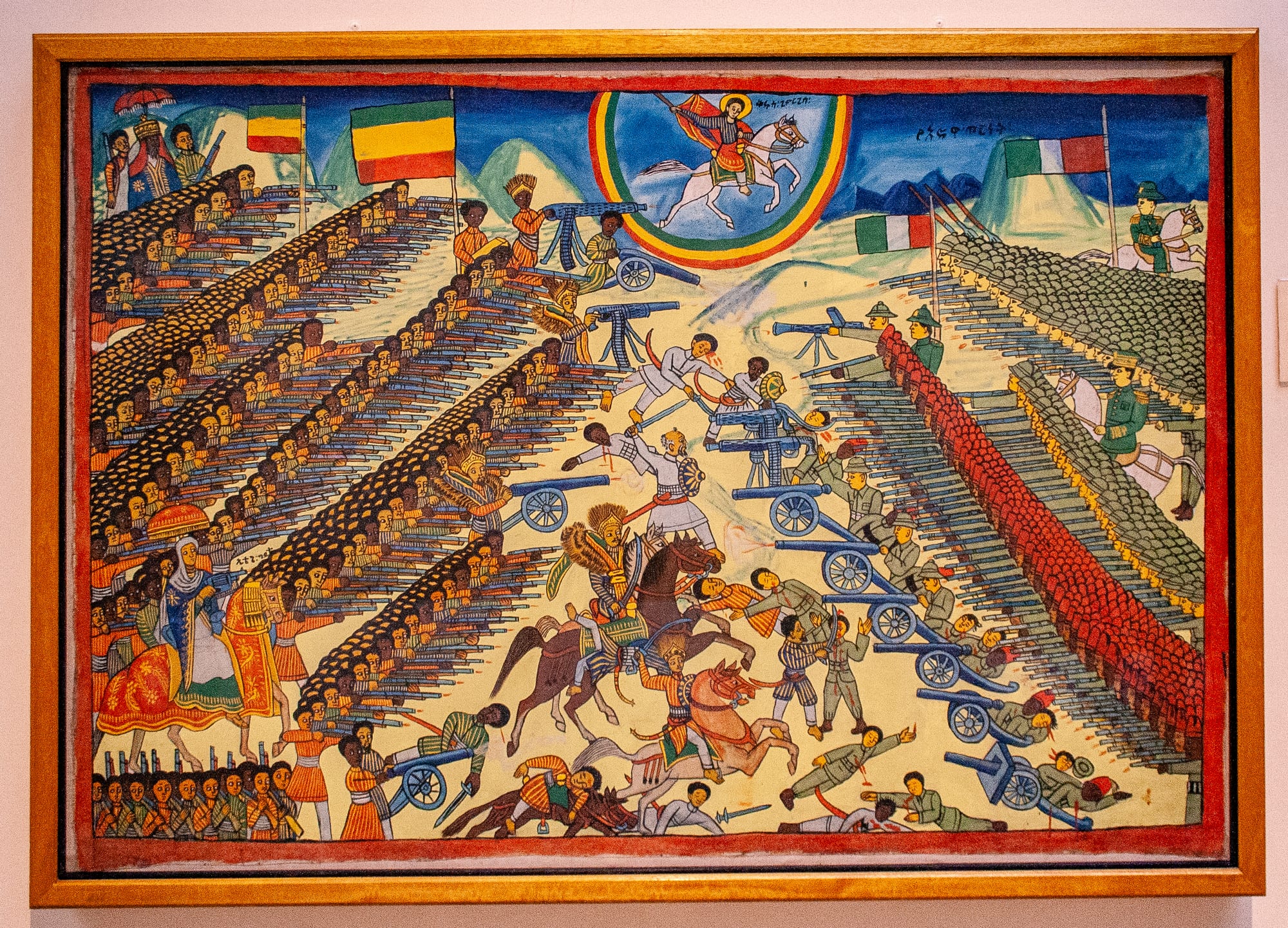
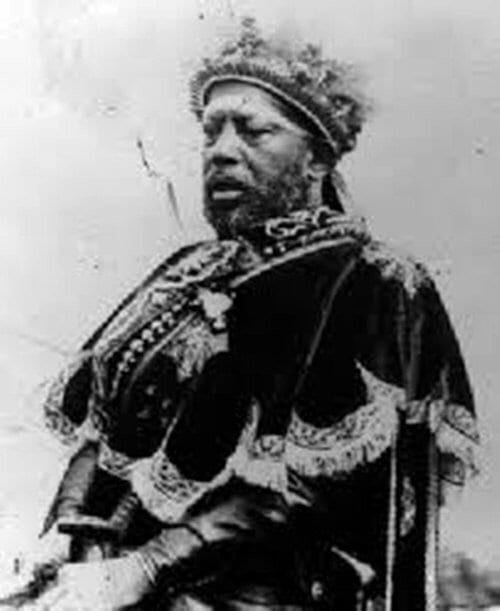
Adwa was the first decisive defeat of a European colonial army by an African state, and it made Ethiopia a symbol of independence for colonised people everywhere.
Haile Selassie and the Italian war
Ras Tafari Makonnen became regent in 1916 and was crowned Emperor Haile Selassie in 1930. He centralised the monarchy, gave Ethiopia its first written constitution, and brought it into the League of Nations.
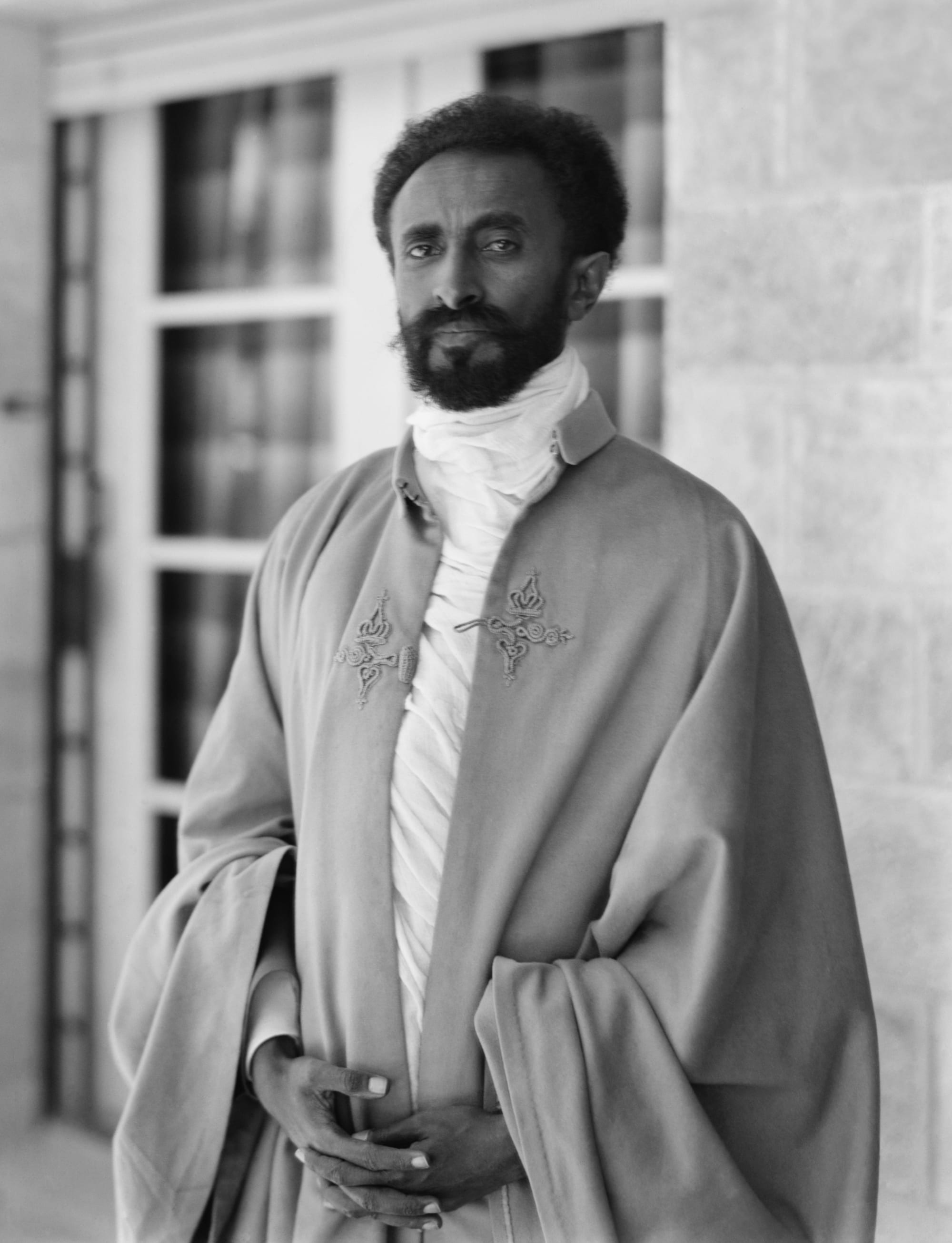
Fascist Italy invaded in October 1935, using poison gas and aerial bombing. Italy took Addis Ababa in May 1936; Haile Selassie went into exile, and the occupation that followed was violent — the Yekatit 12 massacre of 1937 killed tens of thousands in the capital alone — and never subdued the rural "Patriot" resistance. British and Ethiopian forces liberated the country in 1941, and the emperor returned.
After the war Haile Selassie became an elder statesman of African unity: the Organisation of African Unity was founded in Addis Ababa in 1963. But at home his government was a stagnant autocracy sitting on concentrated land and rural misery. A concealed famine in Wollo in 1972–74, exposed on foreign television, combined with inflation and army mutiny to end the monarchy.
The Derg
A committee of junior officers, the Derg, edged into power through 1974, deposed Haile Selassie in September — he was killed the following year — abolished the monarchy, and declared a Marxist-Leninist state.
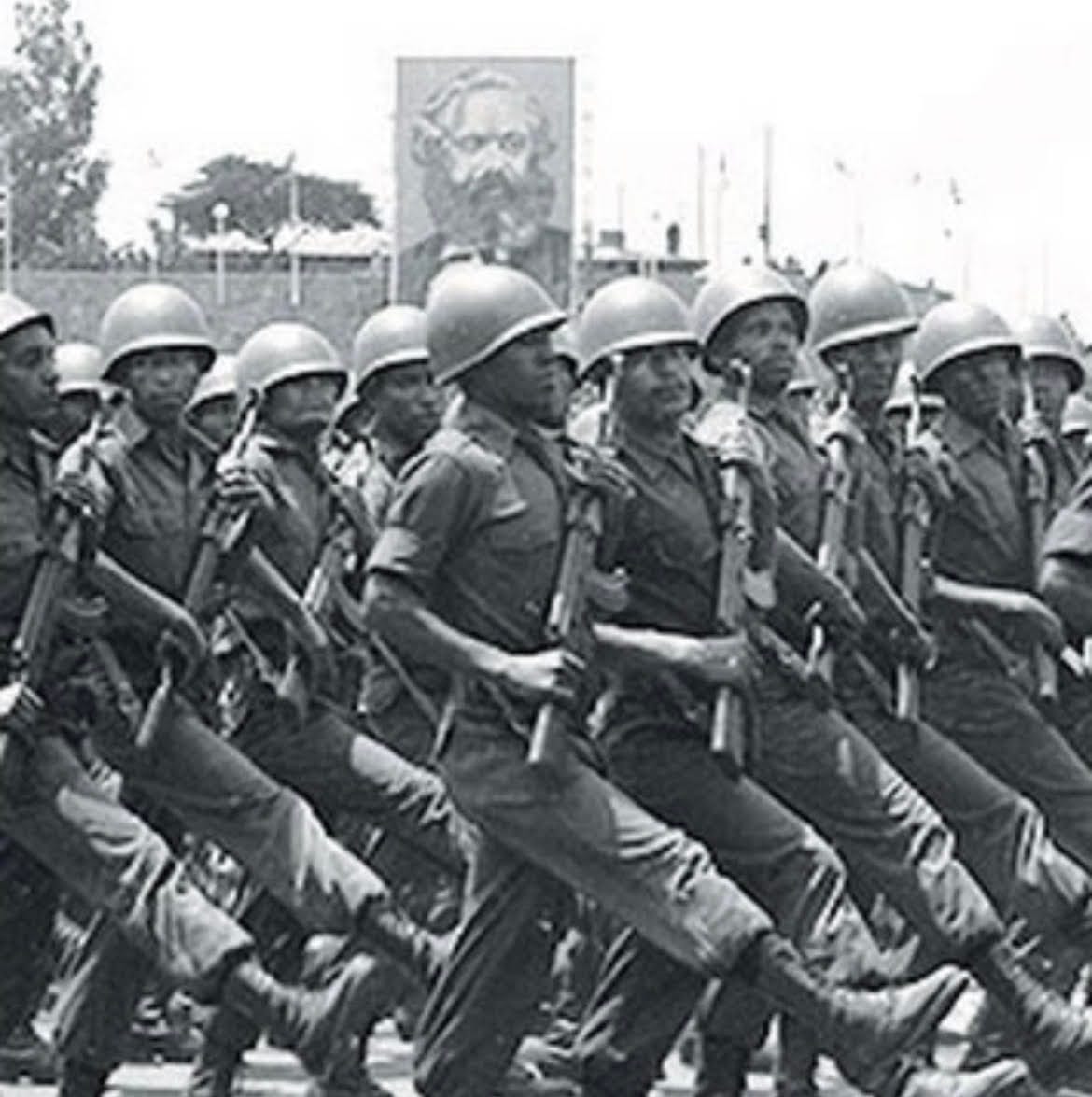
Mengistu Haile Mariam emerged as dictator. The regime nationalised land, forced through collectivisation and resettlement, and fought on every front — against Eritrean and Tigrayan rebels, and against Somalia in the 1977–78 Ogaden War, won only with a Soviet and Cuban airlift. The famine of 1983–85, deepened by war and policy, killed somewhere between 600,000 and over a million people and prompted the Live Aid response. In 1991 a rebel coalition led by the Tigray People's Liberation Front took Addis Ababa; Mengistu fled to Zimbabwe.
The federal era
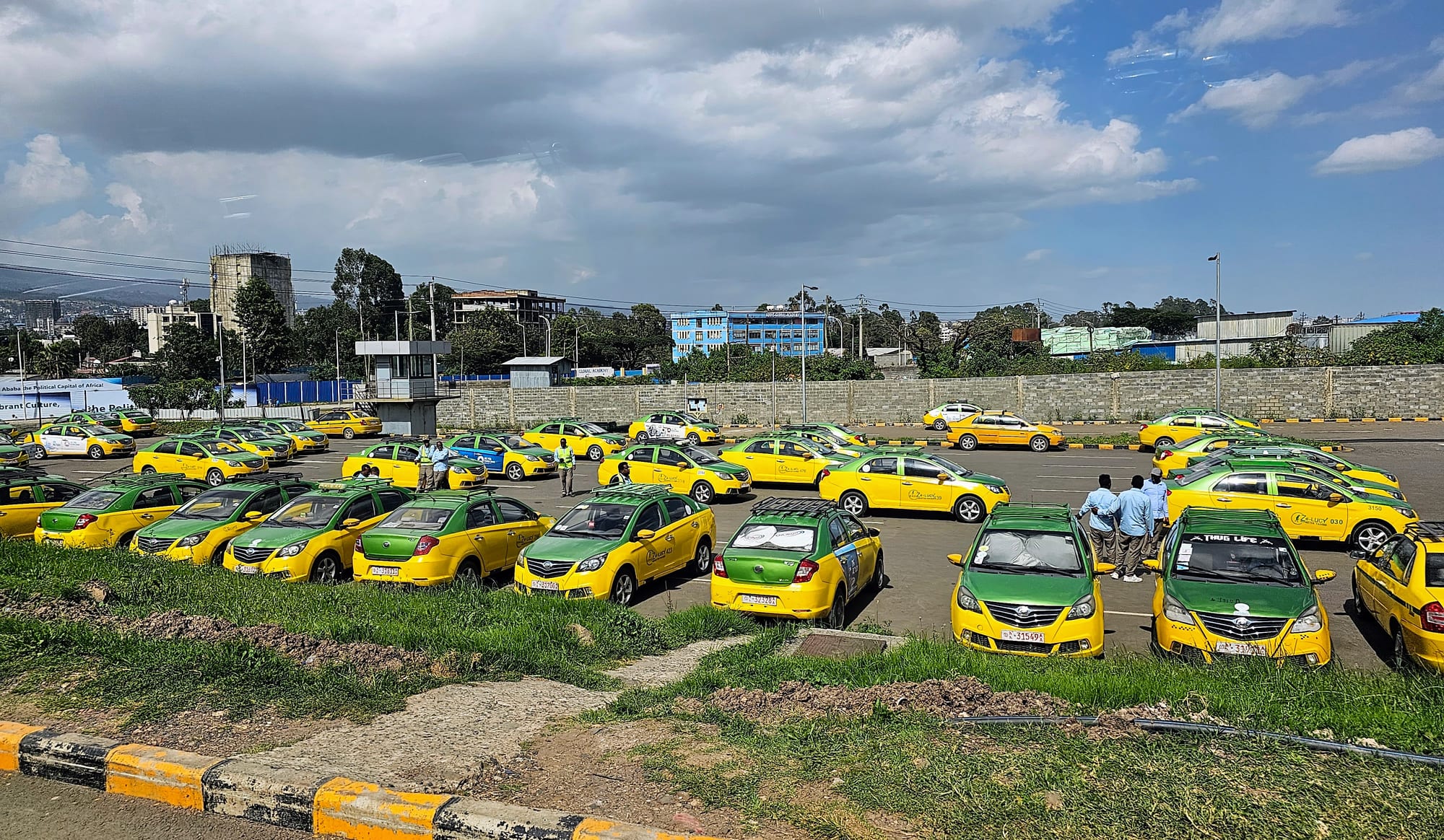
The victors, the EPRDF, rebuilt Ethiopia as a federation of ethnically defined regions, with a constitutional right to secede — which Eritrea exercised in 1993. Under Meles Zenawi the state drove rapid, tightly controlled growth: roads, dams, and, from 2011, the vast Grand Ethiopian Renaissance Dam on the Blue Nile, a lasting source of dispute with Egypt and Sudan. A border war with Eritrea from 1998 to 2000 killed around 100,000 people.
Years of Oromo and Amhara protest brought Abiy Ahmed to the premiership in 2018. He freed prisoners, welcomed home exiles, and made peace with Eritrea, winning a Nobel Peace Prize — then merged the ruling coalition into a single party, which Tigray's leaders refused to join. The dispute became the Tigray War of 2020–2022, fought by federal, Eritrean and Amhara forces against the TPLF: a catastrophe of massacres and starvation with a death toll estimated in the hundreds of thousands, ended by a 2022 agreement. Fighting has since continued in Amhara and Oromia.
What Ethiopia carries
Ethiopia holds a unique place: an African state with an unbroken line back to antiquity, its own church, its own script, its own calendar, and the memory of Adwa. That deep continuity is bound up with its hardest modern problem — an empire assembled by conquest in the 19th century, reorganised as an ethnic federation in the 20th, and still arguing, often violently, over who belongs to it and on what terms.