Attractions & Natural Wonders · Ethiopia
Ethiopia: Ten Attractions and Natural Wonders
Churches cut downward into solid rock, castles on a highland plateau, a sulphur field the colour of a bruise, and mountains full of grass-eating monkeys
By Worldlore Editorial · 19 September 2026
Old, high, and unconquered
Ethiopia is the second-most populous country in Africa, a high plateau split by the Great Rift Valley, and it holds an unusual place in the continent's history: it was never colonised (a brief Italian occupation aside), it adopted Christianity in the 4th century, and it uses its own calendar, script, and clock. It has a deep human story too — the fossil "Lucy" was found here.
The ten below run from the "historic north" (Lalibela, Gondar, Aksum, the Simiens) to the Rift Valley lakes, the Danakil, and the Omo. An important caveat: the 2020–22 war in Tigray and unrest in Amhara and Oromia have made parts of the country unsafe, and access to some sites (Aksum, the Tigray churches, the Simiens, the Danakil) has been disrupted — check current advice carefully. The dry season, roughly October to March, is best.
1. The rock churches of Lalibela
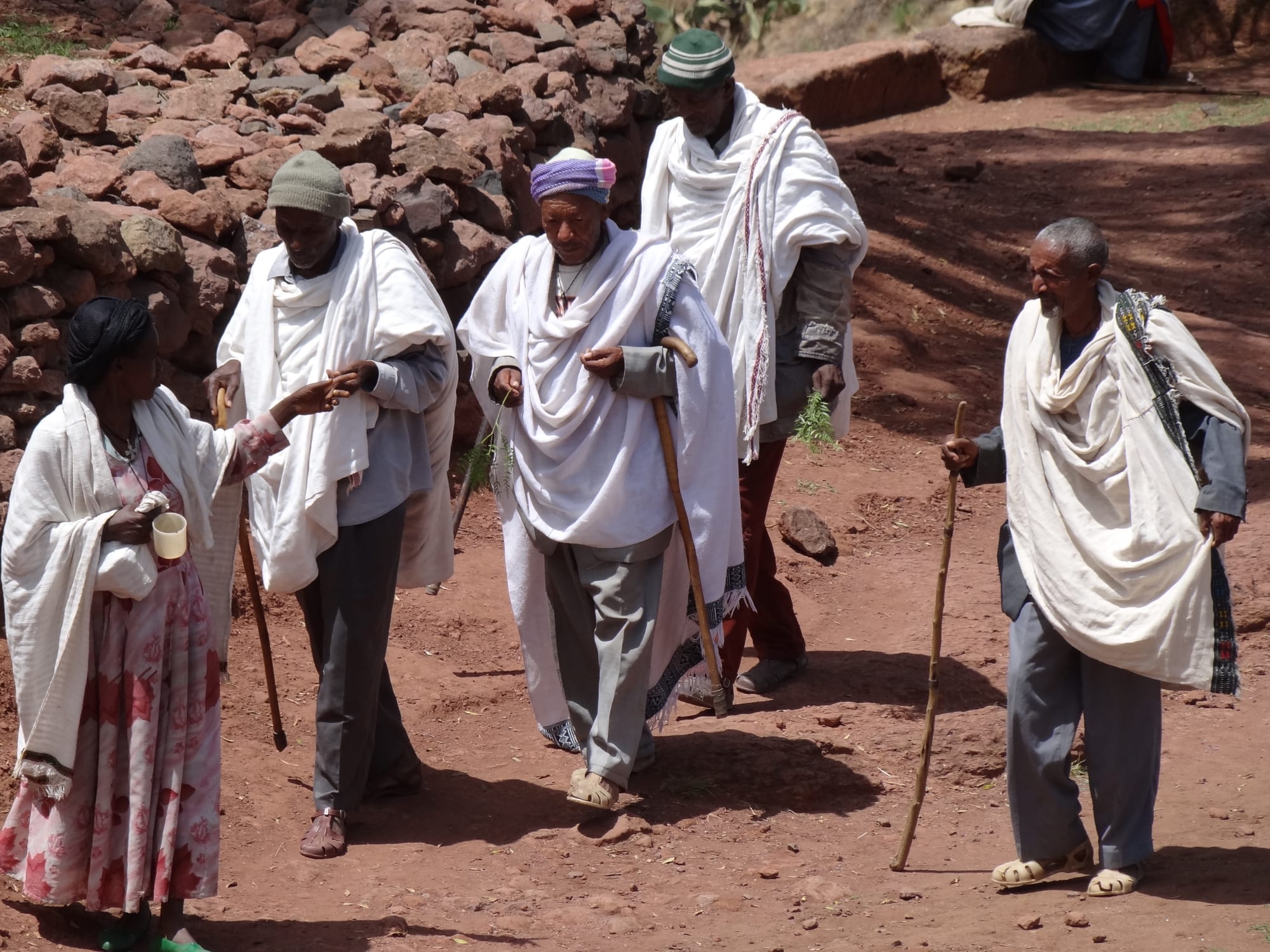
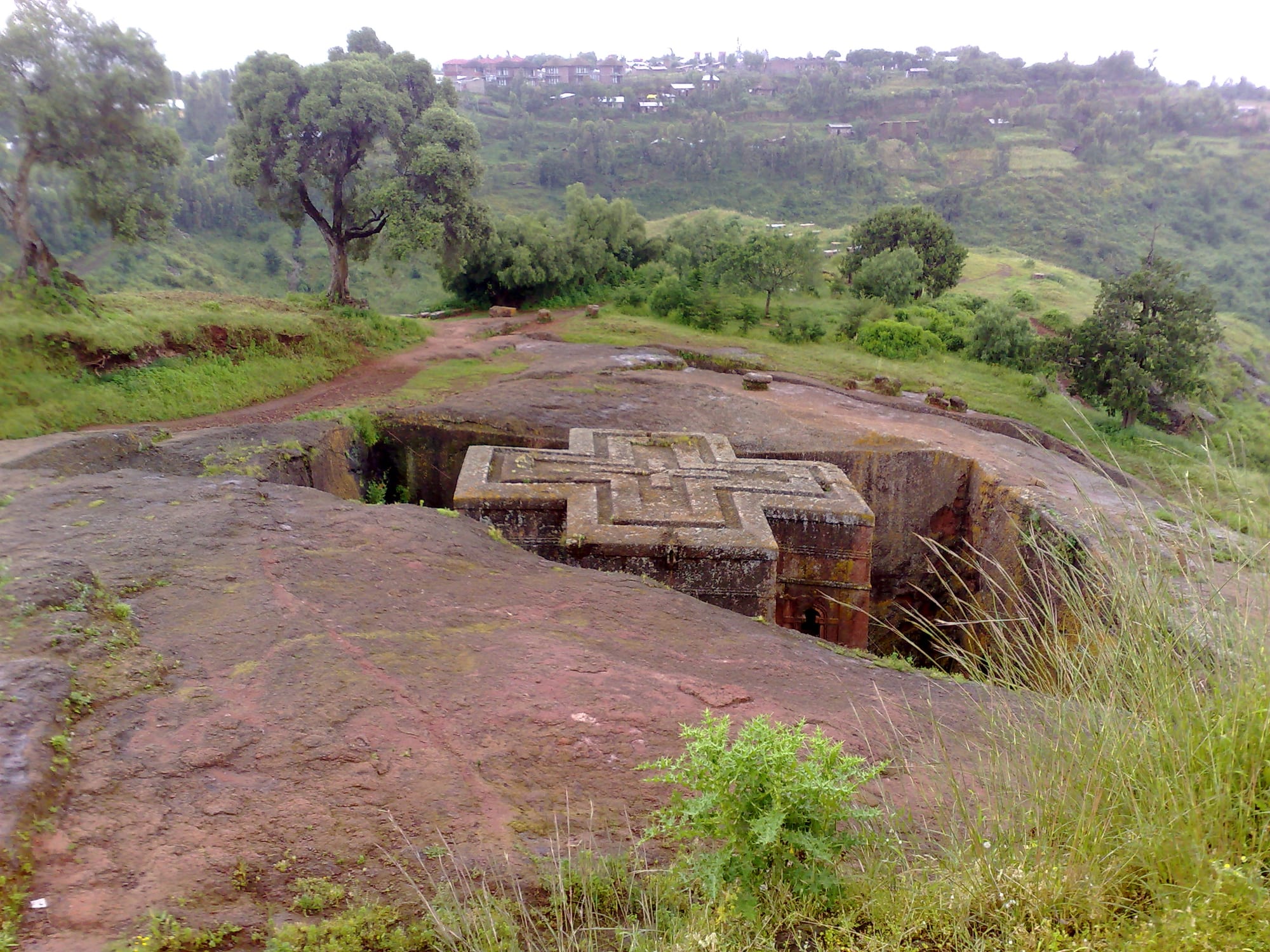
Lalibela, a mountain town at 2,500 metres, has eleven medieval churches carved entirely out of the living rock — cut downward into the ground so that their roofs are at surface level, then hollowed out inside, and connected by tunnels and trenches. Tradition credits King Lalibela with building them around 1200 as a "New Jerusalem". They are still in daily use, with white-robed priests, pilgrims, and services echoing off the stone, and the Timkat (Epiphany) festival here in January is extraordinary. It is a UNESCO World Heritage Site, its churches now sheltered by controversial protective canopies.
2. The Simien Mountains
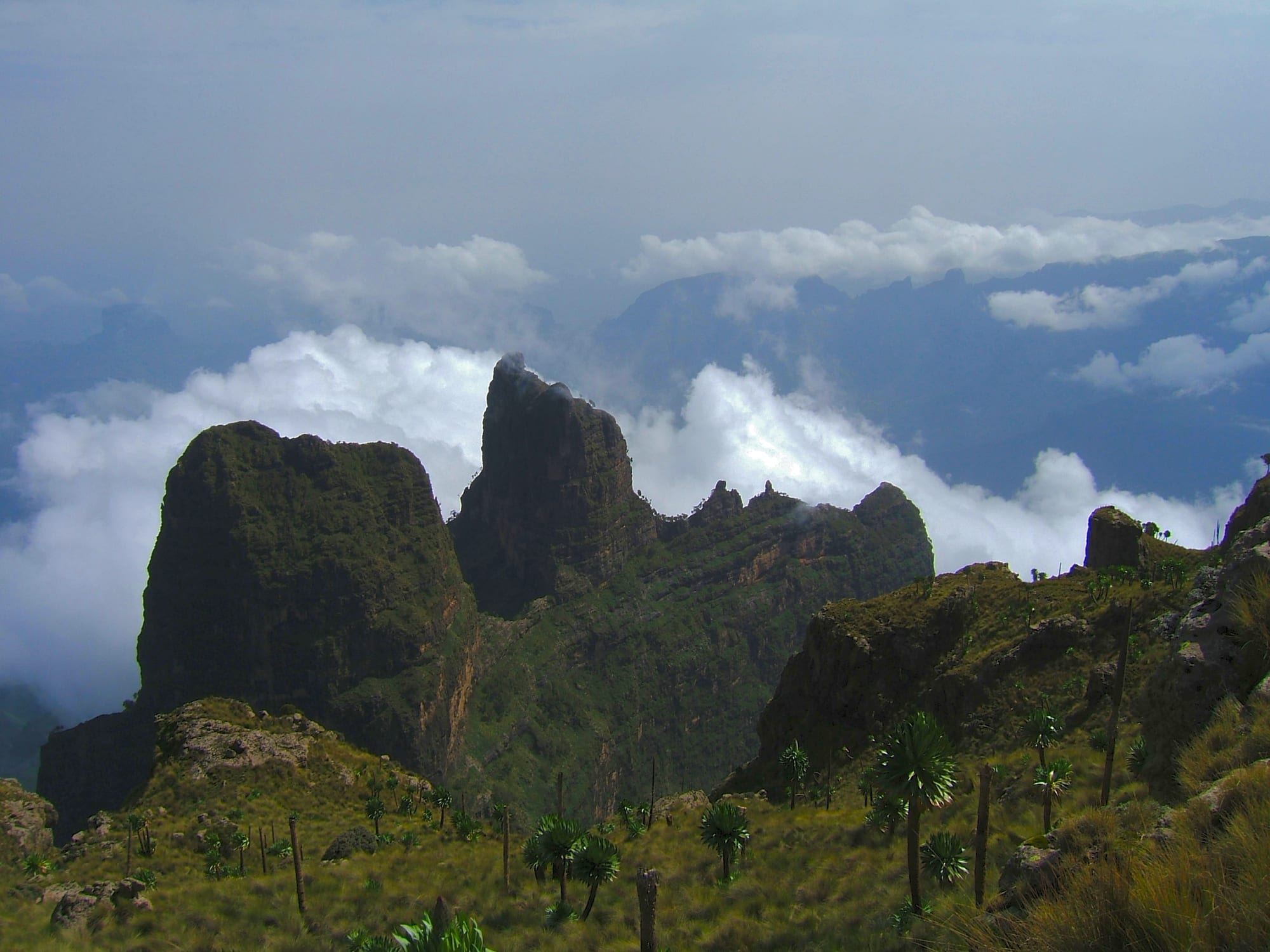
The Simien range, north of Gondar, is a spectacular eroded highland — jagged pinnacles, sheer 1,000-metre escarpments, and a high plateau topped by Ras Dashen, Ethiopia's highest peak at 4,550 metres. It is a UNESCO World Heritage Site and a superb trekking area, with big troops of gelada monkeys that let you walk among them, plus the endemic walia ibex and, rarely, the Ethiopian wolf.
Treks of two to ten days run from the town of Debark, camping or using the new lodges along the escarpment.
3. Gondar
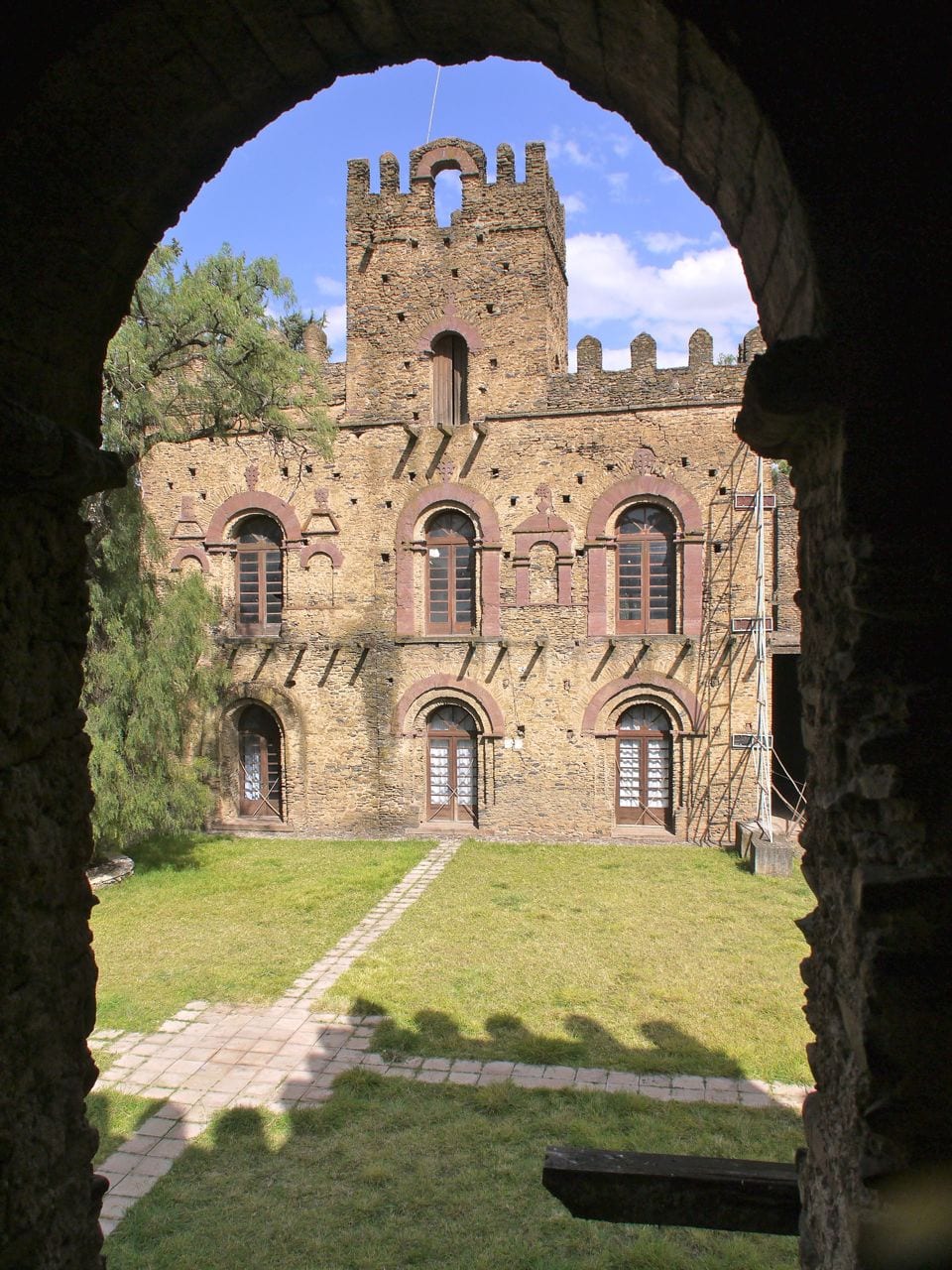
Gondar was Ethiopia's capital for two centuries from 1636, and its emperors built a walled compound of stone castles, banqueting halls, libraries, and stables — Fasil Ghebbi, "the camp of Fasilides" — that looks startlingly European, a UNESCO World Heritage Site. Just outside town, the Fasilides Bath, a pool and pavilion, is filled once a year and blessed for the Timkat celebrations, when thousands plunge in. The nearby church of Debre Berhan Selassie has a famous ceiling of winged angel faces.
4. Aksum
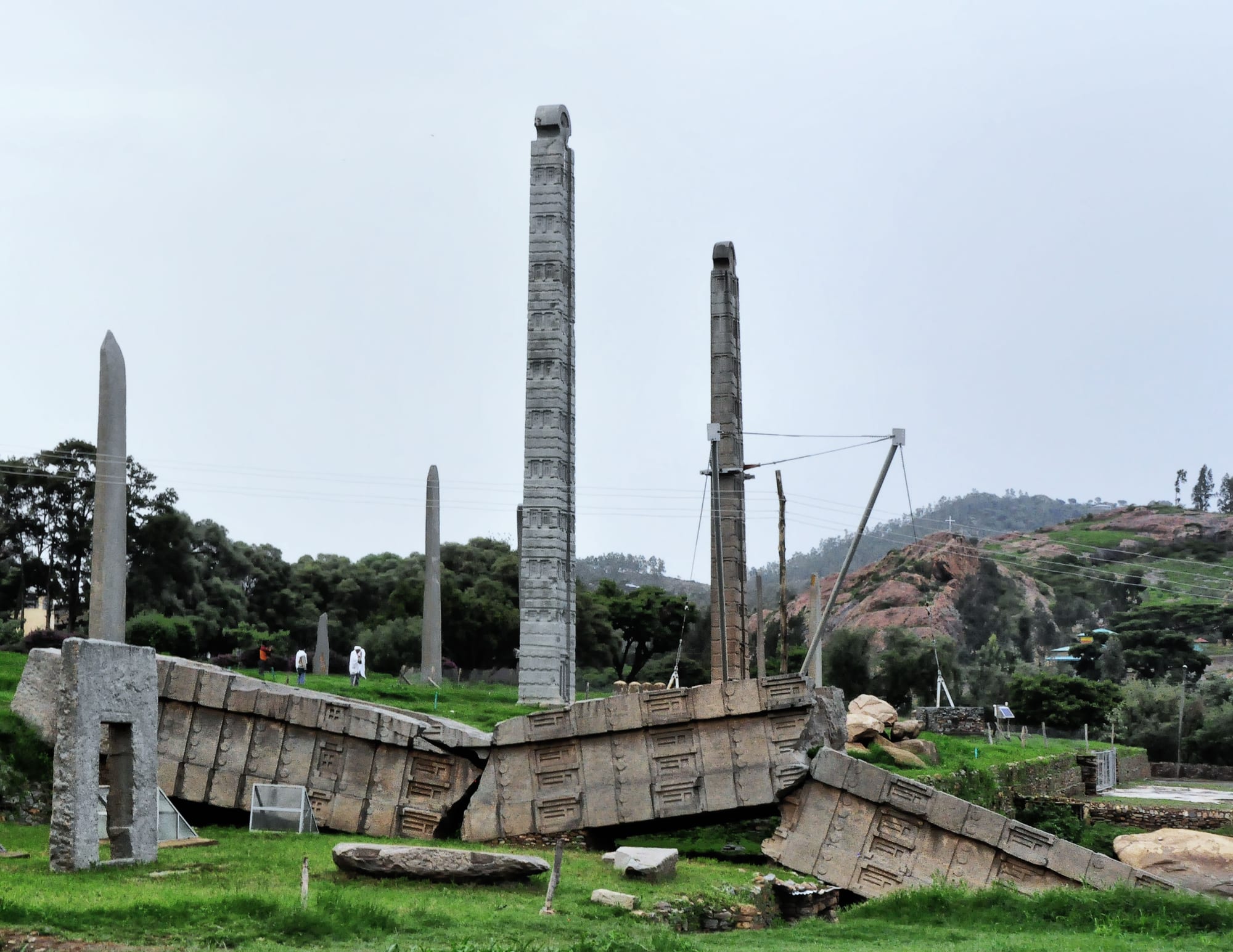
Aksum, in the far north, was the capital of a trading empire that around AD 300 was reckoned one of the great powers of the ancient world, alongside Rome and Persia. Its kings marked their graves with giant carved granite stelae — the largest, now fallen, was over 30 metres and the biggest single stone block humans have ever tried to raise. Aksum is also, by Ethiopian Orthodox belief, the resting place of the Ark of the Covenant, kept in a guarded chapel that no one but one monk may enter. It is a UNESCO World Heritage Site.
5. The Danakil Depression
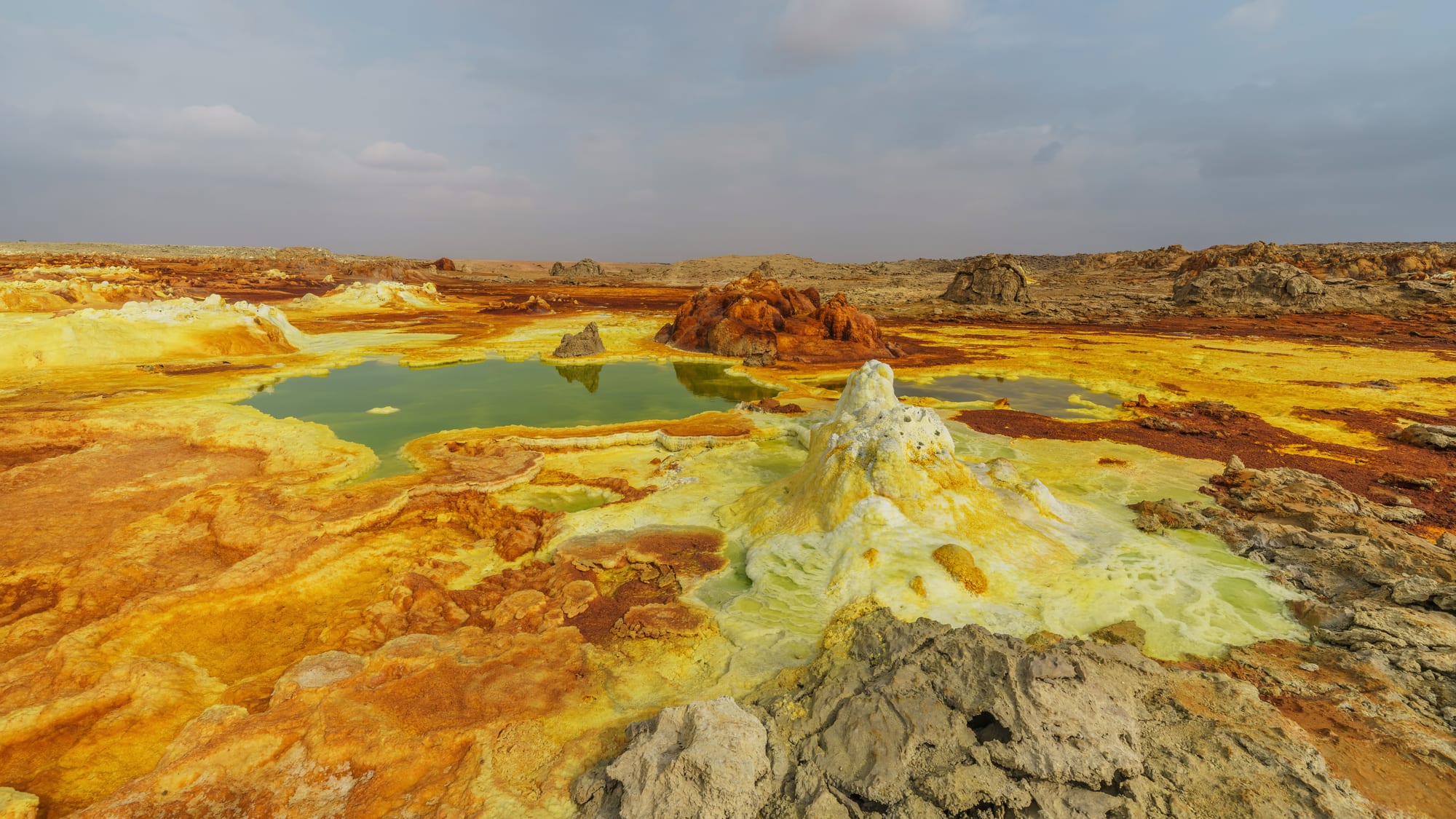
The Danakil, in the Afar region of the northeast, is one of the lowest and hottest places on the planet — more than 100 metres below sea level, regularly over 45°C. It has an otherworldly volcanic landscape: the acid-yellow springs and salt towers of Dallol, salt flats where Afar camel caravans still cut slabs by hand, and — the highlight — Erta Ale, a shield volcano with a permanent lava lake you walk to and camp beside overnight.
Trips run with armed escorts from Mekele; the region's security has been very volatile.
6. The Omo Valley
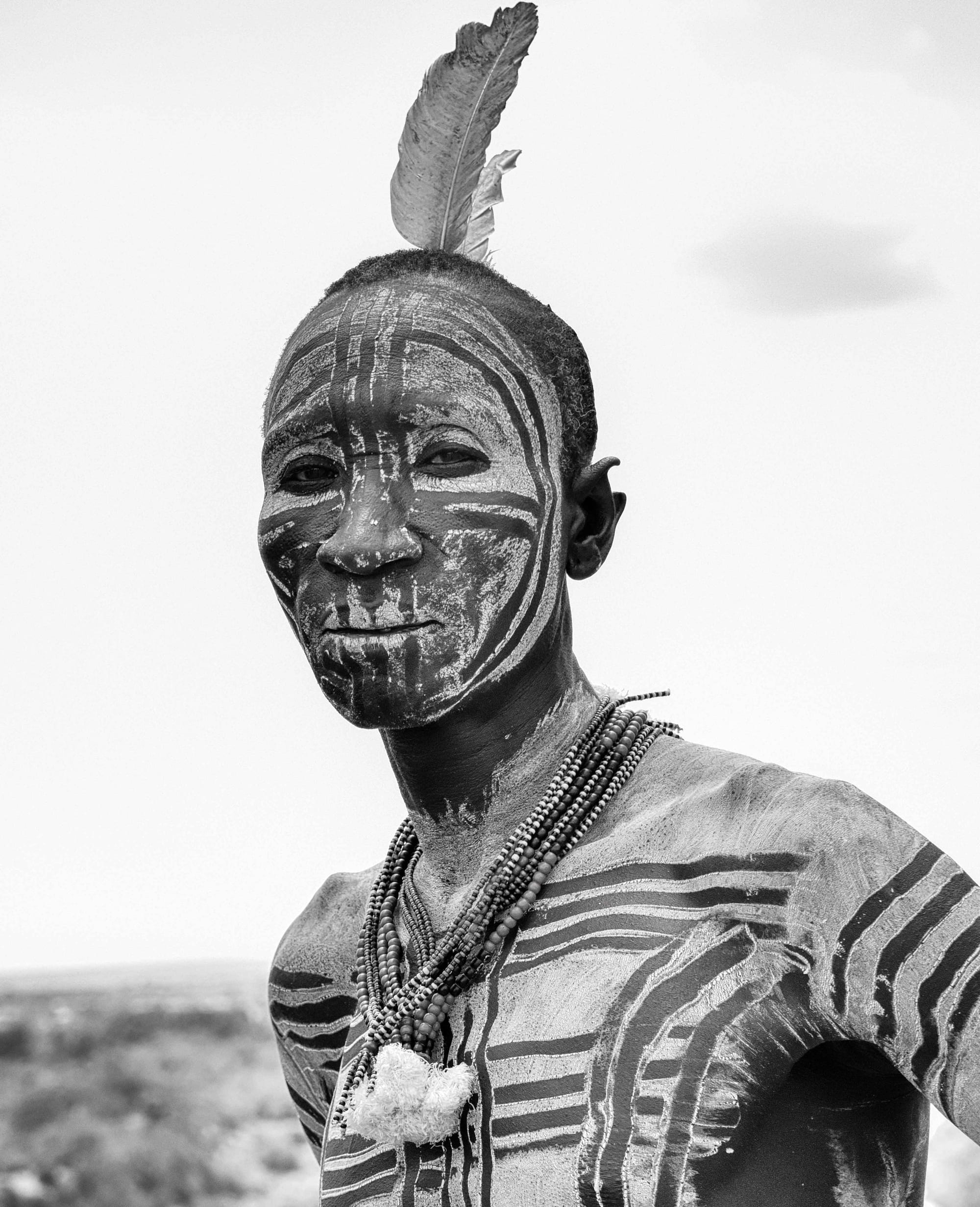
The Lower Omo Valley, in the far south, is home to more than a dozen peoples — Hamer, Mursi, Karo, Dassanech, Nyangatom, Bodi — with distinct languages, body decoration, and ceremonies (the Hamer bull-jumping initiation, Mursi lip plates, Karo body painting). It is a UNESCO World Heritage Site for its archaeology as well as its living cultures.
Tourism here raises real ethical questions — staged photo stops, cash economies, and a large dam and plantations upstream that have disrupted the flood the region depends on. Go with a thoughtful operator and pay attention to how visits are run.
7. Harar
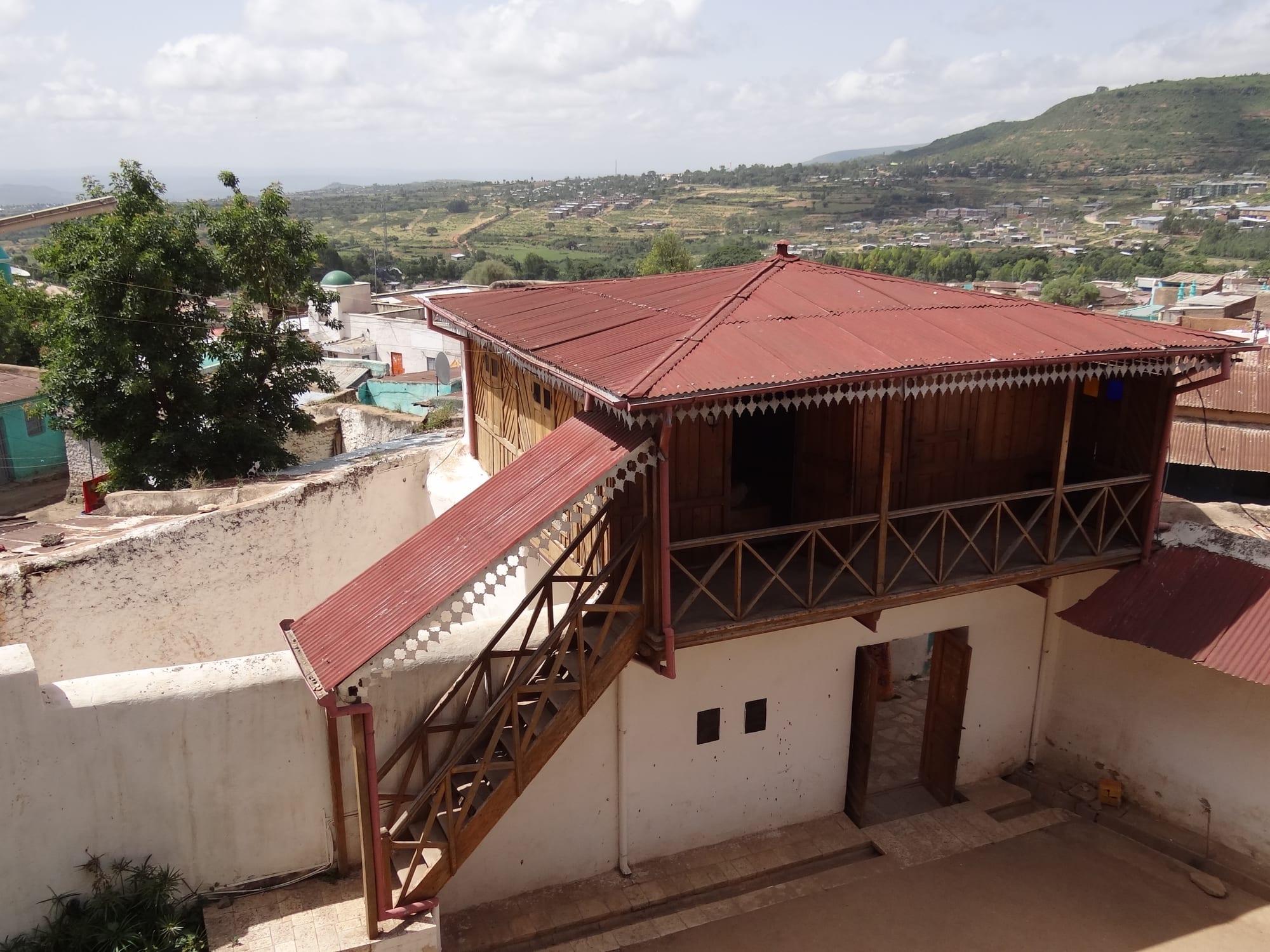
Harar, in the eastern highlands, is a walled Muslim city — a UNESCO World Heritage Site considered by many the "fourth holiest city of Islam", with 82 mosques and more than 100 shrines in a maze of narrow lanes and painted courtyard houses. The French poet Arthur Rimbaud lived here in the 1880s as a trader.
Its strangest attraction is the "hyena men", who for generations have hand-fed wild spotted hyenas just outside the walls each night, a ritual visitors can watch and even join.
8. Bahir Dar, Lake Tana, and the Blue Nile
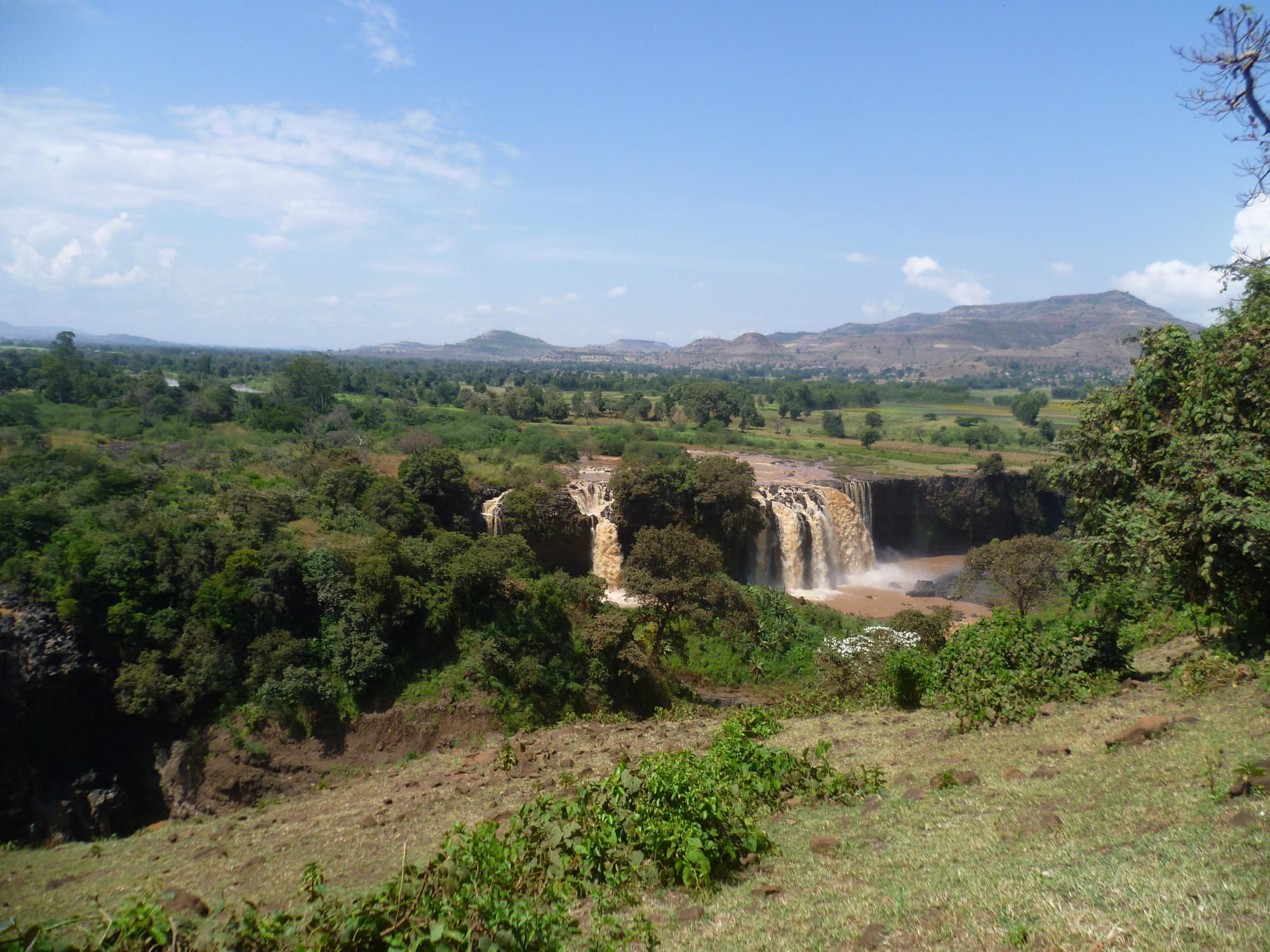
Bahir Dar, on the southern shore of Lake Tana — the source of the Blue Nile and Ethiopia's largest lake — is a palm-lined town and the base for two trips: a boat to the monasteries on the lake's islands and peninsulas, some closed to women, with medieval church paintings and treasures; and a drive to the Blue Nile Falls (Tis Issat) where the young river drops over a basalt shelf.
The lake's papyrus tankwa reed boats are still made and used by fishermen.
9. The Tigray rock churches
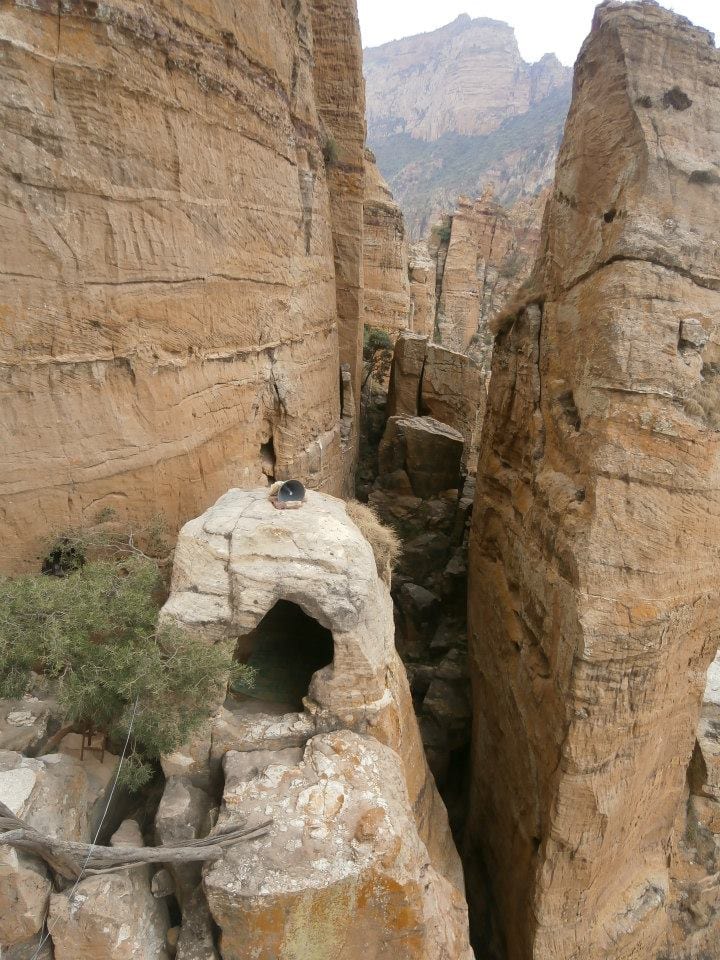
Scattered across the sandstone mountains of Tigray are around 120 rock-cut churches, many perched on cliffs and pinnacles and reached by exposed scrambles — Abuna Yemata Guh, hand- and foot-holds up a sheer wall, is the most famous, with 1,500-year-old paintings inside. They are less visited than Lalibela and, for those with a head for heights, more thrilling to reach.
Access depends entirely on the situation in Tigray, which has been through war and blockade; check before planning.
10. The Bale Mountains
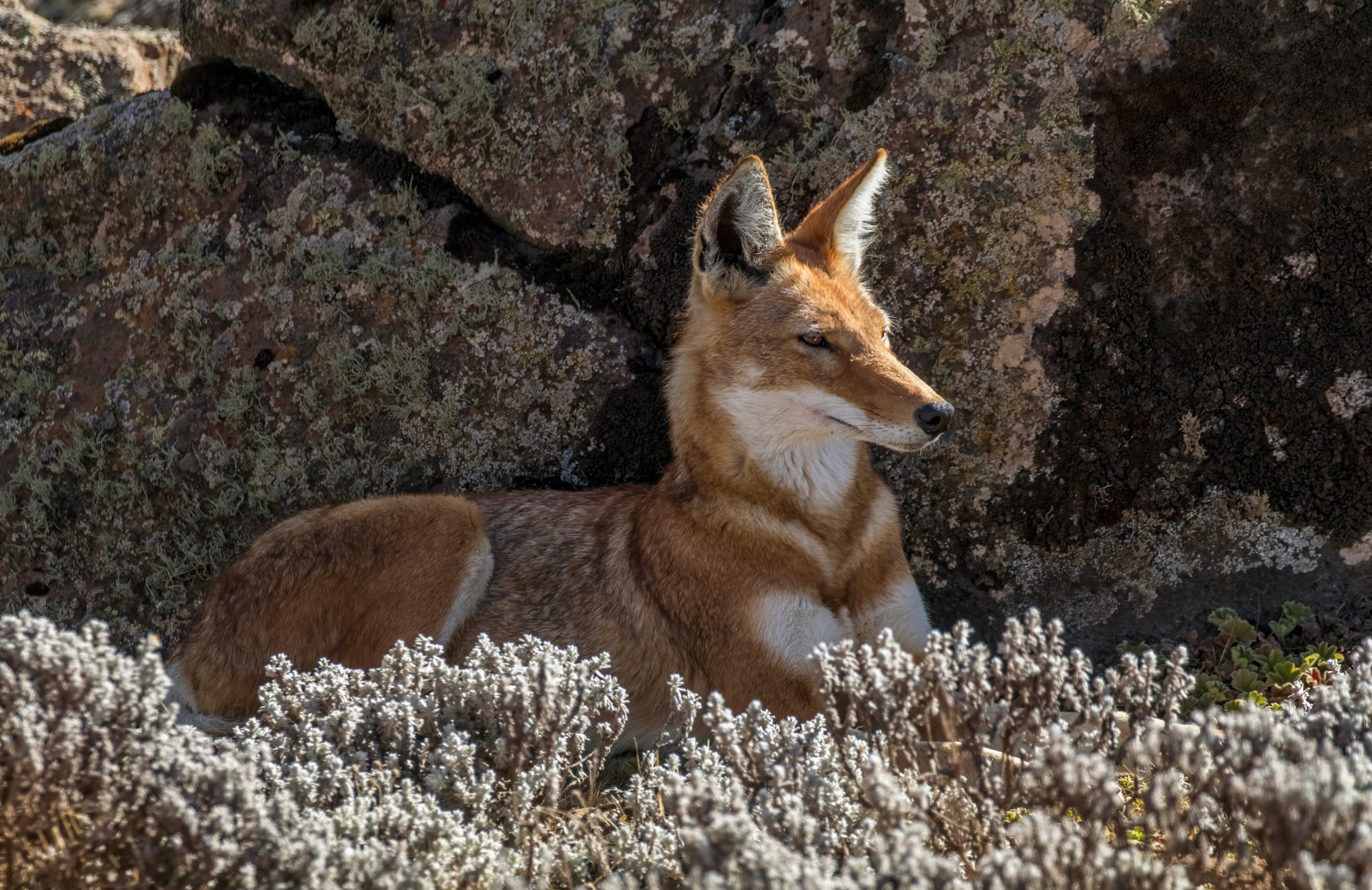
The Bale Mountains, southeast of Addis Ababa, are the greenest of Ethiopia's highlands: the Sanetti Plateau, an Afroalpine moor above 4,000 metres, is the best place on Earth to see the Ethiopian wolf (fewer than 500 survive), and the Harenna forest on the southern slope is a mossy cloud forest full of endemic birds. It is a national park with lodges and horse treks.
The volcanic hot springs at Wondo Genet and the Rift Valley lakes (Ziway, Langano, Awassa) lie on the road down from Addis.
Ethiopia's classic trip is the "historic route" in the north — Bahir Dar, Gondar, the Simiens, Lalibela, Aksum — over ten days to two weeks, adding the Danakil or the Omo for a longer trip. Given the volatile security picture, work with a reliable operator and check the current advice for every region.