Daily Life · Ethiopia
Ethiopia: A Different Clock, a Different Calendar
A year that runs seven or eight years behind the Gregorian calendar, a clock that starts counting at dawn, and a working day still set, for most people, by the rains and the ox-drawn plough
By Worldlore Editorial · 30 September 2026
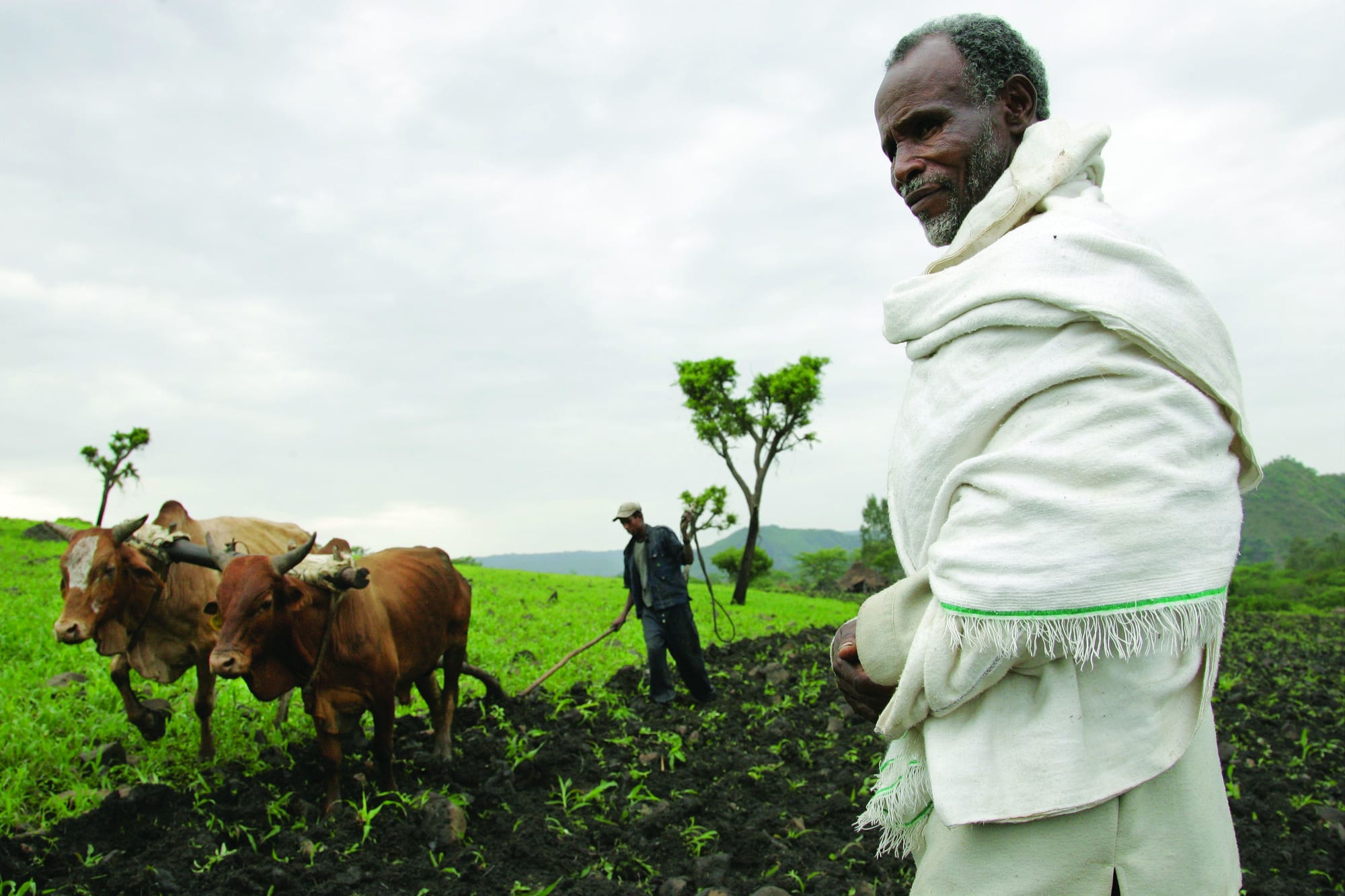
Ethiopia keeps two calendars and two clocks running at once, and an ordinary day is shaped by both. The country's own calendar, with twelve months of thirty days plus a short thirteenth month, runs seven or eight years behind the Gregorian calendar used internationally, so the same date can carry two different years depending on who is asking. Many Ethiopians also reckon the hour of the day from dawn rather than midnight, so what a visitor's phone shows as seven in the morning is spoken of locally as "one o'clock." Beneath both systems, daily life for most of the population still runs on something older than either: a highland farming calendar of rains, ploughing, and harvest that has changed only slowly even as Addis Ababa has grown rapidly into a large modern capital.
Family and home life
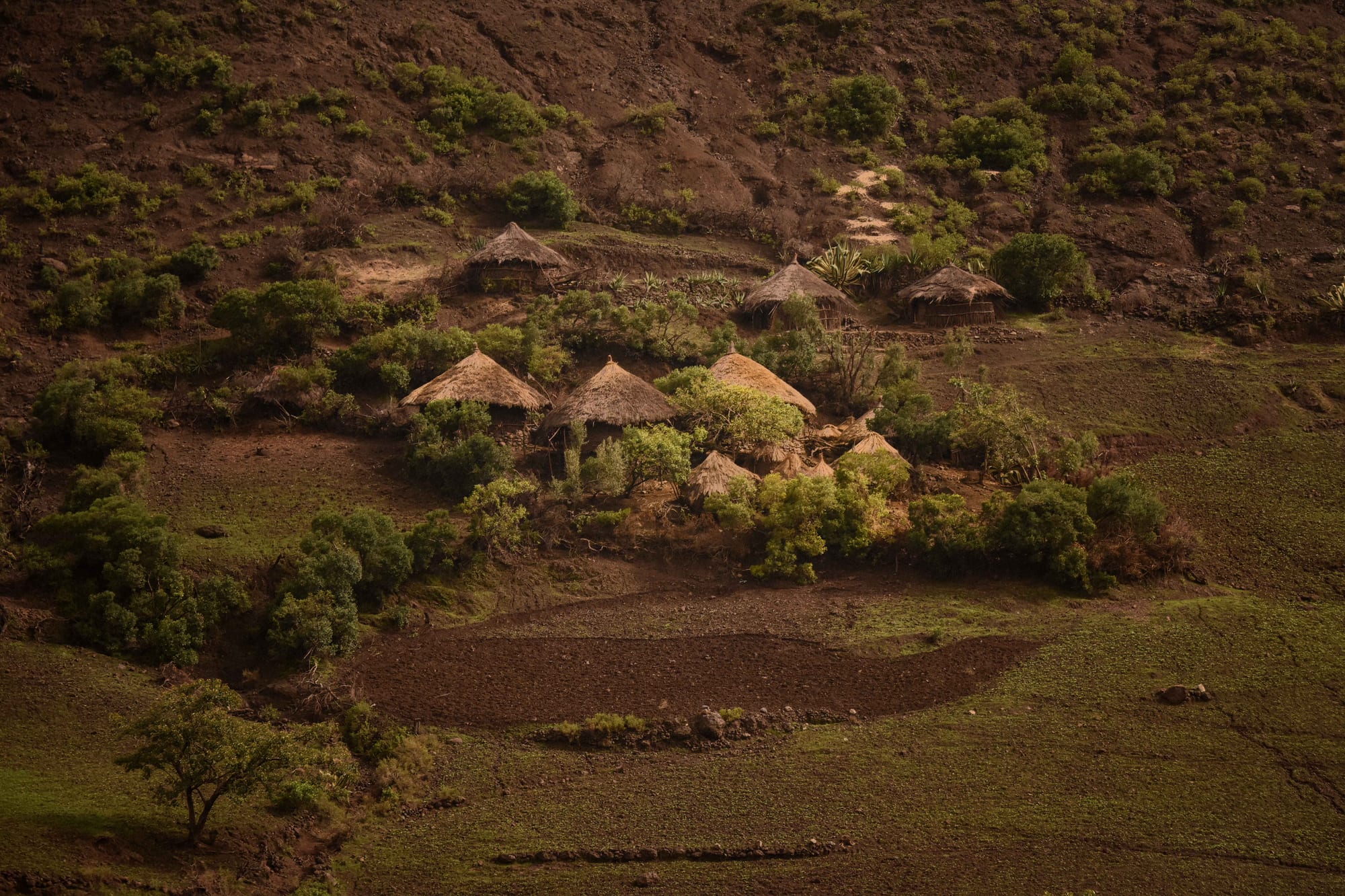
Ethiopia is overwhelmingly rural, and most households still live in the extended family groupings typical of a farming society, with grandparents, parents, and children often sharing a homestead or living within easy reach of one another. In much of the highlands, where most Ethiopians live, home is often a round, thatched-roof house built of wood, mud, and stone, clustered in small groups near the family's fields rather than along a laid-out street. Labour is generally divided along traditional lines, with men doing most of the fieldwork and heavier farm labour and women responsible for the household, food preparation, and, often, fetching water and firewood, though these roles vary by region and are shifting somewhat as more Ethiopians move to towns and cities.
Work, school and the rhythm of the day
For the roughly three-quarters of Ethiopians who live in rural areas, the working day is agricultural and follows the rains rather than a fixed schedule: ploughing with ox teams ahead of the main rainy season from around June to September, planting, weeding, and a harvest push later in the year. Crops such as teff, wheat, barley, maize, and sorghum, along with coffee in the south and west, dominate the farming calendar. In Addis Ababa and other towns, office and government work generally runs a standard week with Sunday as the shared day off, though many people, particularly in private businesses and markets, also work on Saturdays. Schooling runs on the Ethiopian calendar's own academic year, and the Orthodox Christian and Islamic religious calendars — Ethiopia has large communities of each — layer their own fasting periods and festivals on top of the working year, affecting diet and pace at set points throughout it.
Community life and public spaces
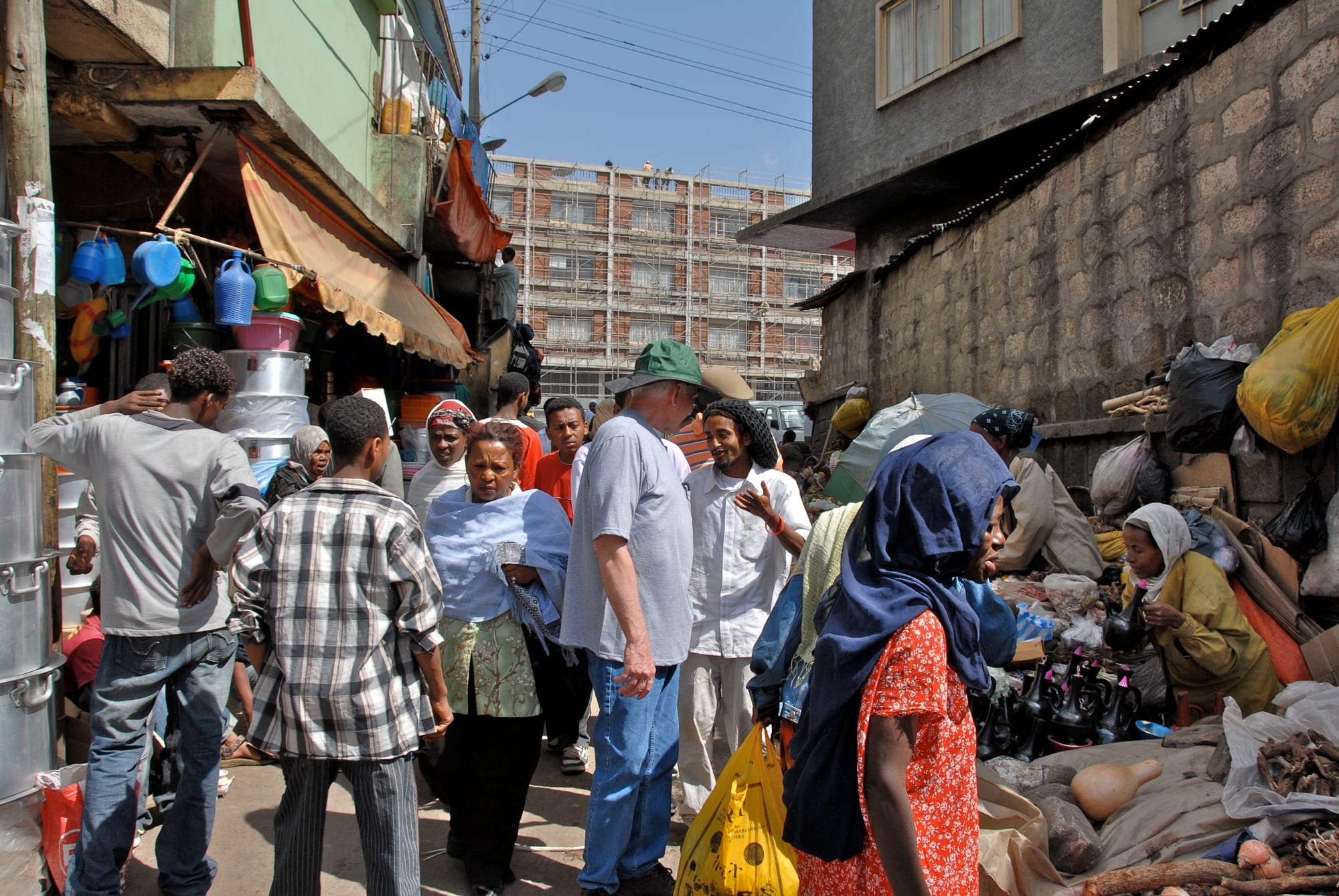
The market is the central public space in both rural and urban Ethiopia, usually held on a fixed day each week in smaller towns and continuously in the larger cities. Addis Ababa's Merkato, widely described as one of the largest open-air markets in Africa, draws traders and shoppers from across the city and well beyond it, its narrow lanes organised by trade — grain, spices, household goods, textiles — much as smaller weekly markets are organised in towns across the country. Minibuses, known locally as taxis, are the standard way to get around Addis Ababa and other cities, running fixed routes with a conductor calling the destination, alongside city buses and, in the capital, a light rail line. Churches and mosques anchor neighbourhood life outside the market, particularly on the Orthodox Christian and Muslim holy days that punctuate the week and the year.
Free time and weekends
Sunday is the widely shared day of rest, observed by church attendance among Ethiopia's large Orthodox Christian and Protestant communities, with Friday holding a similar place for the country's substantial Muslim population. Extended family visits, football, and, in towns, spending time at a local café are common ways of passing free time. Long-distance running carries particular national pride — Ethiopian athletes have long dominated international distance events — and it is common to see runners training on roads and tracks around Addis Ababa and other highland towns, where the altitude is part of the appeal. Major religious festivals, especially Meskel in September and Timkat (Epiphany) in January, draw whole communities out for public celebrations that briefly reorder the usual weekly rhythm.
A visitor's ordinary day
Ethiopia runs largely on cash: the birr was devalued sharply in a 2024 policy change, card acceptance remains limited outside upmarket hotels, and the currency cannot be obtained outside the country, so changing money on arrival is standard practice. Addis Ababa's minibus taxis are cheap but follow fixed routes rather than a map a newcomer can easily read, and asking locally or using a ride-hailing service such as RIDE is the simpler option for a first visit. Government offices and many shops close for Ethiopian public holidays, which do not always match the Gregorian dates a visitor might expect, given the separate calendar; it is worth checking local dates rather than assuming. Domestic flights, run mainly by Ethiopian Airlines, are frequently the practical way to cover long distances between highland towns, since road journeys on mountain routes can take far longer than the map suggests. Parts of the Amhara, Oromia and Tigray regions have been affected by conflict, so current travel advisories are worth checking before planning a route.
What to take away
What defines an ordinary day in Ethiopia is less any single custom than the layering of time itself: a Gregorian date, an Ethiopian date seven or eight years apart, a clock that may start at dawn rather than midnight, and, underneath all of it, a farming calendar that still sets the pace of life for most of the population.