Culture & Customs · Eswatini
Eswatini: Reeds, First Fruits and Respect
A small kingdom where no conversation starts without a greeting, elders are called mother and father, and the year turns around royal ceremonies of reeds, first fruits and marula beer
By Worldlore Editorial · 30 September 2026
A visitor walks up to a homestead unannounced, which is perfectly normal: Swazis visit one another often and at any hour, and the host is expected to show generosity to whoever arrives. What is not normal is to start talking without a greeting. "Sawubona," the visitor says, and the reply comes back, "Yebo." If the person at the door is older, a title is added, "Sawubona make" to a woman, "Sawubona babe" to a man, words that mean mother and father whether or not the two are related. Only then do the questions about how everyone is begin, and only after that the business of the visit. A person who skips this step, a Swazi language guide explains, is thought not to have had a good upbringing. In Eswatini, respect is spoken first and shown in every exchange that follows.
Faith, identity and values
Eswatini is overwhelmingly Christian. Religious leaders cited by the US State Department estimate that about 90 per cent of the population is Christian and about 2 per cent Muslim, with the remainder following other faiths, including Indigenous African beliefs. A large part of that Christian majority belongs to Zionist churches: estimates put the share at around 40 per cent of the population practises Zionism, a blend of Christianity and traditional Swati ceremonies and rituals that is widely observed in rural areas.
Faith and monarchy are closely linked. The State Department reports that the monarchy, and through it the government, aligns its official calendar with Christian traditions, and that churches aligned with the monarchy, including the League of Swaziland Churches and affiliated Zionist churches, celebrate the traditional royal calendar together with the government. Citizens are regularly urged to attend royal festivals, and some have told the State Department they fear reprisal if they stay away; non-Christian groups report that Christian bodies receive preferential treatment, such as free airtime on state broadcasters.
The king and the Queen Mother, the Indlovukati, stand at the centre of the great national ceremonies, which the tourism authority describes as a living tradition rather than a recreation staged for visitors. At home, authority follows age. Traditionally the eldest man is the undisputed head of the family, and no significant step is taken without his approval. Elders are regarded as sources of wisdom and spiritual guidance, and their word is usually final and not publicly questioned. Relationships matter enormously, gender roles are clearly defined, and the churches are conservative and outspoken on sexual morality.
Greetings and meeting people
Greetings are the key to almost everything. They show how a person is feeling, express politeness and humility, and open the way to conversation, and it is considered rude to speak to anyone, even a stranger, without first greeting them. The basic exchange runs "Sawubona", hello, answered by "Yebo"; then "Unjani?", how are you, to which the answer is "Ngikhona", I am fine.
Titles carry the respect. Older people in the community are addressed as make, mother, and babe, father, often with the surname added, as in "Sawubona make Shongwe", whether or not they are relatives. The very old are called gogo, grandmother, and mkhulu, grandfather. Young people may be greeted by their first names, or affectionately as "my child".
Touch is less sensitive than in many Western cultures, but the hands still follow rules: anything offered should be taken with the right hand, and anything given should be passed with the right hand too. Local authorities are sensitive about photography of government buildings and the airport, so cameras are best kept away from both.
Hospitality and being a guest
Hospitality and generosity are among the most valued qualities in Swazi life. In the villages especially, people drop in on one another without an appointment, and a household hosting a guest may find itself receiving a steady stream of visitors. The host carries a real responsibility to be generous to each of them.
Meals come with their own courtesies. People sit down to eat; eating while standing is regarded as disrespectful, especially in a family setting. Modesty in dress and posture is expected, and women are expected to sit with their legs together. Dress is matched to the occasion, from casual clothes in town to formal wear for church, work and community meetings, but traditional dress is considered appropriate everywhere. Emahiya, the traditional clothing worn by women and girls, appear in every colour at the great ceremonies.
Visitors who wish to see how a homestead was traditionally organised can visit the reconstructed village at Mantenga, where guides explain how the beehive huts are built and what each is used for, and where women prepare food, plait grass and make beadwork.
Festivals and life's big moments
The Umhlanga, or Reed Dance, is held over eight days around the end of August or beginning of September. Up to 40,000 unmarried, childless girls and young women arrive in groups from the country's 200 or so chiefdoms, divided into an older and a younger age group. They travel to the reed-beds, cut ten to twenty tall reeds each with long knives, and carry them back to present to the Queen Mother, ostensibly to repair the windbreak around her royal residence. The sixth and seventh days are given over to dancing, with warrior escorts in cow tails carrying shields and sticks, and the king attends on the main day. The Eswatini National Trust Commission describes the ceremony as a way of promoting chastity, providing tribute labour for the Queen Mother and building solidarity among the young women, and traces it to an older custom of female age-regiments. Visitors may take photographs only on the two dancing days.
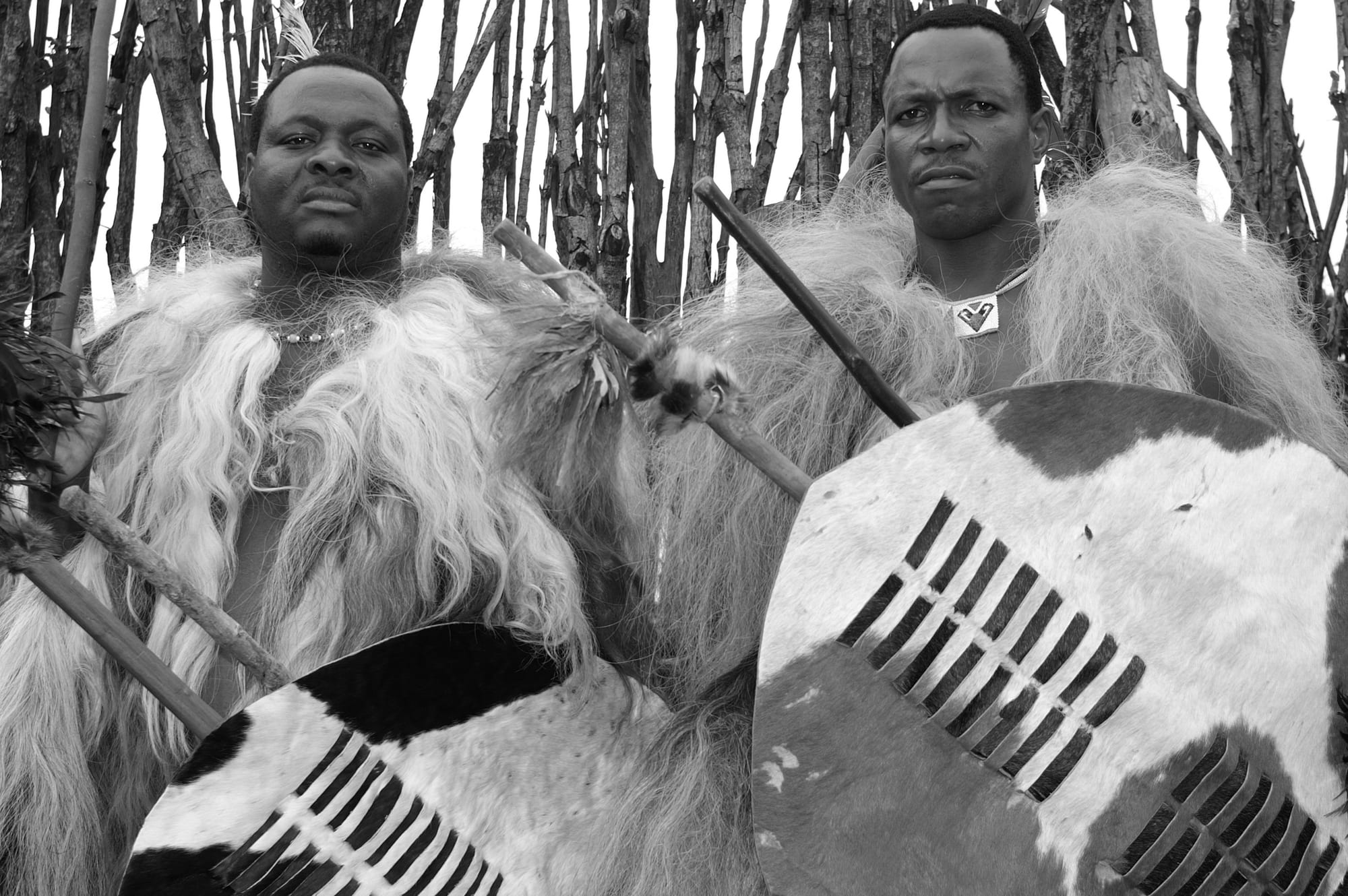
The Incwala, held around the turn of the year on dates set by ancestral astrology, is the most sacred ceremony of all. Often called a first-fruits festival, it is above all a ritual of cleansing and renewal and a celebration of kingship. Its climax, the Big Incwala, lasts six days: regiments go out by moonlight to cut sacred lusekwane branches, which are placed in the royal sanctuary; on the main day the king and the regiments appear in full war dress; a day of strict restrictions follows, while the king stays secluded in the sacred enclosure; and the ceremony ends with the burning of objects that mark the close of the old year. Men wear the umdada, a short leopard-skin skirt, a fur neckpiece that reaches to the waist, and the simohlwane, a necklace of pinkish beads that marks membership of a regiment, while women and girls wear emahiya in many colours. The songs sung inside the royal cattle enclosure belong only to this ceremony and are kept secret; they may not be recorded.
In late summer, the marula festival, known as Buganu, is held at royal residences as the marula fruit ripens. Women and children gather the fallen green fruits and store them until they turn a creamy yellow, and the women brew them into buganu, marula beer. The festival features songs and dances specific to the occasion, including a dance reserved for women.
Marriage in Swazi custom is the union of two families rather than of two people alone, and marriage between members of the same clan is traditionally not allowed. Lobola, bride-wealth traditionally paid in cattle, is understood as thanks to the bride's parents for raising her; the herd customarily includes a beast known as the wiper-away of tears, given to the bride's mother. A traditional wedding, umtsimba, begins when the bride's party arrives at the groom's homestead and sings at the gate of the cattle enclosure while a hut is made ready for them, and goats are slaughtered in welcome. The two sides then compete in songs and dances before the feast turns the rivalry into friendship and gifts are exchanged. The decisive moment is the smearing of the bride's face with red ochre, libovu, by a member of the groom's family, the high point of the marriage: no woman can be smeared twice.
Death brings its own period of observance, set by the family. Traditional signs of mourning include shaving the hair, wearing mourning gowns and, at the end of the period, a cleansing ceremony.
Arts, crafts and music
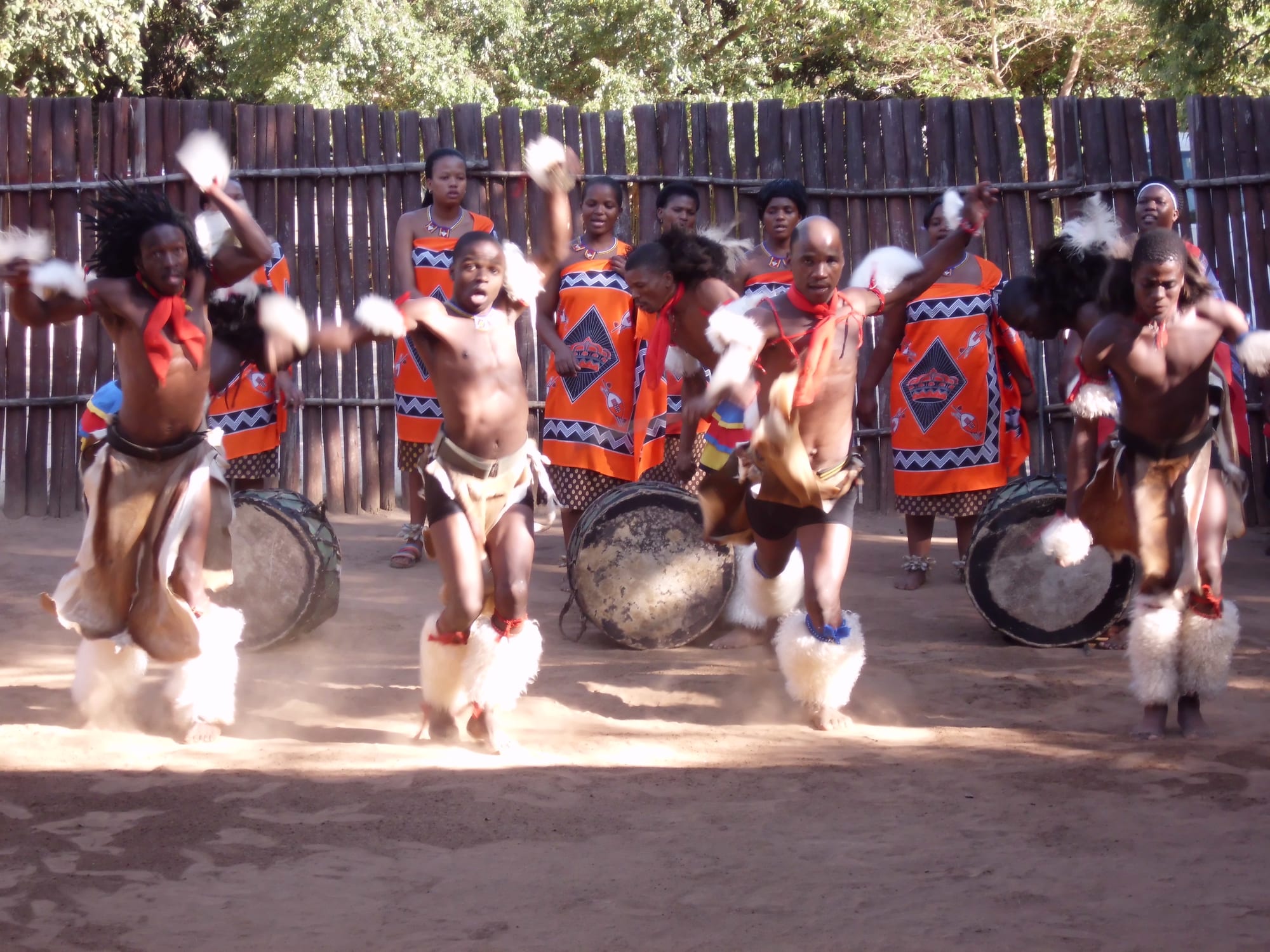
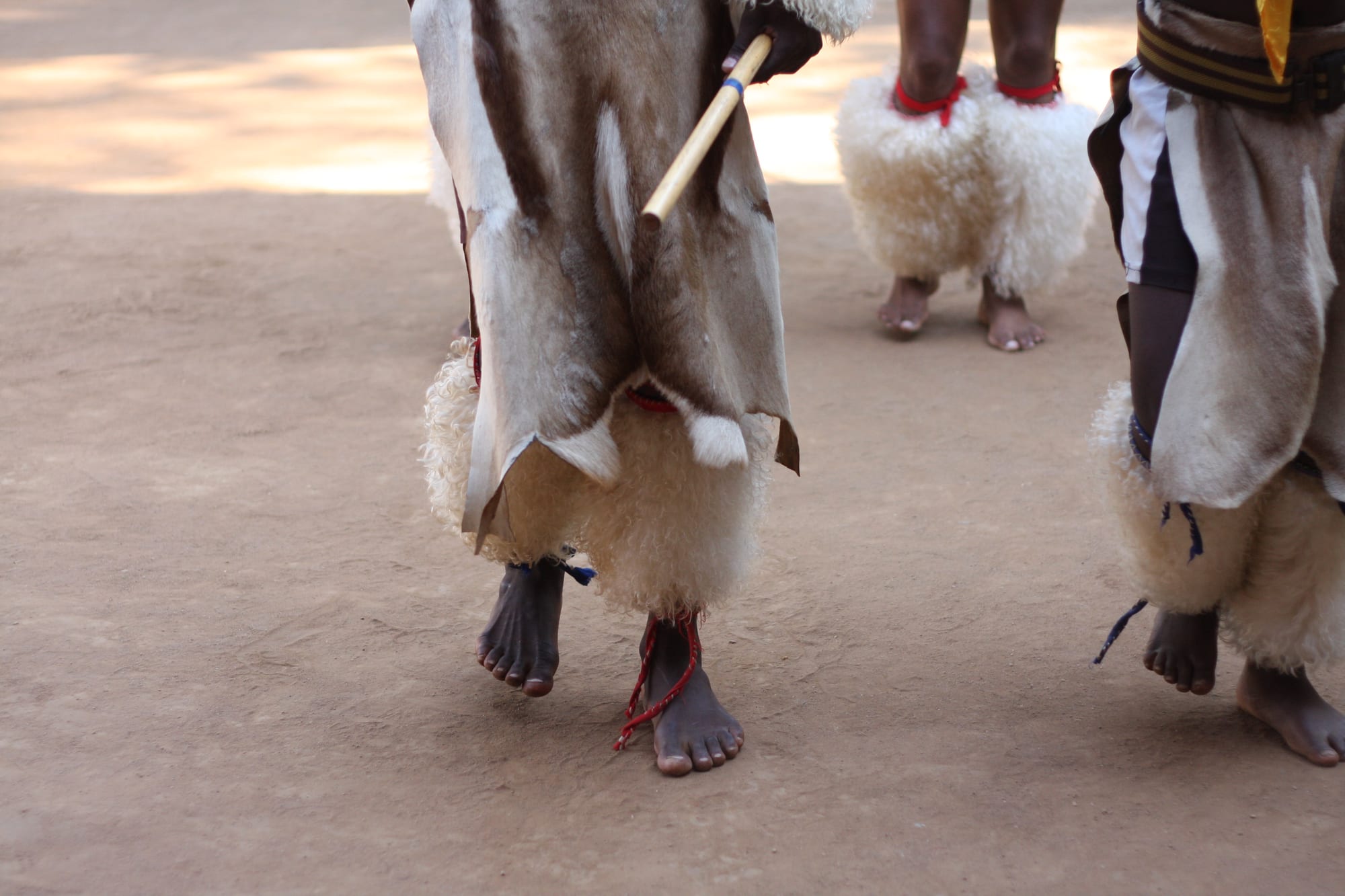
Song and dance run through every ceremony, each with repertoires of its own. The best-known dance outside the ceremonies is the sibhaca, performed by teams of men with vigorous high kicks and stamping, to pulsating drums and rousing song. Visitors can see it performed regularly at the cultural village at Mantenga.
Crafts are one of the country's great strengths, and many of them are made by women in rural communities. Baskets are woven from grass or sisal and coloured with natural dyes, and lutindzi grass is also worked into beaded jewellery and bags. Enterprises such as Gone Rural and Tintsaba provide work for hundreds of rural women, and many producers belong to a fair trade organisation that aims to see craftspeople properly rewarded. Candles are shaped from coloured wax, glass is blown from recycled glass into tableware and animal figures, and mohair is hand-woven into fabrics sold around the world, a craft taught in long-established workshops. Eswatini also has a long tradition of carving in wood and stone, mostly of practical objects, which fill the country's craft markets.
Dos and don'ts for visitors
- Do greet people, even strangers, before starting any conversation; "Sawubona" is the word for hello.
- Do address older people as make or babe, and the very old as gogo or mkhulu.
- Do give and receive things with the right hand.
- Do sit down to eat; eating while standing is considered disrespectful.
- Do follow ceremony dress codes: women in skirts or sarongs rather than trousers, men without non-traditional hats.
- Don't photograph the Umhlanga except on its two dancing days, or the king's private sanctuary during the Incwala.
- Don't photograph government buildings or the airport.
- Don't publicly contradict an elder; their word is treated as final.
What to take away
Eswatini's customs rest on respect made visible — a greeting before every conversation, a title for every elder, a right hand held out — and visitors who offer the same will find a warm and generous welcome.