Daily Life · Eritrea
Eritrea: A Day Measured in Coffee and Duty
A coffee ceremony brewed three times over in the same sitting, a Monday camel market that still sets the week's rhythm in the highlands, and a national service system that shapes nearly every young adult's daily life
By Worldlore Editorial · 30 September 2026
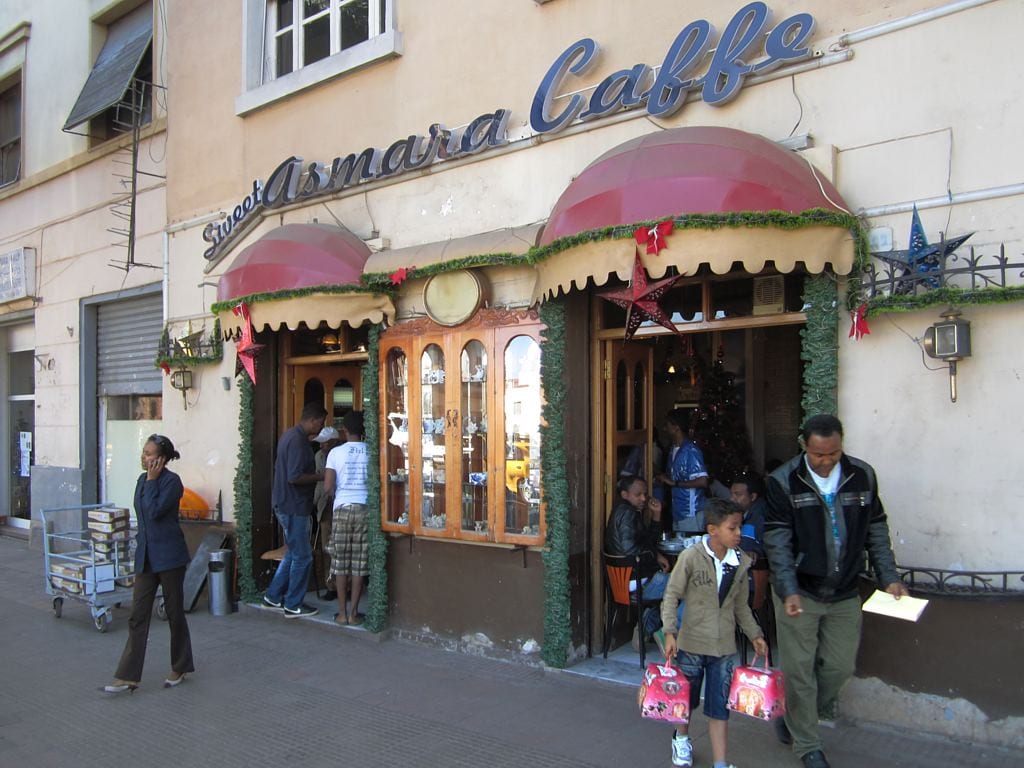
Eritrea runs at a quiet, orderly pace, shaped as much by the state as by custom. In Asmara's Italian-built streets, cafés serving cappuccino and pastries anchor a slow daily ritual that predates independence by decades, while the coffee ceremony, roasting, grinding and brewing beans over an open flame through three separate rounds, remains a common, often daily practice in homes across the country, not an occasional treat. Running underneath both is national service: a system of indefinite military or civil obligation that touches nearly every young adult's life and, more than almost anything else, defines what an ordinary day looks like for a large part of the population.
Family and home life
The extended family remains the centre of daily life, and multiple generations often live together or nearby, particularly in the highland farming communities of the Tigrinya, the country's largest group. Households are generally organised around a division of labour between farming or herding, domestic work and, for a large share of working-age adults, national service obligations that can remove a family member from the home for years at a stretch. Religion runs through daily household life: highland families are mostly Orthodox Christian, observing a demanding calendar of fasting days, while lowland and coastal communities are mostly Muslim.
Work, school and the rhythm of the day
Almost all Eritreans between 18 and 40 are legally required to complete national service, originally set at 18 months by law but, in practice, frequently extended indefinitely, according to Human Rights Watch and other human rights researchers, with conscripts assigned to military duty, teaching or other government work. This system shapes the working lives of a large part of the adult population more than any ordinary job would, and is widely cited as a leading reason young Eritreans leave the country. Outside national service, the formal economy is small and state-dominated, and subsistence farming and herding remain the main livelihood for much of the rural population, work that follows the highland rainy season rather than a fixed calendar.
Community life and public spaces
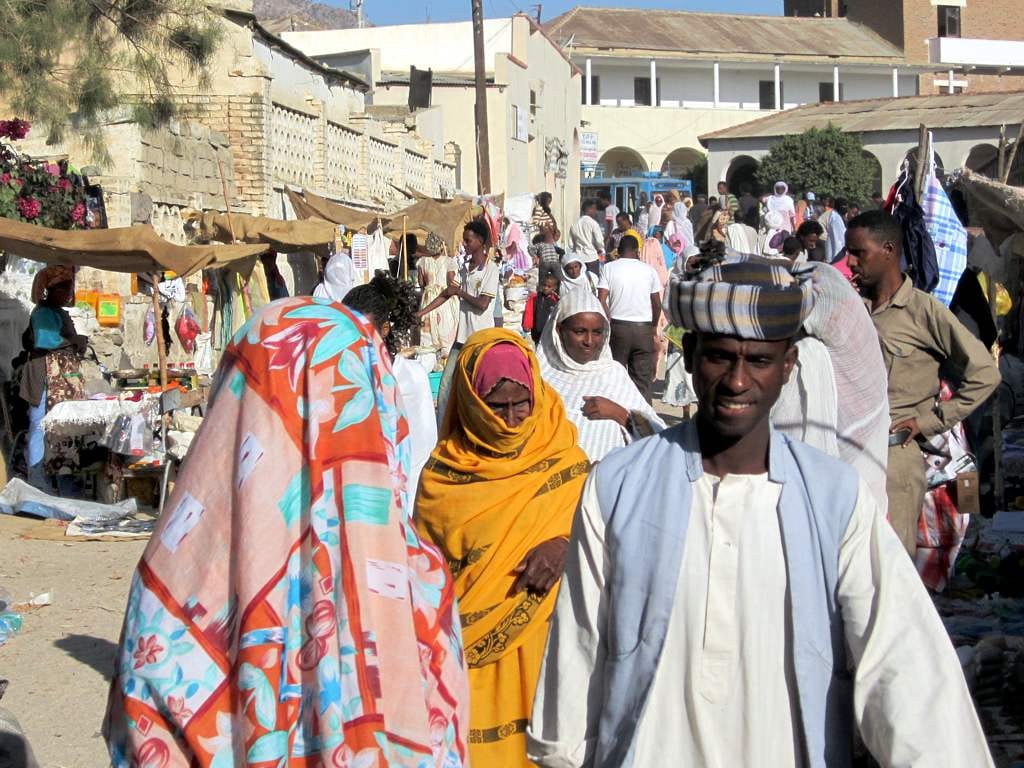
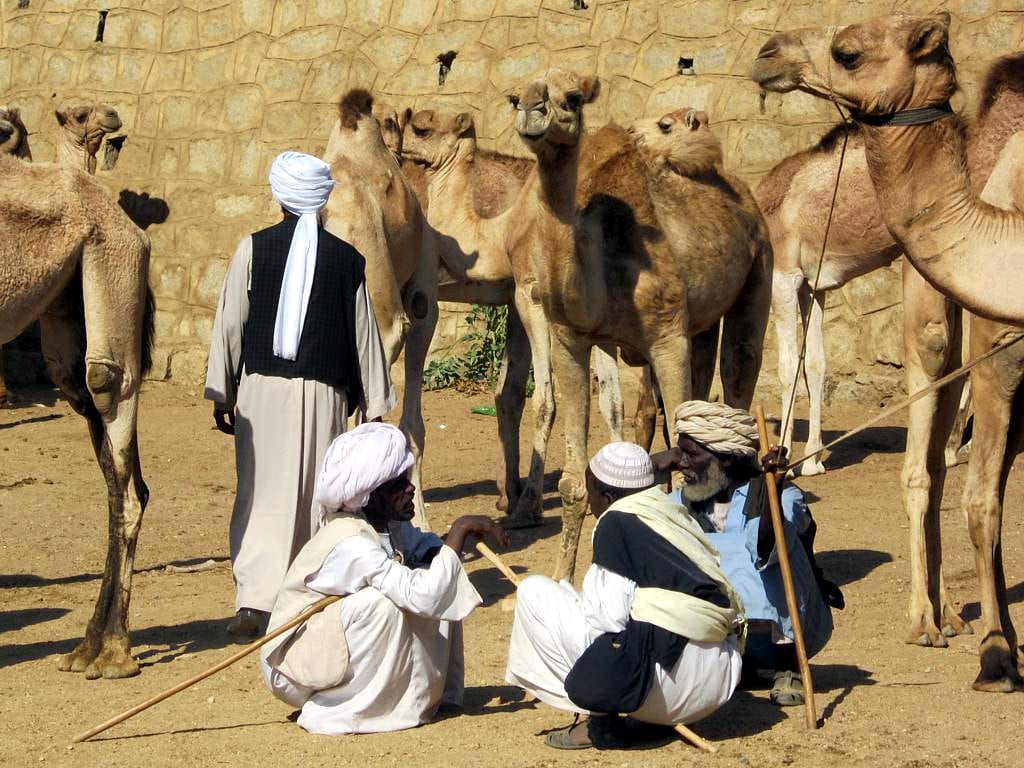
Markets remain the everyday centre of commerce outside the capital, and weekly market days draw farmers and traders in from the surrounding countryside; the Monday market at Keren, which includes a large camel and livestock market, is among the best known and draws buyers and sellers from the surrounding villages and highlands. In Asmara, wide Italian-built boulevards, the central market and a cluster of cafés and cinemas from the 1930s remain the default public gathering places, kept remarkably intact for a capital city. Public transport is limited, and travel beyond the areas immediately around Asmara generally requires a permit, which shapes how freely people can move around their own country day to day.
Free time and weekends
The coffee ceremony is as much a social occasion as a drink: performed typically by the woman of the household, beans are roasted, ground and brewed fresh in front of guests or family, and the pot is shared out over three successive rounds in a single, unhurried sitting. Church or mosque attendance structures the week for many families, and, where national service duties allow, weekends bring family visits and, in Asmara, an unhurried walk through the old town with a macchiato. Football is followed closely, and cycling, introduced under Italian rule, has an outsized following for such a small country, producing some of Africa's best-known professional riders.
A visitor's ordinary day
Eritrea is a cash economy built on the nakfa, which cannot be obtained or exchanged outside the country, so visitors change US dollars on arrival and should only change what they expect to spend. Every destination beyond Asmara requires a travel permit arranged locally, which makes independent, spontaneous travel largely impractical and a guide or local sponsor the normal way to see the country. Photography is tightly restricted around anything military, governmental or infrastructural, including bridges, ports and the airport, and it is worth assuming a camera should stay down near any of these until it is clearly safe to use.
What to take away
What defines an ordinary day in Eritrea is the pairing of two very different rhythms: an unhurried, coffee-paced sociability at home and in the café, set against a state that, through national service and permits, still decides how much of that day belongs to the individual at all.