History · El Salvador
El Salvador: The Little Country
The smallest and most crowded nation in Central America — a coffee oligarchy, the 1932 massacre, a brutal civil war, gang violence, and a president who jailed a generation
By Worldlore Editorial · 10 September 2026
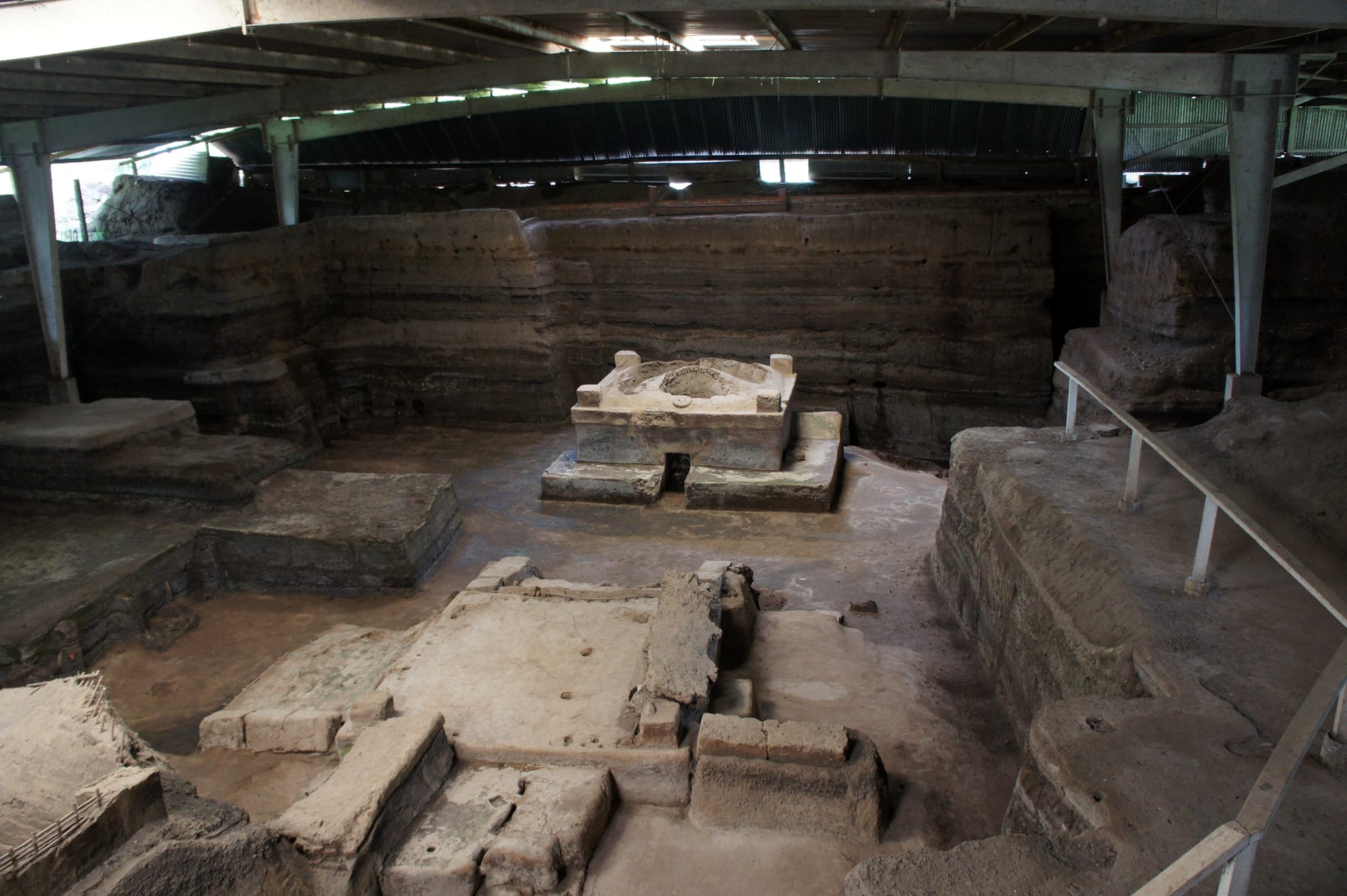
A small, crowded, volcanic land
El Salvador is the smallest country on the Central American mainland and the most densely populated — about 6.3 million people packed into a volcanic strip the size of Wales, with only a Pacific coast. Its history has been shaped by the imbalance between a lot of people and a little land, and by who controlled that land: first Indigenous communities, then a coffee oligarchy, then the state. The result has been an unusually violent modern history — the 1932 massacre, a 12-year civil war, a gang epidemic, and, most recently, the mass imprisonment of more than one in every hundred adults.
A short history
- c. 600 CE
Joya de Cerén
A Maya village is buried and preserved by an eruption.
- c. 900
The Pipil
Nahua migrants from Mexico found the state of Cuzcatlán.
- 1524–1528
Spanish conquest
Alvarado invades from Guatemala against hard Pipil resistance.
- 1841
Independence
El Salvador becomes a republic after the Central American federation fails.
- 1881–1882
The land laws
Communal landholding is abolished; coffee planters take the land.
- January 1932
La Matanza
The army crushes a peasant revolt, killing 10,000–40,000, mostly Indigenous.
- 1931–1979
Military rule
Decades of general-presidents backing the oligarchy.
- 1980–1992
The civil war
75,000 dead, most killed by the state; ended by UN-brokered accords.
- 2022
The state of exception
Over 85,000 people are jailed in an anti-gang crackdown.
Cuzcatlán, and the coffee land
Western and central El Salvador was the south-eastern edge of Mesoamerica. Around 900 CE Nahua-speaking migrants from central Mexico, the Pipil, founded the state of Cuzcatlán, alongside Lenca and Maya peoples in the east. Pedro de Alvarado invaded from Guatemala in 1524 and met fierce resistance; the conquest took four years. The colony grew cacao and then indigo, and after independence in 1841 it stayed a small agrarian republic — until coffee.
From the 1860s coffee replaced indigo, and in 1881–82 the government abolished communal and village landholding by decree. Indigenous and municipal lands were privatised and bought up by a small class of planters, creating both a concentrated landowning elite and a mass of landless rural workers, and destroying the economic basis of Indigenous community life. Coffee became almost the entire export economy, and the state, the army and the land were run by and for the planters.
La Matanza
The Depression collapsed coffee prices and wages, and in January 1932 a peasant uprising with communist and strong Indigenous participation briefly seized towns in the western coffee districts. The military government of General Hernández Martínez crushed it with mass killings — somewhere between 10,000 and 40,000 people shot in a matter of weeks, overwhelmingly Indigenous, with soldiers targeting anyone in "Indian" dress. La Matanza, "the slaughter", effectively ended visible Indigenous identity in El Salvador and began nearly 50 years of unbroken military rule in service of the oligarchy.
The civil war
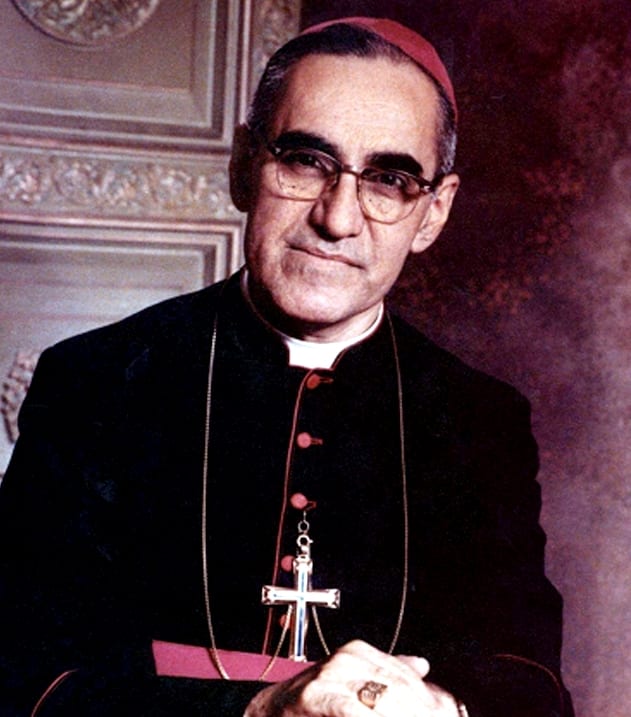
Land hunger, rigged elections, and the closing of the emigration escape valve — after Honduras expelled hundreds of thousands of Salvadoran migrants in 1969 — built toward an explosion. Left-wing guerrilla groups formed in the 1970s and merged in 1980 as the FMLN; right-wing death squads, linked to the military, multiplied. In March 1980, Archbishop Óscar Romero, who had become the country's loudest voice for the poor and against state violence, was shot dead while saying Mass; gunmen then fired on his funeral, killing dozens.
The 12-year war that followed pitted the FMLN against a government and army sustained by billions of dollars in United States aid, sent to prevent "another Nicaragua". US-trained units carried out the El Mozote massacre in December 1981 — around a thousand villagers, most of them children — which both governments denied for a decade. About 75,000 people were killed, the great majority civilians killed by the state and its death squads; a million were displaced, and hundreds of thousands fled to the United States, where Salvadoran youth in Los Angeles formed the gangs MS-13 and Barrio 18.
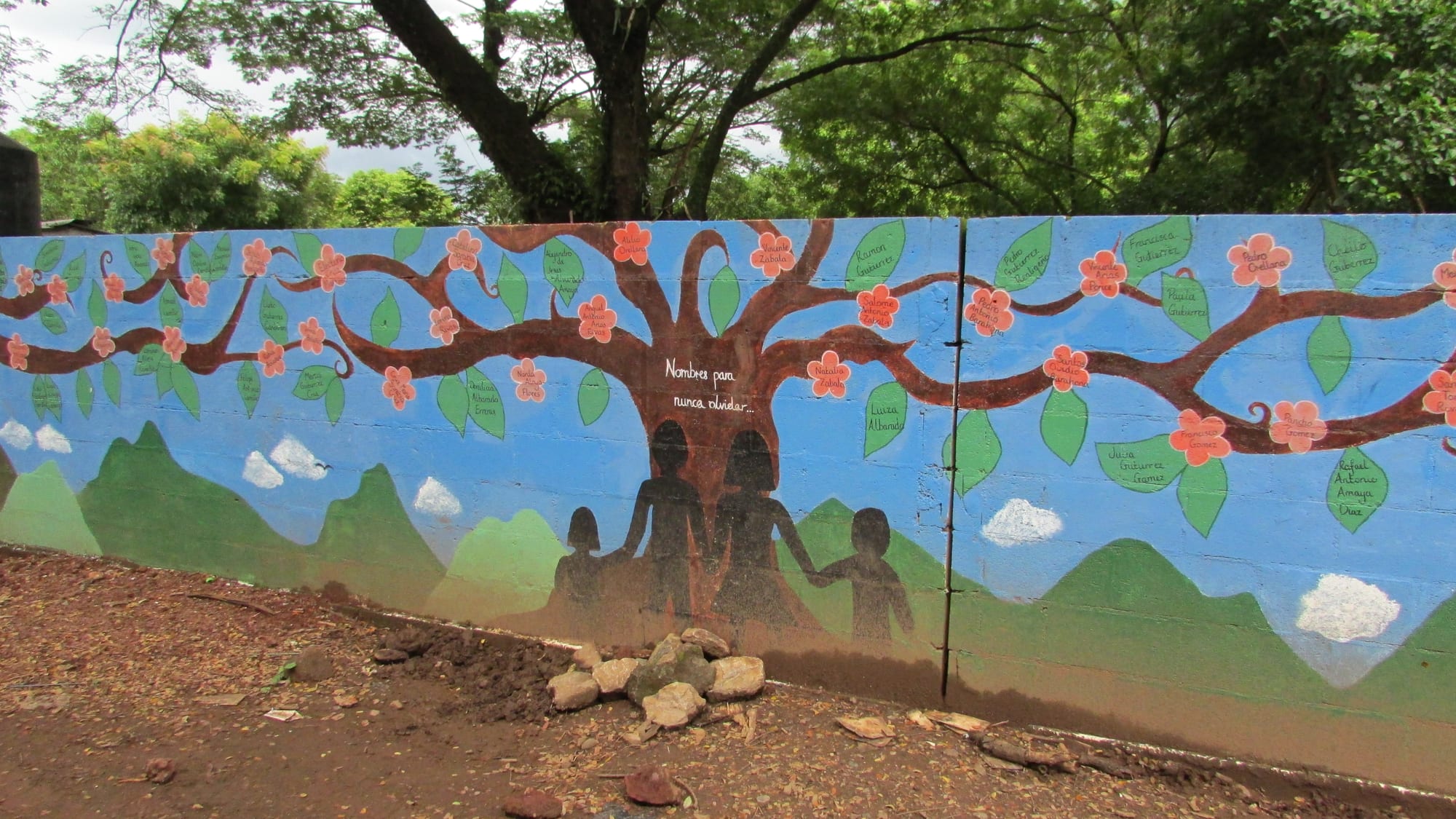
In November 1989 the FMLN launched a major offensive into San Salvador; during it, soldiers murdered six Jesuit priests and two women at the university, an atrocity that pushed both sides to negotiate. UN-brokered peace accords were signed in January 1992: the FMLN disarmed and became a legal party, the military was purged and cut, and a truth commission documented the war — before an amnesty law buried its findings for 24 years.
The gang years, and Bukele
Postwar El Salvador alternated peacefully between the right-wing ARENA and the FMLN, and adopted the US dollar in 2001. But a heavily armed society, weak institutions, deep poverty, and the mass deportation of gang members from the United States produced an epidemic of gang violence: by 2015 El Salvador had one of the highest murder rates in the world, with MS-13 and Barrio 18 controlling neighbourhoods and extorting anyone who worked.
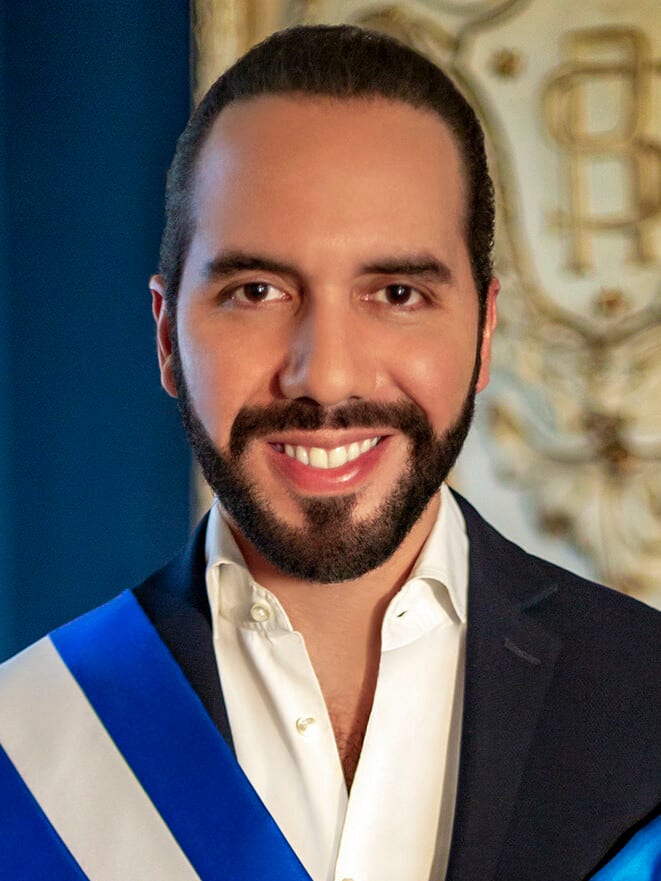
Nayib Bukele, a young former mayor elected in 2019 outside the two main parties, ended 30 years of ARENA–FMLN rule. He governed in a populist, increasingly authoritarian style — sending soldiers into the legislature in 2020, purging the Supreme Court in 2021, and being re-elected in 2024 after the reconstituted court lifted a constitutional ban on consecutive terms. After a burst of gang killings in March 2022 he declared a "state of exception" suspending constitutional rights, and the security forces arrested more than 85,000 people — over one per cent of the adult population — holding many in a vast new mega-prison. Homicides collapsed, and El Salvador went from one of the most violent countries in the world to one of the safest by the official count, while rights groups documented thousands of arbitrary detentions and dozens of deaths in custody.
What El Salvador carries
El Salvador's history is a repeating argument over land and force in a country too small and too crowded to spare either. The coffee laws of the 1880s built the oligarchy; 1932 taught the state that mass killing worked; the civil war was the same conflict at full scale; and the gang crisis, and the crackdown that answered it, grew directly out of that war's unresolved poverty and its exiled children. The killings have stopped, for now. What replaces the fear is the country's open question.